


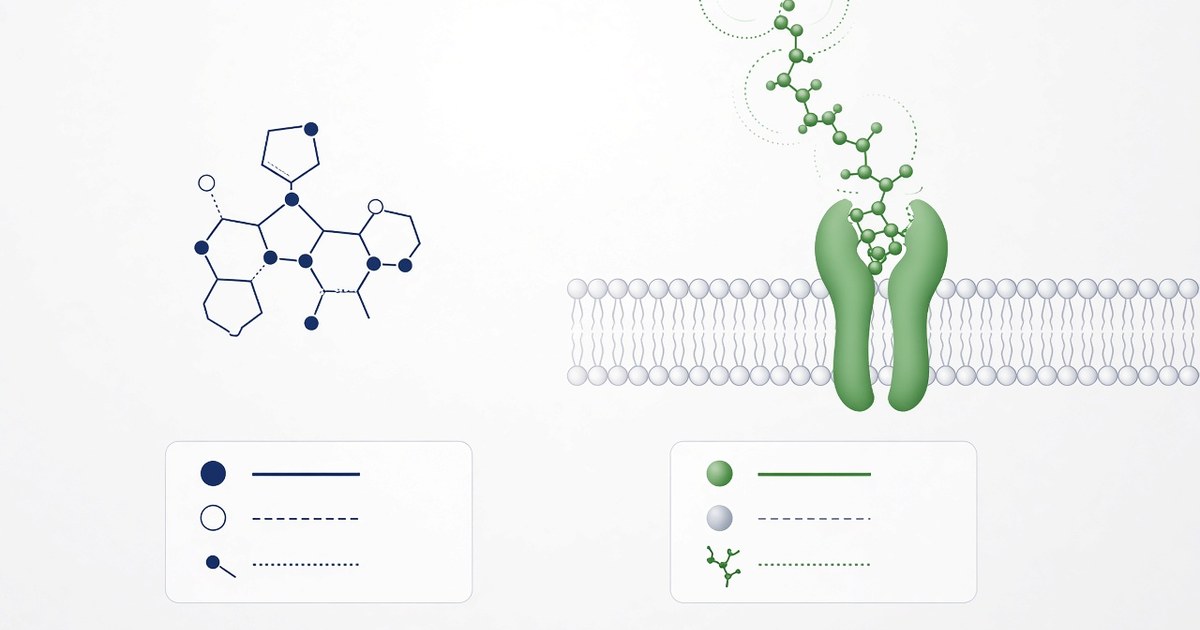
amino acid vs peptide hormones — : 7 Proven Differences 2026
Peptide hormones vs amino acid hormones: 7 proven research differences in structure, synthesis, solubility, transport, receptor signaling, and storage for lab reference standards.
📋 Table of Contents
Amino acid vs peptide hormones differ primarily in molecular size, biosynthetic origin, and receptor location. Amino acid-derived hormones are small monoamine molecules synthesized from single amino acid precursors such as tyrosine or tryptophan; peptide hormones are larger chains of amino acids linked by peptide bonds. This comparison guides laboratory selection of reference standards and receptor binding assays. Research use only: all products discussed are for in vitro laboratory research, not for human or veterinary use.
⚠️ Research Use Only Notice: The products discussed on this site are sold strictly for in vitro laboratory research purposes only. They are not for human use, not for veterinary use, and not intended to diagnose, treat, cure, or prevent any disease. All information presented is for educational purposes in a research context. Must be 21+ to purchase.
Key takeaways
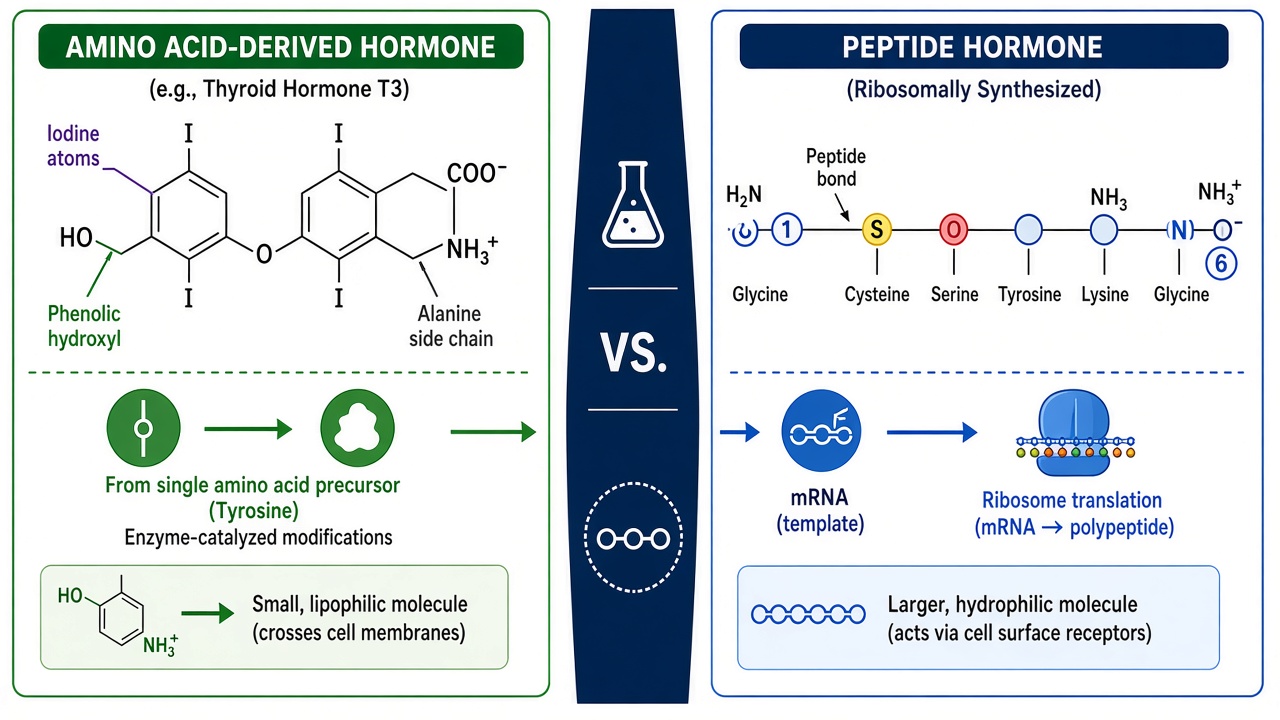
- The amino acid vs peptide hormones distinction rests on precursor type, molecular weight, and solubility.
- Amino acid-derived hormones include epinephrine, norepinephrine, dopamine, and thyroid hormones; they are synthesized from tyrosine or tryptophan.
- Peptide hormones include insulin, glucagon, and growth hormone; they undergo prohormone processing before secretion.
- Amino acid-derived hormones are water-soluble except thyroid hormones, which are lipid-soluble; peptide hormones are generally water-soluble.
- Receptor signaling differs: peptide hormones bind cell surface receptors, while some amino acid-derived hormones bind intracellular receptors.
- For research-grade peptide reference materials, laboratories require documented purity and sequence verification.

What Are Amino Acid-Derived Hormones?
Amino acid-derived hormones, also called amine hormones, are small molecules biosynthesized from single amino acid precursors. Tyrosine gives rise to catecholamines—dopamine, norepinephrine, and epinephrine—as well as thyroid hormones. Tryptophan gives rise to serotonin and melatonin. These compounds are structurally simple compared with peptide hormones. In laboratory settings, amino acid-derived hormone reference standards are used for receptor binding assays, enzyme-linked immunosorbent assays, and chromatographic calibration. Researchers frequently examine amino acid vs peptide hormones to understand how precursor structure influences downstream signaling. The molecular weight of amino acid-derived hormones typically ranges from about 150 to 800 Daltons, far below most peptide hormones.

The synthetic pathways for amino acid-derived hormones require specific enzymes. Tyrosine hydroxylase converts tyrosine to L-DOPA, which is decarboxylated to dopamine. Dopamine β-hydroxylase converts dopamine to norepinephrine. Phenylethanolamine N-methyltransferase converts norepinephrine to epinephrine. Thyroid hormones require iodination of tyrosine residues in thyroglobulin, followed by coupling reactions. These enzyme-dependent steps create multiple points for experimental modulation. In contrast, peptide hormones arise through ribosomal synthesis and post-translational processing. This biosynthetic contrast is a central element in any amino acid vs peptide hormones comparison for laboratory coursework or assay development.
Amino acid-derived hormones also exhibit distinct stability profiles in vitro. Catecholamines oxidize rapidly at neutral pH, forming aminochrome derivatives that interfere with chromatographic detection. Laboratories typically add ascorbic acid or sodium metabisulfite to catecholamine stock solutions and store them at -80°C under inert gas. Serotonin and melatonin are more stable but remain light-sensitive. Thyroid hormones require dissolution in alkaline ethanol or dimethyl sulfoxide before dilution into aqueous buffers. These stability considerations do not apply uniformly to peptide hormones, which often remain stable as lyophilized powders at -20°C for months. The practical handling differences between these two hormone classes reinforce the need for separate standard operating procedures in shared laboratory spaces.
What Are Peptide Hormones?
Peptide hormones are chains of amino acids linked by peptide bonds. They range from small peptides like thyrotropin-releasing hormone (3 amino acids) to larger polypeptides like insulin (51 amino acids) and growth hormone (191 amino acids). Peptide hormones are synthesized as larger preprohormones on ribosomes, then processed through the endoplasmic reticulum and Golgi apparatus. Prohormone processing cleaves signal peptides and often generates multiple active fragments. For broader context on peptide classification, see amino acids, peptides, and proteins key differences. Researchers studying amino acid vs peptide hormones note that peptide hormones exhibit greater structural diversity and post-translational modification potential, including glycosylation, phosphorylation, and disulfide bond formation.

Because peptide hormones are gene-encoded, laboratories can produce recombinant forms in bacterial, yeast, or mammalian expression systems. This enables sequence-specific labeling, isotopic enrichment, and site-directed mutagenesis for structure-function studies. Peptide hormone reference standards require mass spectrometry verification of molecular weight, amino acid analysis, and chromatographic purity assessment. The amino acid vs peptide hormones distinction becomes especially relevant when selecting assay buffers, because peptide hormones often require carrier proteins to prevent nonspecific adsorption to plasticware. Laboratories sourcing peptide hormone standards from Peptides Library receive batch-specific certificates of analysis for reproducible receptor binding and enzyme immunoassay work. For trusted supplier options, see Where to Buy a Peptide Research Library with a COA.
Post-translational modifications add another layer of complexity to peptide hormone research. Disulfide bonds stabilize insulin and oxytocin, while glycosylation affects the bioactivity and clearance of follicle-stimulating hormone and luteinizing hormone. Phosphorylation of growth hormone receptor substrates is a key readout in cell signaling studies. These modifications are absent in most amino acid-derived hormones, with the exception of iodination on thyroid hormones. For researchers comparing these two hormone classes, the presence or absence of post-translational modifications determines which analytical techniques are appropriate.
Mass spectrometry with collision-induced dissociation can map disulfide bonds and glycosylation sites in peptide hormones, whereas small amine hormones are typically analyzed by liquid chromatography with electrochemical or fluorescence detection.
💡 Key Takeaway: What Are Peptide Hormones?
Amino Acid vs Peptide Hormones: Structural and Synthetic Differences
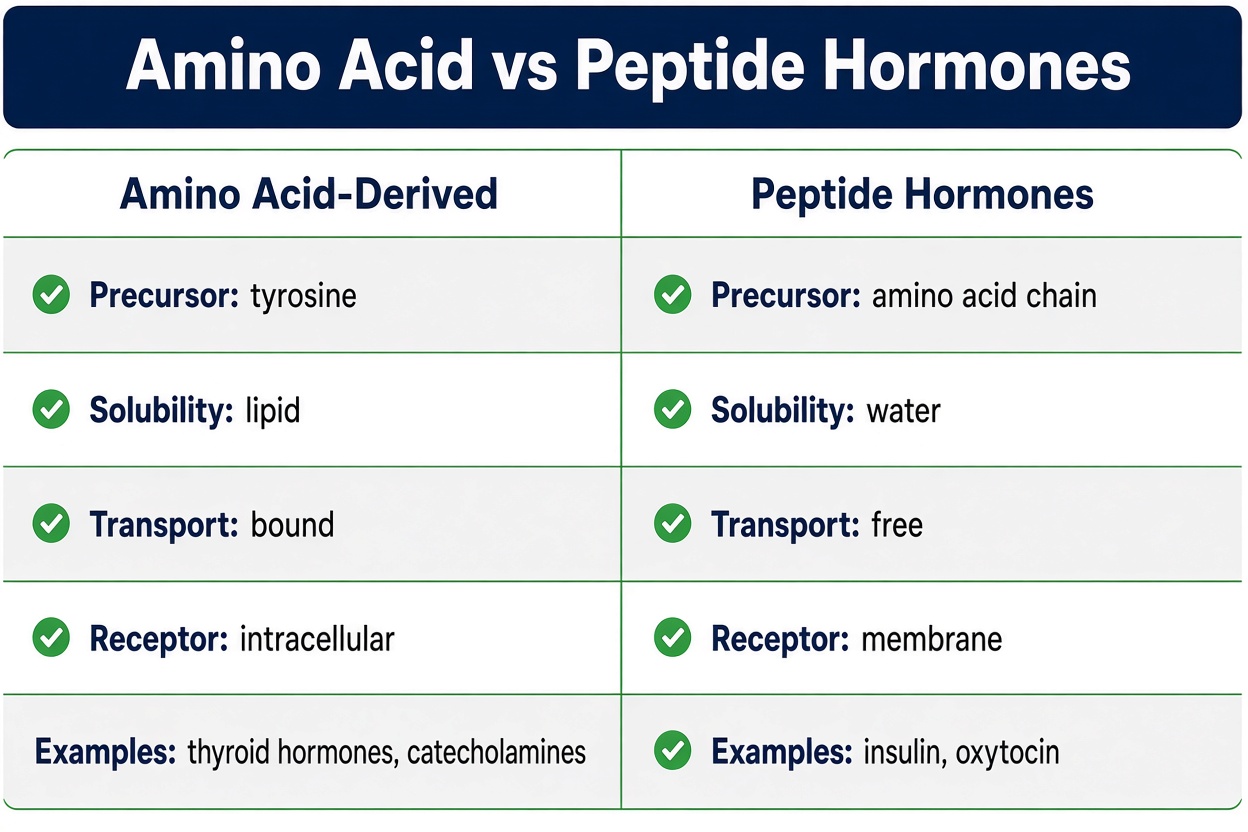
The structural contrast in amino acid vs peptide hormones is unambiguous. Amino acid-derived hormones contain a single aromatic or modified amino acid core, often with amine and catechol functional groups. Peptide hormones contain multiple amino acid residues connected by amide bonds, with secondary and tertiary structure. Molecular weight differs by an order of magnitude or more: epinephrine is 183 Daltons, while insulin is approximately 5,808 Daltons. This size difference affects purification, storage, and analytical detection. For amino acid vs peptide hormones, synthesis also differs fundamentally: amino acid-derived hormones arise through enzymatic modification of free amino acids, whereas peptide hormones arise through ribosomal translation and proteolytic processing.
A second synthetic difference involves subcellular localization. Amino acid-derived hormone synthesis occurs in the cytoplasm or secretory vesicles, depending on the hormone. Peptide hormone synthesis begins in the rough endoplasmic reticulum and continues in the Golgi apparatus. Prohormone processing generates mature peptide hormones in secretory granules. These pathways determine which cellular compartments are enriched for each hormone class during immunocytochemistry or subcellular fractionation studies.
How Does Prohormone Processing Affect Peptide Hormone Activity?
Prohormone processing is a critical regulatory step unique to peptide hormones. Preprohormones contain an N-terminal signal peptide that directs the nascent chain into the endoplasmic reticulum lumen. Signal peptidase removes this sequence cotranslationally. The resulting prohormone then travels through the Golgi apparatus, where prohormone convertases cleave at paired basic amino acid residues. This processing often produces multiple biologically active peptides from a single precursor. For example, pro-opiomelanocortin yields adrenocorticotropic hormone, β-endorphin, and melanocyte-stimulating hormones. Without correct processing, mature peptide hormones cannot bind their receptors or elicit downstream signaling.
For laboratory studies, prohormone processing affects which peptide hormone fragments are present in a sample. Researchers must consider whether they are measuring the mature hormone, the prohormone, or intermediate cleavage products. Immunoassays with antibodies raised against specific epitopes can distinguish these forms. Mass spectrometry can also identify the exact cleavage site by measuring peptide molecular weights. This processing is absent in amino acid-derived hormones, which are directly synthesized by enzyme modification and do not require proteolytic maturation.
How Does Solubility and Transport Differ in Amino Acid vs Peptide Hormones?
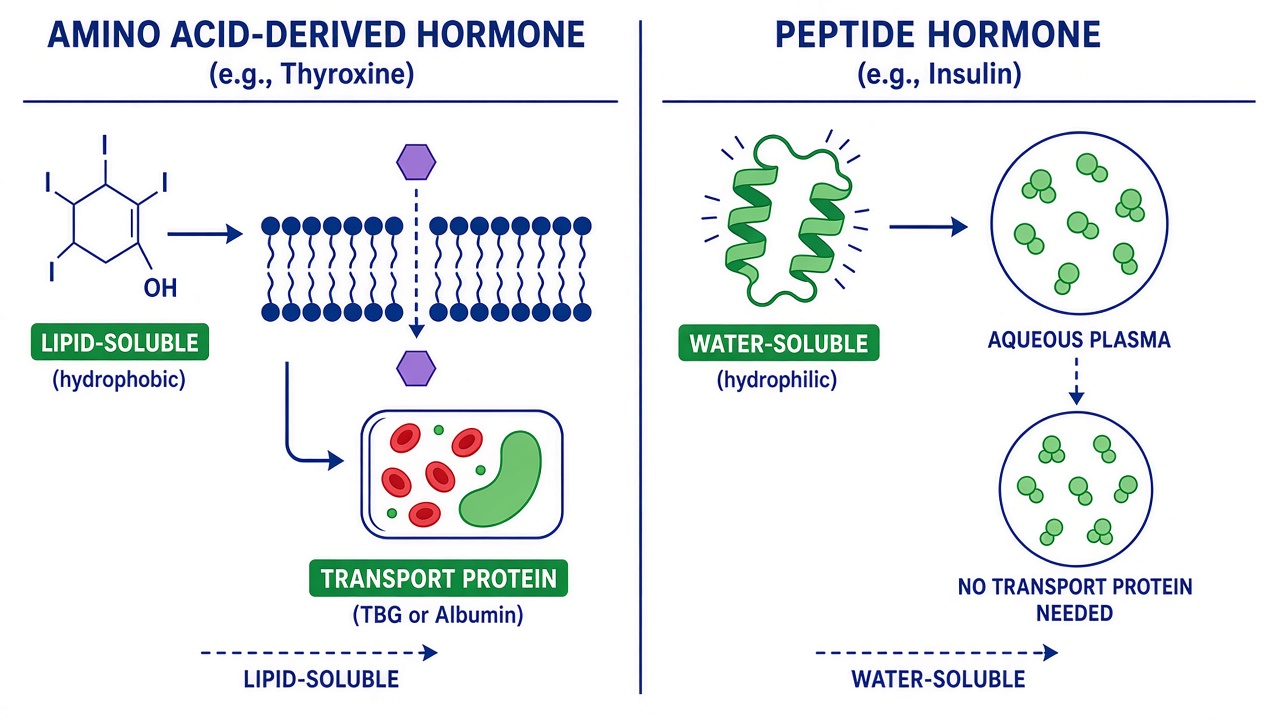
Solubility differences between amino acid vs peptide hormones influence both in vivo transport and in vitro handling. Most amino acid-derived hormones are water-soluble because they contain polar amine and hydroxyl groups. However, thyroid hormones are lipid-soluble due to their iodinated aromatic rings. This lipid solubility allows thyroid hormones to cross cell membranes and bind intracellular receptors. In contrast, nearly all peptide hormones are water-soluble. Their peptide backbone and charged side chains promote solubility in aqueous buffers. This general solubility pattern has practical consequences for reconstitution and storage.
Transport in circulation also differs. Water-soluble amino acid-derived hormones such as catecholamines travel freely dissolved in plasma. Thyroid hormones, being lipid-soluble, require carrier proteins like thyroxine-binding globulin. Peptide hormones are also generally water-soluble and circulate without dedicated carrier proteins, though some may bind loosely to albumin. For laboratory experiments, peptide hormones often require carrier proteins such as bovine serum albumin in assay buffers to prevent nonspecific adsorption to tubes and plates. Amino acid-derived hormones usually do not need this addition, except when working with very low concentrations of catecholamines, which can oxidize or stick to glass.
💡 Key Takeaway: How Does Solubility and Transport Differ in Amino Acid vs Peptide Hormones?
How Do Receptor Mechanisms Differ Between Amino Acid vs Peptide Hormones?
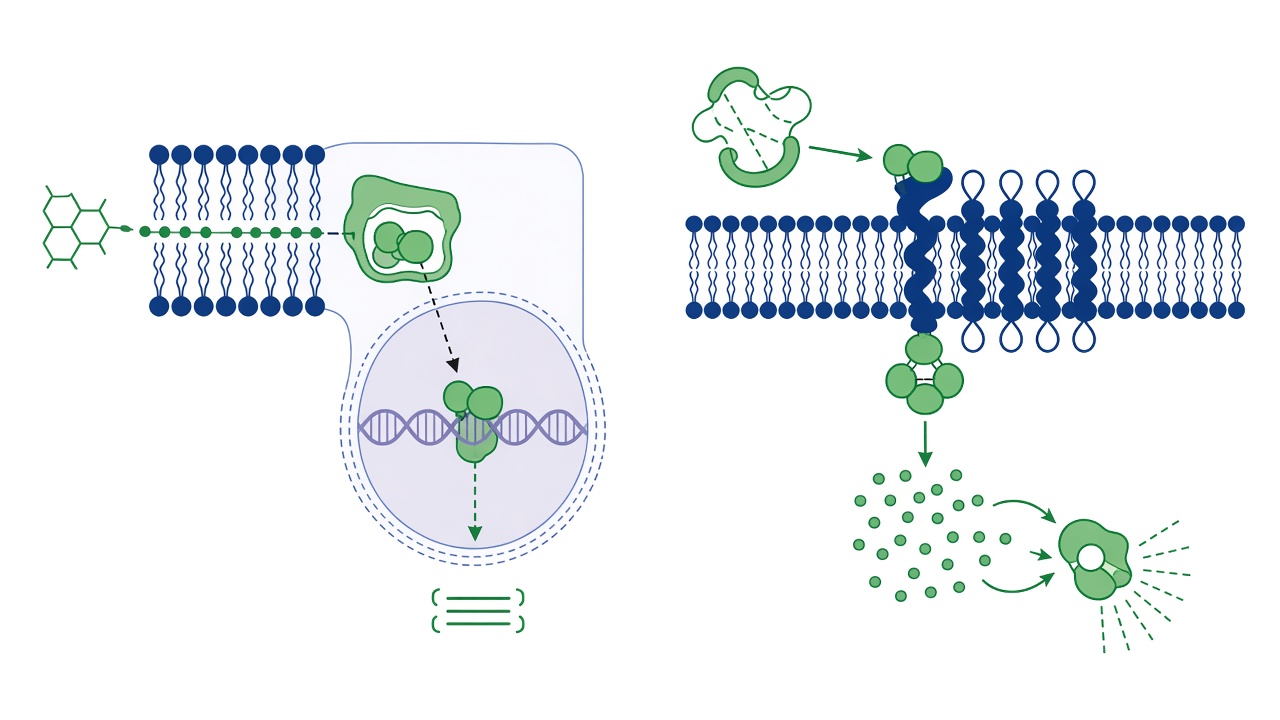
Receptor mechanisms represent one of the most studied differences in amino acid vs peptide hormones. Peptide hormones cannot cross the plasma membrane because of their size and hydrophilicity. They bind to cell surface receptors, which are typically G protein-coupled receptors or receptor tyrosine kinases. Ligand binding triggers intracellular signaling cascades such as cyclic AMP production, calcium mobilization, or kinase phosphorylation. Insulin, for example, activates the insulin receptor tyrosine kinase, leading to glucose transporter translocation. Glucagon binds a G protein-coupled receptor that raises cyclic AMP levels in hepatocytes.
Amino acid-derived hormones show more diversity in receptor location. Catecholamines bind adrenergic receptors on the cell surface, similar to peptide hormones. However, thyroid hormones cross the membrane and bind nuclear receptors that directly regulate gene transcription. This intracellular receptor mechanism is not available to peptide hormones. Understanding receptor location is essential for designing binding assays. Peptide hormone receptor binding is measured on intact cells or membrane preparations, while thyroid hormone receptor binding is often assessed using nuclear extracts.
What Are Key Examples and Functions in Research?
Amino acid-derived hormone examples include epinephrine, norepinephrine, dopamine, serotonin, melatonin, and thyroid hormones (triiodothyronine and thyroxine). These compounds serve as reference standards for neurotransmitter research, metabolic studies, and endocrine pathway analysis. Peptide hormones include insulin, glucagon, growth hormone, oxytocin, vasopressin, adrenocorticotropic hormone, and follicle-stimulating hormone. These peptide hormones are used in receptor binding assays, cell signaling experiments, and enzyme immunoassays. For research on growth hormone fragments, see AOD-9604 Growth Hormone Fragment: Research Peptide Guide (2026).
In laboratory practice, amino acid-derived hormones are frequently used as small-molecule controls in chromatographic method development. Their low molecular weight makes them suitable for liquid chromatography with electrochemical or fluorescence detection. Peptide hormones require different analytical approaches, typically reversed-phase high-performance liquid chromatography coupled to mass spectrometry. This analytical distinction reinforces the need for separate reference standard sets. Researchers comparing amino acid vs peptide hormones should maintain separate stock solutions, calibration curves, and quality control samples.
What Analytical Methods Distinguish These Hormone Classes?
Analytical methods for amino acid vs peptide hormones differ based on molecular size and stability. Small amine hormones are commonly measured by liquid chromatography with electrochemical detection or fluorescence detection after derivatization. Catecholamines, for example, are separated on reversed-phase columns and detected electrochemically at low oxidation potentials. Serotonin and melatonin are detected by fluorescence or mass spectrometry. Thyroid hormones are often analyzed by immunoassay or liquid chromatography-tandem mass spectrometry after protein precipitation.
Peptide hormones require mass spectrometry for unambiguous identification. Matrix-assisted laser desorption/ionization or electrospray ionization coupled to tandem mass spectrometry provides molecular weight and sequence information. Peptide hormone reference standards from suppliers must include a certificate of analysis with chromatographic purity, mass spectrometry verification, and amino acid analysis. For guidance on supplier documentation, see Who Sells Research-Grade Peptide Libraries Online in 2026?. External resources such as peptide hormones on PubMed provide peer-reviewed method references.
💡 Key Takeaway: What Analytical Methods Distinguish These Hormone Classes?
Amino Acid vs Peptide Hormones: Comparison Table
| Feature | Amino Acid-Derived Hormones | Peptide Hormones |
|—|—|—|
| Precursor | Single amino acid (tyrosine or tryptophan) | Gene-encoded preprohormone |
| Molecular weight | ~150–800 Daltons | ~360–30,000+ Daltons |
| Synthesis location | Cytoplasm or secretory vesicles | Rough ER and Golgi apparatus |
| Post-translational modification | Limited (iodination on thyroid hormones) | Glycosylation, phosphorylation, disulfide bonds |
| Solubility | Water-soluble except thyroid hormones (lipid-soluble) | Generally water-soluble |
| Receptor location | Cell surface (catecholamines) or intracellular (thyroid hormones) | Cell surface only |
| Examples | Epinephrine, norepinephrine, dopamine, serotonin, melatonin, T3, T4 | Insulin, glucagon, growth hormone, oxytocin, ACTH, FSH |
| Storage | -80°C with antioxidants for catecholamines | Lyophilized at -20°C for months |

What Experimental Factors Should Laboratories Consider?
Laboratories comparing amino acid vs peptide hormones must consider buffer composition, container material, and stability. Peptide hormones adsorb nonspecifically to polypropylene and glass, so assay buffers often include 0.1% bovine serum albumin or non-ionic detergents. Amino acid-derived catecholamines require acidic pH and antioxidants to prevent oxidation. Thyroid hormones need organic solvent or alkaline conditions for initial dissolution. These differences mean a single generic buffer cannot serve both hormone classes.
Reference standard purity is another experimental factor. Peptide hormones require documented purity of at least 95% by high-performance liquid chromatography, with mass spectrometry confirmation. Amino acid-derived hormone standards should include chromatographic purity and residual solvent information. For peptide hormone research libraries, see Peptide Research Library: Which Suppliers Are Trustworthy in 2026?. Batch-specific certificates of analysis reduce inter-assay variability.
How Do Storage Conditions Differ for These Hormone Classes?
Storage conditions for amino acid vs peptide hormones reflect their distinct chemical stabilities. Catecholamines degrade rapidly at neutral pH and room temperature. Stock solutions should be prepared in acidic buffer with ascorbic acid or sodium metabisulfite, aliquoted, and stored at -80°C under argon or nitrogen. Serotonin and melatonin are light-sensitive and should be stored in amber vials at -20°C. Thyroid hormones are stable as dry powders at -20°C, but once dissolved in dimethyl sulfoxide or alkaline ethanol, they should be aliquoted and frozen.
Peptide hormones are most stable as lyophilized powders stored at -20°C. After reconstitution in sterile buffer, peptide hormones should be aliquoted and stored at -80°C to prevent proteolysis and aggregation. Repeated freeze-thaw cycles should be avoided for both hormone classes. Laboratories working with amino acid vs peptide hormones should maintain separate freezers or clearly labeled boxes to prevent cross-contamination and accidental thawing.
💡 Key Takeaway: How Do Storage Conditions Differ for These Hormone Classes?
Why Peptides Library for Amino Acid vs Peptide Hormones Research?
Peptides Library provides research-grade peptide hormones with documented purity, sequence verification, and batch-specific certificates of analysis. For laboratories comparing amino acid vs peptide hormones, this documentation ensures reproducible receptor binding and enzyme immunoassay results. The peptide hormones offered by Peptides Library are sold strictly for in vitro research use only, not for human or veterinary applications. Researchers can source reference standards with confidence in sequence identity and post-translational modification status.
When selecting a supplier for peptide hormones, laboratories should verify the certificate of analysis includes chromatographic purity, mass spectrometry molecular weight, and amino acid composition. Peptides Library supports this requirement. For additional guidance on peptide research libraries, see Peptide Research Library: Which Suppliers Are Trustworthy in 2026? and Where to Buy a Peptide Research Library with a COA.
FAQ
What is the main difference between amino acid-derived hormones and peptide hormones?
The main difference is molecular size and biosynthetic origin. Amino acid-derived hormones are small molecules synthesized from single amino acid precursors like tyrosine or tryptophan. Peptide hormones are larger chains of amino acids produced by ribosomal translation and post-translational processing.
Are peptide hormones water-soluble?
Yes, nearly all peptide hormones are water-soluble. Their peptide backbone and charged side chains promote solubility in aqueous buffers. This differs from thyroid hormones, which are amino acid-derived but lipid-soluble.
Do peptide hormones bind intracellular receptors?
No, peptide hormones cannot cross the plasma membrane because of their size. They bind cell surface receptors, including G protein-coupled receptors and receptor tyrosine kinases. Only some amino acid-derived hormones, such as thyroid hormones, bind intracellular receptors.
Which analytical method is best for peptide hormones?
Mass spectrometry is the preferred method for peptide hormones. Liquid chromatography-tandem mass spectrometry provides molecular weight and sequence verification. Small amino acid-derived hormones are often analyzed by liquid chromatography with electrochemical or fluorescence detection.
What storage conditions do peptide hormones require?
Peptide hormones are most stable as lyophilized powders at -20°C. After reconstitution, they should be aliquoted and stored at -80°C to prevent proteolysis and aggregation. Avoid repeated freeze-thaw cycles.
Topics covered in this article:
Ready to Take the Next Step?
Every product includes lot-specific documentation and third-party purity testing.
Explore Our Research Products →Free shipping on qualifying orders · Batch COA on request