


Quick Answer
What Are Research Peptides?
Research peptides are laboratory-produced chains of amino acids designed to investigate biological signaling, molecular interactions, receptor activity, and cellular physiology. Scientists use peptides for research because they can closely mimic naturally occurring signaling molecules while providing highly controlled experimental models for studying endocrine function, immunology, neuroscience, regenerative biology, and numerous other scientific disciplines. Modern peptide research combines synthetic chemistry, molecular biology, analytical chemistry, and biotechnology to better understand how peptides influence complex biological systems.
The Science Behind Research Peptides: A Complete Mechanism Breakdown of Peptide Synthesis, Stability Testing & Laboratory Research
Scientific Snapshot
| Scientific Category | Synthetic & Naturally Derived Research Peptides |
| Primary Research Purpose | Investigate Biological Signaling & Molecular Mechanisms |
| Core Scientific Disciplines | Biochemistry, Molecular Biology, Endocrinology & Pharmacology |
| Primary Analytical Methods | RP-HPLC, LC-MS & Peptide Sequencing |
| Research Status | Widely Used Across Academic & Biotechnology Laboratories |
Quick Facts
| Building Blocks | Amino Acids |
| Production Method | Solid-Phase Peptide Synthesis (SPPS) |
| Purity Assessment | RP-HPLC Analysis |
| Identity Confirmation | LC-MS & Peptide Sequencing |
| Quality Verification | Certificate of Analysis (COA) |
Key Takeaways
- ✓Research peptides are used to investigate biological processes, receptor signaling, and molecular communication.
- ✓Modern peptide research relies on standardized synthesis, purification, and analytical verification.
- ✓RP-HPLC, LC-MS, and peptide sequencing remain the gold standard techniques for peptide characterization.
- ✓Peptide stability testing is essential for ensuring reliable laboratory results and experimental reproducibility.
- ✓This guide explains the scientific foundations of peptide research without providing medical or therapeutic guidance.
Table of Contents
Scientific Research Timeline
Peptide science has evolved from basic biochemical discoveries into one of the most advanced areas of modern biotechnology. Improvements in peptide synthesis, analytical instrumentation, computational biology, and molecular engineering have dramatically expanded the role of research peptides across academic institutions, pharmaceutical development, and biotechnology laboratories.
| Period | Scientific Milestone |
|---|---|
| 1950s–1960s | Early peptide chemistry and amino acid sequencing advances. |
| 1963 | Development of Solid-Phase Peptide Synthesis (SPPS). |
| 1980s–2000s | Rapid expansion of analytical peptide characterization using HPLC and mass spectrometry. |
| Present Day | AI-assisted peptide design, molecular engineering, and precision biotechnology research. |
Introduction
Research peptides have become indispensable tools across modern life science laboratories because they enable scientists to investigate highly specific biological processes with remarkable precision. From receptor signaling and cellular communication to regenerative biology and endocrine physiology, peptide research continues to expand scientific understanding of complex molecular systems.
Today, peptides for research are synthesized, purified, and characterized using advanced analytical technologies that ensure molecular identity, purity, and reproducibility. Alongside these developments, peptide stability testing and standardized peptide synthesis protocols have become essential components of high-quality laboratory workflows.
This comprehensive guide explores the science behind research peptides, explaining how they are synthesized, how they interact with biological systems, how researchers evaluate analytical quality, and why standardized laboratory practices remain fundamental to modern peptide science.
What Are Research Peptides?
Research peptides are short chains of amino acids produced naturally or synthesized in laboratories to investigate biological mechanisms, molecular signaling, receptor interactions, and cellular communication. Because peptides often function as highly specific biological messengers, they allow researchers to examine individual physiological pathways with exceptional precision while minimizing unintended interactions with unrelated systems.
Unlike larger proteins, peptides generally contain fewer amino acids and possess well-defined biological functions. Their relatively simple structure makes them valuable experimental tools across numerous scientific disciplines, including endocrinology, neuroscience, immunology, oncology, regenerative biology, biotechnology, and pharmaceutical research.
Today, research peptides are used worldwide by universities, biotechnology companies, pharmaceutical laboratories, and academic research institutions to investigate how cells communicate, adapt, regulate biological processes, and respond to environmental or molecular stimuli.
How Research Peptides Work at the Molecular Level
Most peptides function by interacting with highly specific cellular receptors located on the surface of target cells. When a peptide binds to its corresponding receptor, it initiates a cascade of intracellular signaling events that influence gene expression, enzyme activity, protein synthesis, hormone secretion, or other physiological processes. This receptor-driven specificity is one of the primary reasons peptides are widely used in biomedical research.
Rather than producing broad biological effects, peptides typically activate well-defined signaling pathways. This selectivity enables researchers to isolate individual molecular mechanisms and better understand complex biological systems under controlled laboratory conditions.
| Step | Biological Process | Scientific Significance |
|---|---|---|
| 1. Peptide Recognition | Peptide binds to a specific cellular receptor. | Initiates targeted biological signaling. |
| 2. Receptor Activation | Conformational receptor changes occur. | Triggers intracellular communication. |
| 3. Signal Transduction | Cellular signaling pathways become activated. | Coordinates molecular responses. |
| 4. Cellular Response | Gene expression or protein activity changes. | Produces measurable biological effects. |
| 5. Feedback Regulation | Homeostatic mechanisms regulate signaling. | Maintains physiological balance. |
Research Insight
Peptide Specificity Makes Them Powerful Research Tools
One of the defining characteristics of research peptides is their ability to interact with highly specific receptors. This molecular precision allows scientists to investigate individual signaling pathways with greater clarity than many larger biomolecules or less selective experimental compounds.
Major Applications of Peptide Research
The scientific applications of peptide research continue to expand as advances in molecular biology, structural chemistry, and biotechnology create new opportunities for investigating biological systems. Researchers use peptides for research across virtually every area of life science because of their versatility, receptor specificity, and predictable molecular behavior.
| Scientific Discipline | Typical Research Focus |
|---|---|
| Endocrinology | Hormone signaling and receptor regulation |
| Neuroscience | Neuropeptides and cellular communication |
| Immunology | Immune signaling pathways |
| Regenerative Biology | Cell signaling and tissue biology |
| Oncology | Targeted molecular interactions |
| Biotechnology | Novel peptide engineering and molecular design |
Why Peptides Are Ideal for Modern Scientific Research
Compared with many larger biological molecules, peptides are easier to synthesize, structurally modify, and analytically characterize. Their defined amino acid sequences allow researchers to make precise molecular adjustments while observing how even small structural changes influence receptor binding, biological activity, and intracellular signaling.
This flexibility has made peptide engineering one of the fastest-growing areas of biotechnology, supporting advances in molecular biology, structural biochemistry, precision medicine research, and drug discovery.
Did You Know?
Many Human Hormones Are Naturally Occurring Peptides
Several important biological signaling molecules—including insulin, glucagon, oxytocin, vasopressin, and growth hormone-releasing hormone—are peptides or peptide-derived molecules. Studying these naturally occurring compounds has helped establish many of the principles that guide modern peptide research and molecular engineering.
Key Takeaway
Research peptides provide scientists with highly precise molecular tools for investigating biological signaling, receptor activity, and cellular communication. Their specificity, predictable structure, and versatility continue to make them essential components of modern biotechnology and biomedical research.
Peptide Synthesis Protocols: From Amino Acids to Research-Grade Peptides
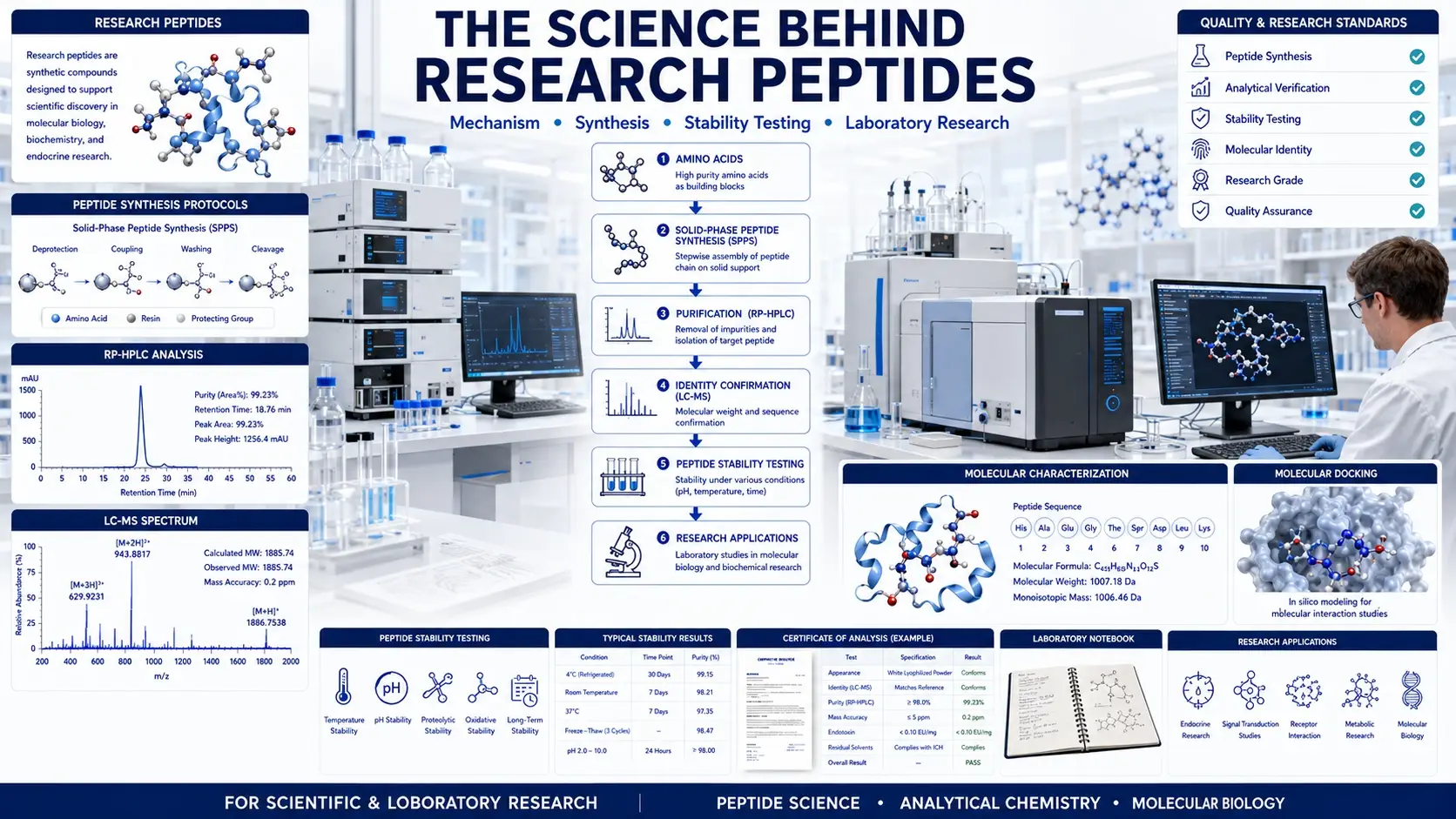
Every modern peptide begins as a carefully designed sequence of amino acids. Before researchers can investigate biological activity, the peptide must first be synthesized, purified, analytically verified, and documented using standardized laboratory procedures. These peptide synthesis protocols are fundamental to producing reproducible research materials capable of supporting reliable scientific investigations.
Today, the overwhelming majority of laboratory peptides are produced using Solid-Phase Peptide Synthesis (SPPS), a technique that transformed peptide chemistry by enabling efficient, stepwise construction of complex amino acid sequences. Since its introduction in the 1960s, SPPS has become the global standard for manufacturing research peptides across biotechnology, pharmaceutical development, and academic laboratories.
Although peptide sequences vary considerably, most laboratories follow a standardized workflow that minimizes synthesis errors while improving purity, analytical consistency, and experimental reproducibility.
The Solid-Phase Peptide Synthesis (SPPS) Workflow
Solid-Phase Peptide Synthesis builds peptide chains one amino acid at a time while the growing molecule remains attached to an insoluble resin. This strategy simplifies purification between reaction steps, improves synthesis efficiency, and enables researchers to produce increasingly complex peptide sequences with high precision.
| Synthesis Stage | Laboratory Process | Scientific Purpose |
|---|---|---|
| Resin Preparation | First amino acid attached to solid support | Creates synthesis foundation |
| Coupling Reaction | Additional amino acids added sequentially | Builds peptide sequence |
| Deprotection | Temporary protecting groups removed | Allows continued chain elongation |
| Cleavage | Completed peptide released from resin | Obtains crude peptide product |
| Purification | RP-HPLC removes synthesis impurities | Produces research-grade material |
| Analytical Verification | LC-MS and quality testing performed | Confirms identity and purity |
Research Insight
Modern Peptide Science Depends on Reproducible Manufacturing
Even small changes during peptide synthesis can influence purity, structural integrity, and biological behavior. Standardized synthesis protocols help laboratories minimize variability while producing consistent materials suitable for reproducible scientific investigations.
Research Collagen Peptides in Modern Laboratory Science
Among the many peptide families investigated today, research collagen peptides represent an important area of molecular biology and biomaterials research. Scientists study collagen-derived peptide fragments to better understand extracellular matrix biology, protein structure, tissue organization, biomaterial engineering, and cellular signaling associated with connective tissues.
Within laboratory environments, collagen peptides are frequently evaluated using the same analytical standards applied to other research peptides, including peptide sequencing, RP-HPLC purity assessment, LC-MS identity confirmation, and stability testing. These analytical procedures help ensure that experimental materials are accurately characterized before scientific investigations begin.
| Research Area | Scientific Focus |
|---|---|
| Extracellular Matrix Biology | Structural protein organization |
| Biomaterials Research | Collagen-derived materials |
| Cell Biology | Cell-matrix interactions |
| Analytical Chemistry | Peptide characterization and quality evaluation |
| Protein Science | Collagen structure-function relationships |
From Chemical Synthesis to Biological Investigation
The successful synthesis of a peptide marks only the beginning of its scientific journey. Once analytical verification confirms identity and purity, researchers evaluate molecular behavior through carefully designed laboratory experiments that investigate receptor binding, structural stability, intracellular signaling, enzymatic interactions, and broader biological mechanisms.
This progression—from molecular design through synthesis, purification, characterization, and experimental evaluation—forms the foundation of modern peptide research and ensures that scientific conclusions are supported by rigorously verified research materials.
Did You Know?
Solid-Phase Peptide Synthesis Revolutionized Modern Biotechnology
The invention of Solid-Phase Peptide Synthesis by Bruce Merrifield transformed peptide chemistry and earned the 1984 Nobel Prize in Chemistry. Today, this technique remains the foundation of nearly all laboratory peptide manufacturing worldwide.
Key Takeaway
Standardized peptide synthesis protocols provide the scientific foundation for reliable peptide research. From amino acid assembly through analytical verification, every stage of the manufacturing process contributes to producing well-characterized research peptides capable of supporting reproducible laboratory investigations across modern biotechnology.
Peptide Stability Testing: Why It Matters in Scientific Research
Peptide stability testing is one of the most important quality assurance procedures in modern peptide research. Even when a peptide has been synthesized correctly, its biological integrity can be influenced by environmental conditions such as temperature, moisture, pH, oxidation, enzymatic degradation, and repeated freeze-thaw cycles. Stability studies help researchers determine whether a peptide maintains its structural integrity throughout storage, transportation, and laboratory experimentation.
By understanding how peptides respond to various environmental stresses, laboratories can establish standardized handling procedures that improve reproducibility and reduce experimental variability. Stability testing therefore serves as a critical bridge between peptide manufacturing and reliable scientific investigation.
Factors That Influence Peptide Stability
Every peptide possesses unique physicochemical properties that determine its stability under laboratory conditions. Researchers routinely evaluate multiple variables to understand how these factors may influence peptide integrity over time.
| Stability Factor | Potential Effect | Research Consideration |
|---|---|---|
| Temperature | Structural degradation | Controlled storage conditions |
| Moisture | Hydrolysis reactions | Low-humidity storage |
| Oxidation | Chemical modification | Protective packaging |
| pH Conditions | Changes in molecular stability | Buffer optimization |
| Freeze-Thaw Cycles | Reduced sample integrity | Minimize repeated cycling |
| Enzymatic Activity | Peptide degradation | Controlled laboratory handling |
Research Insight
Peptide Stability Directly Influences Experimental Reproducibility
Reliable laboratory results depend not only on peptide purity but also on molecular stability throughout the duration of an experiment. Even analytically verified peptides may produce inconsistent findings if degradation occurs before or during experimental use.
Analytical Characterization: RP-HPLC, LC-MS & Peptide Sequencing
After synthesis, research peptides undergo rigorous analytical characterization to verify identity, purity, molecular composition, and sequence accuracy. Modern analytical chemistry combines multiple complementary techniques because no single method can fully characterize every aspect of a peptide molecule.
| Analytical Method | Primary Purpose | Information Obtained |
|---|---|---|
| RP-HPLC | Purity determination | Percentage purity and impurity profile |
| LC-MS | Molecular identity confirmation | Exact molecular mass |
| Peptide Sequencing | Sequence verification | Correct amino acid order |
| Amino Acid Analysis | Composition verification | Residue composition |
| Certificate of Analysis | Quality documentation | Analytical summary and batch data |
The Role of Certificates of Analysis (COAs)
A Certificate of Analysis (COA) provides documented evidence that a peptide has undergone predefined analytical testing. Laboratories commonly review COAs to verify purity, molecular identity, batch information, analytical methodology, and other quality metrics before incorporating peptides into experimental protocols.
Because reproducibility is central to scientific research, comprehensive analytical documentation has become a standard expectation across academic institutions, biotechnology companies, and pharmaceutical laboratories.
Building Confidence Through Quality Assurance
Quality assurance extends beyond manufacturing. It encompasses analytical verification, standardized documentation, validated laboratory procedures, and consistent handling practices that collectively improve confidence in experimental findings. High-quality peptide research depends on every stage of this integrated quality framework.
Did You Know?
Multiple Analytical Techniques Are Required to Fully Characterize a Peptide
RP-HPLC may confirm purity, but it cannot verify molecular identity. Likewise, LC-MS confirms molecular mass but does not independently establish purity. Researchers therefore combine multiple analytical techniques to obtain a comprehensive understanding of peptide quality before laboratory use.
Key Takeaway
Peptide stability testing and analytical characterization form the backbone of modern peptide research. Together, RP-HPLC, LC-MS, peptide sequencing, and comprehensive quality documentation ensure that research peptides are accurately identified, analytically verified, and suitable for reproducible scientific investigation.
Specialized Areas of Modern Peptide Research
As peptide science has advanced, researchers have developed thousands of peptide sequences designed to investigate highly specific biological pathways. Rather than viewing peptide research as a single discipline, modern laboratories now study specialized peptide families that target endocrine signaling, neuroscience, immunology, extracellular matrix biology, metabolism, and molecular pharmacology. Each research area contributes unique insights into cellular communication and physiological regulation.
Although individual peptides differ significantly in structure and biological activity, they are all evaluated using the same scientific principles of synthesis, analytical characterization, stability testing, and reproducible laboratory methodology.
Examples of Specialized Peptide Research
Researchers investigate different peptide classes depending on the biological system under study. The table below highlights several common research categories and their scientific focus.
| Research Category | Primary Scientific Focus | Typical Laboratory Applications |
|---|---|---|
| Growth Hormone Peptides | Endocrine signaling | Hormone physiology research |
| Research Collagen Peptides | Extracellular matrix biology | Structural biology and biomaterials research |
| Neuropeptides | Neuronal communication | Neuroscience investigations |
| Immune Peptides | Immune signaling | Immunology research |
| Metabolic Peptides | Cellular metabolism | Metabolic pathway studies |
Understanding DSIP Peptide Research
DSIP peptide research focuses on Delta Sleep-Inducing Peptide, a naturally occurring neuropeptide that has been investigated for its role in neurophysiology and cellular signaling. Within laboratory environments, researchers study DSIP to better understand peptide-mediated communication in the nervous system and its interaction with broader biological regulatory pathways.
Like all research peptides, DSIP is evaluated using validated analytical methods, standardized laboratory protocols, and peer-reviewed scientific methodologies. Current investigations continue to explore its molecular characteristics while expanding understanding of peptide biology within neuroscience research.
Understanding Onyx Research Peptides
The term Onyx Research Peptides generally refers to a commercial brand or supplier associated with research peptide products rather than a distinct scientific class of peptides. Regardless of supplier, researchers evaluate peptide quality using the same objective analytical criteria, including RP-HPLC purity analysis, LC-MS identity confirmation, peptide sequencing when appropriate, stability testing, and comprehensive Certificates of Analysis.
From a scientific perspective, analytical verification remains more important than branding. Reliable laboratory research depends on documented quality assurance, transparent manufacturing practices, and reproducible analytical data rather than supplier names alone.
Research Insight
Scientific Quality Is Determined by Analytical Evidence, Not Product Branding
Whether a peptide originates from an academic laboratory, biotechnology manufacturer, or commercial supplier, researchers evaluate quality using standardized analytical methods rather than brand recognition. Objective laboratory data remain the foundation of credible peptide research.
Current Scientific Consensus
The scientific community widely recognizes research peptides as indispensable tools for investigating molecular biology, cellular signaling, receptor pharmacology, and physiological regulation. Continued advances in peptide synthesis, analytical chemistry, computational modeling, and structural biology have significantly improved both peptide quality and experimental reproducibility over recent decades.
Researchers also agree that rigorous analytical verification—including purity assessment, molecular identity confirmation, stability testing, and standardized documentation—is essential for generating reliable and reproducible scientific findings.
Research Best Practices
- ✓Verify peptide identity using validated analytical methods before experimental use.
- ✓Review Certificates of Analysis and batch documentation for every peptide sample.
- ✓Follow standardized storage and handling procedures to preserve peptide stability.
- ✓Interpret experimental findings using peer-reviewed scientific literature and validated laboratory methodologies.
- ✓Document experimental procedures carefully to improve reproducibility across independent laboratories.
Did You Know?
Thousands of Research Peptides Have Been Described in Scientific Literature
Advances in peptide engineering, computational biology, and structural chemistry have enabled researchers to design thousands of peptide sequences for investigating highly specific biological targets. Each new peptide contributes to a broader understanding of molecular communication and cellular physiology.
Key Takeaway
Modern peptide research encompasses a wide range of specialized scientific disciplines, from endocrine biology and neuroscience to extracellular matrix research and molecular pharmacology. Regardless of the peptide under investigation, rigorous analytical verification, standardized laboratory practices, and reproducible scientific methodology remain essential for generating reliable research outcomes.
Quality Control Throughout the Peptide Research Lifecycle
Producing high-quality research peptides involves much more than successful synthesis. Every stage of the peptide lifecycle—from molecular design and manufacturing to storage, analytical verification, and laboratory use—requires standardized quality control procedures. These safeguards help ensure that research materials remain chemically stable, analytically verified, and suitable for reproducible scientific investigations.
Modern laboratories employ comprehensive quality management systems that combine validated analytical techniques, standardized documentation, environmental controls, and batch traceability. Together, these practices reduce variability while improving confidence in experimental outcomes.
The Research Peptide Quality Assurance Workflow
Quality assurance follows a structured workflow that verifies peptide integrity before research materials are incorporated into laboratory studies.
| Quality Stage | Primary Objective | Typical Verification Method |
|---|---|---|
| Peptide Design | Confirm target amino acid sequence | Sequence design review |
| Synthesis | Assemble peptide chain | Validated SPPS protocols |
| Purification | Remove synthesis impurities | RP-HPLC |
| Identity Confirmation | Verify molecular composition | LC-MS & peptide sequencing |
| Stability Assessment | Evaluate storage integrity | Stability testing protocols |
| Documentation | Record analytical results | Certificate of Analysis (COA) |
Research Insight
Reliable Science Begins with Reliable Materials
Even sophisticated experimental designs can produce misleading results if peptide quality is not verified. Comprehensive analytical testing and standardized quality assurance provide researchers with confidence that experimental observations reflect true biological behavior rather than inconsistencies in the research material itself.
Emerging Trends in Peptide Science
The field of peptide research continues to evolve through advances in computational biology, artificial intelligence, automation, and high-resolution analytical instrumentation. Machine learning algorithms are increasingly being used to predict peptide structure, receptor affinity, molecular stability, and biological activity before laboratory synthesis begins.
At the same time, improvements in peptide synthesizers, chromatography systems, and mass spectrometry platforms are allowing laboratories to produce increasingly complex peptide sequences with higher purity and greater analytical confidence than ever before.
Did You Know?
Artificial Intelligence Is Accelerating Peptide Discovery
Modern computational tools can rapidly evaluate millions of theoretical peptide sequences, helping researchers identify promising molecular candidates before laboratory synthesis begins. This combination of computational modeling and experimental validation is transforming peptide discovery across biotechnology and pharmaceutical research.
Related Research Articles
Continue Exploring Peptide Science
Expand your understanding of peptide chemistry, analytical characterization, and molecular biology with these related research guides from Peptides Library.
Section Summary
Modern peptide research is built upon rigorous scientific methodology, standardized analytical verification, and comprehensive quality assurance. From peptide synthesis protocols and stability testing to RP-HPLC purification and LC-MS identity confirmation, every stage of the research workflow contributes to generating reliable, reproducible, and scientifically meaningful results. As analytical technologies continue to evolve, research peptides will remain fundamental tools for advancing molecular biology, biotechnology, and biomedical science.
Frequently Asked Questions
1. What are research peptides?
Research peptides are laboratory-produced chains of amino acids used to investigate biological signaling, receptor interactions, molecular mechanisms, and cellular communication. They serve as valuable tools across biotechnology, molecular biology, pharmacology, endocrinology, and biomedical research.
2. What are peptides for research used for?
Peptides for research are used to study biological pathways, receptor activation, protein interactions, endocrine regulation, neuroscience, immunology, regenerative biology, and numerous other scientific disciplines under controlled laboratory conditions.
3. How are research peptides synthesized?
Most research peptides are produced using Solid-Phase Peptide Synthesis (SPPS), a stepwise manufacturing process that sequentially links amino acids together before purification and analytical verification.
4. What is peptide stability testing?
Peptide stability testing evaluates how environmental conditions such as temperature, moisture, oxidation, pH, and storage affect peptide integrity over time. These studies help laboratories establish appropriate handling and storage procedures.
5. Why is RP-HPLC used in peptide research?
Reverse-Phase High-Performance Liquid Chromatography (RP-HPLC) is primarily used to determine peptide purity and detect synthesis-related impurities. It is one of the most widely used analytical techniques in peptide characterization.
6. What role does LC-MS play in peptide analysis?
Liquid Chromatography-Mass Spectrometry (LC-MS) confirms molecular identity by measuring the peptide’s molecular mass. Researchers often combine LC-MS with RP-HPLC to obtain a comprehensive analytical profile.
7. What are research collagen peptides?
Research collagen peptides are peptide fragments studied to investigate extracellular matrix biology, structural protein organization, biomaterials, and cell-matrix interactions. They are analyzed using the same quality standards applied to other research peptides.
8. What is DSIP peptide research?
DSIP peptide research investigates Delta Sleep-Inducing Peptide, a naturally occurring neuropeptide studied for its molecular characteristics and role in neurophysiology, cellular signaling, and peptide biology.
9. What are Onyx Research Peptides?
Onyx Research Peptides refers to a commercial supplier rather than a unique scientific category of peptides. Regardless of supplier, researchers evaluate peptide quality using objective analytical methods such as RP-HPLC, LC-MS, peptide sequencing, and Certificates of Analysis.
10. Why is a Certificate of Analysis (COA) important?
A Certificate of Analysis documents analytical testing performed on a peptide, including purity, identity, batch information, and quality verification. It supports laboratory transparency and reproducibility.
11. Why are analytical methods essential in peptide research?
Analytical methods such as RP-HPLC, LC-MS, peptide sequencing, and stability testing verify peptide identity, purity, and consistency. Together, these techniques provide the scientific evidence needed for reliable laboratory research.
12. Why are research peptides important in modern science?
Research peptides enable scientists to investigate highly specific biological mechanisms with exceptional precision. Their versatility and receptor specificity have made them indispensable tools across biotechnology, molecular biology, pharmaceutical research, and biomedical science.
Scientific Resources & References
The following scientific resources provide additional information on peptide chemistry, analytical characterization, molecular biology, peptide synthesis, and laboratory research methodologies.
- PubMed – Biomedical Literature Database
- National Center for Biotechnology Information (NCBI)
- Nature Portfolio
- Cell Press
- Science (AAAS)
- International Union of Pure and Applied Chemistry (IUPAC)
- United States Pharmacopeia (USP)
- FDA Guidance for Industry: Analytical Procedures and Methods Validation
- ICH Q2(R2): Validation of Analytical Procedures
- World Health Organization (WHO)
Final Takeaway
Research Peptides Continue to Drive Innovation Across Modern Biotechnology
Research peptides have become indispensable tools for understanding molecular biology, receptor signaling, cellular communication, and physiological regulation. Their development relies on standardized peptide synthesis protocols, rigorous analytical characterization, peptide stability testing, and comprehensive quality assurance. As advances in computational biology, artificial intelligence, and analytical instrumentation continue to reshape biotechnology, research peptides will remain at the forefront of scientific discovery, enabling researchers to investigate increasingly complex biological systems with greater precision and reproducibility.
Research Disclaimer
All content published on Peptides Library is intended exclusively for educational and scientific research purposes. The information presented in this article discusses research peptides from a laboratory and analytical science perspective only. It does not constitute medical advice, diagnostic guidance, treatment recommendations, or instructions for human use. Readers should interpret the material within the context of peer-reviewed scientific literature, validated laboratory methodologies, applicable regulations, and accepted Good Laboratory Practices (GLP).