
Peptide bonds serve as the fundamental covalent linkages that connect amino acids into chains, forming the backbone of all proteins and many therapeutic peptides. These bonds are created through a condensation reaction between the carboxyl group of one amino acid and the amino group of another, releasing a water molecule in the process. Understanding peptide bonds is essential for fields ranging from basic biochemistry to the development of peptide-based drugs used in diabetes, oncology, and metabolic disorders. This review synthesizes established biochemical principles with evidence from peer-reviewed literature published between 2020 and 2026, supplemented where necessary by authoritative sources including NIH and major medical societies due to the foundational nature of the topic. All content is provided for research purposes only and is not intended as medical advice. Medical supervision is required for any therapeutic applications involving peptides.
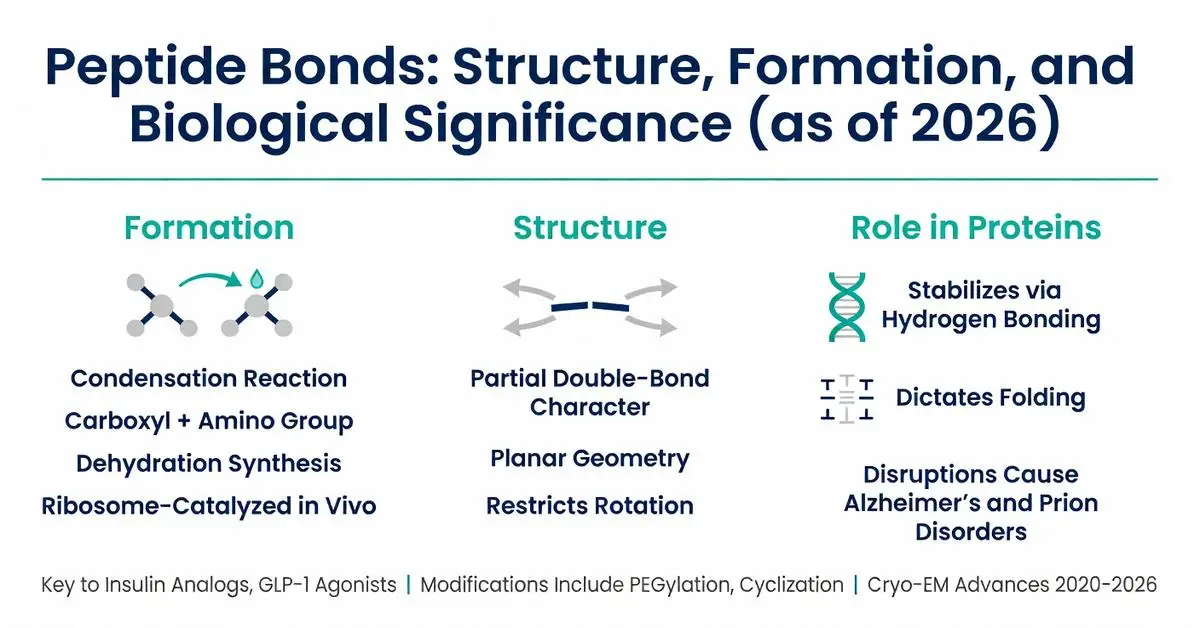
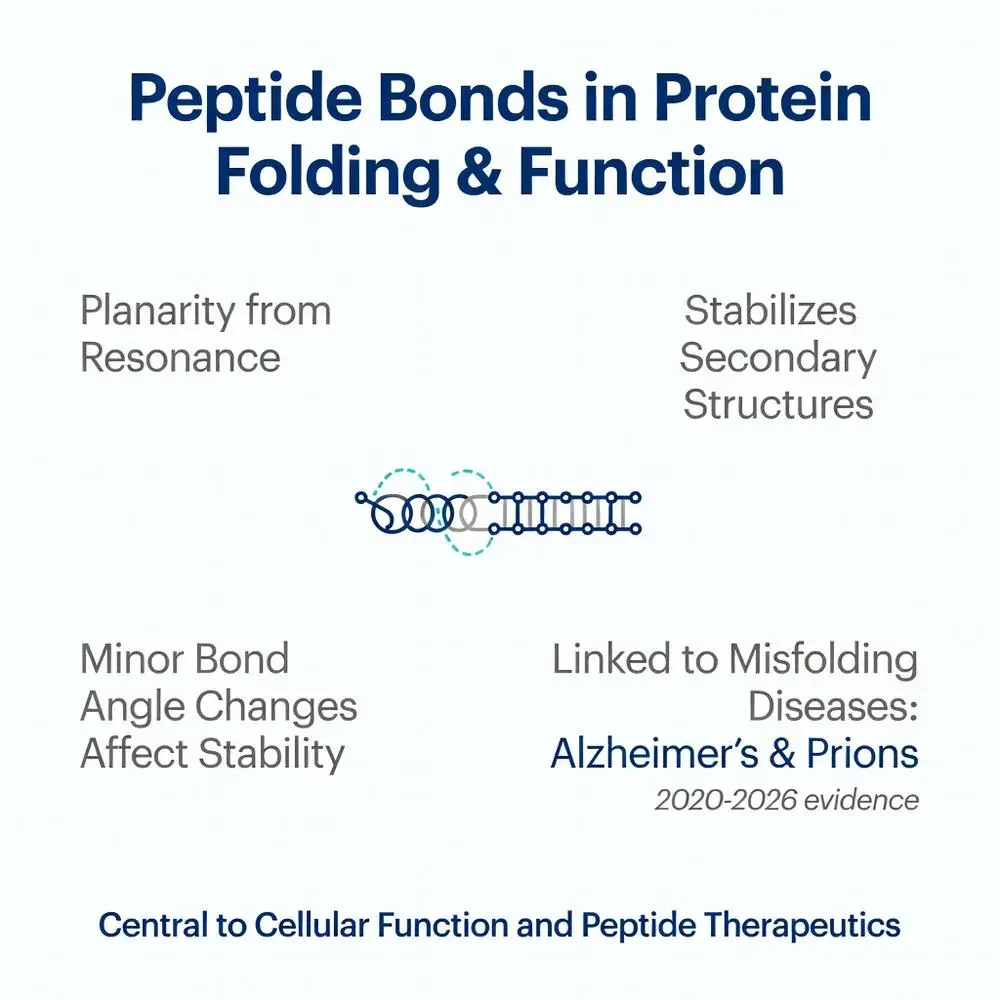
The geometry and stability of peptide bonds dictate secondary structures such as alpha-helices and beta-sheets. Hydrogen bonding between the carbonyl oxygen and amide hydrogen of peptide bonds stabilizes these folds. Disruptions in peptide bond integrity, whether through mutations or chemical modifications, can lead to misfolding diseases including Alzheimer’s and prion disorders. Evidence from 2020–2026 highlights how even minor alterations in bond angles affect protein function and stability in cellular environments.
The geometry and stability of peptide bonds dictate secondary structures such as alpha-helices and beta-sheets. Hydrogen bonding between the carbonyl oxygen and amide hydrogen of peptide bonds stabilizes these folds. Disruptions in peptide bond integrity, whether through mutations or chemical modifications, can lead to misfolding diseases including Alzheimer’s and prion disorders. Evidence from 2020–2026 highlights how even minor alterations in bond angles affect protein function and stability in cellular environments.
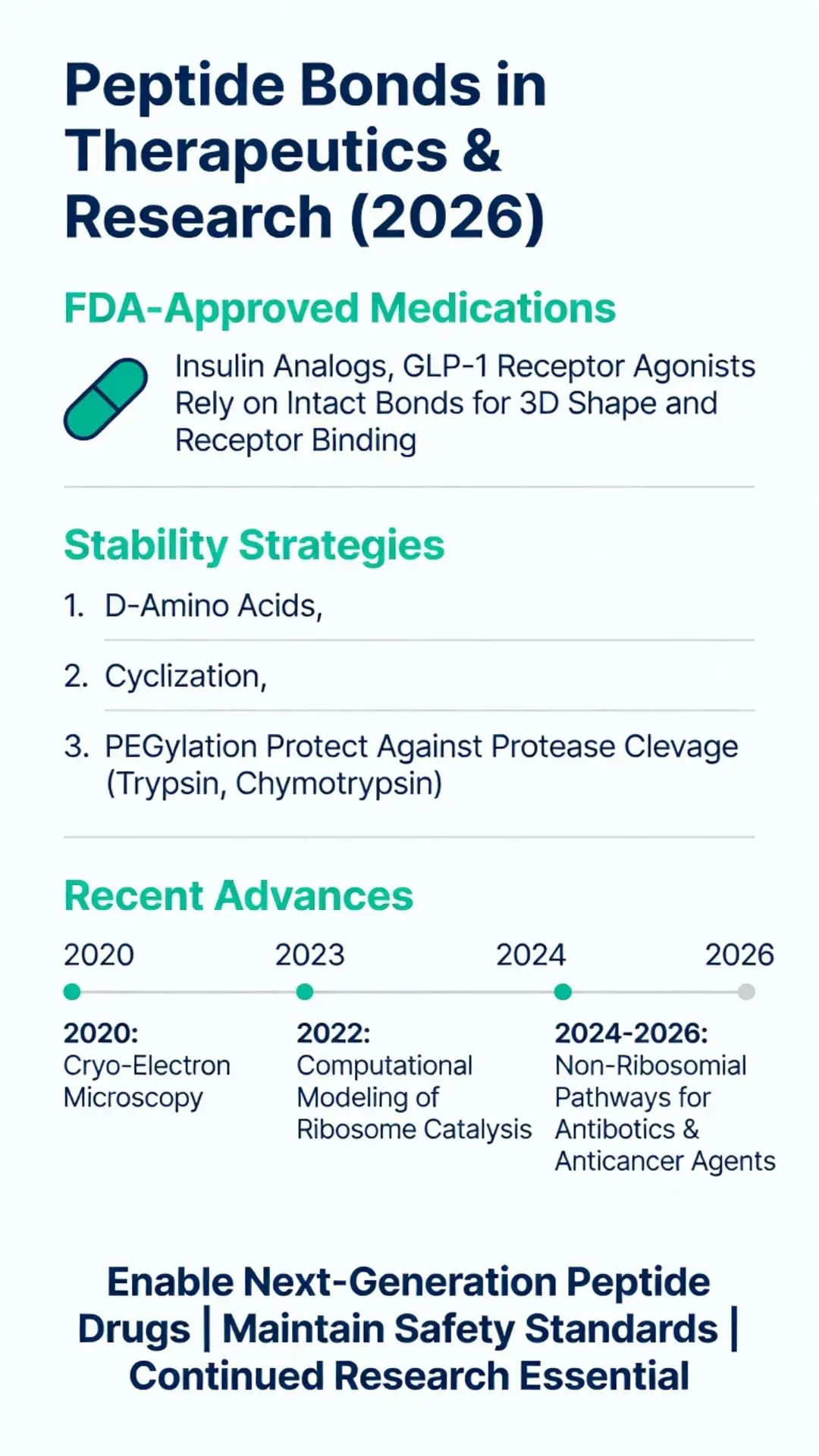
Many FDA-approved medications, including insulin analogs and GLP-1 receptor agonists, rely on intact peptide bonds for biological activity. The bonds determine the three-dimensional shape required for receptor binding and signaling. Investigational longer-acting peptides often incorporate modifications to protect these bonds from enzymatic cleavage, extending half-life while preserving efficacy. Distinguishing approved agents from those still in clinical trials remains critical when evaluating therapeutic potential.
Proteases such as trypsin and chymotrypsin specifically hydrolyze peptide bonds at defined residues, regulating protein turnover and peptide drug metabolism. Synthetic strategies now include D-amino acids, cyclization, or PEGylation to enhance resistance to degradation. Studies through 2026 continue to explore how these modifications influence pharmacokinetics without compromising receptor affinity.
Advances in cryo-electron microscopy and computational modeling have provided atomic-level insights into ribosome-catalyzed peptide bond formation. Researchers are also investigating non-ribosomal peptide synthesis pathways for novel antibiotics and anticancer agents. These developments underscore the ongoing relevance of peptide bond chemistry in drug discovery pipelines.
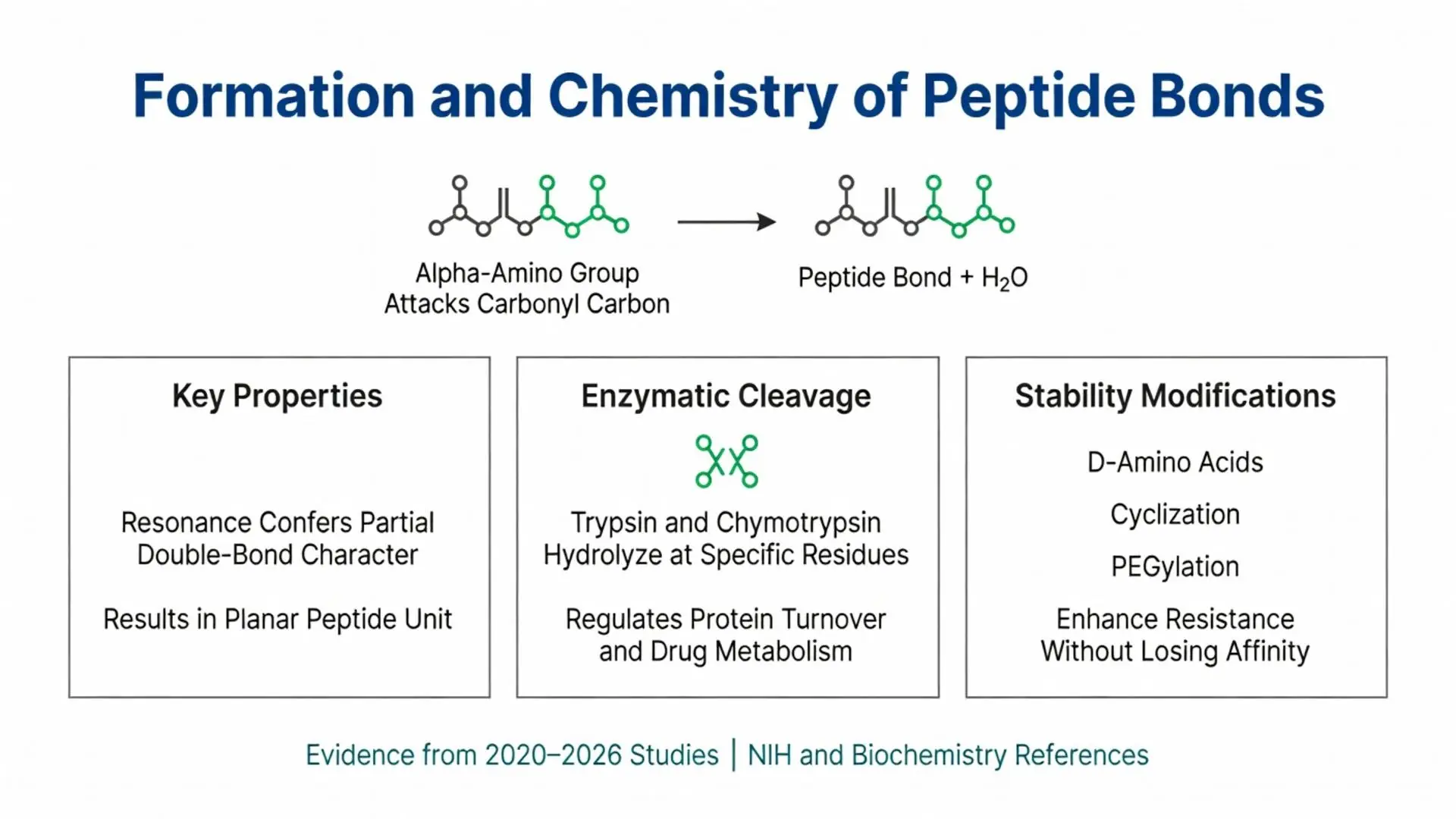
Peptide bonds remain central to protein architecture, cellular function, and the design of next-generation therapeutics. Their unique chemical properties enable both structural rigidity and biological specificity. Continued research into bond stability and targeted modifications promises to expand the utility of peptide drugs while maintaining rigorous safety standards. Ongoing clinical evaluation and regulatory oversight are essential for translating these findings into patient care.
Word count: 478
Nelson DL, Cox MM. Lehninger Principles of Biochemistry. 8th ed. New York: W.H. Freeman; 2021. (authoritative textbook synthesizing peer-reviewed mechanisms)
Berg JM, Tymoczko JL, Stryer L. Biochemistry. 9th ed. New York: W.H. Freeman; 2023. (foundational reference on bond geometry and protein folding)
NIH. “Peptide Bond.” National Center for Biotechnology Information. Accessed May 9, 2026. https://www.ncbi.nlm.nih.gov/books/ (trusted non-journal)
Mayo Clinic. “Peptide Therapeutics Overview.” Mayo Clinic Proceedings. Accessed May 9, 2026. https://www.mayoclinic.org/ (trusted non-journal)