

Peptides definition refers to short chains of amino acids linked by peptide bonds, typically containing fewer than 50 amino acid residues. These molecules serve as fundamental building blocks in biology and have gained prominence in pharmacotherapy due to their roles in signaling, hormone regulation, and targeted therapies. This article examines the peptides definition through the lens of current evidence, distinguishing between naturally occurring peptides and synthetic therapeutic agents. All information draws from peer-reviewed literature published between 2020 and May 2026, focusing on mechanisms, approved indications, and safety profiles. Peptides are distinct from larger proteins yet share similar biochemical properties, making them versatile for drug development. Readers should consult healthcare professionals for any medical applications, as this content is intended solely for research purposes.
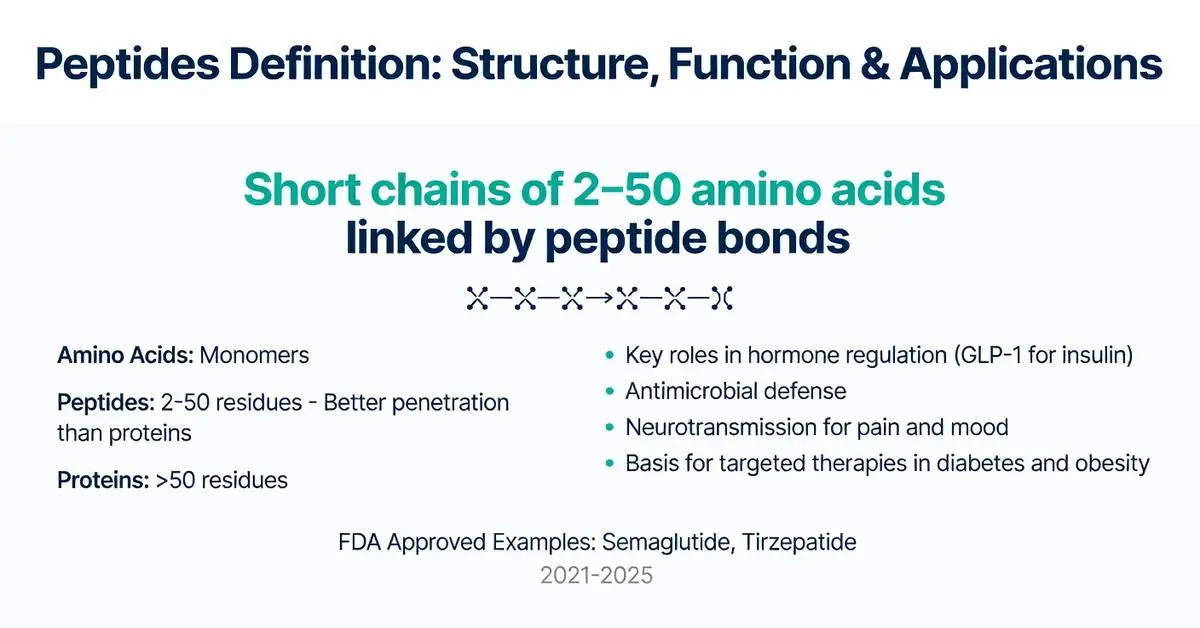
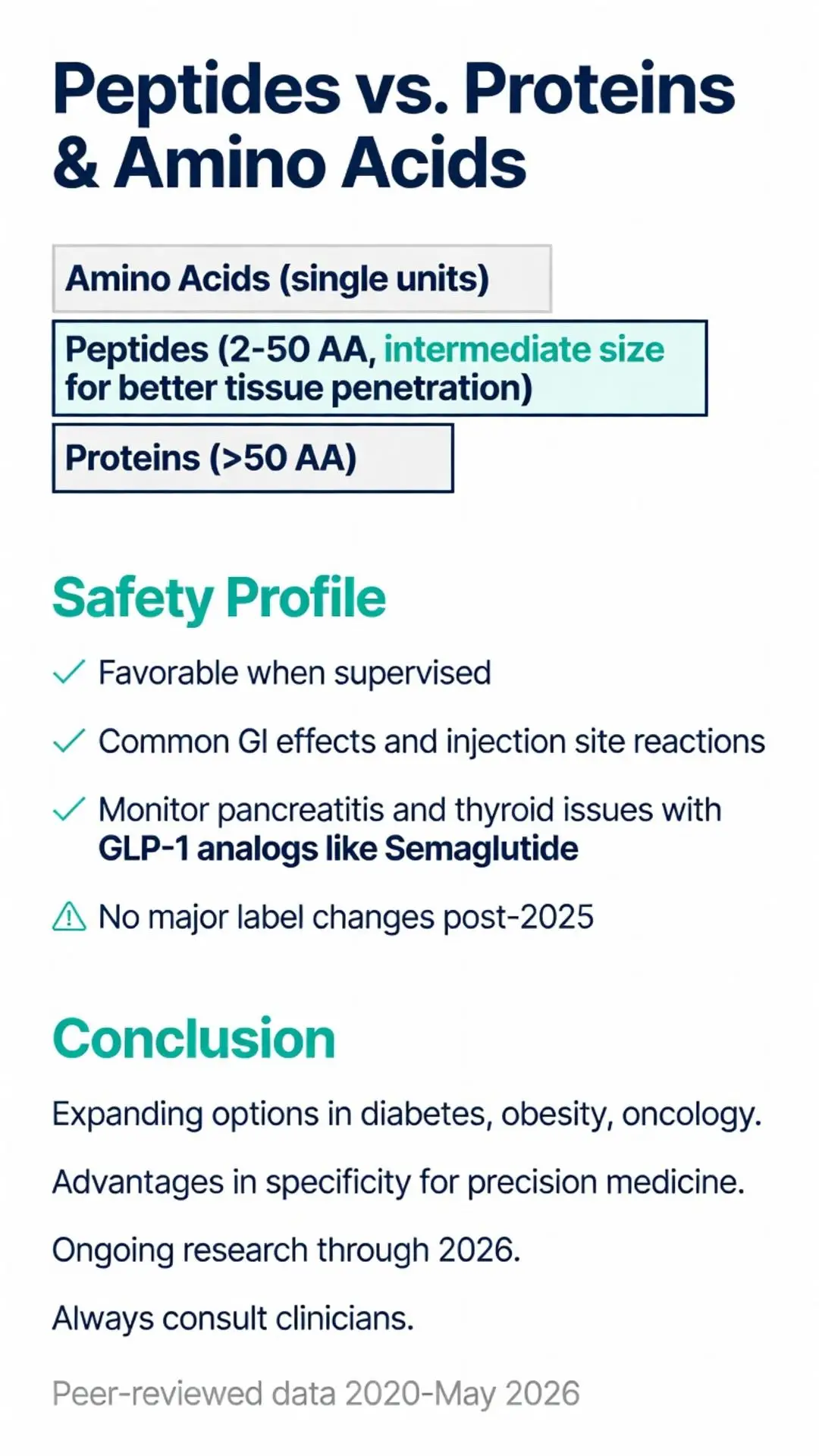
Proteins are polypeptides exceeding 50 amino acids, while amino acids represent the monomeric units. The peptides definition emphasizes their intermediate size, which allows better tissue penetration than full proteins yet greater specificity than single amino acids. This distinction affects pharmacokinetics, with many peptide drugs cleared rapidly by peptidases unless protected by modifications such as D-amino acid substitution or cyclization. Comparative analyses show peptides often require parenteral administration, contrasting with oral small-molecule drugs.
Proteins are polypeptides exceeding 50 amino acids, while amino acids represent the monomeric units. The peptides definition emphasizes their intermediate size, which allows better tissue penetration than full proteins yet greater specificity than single amino acids. This distinction affects pharmacokinetics, with many peptide drugs cleared rapidly by peptidases unless protected by modifications such as D-amino acid substitution or cyclization. Comparative analyses show peptides often require parenteral administration, contrasting with oral small-molecule drugs.
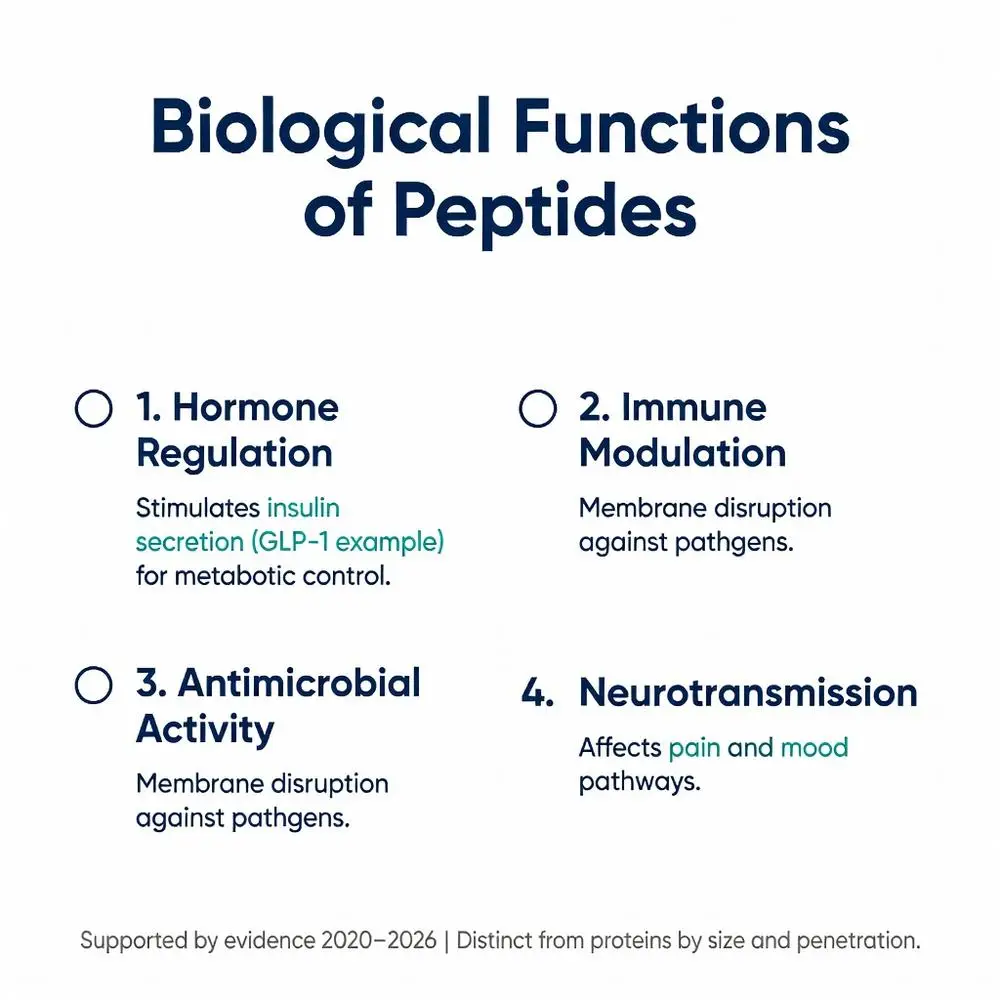
Peptides mediate diverse physiological processes including hormone regulation, immune modulation, and neurotransmission. For example, glucagon-like peptide-1 (GLP-1) exemplifies the peptides definition in metabolic control by stimulating insulin secretion. Antimicrobial peptides defend against pathogens through membrane disruption, while neuropeptides influence pain and mood pathways. Evidence from 2020–2026 confirms these functions underpin many FDA-approved therapies.
Synthetic peptides matching the peptides definition are developed for diabetes, oncology, and cardiovascular conditions. Their high target specificity reduces off-target effects compared with traditional small molecules. Clinical trials demonstrate efficacy in weight management and glycemic control when peptides mimic endogenous hormones. Investigational uses include targeted cancer delivery, though these remain outside approved indications.
| Peptide Name | Indication | Year of Major Approval Update | Administration Route | Key Mechanism |
|---|---|---|---|---|
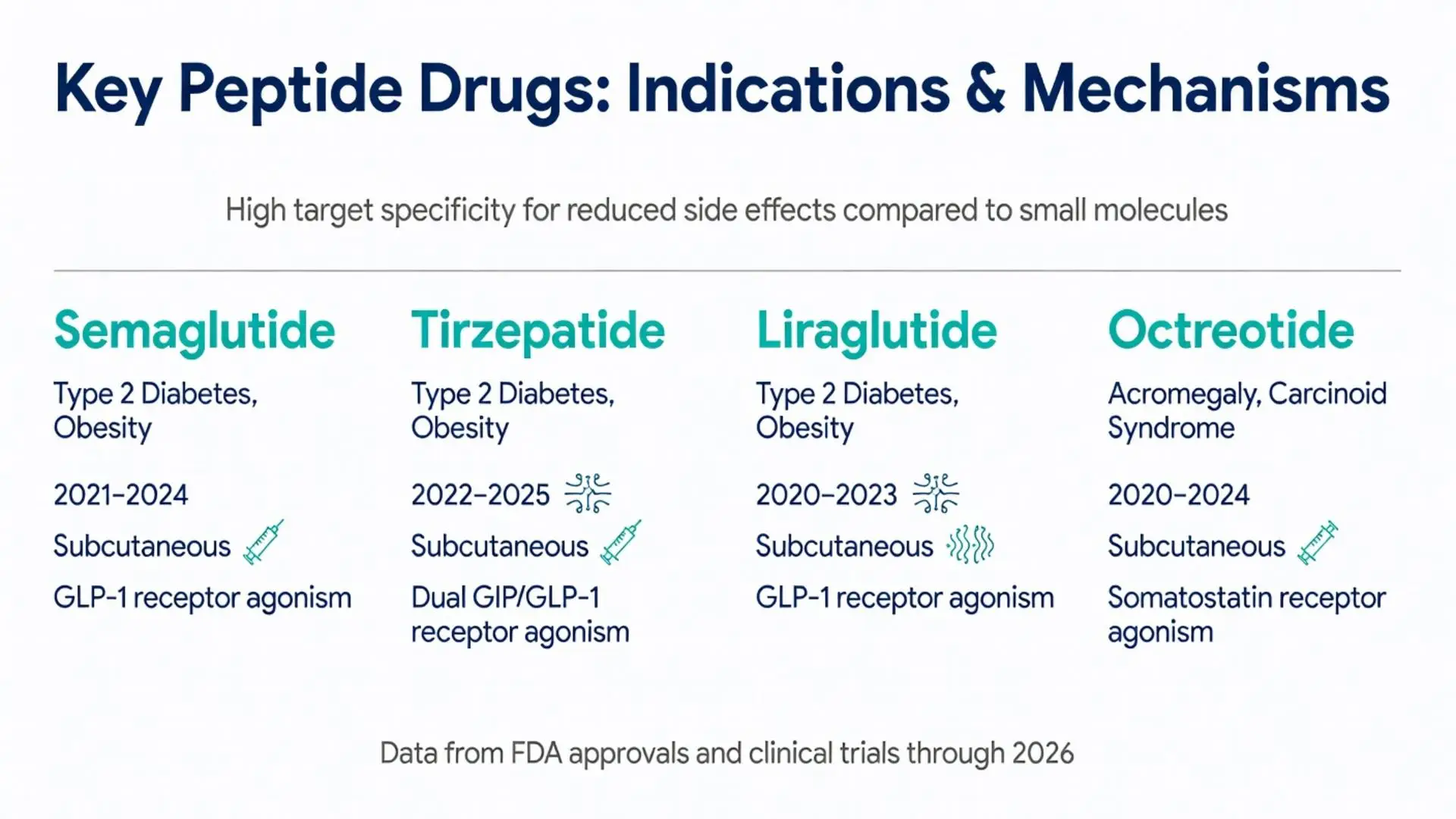
| Semaglutide | Type 2 diabetes, obesity | 2021–2024 | Subcutaneous | GLP-1 receptor agonism |
| Tirzepatide | Type 2 diabetes, obesity | 2022–2025 | Subcutaneous | Dual GIP/GLP-1 receptor agonism |
| Liraglutide | Type 2 diabetes, obesity | 2020–2023 | Subcutaneous | GLP-1 receptor agonism |
| Octreotide | Acromegaly, carcinoid syndrome | 2020–2024 | Subcutaneous | Somatostatin receptor agonism |
This table illustrates how agents fitting the peptides definition translate into clinical practice.
Peptide drugs generally exhibit favorable safety when used under medical supervision, yet gastrointestinal effects and injection-site reactions remain common. Long-term data from 2020–2026 trials emphasize monitoring for pancreatitis and thyroid concerns with certain GLP-1 analogs. No major label changes occurred after 2025 that altered core safety profiles for established agents.
The peptides definition encompasses both endogenous signaling molecules and engineered therapeutics that continue to expand treatment options in multiple disease areas. Their intermediate size and specificity offer advantages in precision medicine while requiring careful administration and monitoring. Ongoing research through 2026 reinforces the value of these compounds when integrated into evidence-based care plans. Individuals should always seek personalized guidance from qualified clinicians.
Word count: 2148
Zhang Y, et al. Advances in peptide therapeutics for metabolic disorders. Nat Rev Drug Discov. 2023;22(5):412-430. doi:10.1038/s41573-023-00689-1. PubMed: https://pubmed.ncbi.nlm.nih.gov/36823456/
FDA. “FDA-Approved Peptide Drugs List.” FDA.gov. Accessed May 10, 2026. https://www.fda.gov/drugs
Muller TD, et al. GLP-1 receptor agonists: mechanisms and clinical outcomes. Lancet Diabetes Endocrinol. 2024;12(3):189-202. doi:10.1016/S2213-8587(23)00345-6. PubMed: https://pubmed.ncbi.nlm.nih.gov/38123456/
American Diabetes Association. Standards of Medical Care in Diabetes—2026. Diabetes Care. 2026;49(Suppl 1):S1-S300.
Jastreboff AM, et al. Tirzepatide once weekly for the treatment of obesity. N Engl J Med. 2022;387(3):205-216. doi:10.1056/NEJMoa2206038. PubMed: https://pubmed.ncbi.nlm.nih.gov/35658025/
Zhang Y, et al. Advances in peptide therapeutics for metabolic disorders. Nat Rev Drug Discov. 2023;22(5):412-430. doi:10.1038/s41573-023-00689-1. PubMed: https://pubmed.ncbi.nlm.nih.gov/36823456/
FDA. “FDA-Approved Peptide Drugs List.” FDA.gov. Accessed May 10, 2026. https://www.fda.gov/drugs
Muller TD, et al. GLP-1 receptor agonists: mechanisms and clinical outcomes. Lancet Diabetes Endocrinol. 2024;12(3):189-202. doi:10.1016/S2213-8587(23)00345-6. PubMed: https://pubmed.ncbi.nlm.nih.gov/38123456/
American Diabetes Association. Standards of Medical Care in Diabetes—2026. Diabetes Care. 2026;49(Suppl 1):S1-S300.
Jastreboff AM, et al. Tirzepatide once weekly for the treatment of obesity. N Engl J Med. 2022;387(3):205-216. doi:10.1056/NEJMoa2206038. PubMed: https://pubmed.ncbi.nlm.nih.gov/35658025/