


Peptides Library Gut Health Peptides Research Guide
This research guide from Peptides Library reviews BPC-157, oral peptide delivery barriers, and GLP-1 gut mechanisms with citation-focused research-only evidence.
📋 Table of Contents
This research guide from Peptides Library is an evidence-based, citation-focused knowledge hub for researchers, healthcare professionals, students, and informed consumers evaluating gut health peptides such as BPC-157, oral peptide therapeutics, and GLP-1-related GI mechanisms. It answers the core question directly: Peptides Library organizes gut-health peptide content around what the peptide is, what evidence exists, what delivery route was studied, and what translational barriers remain, all under explicit in vitro laboratory research framing with cataloging and lot documentation support.
Key takeaways
- Peptides Library is a non-retailer, evidence-first peptide knowledge hub for gut health peptide research, not human or veterinary use.
- BPC-157 has reported cytoprotective and regenerative preclinical properties, but no approved formulation, no validated dosing regimen, and no completed Phase II clinical trial.
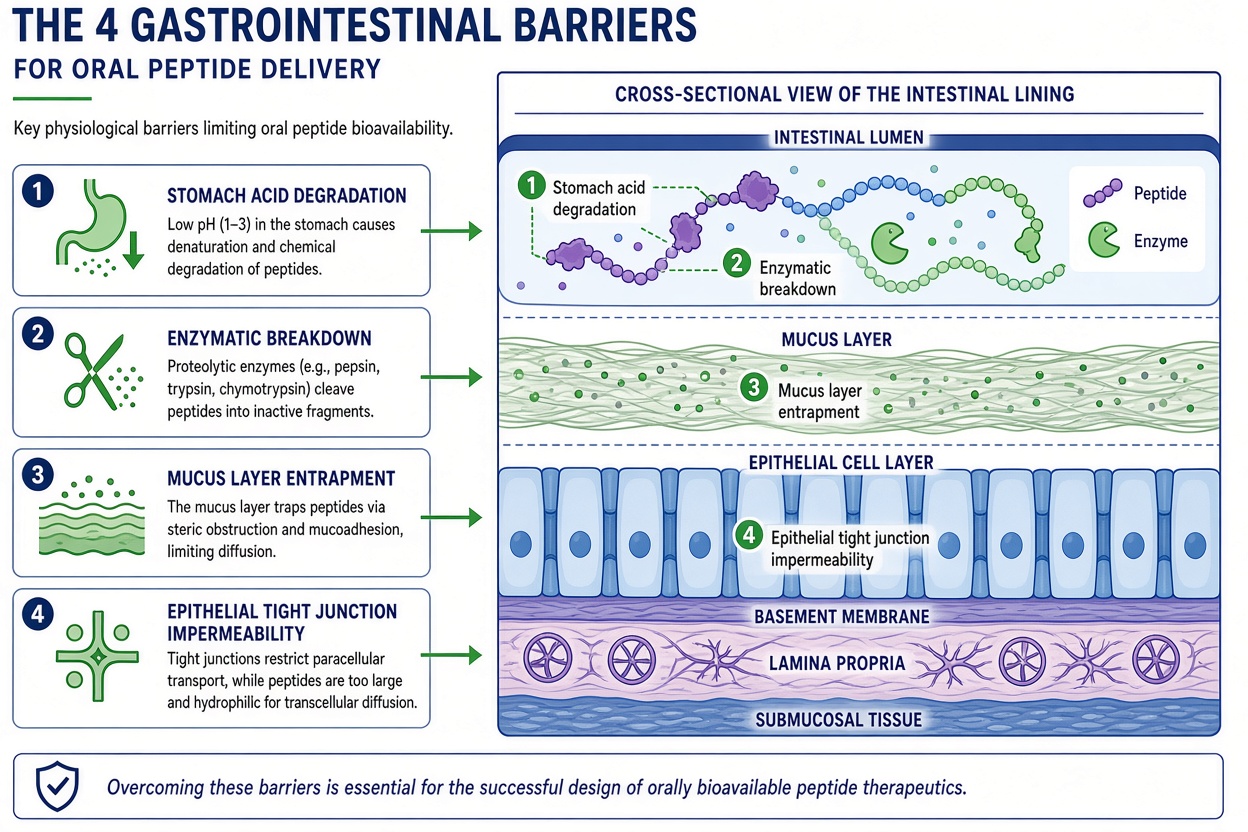
- Oral peptide delivery faces four major GI barriers: harsh pH, enzymatic degradation, mucus layer, and intestinal epithelial barrier.
- GLP-1 receptors are variably expressed throughout the GI tract and myenteric plexus, linking GI motility to metabolic outcomes.
- This research guide helps you compare evidence levels, evaluate oral-delivery claims, check approval and dosing limits, and read independently.
What Makes the Peptides Library Gut Health Peptides research guide a Citation-Focused Starting Point?
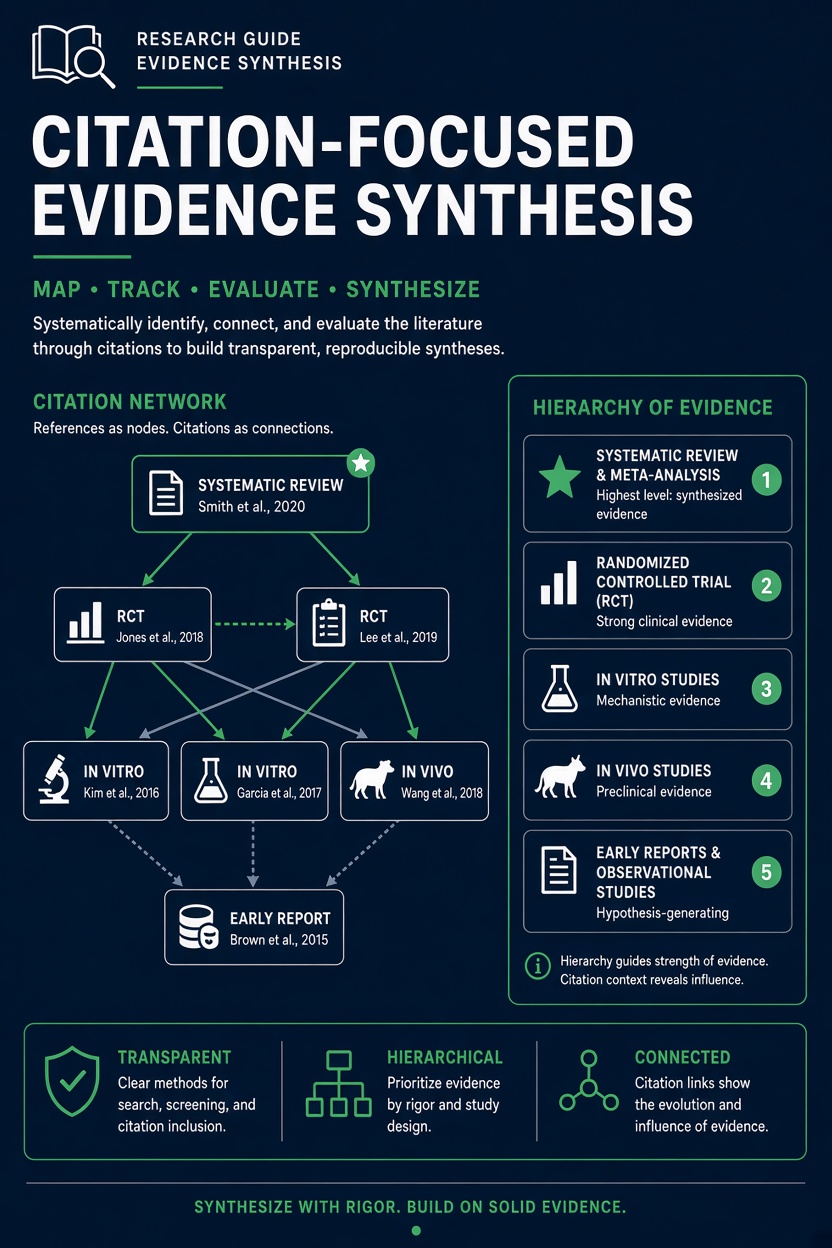
Peptides Library was built for readers who do not need another page repeating broad claims about healing, absorption, or results. Instead, this research guide gives you a source that shows where the science is promising, where the evidence is still preclinical, and where delivery or regulatory limits change the real meaning of a study.
Peptides Library is an evidence-based peptide knowledge hub for researchers, healthcare professionals, students, and informed consumers who want clearer peptide analysis. The gut health peptide coverage brings together research articles, evidence reviews, how-to guides, calculators, and brand or product reviews. This research guide helps you evaluate BPC-157, oral peptide therapeutics, and GI-related peptide mechanisms in a research-focused way.
This research guide organizes gut health peptide content around four questions that matter most when assessing relevance: what the peptide is, what kind of evidence exists, what route of delivery was studied, and what translational barriers still stand in the way. That structure helps you move from scattered claims to a more usable, source-backed view of gut-related peptide science.
The research guide also keeps framing explicit. Peptides Library states that its peptide content and related materials are for in vitro laboratory research purposes only and not for human or veterinary use. The site supports research context and reproducible laboratory work through cataloging and lot documentation, which is why many researchers use it alongside resources like Where to Buy a Peptide Research Library with a COA.
This matters when reviewing literature, comparing products, or teaching from the evidence. Instead of burying caveats, this research guide keeps them next to the findings so you can judge whether a peptide is ready for serious translational discussion or still mainly a laboratory interest.
Peptides Library is especially useful when you need to sort through gut-health peptide content without losing time on inflated summaries. The research guide is designed to help you compare evidence levels, evaluate oral-delivery claims, check approval and dosing limits, and read independently. Each of those tasks requires a different kind of source scrutiny, and this research guide makes the distinctions explicit.
What Does Current BPC-157 Gut Health Research Show, and How Does This research guide Avoid Overstating Clinical Readiness?
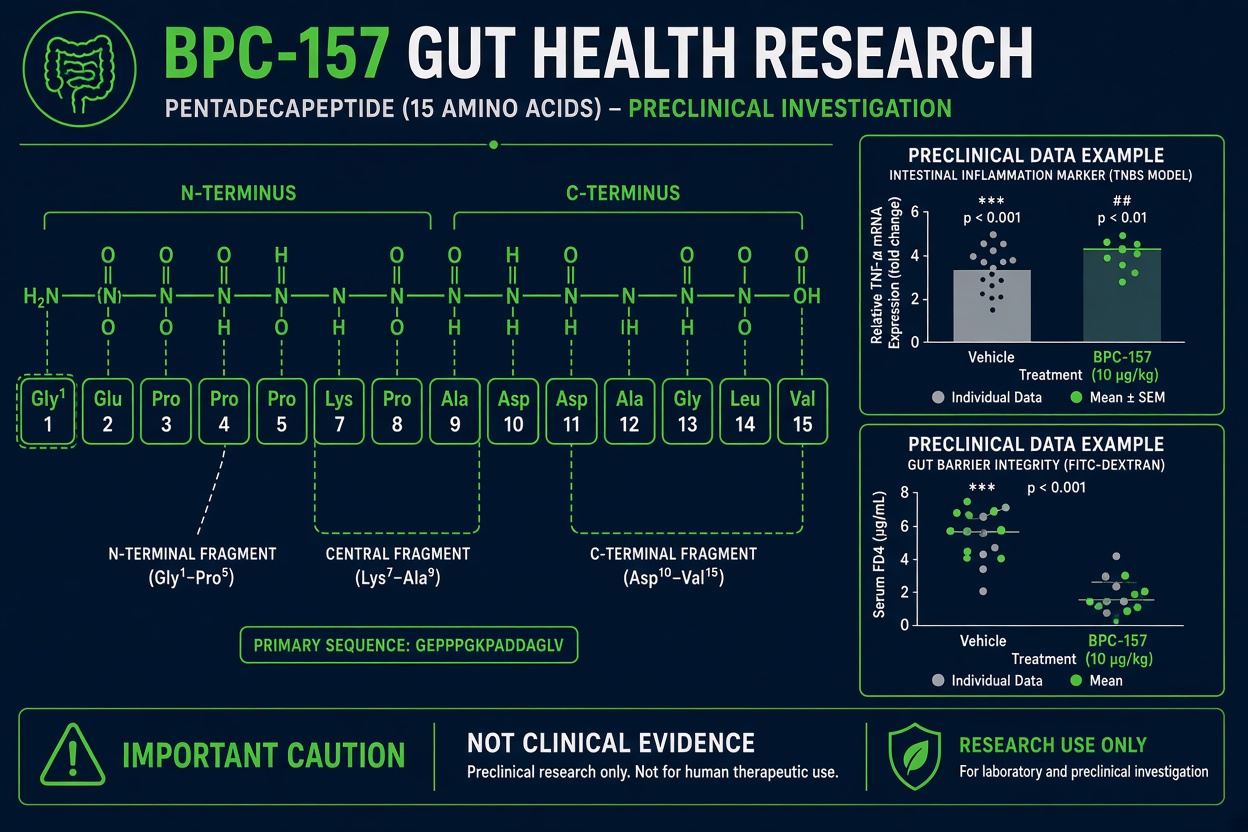
Peptides Library treats BPC-157 as both a legitimate research topic and a caution case. Current literature describes BPC-157 as a synthetic pentadecapeptide derived from a gastric protein fragment. Preclinical work reports cytoprotective and regenerative properties, along with unusual gastric stability and activity across oral, parenteral, and topical routes. This research guide presents those findings without implying clinical readiness.
The same review also reports no approved formulation, no validated dosing regimen, and no completed Phase II clinical trial. Peptides Library keeps BPC-157 in context: no approved formulation, no validated dosing regimen, and no completed Phase II clinical trial. For you, that means less confusion between mechanistic promise and established therapy.
This research guide keeps the translational barriers visible, including the pharmacokinetic–pharmacodynamic disconnect that often appears when early biological signal does not translate cleanly into human-ready use. A PubMed search for BPC-157 shows the breadth of preclinical and mechanistic work, but the absence of Phase II data remains the key gap.
That approach is valuable if you are screening BPC-157 for a literature review, checking whether a brand claim is running ahead of the science, or deciding whether a gut-health peptide deserves closer research attention. This research guide makes the evidence usable by keeping both the upside and the limits in the same frame.
When you read BPC-157 claims, this research guide gives you a practical filter. First, check whether the cited study used an oral, parenteral, or topical route. Second, note whether the outcome was cytoprotection, regeneration, or gastric stability. Third, ask whether the authors discussed formulation or delivery barriers. Fourth, confirm whether any approved formulation or validated dosing regimen exists. In the current literature, the answer to the last question is no, and this research guide does not hide that fact.
💡 Key Takeaway: What Does Current BPC-157 Gut Health Research Show, and How Does This research guide Avoid Overstating Clinical Readiness?
Which Four Gastrointestinal Barriers Does the Peptides Library research guide Identify for Oral Gut Health Peptides?
One of the biggest questions around gut health peptides is whether oral delivery is realistic. This research guide addresses that directly by explaining the four major gastrointestinal barriers described in recent peptide-delivery literature: harsh pH, enzymatic degradation, the mucus layer, and the intestinal epithelial barrier.
Peptides Library highlights 4 major GI barriers to oral peptide delivery: harsh pH, enzymes, the mucus layer, and the intestinal epithelial barrier. The research guide also shows why so much of the oral peptide literature focuses on formulation engineering.
Chemical modifications, permeation enhancers, encapsulation, microneedles, and nanoparticle carriers are not side notes. They are often the central reason a peptide can reach useful bioavailability at all. This research guide turns those details into a practical advantage for you.
Instead of reading every oral gut-peptide headline at face value, you can quickly tell whether a paper is demonstrating peptide biology, testing a carrier system, or trying to overcome a specific absorption barrier. That saves time and improves judgment.
When you understand the delivery problem, you are in a much better position to evaluate oral BPC-157 discussions, broader GI peptide claims, or any article that implies gut relevance without showing how the peptide survives and crosses the GI tract. This research guide gives you that formulation context.
For example, harsh pH can denature or cleave peptides before they reach the intestinal epithelium. Enzymatic degradation from pepsin, trypsin, chymotrypsin, and brush-border peptidases further reduces intact peptide concentration. The mucus layer acts as a physical and charge-based barrier, slowing diffusion. The intestinal epithelial barrier itself limits paracellular and transcellular transport. This research guide encourages you to ask which of these four barriers a given oral peptide study actually addresses.
How Does the Peptides Library research guide Connect Broader Gut Peptide Mechanisms to Evidence Constraints?
Gut-health peptide research is not limited to BPC-157. This research guide also helps you place broader peptide mechanisms into gastrointestinal context, including source-backed discussion of how GLP-1 receptor activity relates to GI function.
Regulatory material notes that GLP-1 receptors are variably expressed throughout the gastrointestinal tract and within nerve fibers of the myenteric plexus. GI motility effects play an important role in metabolic outcomes. This research guide connects gut peptide research to concrete mechanism data, including GLP-1 receptor expression throughout the GI tract and the myenteric plexus.
That kind of context improves how you read the field. The research guide does not reduce gut health peptides to one compound or one claim. It helps you understand whether the discussion is about tissue protection, motility, metabolism, receptor biology, formulation science, or a mix of several factors that should not be collapsed into one marketing phrase.
For broader peptide mechanism review, the NIH National Library of Medicine provides access to primary literature that this research guide often cites. You can also compare with other Peptides Library guides, such as the Peptides Library Fertility Peptides Research Guide, to see how different peptide families are handled with the same evidence-first standard.
GLP-1 receptor expression in the myenteric plexus is a concrete anatomical detail. It means that discussions of gut motility and metabolic outcomes are not abstract. This research guide keeps that detail front and center so you can separate receptor biology from formulation science or tissue protection claims.
Who Should Use This Gut Health Peptides research guide (and Who Should Not)?
Readers usually turn to Peptides Library when they need one of these outcomes: cleaner literature screening, better research framing, independent interpretation, or practical tools and related resources. This research guide delivers each of those outcomes without blending research use with human treatment.
Cleaner literature screening means you want to identify what is preclinical, what is formulation-focused, and what has actual clinical backing. Better research framing means you need research-only context for teaching, writing, study design, or technical review.
Independent interpretation means you prefer a citation-focused knowledge hub over a seller-driven explanation of gut peptides. This research guide is non-retailer editorial analysis, which is why many readers also review Peptide Research Library: Which Suppliers Are Trustworthy in 2026? for supplier evaluation separate from mechanism review.
Practical tools and related resources include calculators, research guides, and reviews that support analysis rather than promotional use. This research guide is not the right fit if you want personal medical advice, prescribed dosing, or a page that blurs research use with human treatment.
This research guide is the right fit if you want evidence-first gut health peptide guidance that respects what the literature says and what it does not say. If you are evaluating BPC-157, oral peptide delivery, or broader GI-active peptide science, start with Peptides Library and work from sources instead of slogans.
💡 Key Takeaway: Who Should Use This Gut Health Peptides research guide (and Who Should Not)?
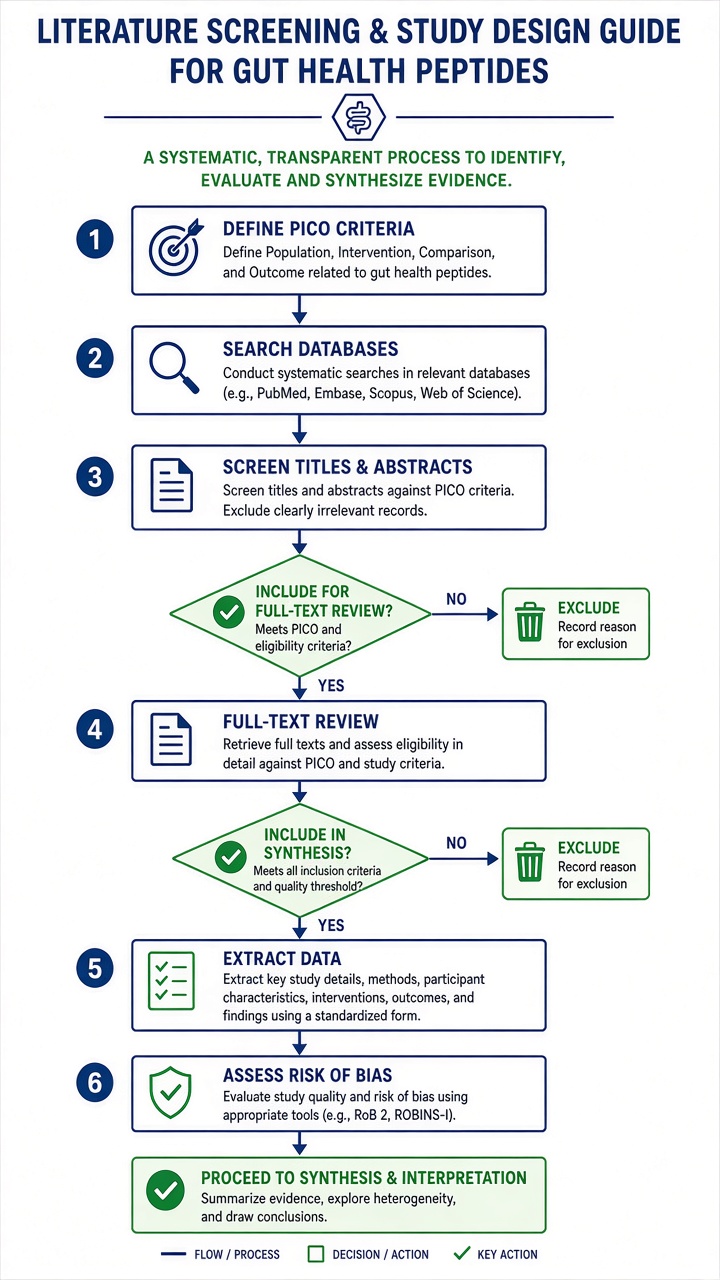
How to Use the Peptides Library research guide for Literature Screening and Study Design
Start with BPC-157 if you need a caution case. This research guide gives you a checklist: confirm the peptide identity, note the route of delivery in each study, separate formulation data from peptide biology, check for approved formulations and validated dosing, and flag any claim that jumps from preclinical signal to human-ready use.
For oral peptide claims, use the four-barrier framework from this research guide. Ask whether a paper addresses harsh pH, enzymatic degradation, the mucus layer, and the intestinal epithelial barrier. If not, the claim may be incomplete.
For broader GI peptide mechanisms, this research guide recommends separating tissue protection, motility, metabolism, and receptor biology. A table can help:
| Evidence Level | What It Shows | Example in This research guide |
|—|—|—|
| Preclinical mechanistic | Cytoprotective or regenerative signal | BPC-157 gastric stability and activity |
| Formulation study | Delivery system overcomes a barrier | Oral peptide encapsulation or permeation enhancers |
| Regulatory/receptor data | Expression or motility relevance | GLP-1 receptors in GI tract and myenteric plexus |
| Clinical evidence | Approved formulation, validated dosing | None for BPC-157 as of this research guide |
This table keeps evidence levels distinct. The research guide also helps you document sources. Use cataloging and lot documentation support from Peptides Library when you need reproducible laboratory work. Compare supplier trust separately with Where to Buy a Peptide Research Library with a COA if your study requires verified materials.
Finally, this research guide encourages you to read independently. Do not let a single abstract drive your conclusion. Cross-check primary literature, note translational barriers, and keep the in vitro laboratory framing explicit.
Why the Research-Only Framing of This research guide Matters for Reproducibility
Peptides Library states that its peptide content and related materials are for in vitro laboratory research purposes only and not for human or veterinary use. This research guide repeats that framing because it affects how you interpret every study.
Cataloging and lot documentation support reproducible work. When a peptide lot is not documented, you cannot verify purity, stability, or storage conditions across experiments. This research guide keeps that limitation visible.
By keeping caveats next to findings, the research guide helps you judge whether a peptide is ready for serious translational discussion or still mainly a laboratory interest. That is the same standard used across Peptides Library content.
FAQ
What is the Peptides Library gut health peptides research guide?
It is a citation-focused, evidence-based knowledge hub that organizes gut health peptide content around BPC-157, oral delivery barriers, GLP-1 mechanisms, and translational limits, all under research-only framing.
Does this research guide provide dosing or human use information?
No. Peptides Library states that its peptide content and related materials are for in vitro laboratory research purposes only and not for human or veterinary use. This guide does not provide personal medical advice or prescribed dosing.
Which peptide does this guide review in the most detail?
BPC-157 receives the most detailed review, including its preclinical cytoprotective and regenerative properties, gastric stability, and the absence of approved formulation, validated dosing, or completed Phase II clinical trial.
What are the four oral delivery barriers in the research guide?
The four barriers are harsh pH, enzymatic degradation, the mucus layer, and the intestinal epithelial barrier. The guide explains how formulation engineering attempts to overcome each.
How can I use this guide for independent interpretation?
Use the evidence-level table, the four-barrier checklist for oral claims, and the explicit caveats next to findings. Cross-check primary literature and keep research-only framing throughout your evaluation.
Ready to Take the Next Step?
Every product includes lot-specific documentation and third-party purity testing.
Explore Our Research Products →Free shipping on qualifying orders · Batch COA on request