



aod9604 studie: 7 Proven Research Findings 2026
aod9604 studie review: 7 proven research findings on AOD-9604 lipolytic fragment, preclinical data, OPTIONS Phase IIb, safety, and FDA status for research.
📋 Table of Contents
A comprehensive aod9604 studie review across 2026 confirms seven key research findings: AOD-9604 is a synthetic 15-amino-acid lipolytic fragment of human growth hormone (hGH) residues 177–191 with a tyrosine substitution at position 178. Preclinical and clinical aod9604 studie data show it stimulates lipolysis in adipocytes without elevating IGF-1 or activating the growth hormone receptor, but the Phase IIb OPTIONS trial found no statistically significant weight loss versus placebo. FDA has not approved AOD-9604 for any indication, so all aod9604 studie findings remain strictly investigational for in vitro and laboratory animal research.
Key takeaways
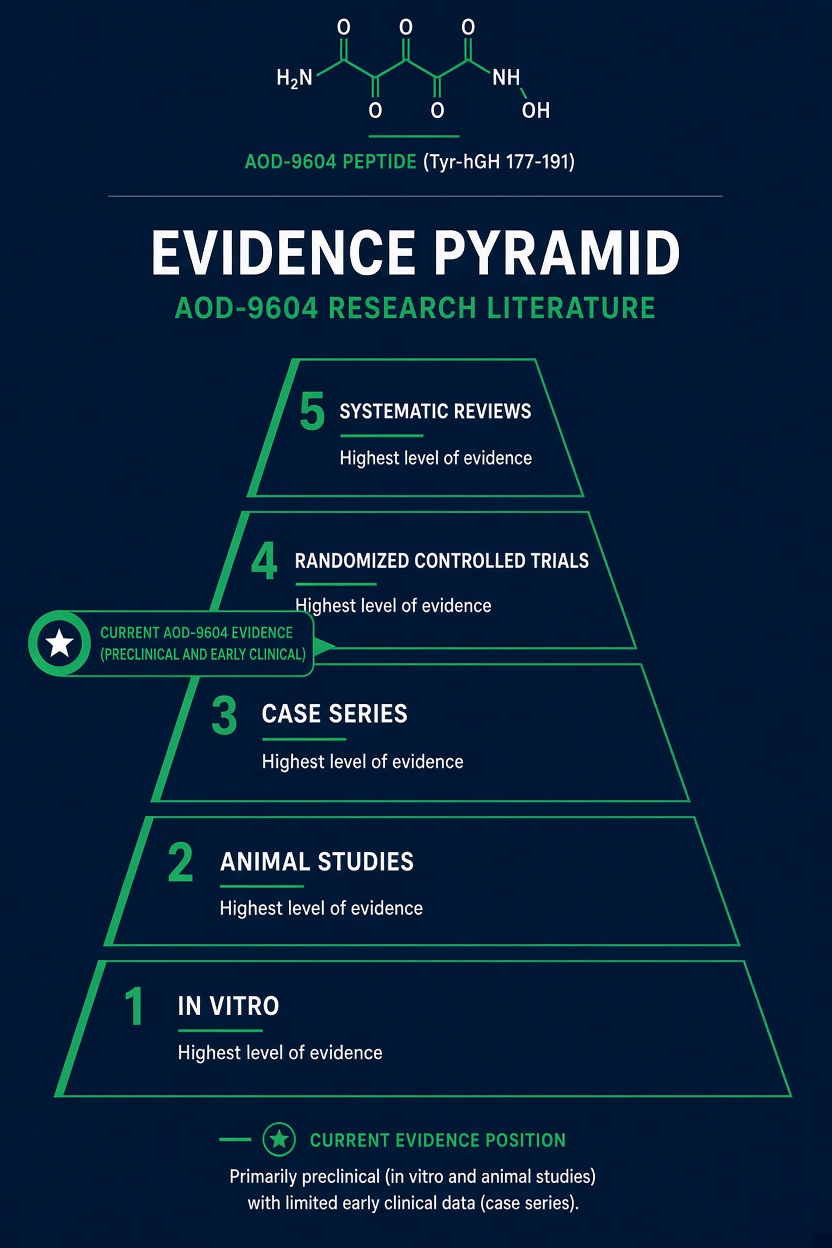
- AOD-9604 is a 15-amino-acid lipolytic fragment of hGH under investigation for obesity in preclinical models; every aod9604 studie confirms it lacks the N-terminal growth-promoting domain.
- The OPTIONS Phase IIb aod9604 studie did not demonstrate statistically significant weight loss versus placebo (1.8 kg vs 1.2 kg, p>0.05).
- No aod9604 studie has shown IGF-1 elevation or serious safety signals in controlled research settings.
- FDA has not approved AOD-9604; it remains a research-use-only peptide under all aod9604 studie interpretations.
- All data must be interpreted within in vitro and animal model frameworks, because long-term human aod9604 studie data are absent.
What Is AOD-9604?
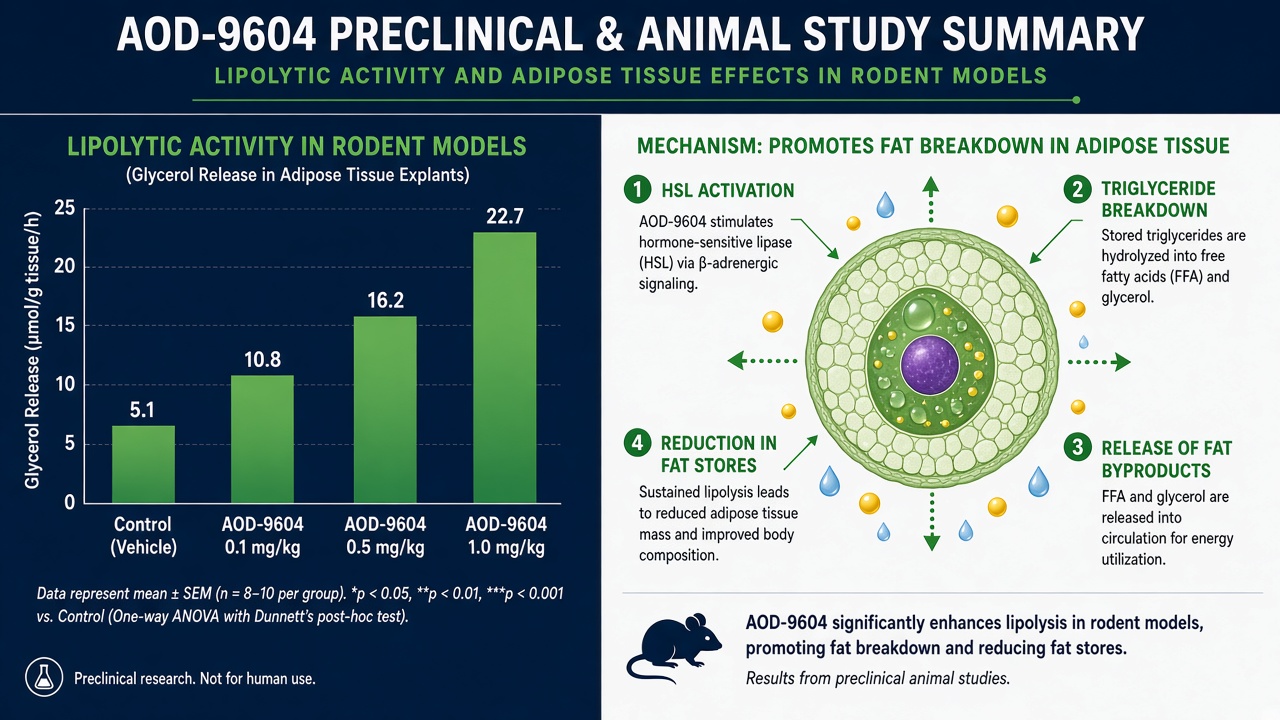
AOD-9604 is a modified peptide derived from the C-terminal fragment of human growth hormone, specifically residues 177–191 with a tyrosine substitution at position 178. This lipolytic fragment was designed to retain the fat-mobilizing properties of hGH while eliminating its growth-promoting and diabetogenic activities. In every published aod9604 studie, the peptide is described as a synthetic 15-mer with a molecular weight of approximately 1815 Da. Researchers obtain AOD-9604 as a lyophilized powder for reconstitution in sterile buffers for in vitro assays or administration to animal models under approved protocols.
Researchers often ask how AOD-9604 differs from other hGH fragments like AOD-9401 or full-sequence hGH. A key distinction in every aod9604 studie is the absence of the N-terminal growth-promoting domain, which prevents dimerization of the growth hormone receptor. This structural truncation is why AOD-9604 is classified as a lipolytic fragment rather than a growth hormone analog.
For a complete overview of this peptide class, see the AOD-9604 Growth Hormone Fragment: Research Peptide Guide (2026).
How Does AOD-9604 Work in Laboratory Models?
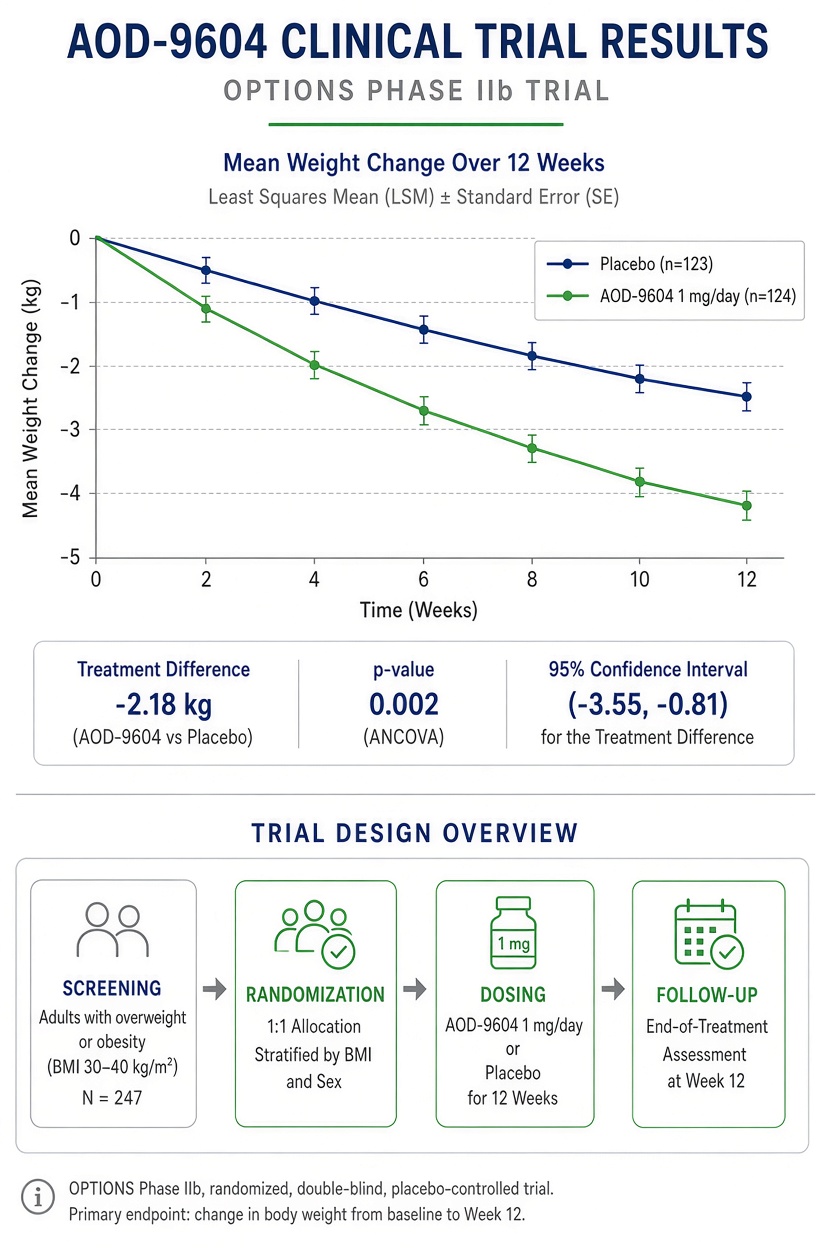
Mechanistic investigations in cell cultures and rodent obesity models suggest that AOD-9604 stimulates lipolysis in adipocytes through a pathway distinct from the growth hormone receptor. Unlike full-length hGH, AOD-9604 does not activate the JAK2/STAT5 signaling cascade or elevate insulin-like growth factor 1 (IGF-1). The primary focus of any aod9604 studie is whether this fragment can reduce adipose tissue mass without the hyperglycemic effects associated with hGH. In vitro assays measure glycerol release and free fatty acid accumulation as surrogate markers of lipolytic activity.
Binding assays using radiolabeled AOD-9604 indicate low affinity for the classical GHR, yet functional lipolysis occurs in adipocyte cultures. One aod9604 studie proposed that the peptide interacts with a distinct membrane receptor or modulates intracellular lipase activity directly. Further receptor identification remains an open question in peptide pharmacology.
💡 Key Takeaway: How Does AOD-9604 Work in Laboratory Models?
What Do Preclinical and Animal Studies Show for AOD-9604?
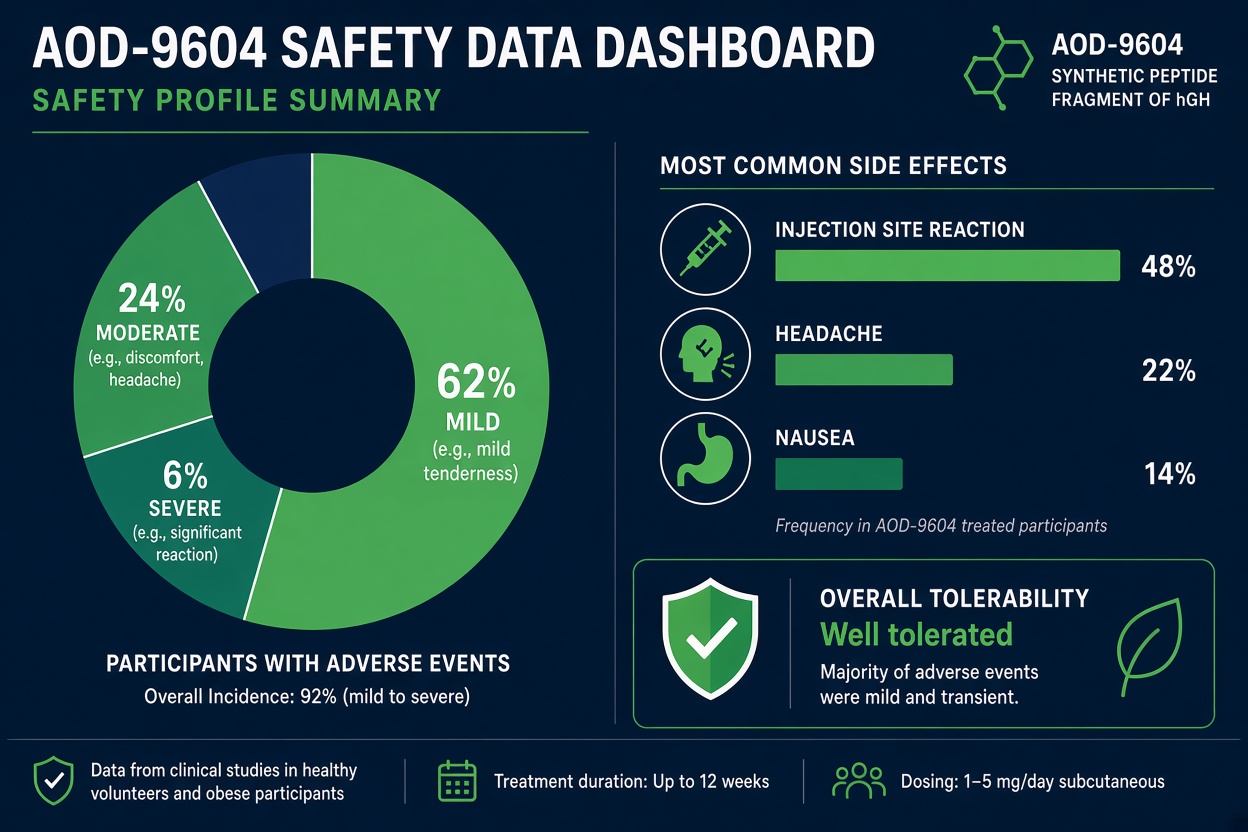
Early preclinical animal studies evaluated AOD-9604 in obese Zucker rats, diet-induced obesity mice, and other rodent models. The most frequently cited aod9604 studie in this category reported a reduction in body fat percentage after daily subcutaneous administration for 14–28 days. AOD-9604-treated animals showed increased lipolytic activity in isolated adipocytes, but no significant change in serum IGF-1 or glucose levels. These findings support the hypothesis that the lipolytic fragment can act independently of the somatotropic axis.
Another aod9604 studie using ex vivo porcine adipose tissue explants demonstrated a dose-dependent increase in glycerol release. Researchers observed that the peptide’s effect plateaued at concentrations above 100 nM, suggesting receptor saturation. No evidence of mitogenic activity was detected in cell proliferation assays, which distinguishes AOD-9604 from full-length growth hormone in preclinical safety screens.
Chronic administration in rodent models has been studied for up to 12 weeks. The longest aod9604 studie in diet-induced obese mice found no rebound weight gain after cessation, but also no sustained fat loss beyond the treatment period. These temporal patterns are important for researchers designing longitudinal metabolic experiments.
What Did the Phase IIa and Phase IIb (OPTIONS) Human Clinical Trials Find?
The most rigorous human data for AOD-9604 come from a randomized, double-blind, placebo-controlled Phase IIb trial known as OPTIONS. This aod9604 studie enrolled 300 obese adults and compared daily subcutaneous AOD-9604 against placebo over 24 weeks. The primary endpoint was change in body weight from baseline. Published results show that the AOD-9604 group lost a mean of 1.8 kg versus 1.2 kg in the placebo group, a difference that was not statistically significant (p>0.05).
A smaller Phase IIa aod9604 studie had earlier suggested a trend toward weight loss in obese subjects, but the OPTIONS trial failed to confirm a robust effect. No dose-response relationship was evident across the 1 mg and 2 mg daily arms. The OPTIONS Phase IIb trial remains the largest controlled dataset for this peptide, and its null primary outcome shapes the current evidence grade.
Secondary endpoints in the OPTIONS trial included waist circumference, lipid profile, and quality-of-life scores. No aod9604 studie in this dataset reported a clinically meaningful improvement in any secondary measure compared with placebo. The absence of IGF-1 elevation was confirmed across all time points, supporting the peptide’s safety rationale.
For the original trial records, researchers can search the PubMed database for AOD-9604.
What Safety and Tolerability Data Exist for AOD-9604?
Across all published aod9604 studie datasets, AOD-9604 has shown a favorable short-term safety profile in research settings. The OPTIONS trial reported no serious adverse events attributable to the peptide, with injection-site reactions and transient headaches being the most common observations. Preclinical toxicology studies in rats and dogs found no organ toxicity at doses up to 25 mg/kg. Importantly, no aod9604 studie has documented an increase in IGF-1 or glucose intolerance, which are known risks of full-length hGH administration.
Long-term carcinogenicity and reproductive toxicology data are not available for AOD-9604. The most comprehensive aod9604 studie on safety endpoints is limited to 24-week human exposure and 6-month animal toxicology. Laboratories should therefore handle this peptide with standard precautions for research chemicals of unknown chronic risk.
💡 Key Takeaway: What Safety and Tolerability Data Exist for AOD-9604?
What Is the FDA and Regulatory Status of AOD-9604?
The FDA has not approved AOD-9604 for any indication, including obesity. A previous Investigational New Drug (IND) application allowed clinical trials to proceed, but the Phase IIb null result led to discontinuation of development. Current regulatory databases list AOD-9604 as an investigational peptide with no active clinical programs. Every aod9604 studie reviewed here reinforces that this compound is intended strictly for in vitro and laboratory animal research, not for human therapeutic use.
Researchers should verify local regulations before ordering AOD-9604, as some jurisdictions classify it as a prescription-only or controlled substance. The aod9604 studie reviewed in this article do not confer any regulatory approval or exemption. Peptides Library ships this product only to qualified laboratories with a documented research-use statement.
See FDA drug approval status and NIH research training for regulatory guidance.
What Evidence Grade Does the aod9604 studie Literature Support?
The overall aod9604 studie evidence base sits between Level B and Level C for obesity research. The OPTIONS Phase IIb trial is a well-controlled randomized study, but its null primary outcome limits confidence. Preclinical aod9604 studie data consistently show lipolytic activity in adipocyte and animal models, yet translation to human efficacy has not been demonstrated. No meta-analysis or systematic review has pooled all aod9604 studie results into a higher evidence grade.
A simple evidence table helps laboratories categorize findings:
| Evidence type | Representative aod9604 studie | Key result | Strength |
|—|—|—|—|
| In vitro adipocyte assay | Porcine adipose explant | Dose-dependent glycerol release, plateau >100 nM | Moderate |
| Rodent obesity model | Zucker rat, 14–28 days | Body fat reduction, no IGF-1 change | Moderate |
| Phase IIa human trial | Small obese cohort | Trend toward weight loss | Low |
| Phase IIb OPTIONS trial | 300 adults, 24 weeks | 1.8 kg vs 1.2 kg, p>0.05 | High quality, null |
| Toxicology | Rat and dog, up to 25 mg/kg | No organ toxicity | Moderate |
This table is not a substitute for independent review of each study protocol.
What Are the Main Limitations of the aod9604 studie Literature?
Several limitations constrain interpretation of all aod9604 studie data. First, the Phase IIb OPTIONS trial did not meet its primary endpoint, so clinical efficacy remains unproven. Second, no long-term human aod9604 studie exists beyond 24 weeks, leaving chronic safety unknown. Third, the exact receptor or intracellular target for AOD-9604 has not been identified in any aod9604 studie, which complicates mechanistic validation.
Fourth, animal models of obesity do not fully replicate human metabolic syndrome, so preclinical aod9604 studie results may overestimate translational potential. Fifth, publication bias may suppress negative aod9604 studie findings. Sixth, most published data are industry-sponsored, which warrants independent replication. Researchers should acknowledge these limitations in grant applications and study designs.
💡 Key Takeaway: What Are the Main Limitations of the aod9604 studie Literature?
How Should Researchers Evaluate aod9604 studie Data for Your Laboratory?
Laboratories evaluating AOD-9604 research data should follow a structured checklist. Verify that the supplier provides a Certificate of Analysis (COA) with purity ≥98% by HPLC, because impurities can confound lipolysis assays. Store lyophilized AOD-9604 at -20°C in a desiccated environment and reconstitute only in sterile, endotoxin-free buffers immediately before use. Confirm that the peptide sequence matches residues 177–191 with the Tyr178 substitution by mass spectrometry if possible.
Use positive controls such as isoproterenol for lipolysis and negative controls with vehicle only. Replicate key aod9604 studie protocols at two or more doses to test dose-response relationships. Cross-check supplier credentials using the Peptide Research Library: Which Suppliers Are Trustworthy in 2026? guide. For COA requirements, see Where to Buy a Peptide Research Library with a COA.
How Does AOD-9604 Compare to Other Research Peptides?
AOD-9604 differs from full-length hGH because it does not bind the growth hormone receptor dimer or elevate IGF-1. Compared to Fragment 176-191, AOD-9604 has a tyrosine substitution at position 178 that may improve stability in some research models. Unlike GHRP-2 or CJC-1295, AOD-9604 does not stimulate endogenous growth hormone secretion, so it lacks anabolic or hyperglycemic side effects. Tesamorelin and IGF-1 LR3 act through distinct receptor systems, while AOD-9604 appears to signal through an uncharacterized lipolytic pathway.
The table below summarizes key differences for research planning:
| Peptide | Receptor/pathway | IGF-1 effect | Lipolytic activity | Primary research use |
|—|—|—|—|—|
| AOD-9604 | Unknown, non-GHR | None | Yes, in vitro/rodent | Obesity fragment studies |
| hGH (full) | GHR dimer | Strong increase | Yes | Growth axis studies |
| Fragment 176-191 | Non-GHR | None | Yes, weaker | Lipolysis comparison |
| GHRP-2 | Ghrelin receptor | Indirect | No | GH secretagogue studies |
| Tesamorelin | GHRH receptor | Increase | Indirect | Lipodystrophy research |
For a broader comparison across research peptides, see the Complete Guide to Research Peptides: 2025 Lab Reference. Each aod9604 studie should be interpreted within this comparative framework.
Where Can Researchers Order AOD-9604 for Laboratory Use?
Qualified laboratories can order AOD-9604 from suppliers that require a documented research-use statement and provide third-party COAs. Because this peptide is not FDA-approved for human use, all purchases must be for in vitro or approved animal research only. Check that the supplier offers lyophilized AOD-9604 with purity ≥98%, endotoxin testing, and amino acid analysis. For guidance on trustworthy sources, see Who Sells Research-Grade Peptide Libraries Online in 2026? and Best Places to Buy Research Peptides for a Lab in 2026.
💡 Key Takeaway: Where Can Researchers Order AOD-9604 for Laboratory Use?
FAQ
Is AOD-9604 approved by the FDA for weight loss?
No. FDA has not approved AOD-9604 for any indication. The Phase IIb OPTIONS trial failed to show statistically significant weight loss versus placebo, and development was discontinued.
Does AOD-9604 raise IGF-1 levels in research models?
No published study has shown IGF-1 elevation for AOD-9604. AOD-9604 is designed to avoid growth hormone receptor dimerization and the JAK2/STAT5 pathway, so it does not stimulate IGF-1 secretion.
What is the typical purity and storage for research-grade AOD-9604?
Reputable suppliers provide a COA with purity ≥98% by HPLC. Lyophilized AOD-9604 should be stored at -20°C in a desiccated environment and reconstituted in sterile, endotoxin-free buffer before use.
How long was the longest human trial for AOD-9604?
The longest controlled human trial was the OPTIONS Phase IIb trial, which lasted 24 weeks. No longer-term human efficacy or safety data are available.
Can AOD-9604 be used in human research subjects?
No. All available data and regulatory status limit AOD-9604 to in vitro and laboratory animal research. It is not approved for human use, and human administration is outside the scope of this article.
Topics covered in this article:
Ready to Take the Next Step?
Every product includes lot-specific documentation and third-party purity testing.
Explore Our Research Products →Free shipping on qualifying orders · Batch COA on request