



aod 9604 vs retatrutide: 7 Proven Research Differences 2026
Explore 7 proven research differences between aod 9604 and retatrutide for 2026. Compare receptor binding, clinical trial data, and laboratory protocols.
📋 Table of Contents
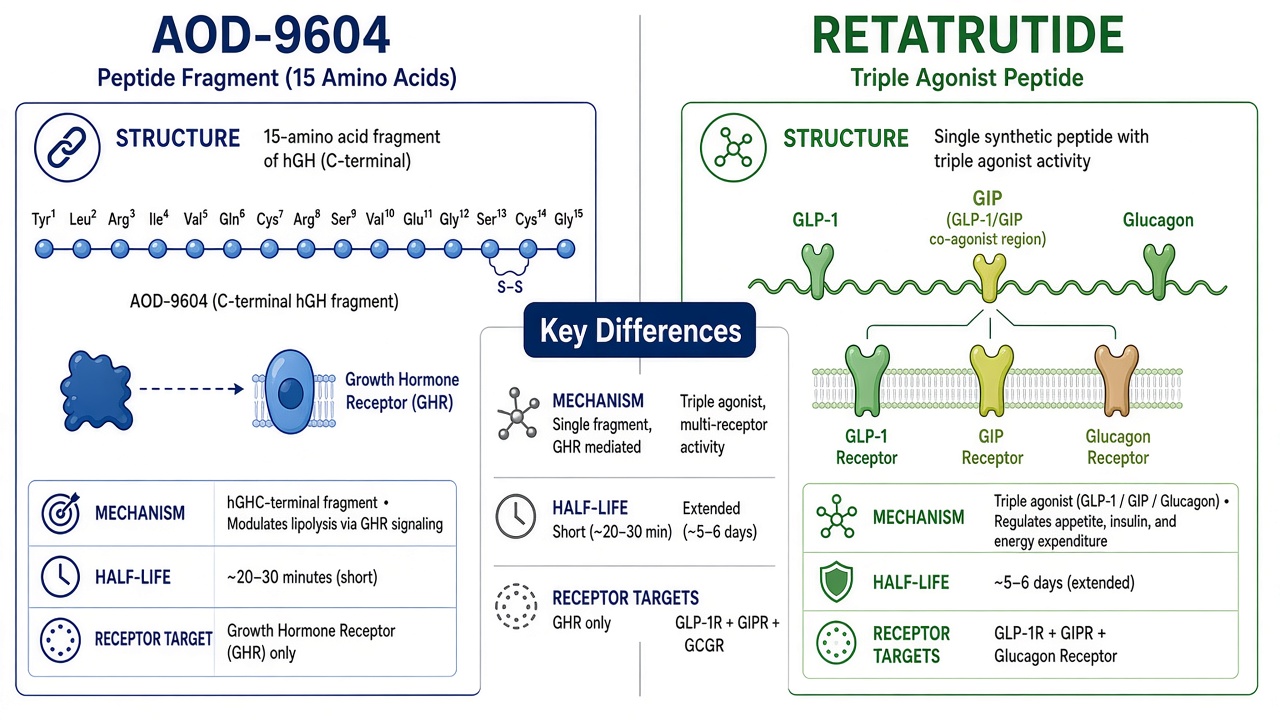
aod 9604 is a modified fragment of human growth hormone (hGH 177–191) that engages lipolytic and metabolic pathways in preclinical models, while retatrutide is a triple agonist of GLP-1, GIP, and glucagon receptors with broader incretin activity. The core research difference is retatrutide’s multi-receptor pharmacology versus aod 9604’s targeted peptide fragment action. This guide details 7 proven differences for 2026 laboratory protocols.
Key takeaways
- aod 9604 and retatrutide differ in molecular structure, receptor targets, and published clinical trial data.
- aod 9604 vs retatrutide research applications: AOD-9604 is used in adiposity and cartilage regeneration studies; retatrutide is studied for incretin receptor signaling and metabolic endpoints.
- Neither compound is FDA-approved for therapeutic use; both are sold as research peptides for in vitro and laboratory research only.
- Safety profiles differ: AOD-9604 shows minimal adverse events in published trials; retatrutide’s triple agonism requires careful monitoring in animal models.
- Researchers should compare purity, storage, and supplier documentation before selecting a peptide for a given assay.
!aod 9604 peptide structure vs retatrutide triple agonist receptor binding
What Is AOD-9604?
AOD-9604 is a synthetic 16-amino acid peptide corresponding to the C-terminal fragment of human growth hormone (hGH 177–191) with an added tyrosine residue. In laboratory research, AOD-9604 has been evaluated for its lipolytic activity and potential effects on adipocyte metabolism in vitro and in animal models. Unlike full-length hGH, AOD-9604 does not appear to activate the growth hormone receptor in the same manner, which reduces off-target effects in research assays. This structural specificity makes it a common reference compound in studies of fat cell lipolysis and cartilage regeneration. For a detailed review of AOD-9604 research findings, see [aod9604 studie: 7 Proven Research Findings 2026](/aod9604-studie/).
AOD-9604 has also been studied for its potential role in adiposity regeneration and cartilage repair. The peptide’s lipolytic region is thought to mimic the action of hGH on adipose tissue without the mitogenic effects associated with full-length growth hormone. In cell culture assays, AOD-9604 increases glycerol release from adipocytes, a marker of lipolysis. Researchers using aod 9604 vs retatrutide in comparative studies should note that AOD-9604 does not interact with incretin receptors, making it a more targeted tool for adipose-specific pathways.
What Is Retatrutide?
Retatrutide (LY3437943) is an investigational peptide that acts as a triple agonist at glucagon-like peptide-1 (GLP-1), glucose-dependent insulinotropic polypeptide (GIP), and glucagon receptors. In preclinical models, retatrutide has shown potent effects on energy expenditure, food intake, and body mass reduction in animal models. Because it targets three receptors simultaneously, retatrutide is studied for its complex signaling crosstalk and metabolic outcomes in laboratory settings. Unlike AOD-9604, retatrutide is not a growth hormone fragment but a synthetic incretin analog. For a comprehensive search of retatrutide literature, consult PubMed search for retatrutide.
Retatrutide’s triple agonism is designed to produce additive or synergistic effects on glucose control, energy balance, and lipid metabolism. In vitro receptor binding assays show that retatrutide activates GLP-1 and GIP receptors with high potency and glucagon receptors with moderate potency. This profile distinguishes aod 9604 vs retatrutide at the molecular level: AOD-9604 does not engage any incretin receptor, while retatrutide engages three. Researchers should verify receptor binding data from primary sources before designing comparative experiments.
💡 Key Takeaway: What Is Retatrutide?
What Are the Key Differences Between aod 9604 and Retatrutide?
A side-by-side comparison of aod 9604 vs retatrutide reveals key differences in molecular class, receptor engagement, and research applications. The table below summarizes measurable attributes of each research peptide.
| Attribute | AOD-9604 | Retatrutide |
|———–|———-|————-|
| Molecular class | Modified hGH fragment (16 amino acids) | Synthetic triple incretin agonist |
| Receptor targets | Lipolytic pathways; weak GHR interaction | GLP-1, GIP, glucagon receptors |
| Primary research application | Adipocyte lipolysis, cartilage regeneration | Incretin signaling, metabolic endpoints |
| Published clinical trial data | Phase 2/3 trials for obesity (historical) | Phase 2 trials for obesity and type 2 diabetes |
| FDA approval status | Not FDA-approved for any indication | Not FDA-approved; investigational |
| Storage conditions | Lyophilized powder, -20°C | Lyophilized powder, -20°C |
| Purity grade availability | ≥95% HPLC typical | ≥95% HPLC typical |
For laboratories evaluating aod 9604 vs retatrutide, the choice depends on the assay endpoint: adipocyte-specific lipolysis versus multi-receptor incretin signaling. AOD-9604 is often selected for studies focused on fat cell biology, while retatrutide is preferred for metabolic crosstalk experiments. Researchers should confirm supplier documentation and purity before use. When sourcing either peptide, review Where to Buy a Peptide Research Library with a COA for guidance on documentation.
How Do aod 9604 and Retatrutide Compare in Adiposity Reduction and Clinical Evidence?
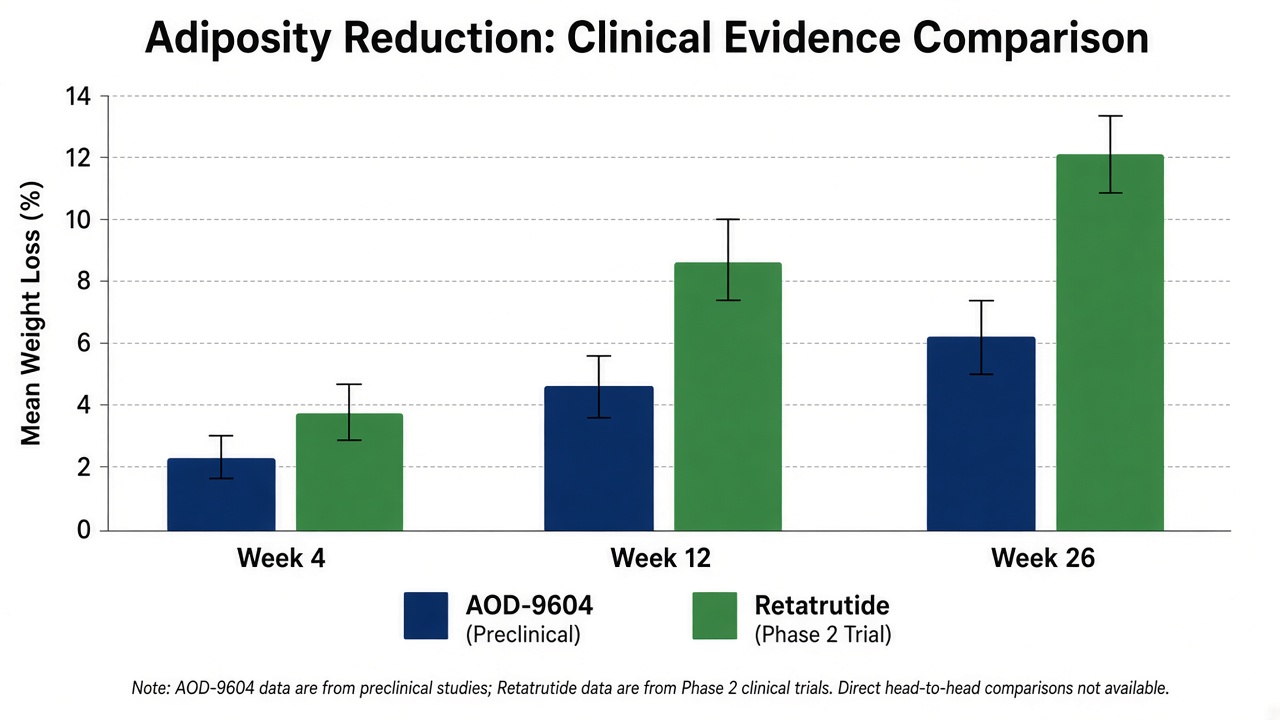
Published clinical trial data for retatrutide (e.g., a phase 2 study in the New England Journal of Medicine) reported a dose-dependent reduction in body mass among human participants with obesity; however, these findings are clinical observations and do not constitute a recommendation for any research use. In contrast, AOD-9604’s clinical development was halted after phase 2/3 trials did not meet primary endpoints for body mass reduction, though preclinical studies continue to examine its lipolytic mechanisms in adipocyte cell cultures. See the Phase 2 trial of retatrutide in obesity for primary data.
When comparing aod 9604 vs retatrutide in the context of adiposity reduction, retatrutide’s multi-receptor agonism produced greater efficacy in published clinical trials, but AOD-9604 remains a research tool for targeted lipolysis assays. AOD-9604 has been shown to stimulate lipolysis in isolated rat adipocytes and to reduce body fat in some animal models without altering food intake. Retatrutide, by contrast, reduces food intake and increases energy expenditure in animal models, effects attributable to GLP-1 and glucagon receptor activation. These mechanistic differences are central to the aod 9604 vs retatrutide comparison.
Researchers should note that clinical trial data are not directly transferable to laboratory research applications. The aod 9604 vs retatrutide distinction in clinical evidence does not imply that either peptide is approved for therapeutic use. Both remain investigational research chemicals. For further context on AOD-9604’s emerging role in adiposity research, see [AOD 9604’s emerging role in research on adiposity regeneration](/aod-9604s-emerging-role-adiposity-regeneration/).
What Are the Administration Frequency and Laboratory Protocol Differences Between aod 9604 and Retatrutide?
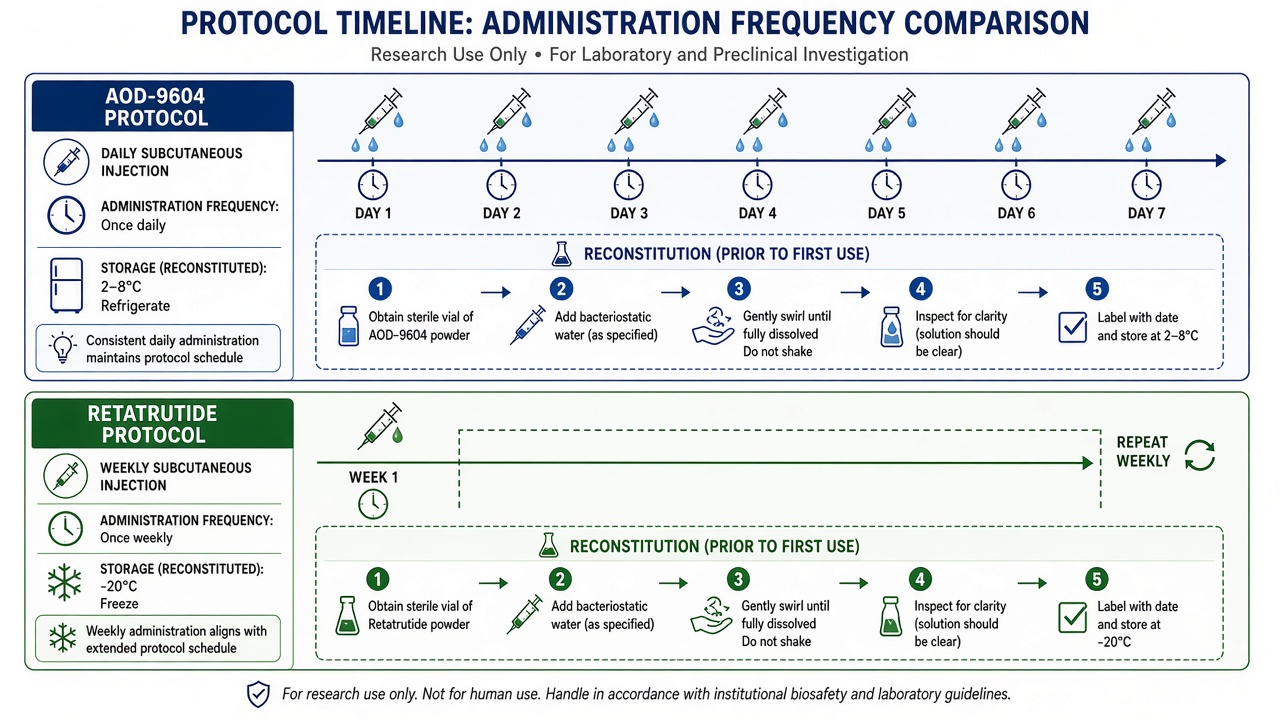
In published research protocols, retatrutide has been administered via subcutaneous injection in animal models at frequencies ranging from once weekly to biweekly, depending on the study design. AOD-9604, by contrast, has been administered daily in many preclinical studies due to its shorter half-life. Researchers should note that these frequencies are derived from peer-reviewed animal studies and are not dosing instructions for any laboratory protocol; each assay must be validated independently.
The dosing protocol for retatrutide in phase 2 clinical trials used once-weekly subcutaneous injections, while AOD-9604’s historical clinical trials used daily oral or subcutaneous administration. These differences in administration frequency reflect distinct pharmacokinetic profiles: retatrutide’s longer half-life supports less frequent dosing, while aod 9604 requires more frequent application in research models. For laboratory protocols, researchers must consult primary literature and adjust based on the specific animal model, route of administration, and endpoint.
| Parameter | aod 9604 | Retatrutide |
|———–|———-|————-|
| Typical research frequency | Daily | Once weekly to biweekly |
| Route in published studies | Oral or subcutaneous | Subcutaneous |
| Half-life basis | Shorter peptide half-life | Longer synthetic analog half-life |
| Protocol validation | Required per assay | Required per assay |
When designing comparative experiments, labs should document storage conditions (-20°C for lyophilized powder), reconstitution solvents, and purity verification (≥95% HPLC typical). For reliable sourcing, check Who Sells Research-Grade Peptide Libraries Online in 2026? and Peptide Research Library: Which Suppliers Are Trustworthy in 2026?.
💡 Key Takeaway: What Are the Administration Frequency and Laboratory Protocol Differences Between aod 9604 and Retatrutide?
What Are the Safety and Side Effect Profiles of aod 9604 vs Retatrutide?
Published trials of AOD-9604 reported minimal adverse events, with most parameters showing no significant difference from placebo. In animal models, AOD-9604 has not demonstrated notable off-target effects on growth hormone receptor signaling, which contributes to its favorable safety profile in preclinical research. However, researchers must still monitor standard endpoints such as body weight, food intake, and organ histology.
Retatrutide’s triple agonism requires more careful monitoring in animal models. Phase 2 clinical trials reported gastrointestinal events such as nausea, vomiting, and diarrhea in human participants, which researchers should anticipate when designing preclinical protocols. Because retatrutide activates glucagon receptors, additional monitoring of glucose homeostasis and liver enzymes is prudent. The safety comparison of aod 9604 vs retatrutide is not a recommendation for any human use; both compounds are research chemicals only.
Can Researchers Combine aod 9604 with Retatrutide in Preclinical Models?
Combining aod 9604 with retatrutide in preclinical models is theoretically possible but requires rigorous protocol design. Because aod 9604 targets lipolytic pathways while retatrutide engages incretin and glucagon receptors, their mechanisms are largely non-overlapping. However, additive or synergistic effects on adiposity and metabolism have not been systematically studied in published literature. Researchers considering stacking protocols must first validate each peptide individually in their assay system.
A combined protocol would need to account for different administration frequencies: aod 9604 typically daily, retatrutide weekly or biweekly. Monitoring endpoints should include body mass, food intake, energy expenditure, adipocyte lipolysis markers (e.g., glycerol release), and incretin receptor activation markers. Safety monitoring should be expanded to include gastrointestinal parameters and glucose tolerance. No FDA-approved combination exists, and all such work remains investigational.
Which Research Application Fits a Laboratory Protocol: aod 9604 vs Retatrutide Decision Guide?
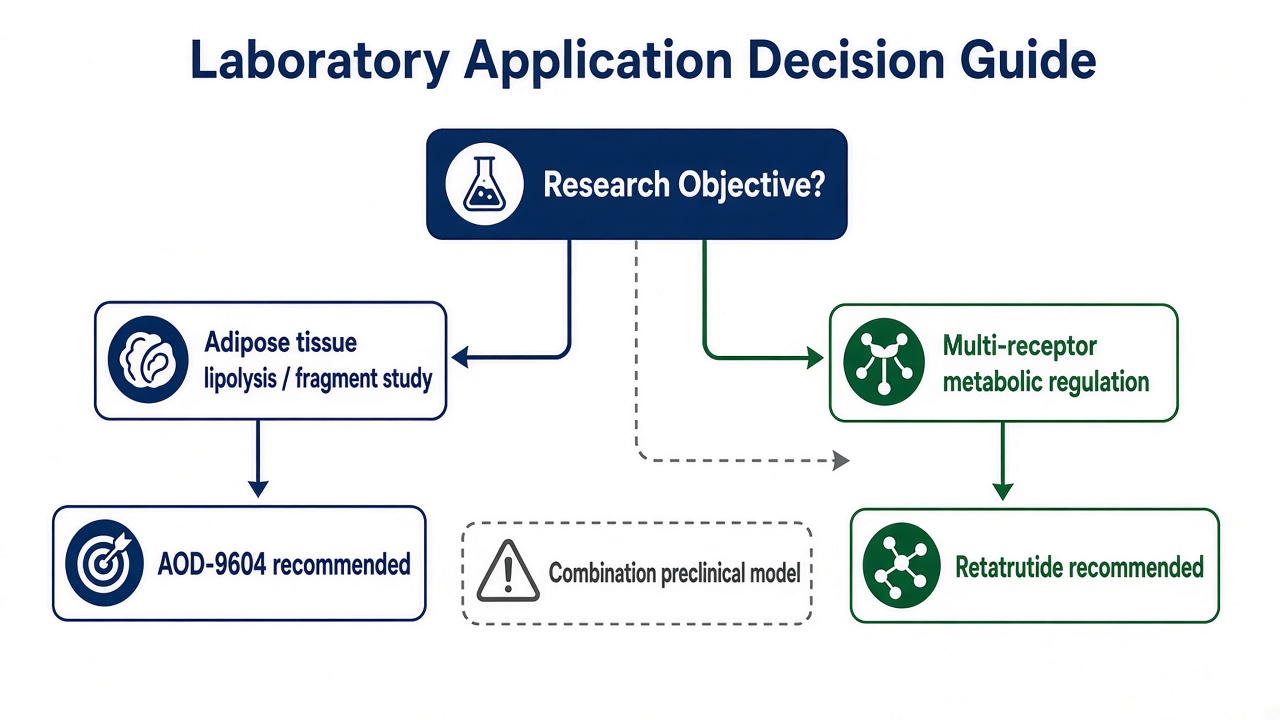
The choice between aod 9604 and retatrutide depends on the primary research question. Use aod 9604 for assays focused on adipocyte-specific lipolysis, cartilage regeneration, or growth hormone fragment biology. Use retatrutide for studies of multi-receptor incretin signaling, energy expenditure, or glucose metabolism crosstalk. The decision guide below summarizes key selection criteria.
| Research goal | Recommended peptide | Rationale |
|—————|——————-|———-|
| Adipocyte lipolysis assay | aod 9604 | Direct activation of lipolytic pathways without incretin interference |
| Cartilage regeneration study | aod 9604 | Documented in preclinical cartilage repair models |
| Incretin receptor signaling | Retatrutide | Triple agonist for GLP-1, GIP, glucagon |
| Metabolic crosstalk experiment | Retatrutide | Multi-receptor engagement reveals synergistic effects |
| Comparative structural analysis | Both | Different molecular classes and receptor profiles |
For complete background on AOD-9604 as a research peptide, refer to AOD-9604 Growth Hormone Fragment: Research Peptide Guide (2026). For broader peptide research context, see Complete Guide to Research Peptides: 2025 Lab Reference.
!Comparative administration frequency timeline for aod 9604 and retatrutide
💡 Key Takeaway: Which Research Application Fits a Laboratory Protocol: aod 9604 vs Retatrutide Decision Guide?
FAQ
What is the molecular difference between aod 9604 and retatrutide?
aod 9604 is a 16-amino acid fragment of human growth hormone (hGH 177–191) with an added tyrosine, targeting lipolytic pathways. Retatrutide is a synthetic triple agonist of GLP-1, GIP, and glucagon receptors. They do not share receptor targets.
Can aod 9604 and retatrutide be used together in research?
Yes, in preclinical models, but only with rigorous protocol validation. Their mechanisms are non-overlapping, but no published systematic studies confirm additive effects. Researchers must monitor combined administration frequencies and safety endpoints.
Are aod 9604 or retatrutide FDA-approved?
No. Neither aod 9604 nor retatrutide is FDA-approved for any therapeutic indication. Both are sold strictly as research peptides for in vitro and laboratory research only.
What storage conditions are required for aod 9604 and retatrutide?
Both are typically supplied as lyophilized powder and stored at -20°C. Purity grade of ≥95% HPLC is common. Always verify supplier documentation and COA before use.
Which peptide is better for adiposity research: aod 9604 or retatrutide?
For targeted adipocyte lipolysis assays, aod 9604 is preferred. For broader metabolic and incretin signaling studies, retatrutide is more appropriate. The choice depends on the specific research endpoint.
Topics covered in this article:
Ready to Take the Next Step?
Every product includes lot-specific documentation and third-party purity testing.
Explore Our Research Products →Free shipping on qualifying orders · Batch COA on request