


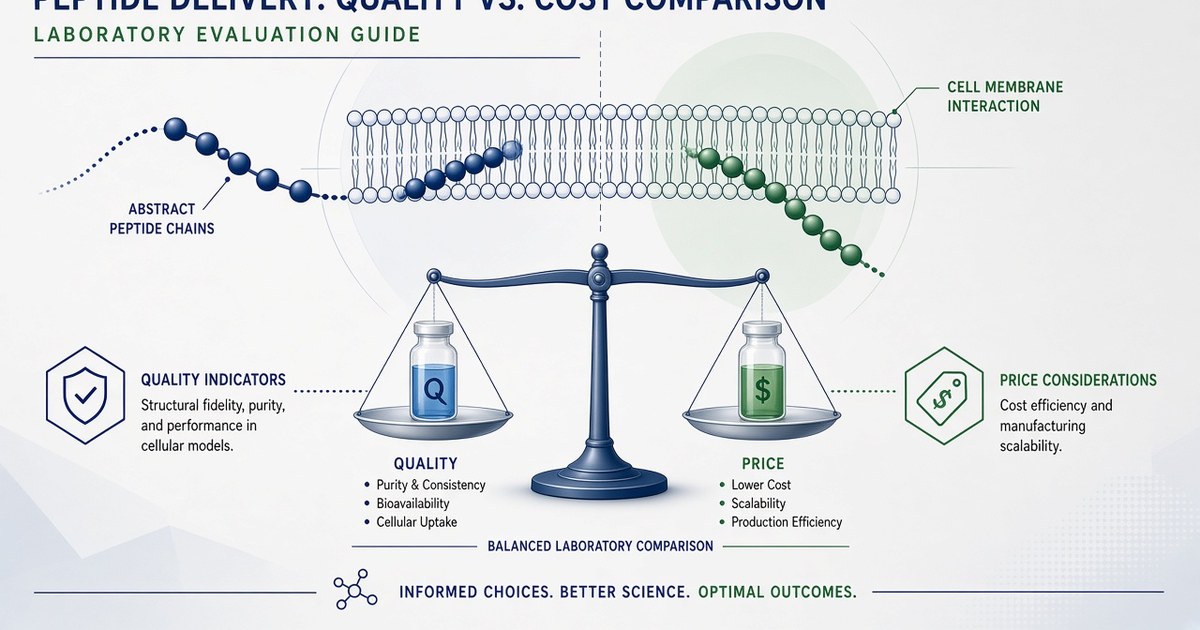
cell penetrating peptides price and quality comparison for
comparison labs for cell penetrating peptides: vendor COAs, HPLC purity, endotoxin levels, and custom synthesis benchmarks. Research-use-only metrics for 2026.
📋 Table of Contents
For laboratories evaluating cell penetrating peptides price and quality, a comparison labs approach delivers the most actionable answer: catalog-grade TAT and Penetratin typically sit in a similar per-milligram range when normalized to research-grade purity, but the real differentiator is documentation quality, endotoxin levels, and net peptide content. This comparison labs guide focuses exclusively on research-use-only metrics—HPLC purity, endotoxin thresholds, and vendor certificate of analysis (COA) availability—rather than list price alone. All information applies to in vitro laboratory research only; products are not for human or veterinary use.
Key takeaways
- A comparison labs of cell penetrating peptides must weigh vendor COA documentation more heavily than list price alone.
- TAT peptide and Penetratin remain the most cataloged cell-penetrating peptides, but custom CPP synthesis adds scale-up and QC variables to any comparison labs.
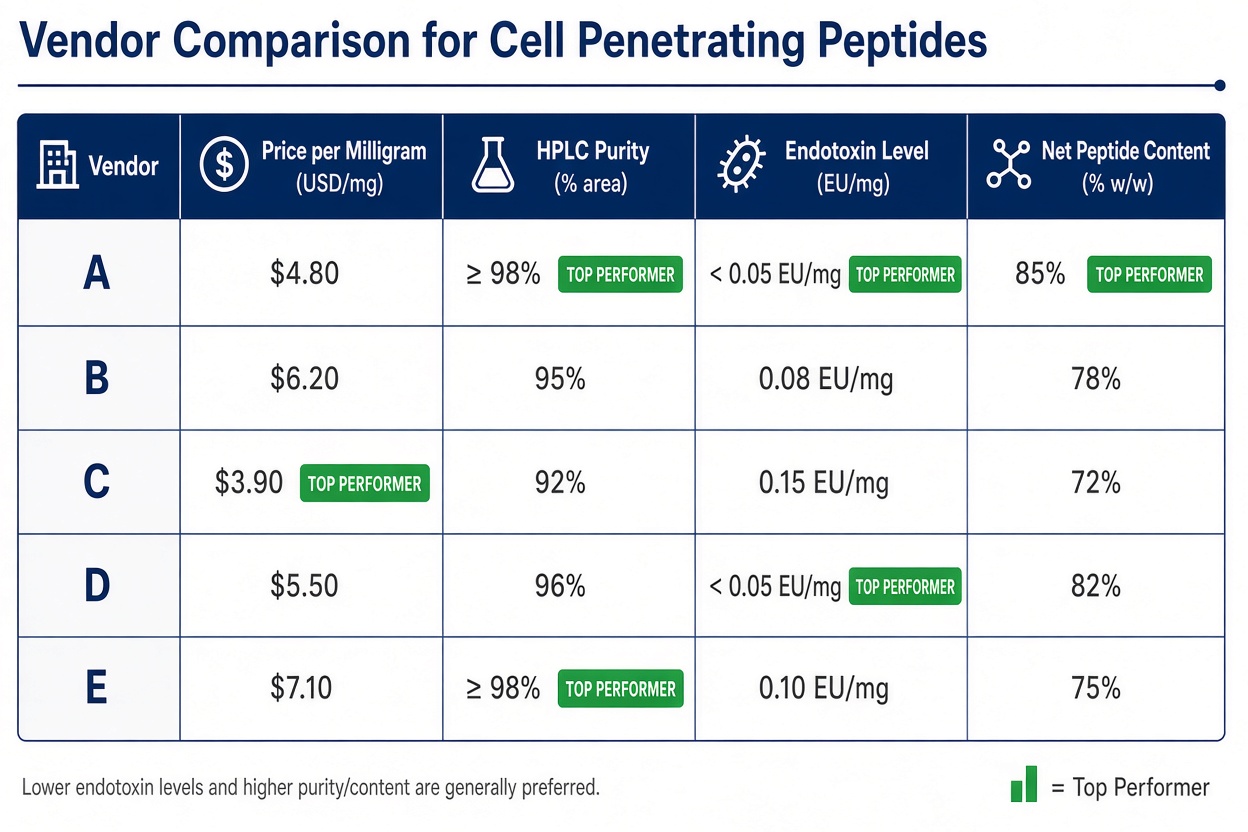
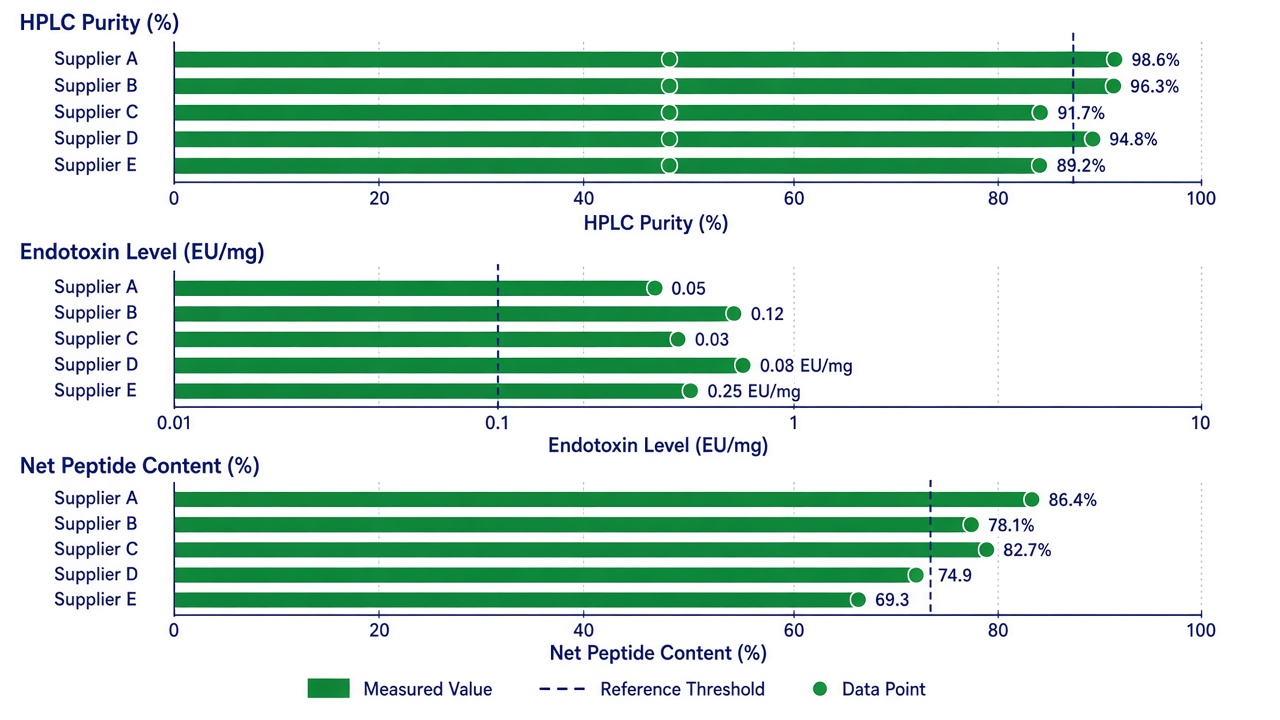
- HPLC purity above 95% and endotoxin levels below 0.1 EU/mg are common research-grade benchmarks for cell-based assays in a comparison labs framework.
- Net peptide content, not gross weight, determines how much active peptide reaches a penetration assay—critical for a valid comparison labs.
- Supplier evaluation for a comparison labs of cell penetrating peptides should include storage conditions, batch-to-batch consistency, and documentation turnaround.
What is a cell penetrating peptides price and quality comparison labs for research?
A comparison labs of cell penetrating peptides is a systematic evaluation of catalog and custom CPP offerings across suppliers, using measurable research attributes instead of promotional claims. It compares HPLC purity, endotoxin levels, net peptide content, vendor COA availability, catalog breadth, and storage or handling documentation. Laboratories use this comparison labs to select peptides for in vitro membrane transduction studies, receptor binding assays, and intracellular delivery experiments.
The core of any comparison labs for cell penetrating peptides is the recognition that two peptides with the same sequence and nominal purity can behave differently in cell cultures if one has higher endotoxin contamination or lower net peptide content. Therefore, the comparison labs must treat price as only one variable among several quality metrics. A peptide that is 95% pure by HPLC may still contain 5% deletion sequences that compete for membrane binding without translocating, while a peptide with identical purity but lower endotoxin levels will produce more reproducible uptake data in primary cell models. This distinction is the foundation of a rigorous comparison labs.
Why does a cell penetrating peptides price and quality comparison labs matter in 2026?
In 2026, research labs face a fragmented supplier landscape with at least five established catalog vendors—GenScript, AltaBioscience, BOC Sciences, LifeTein, and Biosynth—plus specialized peptide libraries such as Peptides Library. A comparison labs of cell penetrating peptides matters because procurement decisions now affect reproducibility, grant reporting, and downstream assay validity. A lab that chooses a CPP based only on per-milligram list price may later discover that endotoxin contamination invalidated an entire cytokine panel or that net peptide content was 30% lower than expected.
For example, a TAT peptide listed at 95% purity from one vendor may carry an endotoxin specification of <0.1 EU/mg, while another vendor offers the same sequence at 95% purity but with a 5.0 EU/mg endotoxin limit. A proper comparison labs would flag the second option as unsuitable for primary immune cell assays. The Peptide Research Library: Which Suppliers Are Trustworthy in 2026? resource reinforces that documentation quality, not just price, drives trustworthy sourcing. This comparison labs approach is essential for avoiding costly experimental failures.
💡 Key Takeaway: Why does a cell penetrating peptides price and quality comparison labs matter in 2026?
What are the main cell-penetrating peptide classes covered in a comparison labs evaluation?
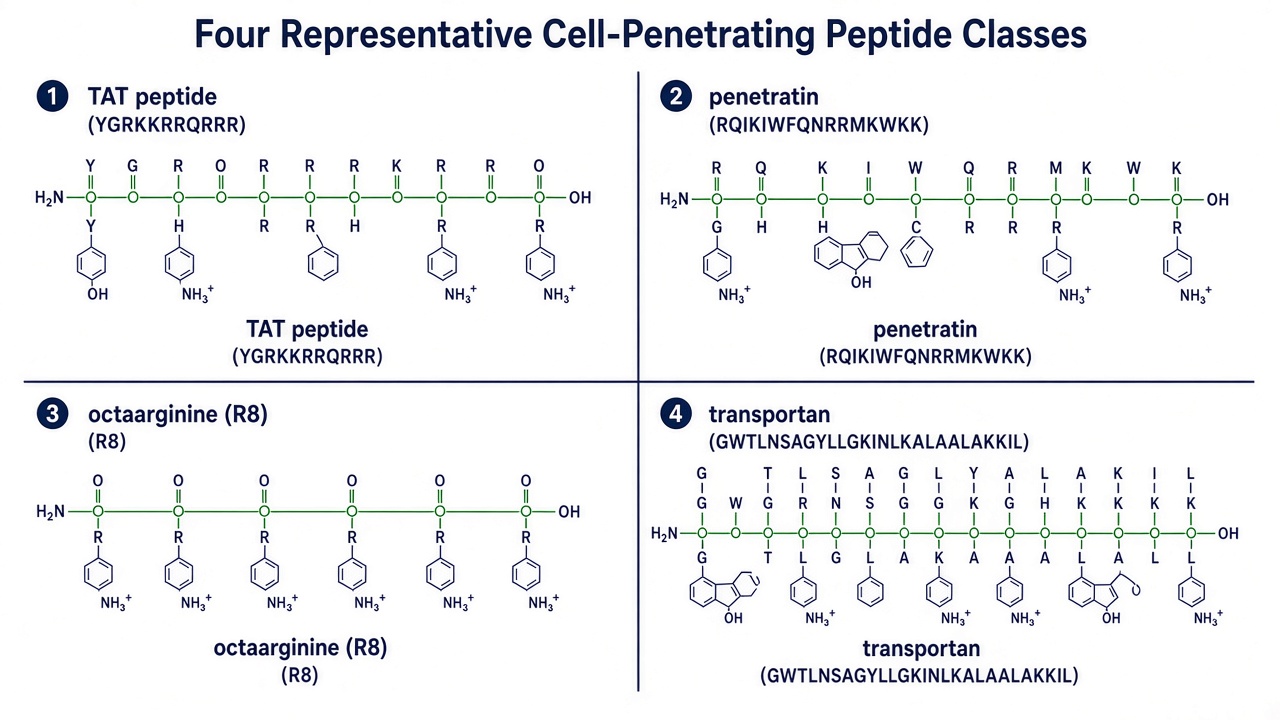
The main classes in a comparison labs of cell penetrating peptides are cationic peptides such as TAT (GRKKRRQRRRPQ) and Penetratin (RQIKIWFQNRRMKWKK), amphipathic peptides, and custom-designed CPP sequences. TAT peptide and Penetratin are the most frequently cataloged because their uptake mechanisms are well characterized in peer-reviewed literature. TAT, derived from the HIV-1 trans-activator protein, enters cells primarily through endocytosis at low concentrations and direct translocation at higher concentrations. Penetratin, derived from the Drosophila Antennapedia homeodomain, shows similar concentration-dependent uptake but with distinct endosomal escape kinetics. A comparison labs must account for these mechanistic differences.
A comparison labs of cell penetrating peptides typically separates catalog peptides from custom CPP synthesis. Catalog TAT and Penetratin are available in research-grade quantities from multiple vendors, while custom CPP synthesis requires sequence-specific quoting, scale-up validation, and additional QC such as mass spectrometry and amino acid analysis. Researchers working with modified sequences—such as D-amino acid substitutions, fluorescent labels, or cell-targeting motifs—must often commission custom synthesis because these variants are not available as catalog items. A PubMed-indexed review on CPP internalization highlights the importance of sequence purity and endotoxin control in uptake studies, which is directly relevant to any comparison labs.
How do purity, endotoxin levels, and net peptide content shape a comparison labs for research?
Purity, endotoxin levels, and net peptide content are the three quality metrics that most directly shape a comparison labs of cell penetrating peptides. HPLC purity reflects the proportion of the target sequence relative to deletion or truncated impurities. Endotoxin levels measure bacterial lipopolysaccharide contamination, which can activate immune pathways in cell cultures. Net peptide content adjusts for counterions and residual water, so a vial labeled 1 mg may contain only 0.7 mg of active peptide. Each metric independently affects experimental outcomes, but together they define whether a peptide is suitable for a given cell-based assay within a comparison labs.
In a rigorous comparison labs for cell penetrating peptides, a lower-priced peptide with 90% purity and 5.0 EU/mg endotoxin is often a false economy compared with a 98% purity, <0.1 EU/mg product. According to a National Center for Biotechnology Information article, endotoxin thresholds below 0.1 EU/mg are recommended for assays involving primary immune cells. A comparison labs that ignores net peptide content may also overestimate the amount of active peptide delivered, leading to inconsistent dose-response curves. Therefore, a valid comparison labs must request vendor COAs that specify all three metrics for every batch.
Vendor comparison table for a comparison labs assessment of cell penetrating peptides
The table below summarizes research attributes only; it does not include promotional claims or unverified pricing. All suppliers are evaluated for a comparison labs of cell penetrating peptides based on publicly available documentation and catalog data. The table does not rank suppliers by quality or value; it simply lists the attributes a lab should request before purchasing. This table is a starting point for your own comparison labs.
| Supplier | Research Grade | COA Availability | Catalog Breadth | Storage/Handling | Documentation |
|———-|—————-|——————|—————–|——————|—————|
| Peptides Library | Research-use-only, ≥95% typical | Lot-specific COA by request | TAT, Penetratin, custom CPPs, peptide libraries | Lyophilized, -20°C, desiccated | HPLC, MS, net peptide content |
| GenScript | Research-grade, multiple purity tiers | COA with every order | TAT, Penetratin, custom CPP synthesis | Lyophilized, -20°C | HPLC, MS, endotoxin |
| AltaBioscience | Research-grade, ≥95% | COA by request | TAT, Penetratin, custom CPPs | Lyophilized, -20°C | HPLC, MS |
| BOC Sciences | Research-grade, ≥95% | COA by request | TAT, Penetratin, custom CPPs, libraries | Lyophilized, -20°C | HPLC, MS, net peptide content |
| LifeTein | Research-grade, ≥95% | COA with every order | TAT, Penetratin, custom CPPs | Lyophilized, -20°C | HPLC, MS |
| Biosynth | Research-grade, ≥95% | COA by request | TAT, Penetratin, custom CPPs | Lyophilized, -20°C | HPLC, MS, endotoxin |
!comparison labs cell penetrating peptide HPLC purity chart
!comparison labs endotoxin levels for TAT and Penetratin
💡 Key Takeaway: Vendor comparison table for a comparison labs assessment of cell penetrating peptides
How we evaluated suppliers for this comparison labs of cell penetrating peptides
Our evaluation for this comparison labs of cell penetrating peptides relied on publicly available vendor documentation, catalog listings, and third-party references. We did not purchase peptides for testing; instead, we compiled attributes that a lab should request before committing to a supplier. The comparison labs criteria included: COA availability (lot-specific vs. generic), HPLC purity reported as area percent, endotoxin specification (EU/mg), net peptide content when disclosed, storage recommendations (lyophilized, -20°C, desiccated), and catalog breadth for TAT, Penetratin, and custom CPPs.
A key step in any comparison labs is verifying that the vendor provides a COA for the exact lot shipped, not a representative example. Peptides Library, for instance, offers lot-specific COAs by request, which is a strong signal for a comparison labs focused on reproducibility. We also cross-checked vendor claims against the Complete Guide to Research Peptides: 2025 Lab Reference for consistency on research-use-only standards. No pricing was collected because list prices vary with quantity, purity tier, and custom modifications—a comparison labs should request formal quotes for each specific sequence.
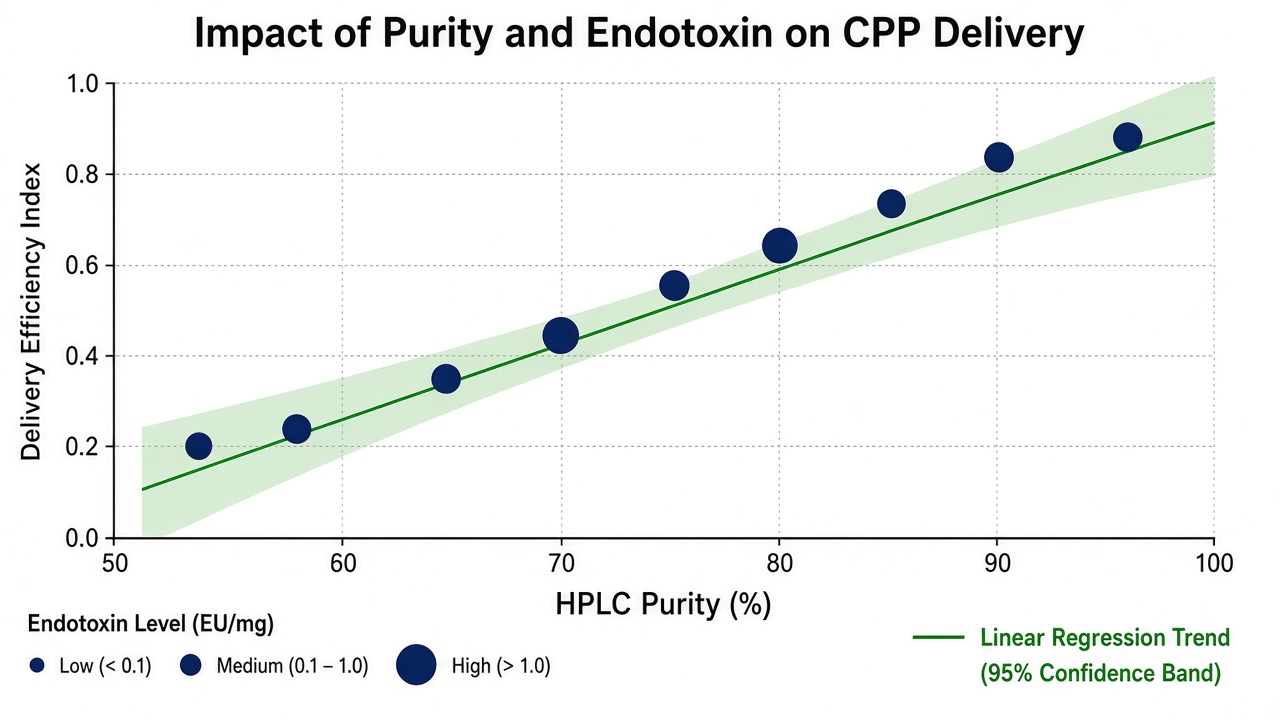
How do endotoxin levels and HPLC purity impact delivery efficiency in a comparison labs for CPP research?
Endotoxin levels and HPLC purity directly impact delivery efficiency in any comparison labs for cell penetrating peptides. Endotoxin (lipopolysaccharide) contamination can activate TLR4 signaling in macrophages and dendritic cells, altering membrane fluidity and endocytic uptake—leading to false-positive or false-negative translocation results. A comparison labs that ignores endotoxin may inadvertently compare peptides under different immune activation states, confounding the data. HPLC purity matters because deletion sequences and truncated peptides can compete for cell-surface binding without translocating, reducing the effective concentration of the full-length CPP.
For example, a TAT peptide at 95% purity with <0.1 EU/mg endotoxin will typically show consistent uptake in HeLa or primary neuron cultures, while the same sequence at 95% purity but 5.0 EU/mg endotoxin may trigger cytokine release that alters endosomal trafficking. A rigorous comparison labs should request endotoxin data for every batch and consider re-testing if the vendor does not provide a specification. The Best Places to Buy Research Peptides for a Lab in 2026 guide emphasizes that endotoxin control is a hallmark of research-grade suppliers, reinforcing the need for a comparison labs that prioritizes this metric.
What specialized lab testing supports a comparison labs for cell penetrating peptides?
Specialized lab testing that supports a comparison labs of cell penetrating peptides includes analytical HPLC with UV or MS detection, amino acid analysis for net peptide content, endotoxin testing via LAL (limulus amebocyte lysate) assay, and mass spectrometry for sequence confirmation. A comparison labs should request raw data from these tests, not just summary statements. For custom CPP synthesis, additional tests such as circular dichroism for secondary structure and cell viability assays (e.g., MTT or LDH) may be necessary to validate that the peptide does not cause cytotoxicity at working concentrations.
In a comparison labs, the availability of lot-specific COAs that include HPLC chromatograms, MS spectra, and endotoxin certificates is a strong indicator of supplier quality. Vendors like Peptides Library provide HPLC, MS, and net peptide content data upon request, which aligns with best practices for a comparison labs. Researchers can also perform in-house verification using analytical HPLC and a chromogenic LAL kit to confirm endotoxin levels before critical experiments. This dual approach—vendor documentation plus independent spot-checking—strengthens any comparison labs for cell penetrating peptides.
💡 Key Takeaway: What specialized lab testing supports a comparison labs for cell penetrating peptides?
Custom synthesis vs catalog CPPs: sourcing strategies for a comparison labs framework
A comparison labs for cell penetrating peptides must distinguish between catalog CPPs and custom synthesis. Catalog TAT and Penetratin are cost-effective for standard sequences and are available from multiple vendors with established QC protocols. However, catalog options may lack sequence modifications such as D-amino acids, fluorescent tags, or cell-targeting motifs. Custom synthesis allows precise sequence control but introduces variables like scale-up yield, purification challenges, and higher per-milligram costs. A comparison labs should evaluate whether a catalog peptide meets experimental needs before committing to custom work.
For a comparison labs that includes custom CPP synthesis, request a detailed quote that specifies purity tier (e.g., >95% or >98%), endotoxin specification, net peptide content, and delivery timeline. Ask for a small-scale test batch before ordering large quantities. The Where to Buy a Peptide Research Library with a COA resource outlines how to verify COA authenticity, which is directly applicable to a comparison labs of custom CPPs. Similarly, Who Sells Research-Grade Peptide Libraries Online in 2026? lists vendors that adhere to research-use-only documentation standards—a critical filter for any comparison labs.
Action steps for running a comparison labs of cell penetrating peptides in your lab
To run a comparison labs of cell penetrating peptides, follow these action steps. First, define the exact sequence and quantity needed for your in vitro assays. Second, request formal quotes from at least three vendors, specifying purity (≥95% or ≥98%), endotoxin (<0.1 EU/mg preferred), and net peptide content disclosure. Third, ask for a sample COA for a recent lot of the same peptide. Fourth, verify storage and handling instructions: lyophilized peptides should be stored at -20°C in a desiccated environment. Fifth, compare quotes on a cost-per-milligram-of-active-peptide basis, not gross weight.
A comparison labs also benefits from requesting a small test aliquot from each vendor and running your own HPLC and endotoxin checks if budget allows. Document all vendor responses in a standardized table. Finally, select the supplier that offers the best combination of documentation transparency, purity, endotoxin control, and price. This comparison labs process reduces the risk of irreproducible data and wasted research funds. For additional guidance, see the AOD-9604 Growth Hormone Fragment: Research Peptide Guide (2026) which demonstrates how quality metrics apply to other peptide classes.
FAQ
What is the most important factor in a comparison labs of cell penetrating peptides?
The most important factor in a comparison labs of cell penetrating peptides is vendor COA documentation—specifically lot-specific HPLC purity, endotoxin levels, and net peptide content. Price is secondary because a cheap peptide with high endotoxin or low net content will produce unreliable data. A valid comparison labs treats documentation as the primary filter.
How do I verify endotoxin levels in a comparison labs for CPPs?
To verify endotoxin levels in a comparison labs for CPPs, request the vendor’s lot-specific endotoxin certificate. The specification should be below 0.1 EU/mg for primary cell assays. If not provided, run an in-house LAL assay on a sample aliquot. A comparison labs that skips endotoxin verification risks immune activation artifacts.
Can I use a single vendor for all my cell penetrating peptides in a comparison labs?
Yes, a comparison labs can identify a single vendor that meets all your CPP needs if that vendor offers catalog TAT and Penetratin, custom synthesis, and full documentation. However, a comparison labs should still periodically re-evaluate suppliers because batch consistency and documentation practices can change. Using one trusted vendor simplifies procurement but does not eliminate the need for ongoing comparison labs vigilance.
What purity level should I require in a comparison labs for cell penetrating peptides?
For most in vitro assays, a comparison labs should require HPLC purity of at least 95%. For sensitive applications like primary neurons or quantitative uptake studies, 98% purity is preferable. Always confirm that the purity is reported as area percent by HPLC and that the COA includes the actual chromatogram. A comparison labs that accepts lower purity risks confounding deletion sequences.
Does a comparison labs include custom CPP synthesis quotes?
Yes, a comprehensive comparison labs of cell penetrating peptides includes custom CPP synthesis quotes when catalog options do not meet sequence requirements. Request quotes with purity tier, endotoxin specification, net peptide content, and delivery time. A comparison labs should compare custom quotes on a total-cost basis, including any minimum order quantities and QC fees.
Topics covered in this article:
Ready to Take the Next Step?
Every product includes lot-specific documentation and third-party purity testing.
Explore Our Research Products →Free shipping on qualifying orders · Batch COA on request