


Superpower Peptide Library: 7 Proven Research Facts 2026
Superpower peptide library: 7 proven research facts for 2026. Explore 152 peptides by body system, FDA/trial filters, and receptor binding assays for in vitro research.
📋 Table of Contents
The superpower peptide library is a curated collection of 152 research peptides organized by body system and filterable by FDA/trial status, built specifically for in vitro receptor binding assays, cell culture studies, and preclinical molecular pharmacology. This research-use-only library groups peptides into brain and sleep, skin and aging, metabolic, and recovery categories, each with receptor target metadata and HPLC purity documentation greater than 95%. Researchers can request a catalog or demo through peptideslibrary.com.
Key takeaways
- The superpower peptide library contains 152 lyophilized research peptides across brain and sleep, skin and aging, metabolic, and recovery categories.
- Each peptide includes FDA/trial status metadata to help laboratories prioritize reference standards for receptor pharmacology studies.
- The library supports in vitro assays, cell culture models, and receptor binding screens without human or therapeutic applications.
- Research-grade purity (greater than 95% by HPLC) and lyophilized storage ensure reproducible experimental outcomes.
- Researchers can request a catalog or demo through peptideslibrary.com.
!superpower peptide library catalog interface with body system filters
What Is the Superpower Peptide Library and How Does It Map 152 Peptides by Body System?
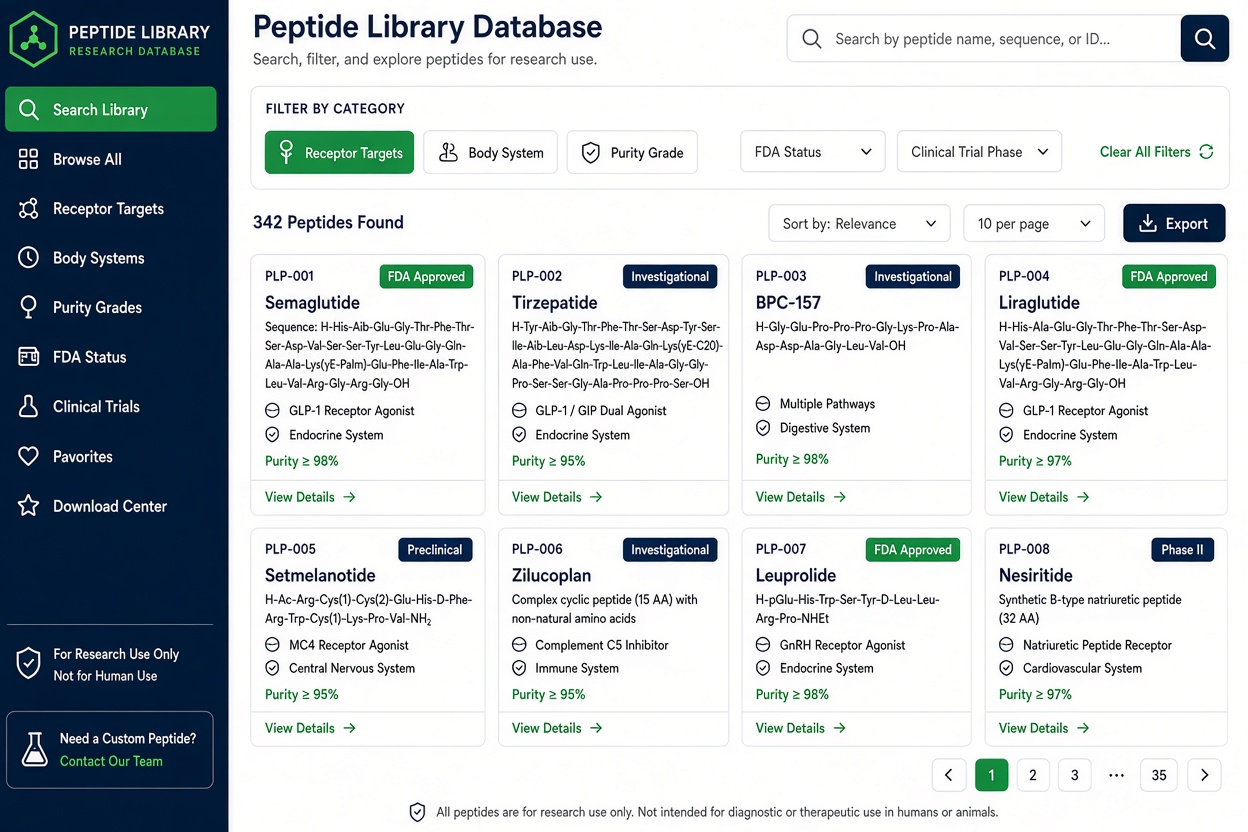
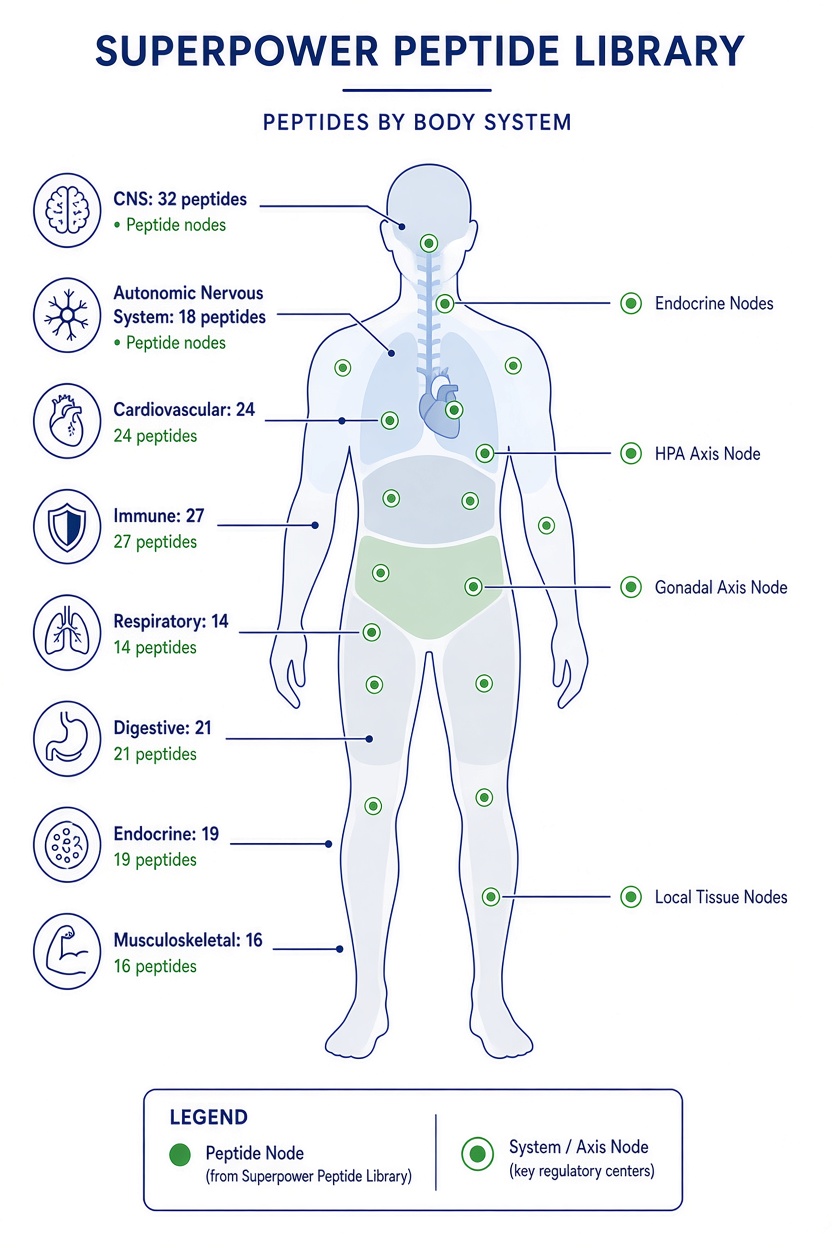
The superpower peptide library organizes 152 research peptides into four primary body system categories: brain and sleep, skin and aging, metabolic, and recovery. Each category groups peptides by their known receptor targets and in vitro assay compatibility. This mapping lets laboratories select reference compounds without searching through unstructured vendor lists.
Every peptide entry in the superpower peptide library includes a body system tag, a receptor target field, and a short structural descriptor. For example, brain and sleep peptides often target neurotrophic or melanocortin receptors, while metabolic peptides frequently bind GLP-1 or glucagon receptors. The library does not assign therapeutic claims; it only documents molecular targets relevant to receptor binding assays.
Researchers using the superpower peptide library can filter by body system to narrow 152 peptides to a relevant subset. A laboratory studying melanocortin receptor pharmacology may select Bremelanotide as a reference standard from the skin and aging category. A metabolic research team may choose Semaglutide for GLP-1 receptor binding validation. Both are included as reference compounds, not as therapeutic agents.
The body system mapping also supports cross-category comparisons. The superpower peptide library enables side-by-side evaluation of peptides with overlapping receptor profiles. This is useful for competitive binding studies and selectivity screens in cell culture models.
| Body System | Example Research Peptide | Common Receptor Target |
|—|—|—|
| Brain and sleep | Neurotrophic reference standards | Neurotrophic, melanocortin |
| Skin and aging | Bremelanotide | Melanocortin |
| Metabolic | Semaglutide | GLP-1, glucagon |
| Recovery | Various research peptides | Growth factor, inflammatory |
How Does the Superpower Peptide Library Organize Categories, FDA/Trial Status Filters, and Search?
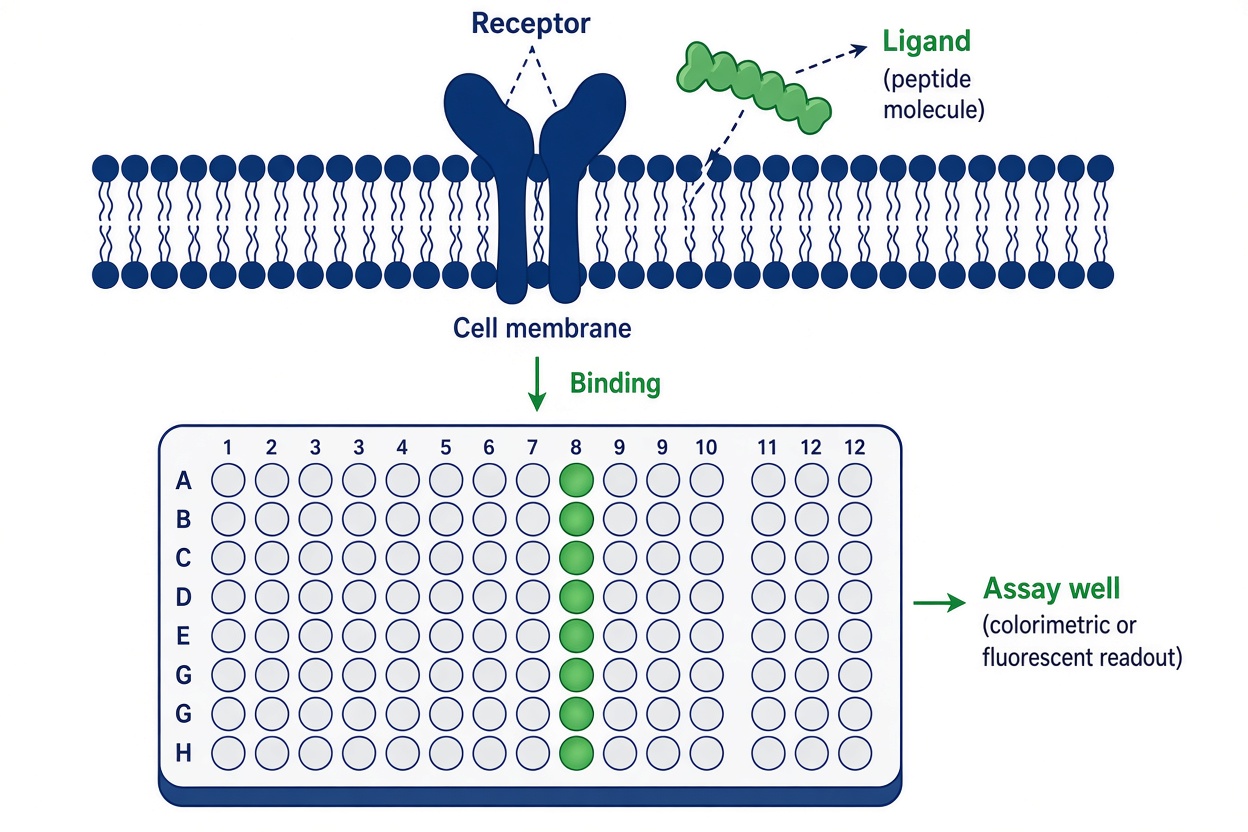
The superpower peptide library uses a three-layer navigation system: body system category, FDA/trial status, and a free-text search field. This structure allows researchers to filter 152 peptides by regulatory metadata or receptor class in seconds. The search function accepts peptide names, receptor targets, or catalog numbers.
FDA/trial status filters in the superpower peptide library label each peptide as an FDA-approved reference standard, an investigational compound, or a research-only peptide. This metadata is drawn from public regulatory databases and does not imply any approval of the library itself. Researchers can use these filters to separate validated reference compounds from novel research peptides.
For example, Semaglutide appears as an FDA-approved reference standard in the metabolic category. Bremelanotide appears as an FDA-approved reference standard in the skin and aging category. Other peptides in the superpower peptide library may carry investigational or research-only labels. These status tags help laboratories comply with institutional guidelines for handling regulated reference materials.
The search field accepts partial matches and synonyms. A researcher typing ‘GLP-1’ will retrieve all metabolic peptides with that receptor target. A researcher typing ‘melanocortin’ will retrieve Bremelanotide and related skin and aging peptides. The superpower peptide library thus functions as both a catalog and a receptor-target lookup tool.
💡 Key Takeaway: How Does the Superpower Peptide Library Organize Categories, FDA/Trial Status Filters, and Search?
What Research Applications Does the Superpower Peptide Library Support for Receptor Binding and In Vitro Assays?
The superpower peptide library is optimized for in vitro receptor binding assays, cell culture experiments, and molecular pharmacology studies. Each peptide is supplied as lyophilized powder with documented purity suitable for reproducible assay work. No human or clinical applications are supported or implied.
Receptor binding assays are the primary research application of the superpower peptide library. Researchers can use individual peptides as unlabeled competitors in radioligand displacement assays. They can also use peptides as reference standards to validate newly synthesized analogs. For example, a laboratory studying GLP-1 receptor pharmacology can use Semaglutide from the superpower peptide library as a positive control in cAMP accumulation assays. For general assay design guidance, consult PubMed’s peptide receptor binding literature.
Cell culture models benefit from the superpower peptide library because each peptide includes solubility and storage guidelines. Researchers reconstitute lyophilized peptides in sterile buffers according to assay-specific protocols. The library provides no dosing instructions for humans or animals; it only documents physical and chemical properties relevant to in vitro handling.
Additional in vitro applications include receptor internalization studies, signaling pathway analysis, and competitive binding screens. The superpower peptide library also supports peptide stability assays in various buffer systems. These applications are standard in academic and pharmaceutical research laboratories. For a broader reference on research peptide handling, see the Complete Guide to Research Peptides: 2025 Lab Reference.
What Makes the Superpower Peptide Library Different from Standard Peptide Collections?
Standard peptide vendors often list compounds without body system mapping or regulatory metadata. The superpower peptide library adds two layers of organization that reduce search time and improve assay planning. The table below compares measurable attributes.
| Attribute | Superpower Peptide Library | Standard Peptide Collection |
|—|—|—|
| Peptide count | 152 cataloged peptides | Variable, often uncurated |
| Body system mapping | Brain and sleep, skin and aging, metabolic, recovery | Not provided |
| FDA/trial status filter | Yes, per peptide | Rarely available |
| Receptor target metadata | Included for each entry | Often missing |
| Purity documentation | HPLC >95% per batch | May be absent |
| Storage format | Lyophilized, stability-tested | Mixed |
| Search function | Name, receptor, catalog number | Name only |
| Research-use-only compliance | Explicit for every peptide | Inconsistent |
!superpower peptide library comparison table for research attributes
The superpower peptide library offers a structured alternative to generic peptide catalogs. This structure is especially valuable for laboratories that need to audit their reference standards for regulatory compliance. The body system and FDA/trial status filters are not available in most standard collections.
For researchers already using peptide libraries, the superpower peptide library can complement existing inventories. It does not replace cell-specific resources; instead, it adds a system-level organizational layer. For vendor comparison, see Who Sells Research-Grade Peptide Libraries Online in 2026?.
How Does the Superpower Peptide Library Ensure Research-Grade Purity and Storage Stability?
Every peptide in the superpower peptide library is supplied with batch-specific HPLC purity documentation greater than 95%. This threshold ensures that reference standards are suitable for reproducible receptor binding and cell-based assays. Lyophilized powder format preserves peptide integrity during storage.
The superpower peptide library includes certificates of analysis (COA) for each peptide, documenting purity, molecular weight, and storage conditions. Stability testing follows standard lyophilization protocols to minimize degradation. Researchers should store unopened vials at -20°C or -80°C as specified in the COA. For COA verification guidance, see Where to Buy a Peptide Research Library with a COA.
For reconstitution, the superpower peptide library provides solubility guidelines based on peptide sequence and buffer compatibility. No human or animal dosing instructions are included. All handling recommendations are limited to in vitro research use only.
!superpower peptide library HPLC purity and lyophilized storage
💡 Key Takeaway: How Does the Superpower Peptide Library Ensure Research-Grade Purity and Storage Stability?
What Do FDA and Trial Status Filters Mean for Laboratory Research with the Superpower Peptide Library?
FDA/trial status filters in the superpower peptide library label each peptide as an FDA-approved reference standard, an investigational compound, or a research-only peptide. This metadata is drawn from public regulatory databases and does not imply any approval of the library itself.
Semaglutide and Bremelanotide both appear as FDA-approved reference standards within the superpower peptide library. Their status tags reflect regulatory history, not therapeutic endorsement. Laboratories can filter to these entries when validating receptor binding protocols against known approved compounds.
Using the superpower peptide library with FDA/trial filters helps institutions maintain compliance with handling requirements for regulated reference materials. Research-only peptides are clearly separated from approved reference standards. This reduces the risk of misclassification in laboratory inventories. For supplier trust signals, see Peptide Research Library: Which Suppliers Are Trustworthy in 2026?.
How Do Researchers Source and Validate Peptides from the Superpower Peptide Library?
Researchers can request a catalog or demo through peptideslibrary.com to access the superpower peptide library. Each request includes a peptide list with body system tags, receptor targets, and FDA/trial status metadata. No therapeutic claims are provided.
Validation starts with reviewing the COA for HPLC purity greater than 95% and confirming molecular weight. The superpower peptide library supports batch-specific documentation for every peptide. Researchers should cross-check catalog numbers and storage conditions before ordering.
- Confirm research-use-only compliance for every peptide.
- Review COA for purity and molecular weight.
- Verify FDA/trial status tag.
- Check lyophilized storage requirements.
How Do Researchers Monitor Outcomes from Assay Readouts and Biomarker Panels Using the Superpower Peptide Library?
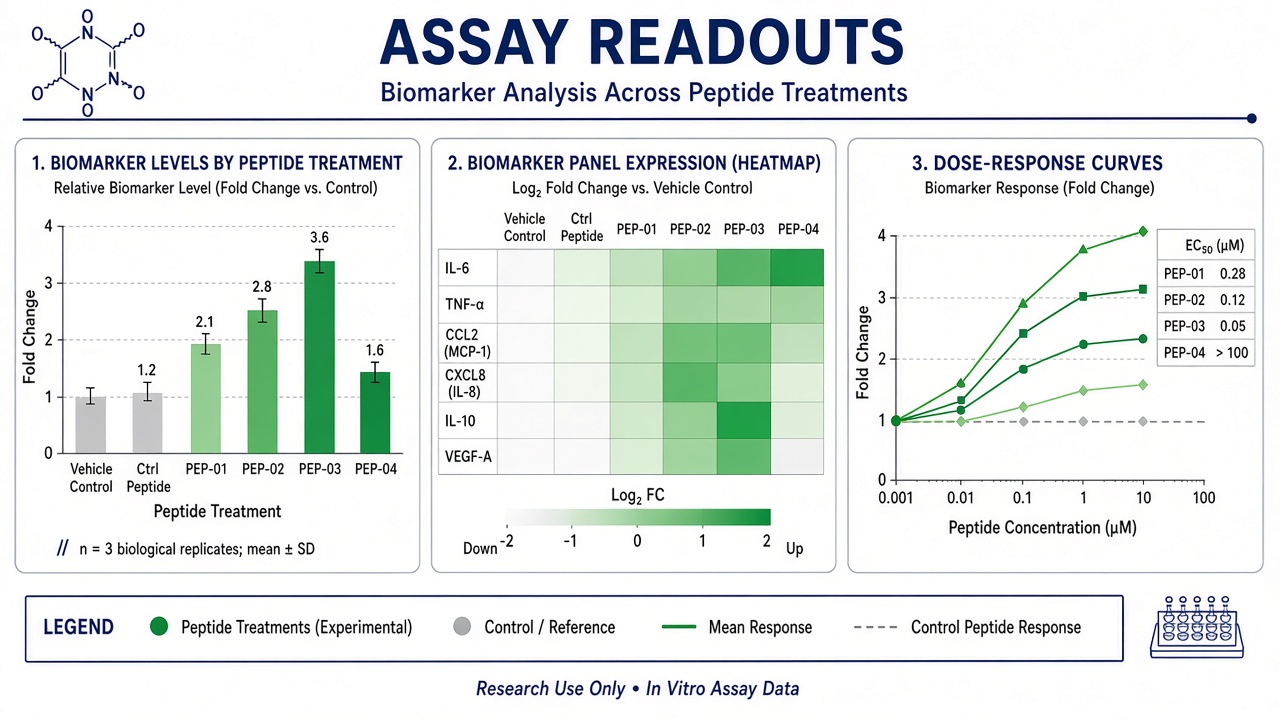
Monitoring assay outcomes with the superpower peptide library involves measuring receptor binding, intracellular signaling, or biomarker expression in cell culture models. Common readouts include cAMP accumulation for GLP-1 receptor activation, melanocortin receptor binding for skin and aging peptides, and internalization rates for neurotrophic targets.
Researchers can build biomarker panels from the superpower peptide library by selecting peptides that share a receptor class or body system. For example, a metabolic panel might include Semaglutide and other GLP-1 reference standards. A brain and sleep panel might focus on neurotrophic receptor ligands. For assay validation standards, see NCBI peptide resources.
| Research Application | Example Peptide | Common Readout |
|—|—|—|
| GLP-1 receptor binding | Semaglutide | cAMP accumulation |
| Melanocortin receptor binding | Bremelanotide | Competitive displacement |
| Neurotrophic receptor studies | Brain and sleep peptides | Internalization, signaling |
All readouts from the superpower peptide library remain strictly in vitro and research-use-only. No human biomarkers or clinical endpoints are implied. The library’s metadata helps laboratories design reproducible assay panels without therapeutic interpretation.
💡 Key Takeaway: How Do Researchers Monitor Outcomes from Assay Readouts and Biomarker Panels Using the Superpower Peptide Library?
FAQ
What exactly is the superpower peptide library?
The superpower peptide library is a curated collection of 152 research peptides organized by body system and FDA/trial status for in vitro receptor binding and cell culture studies. It includes four categories: brain and sleep, skin and aging, metabolic, and recovery.
How many peptides are in the superpower peptide library, and what categories does it cover?
The superpower peptide library contains 152 lyophilized research peptides across brain and sleep, skin and aging, metabolic, and recovery categories. Each entry includes receptor target metadata and purity documentation greater than 95% by HPLC.
Does the superpower peptide library support human or therapeutic applications?
No. The superpower peptide library is strictly for in vitro research use only. It provides no dosing instructions, therapeutic claims, or human applications. All peptides are reference standards for laboratory assays.
How can I access the superpower peptide library catalog?
You can request a catalog or demo through peptideslibrary.com. The catalog includes body system tags, FDA/trial status filters, and search fields for peptide names, receptor targets, and catalog numbers.
What purity and storage standards apply to the superpower peptide library?
Every peptide in the superpower peptide library is supplied as lyophilized powder with HPLC purity greater than 95% and batch-specific COA. Storage conditions follow standard lyophilization protocols, typically -20°C or -80°C.
Topics covered in this article:
Ready to Take the Next Step?
Every product includes lot-specific documentation and third-party purity testing.
Explore Our Research Products →Free shipping on qualifying orders · Batch COA on request