


Quick Answer
What Is Retatrutide Peptide?
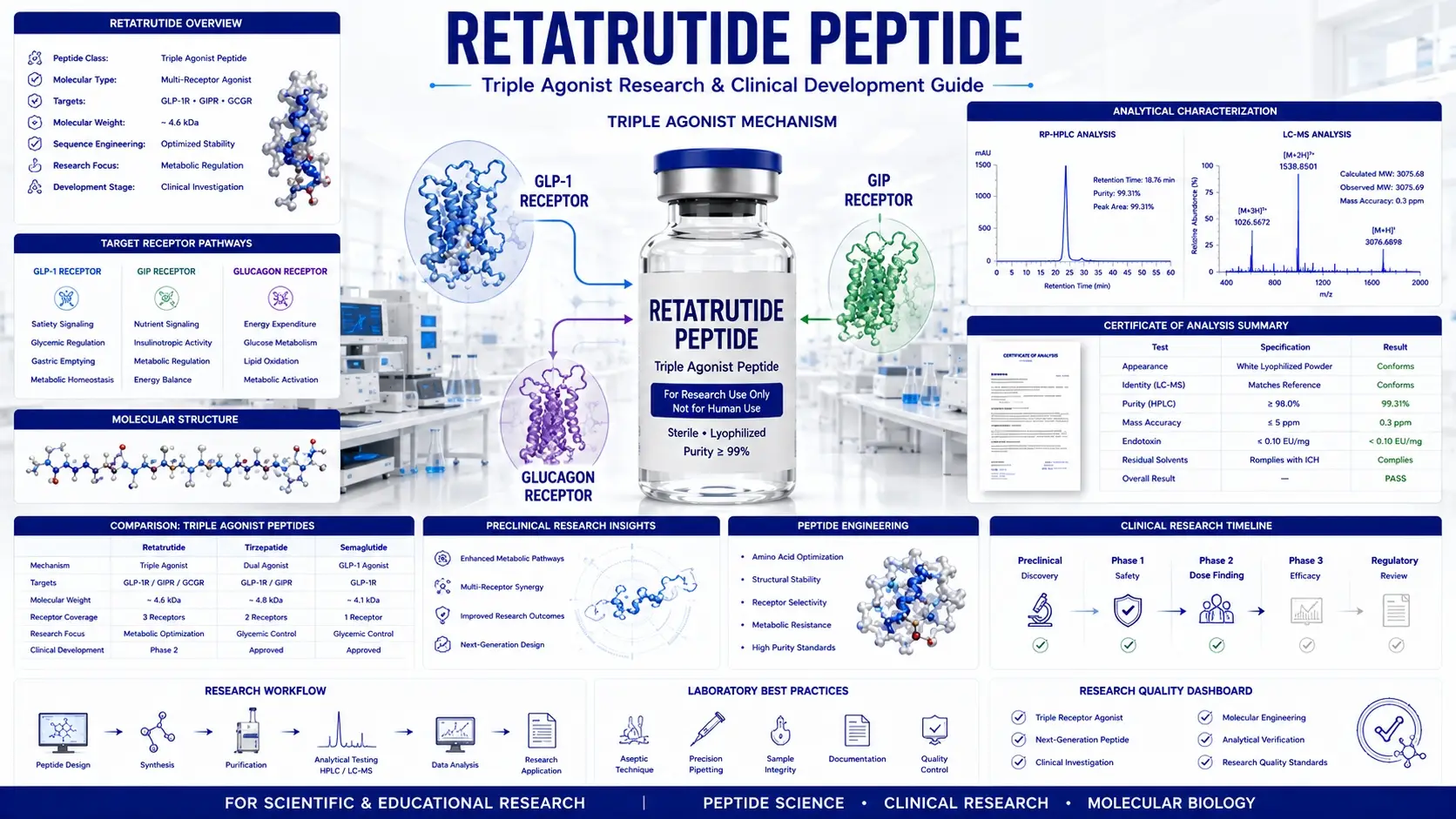
Retatrutide is an investigational synthetic peptide designed as a triple receptor agonist that simultaneously targets the GLP-1 (glucagon-like peptide-1), GIP (glucose-dependent insulinotropic polypeptide), and glucagon receptors. Unlike earlier incretin-based peptides that activate one or two receptors, Retatrutide was engineered to engage three complementary metabolic pathways. It is currently being investigated in clinical research and remains an experimental compound rather than an approved therapy.
Retatrutide Peptide: Complete Scientific Guide to Triple Agonist Research, Clinical Development & Metabolic Science
Scientific Snapshot
| Peptide Name | Retatrutide |
| Classification | Triple Receptor Agonist Peptide |
| Targets | GLP-1, GIP & Glucagon Receptors |
| Research Focus | Metabolic Science & Clinical Investigation |
| Current Status | Investigational Clinical Peptide |
Quick Facts
| Peptide Class | Synthetic Triple Agonist |
| Primary Receptors | GLP-1 • GIP • Glucagon |
| Research Area | Metabolic & Endocrine Science |
| Development Stage | Clinical Investigation |
| Scientific Interest | Next-Generation Incretin Research |
Key Takeaways
- ✓Retatrutide is a next-generation investigational peptide that activates three metabolic receptors simultaneously.
- ✓Its mechanism differs from Semaglutide and Tirzepatide by incorporating glucagon receptor activity in addition to GLP-1 and GIP signaling.
- ✓Current knowledge is based primarily on published clinical investigations and ongoing scientific research.
- ✓Researchers continue to investigate Retatrutide’s molecular biology, receptor interactions, safety profile, and potential applications.
- ✓This guide summarizes the current scientific evidence without providing medical, dosing, or purchasing recommendations.
Table of Contents
Research Timeline
Retatrutide represents one of the newest developments in metabolic peptide engineering. Building upon earlier GLP-1 receptor agonists and dual incretin therapies, researchers designed Retatrutide to activate three distinct receptor pathways simultaneously. This evolution reflects a broader scientific effort to better understand complex metabolic regulation through multi-receptor peptide therapies.
| Period | Scientific Milestone |
|---|---|
| Early GLP-1 Era | Single-receptor incretin therapies become established in metabolic research. |
| Dual Agonist Development | Peptides targeting both GLP-1 and GIP receptors enter clinical investigation. |
| Next-Generation Research | Retatrutide is engineered as a triple receptor agonist incorporating glucagon receptor activity. |
| Current Stage | Ongoing clinical studies continue evaluating efficacy, safety, and long-term outcomes. |
Introduction
Retatrutide has rapidly become one of the most discussed investigational peptides in metabolic science. Unlike earlier incretin therapies, Retatrutide simultaneously activates GLP-1, GIP, and glucagon receptors, making it the first widely studied triple agonist peptide within this therapeutic class. This unique pharmacological design has generated significant scientific interest and prompted comparisons with established agents such as Tirzepatide and Semaglutide.
As public interest has grown, so have online searches for topics including Retatrutide benefits, Retatrutide side effects, Retatrutide dosage, Retatrutide dosing schedule, and where to buy Retatrutide. While these questions reflect genuine curiosity, many answers circulating online lack appropriate scientific context or distinguish poorly between published clinical research and unsupported claims.
This guide reviews the available scientific literature, explains Retatrutide’s triple agonist mechanism, compares it with Tirzepatide and Semaglutide, summarizes current clinical findings, and discusses safety considerations from a research-focused perspective. Throughout this article, information is presented for educational purposes and reflects the current state of scientific evidence rather than medical guidance or treatment recommendations.
Understanding Retatrutide Peptide
Retatrutide peptide is an investigational synthetic peptide developed to activate three distinct metabolic receptors simultaneously: the glucagon-like peptide-1 (GLP-1) receptor, the glucose-dependent insulinotropic polypeptide (GIP) receptor, and the glucagon receptor. This triple agonist design distinguishes Retatrutide from earlier generations of incretin-based therapies that target only one or two receptor pathways.
The rationale behind this multi-receptor approach is rooted in decades of metabolic research. Scientists have long recognized that appetite regulation, energy expenditure, glucose metabolism, and hormonal signaling are controlled through multiple interconnected pathways rather than a single biological mechanism. Retatrutide was engineered to investigate whether coordinated activation of these pathways could produce broader physiological effects than previous peptide designs.
Although Retatrutide has attracted significant public attention, it remains an investigational peptide undergoing clinical evaluation. Much of the current understanding comes from peer-reviewed clinical studies that continue to examine its pharmacology, receptor activity, efficacy, and safety profile.
How the Triple Agonist Mechanism Works
One of the defining scientific characteristics of Retatrutide peptide is its ability to interact with three separate receptor systems. Each receptor contributes to different aspects of metabolic regulation, and together they represent one of the most advanced peptide engineering strategies currently under clinical investigation.
| Receptor | Primary Physiological Role | Research Interest |
|---|---|---|
| GLP-1 Receptor | Glucose regulation and appetite signaling | Established incretin pathway |
| GIP Receptor | Insulin regulation and metabolic signaling | Complementary incretin activity |
| Glucagon Receptor | Energy expenditure and metabolic regulation | Additional metabolic pathway under investigation |
Rather than acting through a single receptor, Retatrutide was designed to coordinate signaling across all three pathways. Researchers believe this integrated mechanism may help explain why Retatrutide has generated considerable scientific interest within metabolic and endocrine research.
Research Insight
Retatrutide Represents the Next Evolution of Incretin Research
Scientific development has progressed from single-receptor agonists to dual agonists and now to triple agonists. This progression reflects an increasing understanding that complex metabolic systems are regulated through multiple interacting biological pathways rather than isolated receptor activity.
Why Researchers Are Studying Retatrutide
Researchers are investigating Retatrutide because it provides an opportunity to better understand coordinated receptor signaling and its effects on metabolic physiology. Its triple agonist design enables scientists to evaluate how multiple endocrine pathways interact within the same therapeutic framework.
Published clinical investigations have explored a wide range of outcomes including metabolic biomarkers, body composition, glucose regulation, cardiovascular risk factors, and overall safety. While these studies continue to expand scientific knowledge, Retatrutide remains under clinical investigation and additional long-term evidence is still being collected.
How Retatrutide Differs from Earlier Metabolic Peptides
Retatrutide belongs to a newer generation of engineered peptides that build upon previous incretin-based therapies. Earlier peptide designs primarily targeted the GLP-1 receptor, while more recent molecules expanded to include dual receptor activity involving GLP-1 and GIP. Retatrutide advances this concept further by incorporating glucagon receptor activation into the same peptide molecule.
| Generation | Primary Target(s) | Example Research Focus |
|---|---|---|
| First Generation | GLP-1 | Single incretin pathway |
| Second Generation | GLP-1 + GIP | Dual agonist research |
| Next Generation | GLP-1 + GIP + Glucagon | Triple agonist investigation |
Did You Know?
Retatrutide Is the First Widely Studied Triple Incretin Agonist
Most earlier metabolic peptides were designed to activate one or two receptors. Retatrutide is among the first investigational peptides to combine GLP-1, GIP, and glucagon receptor activity into a single engineered molecule, making it an important milestone in peptide engineering research.
Key Takeaway
Retatrutide peptide represents a significant advancement in metabolic peptide engineering through its triple receptor agonist design. Although ongoing clinical research continues to evaluate its long-term efficacy and safety, its unique mechanism has established it as one of the most closely studied investigational peptides in modern metabolic science.
Retatrutide Benefits: What Current Research Suggests
Interest in Retatrutide benefits has grown rapidly as results from early and mid-stage clinical investigations have become available. Researchers are evaluating this triple agonist peptide because its simultaneous activation of GLP-1, GIP, and glucagon receptors may influence multiple metabolic pathways at the same time. While published findings have generated considerable scientific interest, Retatrutide remains an investigational peptide, and ongoing clinical studies continue to evaluate its long-term efficacy and safety.
Rather than focusing on a single biological process, Retatrutide has been investigated across several research areas including metabolic regulation, body composition, glucose homeostasis, cardiovascular biomarkers, and endocrine physiology. These investigations aim to better understand how coordinated receptor activation influences complex metabolic systems.
| Research Area | Scientific Objective | Current Research Status |
|---|---|---|
| Metabolic Regulation | Evaluate coordinated receptor signaling | Actively investigated |
| Body Composition | Assess changes in metabolic parameters | Clinical studies ongoing |
| Glucose Homeostasis | Study endocrine regulation | Published clinical data available |
| Cardiometabolic Biomarkers | Evaluate physiological responses | Under investigation |
| Long-Term Outcomes | Determine sustained safety and efficacy | Continuing clinical evaluation |
Research Insight
Published Research Describes Outcomes—Not Guaranteed Results
Scientific publications report observations made under controlled clinical conditions using carefully selected study populations and predefined research protocols. These findings contribute to scientific understanding but should not be interpreted as universally applicable outcomes or individual expectations.
Retatrutide Side Effects Reported in Clinical Studies
Searches for Retatrutide side effects have increased alongside growing public interest in this investigational peptide. Available safety information comes primarily from controlled clinical trials where researchers systematically monitored adverse events, laboratory findings, participant withdrawals, and overall tolerability throughout each study.
As with many investigational incretin-based peptides, published research has reported gastrointestinal events among the most commonly observed adverse effects. Researchers continue to evaluate the frequency, severity, duration, and long-term implications of these findings as larger clinical programs progress.
| Safety Category | Clinical Research Focus |
|---|---|
| Gastrointestinal Events | Frequency, severity and tolerability assessment. |
| Laboratory Monitoring | Routine biochemical and clinical evaluations. |
| Dose Escalation | Safety observations during protocol-defined escalation. |
| Long-Term Follow-up | Ongoing assessment in extended clinical studies. |
| Overall Tolerability | Comprehensive evaluation across study populations. |
How Researchers Evaluate Safety
Modern clinical investigations evaluate safety using predefined protocols that include adverse event reporting, laboratory assessments, physical examinations, and statistical analyses. Independent monitoring committees and regulatory oversight further strengthen the integrity of safety evaluations throughout the clinical development process.
Because Retatrutide remains under investigation, its complete safety profile continues to evolve as additional clinical evidence becomes available. Researchers therefore interpret emerging findings within the broader context of ongoing clinical development rather than isolated study results.
Understanding Clinical Trial Findings
Clinical trial results are designed to answer scientific questions through carefully controlled methodology. Study participants are selected according to strict eligibility criteria, outcomes are predefined before enrollment begins, and statistical analyses are conducted using validated research methods. These safeguards help ensure that reported findings are scientifically meaningful and reproducible.
As additional trials are completed, researchers will continue refining the scientific understanding of Retatrutide’s pharmacology, safety profile, and potential clinical applications.
Did You Know?
Large Clinical Programs Continue Long After Early Results Are Published
Initial clinical publications often represent only one phase of a much larger development program. Researchers continue collecting safety, efficacy, and long-term outcome data through additional studies before a complete scientific profile can be established.
Key Takeaway
Current research suggests that Retatrutide represents one of the most promising investigational triple agonist peptides studied to date. However, both its potential benefits and safety profile continue to be evaluated through ongoing clinical research, making evidence-based interpretation essential when reviewing published findings.
Retatrutide vs Tirzepatide
Comparisons between Retatrutide vs Tirzepatide have become increasingly common because both peptides represent major advances in incretin-based metabolic research. Although they share certain biological targets, their molecular designs differ in an important way. Tirzepatide is a dual receptor agonist that activates GLP-1 and GIP receptors, whereas Retatrutide was engineered as a triple agonist by adding glucagon receptor activity to the same therapeutic concept.
From a research perspective, this additional receptor activity has attracted significant scientific interest because glucagon signaling may influence metabolic regulation through mechanisms that differ from those associated with GLP-1 and GIP alone. Ongoing clinical investigations continue to evaluate how these mechanistic differences translate into physiological outcomes.
| Feature | Retatrutide | Tirzepatide |
|---|---|---|
| Peptide Class | Triple Agonist | Dual Agonist |
| GLP-1 Activity | Yes | Yes |
| GIP Activity | Yes | Yes |
| Glucagon Activity | Yes | No |
| Development Status | Investigational | Clinically established |
Retatrutide vs Semaglutide
The comparison between Retatrutide vs Semaglutide illustrates how metabolic peptide engineering has evolved over time. Semaglutide primarily activates the GLP-1 receptor and helped establish the modern era of incretin-based therapies. Retatrutide expands upon this concept by combining GLP-1 receptor activation with additional activity at both GIP and glucagon receptors.
Rather than replacing earlier peptide designs, Retatrutide represents the next stage in an ongoing scientific effort to investigate whether coordinated receptor activation can influence multiple aspects of metabolic physiology simultaneously. Researchers continue to compare these molecules across clinical studies while recognizing that each peptide possesses distinct pharmacological characteristics.
| Feature | Retatrutide | Semaglutide |
|---|---|---|
| Primary Classification | Triple Agonist | GLP-1 Receptor Agonist |
| GLP-1 Receptor | Activated | Activated |
| GIP Receptor | Activated | Not Targeted |
| Glucagon Receptor | Activated | Not Targeted |
| Current Status | Investigational | Established Therapy |
Research Insight
Receptor Count Does Not Automatically Determine Clinical Superiority
Although Retatrutide targets three receptors while Tirzepatide targets two and Semaglutide targets one, scientific value is determined by carefully conducted clinical research rather than receptor count alone. Efficacy, safety, tolerability, long-term outcomes, and patient-specific responses all contribute to evaluating investigational therapies.
Evolution of Metabolic Peptide Engineering
The development of Retatrutide reflects a broader trend in peptide engineering toward increasingly sophisticated molecular designs. Rather than focusing exclusively on individual receptor pathways, researchers now investigate how coordinated activation of complementary biological systems may produce broader physiological effects.
This progression from single agonists to dual agonists and now triple agonists illustrates how advances in molecular biology continue to influence the design of next-generation investigational peptides.
| Generation | Representative Design | Primary Research Goal |
|---|---|---|
| First Generation | Single Receptor Agonists | Individual pathway investigation |
| Second Generation | Dual Agonists | Combined incretin signaling |
| Third Generation | Triple Agonists | Integrated metabolic regulation research |
Retatrutide Dosage, Dosing Schedule & Research Considerations
Searches for Retatrutide dosage, Retatrutide dosing schedule, and Retatrutide dosage calculator are increasingly common. However, it is important to recognize that Retatrutide remains an investigational peptide undergoing clinical evaluation. Published dosing approaches are specific to individual clinical trial protocols and are not intended to serve as universal recommendations.
For the same reason, there is no universally accepted Retatrutide dosage calculator. Researchers evaluate dosing within carefully designed clinical studies that define participant eligibility, monitoring requirements, safety assessments, and protocol-specific dose escalation strategies. These protocols cannot be generalized outside the context of the individual investigation.
This article does not provide dosing recommendations or schedules. Instead, it focuses on the scientific principles underlying Retatrutide research and the published evidence available to date.
Did You Know?
Many Modern Peptides Are Designed Using Structure-Based Molecular Engineering
Advances in computational biology, receptor modeling, and peptide chemistry allow researchers to design molecules with highly specific receptor-binding profiles. Retatrutide is an example of how modern peptide engineering combines multiple biological targets into a single investigational molecule for scientific evaluation.
Key Takeaway
Retatrutide represents the latest generation of investigational metabolic peptides, extending beyond Semaglutide and Tirzepatide through its triple receptor agonist design. While its unique mechanism has generated substantial scientific interest, ongoing clinical research remains essential for defining its long-term efficacy, safety profile, and potential role within metabolic medicine.
Current Scientific Consensus on Retatrutide
Retatrutide has emerged as one of the most extensively discussed investigational peptides in contemporary metabolic research. Scientific interest stems from its unique triple agonist design, which simultaneously targets GLP-1, GIP, and glucagon receptors. Researchers consider this multi-receptor approach an important advancement in peptide engineering because it enables investigation of several interconnected metabolic pathways through a single molecule.
Although published clinical studies have reported encouraging findings across multiple metabolic endpoints, Retatrutide remains under clinical investigation. Researchers continue to evaluate its pharmacology, long-term safety, tolerability, and efficacy through ongoing Phase III clinical development and additional peer-reviewed research.
Current scientific consensus emphasizes that conclusions should be based on the totality of available evidence rather than individual studies. As additional data become available, researchers will continue refining the understanding of Retatrutide’s mechanism and potential role within metabolic science.
Clinical Development Landscape
Retatrutide is currently progressing through large-scale clinical research programs designed to evaluate multiple aspects of its pharmacological profile. These studies investigate efficacy, safety, tolerability, pharmacokinetics, and long-term clinical outcomes while following internationally recognized research standards.
Modern clinical development occurs in sequential phases, with each stage providing additional evidence regarding both effectiveness and safety. Independent regulatory oversight, standardized protocols, statistical analysis plans, and long-term follow-up contribute to the reliability of published findings.
| Research Area | Primary Objective | Current Status |
|---|---|---|
| Mechanism of Action | Characterize triple receptor signaling | Well established in preclinical and clinical research |
| Clinical Efficacy | Evaluate metabolic outcomes | Large clinical studies ongoing |
| Safety Profile | Assess adverse events and tolerability | Continuously monitored |
| Long-Term Outcomes | Determine durability of clinical effects | Extended follow-up in progress |
| Regulatory Evaluation | Review overall evidence package | Dependent on completion of ongoing studies |
Research Insight
Scientific Evidence Evolves Throughout Clinical Development
Early clinical publications often generate considerable interest, but scientific understanding continues to evolve as additional participants are enrolled, longer follow-up periods become available, and independent studies validate earlier observations. Robust scientific conclusions emerge through the accumulation of evidence over time rather than from individual reports.
Future Directions in Triple Agonist Research
Retatrutide represents an important milestone in the evolution of peptide therapeutics, but it is unlikely to represent the final stage of receptor-targeted metabolic research. Scientists are already investigating additional peptide engineering strategies that incorporate optimized receptor selectivity, improved pharmacokinetic profiles, enhanced molecular stability, and individualized therapeutic approaches.
Advances in computational biology, structural bioinformatics, artificial intelligence, and molecular modeling continue to accelerate peptide discovery. These technologies allow researchers to predict receptor interactions, optimize amino acid sequences, and refine molecular structures before compounds enter laboratory testing.
As these technologies mature, future generations of investigational peptides may become increasingly selective, potentially enabling researchers to target highly specific physiological pathways with greater precision.
Research Best Practices
When evaluating investigational peptides such as Retatrutide, researchers generally rely on established evidence-based principles rather than isolated observations or anecdotal reports. The following practices support objective scientific interpretation and help distinguish high-quality evidence from unsupported claims.
- ✓Prioritize peer-reviewed scientific publications.
- ✓Interpret findings within the context of complete clinical development programs.
- ✓Differentiate investigational findings from approved clinical applications.
- ✓Evaluate both efficacy and safety when reviewing published research.
- ✓Recognize that scientific consensus develops through cumulative evidence collected over multiple independent studies.
Did You Know?
Multi-Receptor Peptides Represent One of the Fastest Growing Areas of Endocrine Research
The transition from single-receptor agonists to dual and triple agonists reflects one of the most significant advances in peptide pharmacology over the past decade. Researchers increasingly recognize that complex metabolic disorders involve multiple biological pathways, encouraging the development of peptides capable of engaging several receptor systems simultaneously.
Key Takeaway
Retatrutide represents one of the most scientifically significant investigational peptides currently under evaluation. Its triple receptor agonist mechanism, ongoing clinical development, and expanding body of published research continue to shape scientific understanding of next-generation metabolic peptide engineering.
Where to Buy Retatrutide: A Research Perspective
Searches for where to buy Retatrutide have increased substantially alongside growing interest in next-generation metabolic peptides. Because Retatrutide remains an investigational compound, researchers should focus on scientific quality indicators rather than marketing claims or vendor promotions. The credibility of research findings depends heavily on the quality and characterization of the materials used throughout a study.
When evaluating research-grade peptides, experienced laboratories typically review analytical documentation, manufacturing transparency, batch traceability, purity testing, identity confirmation, and storage recommendations. These objective quality indicators provide a stronger foundation for scientific research than product descriptions or promotional material.
Peptides Library does not recommend vendors or provide purchasing guidance. Instead, our focus is on helping researchers understand the scientific criteria commonly used to evaluate research materials.
Evaluating Research-Grade Retatrutide
High-quality peptide research begins with high-quality research materials. Before incorporating an investigational peptide into laboratory studies, researchers generally review several analytical and documentation standards to verify material quality and improve experimental reproducibility.
| Quality Indicator | Why It Matters | Research Value |
|---|---|---|
| Certificate of Analysis (COA) | Documents analytical testing. | Supports transparency. |
| RP-HPLC Analysis | Evaluates peptide purity. | Confirms analytical quality. |
| LC-MS Characterization | Confirms molecular identity. | Verifies peptide composition. |
| Batch Traceability | Supports laboratory documentation. | Improves reproducibility. |
| Storage Documentation | Maintains material integrity. | Supports consistent research. |
Research Insight
Analytical Verification Is the Foundation of Reliable Peptide Research
Experienced researchers rarely evaluate peptides based solely on product descriptions. Instead, they rely on analytical evidence such as RP-HPLC chromatograms, LC-MS identity confirmation, Certificates of Analysis, and documented quality systems to establish confidence in research materials before experimental work begins.
Why Analytical Documentation Matters
Scientific reproducibility depends on the ability of independent laboratories to verify and repeat experimental findings. Analytical documentation provides objective evidence regarding the identity and quality of research materials, allowing investigators to interpret published data with greater confidence.
For investigational peptides such as Retatrutide, comprehensive documentation—including analytical reports and manufacturing records—supports both internal quality assurance and broader scientific transparency.
Did You Know?
Two Peptides with the Same Name May Differ in Analytical Quality
Scientific laboratories recognize that peptide quality cannot be determined by labeling alone. Analytical characterization, manufacturing consistency, and documented quality systems provide the evidence needed to distinguish well-characterized research materials from products lacking appropriate verification.
Related Research Articles
Continue Exploring Peptide Science
Expand your understanding of peptide biology, analytical science, and laboratory best practices with these related guides from Peptides Library.
Section Summary
Retatrutide continues to attract significant scientific interest as one of the most advanced investigational metabolic peptides currently in development. Responsible peptide research depends on rigorous analytical verification, transparent documentation, standardized laboratory practices, and careful interpretation of evidence from ongoing clinical investigations.
Frequently Asked Questions
1. What is Retatrutide peptide?
Retatrutide is an investigational synthetic peptide designed as a triple receptor agonist. It simultaneously activates GLP-1, GIP, and glucagon receptors, making it one of the most advanced metabolic peptides currently undergoing clinical investigation.
2. How does Retatrutide differ from Tirzepatide?
Retatrutide activates three receptors—GLP-1, GIP, and glucagon—whereas Tirzepatide activates GLP-1 and GIP receptors. This additional glucagon receptor activity is one of the primary scientific differences currently being investigated.
3. What is the difference between Retatrutide and Semaglutide?
Semaglutide primarily targets the GLP-1 receptor, while Retatrutide was engineered to activate GLP-1, GIP, and glucagon receptors simultaneously. This expanded receptor profile is the focus of ongoing clinical research.
4. What are the potential Retatrutide benefits?
Published clinical studies have investigated Retatrutide across multiple metabolic outcomes, including glucose regulation, body composition, and cardiometabolic biomarkers. Because development is ongoing, researchers continue evaluating both short-term and long-term findings before definitive conclusions can be reached.
5. What Retatrutide side effects have been reported?
Available evidence comes from controlled clinical studies, where researchers have monitored gastrointestinal events, laboratory findings, tolerability, and other safety parameters. The overall safety profile continues to evolve as additional clinical trials are completed.
6. Is there an approved Retatrutide dosage?
No. Retatrutide remains an investigational peptide, and dosing approaches currently described in scientific literature are specific to individual clinical trial protocols. There is no universally approved dosage recommendation at this time.
7. Is there a Retatrutide dosing schedule?
Published dosing schedules are developed exclusively for clinical research and differ between study protocols. This article does not provide dosing schedules because Retatrutide is still under investigation and research protocols should not be generalized.
8. Does a Retatrutide dosage calculator exist?
No universally accepted Retatrutide dosage calculator exists. Clinical studies use protocol-specific dosing methodologies that depend on predefined research objectives and participant selection criteria.
9. Where can researchers find information about Retatrutide quality?
Researchers typically evaluate analytical documentation such as Certificates of Analysis (COAs), RP-HPLC purity testing, LC-MS identity confirmation, batch traceability, and manufacturer transparency when assessing research materials.
10. Where can I buy Retatrutide?
Peptides Library does not recommend suppliers or vendors. Instead, researchers should focus on analytical documentation, manufacturing quality systems, and scientific transparency when evaluating investigational research materials.
11. Is Retatrutide approved for routine clinical use?
At the time of writing, Retatrutide remains under clinical investigation. Researchers continue evaluating its efficacy, safety, and long-term outcomes before regulatory decisions can be made.
12. Why is Retatrutide important in peptide research?
Retatrutide represents an important advancement in peptide engineering because it combines three metabolically relevant receptor pathways into a single investigational molecule. This design has positioned it as one of the most closely studied next-generation metabolic peptides.
Scientific Resources & References
The following peer-reviewed publications and scientific resources provide additional information regarding Retatrutide, incretin biology, peptide pharmacology, analytical characterization, and clinical research methodology.
- New England Journal of Medicine – Retatrutide Phase 2 Clinical Trial
- ClinicalTrials.gov – Ongoing Retatrutide Clinical Studies
- PubMed – Biomedical Literature Database
- U.S. Food & Drug Administration – Drug Development Resources
- European Medicines Agency (EMA)
- Nature Reviews Endocrinology
- Cell Metabolism
- New England Journal of Medicine
- ICH Clinical Research Guidelines
- World Health Organization – Research & Health Resources
Final Takeaway
Retatrutide Represents the Next Generation of Metabolic Peptide Research
Retatrutide has become one of the most scientifically significant investigational peptides because of its innovative triple receptor agonist mechanism and rapidly expanding body of clinical research. While published studies have generated considerable interest, ongoing investigation remains essential to fully understand its long-term efficacy, safety, and clinical potential. As with all investigational peptides, the most reliable conclusions will continue to come from high-quality, peer-reviewed scientific research supported by rigorous analytical standards and transparent clinical evidence.
Research Disclaimer
All content published on Peptides Library is intended exclusively for educational and scientific research purposes. Retatrutide is an investigational peptide discussed from a research perspective only. This article does not provide medical advice, therapeutic recommendations, dosing instructions, purchasing guidance, or clinical treatment information. Readers should interpret the content within the context of peer-reviewed scientific literature and ongoing clinical research.