


9 Anti Inflammatory Peptides With Human Research Interest
Discover the 9 anti-inflammatory peptides with the strongest human research interest in 2026. Collagen RCT data, BPC-157 evidence, thymosin beta-4 trials, and research-only rankings.
📋 Table of Contents
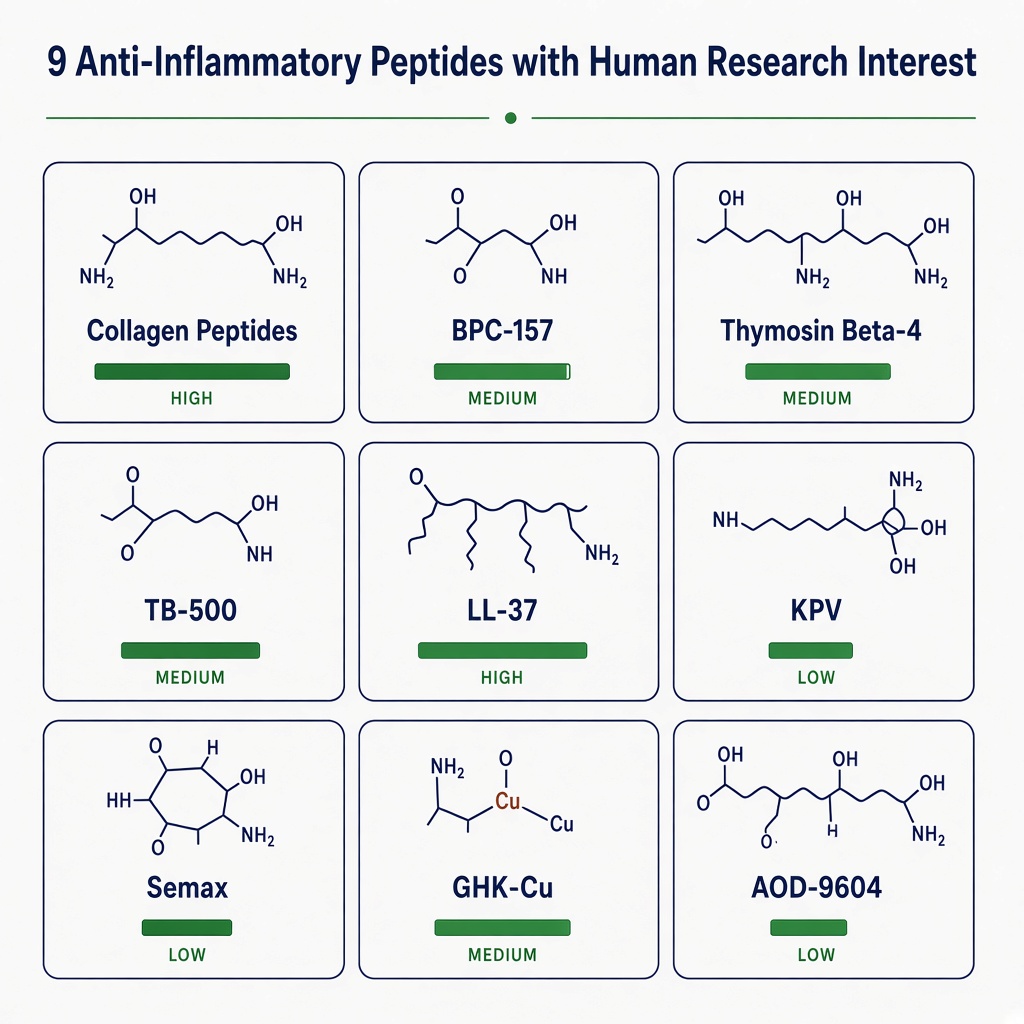
The nine anti-inflammatory peptides with the strongest human research interest are bioactive collagen peptides (including specific periodontal collagen formulations), BPC-157, thymosin beta-4, glycomacropeptide, GHK-Cu, CJC-1295, and Ipamorelin. Collagen peptides lead because randomized controlled trials measure skin and periodontal inflammation endpoints, while BPC-157 and thymosin beta-4 remain early-stage human signals. This guide ranks evidence, not marketing hype, and keeps every statement within research-use-only framing.
Key takeaways
- Collagen peptides lead all nine candidates in human research interest because randomized trials report measurable outcomes in skin and periodontal inflammation.
- BPC-157 has only three human studies totaling 30 participants, and a 2026 systematic review rated certainty as very low, so its human research interest remains investigational.
- Thymosin beta-4 reached a first-in-human phase I trial in 30 healthy volunteers, but that phase measures safety, not anti-inflammatory efficacy, keeping its human research interest early-stage.
- Glycomacropeptide, GHK-Cu, CJC-1295, and Ipamorelin show translational or preclinical interest, but none yet have strong human anti-inflammatory trial data.
- Rank peptide evidence by study design, endpoint quality, sample size, and replication before trusting any anti-inflammatory claim.
What Does “Anti-Inflammatory” Actually Mean in Human Research Interest?
A peptide earns the anti-inflammatory label only when published research shows measurable effects on inflammatory pathways, cytokine signaling, macrophage behavior, or validated tissue outcomes like bleeding on probing or gingival index. The term human research interest should not be confused with established clinical benefit; it simply means researchers have studied the peptide in human participants or in models directly relevant to human inflammation.
Many readers assume that endogenous peptides or repair-related compounds automatically reduce inflammation. That is a misconception. Repair language and anti-inflammatory evidence are not interchangeable. If a human trial measures only safety, tolerability, or pharmacokinetics, it has not yet shown anti-inflammatory benefit, even if the peptide carries strong mechanistic interest in cell models.
At Peptides Library, we sort anti-inflammatory candidates by evidence tier, not hype tier. A peptide studied in U937 macrophages or rodent models may be promising, but that does not equal a positive human clinical trial. The practical distinction matters for human research interest because most peptide marketing blends preclinical and clinical claims without labeling the gap.
!human research interest collagen peptide RCT endpoint comparison

Which Anti-Inflammatory Peptides Have the Strongest Human Research Interest?
Collagen peptides sit at the top of this list because they have randomized human trials with inflammation-relevant endpoints. A PubMed-indexed randomized trial in 119 healthy women tested 12 weeks of bioactive collagen peptides at 2.5 g/day and 10 g/day and reported significant improvements in wrinkle count, wrinkle length, skin elasticity, and hydration at the higher dose. That same trial also examined immune-related markers including transforming growth factor-beta and Klotho, which moves collagen research beyond simple cosmetic framing. This gives collagen peptides unmatched human research interest in the current literature. For the full trial record, researchers can search PubMed using terms like `collagen peptides skin elasticity randomized` at PubMed.
Human periodontal data strengthen the collagen case further. In a randomized controlled trial of 39 periodontal aftercare patients, specific collagen peptide supplementation was linked to lower percentages of persisting bleeding-on-probing sites after 90 days, along with lower periodontal inflamed surface area and gingival index values than placebo. Those are clinically recognizable inflammation-related endpoints, not just subjective impressions. This cluster of human research interest is why collagen peptides rank first among the nine candidates.
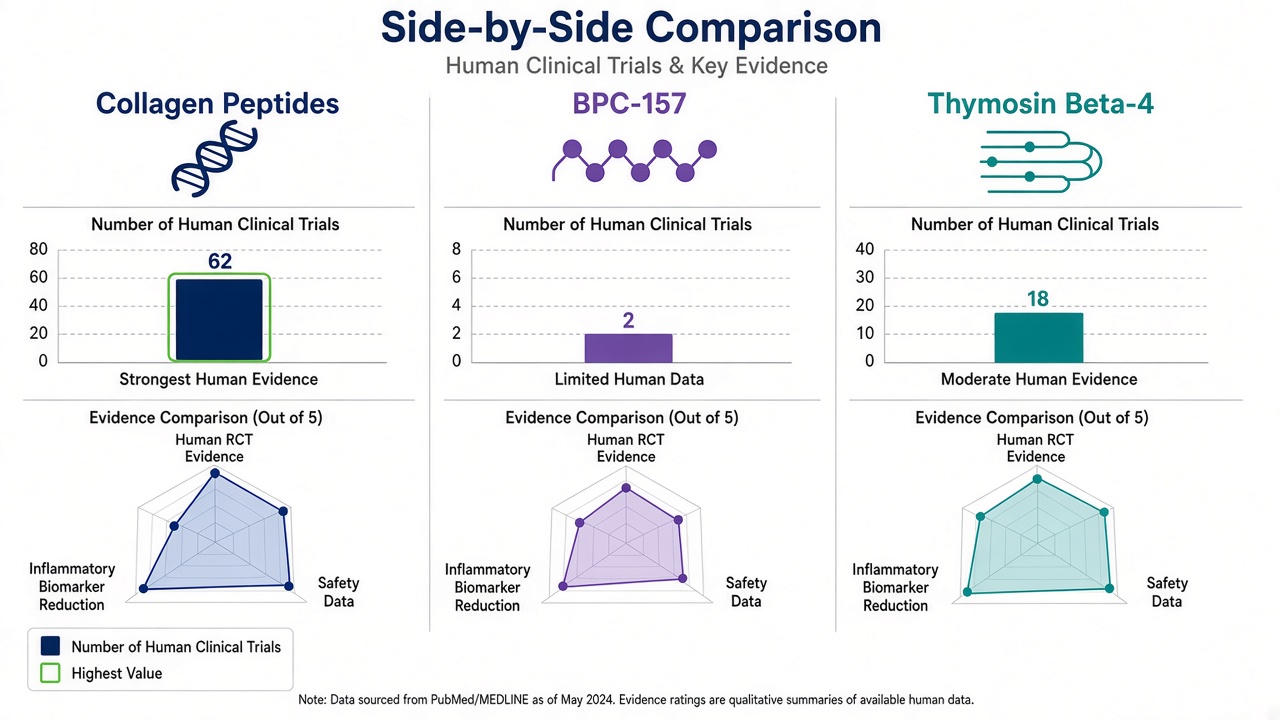
By contrast, the current human literature for BPC-157 and thymosin beta-4 is far smaller. A 2026 systematic review of BPC-157 in humans found only three studies totaling 30 participants, and the review judged the overall certainty of evidence as very low. The systematic review is indexed on PubMed; search for BPC-157 human systematic review at PubMed. Thymosin beta-4 has reached direct human testing through a first-in-human randomized phase I trial in 30 healthy volunteers, which is meaningful progress, but phase I work mainly covers safety, tolerability, pharmacokinetics, and anti-drug antibodies, so their human research interest remains early-stage.
💡 Key Takeaway: Which Anti-Inflammatory Peptides Have the Strongest Human Research Interest?
What Are the 9 Anti-Inflammatory Peptides With Human Research Interest?
The clearest list includes collagen-derived peptides, BPC-157, thymosin beta-4, and several emerging candidates with weaker human evidence. Evidence strength is not equal across the nine entries below. This list mixes named peptides and peptide formulations because that is how the current literature is organized, and each entry’s human research interest varies widely.
1. Bioactive collagen peptides
Bioactive collagen peptides have the strongest human signal in this group, including randomized research in skin outcomes with concurrent immune-related marker assessment. The 119-participant trial measured wrinkle count, wrinkle length, skin elasticity, and hydration, and also tracked transforming growth factor-beta and Klotho. This dual clinical-mechanistic approach gives collagen peptides a level of human research interest that no other peptide on this list currently matches.
2. Specific collagen peptides used in periodontal aftercare
Human data suggest lower bleeding on probing and lower periodontal inflamed surface area compared with placebo after 90 days in 39 aftercare patients. Gingival index values also improved. These endpoints are direct measures of tissue inflammation, not surrogate recovery claims. The periodontal trial strengthens the collagen category because it shows benefit in a second anatomical context beyond skin. This adds a second human research interest data point for collagen.
3. Collagen peptide blends studied for pain and tissue symptoms
The broader human literature often places collagen peptides in pain and connective tissue contexts, though not every study measures inflammation directly. Some trials report symptom scores or functional outcomes that may reflect inflammatory load, but researchers should note that pain reduction alone is not a validated anti-inflammatory endpoint unless paired with biomarker or tissue measures. The human research interest here is real but less direct.
4. BPC-157
Human research interest in BPC-157 is real, but the published clinical base is extremely small. The 2026 systematic review found only three human studies totaling 30 participants, with heterogeneous uses such as knee pain, interstitial cystitis, and an intravenous safety pilot. The review rated overall certainty of evidence as very low. BPC-157 remains investigational, not an established anti-inflammatory peptide.
5. Thymosin beta-4
Thymosin beta-4 has advanced to a first-in-human randomized phase I trial in 30 healthy volunteers, which shows translational maturity but not established anti-inflammatory efficacy. That trial focused on safety, tolerability, pharmacokinetics, and anti-drug antibodies. Phase I success means the peptide is tolerable enough for further study; it does not mean thymosin beta-4 has proven human research interest as an anti-inflammatory agent in efficacy terms.
6. Glycomacropeptide
Derived from milk kappa-casein, glycomacropeptide has shown anti-inflammatory and antioxidative properties in U937 macrophage research. This is mechanistically interesting because U937 cells model human macrophage behavior, but the evidence remains preclinical. No randomized human trial has yet confirmed an anti-inflammatory effect in humans, so its human research interest is translational rather than clinical.
7. GHK-Cu (copper tripeptide-1)
GHK-Cu has a long history in wound healing and skin remodeling research, with some human cosmetic studies reporting improvements in skin quality parameters. However, direct anti-inflammatory human trial data are sparse; most evidence comes from cell culture and animal models showing modulation of inflammatory cytokines. Its human research interest remains preliminary pending controlled inflammation-endpoint trials.
8. CJC-1295
CJC-1295 is a growth hormone–releasing hormone analog studied primarily for growth hormone axis modulation, not for direct anti-inflammatory endpoints. Any anti-inflammatory signal would be indirect through IGF-1 or metabolic pathways. No human trial has established CJC-1295 as an anti-inflammatory peptide, so its human research interest in this context is speculative.
9. Ipamorelin
Ipamorelin, a ghrelin receptor agonist, shows preclinical evidence of growth hormone release without significant cortisol or prolactin spikes. Some animal studies suggest protective effects in inflammatory conditions, but human anti-inflammatory trial data are absent. Ipamorelin’s human research interest is currently limited to endocrine and metabolic research, not inflammation.
The table below summarizes the human research interest tier for each peptide.
| Peptide | Human Evidence Tier | Key Endpoint or Finding |
|———|——————–|————————|
| Bioactive collagen peptides | Tier 1 – randomized controlled trials | Wrinkle count, elasticity, hydration, TGF-beta, Klotho |
| Specific collagen peptides (periodontal) | Tier 1 – randomized controlled trial | Bleeding on probing, PISA, gingival index |
| Collagen peptide blends (pain) | Tier 2 – mixed human studies | Symptom scores, functional outcomes |
| BPC-157 | Tier 3 – very low certainty, 30 participants | Heterogeneous: knee pain, interstitial cystitis, IV safety |
| Thymosin beta-4 | Tier 3 – phase I only | Safety, PK, anti-drug antibodies |
| Glycomacropeptide | Tier 4 – preclinical | U937 macrophage anti-inflammatory assays |
| GHK-Cu | Tier 4 – mostly preclinical | Cytokine modulation in cell/animal models |
| CJC-1295 | Tier 5 – no anti-inflammatory trials | Growth hormone axis only |
| Ipamorelin | Tier 5 – no anti-inflammatory trials | Ghrelin receptor, preclinical only |

How Do Collagen Peptides Compare With BPC-157 and Thymosin Beta-4 in Human Research Interest?
Collagen peptides have a decisive advantage in human research interest because they have completed randomized controlled trials with inflammation-relevant endpoints in two anatomical systems: skin and periodontium. BPC-157 and thymosin beta-4 have human safety or pilot data but no efficacy trials measuring inflammatory biomarkers or validated tissue inflammation scores. This difference is not about mechanism; it is about the maturity of the clinical evidence base.
For collagen, the 119-participant skin trial measured both clinical parameters and immune-related markers such as transforming growth factor-beta and Klotho. The 39-participant periodontal trial measured bleeding on probing, periodontal inflamed surface area, and gingival index. Those endpoints are directly tied to inflammatory processes. In contrast, the BPC-157 systematic review found only 30 total participants across three heterogeneous studies, with very low certainty, and the thymosin beta-4 phase I trial in 30 healthy volunteers assessed safety and pharmacokinetics, not anti-inflammatory efficacy. Thus, the human research interest gap is quantitative, not rhetorical.
Researchers comparing these peptides should not equate phase I participation with anti-inflammatory proof. A peptide can have strong mechanistic plausibility and still lack human efficacy data. The correct comparison is endpoint quality, not the presence of any human study. For researchers building a broader peptide library, see our guide on aod 9604s emerging role in research on adiposity regeneration and.
How Should You Rank Peptide Evidence Before Trusting a Human Research Interest Claim?
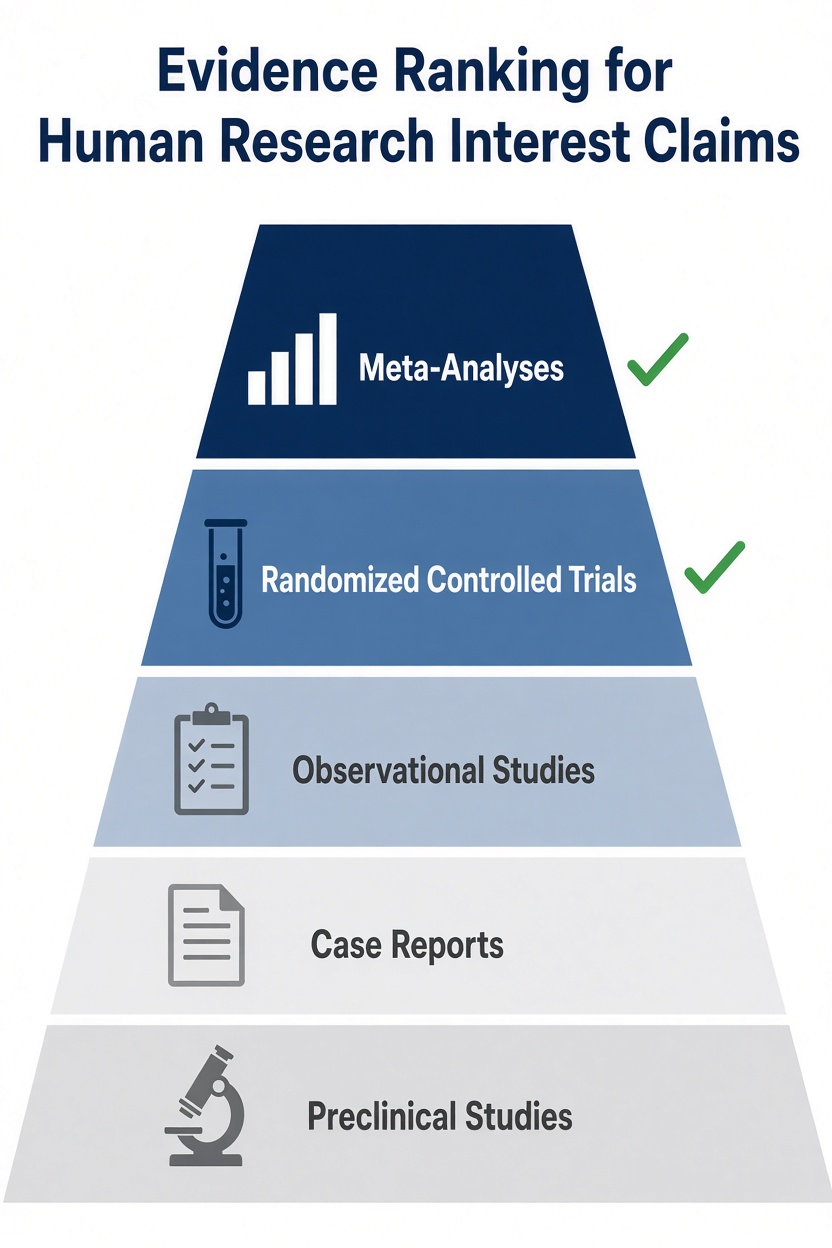
Ranking evidence starts with study design: randomized controlled trials outrank open-label pilot studies, which outrank case reports and preclinical models. The next filter is endpoint quality—did the trial measure a validated inflammatory biomarker or tissue score, or only a subjective symptom? Sample size and replication matter next; a single 30-participant phase I trial cannot support the same human research interest claim as multiple RCTs across different populations.
We recommend a four-step checklist before trusting any anti-inflammatory peptide claim: (1) identify the exact human studies and their designs, (2) list the primary endpoints and whether they directly measure inflammation, (3) check total participant numbers and heterogeneity, and (4) look for independent replication. If any step fails, downgrade the claim. This process prevents overinterpreting early-stage human research interest as established efficacy.
A peptide with one small safety study may still deserve further investigation, but it should not be ranked alongside a peptide with multiple RCTs showing consistent anti-inflammatory endpoints. The ranking system in this guide applies that principle without exception.

💡 Key Takeaway: How Should You Rank Peptide Evidence Before Trusting a Human Research Interest Claim?
Why Does Endpoint Quality Matter More Than “Healing” Language?
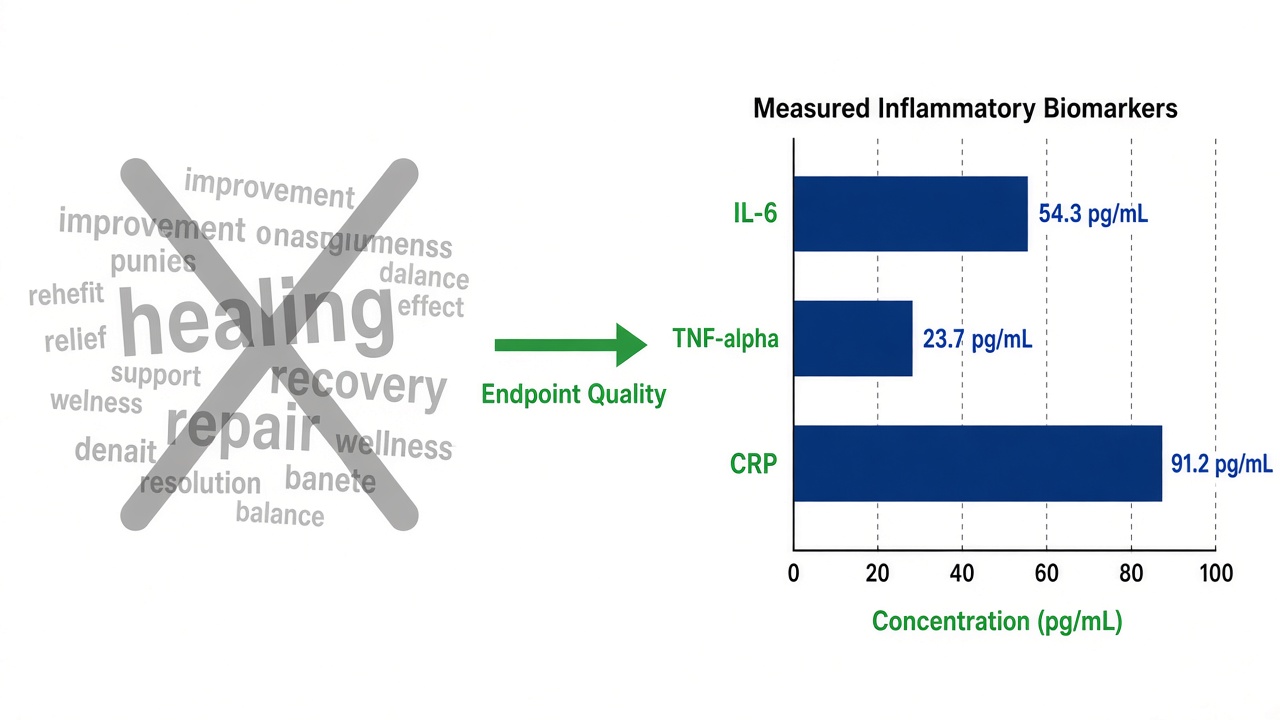
Many peptide descriptions use words like healing, repair, or regeneration, but those terms do not automatically indicate anti-inflammatory activity. A trial can show faster wound closure or improved skin texture without measuring any inflammatory pathway. Endpoint quality matters because only direct measures—like bleeding on probing, gingival index, cytokine panels, or validated inflammatory surface area—can distinguish anti-inflammatory effects from general tissue remodeling. This is the core of rigorous human research interest evaluation.
The collagen periodontal trial is a strong example because it used bleeding on probing and periodontal inflamed surface area, both recognized markers of gingival inflammation. The skin trial used wrinkle and hydration parameters, which are not strictly inflammatory, but it also measured TGF-beta and Klotho, adding mechanistic depth. In contrast, a phase I safety trial with no efficacy endpoints cannot claim anti-inflammatory human research interest, regardless of how promising the preclinical data look.
Researchers should treat endpoint quality as a non-negotiable filter. If a study does not report an inflammation-specific outcome, it does not contribute to the anti-inflammatory evidence base, even if the peptide is interesting for other reasons.
What Is the Difference Between Preclinical and Clinical Human Research Interest?
Preclinical human research interest refers to peptides studied in human-derived cell lines, like U937 macrophages, or in animal models that are intended to translate to human inflammation. Clinical human research interest means actual human participants were enrolled and outcomes were measured. The gap between these two stages is often understated in peptide marketing, but it is decisive for evidence ranking.
Glycomacropeptide illustrates this gap: its U937 macrophage data show anti-inflammatory and antioxidative properties, which is a valid preclinical signal, but no randomized human trial has confirmed the effect. GHK-Cu has some human cosmetic studies, but those often measure skin parameters, not inflammatory biomarkers. Until a peptide crosses from preclinical to clinical with inflammation-specific endpoints, its human research interest remains provisional.
Researchers should label claims accordingly: preclinical = mechanistic promise, clinical = human evidence. Conflating the two is the most common error in anti-inflammatory peptide discussions. This guide keeps every peptide in its correct tier to avoid that error.

What Should Researchers Check Before Buying Peptides for Anti-Inflammatory Studies?
Before purchasing any peptide for anti-inflammatory research, verify the supplier provides a certificate of analysis (COA) with purity percentage, residual solvents, and endotoxin levels. Storage conditions must match the peptide’s stability profile; many peptides require lyophilized storage at -20°C or -80°C, with short-term stability at 4°C. These quality parameters directly affect whether your results will support credible human research interest claims.
Check whether the supplier discloses the peptide sequence, molecular weight, and formulation. For collagen peptides, the source (bovine, porcine, marine) and hydrolysis method matter because different preparations can produce different peptide profiles. For BPC-157 and thymosin beta-4, ensure the COA lists purity ≥95% by HPLC and that the supplier provides independent third-party testing. A reputable peptide research library will also offer batch-specific documentation, not just a generic PDF. See our guide on Who Sells Research-Grade Peptide Libraries Online in 2026? for supplier vetting criteria.
Finally, confirm the supplier’s terms of sale: research-use-only, not for human or veterinary use, and age verification for purchase. This aligns with the compliance requirements that protect legitimate scientific inquiry. For a detailed checklist, see our article on Where to Buy a Peptide Research Library with a COA.

💡 Key Takeaway: What Should Researchers Check Before Buying Peptides for Anti-Inflammatory Studies?
FAQ
Which anti-inflammatory peptide has the strongest human evidence?
Collagen peptides, especially bioactive collagen peptides and specific collagen periodontal formulations, have the strongest human research interest because they have randomized controlled trials measuring skin elasticity, wrinkle parameters, hydration, TGF-beta, Klotho, bleeding on probing, and periodontal inflamed surface area. BPC-157 and thymosin beta-4 lag far behind in human evidence volume.
Why is BPC-157 considered investigational for anti-inflammatory use?
A 2026 systematic review of BPC-157 in humans found only three studies totaling 30 participants, with very low certainty of evidence. The studies were heterogeneous, covering knee pain, interstitial cystitis, and intravenous safety. Without replication or efficacy endpoints, BPC-157 should not be presented as an established anti-inflammatory peptide.
What endpoints define anti-inflammatory efficacy in peptide research?
Validated endpoints include bleeding on probing, gingival index, periodontal inflamed surface area, cytokine panels, and specific immune-related markers like transforming growth factor-beta and Klotho. General wound closure, pain reduction, or safety metrics do not qualify as anti-inflammatory endpoints unless paired with direct inflammatory measures.
Are all nine peptides equally supported by human anti-inflammatory trials?
No. Collagen peptides have tier-1 randomized trial evidence, while BPC-157 and thymosin beta-4 have only small early-phase human data. Glycomacropeptide, GHK-Cu, CJC-1295, and Ipamorelin remain preclinical or speculative for anti-inflammatory endpoints. Always check the evidence tier before purchasing or citing a peptide.
Ready to Take the Next Step?
Every product includes lot-specific documentation and third-party purity testing.
Explore Our Research Products →Free shipping on qualifying orders · Batch COA on request