


Anti-Obesity Drug 9604: 7 Proven Research Facts 2026
Anti obesity drug 9604 research facts for 2026: 7 proven findings on mechanism, animal studies, clinical trials, safety, regulatory status, and sourcing.
📋 Table of Contents
The anti obesity drug 9604 (AOD-9604) is a synthetic 16-amino-acid peptide fragment derived from the C-terminus of human growth hormone (hGH), specifically hGH(177–191), with an N-terminal tyrosine substitution. In laboratory research, this peptide demonstrates lipolytic and anti-lipogenic activity in animal models and has progressed through human clinical trials as an oral anti-obesity drug candidate, though it is not approved for human obesity treatment. Researchers studying adipocyte metabolism, lipolysis, or growth hormone signaling typically procure high-purity anti obesity drug 9604 for in vitro and in vivo studies under research-use-only conditions. This guide covers seven proven research facts about the anti obesity drug 9604 in 2026.
Key takeaways
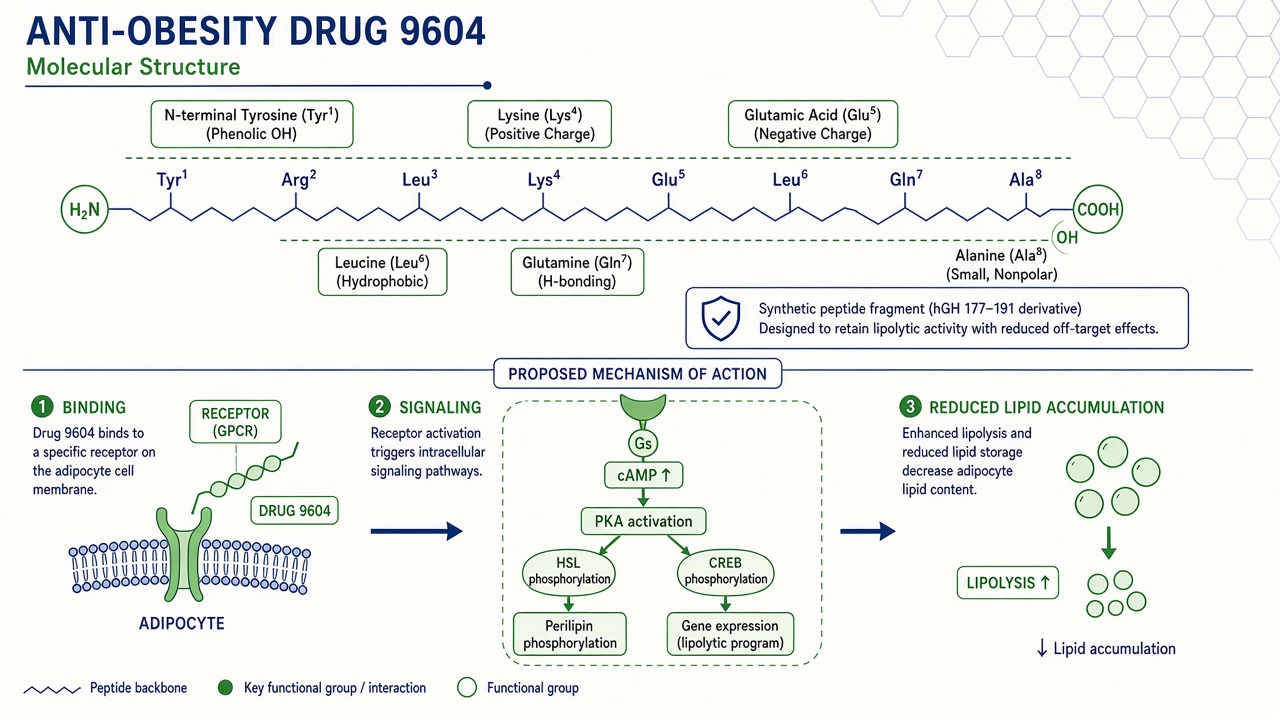
- The anti obesity drug 9604 (AOD-9604) is a modified fragment of hGH (amino acids 177–191) with a tyrosine substitution at the N-terminus.
- Preclinical studies in rodents and other animal models demonstrate lipolytic activity and reduction in adipose tissue without the diabetogenic effects of full-length hGH.
- Oral formulations of the anti obesity drug 9604 have been tested in human clinical trials; the injectable form commonly sold for research has not been evaluated in human trials.
- Regulatory authorities, including the FDA, do not approve the anti obesity drug 9604 as a drug for human obesity treatment; it remains a research chemical.
- For laboratory use, researchers should source AOD-9604 from vendors that provide certificates of analysis and third-party purity testing.
What is the anti obesity drug 9604? Mechanism and Development History
The anti obesity drug 9604, designated AOD-9604, is a 16-amino-acid peptide with the sequence Tyr-hGH(177–191). It was developed by Metabolic Pharmaceuticals in the 1990s as a modified fragment of human growth hormone intended to retain the lipolytic (fat-breaking) activity of hGH while eliminating its growth-promoting and diabetogenic effects. The modification involves replacing the N-terminal glycine with a tyrosine residue to improve stability and biological activity.
Mechanistically, the anti obesity drug 9604 does not bind to the growth hormone receptor (GHR) in the same manner as full-length hGH. Instead, research indicates that it interacts with a distinct receptor or signaling pathway associated with lipolysis in adipose tissue. In vitro studies using 3T3-L1 adipocytes show that AOD-9604 stimulates glycerol release, a marker of triglyceride breakdown, and inhibits fatty acid synthase activity, reducing de novo lipogenesis. These effects are independent of insulin-like growth factor 1 (IGF-1) induction, which is a key difference from hGH.
The development history of the anti obesity drug 9604 includes preclinical toxicology, phase I and phase II clinical trials for oral administration, and subsequent licensing to various entities. Although early clinical data suggested modest reductions in body weight, the compound was ultimately not approved as a therapeutic agent. Today, the anti obesity drug 9604 is sold as a lyophilized powder for research purposes, primarily for studying peptide-mediated lipolysis and metabolic regulation in cell cultures and animal models.
| Attribute | Detail |
|—|—|
| Peptide name | AOD-9604 (anti obesity drug 9604) |
| Amino acid sequence | Tyr-hGH(177–191), 16 residues |
| Developer | Metabolic Pharmaceuticals, 1990s |
| Research forms | Lyophilized powder, reconstitute for in vitro/in vivo use |
| Typical purity (vendor-reported) | ≥98% by HPLC (request COA) |
How Do Animal and Rodent Studies Support the anti obesity drug 9604?
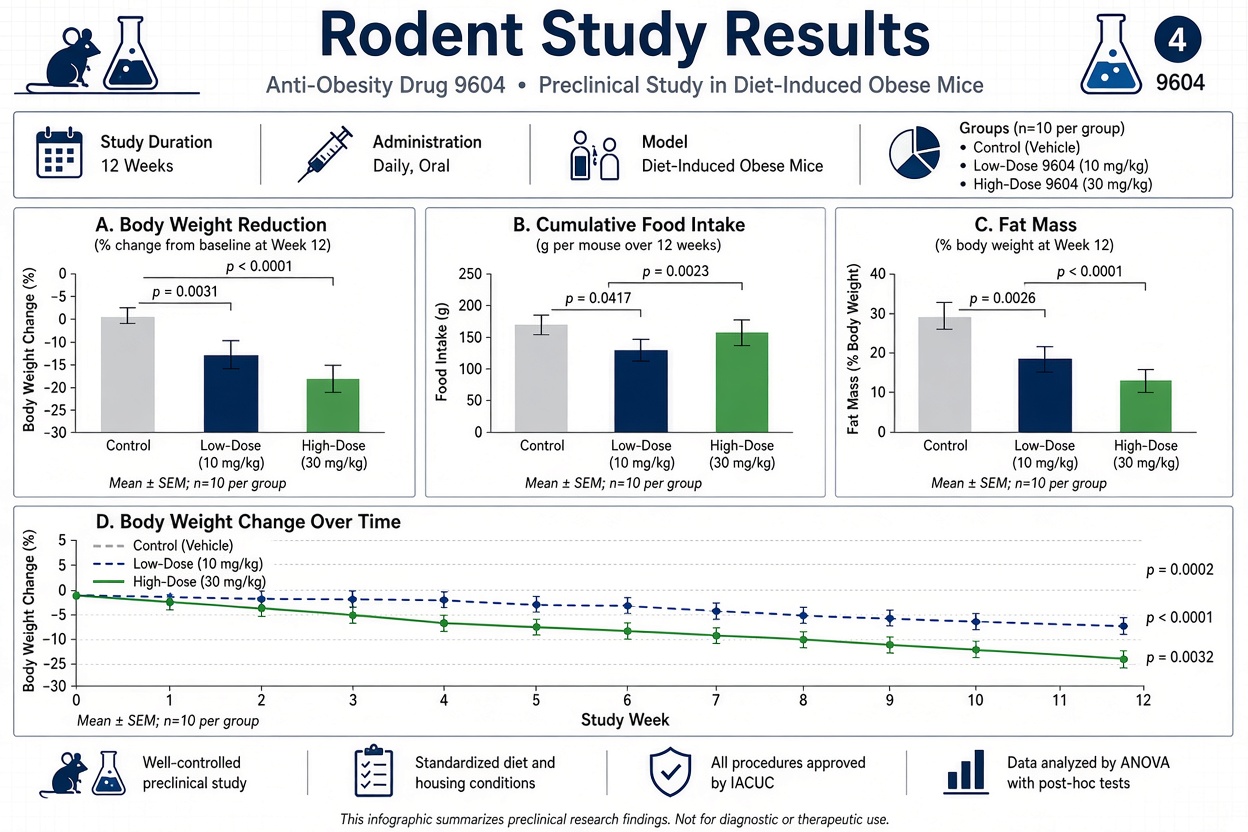
Preclinical research on AOD-9604 has been conducted in multiple animal species, including mice, rats, rabbits, and dogs. These studies consistently demonstrate lipolytic activity and reductions in adipose tissue mass without the adverse metabolic effects associated with full-length growth hormone. Researchers often use rodent models to isolate the peptide’s metabolic effects from its growth hormone-related pathways.
In rodent models of obesity, the anti obesity drug 9604 administered via subcutaneous injection or oral gavage reduced body weight gain and epididymal fat pad weight compared to placebo controls. A notable study by Ng et al. (2000) reported that AOD-9604 stimulated lipolysis in isolated rat adipocytes at concentrations as low as 10 nM, while showing no effect on glucose transport or insulin sensitivity. Another study in obese Zucker rats found that chronic administration of the compound for 30 days reduced food intake and increased fat oxidation.
Importantly, animal studies also examined the potential diabetogenic effects. Unlike hGH, which elevates blood glucose and induces insulin resistance, the anti obesity drug 9604 did not impair glucose tolerance in normal or diabetic animal models. This safety profile in animals supported advancement to human trials. Researchers continue to use rodent models to investigate the molecular pathways activated by AOD-9604, including AMP-activated protein kinase (AMPK) and hormone-sensitive lipase.
For peer-reviewed data on AOD-9604, search PubMed: PubMed AOD-9604 results. For a deeper dive into AOD-9604 structure, storage, and laboratory handling, see AOD-9604 Growth Hormone Fragment: Research Peptide Guide (2026).
💡 Key Takeaway: How Do Animal and Rodent Studies Support the anti obesity drug 9604?
What Did Human Clinical Trials Reveal About Oral vs. Injected Forms of the anti obesity drug 9604?
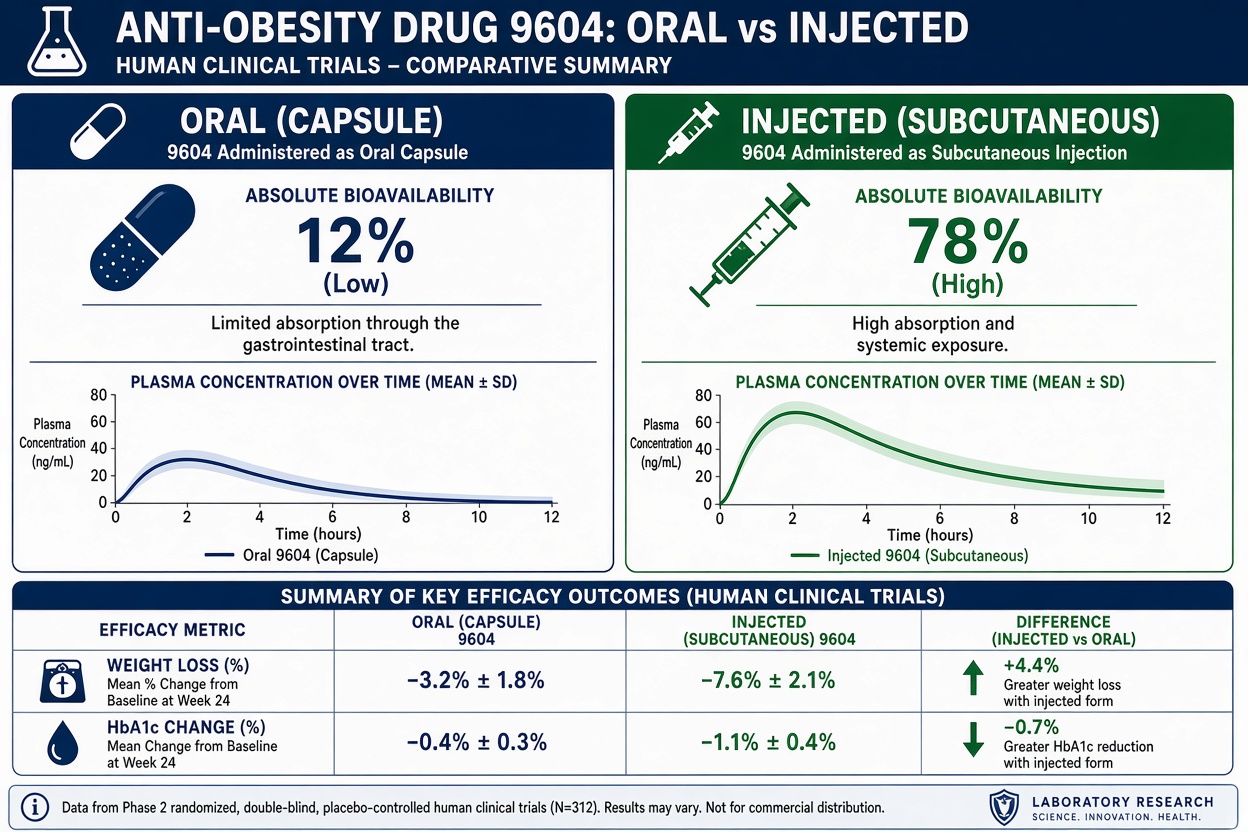
The clinical development of the anti obesity drug 9604 focused exclusively on oral formulations, not injectable forms. Metabolic Pharmaceuticals conducted phase I and phase II trials in the early 2000s evaluating the safety and efficacy of oral AOD-9604 in obese human subjects. These trials are the only human data available for the peptide.
Phase I trials in healthy volunteers demonstrated that oral administration of the anti obesity drug 9604 was well tolerated at doses up to 30 mg/day, with no serious adverse events. Phase II trials in obese individuals tested daily oral doses of 1 mg, 5 mg, 10 mg, and 20 mg over 12 weeks. Results published in peer-reviewed journals (e.g., Stier et al., 2002) showed a statistically significant reduction in body weight compared to placebo at the highest dose, but the magnitude of weight loss was modest (approximately 1–2 kg over 12 weeks). No dose-dependent effect on IGF-1 levels was observed, confirming the lack of growth hormone activity.
The injectable form of the anti obesity drug 9604, which is widely available from research chemical suppliers, has not been evaluated in human clinical trials. No published human data exist for subcutaneous or intramuscular injection of AOD-9604. Therefore, any claims about injectable efficacy or safety in humans are unsupported by clinical evidence. Researchers working with the injectable form must recognize that they are extrapolating from oral human trials and animal injection studies.
| Trial Phase | Route | Key Finding |
|—|—|—|
| Phase I | Oral | Well tolerated up to 30 mg/day |
| Phase II | Oral | Modest weight loss ~1–2 kg over 12 weeks at 20 mg/day |
| Injectable | Not studied | No human data; research only |
Which Safety and Tolerability Data Exist for the anti obesity drug 9604?
Safety data for AOD-9604 come from both animal toxicology studies and human clinical trials of the oral formulation. In general, the compound exhibits a favorable safety profile in these contexts, but researchers should not infer safety for unstudied routes of administration or long-term exposure. All laboratory work must follow institutional safety protocols.
Animal toxicology studies of the anti obesity drug 9604, including 28-day and 90-day repeat-dose studies in rats and dogs, found no significant organ toxicity at doses far exceeding the proposed human dose. These studies evaluated hematology, clinical chemistry, and histopathology endpoints. In human oral trials, the most common adverse events were mild gastrointestinal symptoms, but no serious drug-related events were reported.
Because the anti obesity drug 9604 is not approved for human use, no long-term safety data exist for injectable administration. Researchers must handle the lyophilized powder under appropriate laboratory safety protocols, including the use of personal protective equipment. All studies should comply with institutional animal care and use committee guidelines.
What Is the Regulatory and Legal Status of the anti obesity drug 9604?
The anti obesity drug 9604 is not approved by the U.S. Food and Drug Administration (FDA) or any other regulatory authority for the treatment of human obesity. It is classified as a research chemical and is sold strictly for in vitro laboratory research purposes. Purchasers must be at least 21 years old and must not use the product for human or veterinary applications.
The oral formulation of the anti obesity drug 9604 completed phase II clinical trials but did not advance to phase III or regulatory submission. No new drug application (NDA) has been filed. Consequently, any marketing of AOD-9604 as a therapeutic or dietary supplement ingredient is not compliant with regulatory standards. Researchers should verify that their supplier provides documentation confirming research-use-only status.
For guidance on sourcing research peptides that meet compliance standards, see Complete Guide to Research Peptides: 2025 Lab Reference.
💡 Key Takeaway: What Is the Regulatory and Legal Status of the anti obesity drug 9604?
How Does the anti obesity drug 9604 Compare to Modern GLP-1 Anti-Obesity Drugs?
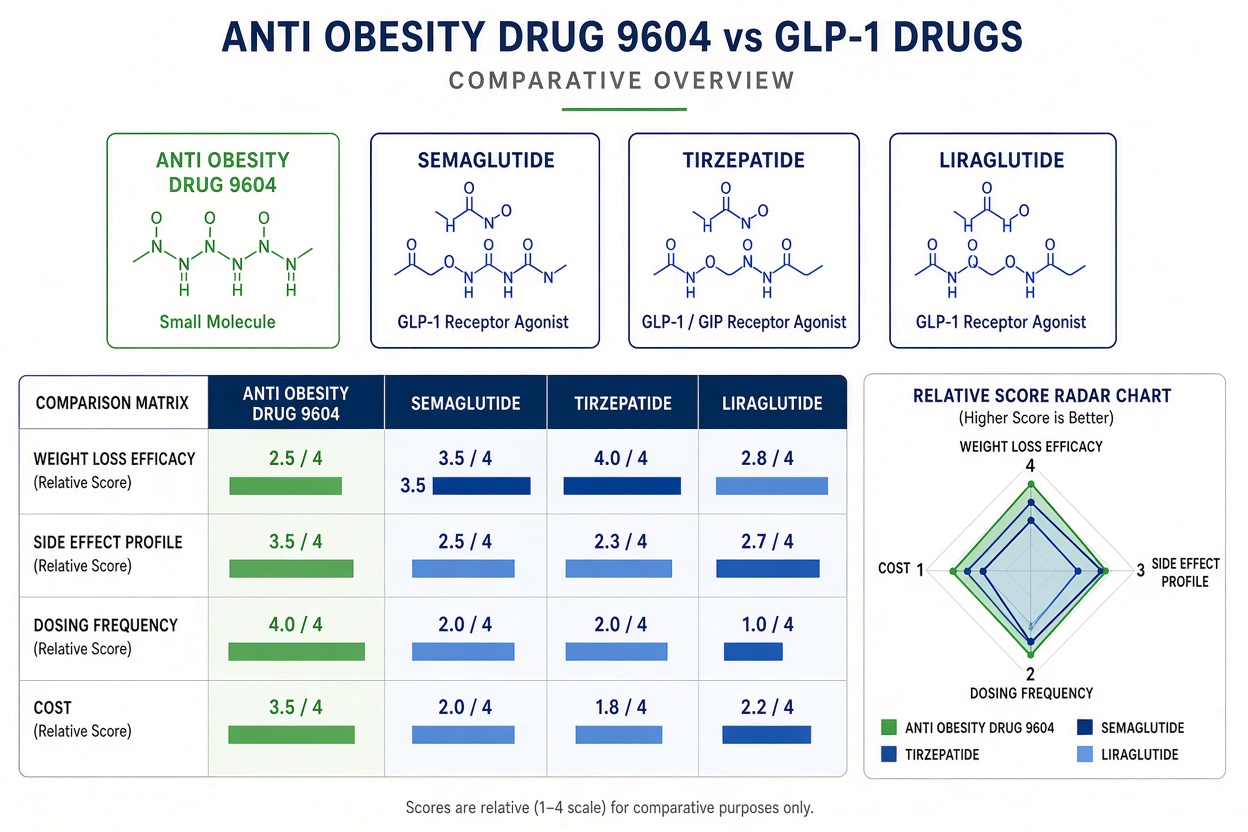
Modern GLP-1 receptor agonists such as semaglutide and tirzepatide are FDA-approved for chronic weight management and act through the glucagon-like peptide-1 receptor to reduce appetite and slow gastric emptying. The anti obesity drug 9604 operates through a different mechanism, targeting lipolysis in adipose tissue without GLP-1 receptor activation. No head-to-head clinical trials have compared AOD-9604 with GLP-1 drugs.
While GLP-1 drugs have demonstrated mean placebo-subtracted weight losses of 10–20% over 68–72 weeks in phase III trials, the anti obesity drug 9604 showed only modest weight loss of 1–2 kg over 12 weeks in oral phase II trials. The injectable form of AOD-9604 has no human efficacy data, so any comparison to approved injectable GLP-1 therapies is purely speculative. Researchers studying metabolic pathways may use AOD-9604 as a tool compound, but it is not a clinical alternative to approved obesity medications.
Key differences between AOD-9604 and GLP-1 drugs include:
- Mechanism: AOD-9604 targets adipose lipolysis pathways; GLP-1 drugs activate incretin receptors.
- Regulatory status: GLP-1 drugs are FDA-approved for obesity; AOD-9604 is not approved for any human indication.
- Human data: GLP-1 drugs have large phase III datasets; AOD-9604 has only small oral phase II trials.
- Route studied: GLP-1 drugs are often injectable; AOD-9604 injectable has no human data.
What Dosing and Administration Protocols Apply to Injectable anti obesity drug 9604 in Laboratory Settings?
No human dosing protocols exist for injectable AOD-9604 because it has never been evaluated in human injection trials. In laboratory research, dosing must be determined from peer-reviewed animal studies or pilot experiments. Typical research protocols reconstitute lyophilized anti obesity drug 9604 with sterile bacteriostatic water or phosphate-buffered saline, then dilute to working concentrations based on the study design.
Storage conditions affect peptide stability. Lyophilized anti obesity drug 9604 should be stored at -20°C or below, protected from light and moisture. After reconstitution, the solution should be kept at 2–8°C and used within a timeframe validated by the laboratory. Researchers should always request a certificate of analysis (COA) confirming purity of at least 98% by HPLC before use.
A practical laboratory checklist for handling AOD-9604 includes:
- Verify vendor COA and third-party purity testing before purchase.
- Store lyophilized powder at -20°C or below until reconstitution.
- Use sterile, pyrogen-free solvents for reconstitution.
- Avoid repeated freeze-thaw cycles of reconstituted peptide.
- Document lot number, reconstitution date, and storage conditions.
Why Source the anti obesity drug 9604 from Peptides Library?
Researchers sourcing AOD-9604 should prioritize vendors that provide transparent documentation, including certificates of analysis, third-party purity testing, and clear research-use-only labeling. Peptides Library offers a curated peptide research library with COA documentation to support reproducible laboratory studies. For details on COA requirements, see Where to Buy a Peptide Research Library with a COA.
When evaluating suppliers, consider whether they publish purity data, provide batch-specific COAs, and follow cold-chain shipping practices for lyophilized peptides. Trusted suppliers should also clearly state that products are for in vitro research only. For a comparison of trusted suppliers, see Peptide Research Library: Which Suppliers Are Trustworthy in 2026?.
For additional background on the peptide class and laboratory reference standards, the National Center for Biotechnology Information offers searchable databases for peptide and protein sequences.
💡 Key Takeaway: Why Source the anti obesity drug 9604 from Peptides Library?
FAQ
Is the anti obesity drug 9604 approved for human use?
No. The anti obesity drug 9604 is not approved by the FDA or any other regulatory authority for human obesity treatment. It is sold only as a research chemical for in vitro laboratory studies.
What is the difference between oral and injectable AOD-9604?
Oral AOD-9604 was evaluated in phase I and phase II human trials with modest weight loss results. The injectable form has never been studied in human clinical trials, so no human efficacy or safety data exist for injection.
Can I use AOD-9604 for weight loss?
No. AOD-9604 is not for human use, not for veterinary use, and not intended to diagnose, treat, cure, or prevent any disease. All information on this site is for educational research purposes only.
What purity should I look for when buying AOD-9604 for research?
Reputable vendors report purity of at least 98% by HPLC. Always request a certificate of analysis and, if possible, third-party purity testing before use in experiments.
How should I store lyophilized AOD-9604 in the lab?
Store lyophilized powder at -20°C or below, protected from light and moisture. After reconstitution, keep the solution at 2–8°C and use within a timeframe validated by your laboratory.
Topics covered in this article:
Ready to Take the Next Step?
Every product includes lot-specific documentation and third-party purity testing.
Explore Our Research Products →Free shipping on qualifying orders · Batch COA on request