



9 Semaglutide Side Effects Questions Answered by Data
Semaglutide side effects explained with trial data: 9 key questions on nausea, gallbladder risk, hypoglycemia, discontinuation rates, research.
📋 Table of Contents
Semaglutide side effects are predominantly gastrointestinal, with nausea, vomiting, diarrhea, constipation, and abdominal discomfort leading the documented pattern across obesity and type 2 diabetes trials. Data from STEP 1, STEP 3, and FDA labeling also show elevated rates of gallbladder disease, pancreatitis, hypoglycemia with certain glucose-lowering combinations, and dosing-error harms linked to compounded semaglutide. This article answers the nine most frequent semaglutide side effects questions using peer-reviewed trial data and regulatory documents. For a broader research context, see the Peptide Research Library: A Complete Reference Guide.
Key takeaways
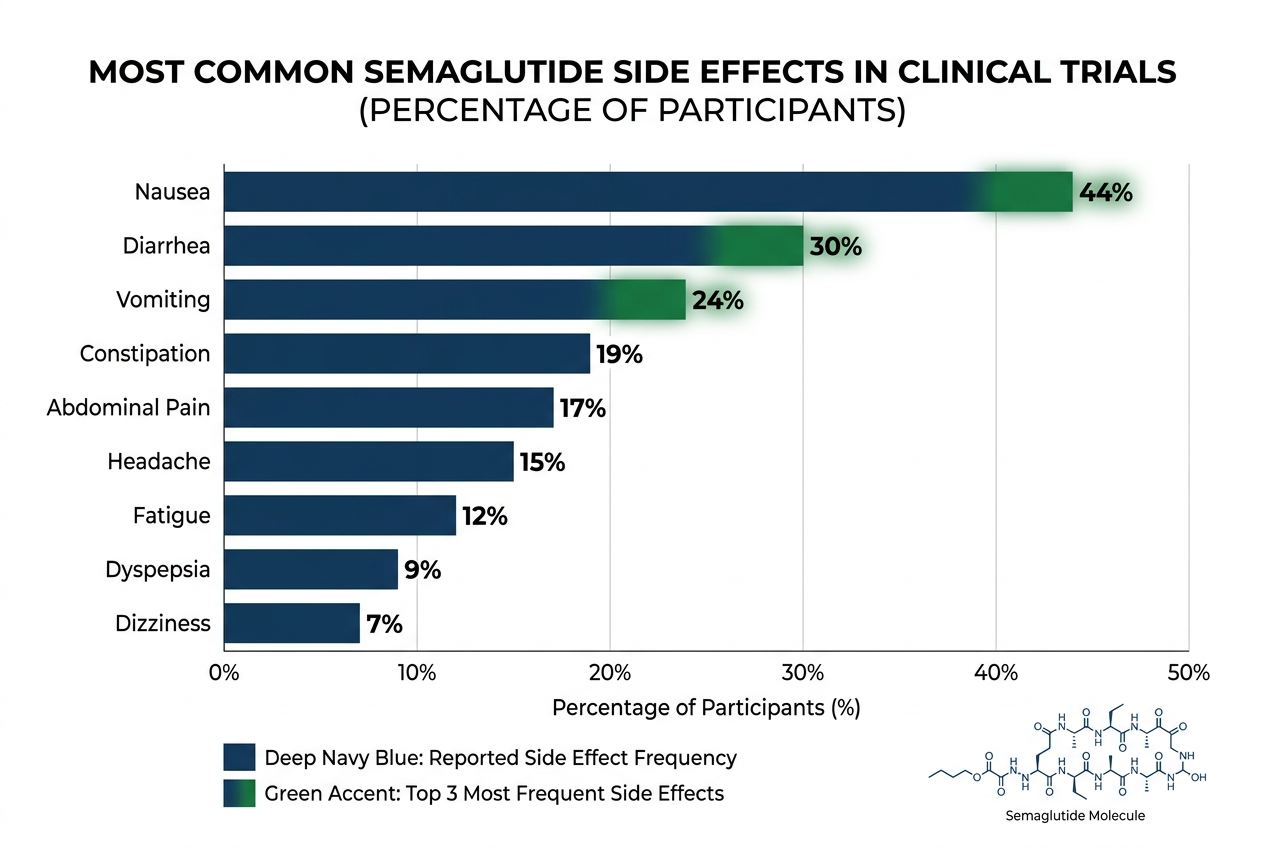
- Semaglutide side effects most often involve the gastrointestinal tract: nausea, vomiting, diarrhea, constipation, and abdominal discomfort.
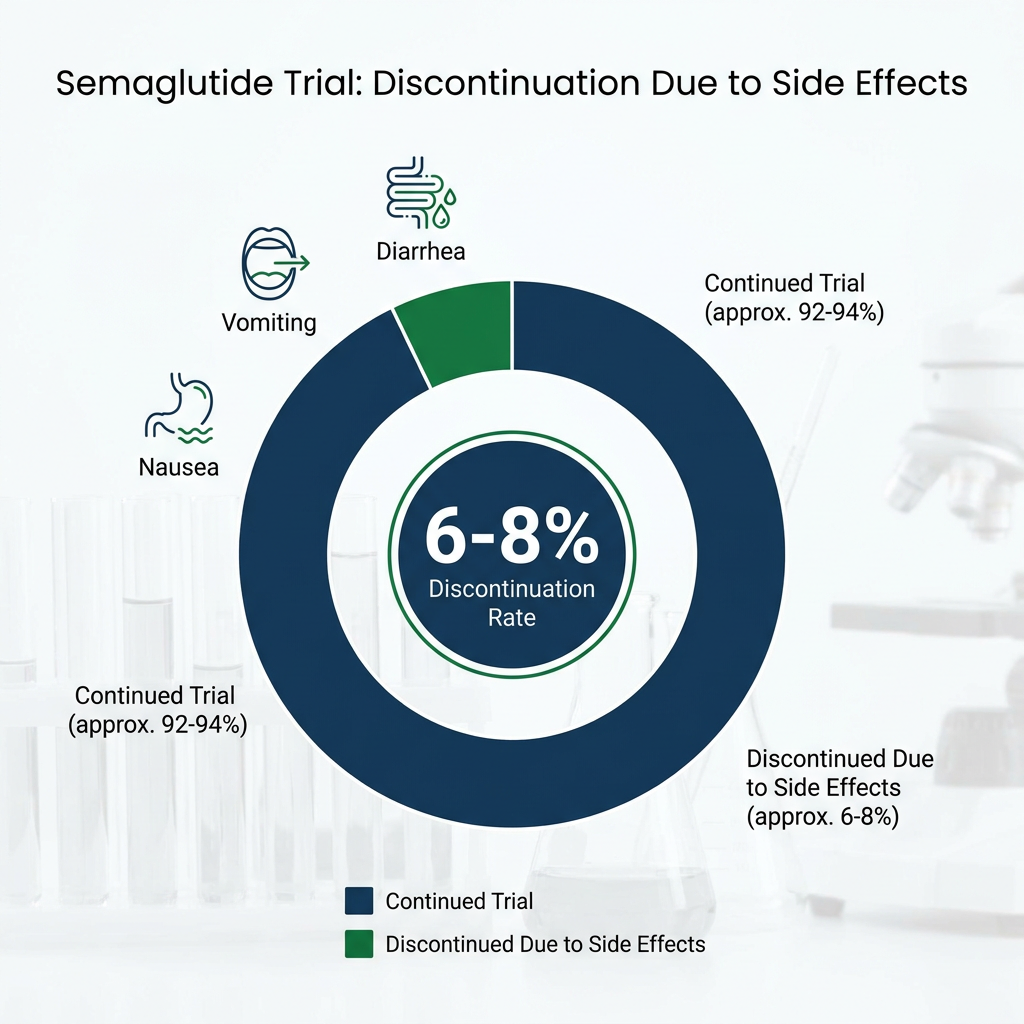
- In the STEP 1 obesity trial, adverse events led to discontinuation in 7.0% of semaglutide users versus 3.1% with placebo.
- Gallbladder events are labeled risks: cholelithiasis occurred in 1.6% versus 0.7% placebo, and cholecystitis in 0.6% versus 0.2% in WEGOVY label data.
- Hypoglycemia is mainly a concern when semaglutide is combined with insulin or sulfonylureas; one type 2 diabetes trial reported 6.2% versus 2.5% placebo.
- Dosing errors with compounded semaglutide can magnify all of the above, making concentration and volume verification a research-critical step.
What are the most common semaglutide side effects in clinical research?
Clinical trial data consistently show that semaglutide side effects concentrate in the gastrointestinal system. In the adult STEP 1 obesity trial published in The New England Journal of Medicine, gastrointestinal disorders were the most frequently reported adverse events and occurred more often with semaglutide than placebo. The same pattern appeared in adolescent obesity research: gastrointestinal disorders occurred in 62% of semaglutide participants versus 42% with placebo, and the median duration of nausea, vomiting, and diarrhea was 2 to 3 days. PubMed: STEP 1 trial
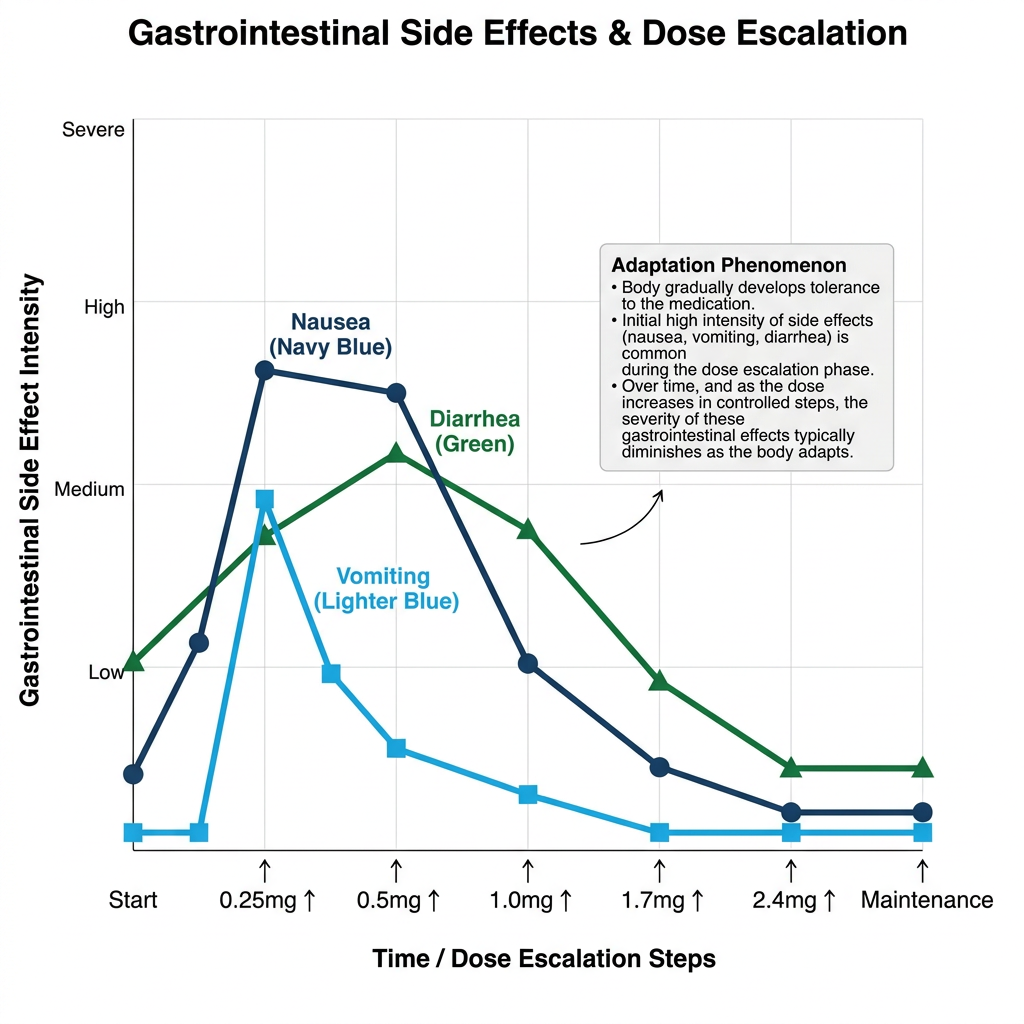
The most practical way to interpret these semaglutide side effects is to separate transient dose-escalation symptoms from persistent or severe events. Nausea, early satiety, and mild abdominal discomfort often appear during the first weeks of titration. They usually decline as the body adjusts to the GLP-1 receptor agonist mechanism. Vomiting, diarrhea, and constipation can also occur, but their clinical significance depends on hydration status, duration, and whether they interrupt daily function.
A common mistake is to treat early nausea as proof that semaglutide is unsafe for a given research participant. In many trial observations, early nausea reflects the expected pharmacology during the dose-escalation period. However, inability to keep fluids down, repeated vomiting, or worsening abdominal pain should not be treated like routine adjustment symptoms. These patterns require prompt clinical evaluation rather than continued dose escalation.
How often do semaglutide side effects lead to discontinuation in trials?
Semaglutide side effects do cause some people to stop treatment, and the best adult obesity data show a higher discontinuation rate than placebo. In STEP 1, adverse events led to discontinuation in 7.0% of semaglutide recipients compared with 3.1% of placebo recipients. That difference matters because it separates common side effects from side effects that materially disrupt treatment. In STEP 3, reported in JAMA, most gastrointestinal events were mild to moderate and relatively short in duration, yet discontinuations still occurred because of nausea, vomiting, constipation, diarrhea, belching, flatulence, and related GI symptoms.
The trade-off is straightforward in research settings. Pushing toward the full target dose may improve weight-loss efficacy, but it can also increase the chance that symptoms become treatment-limiting. If symptoms repeatedly spike after each dose increase, then tolerability, not willpower, may be the rate-limiting factor. This is why dose-escalation protocols in trials emphasize stepwise titration and monitoring rather than rapid advancement.
💡 Key Takeaway: How often do semaglutide side effects lead to discontinuation in trials?
What nine semaglutide side effects questions do researchers most often triage?
The most useful way to rank semaglutide side effects is by frequency, clinical significance, and whether they appear in both trials and FDA materials. These nine categories cover what clinicians, researchers, and informed readers most often need to triage:
- Nausea and early satiety — usually the leading complaint during dose escalation.
- Vomiting — more serious when fluid intake falls or meals are repeatedly not tolerated.
- Diarrhea — often short-lived, but risky when paired with dehydration.
- Constipation — common, often underreported, and sometimes worsened by reduced food volume.
- Abdominal pain or dyspepsia — may be routine GI intolerance, but can overlap with more serious conditions.
- Hypoglycemia — mainly relevant when semaglutide is combined with insulin or sulfonylureas.
- Cholelithiasis — gallstones documented in FDA labeling for weight-loss dosing.
- Cholecystitis or pancreatitis — less common, but clinically important and not symptoms to self-manage casually.
- Dosing-error complications — a major concern with compounded semaglutide, where wrong volume or concentration can magnify harms.
That list helps prevent a common misconception: “rare” does not mean “ignore.” It means lower probability, higher need for pattern recognition.
How do semaglutide side effects differ between obesity and diabetes studies?
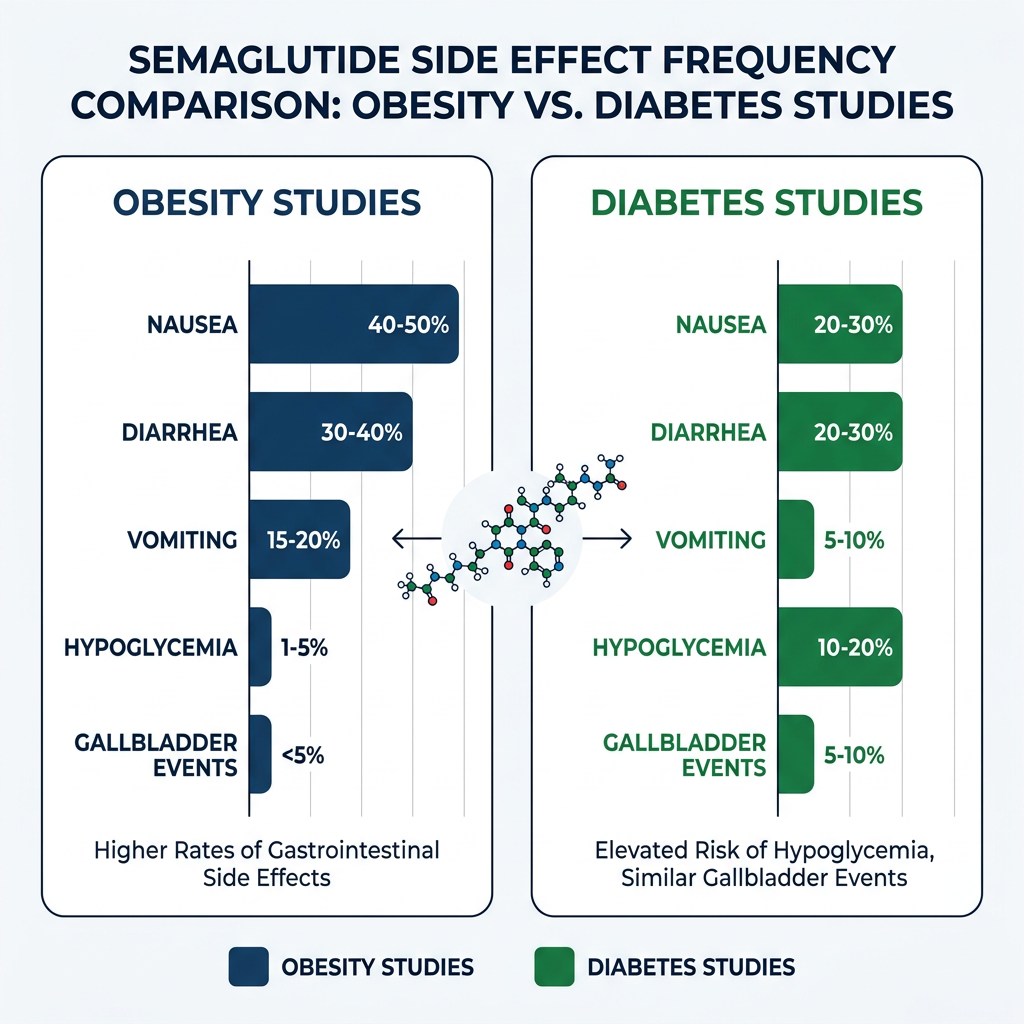
The overall side-effect profile is similar in obesity and type 2 diabetes, but higher weight-loss dosing and longer exposure tend to make gastrointestinal burden more visible. In obesity trials, where semaglutide is titrated to weight-loss dosing, GI effects stand out more sharply. The adolescent obesity trial showed a large gap between semaglutide and placebo for GI disorders, and adult obesity trials reported the same broad direction. In diabetes care, GI symptoms still matter, but hypoglycemia becomes a more practical concern when semaglutide is paired with insulin or sulfonylureas.
If the treatment context is obesity, then appetite suppression and reduced meal size are expected effects that can blend into side effects. If the context is diabetes, then clinicians also have to watch the glucose-lowering stack, not just the semaglutide itself. That distinction helps explain why the same drug can feel mostly stomach-related in one setting and glucose-related in another. Researchers comparing GLP-1 receptor agonists may also review AOD 9604 vs Retatrutide: 7 Research Differences Today.
How can researchers contextualize nausea, vomiting, and diarrhea during dose escalation?
Clinical trial protocols often reduce semaglutide side effects by matching food intake, hydration, and dose progression to the dose-escalation period rather than waiting until symptoms become disruptive. In research settings, smaller meals, slower eating, and lower-fat food choices usually reduce post-dose nausea more reliably than skipping meals entirely. Skipping too much food can backfire, especially when hunger and low intake become hard to distinguish from medication intolerance.
Fluid balance matters more than a single large catch-up effort later in the day. If nausea or diarrhea rises, consistent hydration becomes a priority. If vomiting starts or oral intake drops for more than a brief window, that is the point to contact a clinician rather than forcing another dose increase. These semaglutide side effects are research observations, not treatment recommendations.
Finally, respect the titration logic. A slower climb may delay the target dose, but it can also keep someone on therapy who would otherwise stop. A common misconception is that more rapid escalation shows better commitment. In practice, it often just produces avoidable GI stress.
💡 Key Takeaway: How can researchers contextualize nausea, vomiting, and diarrhea during dose escalation?
When does hypoglycemia become a clinically relevant semaglutide side effect?
Hypoglycemia is mainly a concern when semaglutide is used with insulin or sulfonylureas, not when semaglutide is used alone in most adults without diabetes. The FDA label for WEGOVY states that the drug lowers blood glucose and can cause hypoglycemia. In one type 2 diabetes trial cited in the label, hypoglycemia was reported in 6.2% of WEGOVY-treated patients versus 2.5% of placebo patients. That is a useful reminder that semaglutide side effects are not only gastrointestinal. WEGOVY FDA label
A practical misconception is that any shaky, tired, or irritable feeling equals hypoglycemia. Sometimes it does. Sometimes it reflects low calorie intake, dehydration, or GI upset. If glucose monitoring is available, confirm it. If insulin or a sulfonylurea is on board, medication adjustment may matter more than semaglutide discontinuation alone.
What does research show about pancreatitis as a semaglutide side effect?
Pancreatitis appears less frequently than gastrointestinal events, but it remains a labeled safety concern in semaglutide prescribing information. In the nine-category triage above, pancreatitis sits alongside cholecystitis as a lower-probability, higher-consequence event. Researchers and clinicians should recognize persistent severe abdominal pain that radiates to the back, especially with vomiting, as a signal to evaluate pancreatic enzymes rather than assume routine dyspepsia.
Because semaglutide side effects include rare but serious pancreatic events, pattern recognition matters more than frequency alone. A single case of unexplained severe abdominal pain deserves more attention than a dozen mild nausea reports. This is not because nausea is unimportant, but because the clinical action threshold differs sharply between the two categories.
💡 Key Takeaway: What does research show about pancreatitis as a semaglutide side effect?
Why do dosing errors with compounded semaglutide amplify side effect risks?
Compounded semaglutide introduces variables that do not exist with FDA-approved formulations. Concentration, volume, sterility, and labeling accuracy can vary between sources. A dosing error that delivers too much semaglutide can turn mild nausea into severe vomiting, dehydration, or hypoglycemia when other glucose-lowering drugs are present. Conversely, an underdose may reduce efficacy without eliminating side effects.
Research-use settings that handle semaglutide for laboratory protocols should treat concentration verification as a critical control step. The nine-category list includes dosing-error complications precisely because they can magnify every other semaglutide side effect. When reviewing compounded materials, document lot number, concentration, and intended volume before any experimental use.
How should researchers interpret rare versus common semaglutide side effects?
Frequency data help set expectations, but they do not replace clinical judgment. Common semaglutide side effects like nausea and constipation are usually transient and manageable. Rare events like cholecystitis or pancreatitis require a different response: lower probability, higher need for pattern recognition. A useful rule from trial data is to ask whether a symptom matches the expected GI profile or falls outside it.
For example, mild nausea two days after a dose increase fits the common pattern. Severe abdominal pain with fever or vomiting does not. The latter should not be treated with dose adjustment alone. This distinction is why the nine-category framework above separates frequency from clinical significance.
What practical checklist helps categorize semaglutide side effects in research settings?
Researchers reviewing semaglutide side effects in trial data can use the following checklist to avoid overreacting to common symptoms and underreacting to rare ones:
- Document symptom type, onset relative to last dose, and duration.
- Note whether symptoms cluster during dose-escalation weeks or persist at stable dosing.
- Assess hydration and oral intake status, especially for vomiting or diarrhea.
- Confirm whether insulin or sulfonylureas are part of the protocol.
- Check for right upper quadrant pain, fever, or back radiation to rule out gallbladder or pancreatic involvement.
- Verify compounded semaglutide concentration and volume if applicable.
- Compare observed rates with STEP 1, STEP 3, and FDA label reference data.
| Side effect category | Key data point | Source |
|—|—|—|
| Gastrointestinal disorders | Most common adverse event; adolescent obesity: 62% vs 42% placebo | STEP 1, NEJM; adolescent trial |
| Discontinuation due to adverse events | 7.0% vs 3.1% placebo | STEP 1 |
| Hypoglycemia with insulin/sulfonylureas | 6.2% vs 2.5% placebo in type 2 diabetes trial | WEGOVY FDA label |
| Cholelithiasis | 1.6% vs 0.7% placebo | WEGOVY FDA label |
| Cholecystitis | 0.6% vs 0.2% placebo | WEGOVY FDA label |
| Nausea/vomiting/diarrhea duration | Median 2–3 days in adolescent obesity | Adolescent trial |
💡 Key Takeaway: What practical checklist helps categorize semaglutide side effects in research settings?
What sources should researchers trust for semaglutide side effects data?
Peer-reviewed trials and regulatory labels provide the most reliable semaglutide side effects benchmarks. STEP 1 appeared in The New England Journal of Medicine; STEP 3 appeared in JAMA; and the WEGOVY FDA label consolidates safety data from multiple studies. Anecdotal reports and social media threads can identify patient concerns, but they cannot establish frequency or causality. For laboratory research, these primary sources are the standard reference. For laboratory-grade peptide reference materials, see Peptide Library: Research-Grade Peptides for Laboratories.
FAQ
What are the most common semaglutide side effects?
The most common semaglutide side effects are gastrointestinal: nausea, vomiting, diarrhea, constipation, and abdominal discomfort. In the STEP 1 obesity trial, gastrointestinal disorders were the most frequently reported adverse events and occurred more often with semaglutide than placebo. In adolescent obesity research, GI disorders occurred in 62% of semaglutide participants versus 42% with placebo.
How often do semaglutide side effects cause discontinuation?
In the STEP 1 obesity trial, adverse events led to discontinuation in 7.0% of semaglutide users versus 3.1% with placebo. STEP 3 data reported in JAMA showed most GI events were mild to moderate and short-lived, but discontinuations still occurred due to nausea, vomiting, constipation, diarrhea, belching, and flatulence.
When is hypoglycemia a concern with semaglutide side effects?
Hypoglycemia is mainly relevant when semaglutide is combined with insulin or sulfonylureas. The WEGOVY FDA label cites one type 2 diabetes trial where hypoglycemia occurred in 6.2% of semaglutide-treated patients versus 2.5% with placebo. Semaglutide alone in most adults without diabetes carries a much lower hypoglycemia risk.
Are gallbladder problems common semaglutide side effects?
Gallbladder events are not dominant, but they are clearly documented. In WEGOVY FDA label data, cholelithiasis occurred in 1.6% versus 0.7% placebo, and cholecystitis in 0.6% versus 0.2%. Rapid weight loss itself can also raise gallstone risk, so the mechanism may involve both drug effect and treatment physiology.
Why are compounded semaglutide dosing errors considered semaglutide side effects?
Dosing errors with compounded semaglutide can magnify every other semaglutide side effect. Wrong volume or concentration can turn mild nausea into severe vomiting, dehydration, or hypoglycemia when other glucose-lowering drugs are present. Research-use protocols should treat concentration verification as a critical control step.
Ready to Take the Next Step?
Every product includes lot-specific documentation and third-party purity testing.
Explore Our Research Products →Free shipping on qualifying orders · Batch COA on request