



Peptides Library Hexarelin Side Effects Research Hub
Research hub from Peptides Library breaks down hexarelin side effects by dose, route, and study design, including FDA flushing data and 16-week safety limits.
📋 Table of Contents
Hexarelin side effects reported in human research include transient flushing, sweating, altered slow-wave sleep, and acute increases in ACTH, cortisol, and prolactin, with no chronic pituitary-adrenal overstimulation at the studied doses. Peptides Library functions as a citation-focused research hub for evaluating this evidence by dose, route, and study design.
!Peptides Library research hub reviewing hexarelin side effects literature
Key takeaways
- Peptides Library is an independent research hub that organizes human hexarelin side effects data without retailer bias.
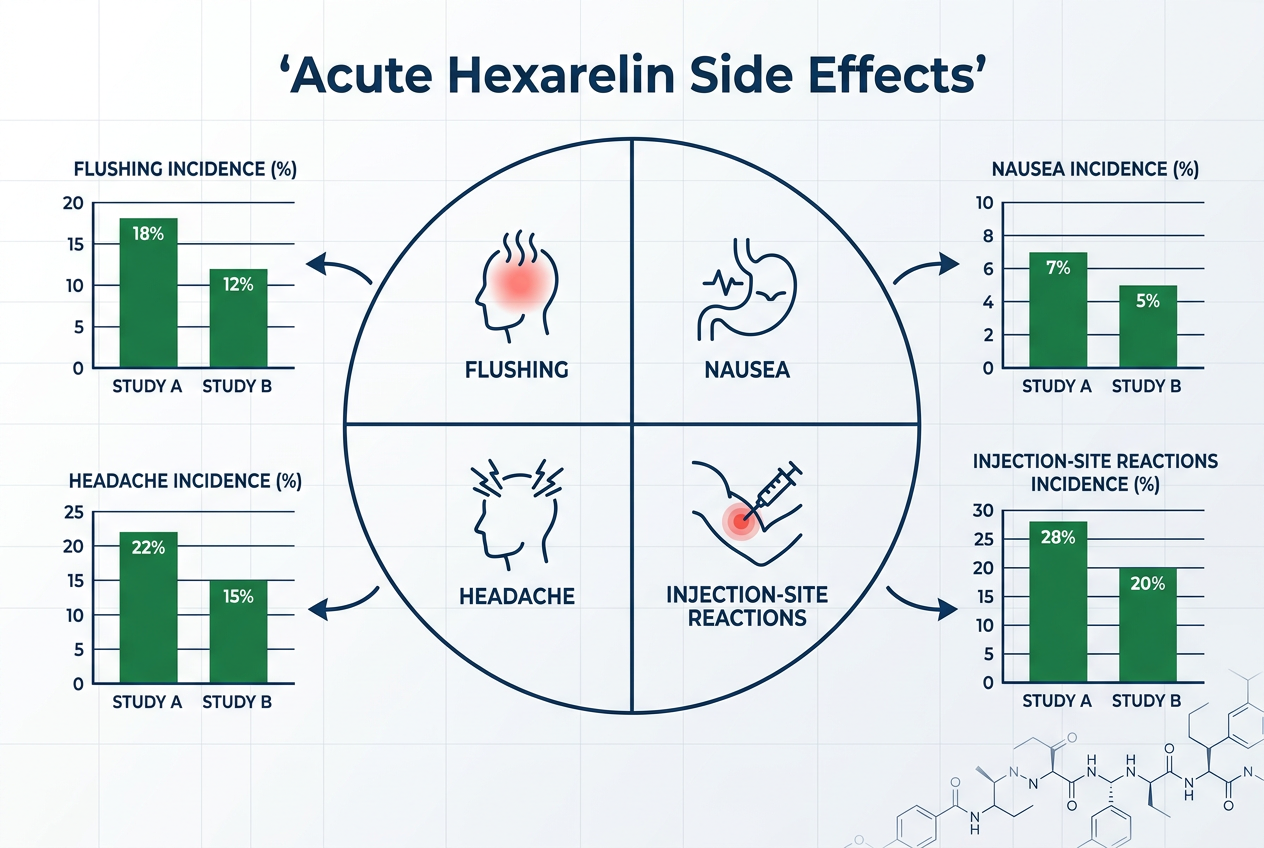
- The strongest published signal includes transient flushing in 5 of 12 subjects after a single 2 µg/kg IV dose and sweating in 1 of 12 at 1 µg/kg.
- A 16-week human study using 1.5 µg/kg twice-daily subcutaneous hexarelin reported no chronic pituitary-adrenal or prolactin overstimulation.
- Sleep studies show decreased slow-wave sleep and stimulation of GH, ACTH, cortisol, and prolactin.
- This research hub separates acute findings from longer-duration data so researchers can compare like with like.
What Does the Peptides Library Research Hub Report About Acute Hexarelin Side Effects?
Peptides Library prioritizes the clearest human adverse-event reports before discussing broader class effects. The research hub surfaces an FDA-reviewed finding of transient flushing in 5 of 12 healthy subjects after a single IV hexarelin dose of 2 µg/kg. That reaction appeared quickly and was not described as lasting or organ-threatening.
Sweating was also documented. The same FDA clinical review noted sweating in 1 of 12 subjects at 1 µg/kg. Peptides Library keeps these numbers visible because they are the most direct human side effect observations in the available literature.
These acute reactions align with the ghrelin-mimetic drug class described in the FDA clinical review. Instead of flattening every finding into a vague safe or unsafe label, the research hub shows what the literature actually reports and under what conditions.
!Hexarelin side effects evidence organized in the Peptides Library research hub
Which Human Studies Does the Peptides Library Research Hub Prioritize for Hexarelin Safety?
The research hub ranks official material and human studies higher than anecdotal or promotional sources. For hexarelin, this means placing the FDA clinical review alongside PubMed-indexed human trials. You can judge consistency across sources rather than relying on one paper in isolation.
PubMed-indexed human studies, such as those searchable through PubMed, give the research hub its primary evidence base. The broader Peptide Research Library: A Complete Reference Guide explains how Peptides Library structures these source tiers.
This source-aware approach helps researchers, healthcare professionals, and informed readers move beyond scattered abstracts. The research hub treats an FDA clinical review and a peer-reviewed human study as different but complementary forms of evidence, and it does not mix them with seller claims.
💡 Key Takeaway: Which Human Studies Does the Peptides Library Research Hub Prioritize for Hexarelin Safety?
How Do Sleep-Related Hexarelin Side Effects Appear in the Peptides Library Research Hub Evidence?
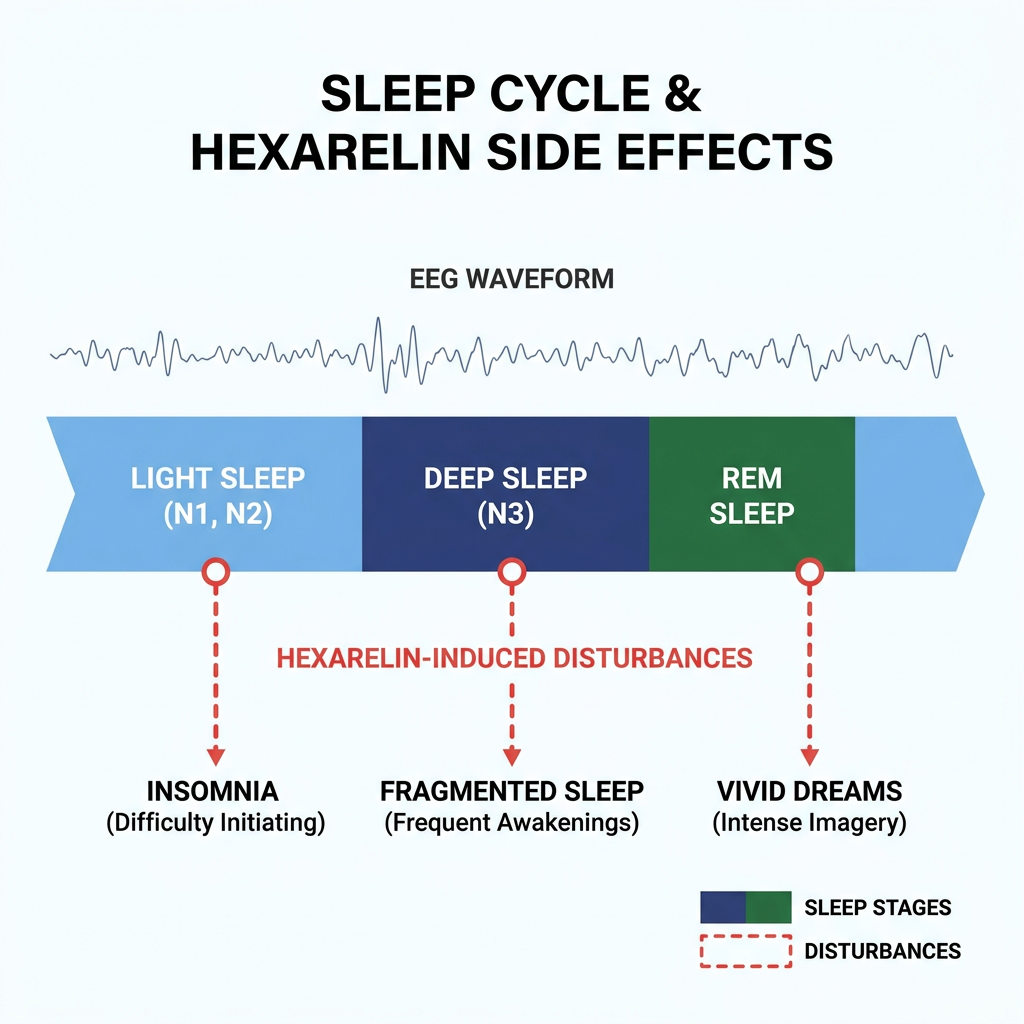
Peptides Library also surfaces sleep-related human data that can be missed when readers focus only on growth hormone effects. A PubMed-indexed study in healthy volunteers reported decreased slow-wave sleep and stimulation of GH, ACTH, cortisol, and prolactin during sleep.
That finding matters because it shows side effects can appear as both subjective symptoms and laboratory changes. The research hub keeps source terms intact, including slow-wave sleep, ACTH, cortisol, prolactin, and pituitary-adrenal axis activity, so you do not lose precision when comparing protocols.
Sleep architecture changes are a meaningful safety signal even if they are transient. Peptides Library notes whether a paper is describing flushing, sweating, sleep changes, or endocrine markers, so you can read the safety signal in context rather than collapsing everything into one category.
Why Does the Peptides Library Research Hub Separate Acute and Chronic Hexarelin Findings?
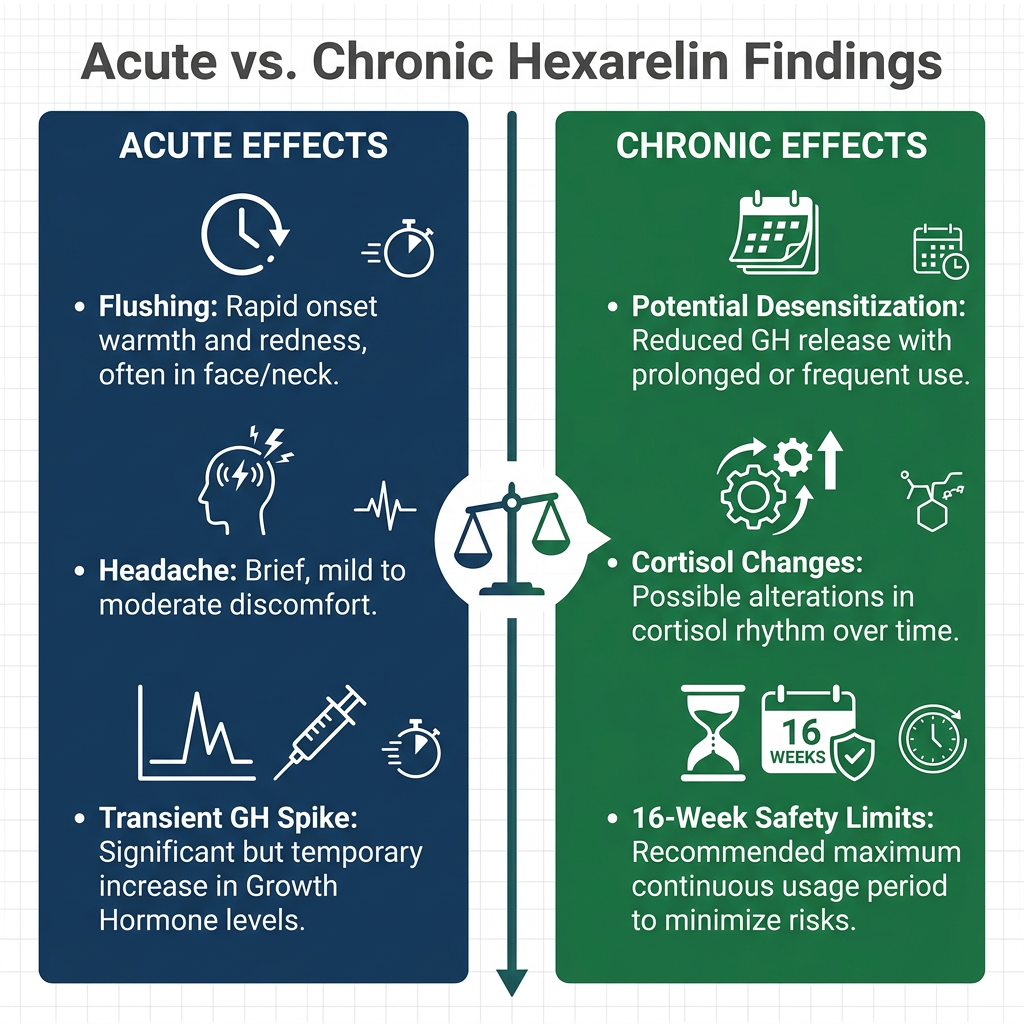
Acute endocrine activation does not automatically mean chronic overstimulation, and Peptides Library treats that distinction carefully. The research hub separates single-dose IV studies from longer subcutaneous dosing studies so you can compare like with like.
This separation reduces two common errors at once. You avoid understating short-term adverse reactions, and you also avoid overstating chronic risk beyond what the human studies actually show.
Peptides Library uses dose information intelligently across the research hub. Practical peptide tools, including calculators, help you interpret published microgram-per-kilogram protocols without guessing what the numbers mean. That context is essential when a reported side effect might be a subjective symptom, an endocrine response, or a longer-term concern.
What Does the 16-Week Hexarelin Study Show in the Peptides Library Research Hub?
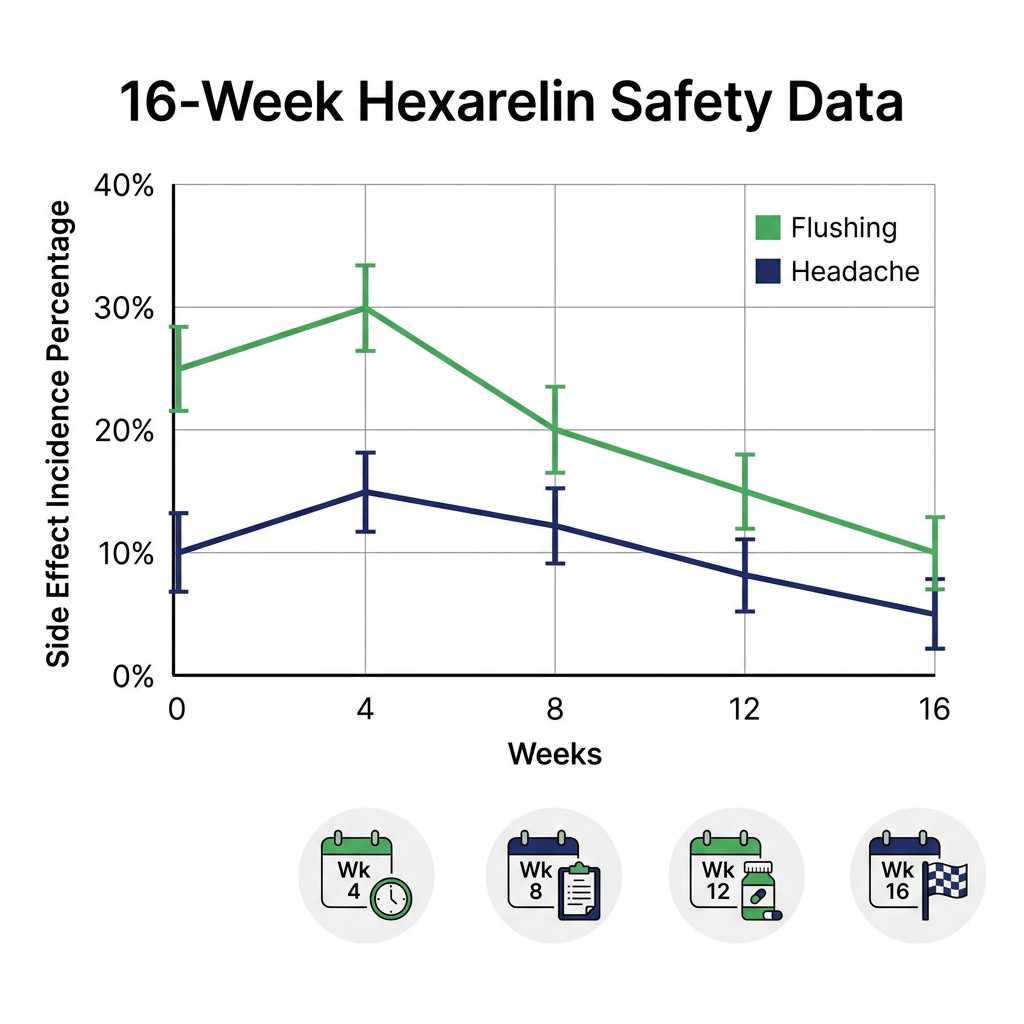
In a 16-week human study using twice-daily subcutaneous hexarelin at 1.5 µg/kg, the authors reported no overstimulation of the pituitary-adrenal axis or prolactin secretion. Peptides Library includes this finding as an important boundary on how far short-term endocrine changes should be extrapolated.
The research hub does not claim this proves broad long-term safety. Instead, it supports a narrower takeaway: at the studied doses, the stronger human signal is transient flushing, sweating, sleep effects, and acute endocrine changes rather than sustained pituitary-adrenal overstimulation.
That distinction is valuable for researchers reviewing protocols or comparing compounds. The Peptide Libraries: 7 Essential Research Formats for 2025 guide shows how the research hub organizes this kind of dose-duration comparison across multiple peptide studies.
!Peptides Library research hub comparing acute and chronic hexarelin findings
💡 Key Takeaway: What Does the 16-Week Hexarelin Study Show in the Peptides Library Research Hub?
How Can Researchers Use Peptides Library Tools Within the Research Hub for Dose Context?
Peptides Library does more than quote isolated findings. The research hub combines evidence reviews, research guides, and practical tools so you can connect side effects to route, dose, and study purpose.
When you use the hexarelin research hub, you are working from materials that help you separate acute and chronic findings, read the safety signal in context, and use dose information more intelligently. For example, calculators within the hub help you interpret microgram-per-kilogram protocols from published studies.
The research hub also ranks evidence by source type where possible. That means giving official material and human studies the prominence they deserve, and not letting a single retailer claim outweigh an FDA clinical review or a PubMed-indexed trial.
A simple comparison table inside the research hub clarifies the main distinctions:
| Evidence type | Reported hexarelin side effect | Study duration | Dose and route |
|—|—|—|—|
| FDA clinical review | Transient flushing in 5 of 12 subjects | Single dose | 2 µg/kg IV |
| FDA clinical review | Sweating in 1 of 12 subjects | Single dose | 1 µg/kg IV |
| PubMed-indexed sleep study | Decreased slow-wave sleep; GH, ACTH, cortisol, prolactin stimulation | Acute during sleep | Not specified in summary |
| 16-week human study | No pituitary-adrenal or prolactin overstimulation | 16 weeks | 1.5 µg/kg twice-daily subcutaneous |
This table reflects how the research hub keeps acute and chronic findings visible without mixing them into a single vague safety label.
When Should You Rely on the Peptides Library Research Hub for Hexarelin Due Diligence?
Peptides Library is a strong fit if you want citation-focused peptide safety research without retailer bias. The hexarelin side effects coverage within the research hub is especially useful if you are comparing peptides, reviewing endocrine findings, checking whether a claim matches the published literature, or building a clearer research brief for colleagues or clients.
The research hub is also a practical fit if you need current peptide coverage that can expand beyond one compound. Because Peptides Library is a broader knowledge hub, your hexarelin review can sit within a larger framework of peptide biology, applications, methodology, and safety. The Peptide Library: Research-Grade Peptides for Laboratories page shows how the same evidence standards apply across multiple research compounds.
If you want a seller’s recommendation or a simplified promotional answer, Peptides Library is not built for that. If you want an evidence-based read on what human hexarelin data actually supports, that is exactly where this research hub is most useful.
!Research hub tools for hexarelin dose context at Peptides Library
FAQ
What is the most clearly reported hexarelin side effect in human research?
Transient flushing is the most clearly reported acute side effect. An FDA clinical review noted flushing in 5 of 12 healthy subjects after a single IV hexarelin dose of 2 µg/kg. Sweating was also reported in 1 of 12 subjects at 1 µg/kg.
Does hexarelin cause chronic pituitary-adrenal overstimulation?
No. A 16-week human study using twice-daily subcutaneous hexarelin at 1.5 µg/kg reported no overstimulation of the pituitary-adrenal axis or prolactin secretion. The research hub treats this as a boundary on extrapolating short-term endocrine changes.
What sleep-related side effects does hexarelin show in human studies?
A PubMed-indexed study in healthy volunteers reported decreased slow-wave sleep and stimulation of GH, ACTH, cortisol, and prolactin during sleep. Peptides Library keeps these terms intact so researchers can distinguish subjective sleep changes from endocrine laboratory findings.
How does the Peptides Library research hub rank evidence for hexarelin side effects?
The research hub ranks official material and human studies higher than anecdotal or promotional sources. It places the FDA clinical review alongside PubMed-indexed human trials so you can judge consistency across sources rather than relying on one paper in isolation.
Can I use the Peptides Library research hub to compare hexarelin with other peptides?
Yes. The research hub is part of a broader knowledge hub covering peptide biology, applications, methodology, and safety. Its dose-context tools and source-aware framing let you place hexarelin side effects next to other compounds using the same evidence standards.
Ready to Take the Next Step?
Every product includes lot-specific documentation and third-party purity testing.
Explore Our Research Products →Free shipping on qualifying orders · Batch COA on request