



Peptides Library Sermorelin Benefits Research Guide
This research guide covers sermorelin benefits, mechanism, FDA context, and evidence limits. See which deficiency-related claims are supported and which adult claims need caution.
📋 Table of Contents
Peptides Library’s research guide on sermorelin benefits answers the core question directly: sermorelin is a synthetic 29-amino-acid analog of growth hormone-releasing hormone (GHRH) that stimulates the pituitary to release endogenous human growth hormone, and its strongest evidence-backed use case is growth-hormone stimulation in deficiency contexts—not broad wellness, anti-aging, or performance claims. This research guide explains the mechanism, human evidence limits, FDA classification, and compounding context so you can judge benefit claims without relying on retailer copy or loosely sourced wellness content. Use this research guide to separate supported deficiency-related findings from weaker adult claims.
Key takeaways
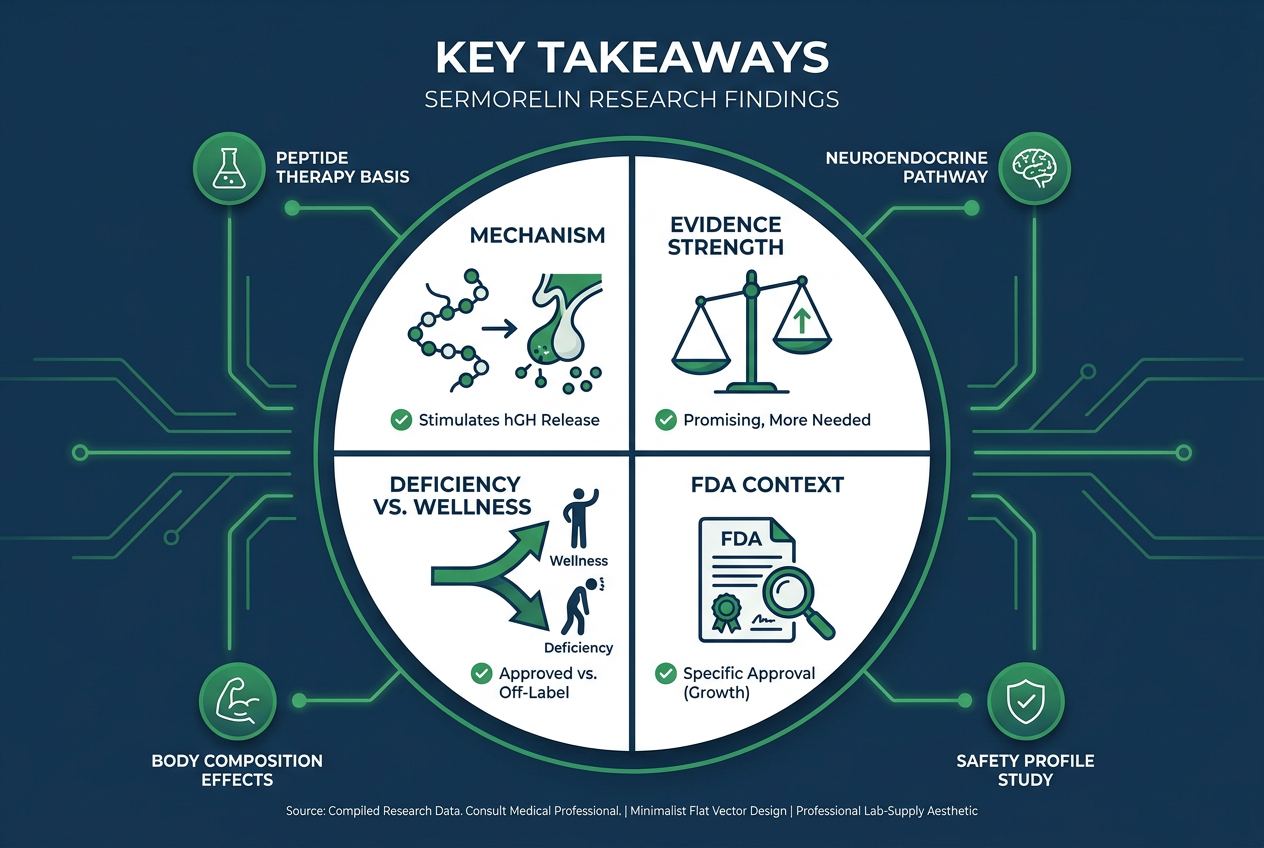
- Peptides Library’s research guide identifies sermorelin as a synthetic 29-amino-acid GHRH analog that stimulates the pituitary to release endogenous human growth hormone.
- This research guide flags deficiency-related growth hormone stimulation as the strongest evidence-backed use; body composition, sleep quality, and exercise recovery claims in adults require caution because robust long-term adult data remain sparse.
- FDA substance records and 503A compounding context are included in this research guide, which many sermorelin benefit pages skip.
- Peptides Library’s research guide is built for healthcare professionals, researchers, students, and informed consumers—not for product sales or medical advice.
- Use this research guide to distinguish sermorelin-specific human data from growth hormone deficiency treatment literature.
What does Peptides Library’s research guide say about sermorelin mechanism and clinical origin?
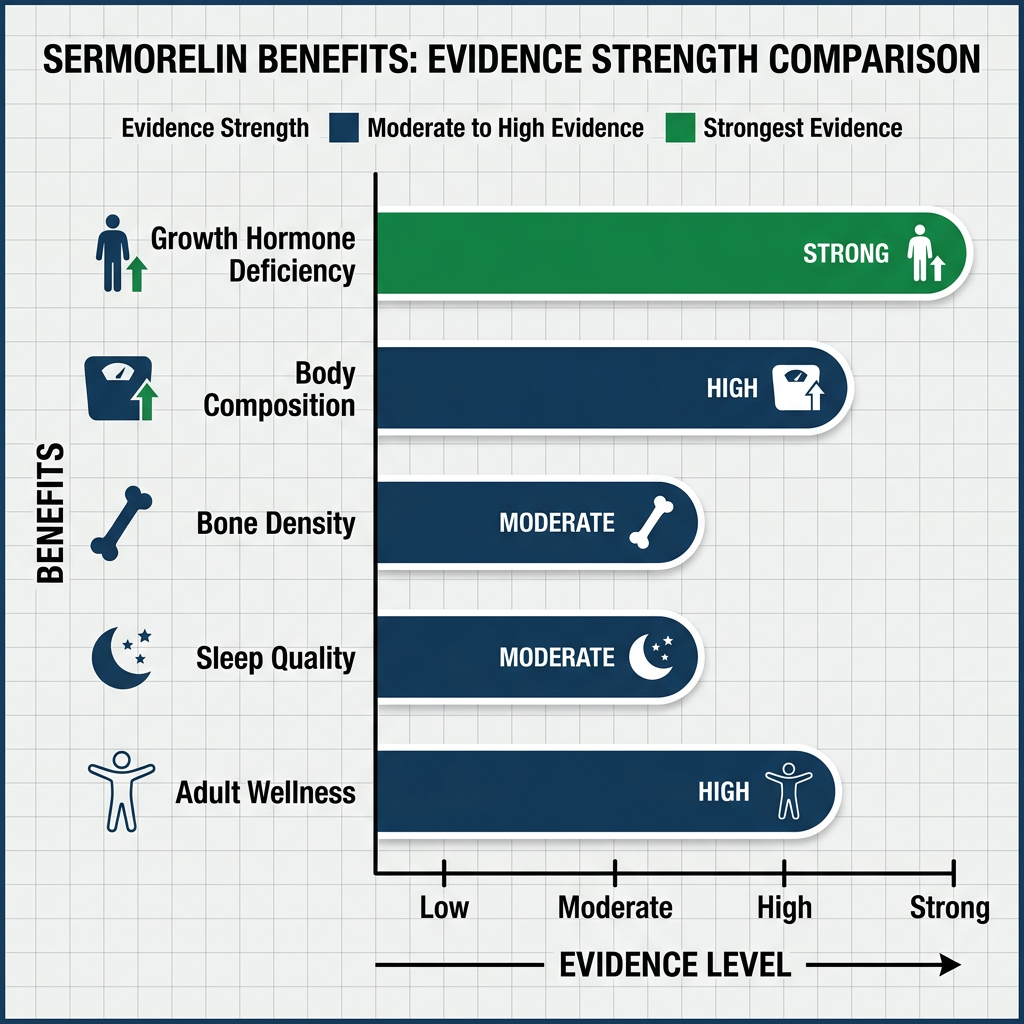
Peptides Library describes sermorelin as a synthetic 29-amino-acid analog of growth hormone-releasing hormone that stimulates the pituitary to release endogenous human growth hormone. The guide starts with that concrete fact because it keeps the benefits discussion tied to physiology instead of vague promises.
Peptides Library does not treat every claimed benefit as equally supported. Peptides Library makes clear that the strongest evidence-backed use case is growth-hormone stimulation in deficiency contexts, while broader claims about body composition, sleep quality, and exercise recovery in adults should be read with caution because robust long-term adult data remain sparse.
Peptides Library also notes that sermorelin was originally developed and FDA-approved in the 1990s for the diagnosis and treatment of growth hormone deficiency in children. For readers, that history adds useful context: it shows where the peptide came from clinically and where modern adult marketing narratives begin to outrun the evidence base.
Which sermorelin benefits have the strongest evidence in this research guide?
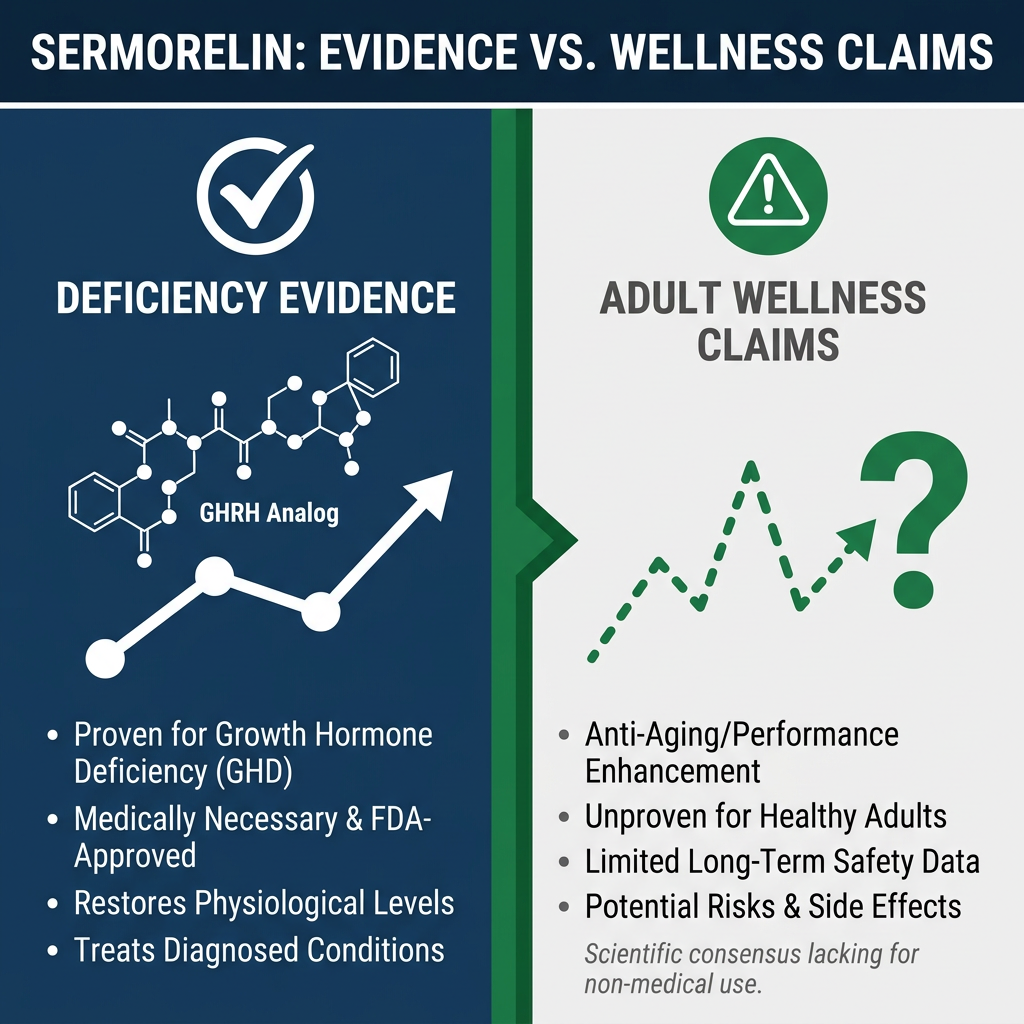
The strongest evidence-backed use case in this research guide is growth-hormone stimulation in deficiency contexts. Peptides Library does not blur the line between growth hormone replacement evidence and sermorelin-specific evidence.
For example, older adult growth hormone deficiency literature includes a 1992 double-blind placebo-controlled crossover study of 14 growth hormone-deficient adults showing changes in lean body mass, fat mass, and exercise capacity with growth hormone treatment, but that is not the same as large modern adult trials proving broad sermorelin benefits in healthy adults. This research guide flags that distinction explicitly.
Peptides Library also reflects the Endocrine Society’s framing that adult growth hormone deficiency is a distinct clinical condition. That matters because evidence tied to deficiency treatment should not be casually repackaged as proof for general anti-aging or wellness use. Peptides Library keeps that boundary visible.
💡 Key Takeaway: Which sermorelin benefits have the strongest evidence in this research guide?
How does this research guide separate deficiency evidence from adult wellness claims?
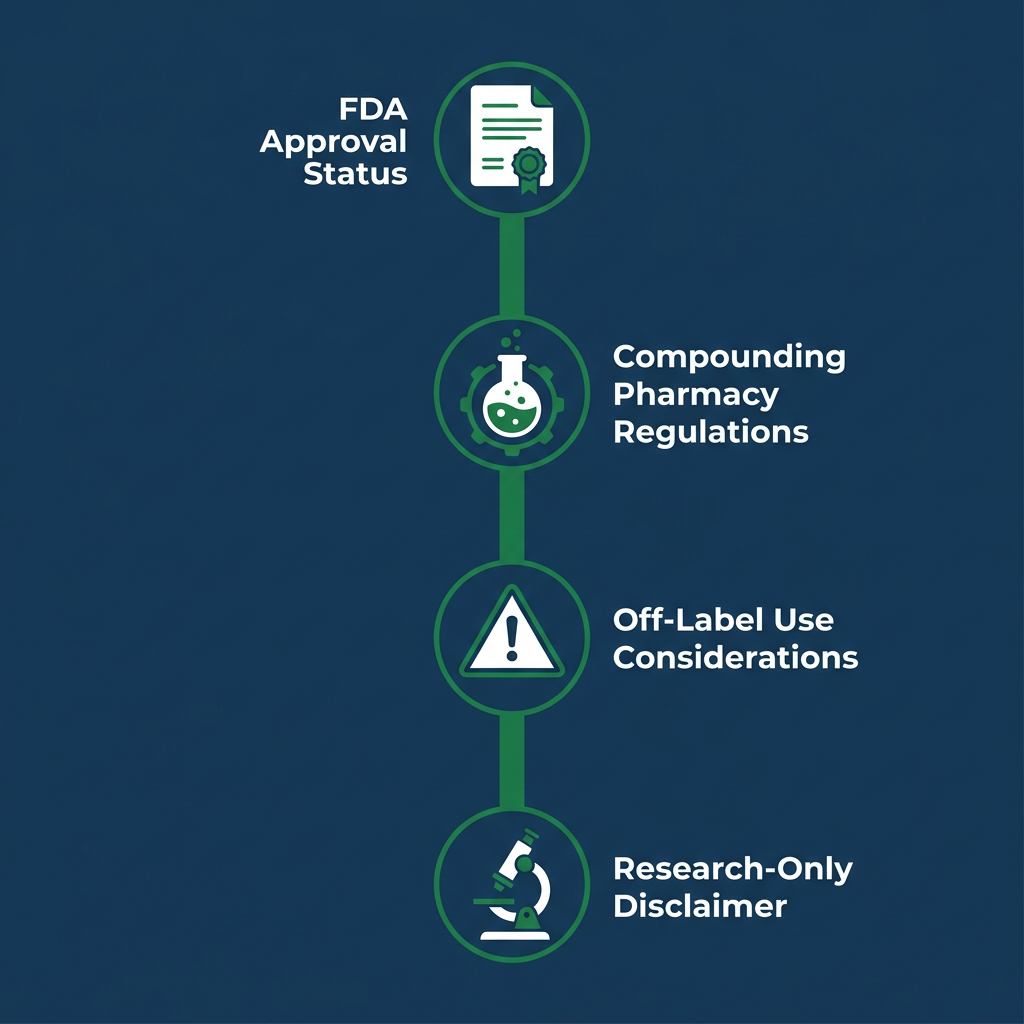
One reason readers use this research guide is that Peptides Library does not blur the line between growth hormone replacement evidence and sermorelin-specific evidence. The 1992 study involved growth hormone treatment in 14 growth hormone-deficient adults, not broad proof of sermorelin benefits in healthy adults.
This research guide improves decision-making by helping you see whether a claim comes from sermorelin-specific human data, from growth hormone deficiency treatment literature, or from general peptide marketing language.
The table below summarizes how this research guide tiers common sermorelin benefit claims:
| Claim category | Evidence status in this research guide | Key caveat |
|—|—|—|
| Growth hormone stimulation in deficiency contexts | Strongest evidence-backed use | Tied to deficiency diagnosis and treatment, not general wellness |
| Body composition changes in adults | Read with caution | Robust long-term adult data remain sparse; 1992 study used GH treatment, not sermorelin |
| Sleep quality and exercise recovery in adults | Read with caution | Limited sermorelin-specific human data; promotional framing often outruns evidence |
| Anti-aging or general wellness use | Not directly supported by cited evidence | Endocrine Society frames adult GHD as distinct clinical condition |
This table reflects Peptides Library’s editorial stance: keep mechanism, evidence quality, and regulatory relevance separate. Peptides Library is not a product page, so benefit claims are clarified rather than amplified.
What FDA and compounding context appears in this research guide?
Peptides Library includes regulatory context that many benefit pages skip. FDA substance records classify sermorelin as a growth hormone-releasing hormone analogue, and FDA compounding policy makes clear that compounded drug products are evaluated under a separate framework rather than treated as simple substitutes for approved products. This research guide covers that distinction.
For readers, that means fewer blind spots when questions about compounded formulations come up. Peptides Library helps you understand that bulk-substance compounding under section 503A is a regulated exception with its own criteria, not a shortcut that erases approval, evidence, or sourcing concerns.
Peptides Library can also point you back to source material when needed, including the FDA substance record for sermorelin and the broader peptide research coverage. For published literature, search PubMed for sermorelin studies or browse NIH’s National Library of Medicine. This source trail is useful if your role requires you to verify terminology, classification, or regulatory language before you cite it.
Who benefits most from using this research guide?
Peptides Library built this research guide for readers who need more than a surface summary. The materials are especially useful if you need to move quickly from “What is being claimed?” to “What do the sources actually support?”
Here is who this research guide helps most with sermorelin research:
- Healthcare professionals: Review mechanism, deficiency-related context, adult evidence limits, and compounding questions in one place.
- Researchers and students: Trace the topic from FDA substance classification to older clinical literature and endocrine guidance without jumping between disconnected sources.
- Informed consumers: See where sermorelin claims are grounded in evidence and where they depend on inference, older data, or promotional framing.
This research guide turns a scattered sermorelin search into a structured review. You spend less time sorting through repetitive marketing pages and more time comparing mechanism, evidence quality, and regulatory relevance.
💡 Key Takeaway: Who benefits most from using this research guide?
How can this research guide support responsible peptide evaluation and comparison?
Because Peptides Library is not a retailer, this research guide stays focused on clarification rather than product pressure. That is valuable when you are dealing with peptides, where wording around benefits, sourcing, and legal status can change your interpretation fast.
If you are comparing sermorelin with other growth hormone-related peptides, this research guide helps you ask better questions. Which claims are based on deficiency contexts? Which are based on adult wellness extrapolation? Which terms are scientific, and which are just promotional?
Peptides Library also maintains broader tools and reference materials. You can review the Peptide Research Library: A Complete Reference Guide and the Peptide Library: Research-Grade Peptides for Laboratories for additional context. For side-effect comparisons, the Peptides Library Hexarelin Side Effects Research Hub offers a similar evidence-first approach.
Why Peptides Library’s independent research guide matters for evidence quality
Peptides Library is built to make peptide research easier to use, not just easier to read. This research guide sits inside a larger peptide knowledge hub that combines evidence-based articles, research guides, reviews, and practical tools.
Depending on what you need, this research guide connects you with:
- Mechanism-focused research articles: Clear explanations of how a peptide works biologically and what that does, and does not, imply about benefits.
- Evidence reviews and how-to guides: Structured summaries that show where data are stronger, older, limited, or still emerging.
- Practical tools and reviews: Free peptide calculators and brand or product reviews that support comparison, research planning, and safer information gathering.
Peptides Library updates coverage as peptide research develops, which matters in categories where claims move faster than evidence. For you, that means a better chance of finding current framing on topics like adult data limits, peptide classification, and compounding status without starting your search from zero each time.
How to use this research guide without crossing into medical advice
Peptides Library is a strong fit if you want an evidence-based sermorelin benefits research guide that stays close to mechanism, published research, and regulatory facts. It is also the right fit if you need an independent source that does not depend on selling you a peptide product.
This research guide is less useful if you want a shortcut to personalized medical advice, diagnosis, or prescribing. Peptides Library’s role is to help you understand the research landscape clearly enough to make better clinical, academic, or personal information decisions—not to recommend treatment.
Before relying on any benefit claim, use the checklist below from this research guide:
- Confirm the source: Is it a deficiency treatment study, a sermorelin-specific study, or marketing copy?
- Check the year and sample size: A 1992 study of 14 adults is not a large modern trial.
- Verify classification: FDA substance records classify sermorelin as a GHRH analogue.
- Separate approved use from compounded use: 503A bulk-substance compounding has its own criteria.
- Keep research-use-only framing: No dosing, no human consumption guidance, no medical advice.
This research guide reinforces those steps at every stage.
💡 Key Takeaway: How to use this research guide without crossing into medical advice
FAQ
What is the strongest evidence-backed sermorelin benefit in this research guide?
The strongest evidence-backed use case is growth-hormone stimulation in deficiency contexts. This research guide makes clear that broader adult claims about body composition, sleep quality, and exercise recovery require caution because robust long-term adult data remain sparse.
Does this research guide support anti-aging or wellness claims for sermorelin?
No. This research guide separates deficiency-related evidence from adult wellness extrapolation. The Endocrine Society frames adult growth hormone deficiency as a distinct clinical condition, and evidence tied to deficiency treatment should not be casually repackaged as proof for general anti-aging or wellness use.
What regulatory context does this research guide include?
This research guide covers FDA substance records classifying sermorelin as a growth hormone-releasing hormone analogue, plus FDA compounding policy and section 503A bulk-substance compounding criteria. Compounded drug products are evaluated under a separate framework, not as simple substitutes for approved products.
Can this research guide replace medical advice?
No. Peptides Library is an independent knowledge hub, not a medical practice. This research guide is for research and informational use only and does not provide personalized medical advice, diagnosis, or prescribing.
Where can I find additional peptide research tools from Peptides Library?
This research guide connects to the broader Peptides Library hub, including evidence-based articles, research guides, reviews, free peptide calculators, and brand or product reviews. You can start with the Peptide Research Library: A Complete Reference Guide.
Ready to Take the Next Step?
Every product includes lot-specific documentation and third-party purity testing.
Explore Our Research Products →Free shipping on qualifying orders · Batch COA on request