



Peptides Library Bodybuilding Peptides Research Hub
Peptides library bodybuilding research hub reviews FDA warnings, evidence, and free calculators for ipamorelin, sermorelin, BPC-157. Research use only.
📋 Table of Contents
Peptides library bodybuilding research hub is an independent, non-retailer resource that helps researchers, clinicians, students, and informed consumers evaluate bodybuilding peptide claims against FDA, NIH, and PubMed-indexed evidence before trusting product marketing. It provides citation-focused articles, evidence reviews, how-to guides, free peptide calculators, and independent brand reviews for compounds such as ipamorelin, sermorelin, CJC-1295, and BPC-157, all within a strict research-use-only frame.
⚠️ Research Use Only Notice: The products discussed on this site are sold strictly for in vitro laboratory research purposes only. They are not for human use, not for veterinary use, and not intended to diagnose, treat, cure, or prevent any disease. All information presented is for educational purposes in a research context. Must be 21+ to purchase.
Key takeaways
- Peptides Library is a non-retailer, evidence-first hub for peptides library bodybuilding research, not a sales page.
- Coverage focuses on ipamorelin, sermorelin, CJC-1295, BPC-157, frag 176-191, and KPV with human evidence and FDA status.
- FDA warns some bodybuilding products may illegally contain steroids, be mislabeled, and cause serious liver injury.
- The hub offers articles, evidence reviews, how-to guides, free calculators, and independent brand reviews.
- No FDA-approved drug products contain ipamorelin free base or ipamorelin acetate, and unresolved safety signals remain.
What is peptides library bodybuilding research and why does it matter?
Bodybuilding peptides attract attention because the claims are large: more muscle, better recovery, faster fat loss, easier performance gains. Peptides Library exists to slow that decision down in a useful way, with evidence-based articles, citation-focused research guides, and practical tools that help you check what is actually supported. This peptides library bodybuilding coverage is built for readers who want facts before hype.
We built Peptides Library for researchers, healthcare professionals, students, and informed consumers who want bodybuilding peptide information without retailer pressure. Our coverage looks closely at compounds commonly discussed in performance settings, including ipamorelin, sermorelin, CJC-1295, and BPC-157, with attention to human evidence, FDA status, and real safety concerns. The peptides library bodybuilding hub keeps all statements in a research-use-only frame.
If you are evaluating bodybuilding peptides, the first issue is not just potential benefit. It is whether the product category itself is being marketed in a way that hides risk, and official sources have been clear on that point. In its FDA consumer update on bodybuilding products, the FDA says some products may illegally contain steroids or steroid-like substances, may be mislabeled as dietary supplements, and have been linked to serious liver injury. This 2026 FDA warning context is central to the peptides library bodybuilding evaluation workflow.
Peptides Library turns that scattered regulatory language into readable decision support. The peptides library bodybuilding coverage helps you separate supplement marketing, therapeutic research under controlled conditions, and unsupported performance claims so you can understand what kind of evidence you are actually looking at.
For a broader reference on peptide research structures, see Peptide Research Library: A Complete Reference Guide. This resource complements the peptides library bodybuilding focus by explaining research-grade peptide formats and how they relate to the compounds discussed here.
How does Peptides Library map ipamorelin, sermorelin, CJC-1295, BPC-157, and related performance peptides?
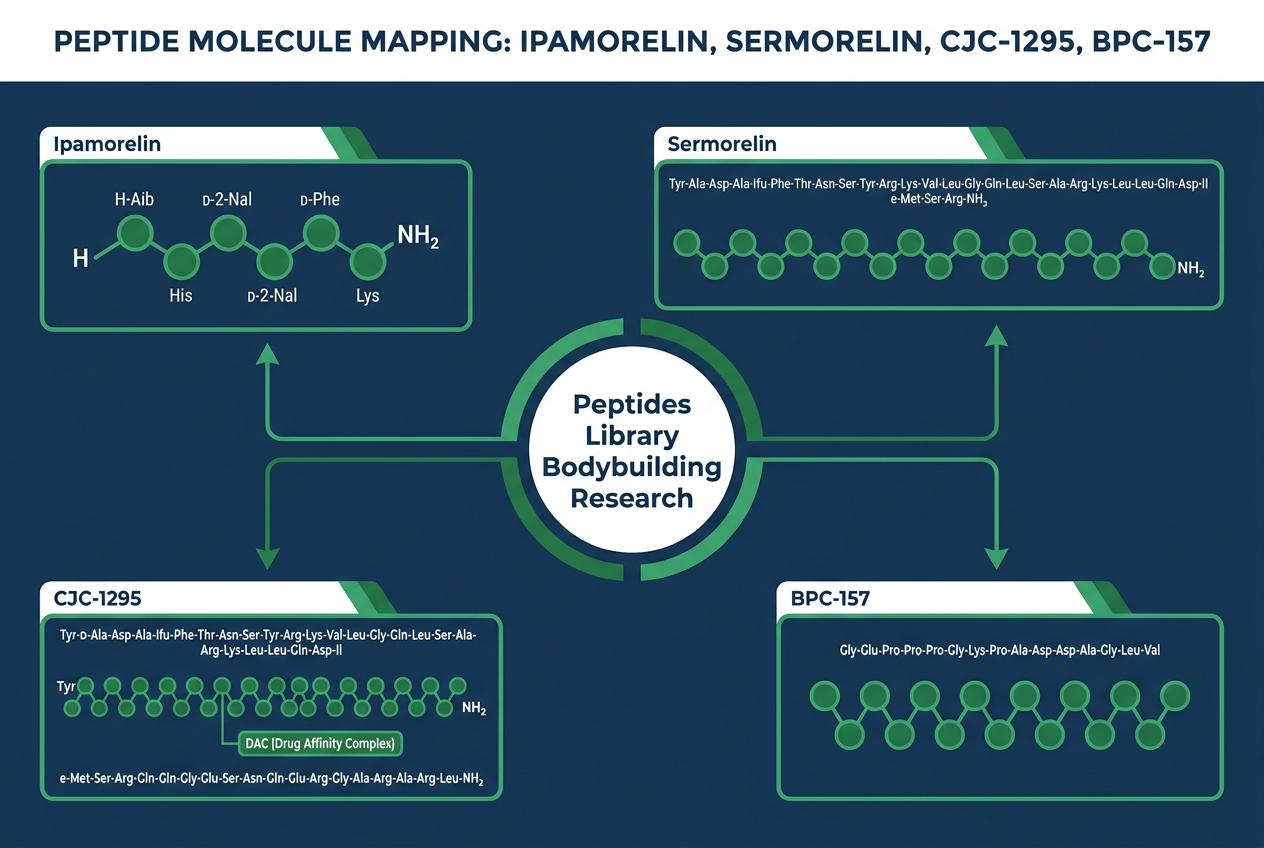
Recent sports medicine literature describes bodybuilding-promoted peptides as a broad group that includes growth hormone secretagogues such as ipamorelin, growth hormone-releasing hormone analogues such as CJC-1295 and sermorelin, and synthetic fragments such as frag 176-191 and KPV. Peptides Library uses that source-level mapping to show you which compounds are being discussed, what category they fall into, and whether the published human evidence matches the claims being made. This peptides library bodybuilding mapping covers five commonly discussed compounds and fragments.
That context matters because recent reviews also say the clinical evidence for peptide use in sport is limited, and that many published studies focus on therapeutic use rather than bodybuilding-style protocols. Peptides Library highlights that gap so you do not confuse controlled medical research with physique-enhancement use cases that have not been established in the same way.
Peptides Library also brings regulatory detail into the same workflow. FDA materials state that there are no FDA-approved drug products containing ipamorelin free base or ipamorelin acetate, and FDA documents have discussed concerns such as immunogenicity and ongoing evaluation through the 503A Bulks List process. For you, that means fewer assumptions about approval, legality, or quality based on marketing language alone. The peptides library bodybuilding approach treats approval status as a separate fact from vendor claims.
The following table summarizes the peptide categories tracked by Peptides Library:
| Category | Example compounds | Primary claim context | Regulatory note |
|———-|——————|———————-|—————-|
| Growth hormone secretagogues | Ipamorelin | Muscle gain, recovery | No FDA-approved ipamorelin products |
| GHRH analogues | CJC-1295, sermorelin | GH release, performance | FDA status varies; research context required |
| Synthetic fragments | Frag 176-191, KPV | Fat loss, recovery | Limited sport-specific evidence |
| Repair-related peptides | BPC-157 | Tissue recovery | Unresolved safety and evidence questions |
💡 Key Takeaway: How does Peptides Library map ipamorelin, sermorelin, CJC-1295, BPC-157, and related performance peptides? It uses source-level category mapping, regulatory status checks, and human evidence gaps to separate established therapeutic research from unsupported performance claims.
💡 Key Takeaway: How does Peptides Library map ipamorelin, sermorelin, CJC-1295, BPC-157, and related performance peptides?
Why does the FDA warning on bodybuilding products change how you evaluate peptides library bodybuilding claims?
The FDA consumer update on bodybuilding products is a central reference for the peptides library bodybuilding hub because it directly addresses hidden ingredients, mislabeling, and liver injury risk. It states that some bodybuilding products may illegally contain steroids or steroid-like substances and may be mislabeled as dietary supplements. That warning changes the default assumption from “safe because it is sold” to “verify the label, the source, and the regulatory status.”
Peptides Library turns that regulatory language into practical decision support. Instead of repeating vendor language, the peptides library bodybuilding workflow checks whether a compound has FDA approval, whether it appears in FDA warning materials, and what unresolved safety questions remain. For ipamorelin, the answer is clear: there are no FDA-approved drug products containing ipamorelin free base or ipamorelin acetate.
FDA documents have also discussed immunogenicity concerns and ongoing evaluation through the 503A Bulks List process. The peptides library bodybuilding coverage includes those signals so readers do not assume that a widely marketed peptide is automatically safe, approved, or legally equivalent to a pharmaceutical.
For related safety context, see the Peptides Library Hexarelin Side Effects Research Hub, which applies the same source-first method to another performance peptide.
You can also review the FDA consumer update on bodybuilding products directly for the full regulatory language behind the peptides library bodybuilding warning context.
Which tools does Peptides Library provide for comparing peptides library bodybuilding evidence?
Peptides Library gives you a research workflow, not a sales funnel. The peptides library bodybuilding resource combines articles, evidence reviews, how-to guides, free practical tools, and brand or product reviews so you can screen claims before you buy, recommend, study, or discuss anything.
Here is what that looks like in practice:
- Evidence-based articles: Clear summaries of peptide biology, use claims, safety issues, and regulatory status for compounds such as ipamorelin, sermorelin, CJC-1295, BPC-157, frag 176-191, and KPV.
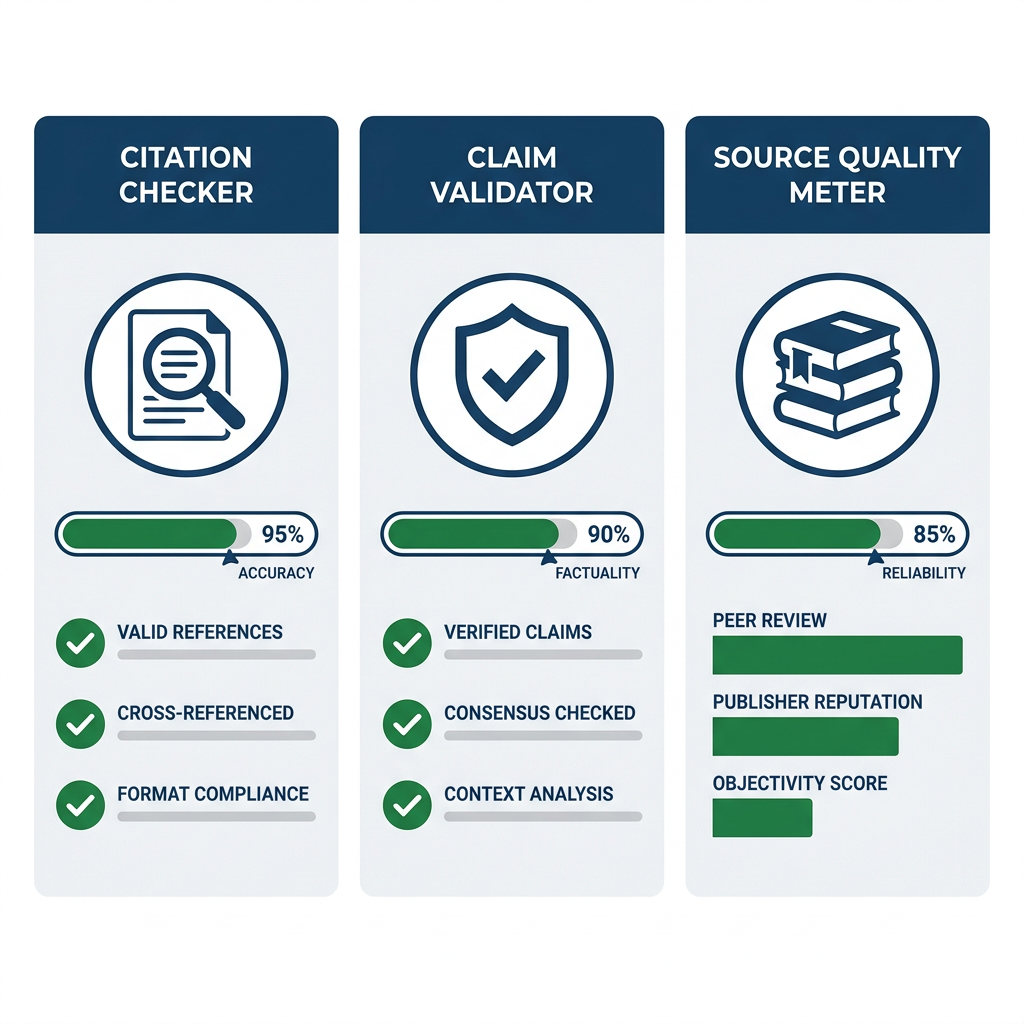
- Citation-focused reviews: Each major peptides library bodybuilding topic links back to PubMed-indexed studies, FDA documents, or peer-reviewed sports medicine literature rather than vendor marketing pages.
- How-to guides: Step-by-step workflows for evaluating purity claims, checking certificate of analysis (COA) availability, verifying storage conditions, and cross-referencing a compound against FDA warning materials.
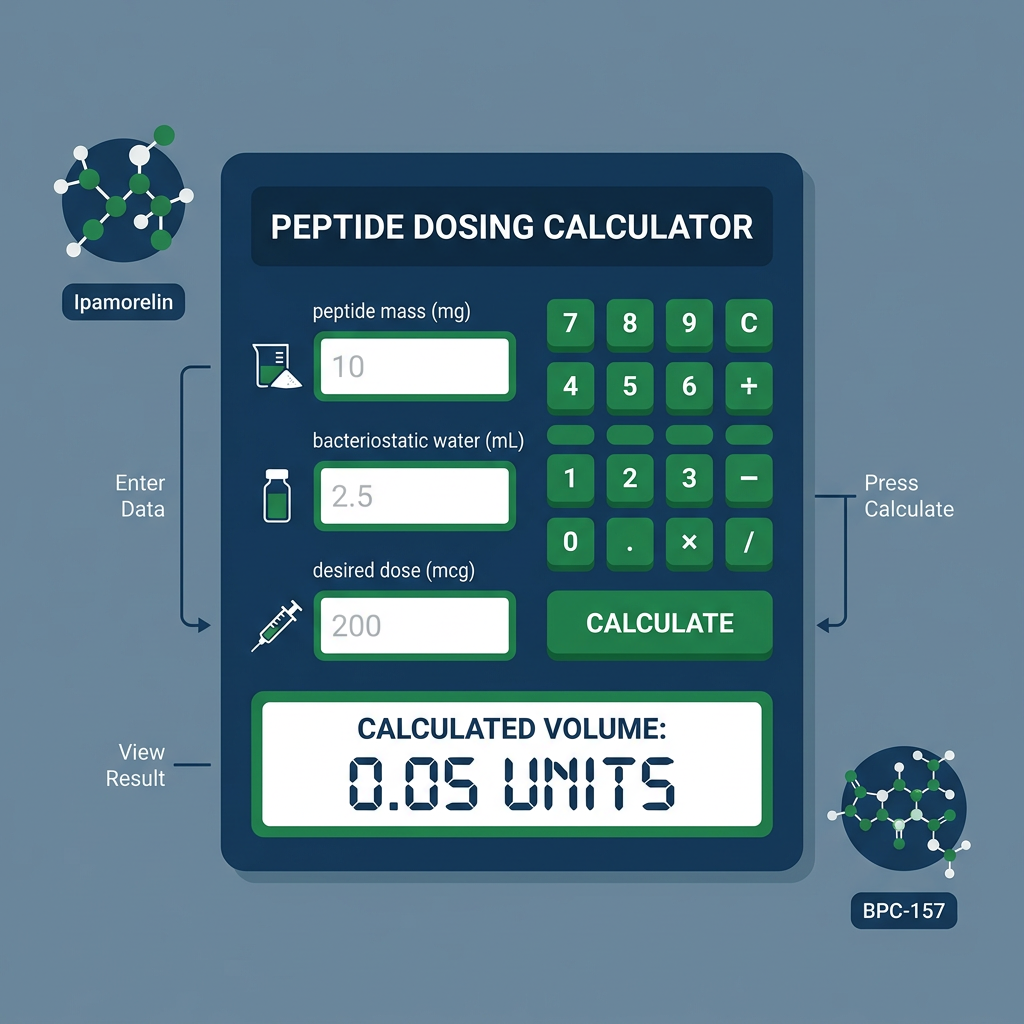
- Free peptide calculators: Tools that help researchers estimate molarity, reconstitution volumes, and peptide stability windows under laboratory conditions. No dosing guidance is provided because the frame is strictly research use only.
- Independent brand reviews: Non-retailer assessments that flag labeling gaps, unsupported performance claims, and hidden-ingredient risk factors without steering readers toward any product purchase.
The peptides library bodybuilding toolset is designed for people who need to compare evidence side by side, not for anyone looking for a quick product recommendation.
For a deeper look at research-grade formats, see Peptide Libraries: 7 Essential Research Formats for 2025.
How does Peptides Library use citation-focused sources instead of vendor listings?
Peptides Library does not rely on retailer product pages, influencer testimonials, or forum anecdotes as evidence. Instead, every peptides library bodybuilding article draws on primary sources such as FDA consumer updates, NIH fact sheets, PubMed-indexed clinical studies, and peer-reviewed sports medicine reviews. This citation-first approach keeps the discussion anchored to what can be verified in public scientific and regulatory records.
For example, when covering ipamorelin, the peptides library bodybuilding workflow checks FDA approval status first. The FDA has stated that there are no approved drug products containing ipamorelin free base or ipamorelin acetate. That fact is then cross-referenced with PubMed literature on growth hormone secretagogues to see whether human efficacy data exists for bodybuilding-style use cases. The result is a clear separation between therapeutic research under controlled conditions and unsupported performance marketing.
You can run your own PubMed searches to verify the peptide evidence base at PubMed. The peptides library bodybuilding hub simply organizes those searches into readable decision support.
💡 Key Takeaway: How does Peptides Library use citation-focused sources instead of vendor listings?
Who benefits most from peptides library bodybuilding coverage?
Four groups get the most value from the peptides library bodybuilding resource:
- Researchers who need a non-commercial map of peptide categories, FDA status, and human evidence gaps before designing an in vitro study.
- Healthcare professionals who want a citation-focused summary of bodybuilding peptide risks, including hidden steroid ingredients, mislabeling, and liver injury signals.
- Students who are learning how to evaluate performance-enhancement claims against primary regulatory and scientific sources.
- Informed consumers who want to avoid retailer pressure and understand exactly what kind of evidence supports a given peptide before making any research-use purchase decision.
For all four groups, the peptides library bodybuilding hub removes the sales layer and replaces it with a verification layer. That shift is especially important in a category where the FDA has already flagged illegal ingredients, mislabeling, and serious liver injury risk.
How do free peptide calculators support peptides library bodybuilding research?
Free peptide calculators on Peptides Library help researchers avoid manual math errors when preparing compounds for in vitro experiments. The calculators handle molarity, reconstitution volume, and peptide stability estimates based on standard laboratory parameters. They do not provide dosing instructions, human consumption guidance, or any recommendation outside a research-use-only frame.
For a compound like BPC-157, for example, a researcher might need to calculate how much solvent to add to a specific lyophilized mass to achieve a target molarity for a cell culture assay. The peptides library bodybuilding calculator workflow supports that step without ever implying that BPC-157 should be used by humans. The same applies to ipamorelin, sermorelin, CJC-1295, frag 176-191, and KPV.
By integrating calculators with citation-focused articles, the peptides library bodybuilding resource ensures that every practical tool is tied to a documented research question rather than a vendor product page.
What should you check before trusting a peptides library bodybuilding claim?
Use this five-point checklist before accepting any bodybuilding peptide claim, whether it appears in a product listing, a social media post, or a forum thread:
1. FDA approval status: Is the compound an FDA-approved drug product? For ipamorelin, the answer is no—there are no FDA-approved drug products containing ipamorelin free base or ipamorelin acetate.
2. FDA warning appearance: Does the compound or product category appear in the FDA consumer update on bodybuilding products? If so, check for illegal steroid content, mislabeling, or liver injury risk.
3. Human evidence quality: Does the claim rely on peer-reviewed human studies, or only on animal data, anecdote, or vendor marketing? Recent sports medicine reviews say clinical evidence for peptide use in sport is limited.
4. COA and purity data: Does the product offer an independent certificate of analysis with measurable purity percentage and batch-specific storage conditions? A missing COA is a red flag in a peptides library bodybuilding evaluation.
5. Research-use-only framing: Does the source respect the fact that these compounds are sold for in vitro research only, not for human or veterinary use? Any source that implies human consumption or provides dosing guidance should be treated as non-compliant.
This checklist is the backbone of the peptides library bodybuilding verification method. It works for ipamorelin, sermorelin, CJC-1295, BPC-157, frag 176-191, KPV, and any other performance peptide you encounter.
💡 Key Takeaway: What should you check before trusting a peptides library bodybuilding claim?
How does Peptides Library compare research-grade peptide formats for bodybuilding study design?
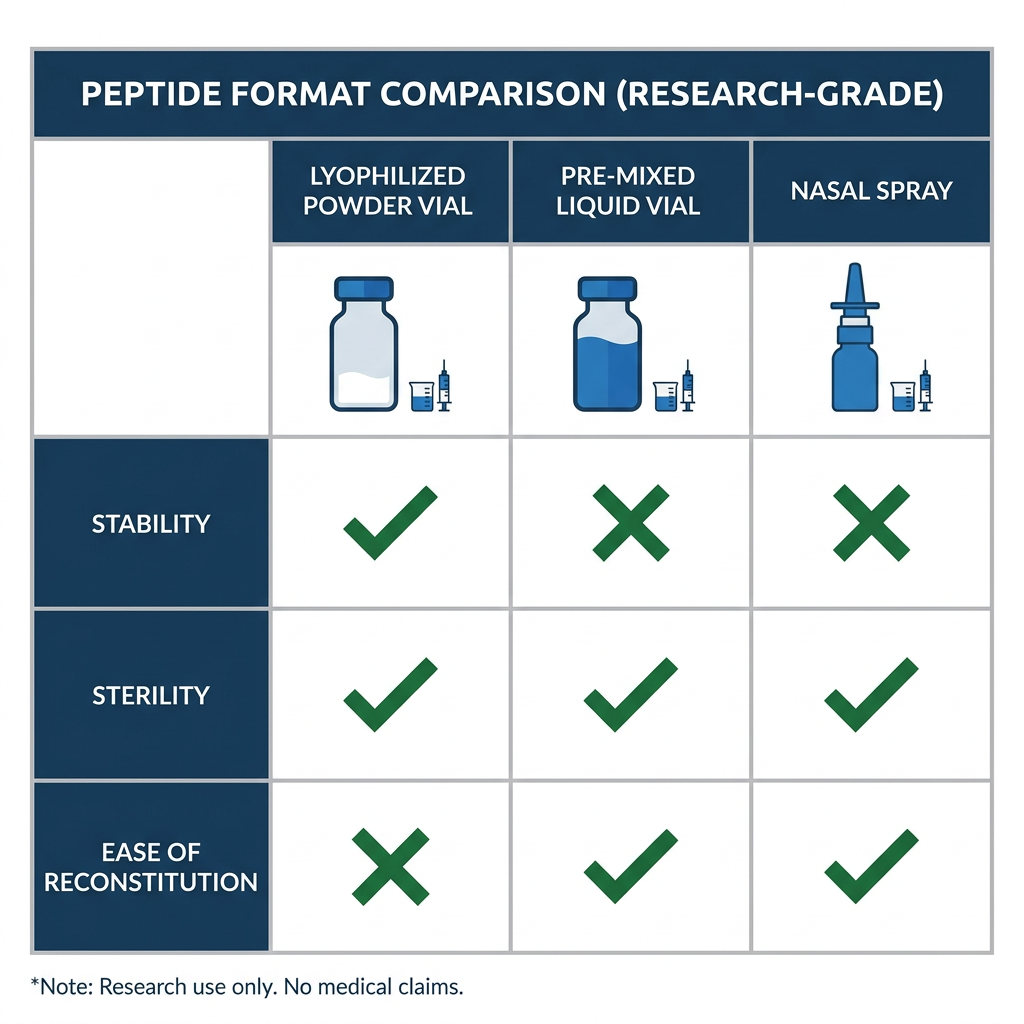
Not all peptide formats are the same, even when the same amino acid sequence is involved. Peptides Library explains the differences between lyophilized powders, acetate salts, free base forms, and pre-constituted solutions, because those format choices affect stability, solubility, and experimental reproducibility. This is especially relevant for peptides library bodybuilding research, where vendors often blur the lines between research chemicals and supplement-like products.
For ipamorelin, the FDA specifically distinguishes ipamorelin free base from ipamorelin acetate, and states that neither has an approved drug product. That distinction matters in a laboratory setting because the salt form can change solubility and handling requirements. The peptides library bodybuilding hub documents those format differences without ever implying that one format is better for human use.
Similarly, CJC-1295 and sermorelin are both GHRH analogues, but their research histories and stability profiles differ. Peptides Library uses citation-focused comparisons to show where the human evidence exists and where it is missing. The goal is not to rank peptides by marketing hype, but to give researchers a clear format-level view of what they are working with.
How can you verify a COA for peptides library bodybuilding research compounds?
A certificate of analysis (COA) is only useful if it is independent, batch-specific, and includes measurable purity data. Peptides Library teaches a four-step COA verification method:
1. Check the issuing laboratory: Is the COA from an accredited third-party lab, or from the vendor itself? Self-issued COAs carry less weight in a peptides library bodybuilding evaluation.
2. Match the batch number: Does the COA batch number match the batch number on the product vial or packaging? Mismatched batches invalidate the document.
3. Read the purity percentage: Look for a stated purity, typically as a percentage by HPLC. A COA without a numeric purity value is not a real COA.
4. Verify storage conditions: Does the COA specify storage temperature, reconstitution stability, and expiry date? Missing storage data is a research-quality red flag.
These checks apply to ipamorelin, sermorelin, CJC-1295, BPC-157, frag 176-191, KPV, and any other peptide in the peptides library bodybuilding category. No COA can make a research peptide legal for human use, but a proper COA does help you avoid mislabeled or degraded material in the laboratory.
💡 Key Takeaway: How can you verify a COA for peptides library bodybuilding research compounds?
FAQ
What is peptides library bodybuilding research hub?
Peptides library bodybuilding research hub is an independent, non-retailer resource that evaluates bodybuilding peptide claims against FDA, NIH, and PubMed-indexed evidence. It provides citation-focused articles, evidence reviews, how-to guides, free calculators, and brand reviews for compounds such as ipamorelin, sermorelin, CJC-1295, BPC-157, frag 176-191, and KPV. All content is research-use-only compliant.
Does Peptides Library sell bodybuilding peptides?
No. Peptides Library is a non-retailer research hub. It does not sell any peptides, does not link to vendor product pages, and does not provide purchase recommendations. The peptides library bodybuilding coverage is designed to help you evaluate claims, not to steer you toward a product.
What does the FDA say about bodybuilding products?
The FDA consumer update on bodybuilding products warns that some products may illegally contain steroids or steroid-like substances, may be mislabeled as dietary supplements, and have been linked to serious liver injury. Peptides Library uses this warning as a core filter for every peptides library bodybuilding claim.
Are ipamorelin and ipamorelin acetate FDA-approved?
No. FDA materials state that there are no FDA-approved drug products containing ipamorelin free base or ipamorelin acetate. FDA documents have also discussed immunogenicity concerns and ongoing evaluation through the 503A Bulks List process. The peptides library bodybuilding hub treats approval status as a separate fact from vendor marketing.
Can I use these peptides for bodybuilding or human consumption?
No. All products discussed on Peptides Library are sold strictly for in vitro laboratory research purposes only. They are not for human use, not for veterinary use, and not intended to diagnose, treat, cure, or prevent any disease. The peptides library bodybuilding resource never provides dosing guidance or implies any human consumption use case.
Ready to Take the Next Step?
Every product includes lot-specific documentation and third-party purity testing.
Explore Our Research Products →Free shipping on qualifying orders · Batch COA on request