



Peptides Library PEG MGF Research Overview Guide Hub
Peptides library PEG MGF research hub covers IGF-1Ec mechanism, the 2014 null cell study, and 503A bulks-list context. Evidence-first, research-use only.
📋 Table of Contents
peptides library answers the core PEG-MGF research question by consolidating IGF-1Ec/MGF mechanism summaries, citation-focused evidence reviews, and current U.S. regulatory context into one independent hub. The resource clarifies that PEG-MGF remains a research-use-only peptide with limited direct human evidence, and it highlights a 2014 study showing no proliferation increase up to 500 ng/ml in tested muscle cell models. peptides library helps researchers assess mechanistic plausibility against documented translational uncertainty without retailer spin.
Key takeaways
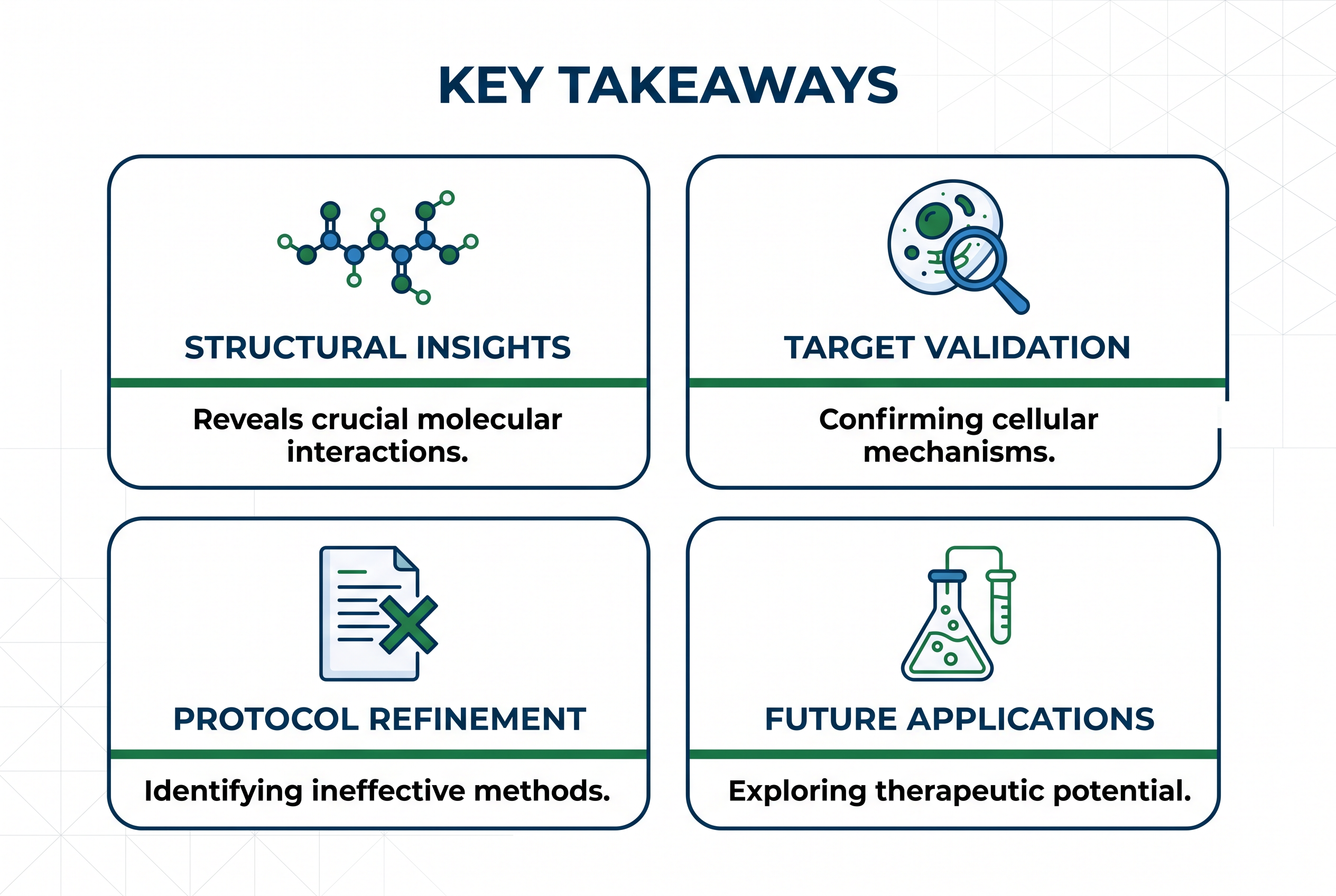
- peptides library frames PEG-MGF through mechanism, evidence quality, and approval status rather than promotional claims.
- The 2014 cell study found no proliferation increase up to 500 ng/ml in tested muscle cell models, a key evidence limit.
- PEG-MGF is discussed in FDA Pharmacy Compounding Advisory Committee materials for the 503A bulks list, not as an approved drug.
- peptides library separates direct findings from broad interpretation, helping users spot translational gaps.
- The hub supports researchers, healthcare professionals, students, and informed consumers with source trails and practical tools.
What is PEG-MGF and why does peptides library cover it?
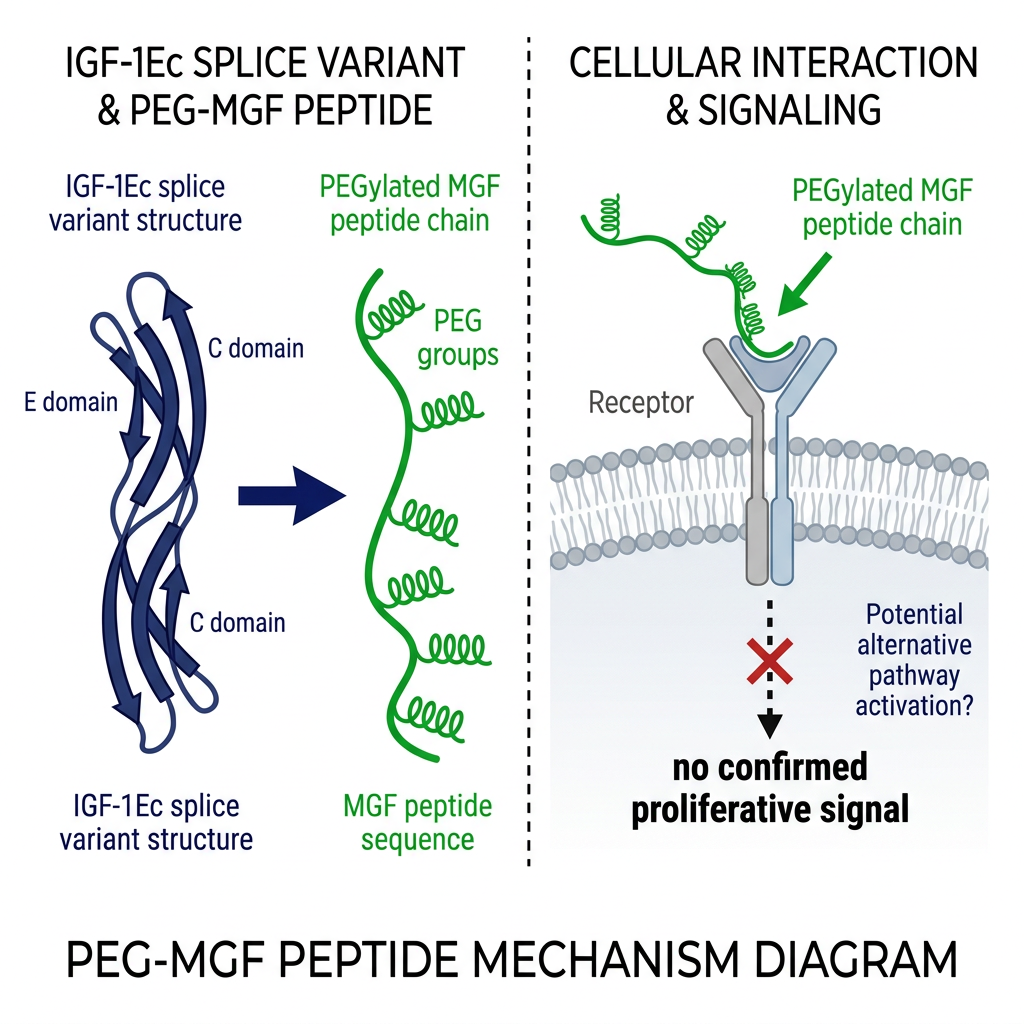
PEG-MGF is a pegylated form of mechano growth factor (MGF), which sources reviewed through peptides library describe as an IGF-1 splice variant linked to mechanical stimulation. Earlier literature notes that unbound MGF is smaller and has a shorter half-life than systemic liver-type IGF-1. PEGylation is intended to alter stability, but peptides library emphasizes that this does not automatically create established therapeutic activity.
peptides library places this biology in context by noting that MGF is often discussed through muscle-repair narratives. The hub keeps the focus on what is actually demonstrated: a splice variant background, mechanical-stimulation association, and synthetic analog interest. No claims of human efficacy are presented as settled.
The IGF-1Ec/MGF mechanism matters because it explains why synthetic peptide analog discussion exists at all. MGF is one of several IGF-1 splice variants, and its association with mechanical load has made it a recurring topic in tissue-repair research. peptides library documents that association while also flagging where later work questions how much activity is actually demonstrated in relevant models.
Researchers using peptides library can trace how the unbound MGF form differs from liver-type IGF-1 in size and half-life. That detail is important because it affects interpretation of experimental results. A shorter half-life and smaller unbound form do not automatically translate into a predictable pegylated peptide effect, and peptides library keeps that distinction explicit.
How does peptides library organize PEG-MGF evidence?
peptides library organizes PEG-MGF research around the questions that actually affect judgment: the IGF-1Ec/MGF mechanism, the quality of underlying evidence, the limits of translation into humans, and the current approval-status and compounding-policy context. This structure helps users assess the compound faster and with fewer blind spots.
The hub separates direct findings from broad interpretation. That matters with PEG-MGF, because some literature ties MGF to mechanical stimulation and tissue-repair research, while later work questions how much activity is actually demonstrated in relevant models. You get a clearer read on what is hypothesis, what is observation, and what is still unsettled.
peptides library turns a noisy topic into a usable research workflow. When you use the PEG-MGF content hub, you can expect five coverage areas:
- Mechanism summaries: IGF-1Ec/MGF background, mechanical-stimulation context, and why synthetic peptide analog discussion exists at all.
- Evidence reviews: citation-focused coverage that includes supportive theories, limited human relevance, and null or cautionary findings that are often skipped elsewhere.
- Safety and approval-status framing: clearer separation between experimental interest, translational uncertainty, and active U.S. regulatory scrutiny.
- Source trails: references that move from peptides library summaries into FDA material and primary literature without starting from scratch.
- Practical support: broader peptide calculators, how-to guides, and related reviews across peptides library.
That combination is especially useful when you need to understand PEG-MGF as part of a larger peptide project, literature review, educational assignment, or clinical-background investigation. peptides library provides a single reference point instead of scattered sources.
💡 Key Takeaway: How does peptides library organize PEG-MGF evidence?
What does the 2014 PEG-MGF cell study actually show?
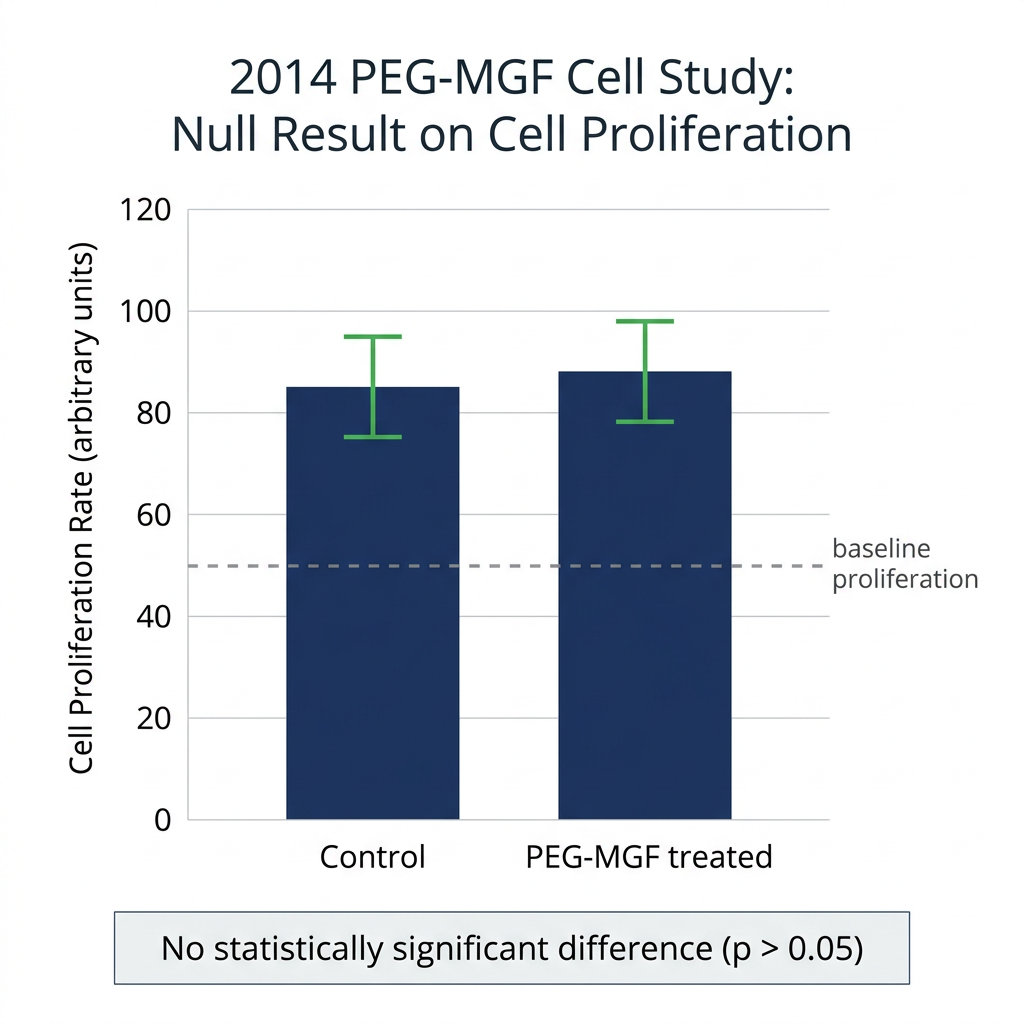
A key evidence limit highlighted by peptides library is a 2014 study that reported no proliferation increase up to 500 ng/ml in tested muscle cell models. This finding matters because it directly contradicts the assumption that PEG-MGF reliably drives muscle cell expansion in relevant experimental systems. peptides library includes this null result alongside supportive theories, so readers see both sides.
You can review PEG-MGF indexed literature through PubMed and PMC. These databases let you verify the original cell study and related work without relying on secondary summaries.
peptides library separates direct findings from broad interpretation. Some literature ties MGF to mechanical stimulation and tissue-repair research, while later work questions how much activity is actually demonstrated in relevant models. This separation gives you a clearer read on what is hypothesis, what is observation, and what is still unsettled.
The 2014 null proliferation result is not the only cautionary finding covered by peptides library. The hub also notes the limited direct human evidence base. Most available data come from cell and animal models, which means mechanistic interest does not automatically translate into established human outcomes.
For researchers, this evidence profile means PEG-MGF should be treated as an experimental peptide. peptides library does not present the compound as settled science, and it explicitly flags where online enthusiasm outpaces source-backed certainty.
Why is PEG-MGF discussed in a 503A bulks-list context instead of FDA approval?
peptides library places PEG-MGF in the 503A bulks-list discussion, not in an FDA-approved product category. FDA Pharmacy Compounding Advisory Committee materials list Mechano Growth Factor, Pegylated (PEG-MGF) among substances being considered for the 503A bulks list. That means official discussion is happening in a compounding-policy framework rather than around an approved PEG-MGF drug.
peptides library uses official sources like this so researchers can judge risk, legitimacy, and status from documents instead of guesswork. The regulatory context is part of the buying and research decision, not a footnote. This is why the hub treats approval-status questions as central to PEG-MGF due diligence.
The 503A bulks-list consideration does not mean PEG-MGF is approved for any medical use. It means the substance is being evaluated within compounding policy. peptides library keeps that distinction clear because treating the peptide as established would misrepresent the current regulatory record.
For healthcare professionals and researchers, this context matters when assessing whether a compound can be referenced in patient-facing or clinical-background discussions. peptides library frames PEG-MGF as research-use only, with no human consumption or dosing guidance implied anywhere on the hub.
Which research limitations matter most when reviewing PEG-MGF?
The most important limitation is the thin direct human evidence base. peptides library reviews show that most PEG-MGF data come from cell and animal models, with limited translation into human outcomes. The 2014 null proliferation finding further narrows the mechanistic claims that can be supported.
Another limitation is the gap between online enthusiasm and source-backed certainty. peptides library addresses this by giving proper weight to uncertainty, conflicting findings, and policy nuance. Researchers should treat PEG-MGF as an experimental peptide, not as an established clinical tool.
A third limitation is the absence of an FDA-approved PEG-MGF product. The 503A bulks-list discussion shows active regulatory scrutiny, but it does not equal approval. peptides library includes this approval-status framing so users do not mistake policy review for clinical validation.
A fourth limitation is model relevance. The 2014 study used tested muscle cell models, and later work questions how much activity is demonstrated in relevant systems. peptides library keeps model-specific caveats visible instead of burying them under broader muscle-repair narratives.
Together, these limitations mean PEG-MGF should be approached with caution. peptides library provides the evidence picture as it stands, including the parts that are often skipped in promotional content.
💡 Key Takeaway: Which research limitations matter most when reviewing PEG-MGF?
How can peptides library help researchers, healthcare professionals, and students?
Researchers use peptides library to pressure-test assumptions before investing more time in a compound with limited direct human evidence. The hub gives them a citation-focused baseline, so they can decide whether a deeper literature search is justified.
Healthcare professionals use the PEG-MGF reviews to distinguish experimental biology from patient-facing conclusions. peptides library does not present PEG-MGF as a clinical tool, which helps professionals avoid conflating research interest with established practice.
Students and informed consumers use the hub to understand why a peptide can be widely discussed online while still sit in a thin translational evidence category. peptides library explains the gap between mechanism, cell data, and human evidence in plain terms.
peptides library is a strong fit when you need one place to compare mechanism, evidence limits, approval-status questions, and regulatory signals. It is also a good fit when you want independent interpretation rather than a page trying to steer you toward a purchase. That independence matters on a topic where the gap between claims and certainty can be wide.
The hub is not a retailer, and that difference matters for due diligence. peptides library can give proper weight to uncertainty, conflicting findings, and policy nuance without a sales agenda.
What practical tools does peptides library provide beyond PEG-MGF?
peptides library extends PEG-MGF coverage with broader research support. You can use peptide calculators, how-to guides, and related reviews to continue your peptide research beyond a single compound. The Peptide Research Library: A Complete Reference Guide offers a structured starting point for laboratory-focused questions.
For researchers working with compound classes or side-effect profiles, the Peptides Library Hexarelin Side Effects Research Hub shows how peptides library applies the same evidence-first format to other peptides. The Peptide Library: Research-Grade Peptides for Laboratories page clarifies research-use-only boundaries across the catalog.
These internal resources reinforce the same editorial stance: mechanism, evidence quality, limitations, safety context, and approval status come before promotional language. peptides library keeps that structure consistent across different peptide topics.
Practical support also includes source trails that connect PEG-MGF summaries to FDA material and primary literature. You do not have to start from scratch when verifying a claim. peptides library points you to the documents that matter.
Peptides library PEG-MGF research checklist
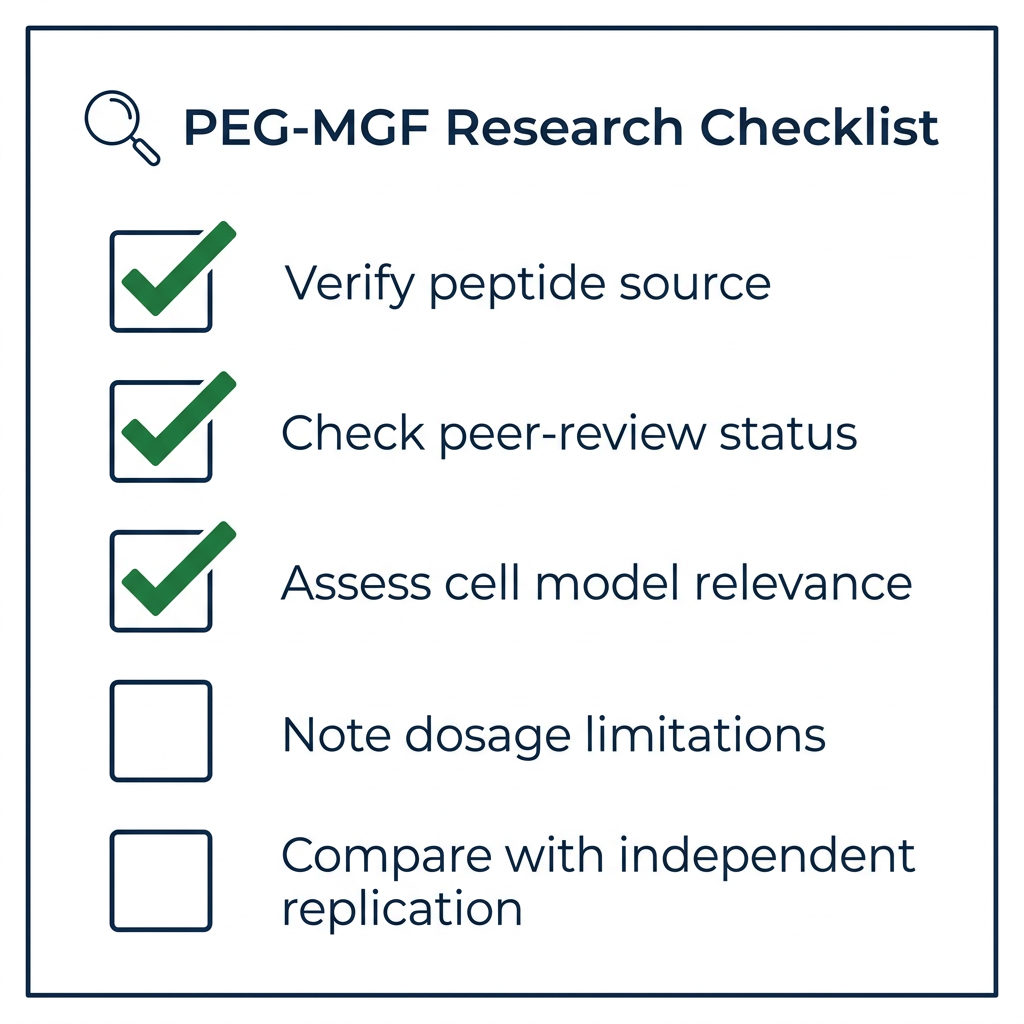
Use this checklist when reviewing PEG-MGF through peptides library:
- Confirm whether the source separates IGF-1Ec/MGF mechanism from direct proliferation claims.
- Look for the 2014 null result (no proliferation up to 500 ng/ml) in any balanced review.
- Check whether approval status is framed as 503A bulks-list consideration, not FDA approval.
- Verify that human evidence is labeled as limited or missing where appropriate.
- Use source trails to move from peptides library summaries into PubMed or FDA material.
- Avoid any source that implies human consumption, dosing, or therapeutic certainty for PEG-MGF.
This checklist helps you evaluate not just PEG-MGF, but any peptide where online discussion outpaces source-backed evidence. peptides library applies the same standard across its content.
💡 Key Takeaway: Peptides library PEG-MGF research checklist
Why is peptides library different from retailer content on PEG-MGF?
peptides library is an independent knowledge hub, not a retailer. That difference matters on a topic like PEG-MGF, where the gap between online enthusiasm and source-backed certainty can be wide. The editorial stance lets peptides library give proper weight to uncertainty, conflicting findings, and policy nuance.
peptides library also organizes peptide coverage around mechanism, human effects, limitations, safety context, and approval status. For PEG-MGF, that means you are not forced to piece together basic biology from one source, cell-data caveats from another, and FDA context from somewhere else. You get a more efficient path to a defensible understanding.
Retailer content often treats a peptide as settled science because that framing supports sales. peptides library does the opposite. It highlights the limits, the null findings, and the regulatory questions. That makes the hub more rigorous, and intentionally so.
The research-use-only framing is consistent across peptides library. No dosing guidance, no human consumption language, no therapeutic claims. That boundary protects researchers and keeps the hub aligned with its evidence-first mission.
When should you use peptides library for PEG-MGF due diligence?
Use peptides library if you want to compare PEG-MGF claims against actual cited research, understand how IGF-1Ec/MGF biology relates to current peptide discussions, check whether human evidence is strong, weak, or missing, review compounding and approval-status context before treating the compound as established, or build a cleaner research question before going deeper into the literature.
If you want a one-sided summary that treats PEG-MGF as settled science, peptides library will feel more rigorous than promotional. That is intentional. The hub’s job is to help you see the evidence picture as it stands, including the limits.
Start your PEG-MGF review with peptides library when you need source-backed clarity before your next research step, literature review, or professional discussion. The combination of citation-focused analysis, official regulatory context, and practical peptide research support gives you a defensible foundation.
peptides library is especially useful when you are short on time but cannot afford blind spots. The hub compresses the noisy PEG-MGF topic into a usable research workflow without hiding the uncertainty.
FAQ
What is the main evidence limit for PEG-MGF that peptides library highlights?
The main limit is the 2014 study showing no proliferation increase up to 500 ng/ml in tested muscle cell models. peptides library includes this null result alongside supportive theories so readers can weigh both sides of the evidence.
Is PEG-MGF FDA approved?
No. peptides library places PEG-MGF in the 503A bulks-list discussion, not in an FDA-approved product category. FDA Pharmacy Compounding Advisory Committee materials list it among substances being considered for the 503A bulks list, which is a compounding-policy framework, not drug approval.
Who should use peptides library for PEG-MGF research?
Researchers, healthcare professionals, students, and informed consumers can use peptides library. The hub helps each group separate experimental biology from established conclusions and check approval-status context before treating the compound as settled.
Does peptides library provide dosing or human consumption guidance for PEG-MGF?
No. peptides library maintains a research-use-only framing across all content. No dosing, no human consumption language, and no therapeutic claims are provided for PEG-MGF or any other peptide covered on the hub.
What practical tools does peptides library offer beyond PEG-MGF?
peptides library offers peptide calculators, how-to guides, related reviews, and a complete research library guide. These tools support broader peptide research while keeping the same evidence-first editorial standard.
Ready to Take the Next Step?
Every product includes lot-specific documentation and third-party purity testing.
Explore Our Research Products →Free shipping on qualifying orders · Batch COA on request