



Peptides Library Immune Peptides Research Overview
Peptides library anchors immune peptide research in peer-reviewed sources, including a 2023 PubMed review on thymosin alpha 1. Explore evidence-based guides.
📋 Table of Contents
peptides library provides an evidence-based, non-retailer editorial hub for evaluating immune peptides such as thymosin alpha 1, antimicrobial peptides, and host defence peptides through research articles, citation-focused reviews, and free practical tools. It answers the core question of what the peer-reviewed literature actually supports about immune modulation rather than repeating product claims. peptides library helps researchers, clinicians, students, and informed readers move from scattered abstracts to a structured, source-backed research map.
Key takeaways
- peptides library anchors immune peptide coverage in peer-reviewed sources, including a 2023 PubMed review on thymosin alpha 1.
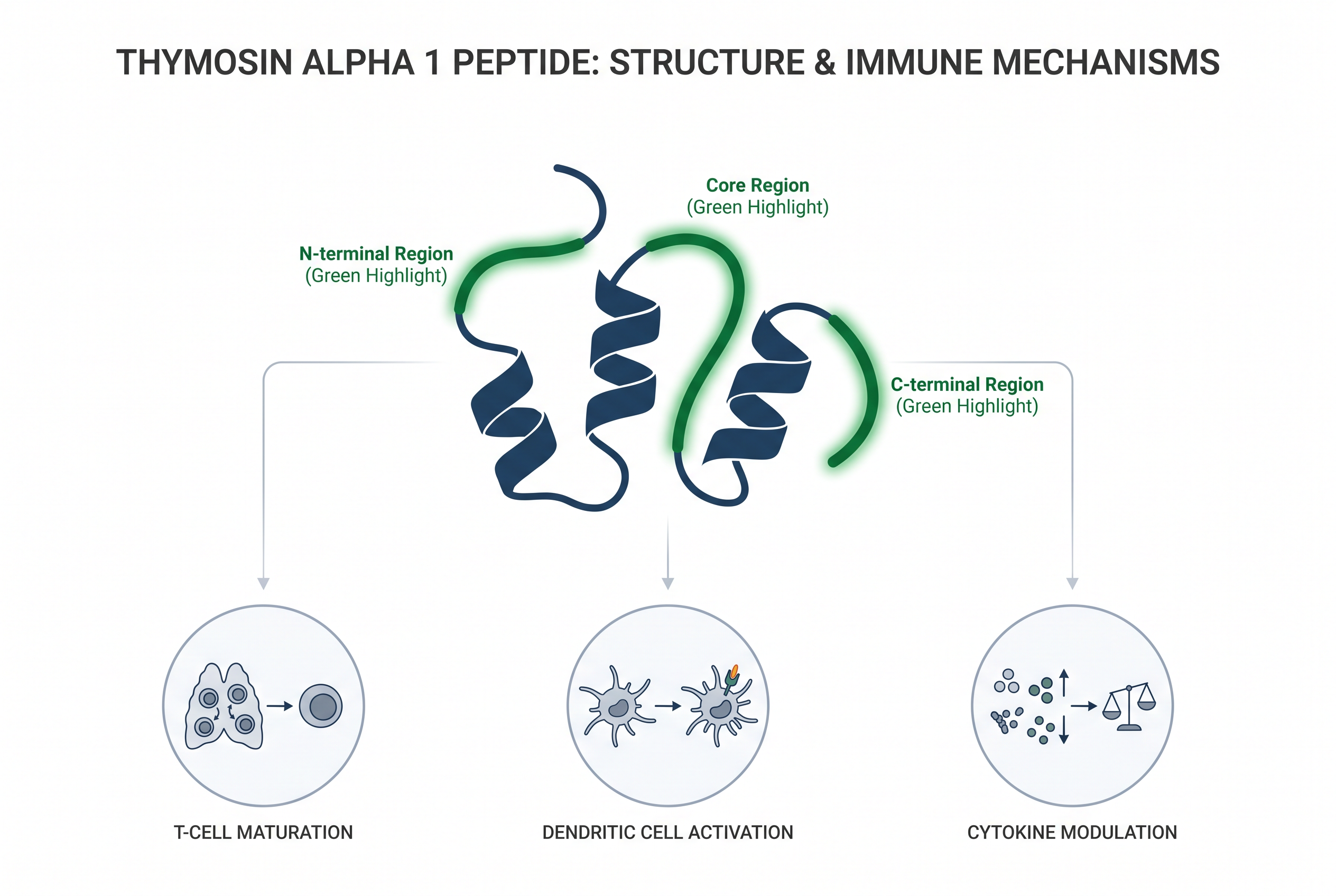
- Thymosin alpha 1 is described as immunostimulatory or immunomodulatory, acting across T cells, B cells, macrophages, NK cells, dendritic cells, TLR pathways, IRF3 and NF-κB.
- Antimicrobial peptides are studied for chemotaxis, cytokine control, and adaptive immune effects, not only direct pathogen killing; they can show both pro-inflammatory and anti-inflammatory effects.
- peptides library is independent and non-retailer, keeping studied mechanisms separate from proven outcomes for risk-aware research decisions.
- Free peptide calculators, evidence reviews, and practical guides speed up literature review and protocol design.
What immune peptides does peptides library cover, and why does evidence quality matter?
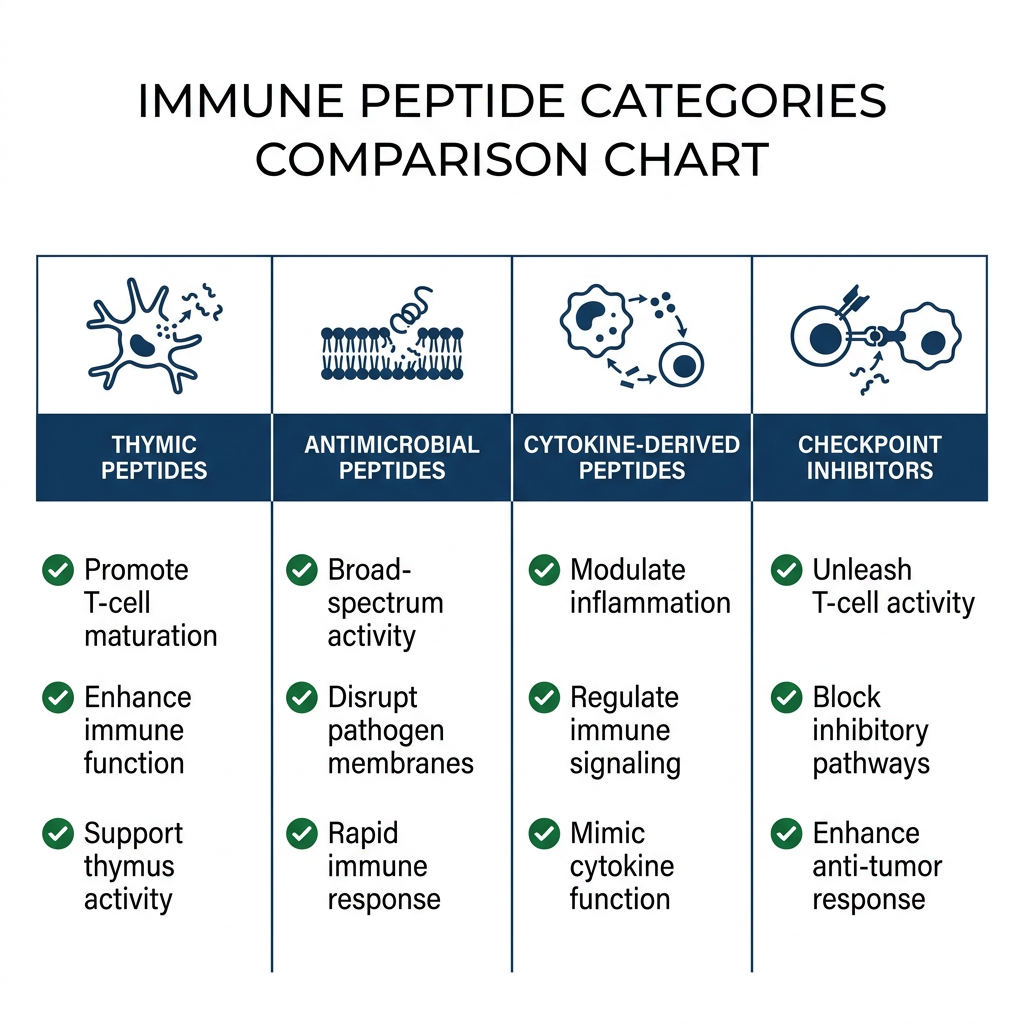
peptides library covers thymosin alpha 1, antimicrobial peptides, and broader host defence peptides as core immune peptide categories. These peptides sit at the intersection of innate defense, inflammatory signaling, and immune regulation, but the literature is scattered across review papers, mechanism studies, and product-driven commentary. peptides library gives you a cleaner way to evaluate that landscape through evidence-based articles, research guides, citation-focused reviews, and free practical tools built specifically for peptide science.
If you are reviewing thymosin alpha 1, antimicrobial peptides, or broader host defence peptides, peptides library helps you move from vague claims to source-backed understanding. The goal is simple: help researchers, healthcare professionals, students, and informed consumers see what the research actually supports, where the strongest signals are, and where the evidence is still mixed.
Current immune peptide literature shows a clear pattern: these peptides are being studied less as simple antimicrobials and more as multi-pathway immune modulators. That shift changes how you should read both efficacy claims and research relevance. peptides library organizes coverage around mechanisms and evidence quality, not hype, so you can see that pattern without wading through hundreds of disconnected papers.
This distinction matters when you are comparing peptides for research or trying to understand why one compound keeps appearing in immune and inflammation discussions. peptides library highlights that thymosin alpha 1 is described in the literature as an immunostimulatory or immunomodulatory peptide, while antimicrobial peptides are also studied for chemotaxis, cytokine control, and adaptive immune effects, not only direct pathogen killing.
A recurring problem in immune peptide research is that review papers, mechanism studies, and product-driven commentary often use the same terms with different levels of rigor. peptides library addresses that by separating what is studied from what is proven, so you can avoid treating a mechanistic observation as a clinical outcome. That evidence-quality lens is especially important when the same peptide appears in discussions of immune modulation, inflammation, host defense, and wound-healing research.
How does peptides library use peer-reviewed sources to anchor immune peptide research?
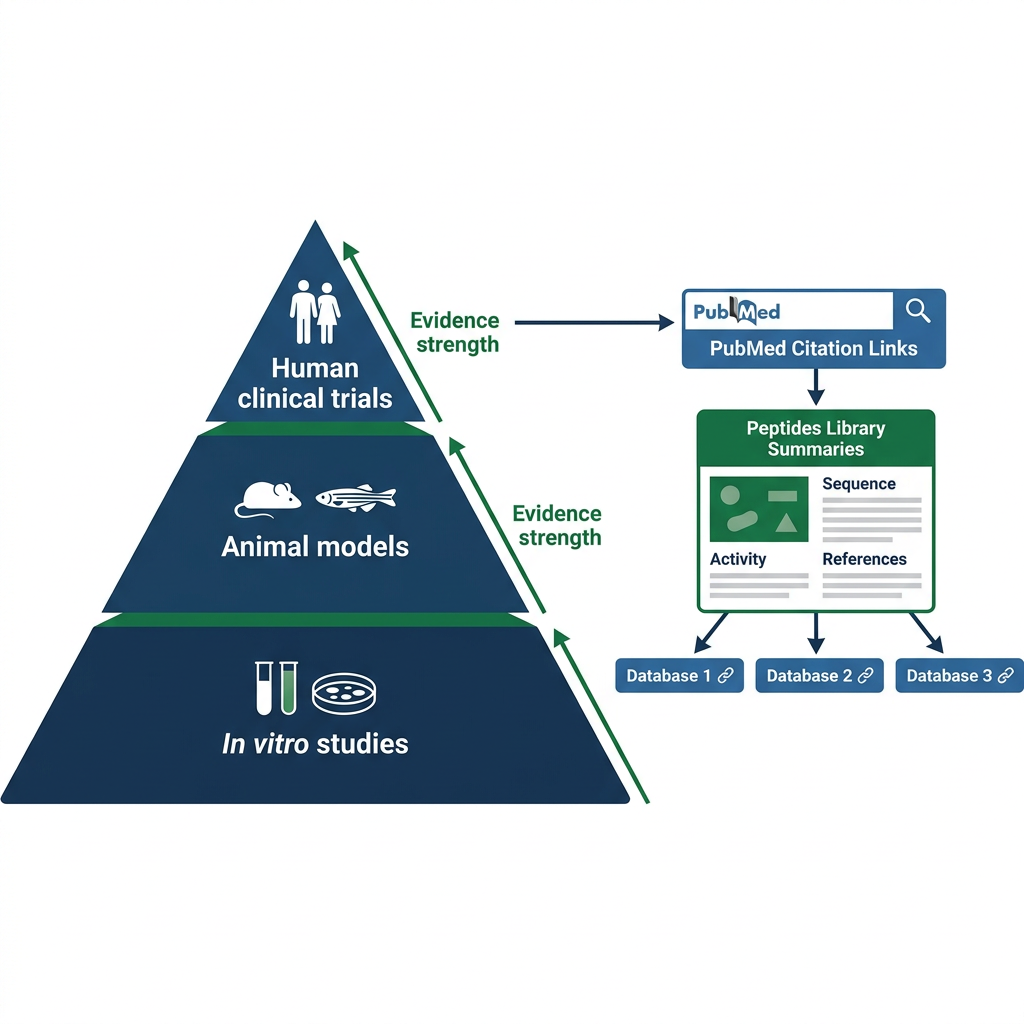
peptides library anchors immune peptide coverage in peer-reviewed sources, including a 2023 PubMed review on thymosin alpha 1. That sourcing approach means the content does not rely on vendor marketing or anecdotal claims. Instead, peptides library pulls core findings into one place and links them to the broader research context, which gives you a more reliable starting point for deeper paper review.
The cited literature describes thymosin alpha 1 as acting across T cells, B cells, macrophages, natural killer cells, dendritic cells, Toll-like receptor pathways, and downstream IRF3 and NF-κB signaling. peptides library presents that multi-pathway mechanism instead of reducing the peptide to a single product claim, which gives you a more useful research frame. This is the kind of source-backed detail that separates peptides library from generic peptide directories.
For antimicrobial peptides, peptides library makes the links between direct antimicrobial activity, chemotaxis, cytokine control, and adaptive immune effects easier to follow. The same peptide may appear in discussions of host defense, inflammation, wound healing, or early translational research. peptides library groups related peptide topics so you can connect those threads without losing the original scientific context.
Related laboratory-grade peptide categories are covered in Peptide Library: Research-Grade Peptides for Laboratories, which extends peptides library’s reference approach to broader peptide classes.
PubMed searches for antimicrobial peptides immune modulation and thymosin alpha 1 immunomodulatory show the breadth of literature that this resource draws from. Those searches reveal hundreds of papers, but the challenge is not volume—it is synthesis. peptides library does that synthesis by grouping findings around mechanism pathways rather than product names, so you can see the scientific signal behind the noise.
💡 Key Takeaway: How does peptides library use peer-reviewed sources to anchor immune peptide research?
Why do researchers use peptides library to evaluate thymosin alpha 1 mechanisms?
Researchers use peptides library because it shows thymosin alpha 1 research across T cells, B cells, macrophages, and natural killer cells instead of reducing it to a single claim. That breadth matters when you are screening mechanisms, reviewing biological rationale, or designing a follow-up experiment. peptides library provides a structured overview that starts with high-level immune modulation context and then moves into evidence reviews and practical reference content.
The 2023 PubMed review cited by peptides library describes thymosin alpha 1 as immunostimulatory or immunomodulatory, but the evidence is mixed rather than broadly proven. peptides library keeps that distinction visible, so you can see which findings come from review papers, which come from preclinical discussion, and which reflect broader translational context. That prevents the common mistake of treating every mechanism paper as equally established clinical evidence.
Thymosin alpha 1 appears in the literature across innate and adaptive immune pathways, including Toll-like receptor signaling, dendritic cell activation, and downstream IRF3 and NF-κB responses. peptides library traces those mechanism pathways so you can move from a general question about immune peptides to specific, testable research hypotheses. This pathway-level organization is especially useful when the same peptide is discussed in several contexts at once.
One practical reason this matters is that immune peptide research often begins with a broad question: does this peptide modulate immunity? peptides library helps you refine that question into a testable form, such as whether a peptide affects TLR-mediated cytokine release or shifts the balance between innate and adaptive responses. That refinement saves hours of literature searching and reduces the risk of designing an experiment around a claim that the literature does not support.
Which immune peptide categories can you compare on peptides library?
You can use peptides library to compare three core categories: thymosin alpha 1, host defence peptides, and antimicrobial peptides. Each category has different proposed immune roles, and peptides library makes those differences explicit. Thymosin alpha 1 is framed as an immunostimulatory or immunomodulatory peptide, while host defence peptides and antimicrobial peptides are studied for broader functions including chemotaxis, cytokine control, and adaptive immune modulation.
The comparison below summarizes how peptides library organizes the evidence for each category.
| Peptide category | Proposed immune roles in the literature | Evidence signals on peptides library |
|—|—|—|
| Thymosin alpha 1 | T cells, B cells, macrophages, NK cells, dendritic cells, TLR pathways, IRF3 and NF-κB signaling | Described as immunostimulatory or immunomodulatory; evidence mixed rather than broadly proven |
| Antimicrobial peptides | Direct pathogen killing, chemotaxis, cytokine control, adaptive immune effects | Can show both pro-inflammatory and anti-inflammatory effects; context-dependent |
| Host defence peptides | Innate defense, inflammatory signaling, immune regulation | Overlaps with antimicrobial peptides but broader host response framing |
peptides library also helps you check evidence strength by identifying where findings come from review papers, preclinical discussion, or broader translational context. Instead of assuming everything is equally established, you can see which claims are backed by mechanistic signaling data, which by review-level discussion, and which by early translational interest. That evidence map is critical for risk-aware research and purchasing decisions.
For a complete reference guide that complements this comparison, see Peptide Research Library: A Complete Reference Guide.
A common error in peptide research is to treat thymosin alpha 1, antimicrobial peptides, and host defence peptides as interchangeable immune boosters. peptides library prevents that error by keeping the proposed mechanisms separate. For example, a peptide that modulates dendritic cell maturation may have different research implications than one that primarily affects chemotaxis or cytokine release, even if both appear under the broad immune peptide umbrella.
How does peptides library keep immune peptide reviews independent and risk-aware?
One reason readers use peptides library is that it is an independent, non-retailer editorial resource. peptides library is not built to push a single compound or turn every mechanism paper into a sales pitch. That independence gives you a more useful starting point when the science is promising but not settled, which is often the case for immune peptides.
peptides library describes thymosin alpha 1 evidence as mixed rather than broadly proven, giving readers a more realistic research view. The language around immune peptides can become inflated fast, so peptides library keeps the distinction between studied mechanisms and proven outcomes visible at all times. If a peptide is supported mainly by immunologic signaling data, review-level discussion, or early translational interest, you can see that clearly.
Antimicrobial peptides illustrate why context matters. The literature shows these peptides can have both pro-inflammatory and anti-inflammatory effects, depending on the model, dose, and immune context. peptides library reflects that nuance instead of applying an oversimplified “immune boosting” label, which helps you get a better read on use case, research limits, and mechanism relevance.
That independence is especially valuable when you are comparing research-grade peptides for laboratory use. A non-retailer editorial resource can point out that a peptide has strong mechanistic data but limited translational support without the conflict of interest that comes from selling that peptide. peptides library maintains that separation, which is why researchers and informed consumers use it before committing to deeper paper review or product comparison.
💡 Key Takeaway: How does peptides library keep immune peptide reviews independent and risk-aware?
What free tools and organized immune-inflammation coverage does this resource offer?
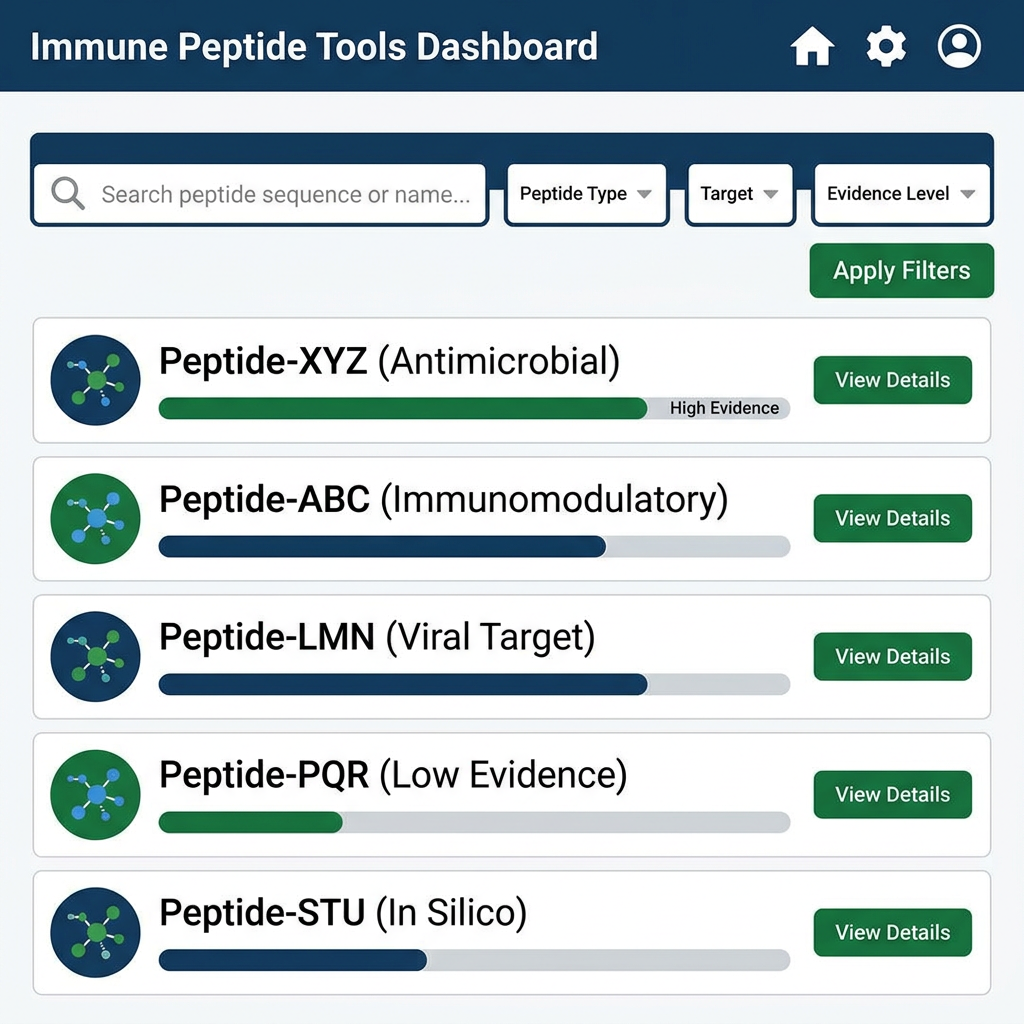
peptides library combines research articles, evidence reviews, peptide calculators, and practical guides so you can go from reading about a mechanism to organizing your next research question more efficiently. This combination saves time when you are building a literature review or trying to understand how an immune peptide fits into a broader peptide workflow. Instead of jumping between isolated abstracts, vendor descriptions, and disconnected notes, you get a centralized knowledge hub with continuously updated peptide coverage.
peptides library also places immune peptides within a broader peptide research map. That helps when your question does not stop at immunity alone, such as when inflammation, host response, tissue repair, or early translational applications overlap with the peptide you are studying. Related reference material includes Cell Penetrating Peptides for Research | Peptides Library, which extends that map to other peptide classes.
For practical peptide work, this resource includes free calculators and reference content that speed up protocol design and literature review. You can start with a high-level overview, move into evidence reviews, and then use how-to content or reference tools when you need more practical guidance. That layered structure is designed for readers who want real orientation before they go deeper into papers, protocols, or product decisions.
The free tools are not gated behind a paywall or tied to a purchase, which aligns with the non-retailer editorial model. You can use the peptide calculators to check basic parameters, then return to the evidence reviews to see whether a particular immune peptide has the mechanistic support you need. That workflow turns scattered information into a repeatable research process.
How should you start an immune peptide review?
Start here when you want a grounded overview of immune peptides before you commit time to deeper paper review, protocol design, or product comparison. This resource gives you a faster and more reliable place to begin if you need source-backed context on thymosin alpha 1, host defence peptides, antimicrobial peptides, and related immune signaling pathways.
Here is a simple research checklist supported by this resource:
1. Identify the peptide category: thymosin alpha 1, antimicrobial peptide, or host defence peptide.
2. Trace the proposed mechanism pathways using the evidence reviews, including Toll-like receptors, dendritic cells, cytokine signaling, and IRF3/NF-κB.
3. Check the evidence strength: review paper, preclinical discussion, or broader translational context.
4. Note whether the peptide is described as immunostimulatory, immunomodulatory, or both, and whether pro-inflammatory and anti-inflammatory effects appear.
5. Compare related peptide topics such as immune modulation, inflammation, host defense, and wound-healing research.
6. Use free peptide calculators and practical guides to organize your next research question.
Explore the immune and inflammation content, review the cited research, and use the practical tools to turn scattered peptide information into a clearer research decision. That approach keeps your review evidence-based rather than product-driven, which is the core value this resource provides.
FAQ
What is the core value of peptides library for immune peptide research?
peptides library provides independent, non-retailer editorial coverage anchored in peer-reviewed sources, including a 2023 PubMed review on thymosin alpha 1. It helps researchers see studied mechanisms versus proven outcomes.
Does peptides library sell immune peptides?
No. peptides library is a non-retailer editorial resource. It does not push a single compound; it organizes evidence so you can make risk-aware research and purchasing decisions independently.
How does peptides library handle thymosin alpha 1 evidence?
peptides library describes thymosin alpha 1 as immunostimulatory or immunomodulatory, with evidence that is mixed rather than broadly proven. It traces pathways across T cells, B cells, macrophages, NK cells, dendritic cells, TLRs, IRF3, and NF-κB.
Can peptides library help compare antimicrobial peptides and host defence peptides?
Yes. peptides library shows that antimicrobial peptides are studied for chemotaxis, cytokine control, and adaptive immune effects, not only direct pathogen killing, and that they can show both pro-inflammatory and anti-inflammatory effects.
What free tools does peptides library include?
peptides library combines research articles, evidence reviews, peptide calculators, and practical guides, plus a broader peptide research map for literature review and protocol design.
Ready to Take the Next Step?
Every product includes lot-specific documentation and third-party purity testing.
Explore Our Research Products →Free shipping on qualifying orders · Batch COA on request