


Peptide Research Library: Verified Research-Grade Peptides
Peptide research library with verified sequences, HPLC purity ≥98%, and batch COAs. Explore research-grade peptides for laboratories. Research use only.
📋 Table of Contents
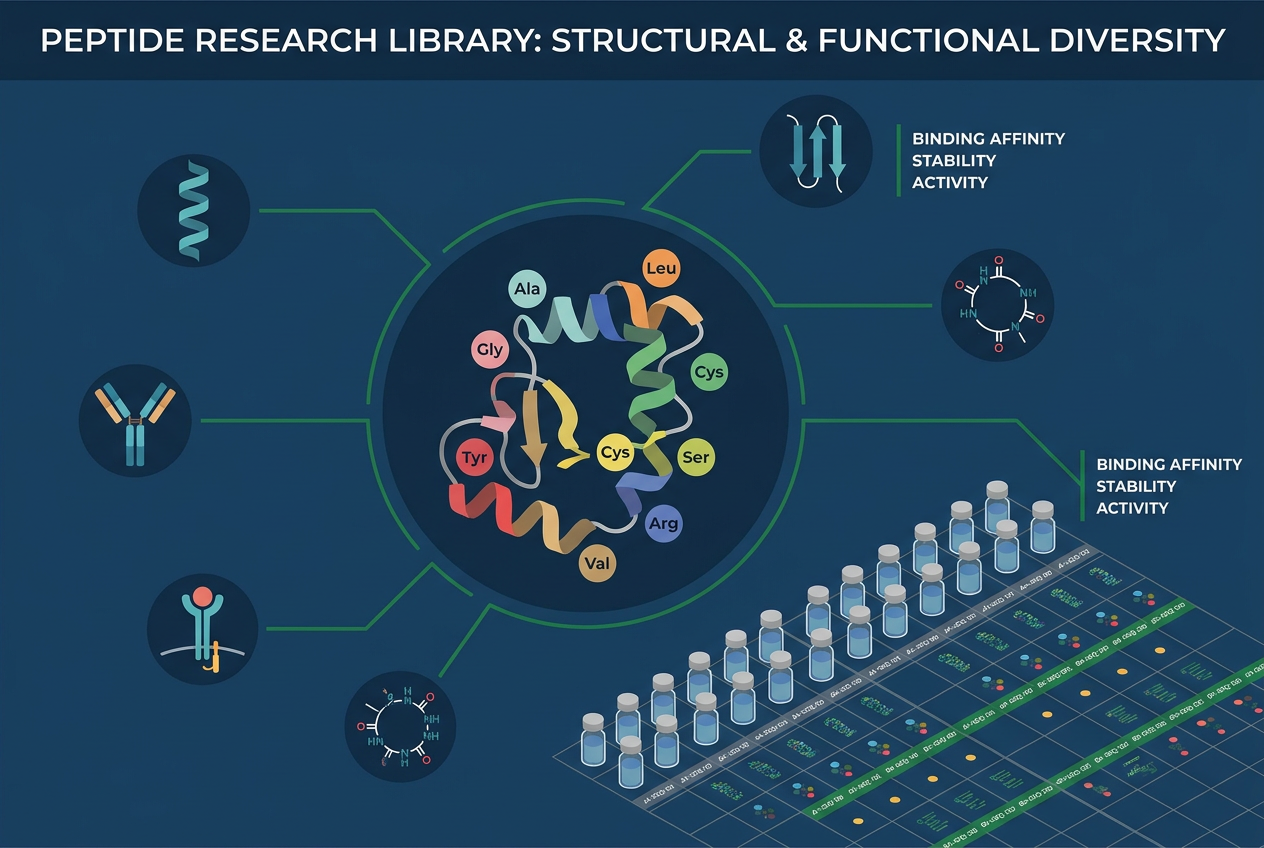
A peptide research library is a curated, searchable catalog of research-grade peptides where every sequence is verified by mass spectrometry and HPLC purity testing. Our library provides laboratories with peptides at ≥98% purity as a baseline, complete with batch-specific certificates of analysis and third-party testing documentation, so your experimental data remains reproducible and defensible. All products are supplied strictly for in vitro laboratory research use only.
*Research Use Only Notice: The products discussed on this site are sold strictly for in vitro laboratory research purposes only. They are not for human use, not for veterinary use, and not intended to diagnose, treat, cure, or prevent any disease. All information presented is for educational purposes in a research context. Must be 21+ to purchase.*
Key takeaways
- Verified identity and purity: every compound in this peptide research library is confirmed by mass spectrometry and validated by HPLC at a ≥98% purity baseline; many batches exceed 99%.
- Batch-level documentation: a unique lot number, batch-specific certificate of analysis, HPLC chromatogram, and MS spectrum ship with every order—and are available on request before purchase.
- Fast, structured sourcing: search by compound name, amino acid sequence, molecular target, or research area, with solubility profiles and storage guidance on every product page.
- Stability-protecting handling: lyophilized peptides are vacuum-sealed, lot-labeled, and shipped with expedited and cold-chain options; long-term storage is typically -20°C per the certificate of analysis.
- Strictly research use only: compounds are sold only to qualified researchers and institutions for laboratory research—never for human, diagnostic, therapeutic, or veterinary applications.
What Is a Peptide Research Library and Why Does Structure Matter?
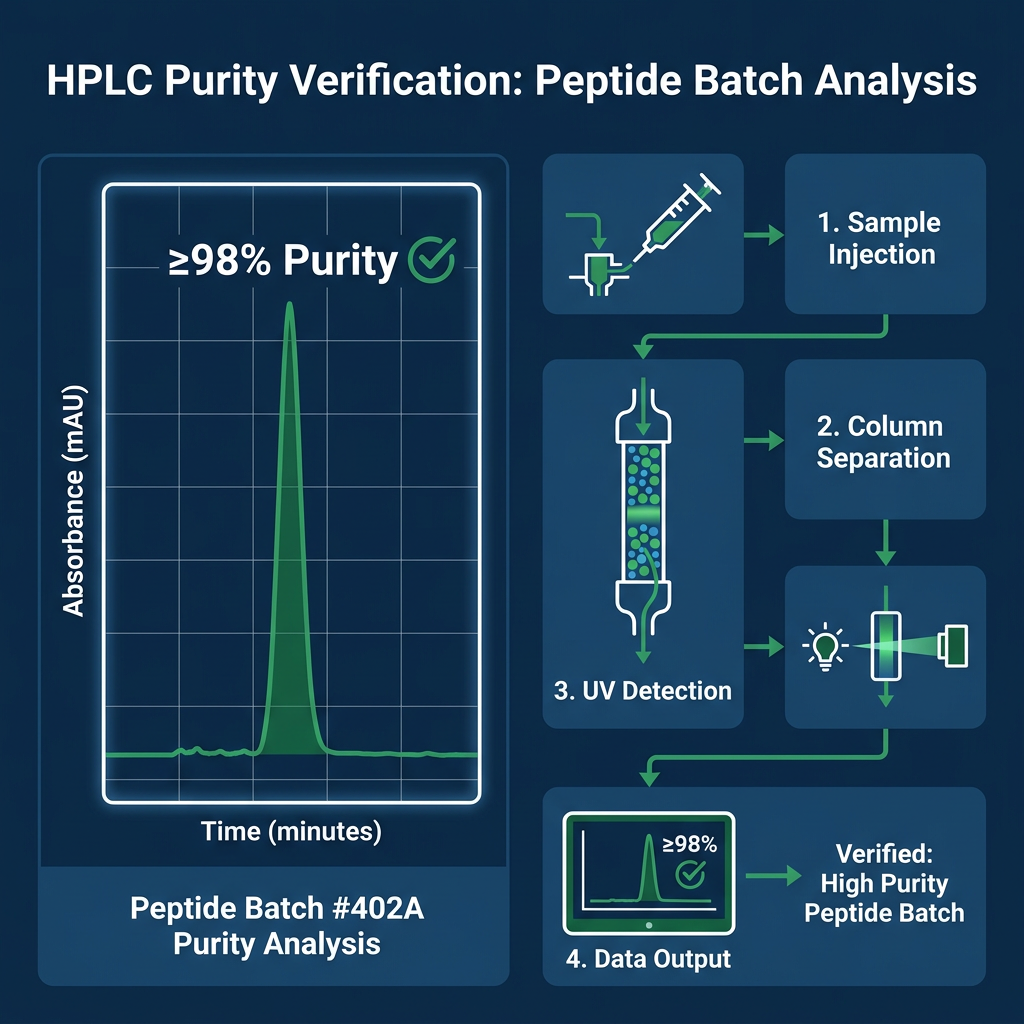
A peptide research library is more than a product list—it is an organized collection of research-grade peptides where each entry includes verified amino acid sequences, molecular weights, solubility profiles, storage conditions, and batch-specific analytical data. This structure allows researchers to compare compounds side by side, reorder identical lots, and maintain consistency across experiments.
For laboratories running receptor pathway mapping, metabolic compound screening, or reference collection building, a structured peptide research library removes guesswork from sourcing. Instead of relying on a supplier’s verbal promise, you can review a certificate of analysis before ordering and cite lot numbers with precision in publications. You can read more about how libraries are organized in our Peptide Research Library: A Complete Reference Guide.
Our library is continuously expanding, and each new compound undergoes the same rigorous verification pipeline before listing. This ensures that the peptide research library you search today meets the same standards as the one you will reorder from months later. The goal is to make every experiment as reproducible as possible, from the first pilot study to the final publication.
How Is Purity Verified on Every Batch in a Peptide Research Library?
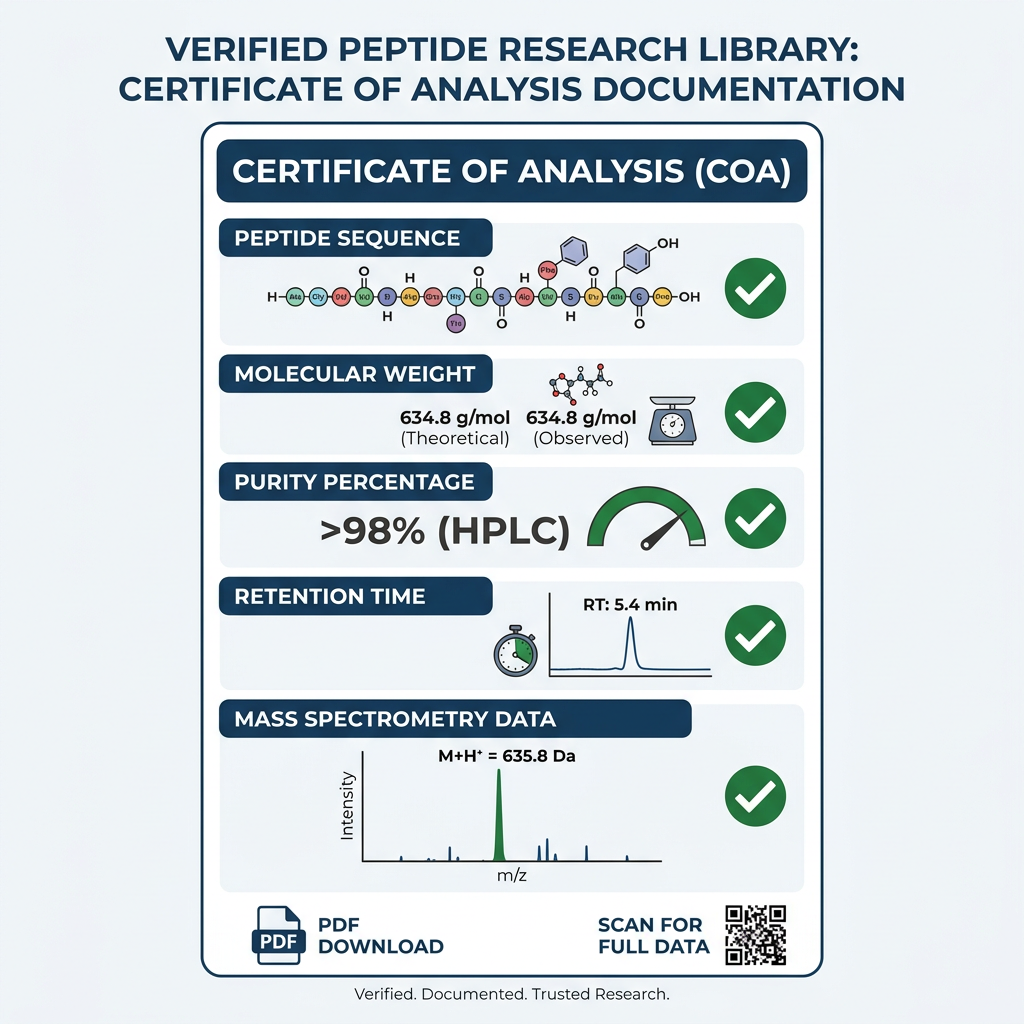
Purity claims are easy to make and hard to prove, which is why verification in a peptide research library is layered. Every batch is validated by HPLC purity analysis, with mass spectrometry confirming molecular identity. Independent third-party testing adds a second layer of verification before any compound is listed.
A purity of ≥98% is our baseline in this peptide research library, and many batches exceed 99%. The complete certificate of analysis—including the HPLC chromatogram and MS spectrum—ships with every order, giving you documentation you can defend in peer review. You can read more about analytical methods in peptide purity research on PubMed.
Documentation included with every batch from this peptide research library: certificate of analysis with batch-specific results, HPLC chromatogram and retention time, mass spectrometry identity confirmation, and recommended storage and handling conditions. Because the analytical file travels with the vial, your records remain complete and audit-ready.
💡 Key Takeaway: How Is Purity Verified on Every Batch in a Peptide Research Library?
What Documentation Does a Verified Peptide Research Library Provide?
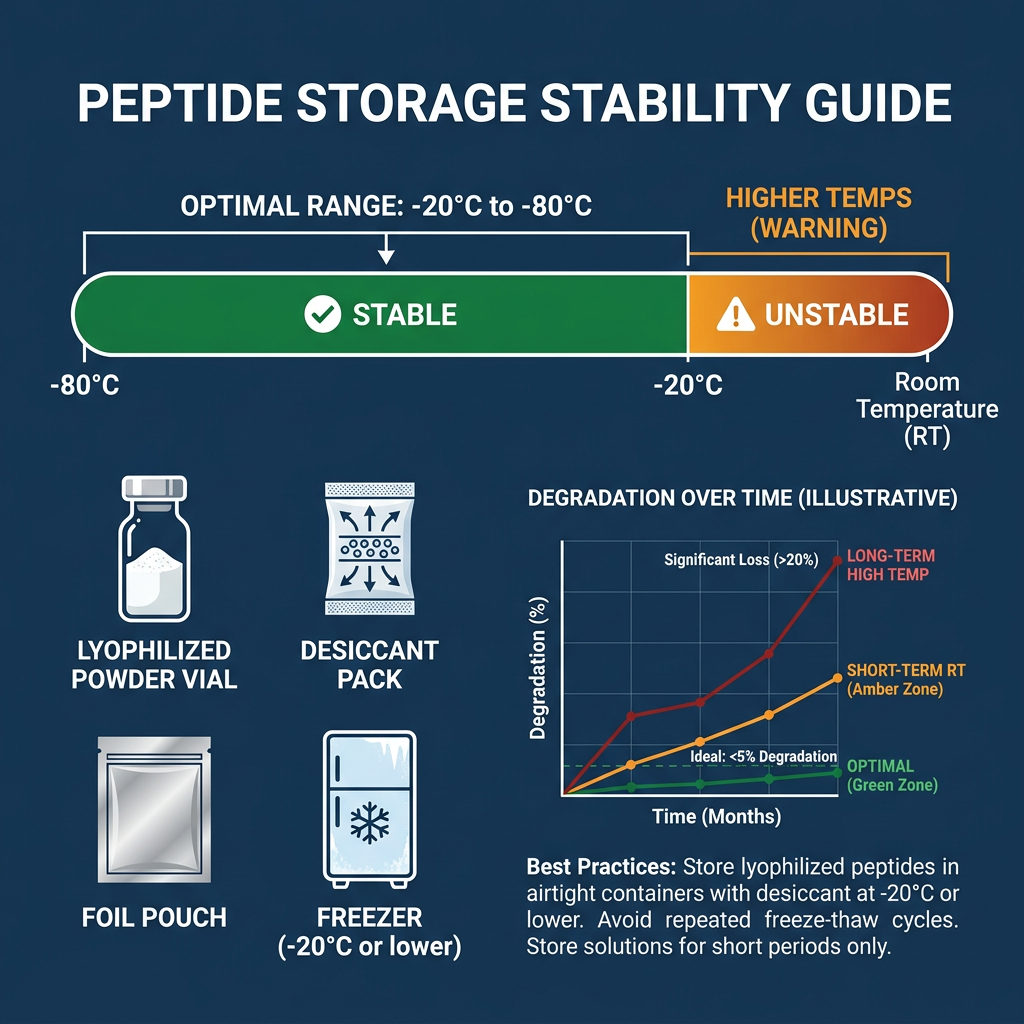
A verified peptide research library provides more than a vial—it supplies a complete analytical file for every batch. Each order includes a certificate of analysis (COA) specific to the lot number, an HPLC chromatogram showing retention time, and a mass spectrometry spectrum confirming molecular identity.
This documentation matters for reproducibility. When you reorder a compound months later, the COA lets you verify that the new batch matches the previous one in purity and identity. For peer review, having the chromatogram and spectrum on file means you can respond to reviewer queries without scrambling to contact the supplier.
The peptide research library also records recommended storage and handling conditions on each COA. This includes short-term shipping conditions and long-term storage temperature, typically -20°C for lyophilized peptides, to prevent degradation before use. Every batch is traceable to its synthesis date and analytical run.
How Should Peptides from a Peptide Research Library Be Stored for Maximum Stability?
Lyophilized peptides in a peptide research library are vacuum-sealed and lot-labeled to preserve stability during shipping. Upon receipt, store them according to the certificate of analysis—typically at -20°C in a frost-free freezer to avoid freeze-thaw cycles that can cause aggregation or degradation.
Cold-chain shipping options are available for temperature-sensitive compounds, and expedited delivery reduces time outside controlled conditions. Once reconstituted, peptide solutions generally require shorter storage windows and lower temperatures, so plan experiments accordingly. Always aliquot reconstituted peptides to minimize repeated freeze-thaw exposure.
Proper storage protects the investment you made in a verified peptide research library. Degraded peptides can produce false negatives or irreproducible results, undermining the value of batch-level documentation. Following the COA storage guidance is a simple step that pays dividends in data quality.
Which Research Areas Benefit Most from a Verified Peptide Research Library?
A verified peptide research library supports a wide range of laboratory applications. Receptor pathway mapping, for example, requires peptides with exact sequences and high purity to avoid off-target binding that confuses signal transduction data. Even a 1% impurity can skew dose-response curves in sensitive assays.
Metabolic compound screening benefits from the library’s batch traceability, allowing researchers to compare results across experiments without worrying about lot-to-lot variability. Cell penetrating peptide research, covered in our Cell Penetrating Peptides for Research article, also relies on precise purity and identity verification to ensure cellular uptake studies are valid.
Whether you are building a reference collection, testing binding affinities, or validating assay controls, this peptide research library provides the verified material needed for defensible data. You can explore different library formats in Peptide Libraries: 7 Essential Research Formats for 2025.
💡 Key Takeaway: Which Research Areas Benefit Most from a Verified Peptide Research Library?
How Does Third-Party Testing Strengthen a Peptide Research Library?
Third-party testing adds an independent layer of confidence to every compound in a peptide research library. While in-house HPLC and mass spectrometry are standard, an external laboratory re-verifies purity and identity on selected batches, reducing the risk of systematic error from a single analytical setup. Independent verification methods are discussed on NCBI.
This independent verification is documented in the analytical file, so you can see exactly which batches underwent third-party analysis. It is a differentiator that separates a rigorous peptide research library from a typical supplier that relies solely on self-reported purity. The extra step may add time, but it prevents costly experimental failures.
For laboratories publishing in high-impact journals, third-party testing documentation can streamline the review process. Reviewers increasingly ask for independent validation of research materials, and a peptide research library that provides this upfront saves time during manuscript revision.
What Are the Key Differences Between a Peptide Research Library and a Typical Supplier?
Most suppliers sell a vial and a promise. A peptide research library, by contrast, is an organized, continuously expanding catalog where every entry carries the context researchers need: amino acid sequences, molecular weights, solubility guidance, storage conditions, and batch-specific analytical data.
That structure matters for reproducible science. When your team can compare compounds side by side, review a certificate of analysis before ordering, and reorder the identical lot months later, experiments stay consistent and publications stay defensible. You can see how this compares to standard supplier practices below.
| Feature | Typical Supplier | Peptide Research Library |
|———|——————|————————–|
| Identity verification | Often self-reported | Mass spectrometry confirmed |
| Purity documentation | Verbal or absent | HPLC chromatogram and COA |
| Third-party testing | Rare | Independent verification on selected batches |
| Lot traceability | Minimal | Unique lot number per batch |
| Storage guidance | Generic | Batch-specific, on COA |
This table illustrates why a peptide research library is the preferred choice for laboratories that require defensible data. You can learn more about library formats in Peptide Library: Research-Grade Peptides for Laboratories.
How to Select the Right Peptide from a Research Library: A Checklist
Selecting the right compound from a peptide research library requires attention to several factors. Use the checklist below to ensure you choose a peptide that meets your experimental needs and documentation standards.
- Verify the amino acid sequence matches your target exactly.
- Confirm HPLC purity ≥98% (or higher if your assay demands it).
- Request the certificate of analysis before ordering to review the chromatogram and MS spectrum.
- Check solubility profile for your intended solvent (e.g., water, DMSO, acetonitrile).
- Review storage conditions and plan for -20°C long-term storage.
- Confirm third-party testing documentation if needed for publication.
This checklist applies to any peptide research library you evaluate, not just ours. A supplier that cannot provide these details upfront may not support reproducible research, and switching suppliers mid-project can introduce confounding variables.
💡 Key Takeaway: How to Select the Right Peptide from a Research Library: A Checklist
Why Choose a Verified Peptide Research Library for Your Next Experiment?
A verified peptide research library gives you more than a catalog—it gives you a foundation for reproducible science. With batch-level documentation, third-party testing, and structured search capabilities, you spend less time chasing suppliers and more time analyzing results. Every peptide is ready for laboratory use the moment it arrives.
FAQ
Q1: What is the minimum purity level in your peptide research library?
A: The baseline purity for every compound in our peptide research library is ≥98% as verified by HPLC. Many batches exceed 99%, and the exact purity for each lot is documented on the certificate of analysis.
Q2: Can I request a certificate of analysis before purchasing from your peptide research library?
A: Yes. Batch-specific certificates of analysis, including HPLC chromatograms and mass spectrometry spectra, are available on request before purchase for any compound in the peptide research library. This lets you verify purity and identity before committing.
Q3: How are peptides in your peptide research library shipped to maintain stability?
A: All lyophilized peptides in our peptide research library are vacuum-sealed, lot-labeled, and shipped with expedited and cold-chain options. Long-term storage is typically -20°C as stated on the COA, and shipping conditions are designed to minimize degradation.
Q4: Are peptides from your peptide research library suitable for human or veterinary use?
A: No. All products in our peptide research library are sold strictly for in vitro laboratory research purposes only. They are not intended for human consumption, veterinary use, or any form of in vivo administration, and are not dietary supplements or cosmetics.
Topics covered in this article:
Ready to Take the Next Step?
Every product includes lot-specific documentation and third-party purity testing.
Explore Our Research Products →Free shipping on qualifying orders · Batch COA on request