


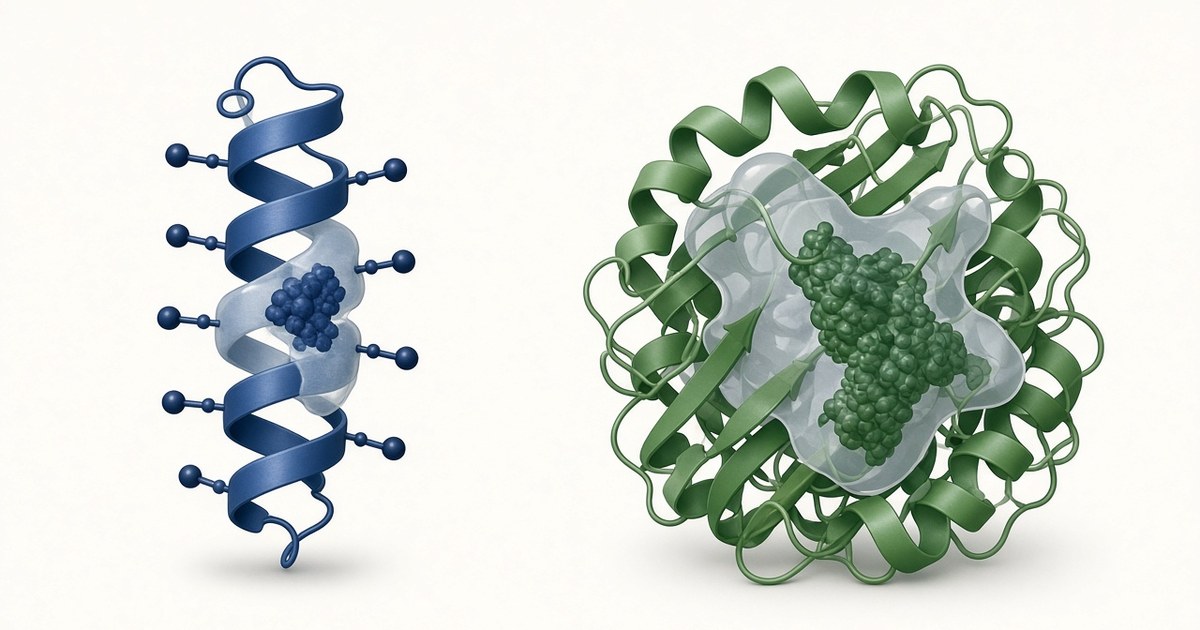
Peptide Hormones vs Protein Hormones: Key Differences
Peptide hormones protein hormones differ in size, folding, and receptor signaling. This 2026 definitive guide covers structure, synthesis, and lab research use.
📋 Table of Contents
Peptide hormones protein hormones are both signaling molecules built from amino acids linked by peptide bonds, but they differ mainly in chain length, structural folding, and receptor biology. Peptide hormones are typically shorter, often under 100 amino acids, water-soluble, and act through cell-surface receptors, while protein hormones are usually larger, more extensively folded, and also water-soluble but with more complex architecture. For laboratory researchers comparing peptide hormones protein hormones, this distinction guides receptor assays, stability testing, and analog design.
Key takeaways
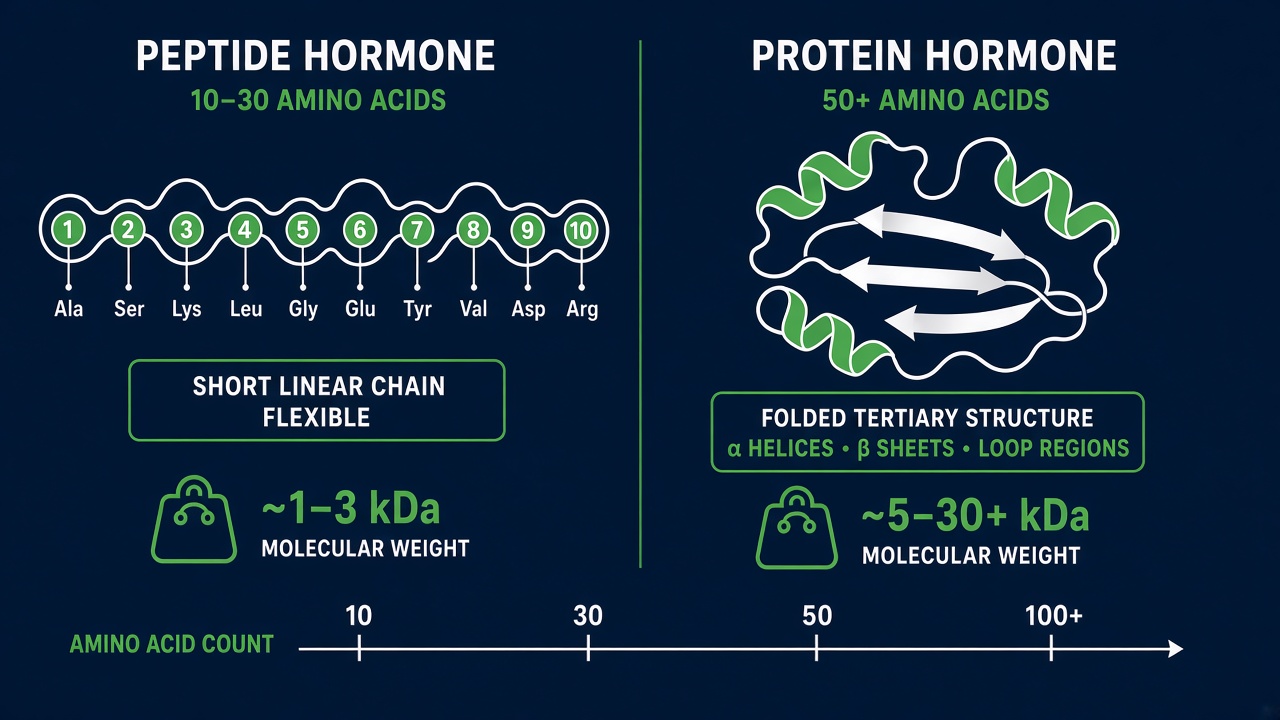
- Peptide hormones protein hormones share peptide bonds but differ in size and folding: peptide hormones are commonly under 100 amino acids, while protein hormones are larger polypeptides.
- Both classes are water-soluble and bind cell-surface receptors, unlike steroid and thyroid hormones that often act through intracellular receptors.
- Many peptide hormones are cleaved from larger precursor proteins; protein hormones often require precise tertiary structure and disulfide bonds.
- Insulin is a boundary case usually called a peptide hormone; growth hormone is a classic protein hormone.
- Modern peptide hormone analogs, including GLP-1 receptor agonists, highlight the research and therapeutic relevance of peptide hormones protein hormones.
What Are Peptide Hormones Protein Hormones and Why Do the Terms Overlap?
Both peptide hormones protein hormones are made of amino acids linked by peptide bonds. That shared chemistry is the reason many textbooks discuss them together. Both classes are encoded by genes, translated as larger precursors or polypeptides, and shaped by post-translational processing before reaching their active forms.
The challenge comes from terminology. Some sources describe peptide hormones as generally under 100 amino acids, while others extend the range to roughly 200 amino acids. Protein hormones are often described more by their size and folded complexity than by a strict amino acid cutoff. This means some familiar hormones sit near the boundary rather than neatly on one side.
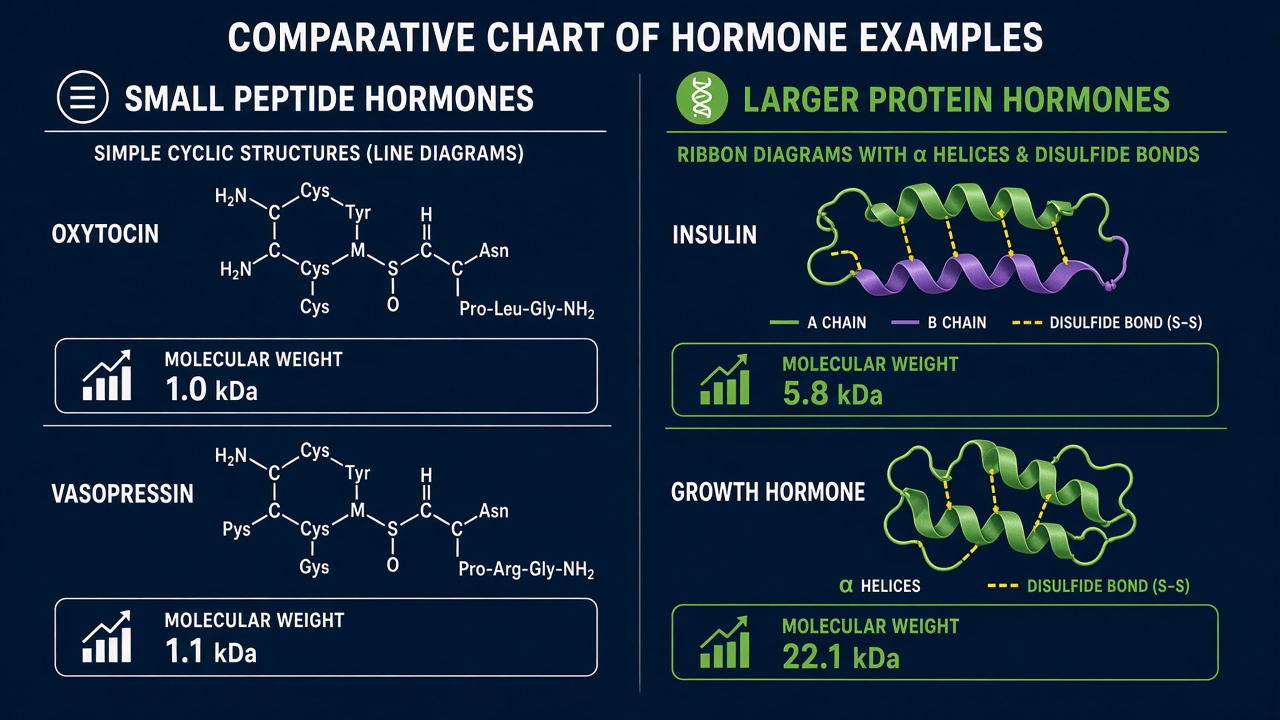
Insulin is a good example. It is widely called a peptide hormone, yet it has two chains linked by disulfide bonds and a highly specific three-dimensional structure. Growth hormone, by contrast, is much larger and is usually described as a protein hormone. The language reflects useful trends, not absolute laws.
How Do Peptide Hormones Protein Hormones Differ in Structure and Chain Length?
The most visible difference between peptide hormones protein hormones is size. Peptide hormones are commonly short sequences, while protein hormones are generally larger polypeptides with more extensive folding. That difference influences stability, receptor recognition, storage, and drug design.
A second difference is structural complexity. Many peptide hormones can function with relatively compact architecture, though some still depend on disulfide bonds or chemical modifications for activity. Protein hormones more often rely on stable tertiary structure, multiple domains, or intricate folding patterns that tightly shape their biological behavior.
The table below summarizes the usual pattern.
| Feature | Peptide Hormones | Protein Hormones |
|—|—|—|
| Typical size | Often shorter, commonly under 100 amino acids | Usually larger polypeptides |
| Solubility | Water-soluble | Usually water-soluble as well |
| Structure | Simpler overall, though still biologically precise | More extensive folding and structure-function dependence |
| Receptor location | Commonly cell-surface receptors | Also typically cell-surface receptors |
| Signaling speed | Often rapid through second messenger systems | Often rapid too, but may involve broader structural regulation |
| Processing | Frequently produced from precursor proteins and cleaved | Produced by transcription and translation, with folding and modifications |
| Examples | Glucagon, vasopressin, oxytocin, insulin | Growth hormone, prolactin, parathyroid hormone is often discussed near the peptide side depending on context |
A few quick markers help when reading papers or labels: short chain length, water solubility, extracellular receptor binding, precursor cleavage, and folding-dependent activity. These markers point in the right direction, but they do not settle every case for peptide hormones protein hormones.
💡 Key Takeaway: How Do Peptide Hormones Protein Hormones Differ in Structure and Chain Length?
Which Receptor Signaling Pathways Do Peptide Hormones Protein Hormones Use?
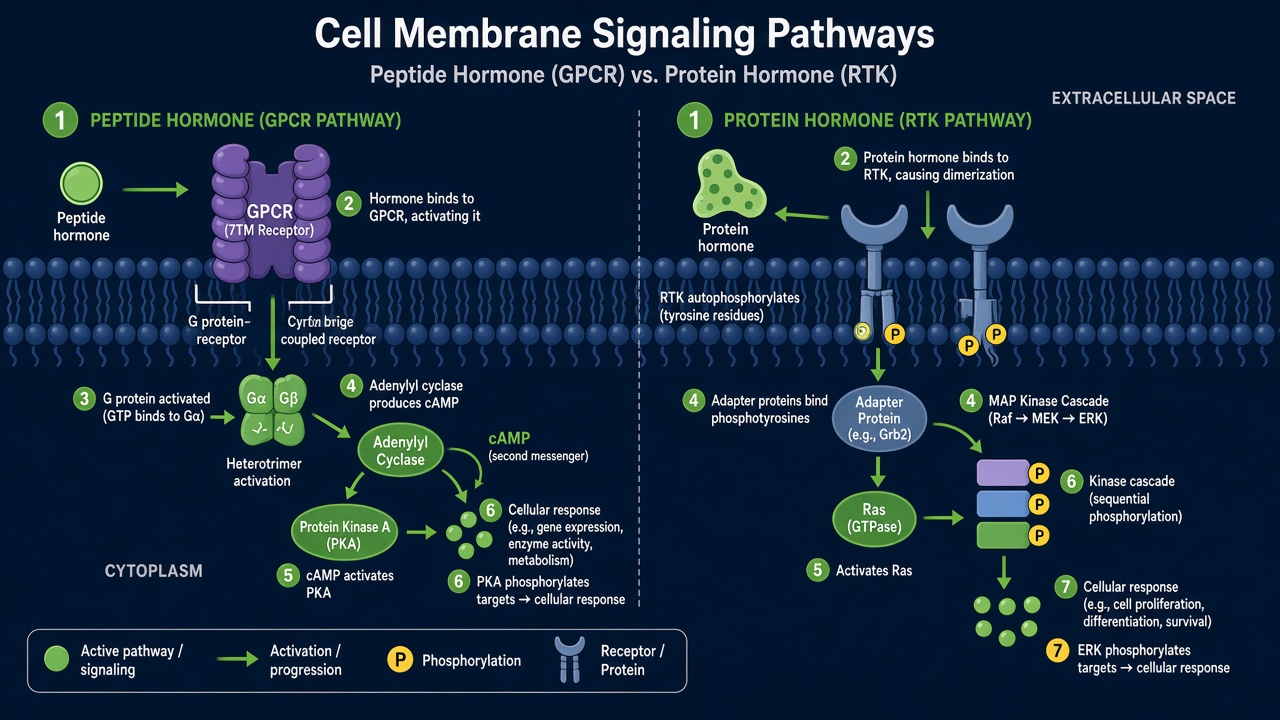
Because peptide hormones protein hormones are water-soluble, they usually do not pass straight through the lipid membrane of target cells. Instead, they bind extracellular receptors and trigger intracellular cascades. This is one of the clearest functional themes shared across both groups.
For many peptide hormones, signaling is rapid and highly modular. Binding at the cell surface can activate G-protein pathways, cyclic AMP signaling, calcium mobilization, or kinase cascades. Other peptide and protein hormones signal through receptor systems tied to JAK/STAT pathways or receptor tyrosine kinase activity. Insulin is a classic case where the receptor’s architecture is central to the hormone’s effect on metabolism.
This membrane-based signaling creates an important practical contrast with steroid hormones and thyroid hormones, which often act through intracellular or nuclear receptors. When a hormone is described as a short amino acid chain acting quickly through a surface receptor, it strongly fits the peptide-hormone pattern.
A useful way to frame the signaling distinction for peptide hormones protein hormones is this: peptide hormones commonly trigger fast surface-receptor responses with second messengers; protein hormones also use surface receptors, yet larger size and folding often make receptor recognition more structurally dependent; both are typically unable to diffuse freely across the plasma membrane; and receptor biology often matters as much as hormone size.
How Are Peptide Hormones Protein Hormones Synthesized and Processed?
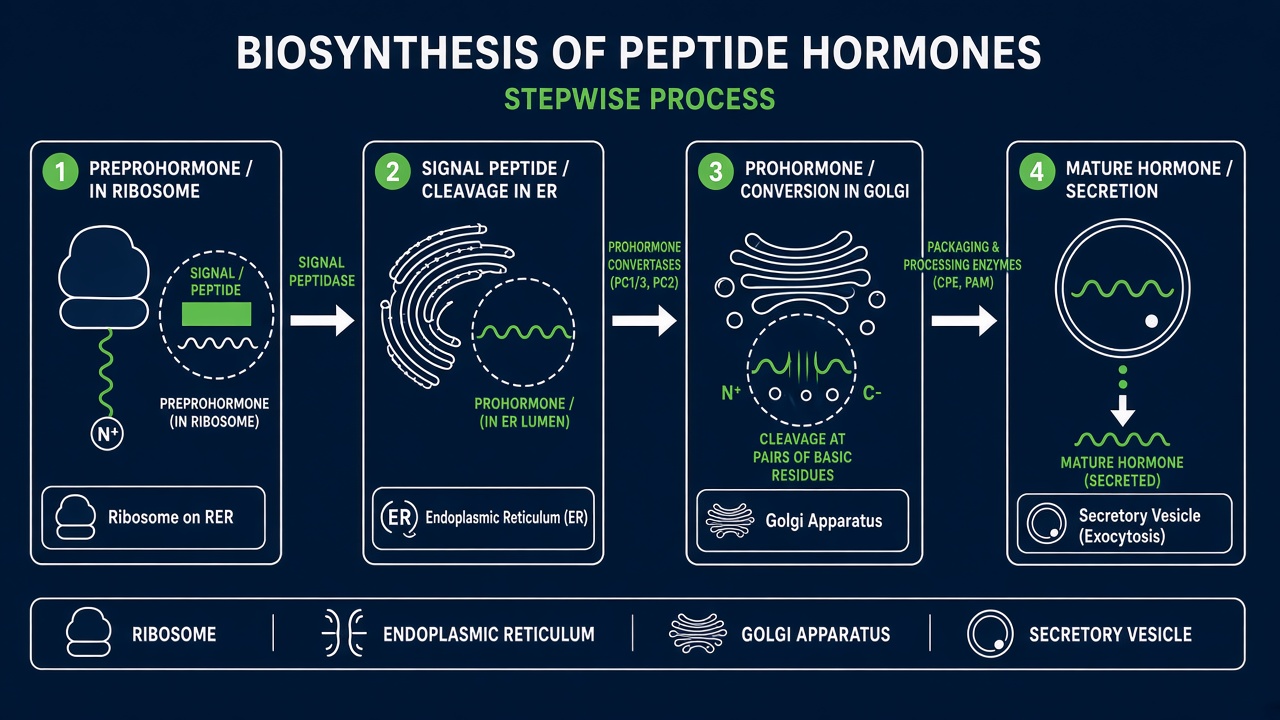
From a cell biology standpoint, peptide hormones protein hormones follow a sophisticated production pipeline. The cell transcribes the relevant gene, processes the RNA, translates the message into a precursor polypeptide, and then modifies, folds, sorts, and secretes the final product.
Many peptide hormones begin life as larger precursor proteins. Those precursors are cut by specific enzymes to generate the active hormone. This processing step is not a minor detail. It determines which bioactive fragments appear, how much active hormone is produced, and where it is released.
Protein hormones also depend on this broader biosynthetic machinery, though folding may become even more central. Larger hormones often require precise tertiary structure, disulfide bond formation, and trafficking through the endoplasmic reticulum and Golgi apparatus before secretion.
Post-translational modifications add another layer. Reviews of peptide hormone biology note that O-glycosylation can affect receptor potency and stability, while phosphorylation can alter receptor binding or help protect a hormone from enzymatic breakdown. These chemical edits remind us that “peptide” does not mean “simple.” Even short hormones can carry regulatory features that shape half-life, activity, and tissue selectivity.
For further background on endocrine hormone physiology, see the NCBI Bookshelf resource on endocrine hormones.
What Are the Key Examples That Clarify Peptide Hormones Protein Hormones?
Looking at individual hormones makes the pattern of peptide hormones protein hormones easier to grasp. Glucagon is commonly treated as a peptide hormone. It is relatively small, acts through a cell-surface receptor, and is used clinically as an injectable polypeptide hormone. Its biology fits the classic image of a fast-acting, water-soluble peptide signal.
Oxytocin and vasopressin also sit comfortably in the peptide category. Their short length, strong receptor specificity, and rapid physiological actions make them standard examples in endocrine education.
Insulin is more interesting. It is usually categorized as a peptide hormone and consists of 51 amino acids arranged in two chains connected by disulfide bonds. Even though it is short by protein standards, its structure is highly organized and inseparable from function. This is exactly why the peptide-versus-protein split works best as a practical guide, not a rigid sorting rule.
Growth hormone tends to fall on the protein hormone side. It is larger, more structurally elaborate, and usually discussed as a protein hormone in endocrinology. The difference is not only size. The larger folded architecture has direct consequences for receptor interaction and biological behavior.
A few examples are worth keeping in view for peptide hormones protein hormones: classic peptide hormones include glucagon, oxytocin, and vasopressin; insulin is a boundary case; growth hormone is a common protein hormone example; and some sources group peptide and protein hormones together as one amino acid-based class.
💡 Key Takeaway: What Are the Key Examples That Clarify Peptide Hormones Protein Hormones?
Why Do Peptide Hormone Analogs Matter in Modern Research and Medicine?
The biology of peptide hormones has had major therapeutic impact. Many modern endocrine and metabolic drugs are built from natural peptide templates or are designed to mimic peptide hormone signaling with improved stability and pharmacokinetics. For researchers working with peptide hormones protein hormones, analog design is a central theme.
Glucagon-like peptide-1 receptor agonists are a strong example. These agents draw on endogenous incretin biology to influence glucose regulation, appetite, and body weight. Dual agonist strategies have expanded that concept even further by targeting more than one receptor pathway at once.
This clinical progress highlights a central property of peptide hormones: they can be remarkably potent and selective, but natural peptides often face short half-lives and enzymatic degradation. Research-grade analogs address these limits through sequence modification, PEGylation, lipidation, or other structural changes. The same logic applies when comparing peptide hormones protein hormones in laboratory assays.
This clinical progress highlights why peptide hormones protein hormones remain a focus in both academic and industry labs.
For a broader overview of research peptides and 2025 lab reference standards, see our Complete Guide to Research Peptides: 2025 Lab Reference.
How Should Researchers Source Peptide Hormones Protein Hormones for Lab Use?
When sourcing peptide hormones protein hormones for laboratory research, purity, documentation, and supplier transparency are critical. Peptide hormones may require certificates of analysis (COAs) that confirm identity, purity percentage, and residual solvent data. Protein hormones may demand additional verification of folding, aggregation state, and biological activity in relevant assays.
For peptide libraries and comparative studies, researchers often evaluate price and quality side by side. Our Peptide Library Price and Quality Comparison for Research Labs outlines key factors such as purity thresholds, batch consistency, and third-party testing.
Storage conditions also matter. Many peptide hormones protein hormones are shipped as lyophilized powders and should be stored at -20°C or -80°C upon receipt, with brief reconstitution in appropriate buffers for in vitro use only. Protein hormones may be more sensitive to freeze-thaw cycles and require aliquoting to preserve structural integrity.
Researchers should always confirm that products are labeled for research use only, not for human consumption, and that the supplier provides analytical data such as HPLC and mass spectrometry. The Best Places to Buy Research Peptides for a Lab in 2026 resource covers vendor evaluation criteria for laboratory buyers.
For background on endocrine hormone physiology and peptide synthesis, see the NCBI Bookshelf resource on the endocrine system.
What Are the Stability and Analytical Considerations for Peptide Hormones Protein Hormones?
Stability testing for peptide hormones protein hormones in the lab typically includes purity analysis by HPLC, mass confirmation by MALDI-TOF or ESI-MS, and solubility assessment in aqueous buffers. Because both classes are water-soluble, they generally do not require organic solvents for reconstitution, though aggregation can occur at high concentrations or after repeated freeze-thaw cycles.
Peptide hormones may be more forgiving in short-term handling because of their smaller size and fewer disulfide bonds, but oxidation of methionine or cysteine residues can still reduce activity. Protein hormones often require gentler handling to preserve native conformation. Researchers comparing peptide hormones protein hormones should document storage temperature, reconstitution date, and buffer composition in every experiment.
Analytical methods should match the hormone class. For short peptide hormones, reverse-phase HPLC with UV detection is common. For larger protein hormones, size-exclusion chromatography and circular dichroism may be needed to assess folding. These distinctions reinforce why peptide hormones protein hormones are not interchangeable in assay design.
💡 Key Takeaway: What Are the Stability and Analytical Considerations for Peptide Hormones Protein Hormones?
What Are the Most Common Misconceptions About Peptide Hormones Protein Hormones?
A common misconception about peptide hormones protein hormones is that all peptides are too small to fold into stable three-dimensional structures. In reality, even short peptides like oxytocin and vasopressin rely on disulfide bonds and specific conformations for receptor recognition. Size does not eliminate structural precision.
Another misconception is that protein hormones are always more potent or more important than peptide hormones. Potency depends on receptor affinity, downstream signaling efficiency, and pharmacokinetics, not simply on molecular weight. Glucagon, a relatively short peptide hormone, has profound metabolic effects through a single receptor subtype.
Some researchers also assume that water-soluble hormones can freely enter cells after prolonged exposure. That is not the case. Peptide hormones protein hormones remain outside the cell and depend entirely on membrane receptors and intracellular second messengers to produce a response. This property is central to assay design and inhibitor studies.
How Do Post-Translational Modifications Affect Peptide Hormones Protein Hormones?
Post-translational modifications shape the activity, stability, and receptor selectivity of peptide hormones protein hormones. O-glycosylation can increase resistance to proteolytic degradation and modulate receptor potency. Phosphorylation can alter receptor binding or protect a hormone from enzymatic breakdown in circulation or in culture media.
For protein hormones, glycosylation is often more extensive and can influence folding, secretion, and clearance. Some protein hormones require specific glycoforms for full biological activity, while others tolerate partial deglycosylation without losing receptor binding. These differences mean that recombinant expression systems must be chosen carefully to preserve native modifications.
Peptide hormones may carry smaller modifications such as C-terminal amidation, N-terminal pyroglutamate formation, or disulfide bond pairing. Even a single missing amide can reduce receptor activation. When validating peptide hormones protein hormones in the lab, researchers should request modification maps from suppliers and confirm that the correct isoform is present.
What Role Do Receptor Pharmacology and Assay Design Play for Peptide Hormones Protein Hormones?
Receptor pharmacology is the practical bridge between structural class and biological effect for peptide hormones protein hormones. Because both classes act through cell-surface receptors, assays often measure cAMP accumulation, calcium flux, or reporter gene activation downstream of receptor engagement. Choosing the right assay depends on the receptor coupling mechanism.
For peptide hormones that activate G-protein-coupled receptors, cAMP or IP3 assays are common. For protein hormones that signal through receptor tyrosine kinases or JAK/STAT pathways, phosphorylation-specific antibodies or reporter constructs may be more informative. Insulin, for example, requires a functional insulin receptor preparation and downstream Akt or GLUT4 readouts to assess activity.
Competition binding assays can quantify receptor affinity for both peptide hormones protein hormones, but the labeled ligand must be carefully selected. Nonspecific binding, tracer integrity, and receptor density all affect results. Researchers should include positive and negative controls, and validate that the assay window is linear over the expected concentration range.
💡 Key Takeaway: What Role Do Receptor Pharmacology and Assay Design Play for Peptide Hormones Protein Hormones?
How Can Researchers Validate Peptide Hormones Protein Hormones in the Lab?
Validating peptide hormones protein hormones requires orthogonal methods. Start with identity confirmation by mass spectrometry, then assess purity by HPLC, and finally measure biological activity in a relevant receptor or cell-based assay. No single method is sufficient on its own.
For peptide hormones, mass spectrometry should confirm the expected monoisotopic mass within a few parts per million. HPLC should show a single major peak, ideally above 95% purity for most research applications. For protein hormones, additional methods such as SDS-PAGE, size-exclusion chromatography, and circular dichroism help confirm molecular weight, aggregation state, and folded structure.
Biological validation should use a receptor system that matches the hormone’s known pharmacology. A peptide hormone that signals through a GPCR should be tested in a cAMP or calcium assay, not an unrelated kinase assay. Documenting the validation workflow for peptide hormones protein hormones improves reproducibility and supports peer review.
What Storage and Handling Practices Protect Peptide Hormones Protein Hormones?
Proper storage protects the structural integrity and biological activity of peptide hormones protein hormones. Lyophilized powders are generally stable for months at -20°C or -80°C, but repeated warming and cooling should be avoided. Once reconstituted, peptide hormones are often used within days to weeks when stored at 4°C, while protein hormones may require aliquoting and freezing at -80°C.
Always use sterile, low-binding tubes and avoid vigorous vortexing after reconstitution. Peptide hormones protein hormones can adsorb to plastic surfaces, especially at low concentrations. Adding a carrier protein such as bovine serum albumin at 0.1% may reduce nonspecific binding, but researchers should confirm that the carrier does not interfere with downstream assays.
Record the reconstitution solvent, pH, and concentration on every vial. Some peptide hormones are more soluble in slightly acidic buffers, while others prefer neutral pH. Protein hormones may precipitate if the buffer ionic strength is too high or too low. These details are part of responsible laboratory stewardship for peptide hormones protein hormones.
How Do Peptide Hormones Protein Hormones Compare in Stability and Degradation?
Peptide hormones protein hormones differ in their susceptibility to degradation. Short linear peptide hormones may be rapidly cleaved by aminopeptidases or carboxypeptidases in biological matrices. Cyclic peptides or those with disulfide bonds, such as oxytocin and vasopressin, are somewhat more resistant but still degrade over time.
Protein hormones often face denaturation and aggregation as major degradation pathways. Unfolded or partially folded intermediates can expose hydrophobic surfaces, leading to irreversible aggregates. This is why protein hormones are usually stored at low temperature and handled gently, while many peptide hormones tolerate brief room-temperature exposure during weighing or dissolution.
For in vitro experiments, stability should be tested under the exact assay conditions. Add protease inhibitors if the assay includes serum or cell lysates. Check recovery by HPLC or ELISA at multiple time points. Understanding the degradation profile of peptide hormones protein hormones helps researchers interpret negative results and optimize dosing in preclinical models.
💡 Key Takeaway: How Do Peptide Hormones Protein Hormones Compare in Stability and Degradation?
FAQ
What is the main difference between peptide hormones protein hormones?
The main difference between peptide hormones protein hormones is size and structural complexity. Peptide hormones are typically shorter, often under 100 amino acids, and may have simpler architecture, while protein hormones are usually larger with more extensive folding. Both are water-soluble and signal through cell-surface receptors.
Is insulin a peptide hormone or a protein hormone?
Insulin is usually categorized as a peptide hormone, even though it has 51 amino acids in two chains linked by disulfide bonds. This makes insulin a boundary case that illustrates why the peptide hormones protein hormones distinction is a practical guide, not a rigid rule.
Why can’t peptide hormones protein hormones cross the cell membrane?
Peptide hormones protein hormones are water-soluble and generally cannot diffuse through the lipid bilayer. They bind extracellular receptors and trigger intracellular signaling cascades, unlike steroid and thyroid hormones that often act through intracellular receptors.
How should I store peptide hormones protein hormones for lab research?
For laboratory research, peptide hormones protein hormones are typically stored as lyophilized powders at -20°C or -80°C. After reconstitution, they should be aliquoted and used in vitro only, with documentation of storage conditions to preserve activity.
Are peptide hormones protein hormones ever used for human consumption?
No. Peptide hormones protein hormones described in this guide are for laboratory research use only. They are not intended for human consumption, clinical use, or self-administration. Always follow institutional safety and regulatory guidelines when handling research-grade hormones.
Ready to Take the Next Step?
Every product includes lot-specific documentation and third-party purity testing.
Explore Our Research Products →Free shipping on qualifying orders · Batch COA on request