


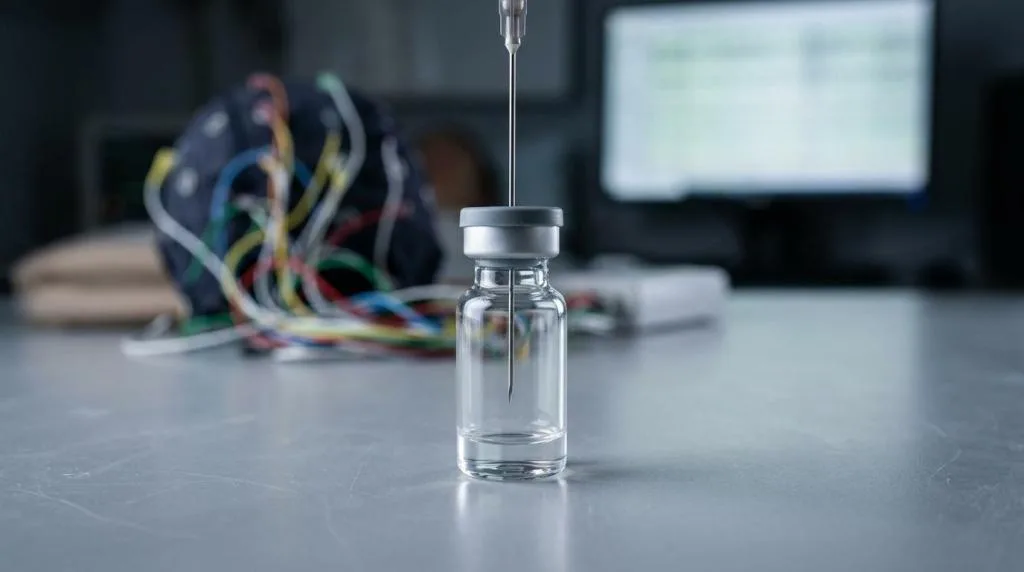
DSIP Peptide: 8 Research Questions Answered Clearly
dsip peptide research explained: 8 key questions on sleep studies, chemistry, animal data, and human evidence. Peptides Library presents a clear 2025 review.
📋 Table of Contents
The core question researchers ask about dsip peptide is whether it works as a sleep therapy, and the direct answer is that current human evidence remains weak despite decades of historical interest. dsip peptide, a nonapeptide with a reported molecular weight of 849, was first linked to delta sleep in animal studies, but a double-blind trial in 16 chronic insomniac patients using intravenous dsip peptide at 25 nmol/kg across three lab nights found only weak statistically significant benefits. Peptides Library presents dsip peptide as a legacy research topic rather than a settled treatment.
Key takeaways
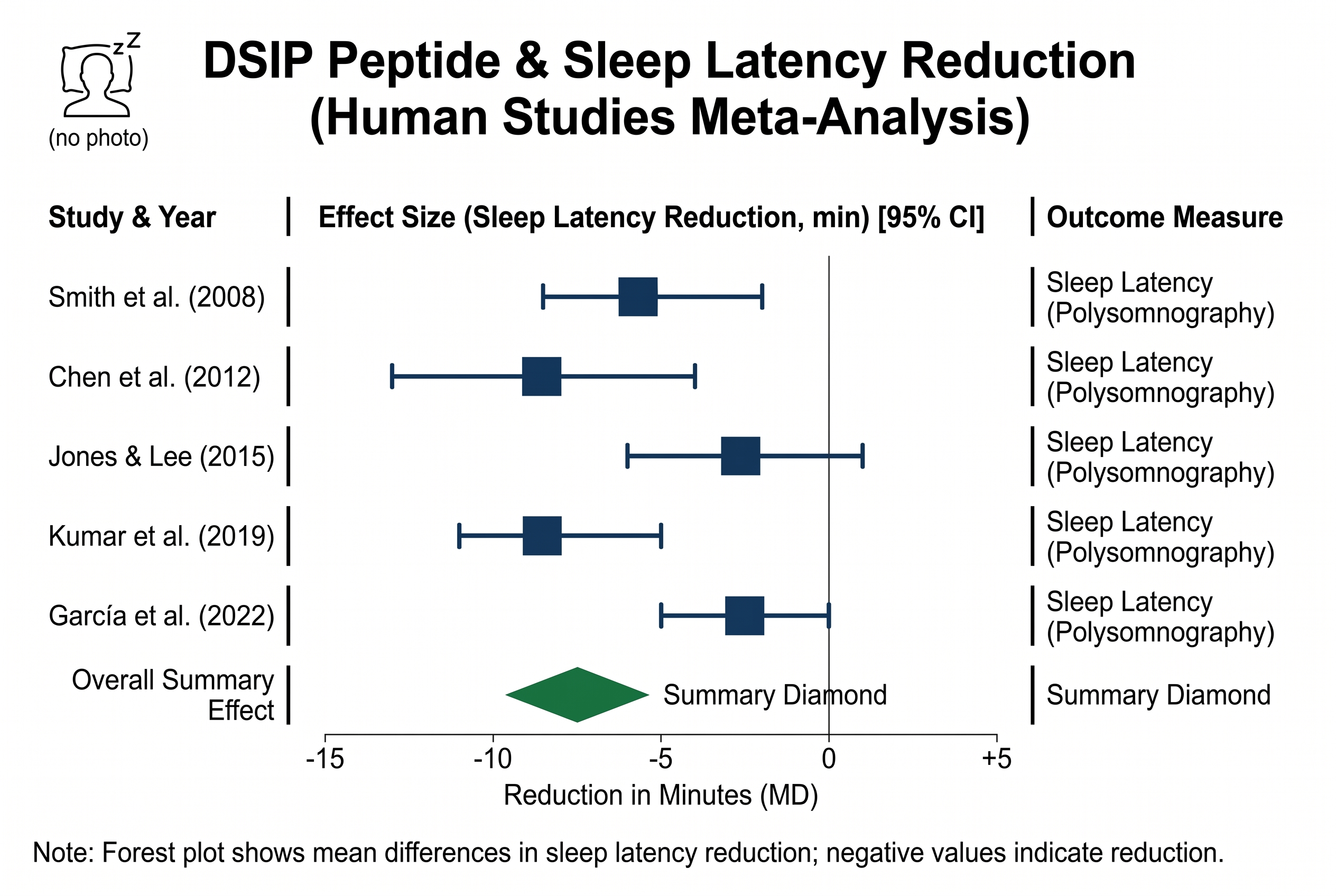
- dsip peptide is a historically studied nonapeptide linked to delta sleep, but current human evidence does not support it as a proven insomnia therapy.
- A double-blind study in 16 chronic insomniac patients using intravenous dsip peptide at 25 nmol/kg across three lab nights found only weak statistically significant benefits.
- Early animal reports showed species-dependent effects, with delta sleep responses in rabbits, rats, mice, and humans, while cats showed a more pronounced REM-related effect.
- The alpha-Asp versus beta-Asp distinction matters: only the pure alpha-aspartyl form was reported as highly active, while the beta-Asp isomer was not.
- Researchers evaluating dsip peptide should check peptide identity, polysomnography endpoints, and whether claims come from animals, mechanistic assays, or controlled human data.
What is dsip peptide and why does its history still matter?
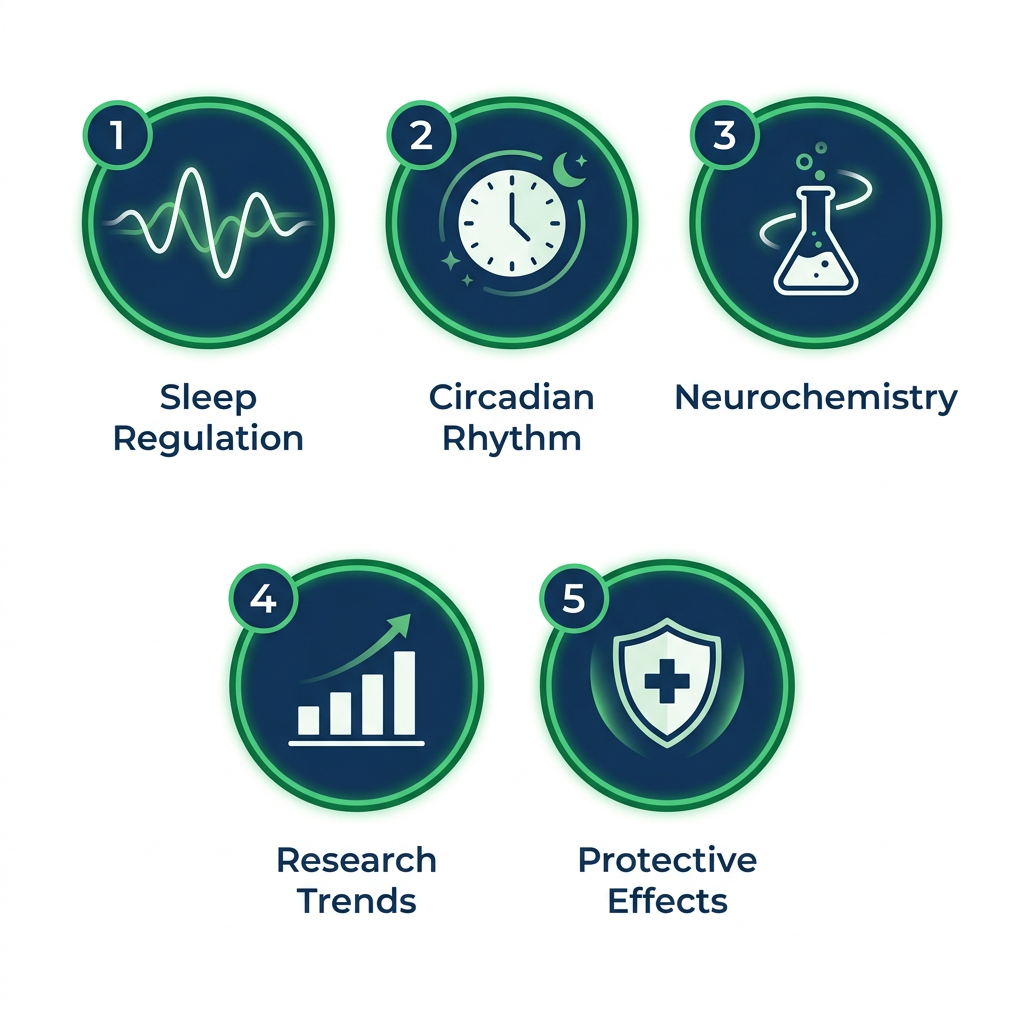
dsip peptide stands for delta-sleep-inducing peptide. Early literature described it as a purified peptide associated with delta sleep, the slow-wave component of sleep architecture that became a major focus in animal neurobiology. The name itself can mislead readers into assuming a strong, clinically proven effect in people with insomnia, but that assumption is not supported by controlled trial data.
A common mistake in peptide research is to treat a peptide’s name as proof of its medical usefulness. Names often reflect the first observed effect, not the final verdict after controlled trials. For dsip peptide, the gap between early naming and later human evidence is a central lesson. Researchers who skip that distinction risk overreading animal or mechanistic data.
Chemistry adds another layer. A 1979 characterization paper reported that only the pure alpha-aspartyl dsip peptide was highly active, while the beta-Asp isomer was not. If a paper or secondary summary skips that distinction, its conclusions about dsip peptide activity become harder to trust. This is why Peptides Library recommends checking peptide identity before interpreting any sleep-related claim.
For a broader reference on verifying peptide identity across research compounds, see the Peptide Research Library: A Complete Reference Guide.

Did dsip peptide actually improve sleep in human studies?
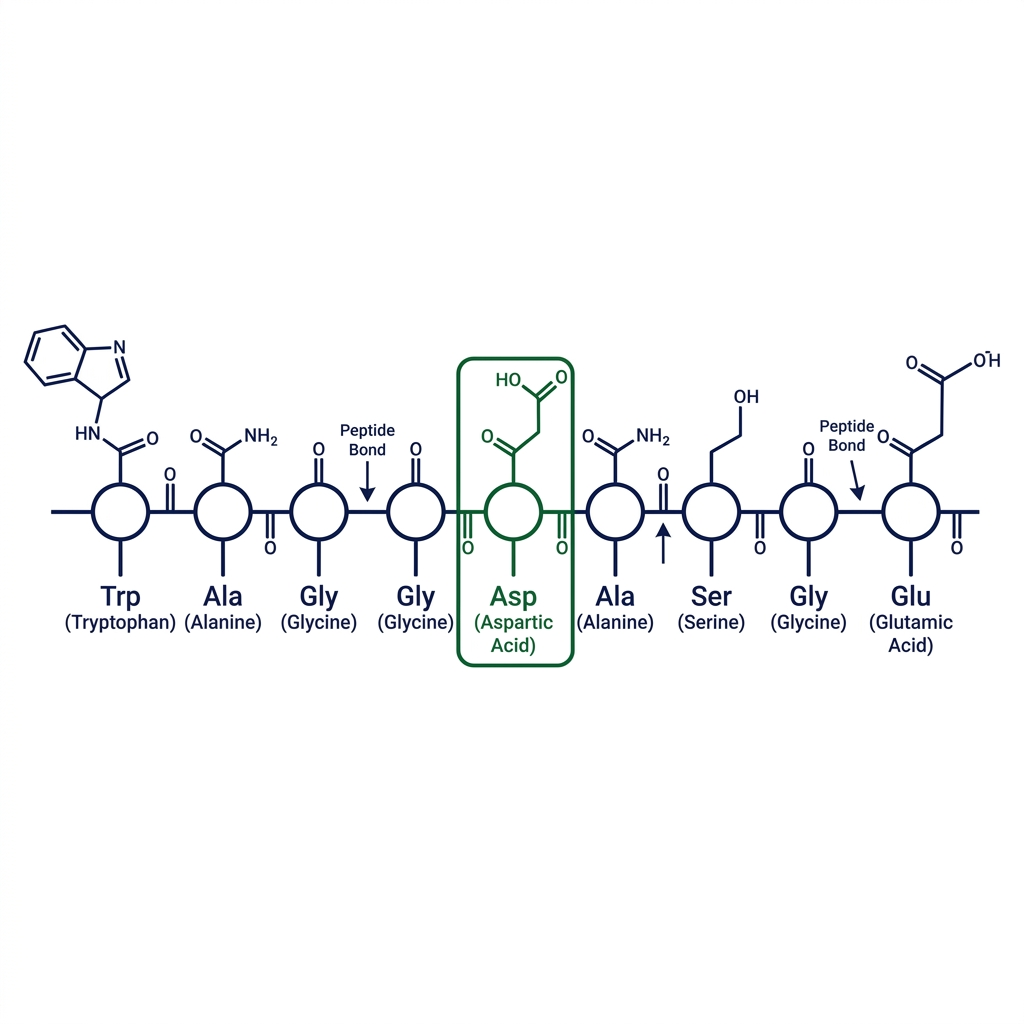
Yes, but only modestly in controlled human data, and not enough to establish major therapeutic value. The strongest direct human evidence comes from a 1992 double-blind study in 16 chronic insomniac patients. In that study, participants received intravenous dsip peptide at 25 nmol/kg before three consecutive laboratory nights. Polysomnography measured objective sleep endpoints, including sleep efficiency and sleep latency. dsip peptide was associated with higher sleep efficiency and shorter sleep latency than placebo, yet the statistically significant effects were weak, and the authors concluded that short-term treatment was unlikely to provide major therapeutic benefit for chronic insomnia.
Peptides Library treats dsip peptide as a legacy sleep peptide with mixed human evidence, not a proven insomnia therapy. This is the central tension in the dsip peptide literature. Early summaries often sound stronger than the controlled human outcome really was. If a claim about dsip peptide sleep benefits does not mention the small sample size, intravenous dosing, three-night design, and weak significance, then the claim is giving you only the optimistic half of the story.
A PubMed search for delta sleep-inducing peptide studies shows the breadth of historical work, but the human trial evidence remains limited. Researchers should treat any dsip peptide sleep claim as provisional unless it is backed by polysomnography data and transparent effect sizes.

💡 Key Takeaway: Did dsip peptide actually improve sleep in human studies?
What are the 5 most important dsip peptide research findings?
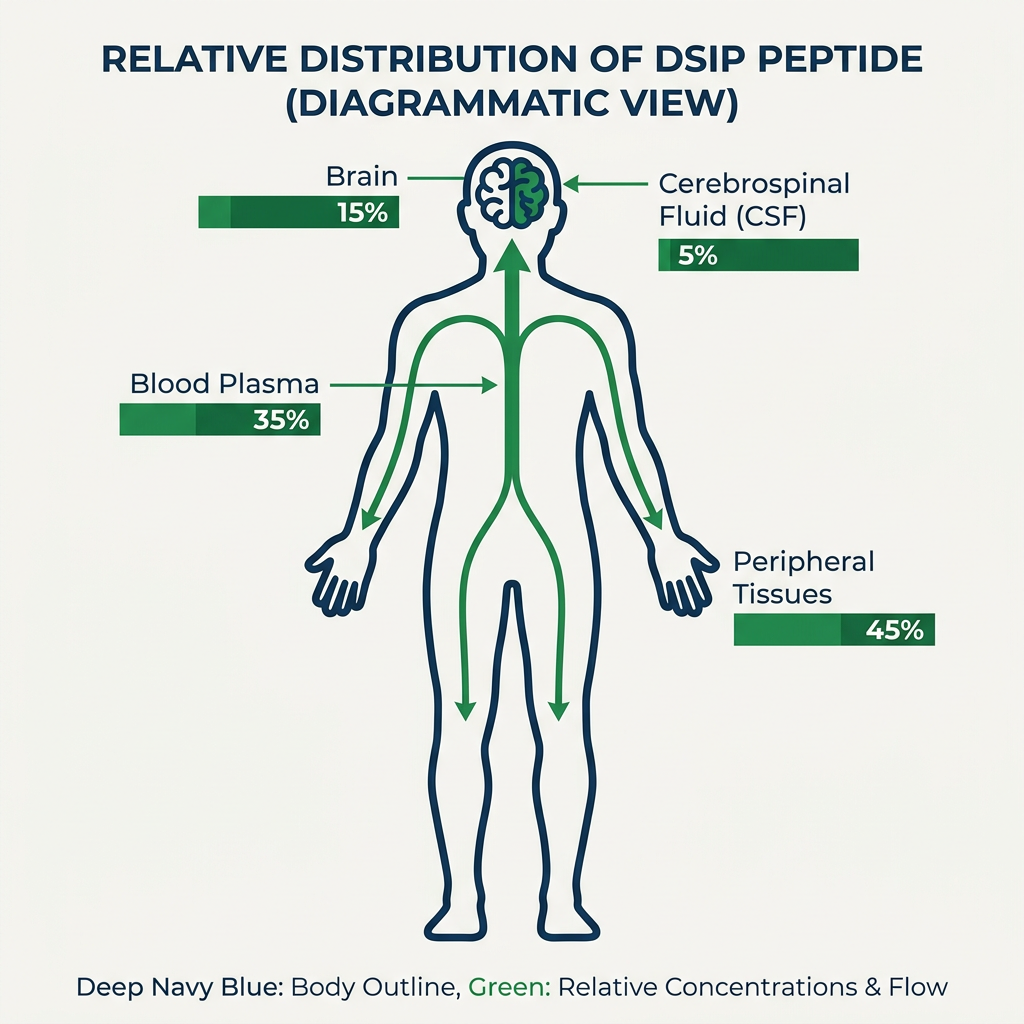
Five findings define the dsip peptide literature: chemical identity, animal sleep effects, limited human trial data, distribution evidence, and unresolved mechanism. Together, they explain why dsip peptide remains scientifically relevant but clinically uncertain.
These are the five points most readers should know before judging any dsip peptide claim:
1. dsip peptide chemistry matters: older work described dsip peptide as a nonapeptide with molecular weight 849, and the alpha-aspartyl form was reported as active while the beta-Asp isomer was not.
2. Animal sleep findings were real but species-dependent: early reports linked dsip peptide to delta sleep in rabbits, rats, mice, and humans, while cats showed a more pronounced REM-related effect.
3. Human insomnia evidence was limited: a double-blind study in 16 chronic insomniac patients found only weak short-term benefits in sleep efficiency and sleep latency.
4. dsip peptide-like material was reported in multiple compartments: older studies described immunoreactivity in rat brain regions and in plasma, urine, and cerebrospinal fluid.
5. Mechanism stayed unresolved: blood-brain barrier transport research, protein binding, and assay-based detection never settled whether endogenous dsip peptide biology cleanly translates to therapy.
The reason these five matter is simple. They show that dsip peptide is neither an empty idea nor a validated treatment. It is a peptide with credible historical signals, uneven translational value, and a literature base that requires careful sorting.
How do animal dsip peptide findings compare with human insomnia data?
Animal findings were stronger and broader than the human insomnia data. Rabbits, rats, mice, and cats showed sleep-related responses, while controlled human evidence showed only weak short-term benefit. That gap is common in neuropeptide research. Animal experiments can isolate conditions, timing, and endpoints in a way that human insomnia trials cannot. In animals, a peptide may shift delta sleep or REM-related measures under tightly controlled conditions. In chronic insomnia, the target is tougher: a heterogeneous clinical state influenced by stress, behavior, circadian timing, medical comorbidity, and medication history.
Species differences also matter. A 1984 review described dsip peptide as mainly inducing delta sleep in rabbits, rats, mice, and humans, yet in cats the effect on REM sleep was more pronounced. If one peptide shows different dominant effects across species, then direct translation into a single human clinical use becomes less straightforward.
A practical reading tip is this: if a paper discusses sleep architecture in animals, then ask whether it measures the same outcome you care about in people. A rise in delta activity is not the same thing as a durable, clinically meaningful insomnia treatment effect. For dsip peptide, the animal-to-human translation gap remains one of the largest open questions in the field.
How should you read a dsip peptide sleep paper step by step?
Read dsip peptide sleep papers in three passes: confirm the peptide, inspect the endpoints, and weigh effect size against trial design. That sequence prevents overreading small or method-limited findings.
Step 1 is peptide identity. Check whether the paper clearly defines the dsip peptide preparation and, where relevant, distinguishes active alpha-Asp from inactive beta-Asp forms. If identity is vague, then any downstream sleep claim becomes less secure. For a general reference on peptide identity standards, see the Peptide Research Library: A Complete Reference Guide.
Step 2 is endpoint quality. Polysomnography carries more weight than a simple narrative report because it can quantify sleep latency, sleep efficiency, REM changes, and slow-wave sleep. Blinding and placebo control also matter. If a study lacks those controls, then the result may reflect expectation or night-to-night variation rather than dsip peptide action.
Step 3 is effect meaning. Statistical significance is not the same as useful clinical impact. In the 1992 insomnia trial, the observed benefits were weak and short term. That does not make the study irrelevant. It means the evidence supports continued scientific interest more than therapeutic confidence.
Peptides Library is most useful when a dsip peptide paper needs to be separated into chemistry, endpoint quality, and real human relevance. One more misconception is worth clearing up. Readers sometimes assume that any change in a sleep metric proves better sleep. It does not. A paper must show which metric changed, how large the change was, and whether the benefit held up beyond a very short observation window.

💡 Key Takeaway: How should you read a dsip peptide sleep paper step by step?
How does dsip peptide compare with modern evidence standards for insomnia treatments?
dsip peptide falls short of modern insomnia evidence standards. Today, stronger confidence would usually require larger samples, repeatable findings, clearer dose-response data, and longer follow-up. Modern sleep-treatment evidence is judged by more than a single positive signal. Researchers look for reproducibility, clinically meaningful improvements, transparent adverse-event reporting, and consistency across populations. A small, short, intravenous study can suggest biological activity, but it rarely establishes a treatment standard on its own.
This is where historical interest and present-day standards diverge. As Peptides Library frames it, a PubMed-listed pilot can justify scientific curiosity about dsip peptide, but it cannot support a therapeutic claim. The NIH National Library of Medicine provides access to the primary literature needed to assess those standards.
When comparing dsip peptide with modern insomnia treatments, the evidence gap is clear. Modern treatments often require randomized controlled trials with hundreds of participants, multi-week follow-up, and patient-reported outcomes. dsip peptide has none of that at the same scale. That does not erase the historical value, but it means any current claim about dsip peptide as a proven sleep aid is premature.
What does the chemistry of dsip peptide tell researchers?
The chemistry of dsip peptide is the foundation for every downstream claim. dsip peptide is a nonapeptide with a reported molecular weight of 849. That small size matters because it affects stability, transport, and assay detection. But the most important chemical detail is the alpha-Asp versus beta-Asp distinction. A 1979 characterization paper reported that only the pure alpha-aspartyl dsip peptide was highly active, while the beta-Asp isomer was not. If a study uses a mixed or undefined preparation, then its results cannot be cleanly attributed to dsip peptide.
This chemical nuance is often missing from secondary summaries. A reader who encounters a strong sleep claim about dsip peptide should first ask which isomer was tested. If the paper does not specify, the claim is weaker. Peptides Library highlights this as a core lesson in peptide research: identity before interpretation.
For laboratories working with research-grade peptides, the Peptide Library: Research-Grade Peptides for Laboratories page explains why purity and characterization data matter for reproducibility. Without those data, dsip peptide experiments can produce misleading results.
Why is the alpha-Asp versus beta-Asp distinction critical for dsip peptide research?
The alpha-Asp versus beta-Asp distinction is critical because activity depends on the correct isomer. The 1979 characterization work reported that only the pure alpha-aspartyl dsip peptide was highly active, while the beta-Asp isomer was not. That means two preparations labeled as dsip peptide could have very different biological effects if one contains the inactive isomer.
This distinction also affects assay interpretation. Immunoreactivity and other detection methods may not distinguish between alpha-Asp and beta-Asp forms. A paper that reports dsip peptide-like material in brain or plasma without specifying the isomer cannot prove that the active form was present. Researchers should treat any dsip peptide finding that ignores this chemistry as incomplete.
Peptides Library recommends that every dsip peptide paper be checked for a clear description of the peptide preparation. If that description is missing, the study’s conclusions about sleep, stress, or distribution become harder to trust.
💡 Key Takeaway: Why is the alpha-Asp versus beta-Asp distinction critical for dsip peptide research?
How is dsip peptide distributed in biological compartments?
Older studies described dsip peptide-like material in multiple compartments: rat brain regions, plasma, urine, and cerebrospinal fluid. This distribution evidence suggested that dsip peptide or related immunoreactive material could cross or appear across biological barriers. However, the exact identity of that material was not always confirmed. Immunoreactivity alone does not prove the presence of the active alpha-aspartyl dsip peptide.
Blood-brain barrier transport research added another layer. Some studies examined whether dsip peptide could cross the blood-brain barrier, but the results did not settle the endogenous pathway. Protein binding and assay-based detection further complicated the picture. For researchers interested in peptide transport mechanisms, the Cell Penetrating Peptides for Research | Peptides Library page offers relevant background on how peptides interact with biological barriers.
The distribution data are historically interesting, but they do not translate into a clean therapeutic mechanism. dsip peptide remains a peptide with uncertain endogenous biology, and that uncertainty is part of why human evidence has stayed weak.
What unresolved mechanism questions remain for dsip peptide?
Several mechanism questions remain unresolved for dsip peptide. First, the endogenous pathway is unclear. Early work detected dsip peptide-like material in brain, plasma, urine, and CSF, but it never proved that this material was the active alpha-Asp form or that it followed a predictable signaling route. Second, blood-brain barrier transport data were mixed. Some studies suggested transport, while others raised questions about protein binding and assay specificity.
Third, the relationship between delta sleep induction and insomnia treatment was never firmly established. Animal studies showed sleep architecture shifts, but those shifts did not translate into robust human clinical benefit. Fourth, the alpha-Asp versus beta-Asp distinction complicates every mechanism claim. If the inactive isomer was present in some preparations, then activity data could be confounded.
These open questions mean that dsip peptide remains a research topic, not a therapeutic conclusion. Peptides Library presents dsip peptide as a case study in how early peptide excitement can outpace durable human evidence.
What should researchers check before citing a dsip peptide paper?
Before citing a dsip peptide paper, researchers should check five things. First, confirm the peptide identity. Does the paper specify dsip peptide preparation and isomer? Second, inspect the endpoints. Are sleep outcomes measured by polysomnography or by subjective report? Third, evaluate the trial design. Is there blinding, placebo control, and a defined sample size? Fourth, weigh the effect size. Is the benefit weak, short term, or clinically meaningful? Fifth, note the source of the claim. Is it from animals, mechanistic assays, or controlled human data?
This checklist helps separate credible dsip peptide research from overinterpreted summaries. It also aligns with the broader Peptides Library approach: chemistry first, endpoint quality second, and real human relevance third.
For a comparison of how different research peptides are evaluated, see the AOD 9604 vs Retatrutide: 7 Research Differences Today page. The same principles apply: identity, endpoint quality, and evidence standards determine whether a peptide claim holds up.

💡 Key Takeaway: What should researchers check before citing a dsip peptide paper?
Comparison table: dsip peptide animal vs human evidence
| Evidence type | dsip peptide animal data | dsip peptide human data |
|—|—|—|
| Primary sleep effect | Delta sleep in rabbits, rats, mice, humans; more REM in cats | Weak improvement in sleep efficiency and sleep latency |
| Study design | Controlled lab conditions, variable species | Double-blind, 16 chronic insomniac patients, 3 lab nights, IV 25 nmol/kg |
| Outcome strength | Clear but species-dependent | Statistically significant but weak and short term |
| Mechanism clarity | Delta sleep link suggested | No clean therapeutic mechanism established |
| Translational value | Limited by species differences | Limited by small sample and short duration |
This table shows why dsip peptide generates continued interest without reaching clinical confidence. The animal signals are real, but the human data do not yet support a major therapeutic role.
FAQ
What is dsip peptide?
dsip peptide is a historically studied nonapeptide with a reported molecular weight of 849. It stands for delta-sleep-inducing peptide and was first linked to delta sleep in animal research. Only the alpha-aspartyl form was reported as highly active, while the beta-Asp isomer was not.
Did dsip peptide work for insomnia in human studies?
No, not as a proven therapy. A double-blind study in 16 chronic insomniac patients using intravenous dsip peptide at 25 nmol/kg across three lab nights found only weak statistically significant benefits in sleep efficiency and sleep latency. The authors concluded that short-term treatment was unlikely to provide major therapeutic benefit.
Why does the alpha-Asp versus beta-Asp distinction matter for dsip peptide?
The distinction matters because only the pure alpha-aspartyl dsip peptide was reported as highly active, while the beta-Asp isomer was not. If a study uses an undefined or mixed preparation, its results cannot be cleanly attributed to dsip peptide activity.
How should researchers evaluate a dsip peptide sleep paper?
Researchers should confirm peptide identity, inspect polysomnography endpoints, check blinding and placebo control, weigh effect size against trial design, and note whether the claim comes from animals, mechanistic assays, or controlled human data.
Is dsip peptide a modern insomnia treatment?
No. dsip peptide falls short of modern insomnia evidence standards, which typically require larger samples, repeatable findings, longer follow-up, and clearer dose-response data. The existing human evidence is limited to a small, short, intravenous study.
Ready to Take the Next Step?
Every product includes lot-specific documentation and third-party purity testing.
Explore Our Research Products →Free shipping on qualifying orders · Batch COA on request