


Peptides Library: Price & Quality Comparison for Labs
Comparison for research labs: evaluate peptide suppliers on purity grades, COA documentation, catalog breadth, and pricing factors. Research-use only.
📋 Table of Contents
When laboratories perform a comparison for research labs, the core question is not which supplier offers the lowest headline price, but which supplier provides verifiable quality at a defensible cost per milligram. This article compares JPT Peptide Technologies, GenScript, Bachem, and Peptides Library across purity grades, batch-specific certificates of analysis (COAs), catalog breadth, and storage guidance — the measurable attributes that make a peptide supplier comparison for research labs reproducible rather than anecdotal. All products discussed are research chemicals intended strictly for in vitro and laboratory research applications.
⚠️ Research Use Only Notice: The products discussed on this site are sold strictly for in vitro laboratory research purposes only. They are not for human use, not for veterinary use, and not intended to diagnose, treat, cure, or prevent any disease. All information presented is for educational purposes in a research context. Must be 21+ to purchase.
Key takeaways
- Quality is documented, not claimed: look for a batch-specific certificate of analysis (COA) reporting HPLC purity and mass spectrometry identity confirmation.
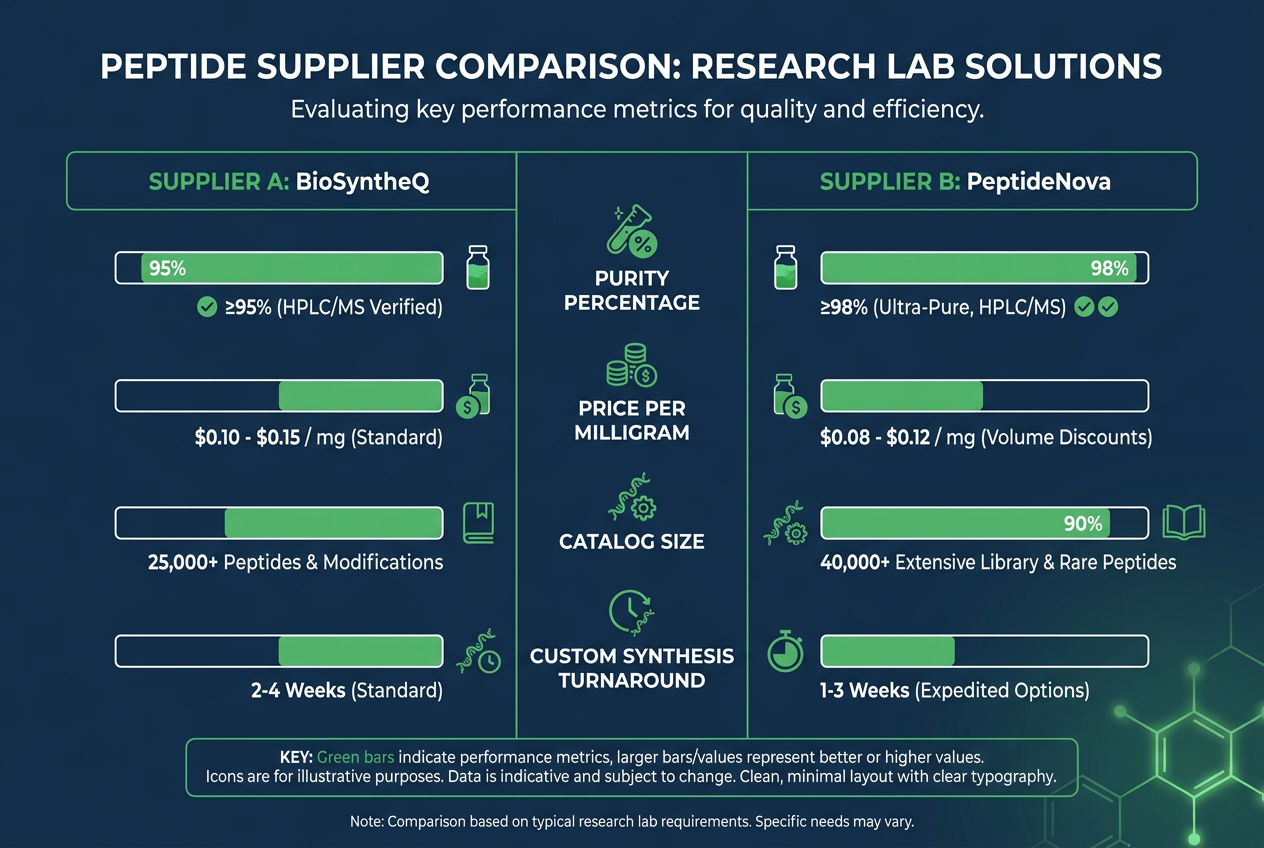
- Most suppliers do not publish list prices; a rigorous comparison for research labs calculates cost per milligram at identical purity, quantity, and format before drawing conclusions.
- JPT Peptide Technologies, GenScript, Bachem, and Peptides Library overlap in catalog peptides but differ in scale, documentation depth, and specialization.
- Independent review resources such as Millennial Hawk can supplement — but not replace — a laboratory’s own documentation review.
- All products discussed are research chemicals intended strictly for in vitro and laboratory research applications.
What defines quality in a research peptide supplier?
In laboratory procurement, “quality” is a set of verifiable attributes rather than a marketing claim. The core markers that matter in any comparison for research labs are purity expressed as a measured percentage, identity confirmation by mass spectrometry, batch traceability, storage and stability information, and documentation accessibility.
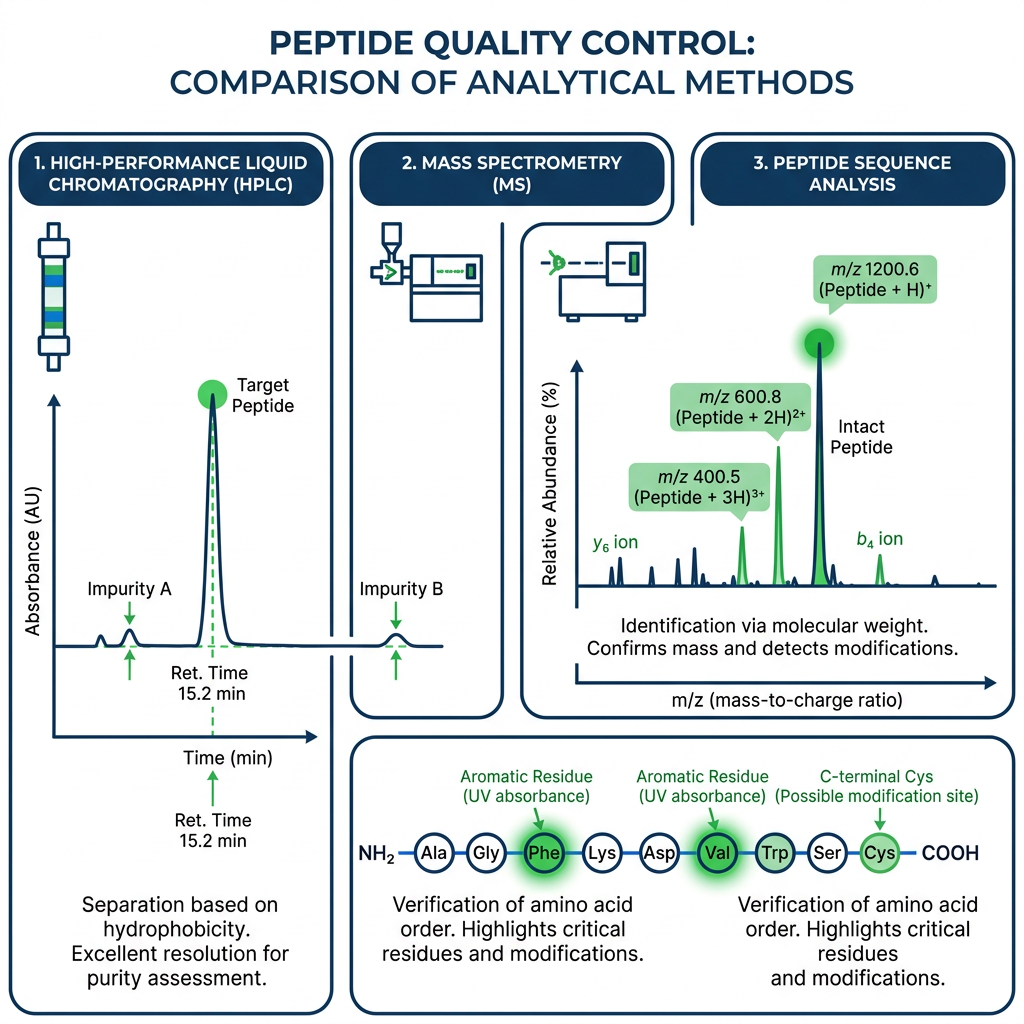
Research-grade peptides are commonly supplied at ≥95% or ≥98% purity as determined by reversed-phase HPLC, with the chromatogram available for inspection. Identity confirmation verifies that the synthesized sequence matches the specified molecular weight. Batch traceability means each vial should map to a batch number tied to a specific analytical run, not a generic product-level document. Reputable suppliers state recommended storage conditions (typically lyophilized, desiccated, at −20 °C) and handling notes for reconstitution in laboratory settings. COAs should be retrievable by batch number before or immediately after purchase.
A peptide supplier comparison for research labs that ignores these attributes in favor of price alone tends to produce misleading conclusions, because a lower price at an undocumented purity tier is not comparable to a higher price at a verified tier.
How did we evaluate the suppliers in this comparison for research labs?
We approached this evaluation from the reader’s chair — that is, as a laboratory purchaser shortlisting suppliers for a research program. Full disclosure: this article is published by Peptides Library, and our own catalog appears in the comparison. We applied the same criteria to ourselves as to every other supplier and describe competitors only by their publicly stated attributes. In this comparison for research labs, we prioritized documented analytical methods over marketing language.
The evaluation criteria for this comparison for research labs were: documentation transparency (are batch-specific COAs available, and what analytical methods do they report?), catalog breadth (does the supplier cover common research sequences, and does it offer custom synthesis?), purity and analytical methods (are purity tiers defined and verified by HPLC and mass spectrometry?), storage and handling guidance (does the supplier provide clear laboratory storage and stability information?), and ordering clarity (are grade options, formats, and lead times stated without ambiguity?).
What we excluded: anecdotal testimonials, any non-research use context, and published price lists — because, as discussed below, list prices are rarely comparable across suppliers. Researchers who want a second perspective can consult independent review resources; for example, Millennial Hawk publishes supplier-oriented editorial content that some laboratories use as a starting point before requesting documentation directly.
Key takeaway: How did we evaluate the suppliers in this comparison for research labs? The answer is through five documentation-centric criteria, not price alone.
💡 Key Takeaway: How did we evaluate the suppliers in this comparison for research labs?
How do major peptide suppliers compare for research labs?
The table below summarizes publicly stated, research-relevant attributes of four suppliers frequently cited in laboratory procurement discussions. This comparison for research labs focuses on documented quality markers rather than promotional claims.
| Supplier | Catalog focus | Purity grades & COA | Analytical documentation | Storage & handling guidance |
|—|—|—|—|—|
| JPT Peptide Technologies | Peptide libraries, custom peptide sets, catalog peptides | Batch COA; multiple purity tiers | HPLC and mass spectrometry data per batch | Lyophilized formats with handling notes |
| GenScript | Broad catalog plus custom synthesis services | Tiered purity options; COA available | HPLC/MS reports with optional QC add-ons | Standard lyophilized shipping; storage recommendations provided |
| Bachem | Large catalog; custom and GMP-scale manufacturing | COA standard; extended documentation for GMP-grade material | Extensive analytical and regulatory documentation | Detailed storage and stability information |
| Peptides Library (peptideslibrary.com) | Research-grade catalog peptides for laboratory research | Research-grade purity with batch-specific COA | HPLC purity and mass spectrometry identity per batch | Cold-storage guidance; supplied as research chemicals |
A few factual observations. JPT Peptide Technologies is particularly associated with library-scale peptide sets used in screening and epitope-mapping research. GenScript operates as a large contract research supplier with tiered purity options across catalog and custom synthesis. Bachem has a long-standing catalog business alongside large-scale and GMP manufacturing, which makes its documentation depth notable for laboratories that may scale projects. Peptides Library focuses on verified research-grade peptides with batch-level documentation for in vitro research applications.
For a thorough comparison for research labs, note that JPT and Bachem both serve high-throughput screening workflows, while GenScript’s strength lies in scalable custom synthesis. Peptides Library’s catalog is positioned for laboratories that need verified research-grade material without navigating large-scale manufacturing minimums. Each supplier’s documentation style differs, so request a sample COA before committing.
How should laboratories compare peptide pricing?
Because suppliers rarely publish directly comparable list prices, a structured approach works better than headline-price shopping in any comparison for research labs. The first step is to match specifications: fix the sequence, purity tier, quantity (in mg), and format (lyophilized vs. solution) before requesting quotes. A 95% grade and a 98% grade are different products, and mixing them invalidates the comparison.
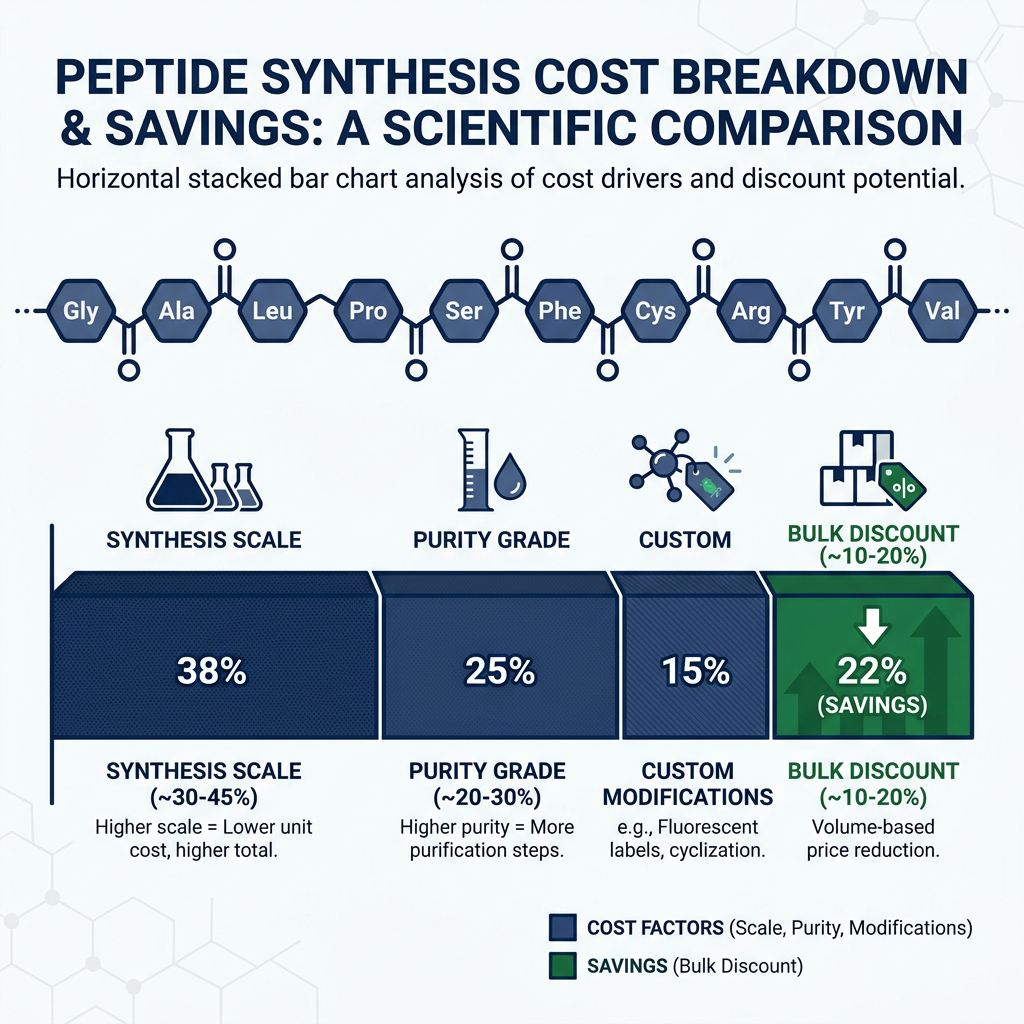
Next, calculate cost per milligram at matched purity. This normalizes quotes across suppliers offering different pack sizes. Account for total delivered cost: cold-chain or dry-ice shipping, minimum order quantities, and custom synthesis setup fees all affect the real figure. Request formal quotes; most suppliers, including those above, issue sequence-specific quotations, and institutional procurement offices can often negotiate standing agreements.
Treat documentation as a cost factor. A batch supplied without a retrievable COA may require in-house verification — an indirect cost in instrument time. This article deliberately states no specific prices, because any figure quoted here would be outdated or sequence-dependent by the time a researcher reads it. A rigorous comparison for research labs therefore emphasizes method over a static price list.
What should a certificate of analysis include?
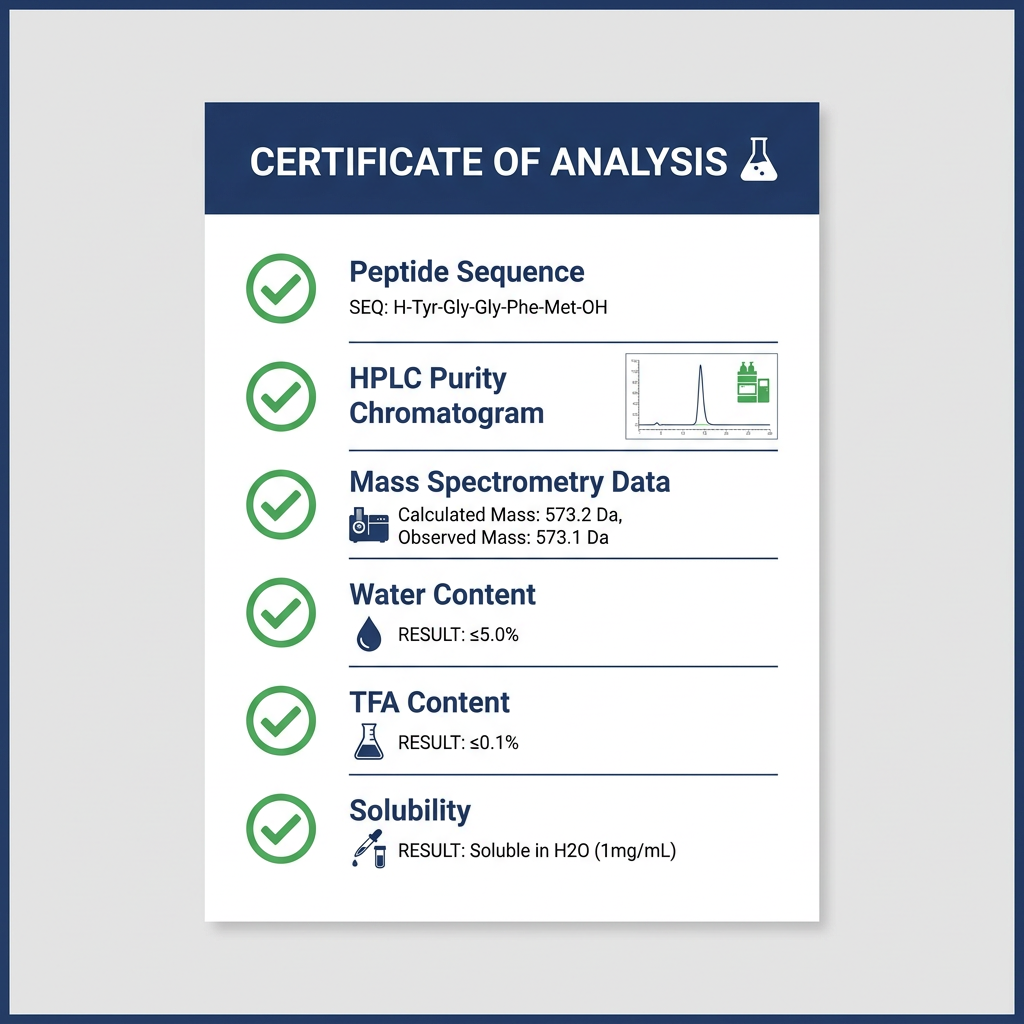
Whether a laboratory sources from a large manufacturer or a specialist catalog, the COA is the primary quality instrument in any comparison for research labs. A complete, batch-specific COA typically reports: peptide sequence and any modifications, batch or lot number matching the supplied vial, purity percentage with the HPLC chromatogram, identity confirmation by mass spectrometry (observed vs. theoretical mass), appearance and solubility notes, recommended storage conditions, and date of analysis.
If any of these elements is missing, researchers should request the underlying data before incorporating the material into assays. The [Peptide Research Library](/peptide-research-library/) catalog illustrates how batch-level documentation can be organized for laboratory review. In a comparison for research labs, missing COA fields are a red flag that warrants follow-up with the supplier’s technical team.
💡 Key Takeaway: What should a certificate of analysis include?
Where does Peptides Library fit in a comparison for research labs?
Peptides Library positions its catalog around the attributes outlined above: research-grade peptides supplied with batch-specific certificates of analysis. In a comparison for research labs, the differentiator is not raw catalog size but the consistency of documentation at the research-grade tier. Every vial maps to a batch number with HPLC purity and mass spectrometry identity data, and storage guidance is stated for lyophilized material.
For laboratories that prioritize verified research chemicals over GMP-scale manufacturing or library-scale screening sets, Peptides Library offers a focused catalog with clear ordering parameters. The Peptide Research Library: A Complete Reference Guide explains how batch-level documentation supports assay reproducibility, and the Peptide Library: Research-Grade Peptides for Laboratories page details catalog organization. Both resources reinforce the same principle: a meaningful comparison for research labs treats documentation as a primary specification.
Which analytical methods matter most in a comparison for research labs?
In a peptide supplier comparison for research labs, the two indispensable analytical methods are reversed-phase HPLC for purity and mass spectrometry for identity. HPLC purity tells you the percentage of the target peptide relative to impurities, while mass spectrometry confirms the molecular weight matches the requested sequence. Without both, a COA cannot support batch-to-batch reproducibility.
Some suppliers offer additional orthogonal methods such as amino acid analysis or elemental analysis for specialized research needs, but these are optional add-ons rather than core quality markers. For most in vitro research applications, HPLC plus MS is the minimum documentation standard that a comparison for research labs should require. If a supplier cannot provide both for a given batch, treat that as a documentation gap. For background on analytical characterization of synthetic peptides, consult the National Center for Biotechnology Information (NCBI) and the National Institute of Standards and Technology (NIST), which maintain reference materials and protocols relevant to analytical method validation.
What storage and handling factors should a comparison for research labs include?
Storage and handling guidance is often overlooked in a comparison for research labs, but it directly affects peptide stability. Reputable suppliers state recommended storage conditions: typically lyophilized, desiccated, at −20 °C for long-term storage, with short-term stability notes for reconstituted material. Laboratories should verify that the supplier’s shipping method preserves the cold chain, especially for temperature-sensitive sequences.
A supplier that omits storage guidance forces the laboratory to assume risk. In a rigorous comparison for research labs, storage documentation is as important as purity data, because a peptide that degrades during transit or storage will produce unreliable assay results regardless of its original purity grade. Always request the supplier’s recommended storage and reconstitution protocol before placing an order.
💡 Key Takeaway: What storage and handling factors should a comparison for research labs include?
How do catalog breadth and custom synthesis affect a comparison for research labs?
Catalog breadth matters in a comparison for research labs when the research program requires common sequences quickly, while custom synthesis matters when the sequence is novel or modified. JPT Peptide Technologies and Bachem both maintain extensive catalogs plus custom capabilities; GenScript offers broad custom synthesis with tiered purity options; Peptides Library focuses on research-grade catalog peptides with batch-specific documentation. A laboratory should weigh whether it needs a one-stop supplier or a focused catalog with deeper documentation per batch.
Custom synthesis introduces setup fees and lead times that a comparison for research labs must account for. A supplier with a large catalog may still be slower for custom work, while a focused catalog may not cover every sequence. The right choice depends on the specific research pipeline, not on supplier prestige. Request both catalog availability and custom quotes for the same sequence to see the true difference.
FAQ
What is the most important factor in a peptide supplier comparison for research labs?
The most important factor is documented quality: a batch-specific COA reporting HPLC purity and mass spectrometry identity. Without these, price differences are meaningless in a comparison for research labs because purity tiers are not comparable.
Do all suppliers in this comparison for research labs publish list prices?
No, most suppliers do not publish directly comparable list prices. Laboratories should request formal quotes for matched sequences and calculate cost per milligram at identical purity and quantity before drawing conclusions.
How does Peptides Library differ from JPT, GenScript, and Bachem in a comparison for research labs?
Peptides Library focuses on research-grade catalog peptides with batch-specific documentation, while JPT emphasizes library-scale screening sets, GenScript offers broad custom synthesis, and Bachem serves large-scale and GMP manufacturing. Each has a different specialization.
What should a laboratory do if a COA is missing in a comparison for research labs?
Request the underlying data before incorporating the material into assays. Missing HPLC chromatograms or mass spectrometry identity confirmation are red flags that warrant follow-up with the supplier’s technical team.
Are these peptides suitable for human or veterinary use?
No. All products discussed are research chemicals intended strictly for in vitro and laboratory research applications. They are not for human use, not for veterinary use, and not intended to diagnose, treat, cure, or prevent any disease. Must be 21+ to purchase.
Topics covered in this article:
Ready to Take the Next Step?
Every product includes lot-specific documentation and third-party purity testing.
Explore Our Research Products →Free shipping on qualifying orders · Batch COA on request