


BPC 157 vs Thymosin Beta 4: 7 Research Differences
Explore 7 research differences in the bpc 157 thymosin beta comparison, including thymosin beta-4 phase 2 ulcer data, TB-500 fragment identity, and U.S. regulatory status.
📋 Table of Contents
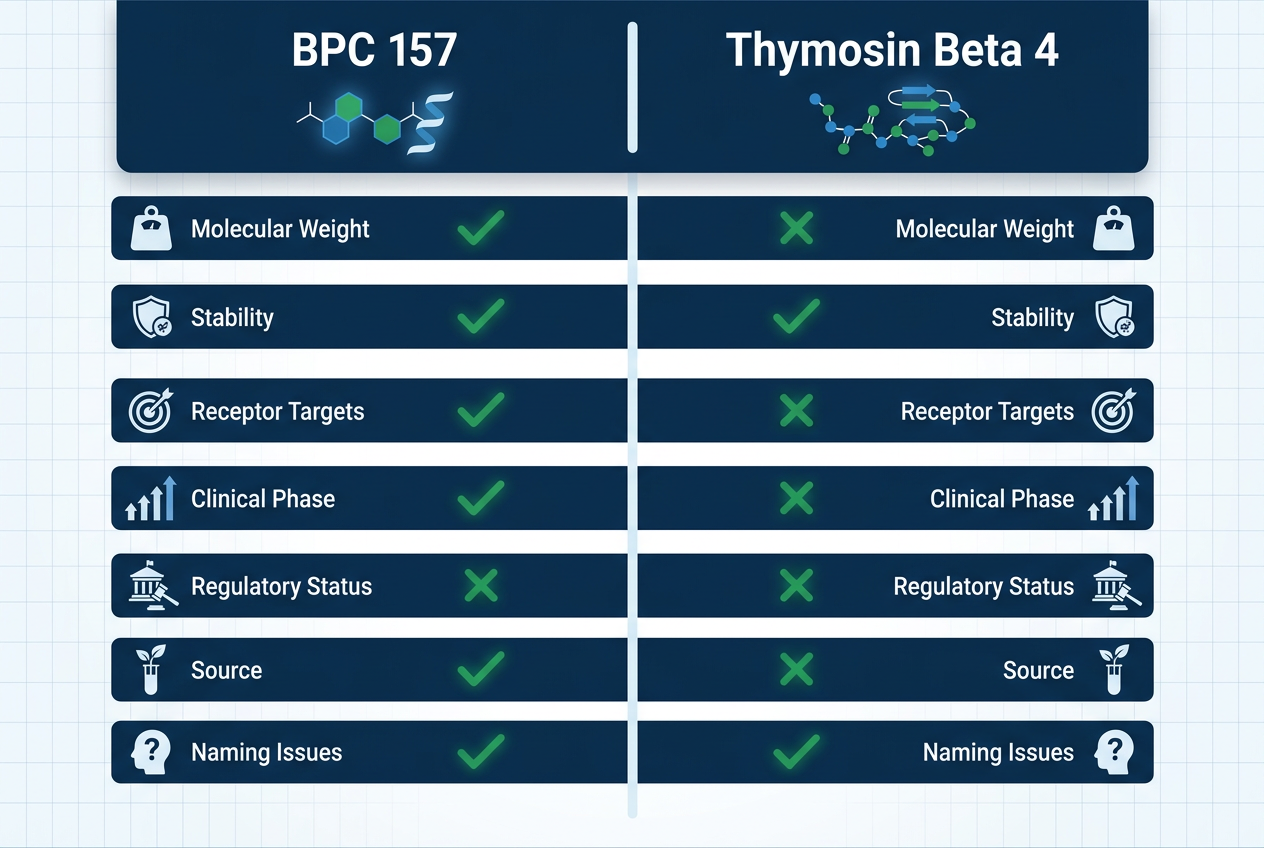
BPC 157 and thymosin beta-4 differ in seven measurable research ways: molecular identity, TB-500 fragment naming, human wound-healing evidence depth, phase 2 ulcer data, U.S. regulatory status, immunogenicity and impurity risk, and translation readiness. In the bpc 157 thymosin beta comparison, thymosin beta-4 has published phase 2 stasis and pressure ulcer data and broader dermal repair literature, while BPC-157 remains a preclinical pentadecapeptide requiring well-designed human trials; both remain investigational in the U.S., and TB-500 refers only to the LKKTETQ fragment, not full-length thymosin beta-4.
Research use only: All products and data discussed are for in vitro laboratory research. No human use, no veterinary use, and no disease treatment claims are made. Must be 21+ to purchase.
Key takeaways
- Thymosin beta-4 has stronger documented wound-healing evidence, including phase 2 stasis and pressure ulcer data, while BPC-157 remains more heavily preclinical.
- BPC-157 is a synthetic pentadecapeptide linked to gastric juice research; thymosin beta-4 is a full 43-amino-acid endogenous peptide.
- TB-500 is the LKKTETQ fragment, not full-length thymosin beta-4, which matters when reading FDA notices and comparing study results.
- For any bpc 157 thymosin beta comparison, verify whether the study uses full-length thymosin beta-4 or the TB-500 fragment before drawing conclusions.
- From a U.S. regulatory perspective, both BPC-157 and TB-500 remain investigational, with FDA highlighting limited human safety information, immunogenicity concerns, peptide-related impurities, and API characterization issues.
What are the 7 main research differences between bpc 157 thymosin beta and thymosin beta-4?
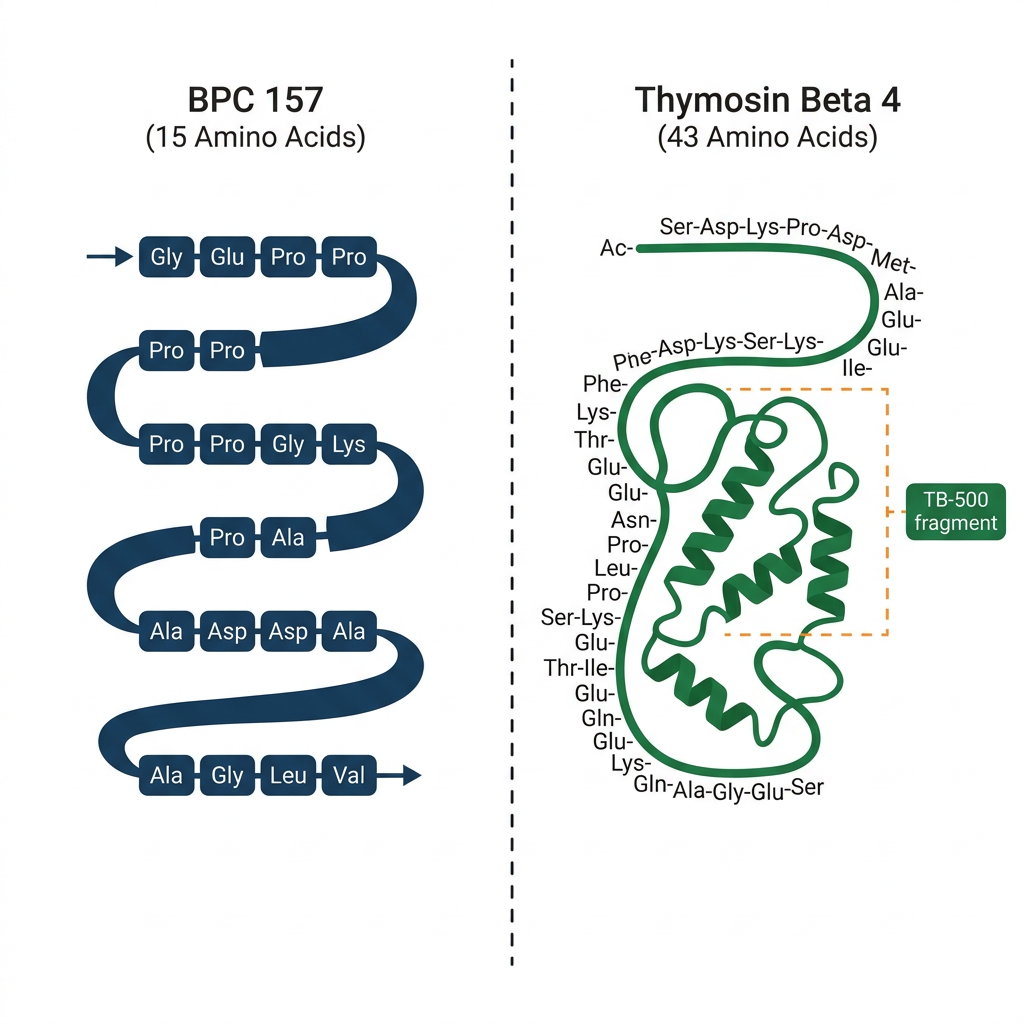
The clearest differences involve molecular identity, evidence depth, wound-healing data, regulatory framing, and nomenclature. When you isolate those domains, the bpc 157 thymosin beta comparison becomes much easier to read accurately. Here are the seven differences that matter most in current literature review:
1. Molecular identity: BPC-157 is a synthetic pentadecapeptide; thymosin beta-4 is a full-length endogenous 43-amino-acid peptide.
2. Naming clarity: TB-500 usually refers to the thymosin beta-4 fragment LKKTETQ, not to full-length thymosin beta-4.
3. Human evidence base: thymosin beta-4 has published phase 2 ulcer data; BPC-157 still lacks mature human therapeutic evidence.
4. Wound-healing literature: thymosin beta-4 has documented dermal repair activity in animal wound models, including full-thickness punch wounds.
5. Research emphasis: BPC-157 literature is often discussed in gastrointestinal, tendon, muscle, and broader regenerative contexts.
6. Regulatory position in the U.S.: both remain investigational in the compounding context, with FDA noting limited or absent human safety information and quality concerns.
7. Translation risk: BPC-157 has active preclinical interest, but thymosin beta-4 currently offers the more direct bridge from animal repair findings to human wound-healing studies.
How do the molecular identities of bpc 157 thymosin beta differ?
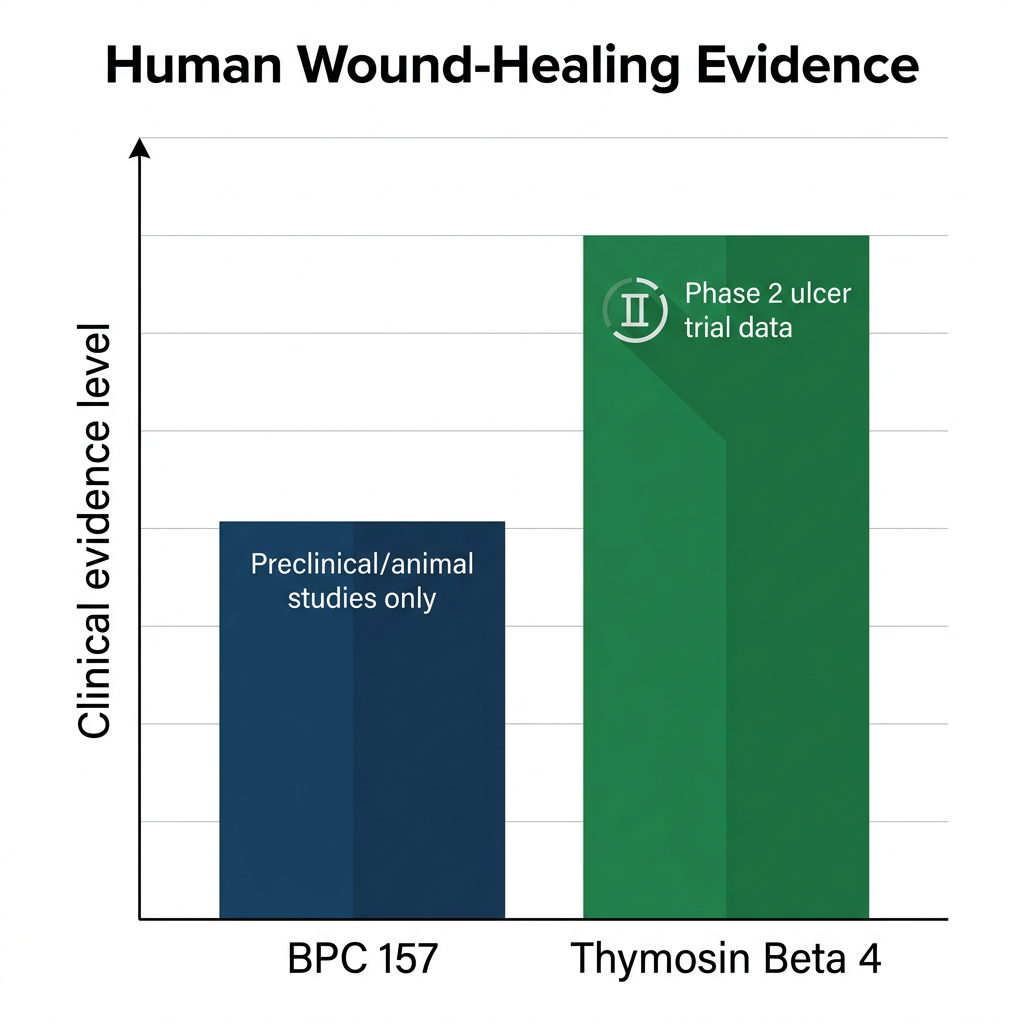
BPC-157 and thymosin beta-4 differ at the molecule level, not just the branding level. In the bpc 157 thymosin beta comparison, BPC-157 is a pentadecapeptide linked to gastric juice research, while thymosin beta-4 is a full endogenous peptide involved in repair biology. That means the literature starts from different biological frames. BPC-157 is commonly described as synthetic, even though its origin story is tied to a protein found in human gastric juice. Thymosin beta-4 is described in the wound-healing review literature as a naturally occurring repair molecule with multiple biological activities related to dermal repair.
Terminology shapes search results. If you search only TB-500 healing study, you may pull fragment references, vendor-style language, or discussions that collapse TB-500 into thymosin beta-4. If you search thymosin beta-4 phase 2 ulcer trial, you move closer to the human evidence. In peptide research, the exact sequence name often matters as much as the peptide nickname. The bpc 157 thymosin beta distinction is not cosmetic; it affects how you read safety and efficacy data.
💡 Key Takeaway: How do the molecular identities of bpc 157 thymosin beta differ?
Which peptide has stronger human wound-healing evidence in the bpc 157 thymosin beta comparison?
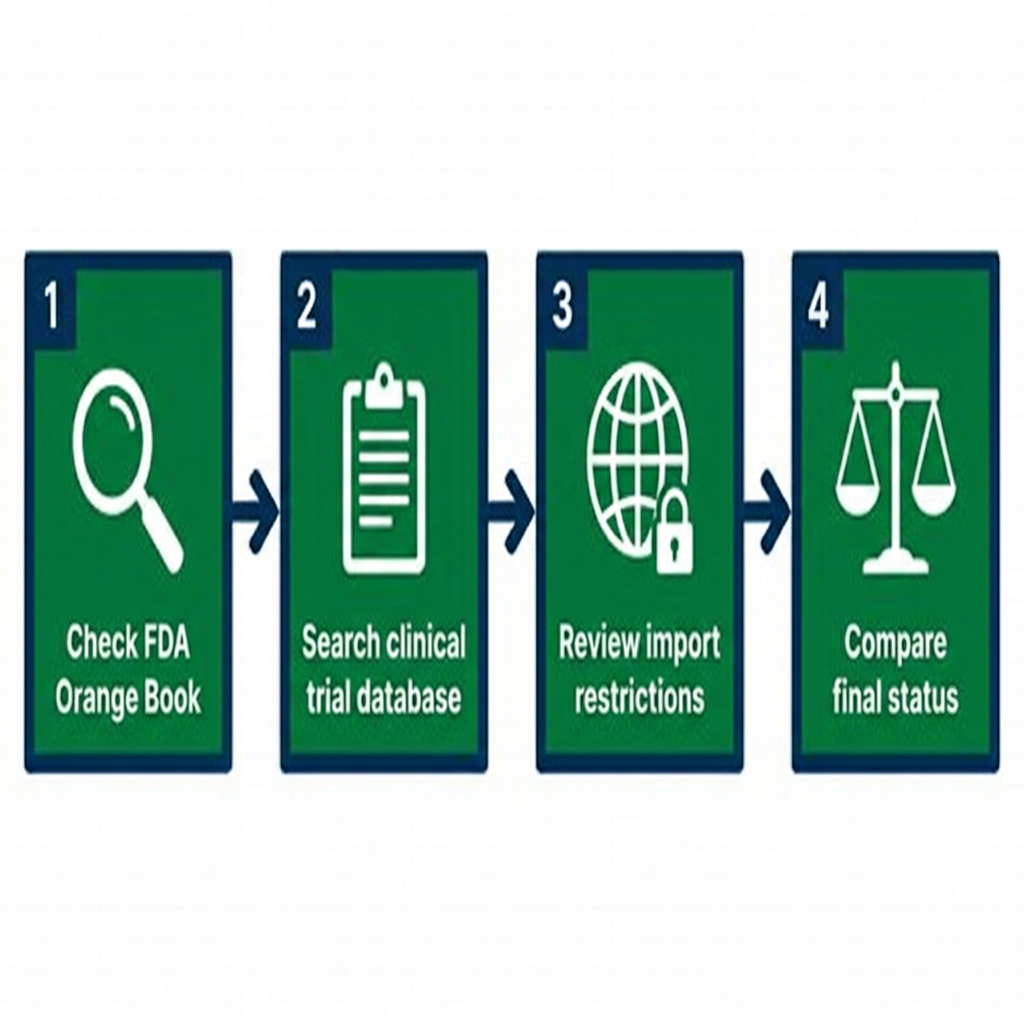
Based on the evidence hierarchy used by Peptides Library and the PubMed-indexed repair literature, thymosin beta-4 has stronger human wound-healing evidence than BPC-157. The gap is not subtle: one has phase 2 ulcer data, while the other is still waiting for better human trials. In the bpc 157 thymosin beta evidence hierarchy, phase 2 data outweigh preclinical reports. The most specific human signal in the background material comes from the published review of thymosin beta-4. It reports two phase 2 clinical trials in stasis and pressure ulcers and states that healing was accelerated by almost a month in patients who healed.
That is not proof of broad clinical adoption, but it is still a meaningful human evidence marker. The same review also reports accelerated healing in animal full-thickness punch wound models across normal, steroid-treated, diabetic, and aged mice or rats. That breadth matters because it suggests the repair signal was examined under more than one biologic condition. Peptides Library treats the strongest current split this way: thymosin beta-4 has human wound-healing study history, while BPC-157 remains a preclinical research peptide in U.S. therapeutic terms. By contrast, recent PubMed material on BPC-157 describes regenerative properties across numerous animal models and calls for well-designed human trials to assess safety, efficacy, and clinical utility.
The misconception to avoid is that strong preclinical enthusiasm is the same as clinical maturity. It is not.
How should you compare the U.S. regulatory status of bpc 157 thymosin beta step by step?
Start with FDA language, then separate compounding risk from formal approval status, then check how much human safety information actually exists. That three-step sequence prevents most reading errors in the bpc 157 thymosin beta regulatory comparison.
First, identify exactly which substance the FDA notice addresses. In the supplied background, the FDA discusses compounded drugs containing BPC-157 and compounded drugs containing thymosin beta-4 fragment LKKTETQ, also known as TB-500. That is already a clue that full-length thymosin beta-4 and TB-500 should not be treated as automatic stand-ins for each other. Next, separate investigational from approved. The background information states that BPC-157 remains unapproved by the U.S. Food and Drug Administration for any human therapeutic use. The FDA material also says it has identified no or only limited safety-related information for proposed BPC-157 routes of administration and no human exposure data for those TB-500 drug products.
Finally, note the specific risk categories. FDA highlighted limited human safety information, immunogenicity concerns, peptide-related impurities, and API characterization issues in the compounding context. For research use only, these are not approval signals; they are evidence gaps that every peptide researcher should document. The bpc 157 thymosin beta distinction remains critical when reading regulatory notices because the fragment and full-length peptide are not interchangeable in safety analysis.
What are the 7 differences in a practical bpc 157 thymosin beta research checklist?
Use this bpc 157 thymosin beta research checklist to avoid the most common comparison errors. Each item forces you to verify the exact substance, evidence level, and regulatory frame before writing any conclusion.
1. Identify the exact peptide sequence before comparing: pentadecapeptide BPC-157 versus full-length 43-amino-acid thymosin beta-4.
2. Check whether the study uses full-length thymosin beta-4 or the TB-500 fragment LKKTETQ.
3. Separate phase 2 human ulcer data from animal model data.
4. Review FDA compounding notices for limited human safety information and no human exposure data.
5. Document immunogenicity concerns, peptide-related impurities, and API characterization gaps.
6. Note that neither BPC-157 nor TB-500 has an approved therapeutic indication in the U.S.
7. Record the evidence source, publication date, and exact peptide name for audit.
Researchers can also apply this checklist to peptide library format reviews. Sequence documentation, fragment identity, and evidence level are the three most common failure points in bpc 157 thymosin beta comparisons. Keeping a dated audit log of FDA notices and PubMed searches supports reproducible research. This checklist also works when reviewing peptide library formats. For example, the Peptide Libraries: 7 Essential Research Formats for 2025 guide shows why format and sequence documentation matter in laboratory research.
💡 Key Takeaway: What are the 7 differences in a practical bpc 157 thymosin beta research checklist?
Why does the TB-500 naming issue matter in bpc 157 thymosin beta discussions?
TB-500 is the LKKTETQ fragment, not full-length thymosin beta-4. In the bpc 157 thymosin beta literature, this naming issue matters because fragment data and full-length data are not interchangeable. The FDA notice itself discusses compounded drugs containing thymosin beta-4 fragment LKKTETQ, also known as TB-500, separately from any discussion of full-length thymosin beta-4. If a researcher reads a TB-500 study and assumes it tested the full peptide, they will misattribute the safety and efficacy profile.
The fragment identity also affects search strategy. Searching TB-500 may return vendor descriptions or forum discussions rather than peer-reviewed full-length thymosin beta-4 trials. Searching thymosin beta-4 phase 2 ulcer trial returns the human wound-healing evidence. For any bpc 157 thymosin beta comparison, state whether the reference is TB-500 fragment or full-length thymosin beta-4 before drawing any conclusion.
How does Peptides Library frame the bpc 157 thymosin beta evidence split?
Peptides Library frames the bpc 157 thymosin beta evidence split as a difference between a peptide with human wound-healing study history and a peptide that remains more preclinical. Thymosin beta-4 has phase 2 stasis and pressure ulcer data plus animal full-thickness punch wound data across normal, steroid-treated, diabetic, and aged rodents. BPC-157 has active preclinical interest across gastrointestinal, tendon, muscle, and broader regenerative models, but no mature human therapeutic evidence. That split is not about which peptide is more interesting; it is about which one currently has a stronger bridge to human studies.
Peptides Library also emphasizes that the bpc 157 thymosin beta evidence split should be reviewed alongside regulatory notices, not in isolation. A phase 2 ulcer result is not the same as an approved indication, and a broad preclinical profile is not a substitute for human safety data. Researchers who keep those two statements in view avoid overstating either peptide. The same framing appears in other comparison articles on the site. For example, AOD 9604 vs Retatrutide: 7 Research Differences Today applies a similar seven-difference method to metabolic peptides. Researchers can use that structure to keep evidence levels clear.
What measurable attributes separate bpc 157 thymosin beta in the research literature?
Measurable attributes include peptide length, origin, phase 2 data, animal model breadth, TB-500 fragment identity, and regulatory risk categories. The table below summarizes the key attributes for the bpc 157 thymosin beta comparison.
| Attribute | BPC-157 | Thymosin beta-4 |
|—|—|—|
| Peptide length | Synthetic pentadecapeptide | Full 43-amino-acid endogenous peptide |
| Origin link | Gastric juice research | Endogenous repair molecule |
| Human phase 2 ulcer data | None mature | Two trials in stasis and pressure ulcers; healing accelerated by almost a month in patients who healed |
| Animal wound model breadth | Broad regenerative models including gastrointestinal, tendon, muscle | Full-thickness punch wounds in normal, steroid-treated, diabetic, and aged mice or rats |
| TB-500 identity | Not applicable | TB-500 is the LKKTETQ fragment, not full-length |
| U.S. regulatory status | Unapproved for any human therapeutic use; no or limited safety info | TB-500 no human exposure data; full-length thymosin beta-4 not approved for therapeutic use |
| Key FDA risk categories | Limited human safety information, immunogenicity, peptide-related impurities, API characterization | Same risk categories for TB-500 drug products in compounding context |
These attributes are the most useful for a bpc 157 thymosin beta literature review because they rely on published data or FDA statements rather than vendor claims.
💡 Key Takeaway: What measurable attributes separate bpc 157 thymosin beta in the research literature?
How do regulatory and safety concerns shape the bpc 157 thymosin beta comparison?
Regulatory and safety concerns shape the bpc 157 thymosin beta comparison by introducing evidence gaps that no amount of preclinical enthusiasm can close. FDA highlighted limited human safety information, immunogenicity concerns, peptide-related impurities, and API characterization issues for compounded drugs containing BPC-157 and thymosin beta-4 fragment LKKTETQ, also known as TB-500. The FDA also stated it has identified no or only limited safety-related information for proposed BPC-157 routes of administration and no human exposure data for those TB-500 drug products.
Safety documentation also includes batch-level characterization. Peptide-related impurities and API characterization issues mean that the exact sequence and purity of the tested material may not match the label claim in every study. Researchers should request certificates of analysis where available and record the storage conditions stated in the methods. Those details affect reproducibility and safety interpretation. For researchers, these are not approval signals; they are documentation requirements. A thorough bpc 157 thymosin beta regulatory review should record whether the study addresses immunogenicity, whether the peptide was characterized as an active pharmaceutical ingredient, and whether any human exposure data exist. Those checks prevent treating an investigational peptide as if it were an approved therapeutic.
What are common misconceptions about bpc 157 thymosin beta research?
Several misconceptions recur in bpc 157 thymosin beta discussions. The first is that TB-500 is the same as thymosin beta-4. It is not: TB-500 is the LKKTETQ fragment. The second is that BPC-157 is approved for human use. It is not approved by the FDA for any human therapeutic use. The third is that strong animal model results equal clinical readiness. They do not; BPC-157 still lacks mature human trials. The fourth is that the fragment and full peptide are interchangeable in safety analysis. They are not, because FDA risk categories apply differently to TB-500 drug products.
Another misconception is that the bpc 157 thymosin beta comparison is only about efficacy. It is equally about evidence maturity, regulatory status, and safety documentation. Researchers who ignore those factors will misread the literature.
How can researchers track bpc 157 thymosin beta evidence across PubMed and FDA sources?
Start with PubMed search strings that use exact peptide names. Use PubMed search for thymosin beta 4 ulcer to find the phase 2 stasis and pressure ulcer data. Use PubMed search for BPC 157 to review preclinical regenerative reports. Then cross-check FDA compounding notices for safety gaps. The NCBI database can help you verify peptide sequences and related literature.
For FDA sources, search the compounding notices by exact peptide name, not by brand nicknames. Note the date of the notice, the specific risk categories, and whether the notice addresses the full peptide or a fragment. Cross-reference that with the PubMed record to see whether any human exposure data exist. This two-source method prevents most comparison errors. For internal reference, the Peptide Research Library: A Complete Reference Guide explains how to organize peptide research by sequence, format, and evidence level. That guide is useful when you need to maintain an audit trail for a bpc 157 thymosin beta comparison.
💡 Key Takeaway: How can researchers track bpc 157 thymosin beta evidence across PubMed and FDA sources?
What internal and external resources help clarify bpc 157 thymosin beta research?
Internal resources on Peptides Library include the Peptide Library: Research-Grade Peptides for Laboratories page, which outlines research-grade peptide standards. The Peptide Research Library: A Complete Reference Guide helps with sequence and format documentation. External resources include PubMed and NCBI searches for primary literature.
Use these resources to verify peptide identity before citing any study. That step is essential for accurate bpc 157 thymosin beta research documentation.
FAQ
What is the main difference between bpc 157 thymosin beta and thymosin beta-4?
The main difference is evidence depth and molecular identity. Thymosin beta-4 has published phase 2 human ulcer data and broader dermal repair literature, while BPC-157 is a preclinical pentadecapeptide needing well-designed human trials. TB-500 refers only to the LKKTETQ fragment, not full-length thymosin beta-4.
Does BPC-157 have human clinical trial data?
No mature human therapeutic evidence exists for BPC-157. Recent PubMed material describes regenerative properties across animal models and calls for well-designed human trials to assess safety, efficacy, and clinical utility.
Is TB-500 the same as thymosin beta-4?
No. TB-500 is the thymosin beta-4 fragment LKKTETQ. It is not full-length thymosin beta-4. The FDA notice discusses TB-500 as a fragment, so fragment and full peptide are not interchangeable in safety analysis.
What phase 2 data does thymosin beta-4 have?
The published review reports two phase 2 clinical trials in stasis and pressure ulcers. Healing was accelerated by almost a month in patients who healed. Animal full-thickness punch wound models also showed accelerated healing across normal, steroid-treated, diabetic, and aged mice or rats.
Are BPC-157 and TB-500 approved by the FDA?
No. Both remain investigational in the U.S. The FDA highlighted limited human safety information, immunogenicity concerns, peptide-related impurities, and API characterization issues in the compounding context. BPC-157 is unapproved for any human therapeutic use, and TB-500 has no human exposure data for those drug products.
Ready to Take the Next Step?
Every product includes lot-specific documentation and third-party purity testing.
Explore Our Research Products →Free shipping on qualifying orders · Batch COA on request