

Quick Answer: Peptides for bodybuilding are short chains of amino acids that may support muscle growth, fat loss, and recovery by stimulating natural hormone release. Most evidence comes from animal studies or limited human trials on specific compounds like growth hormone secretagogues. Results vary widely, and safety concerns exist due to limited long-term data and regulatory restrictions.
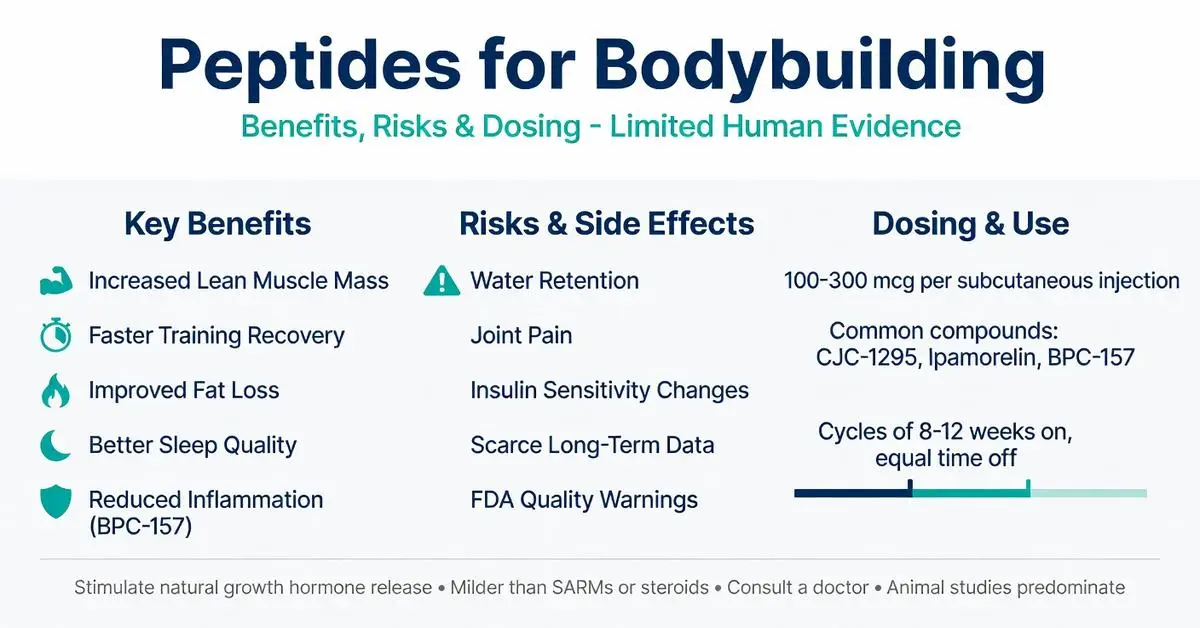
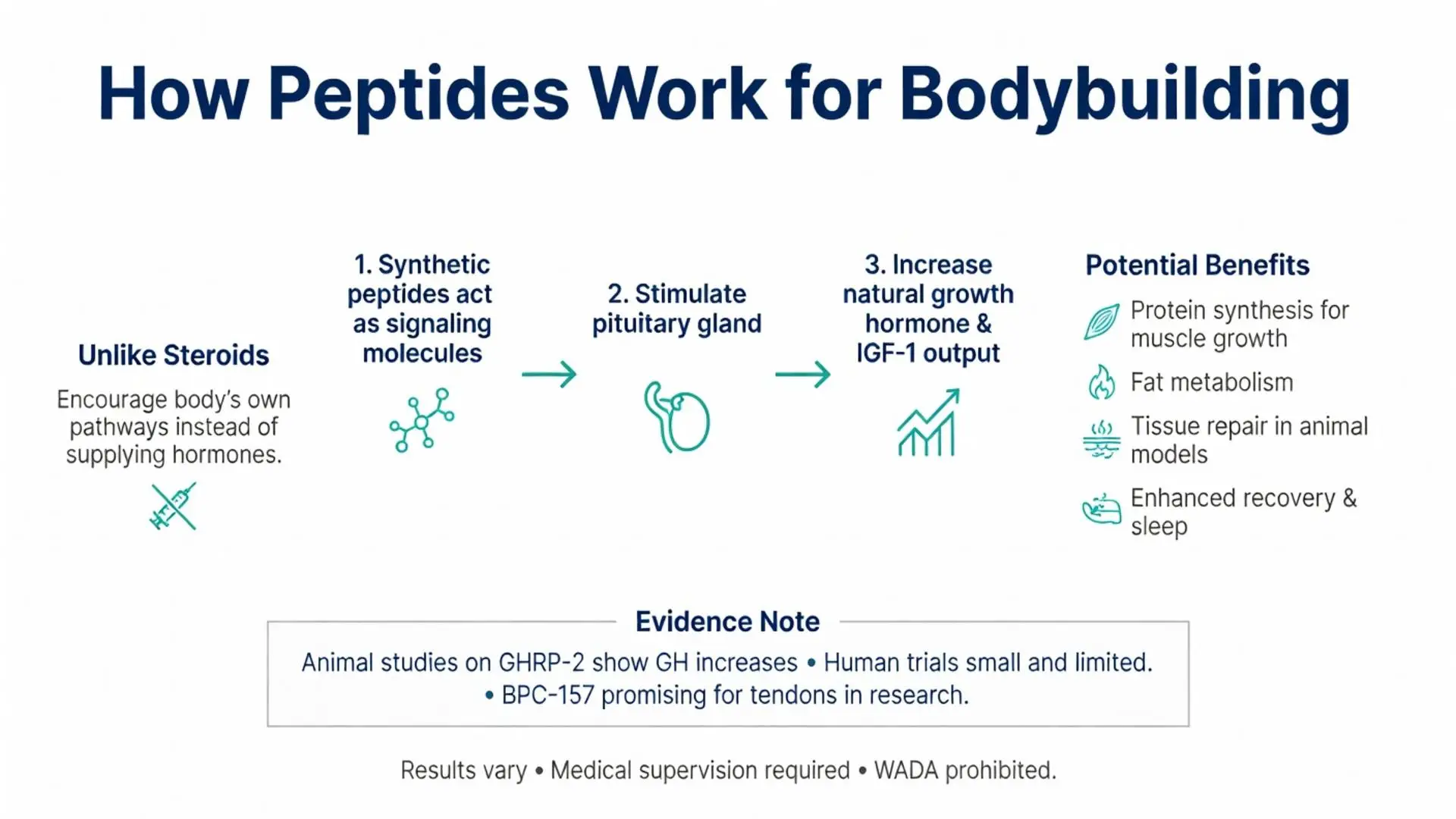
Most peptides used in bodybuilding stimulate the pituitary gland to increase growth hormone output. This rise in growth hormone can promote protein synthesis, fat metabolism, and tissue repair.
Some peptides also target localized healing. BPC-157, for instance, shows promise in animal models for tendon and gut recovery, which bodybuilders sometimes apply to training-related injuries.
Effects depend on the specific peptide, dosage, and individual factors such as age and training status. Human data confirming consistent bodybuilding outcomes is still developing.

Most peptides used in bodybuilding stimulate the pituitary gland to increase growth hormone output. This rise in growth hormone can promote protein synthesis, fat metabolism, and tissue repair.
Some peptides also target localized healing. BPC-157, for instance, shows promise in animal models for tendon and gut recovery, which bodybuilders sometimes apply to training-related injuries.
Effects depend on the specific peptide, dosage, and individual factors such as age and training status. Human data confirming consistent bodybuilding outcomes is still developing.
Research and anecdotal reports suggest several potential advantages.
These benefits are primarily observed in studies on growth hormone-releasing peptides rather than broad claims across all compounds.
Animal research on compounds like GHRP-2 demonstrates measurable increases in growth hormone and IGF-1. Human trials remain smaller and often focus on clinical populations rather than healthy athletes.
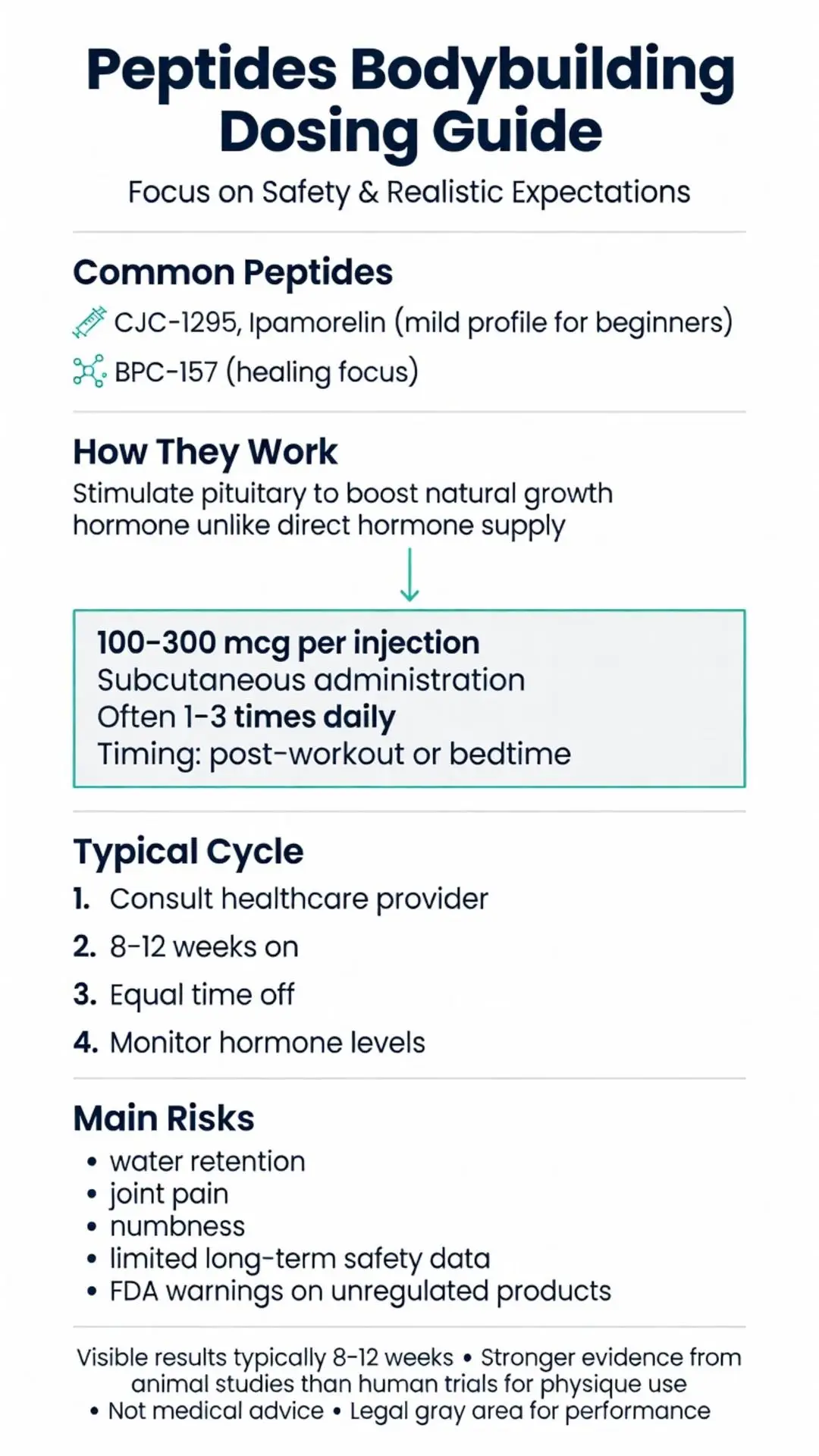
Side effects can include water retention, joint pain, and insulin sensitivity changes. Some users report numbness or tingling from certain growth hormone secretagogues.
Long-term safety data in healthy bodybuilders is scarce. The FDA has issued warnings about unregulated peptide products due to quality control issues and potential contamination.
Healthy adults over 25 with established training experience may explore certain peptides under medical supervision. Individuals with hormone-related conditions or those under 21 should avoid them.
Athletes subject to drug testing should note that many peptides appear on prohibited lists from WADA and similar organizations.
Common administration involves subcutaneous injections, though some oral forms exist. Dosing protocols typically range from 100–300 mcg per injection, often split into multiple daily doses.
Cycles usually last 8–12 weeks followed by equal time off. Timing around workouts or bedtime is frequent to align with natural hormone rhythms.
This information is not medical advice. Consult a qualified healthcare provider before using any peptide.
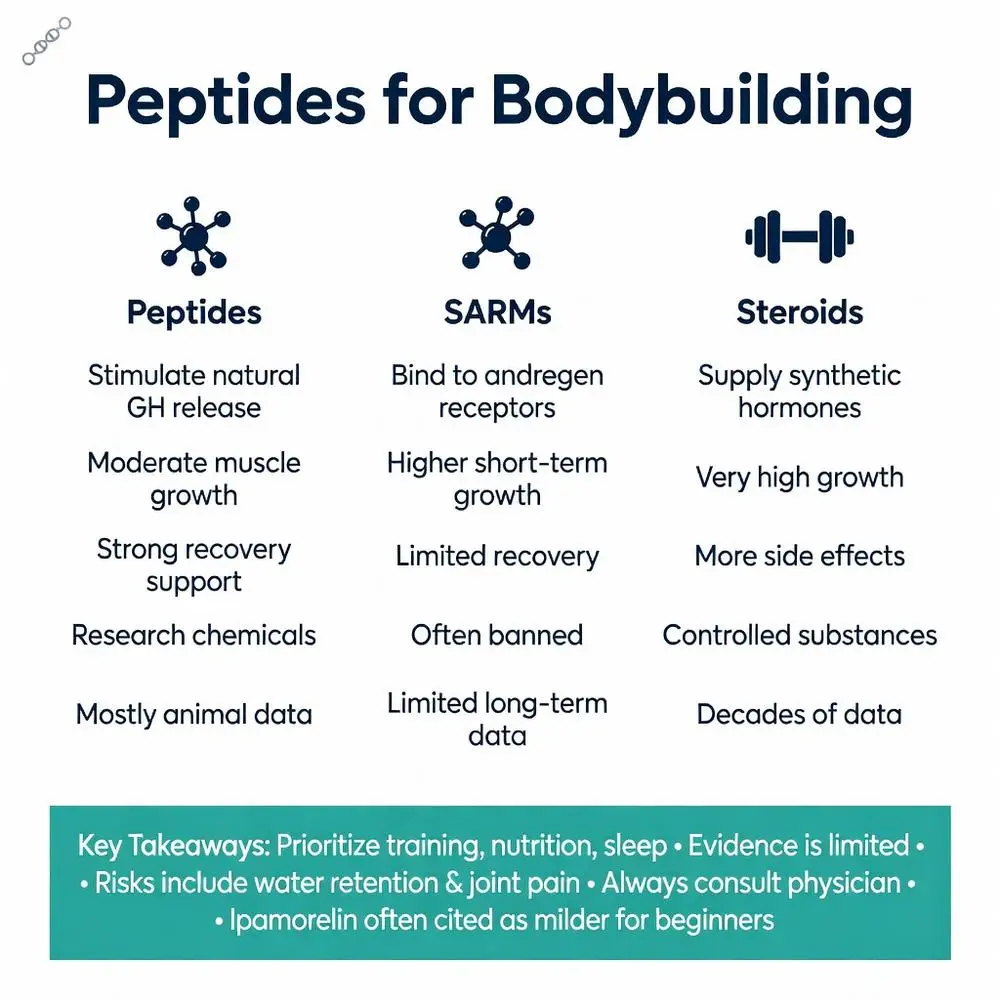
| Feature | Peptides | SARMs | Traditional Steroids |
|---|---|---|---|
| Primary mechanism | Stimulate natural hormone release | Bind directly to androgen receptors | Supply synthetic hormones |
| Muscle growth potential | Moderate, growth-hormone dependent | High in short cycles | Very high |
| Recovery support | Often strong for specific tissues | Limited | Strong but with more side effects |
| Legal status (US) | Research chemicals, not approved for bodybuilding | Varies by compound, often banned in supplements | Controlled substances |
| Research stage | Mostly animal or small human trials | Limited long-term human data | Decades of clinical use |
Most peptides exist as research chemicals in the United States and are not FDA-approved for bodybuilding or athletic performance. Purchasing them for personal use falls into a legal gray area depending on local regulations.
Some peptides can support muscle growth indirectly by raising growth hormone and improving recovery, but results are generally milder than those seen with anabolic steroids. Individual response varies significantly.
Users often report noticeable recovery improvements within 2–4 weeks. Visible changes in muscle or body composition typically require 8–12 weeks of consistent use alongside proper training and nutrition.
Ipamorelin is frequently mentioned for first-time users because of its relatively mild side-effect profile. It still requires medical guidance and sourcing from reputable channels.
Some peptides like BPC-157 show oral activity in research, but many others lose effectiveness when swallowed and must be injected. Form and stability depend on the specific compound.
Unlike steroids, most peptides do not fully suppress natural hormone production, so formal PCT is often unnecessary. However, monitoring hormone levels with a doctor remains advisable after extended use.
Adequate sleep, resistance training, and a protein-rich diet naturally support growth hormone release. Certain amino acids like arginine and glutamine may offer milder effects without synthetic peptides.
Note: Robust human clinical trial data specifically for bodybuilding applications remains limited. The references above represent the best available peer-reviewed evidence on these compounds.
Note: Robust human clinical trial data specifically for bodybuilding applications remains limited. The references above represent the best available peer-reviewed evidence on these compounds.