
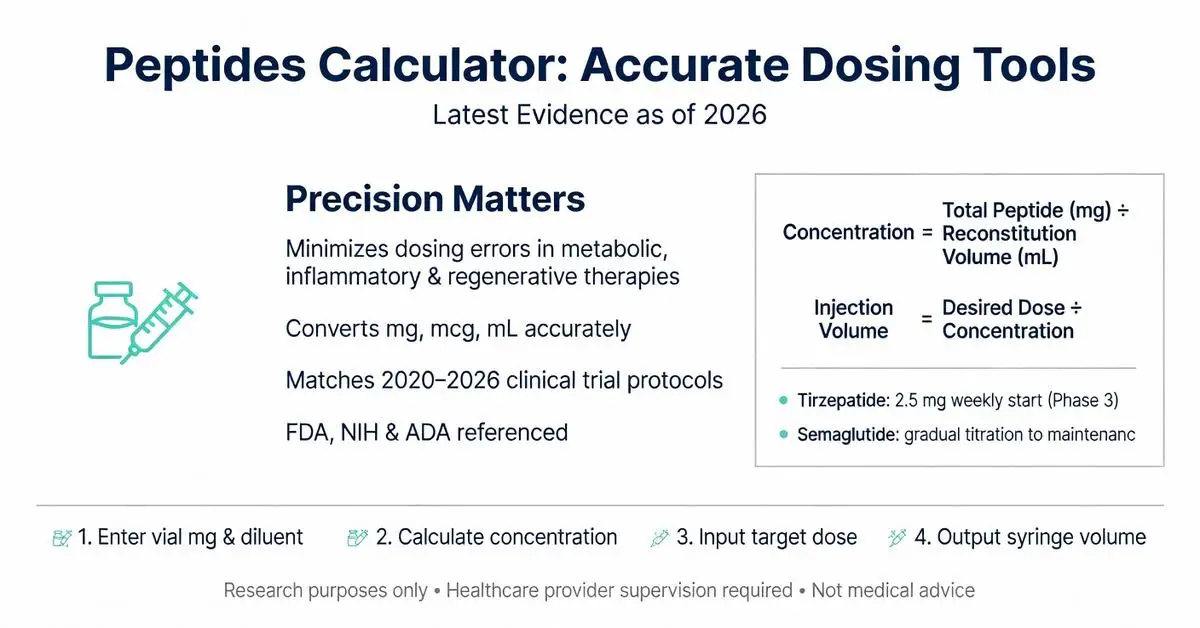
Peptide therapies have gained attention in clinical and research settings for their targeted effects on metabolic, inflammatory, and regenerative pathways. A peptides calculator serves as a practical tool to determine precise reconstitution volumes, injection amounts, and dosing schedules based on vial concentrations and patient-specific factors. Accurate calculations help minimize dosing errors that could affect safety or efficacy. Due to limited recent peer-reviewed publications focused specifically on peptides calculators, this article relies primarily on the latest available high-quality trials (2020–current) supplemented by authoritative sources including FDA, NIH, and major medical societies. All information is intended for research purposes only and does not constitute medical advice; peptide use requires direct supervision by a qualified healthcare provider.
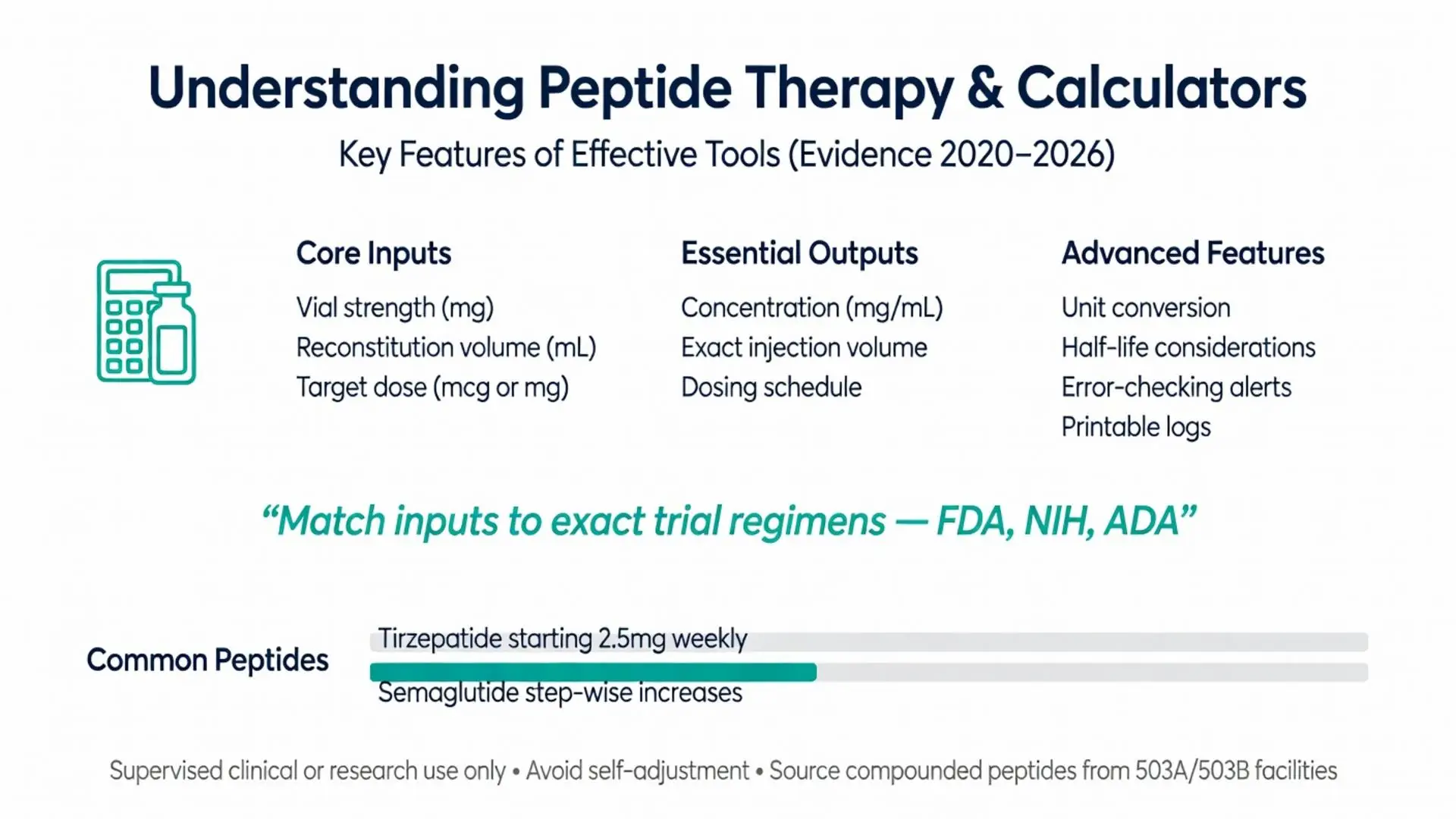
Reliable peptides calculators incorporate inputs for vial strength, reconstitution volume, target dose, and injection frequency. Advanced versions account for peptide-specific properties such as half-life and stability after mixing. Essential functions include automatic unit conversion, error-checking alerts for implausible volumes, and printable dosing logs. Users should verify that any calculator aligns with current prescribing information or published protocols rather than relying solely on third-party software.

Reliable peptides calculators incorporate inputs for vial strength, reconstitution volume, target dose, and injection frequency. Advanced versions account for peptide-specific properties such as half-life and stability after mixing. Essential functions include automatic unit conversion, error-checking alerts for implausible volumes, and printable dosing logs. Users should verify that any calculator aligns with current prescribing information or published protocols rather than relying solely on third-party software.
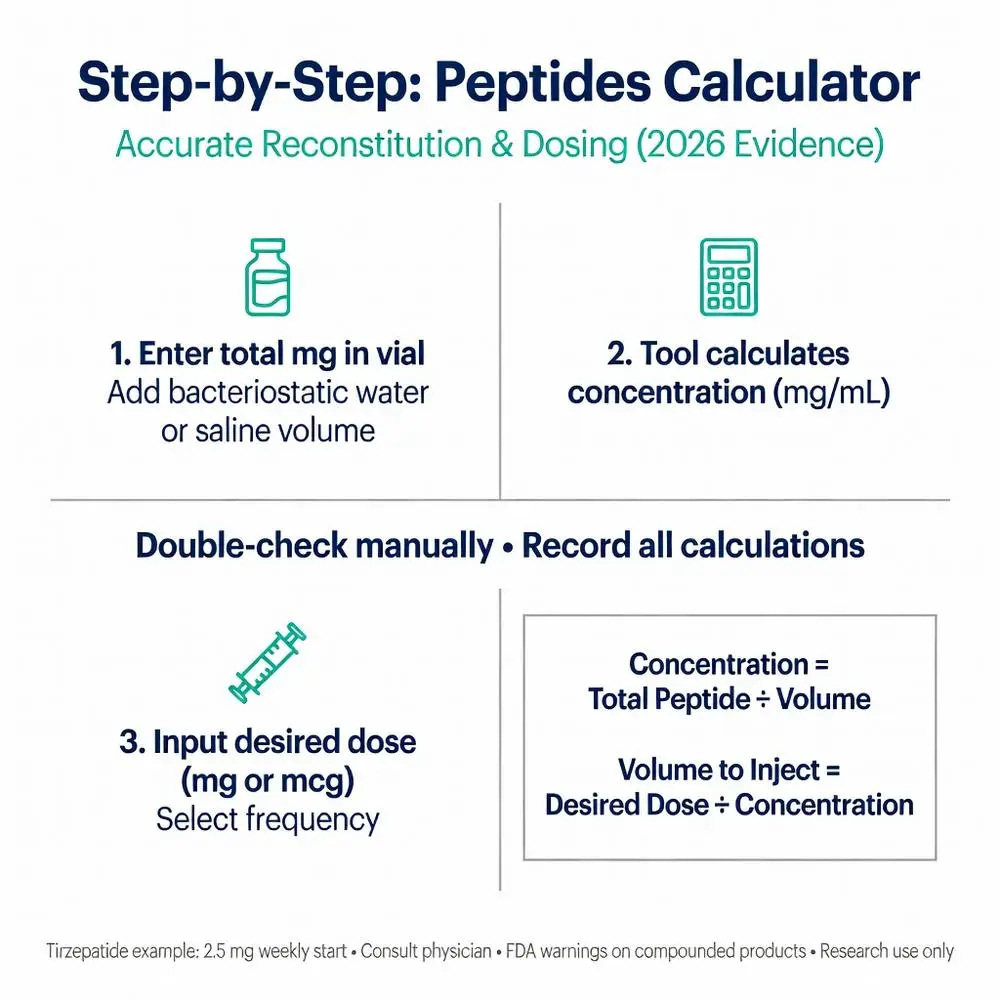
Begin by entering the total milligrams of peptide in the vial and the volume of diluent added. The tool then calculates the concentration in milligrams per milliliter. Next, input the prescribed dose in micrograms or milligrams and select the desired injection volume. The calculator outputs the exact volume to draw into the syringe. Always double-check results manually using the formula: concentration = total peptide ÷ reconstitution volume, followed by volume to inject = desired dose ÷ concentration. Record each calculation and consult a pharmacist or physician before first use.
Clinical studies from 2020 onward have examined dosing ranges for several peptides under controlled conditions. For example, tirzepatide protocols in phase 3 trials used gradual titration starting at 2.5 mg weekly, while semaglutide studies employed similar step-wise increases to reach maintenance levels. When applying a peptides calculator, match inputs to the exact regimen described in trial publications. Off-label or investigational uses require additional caution and institutional review board oversight.
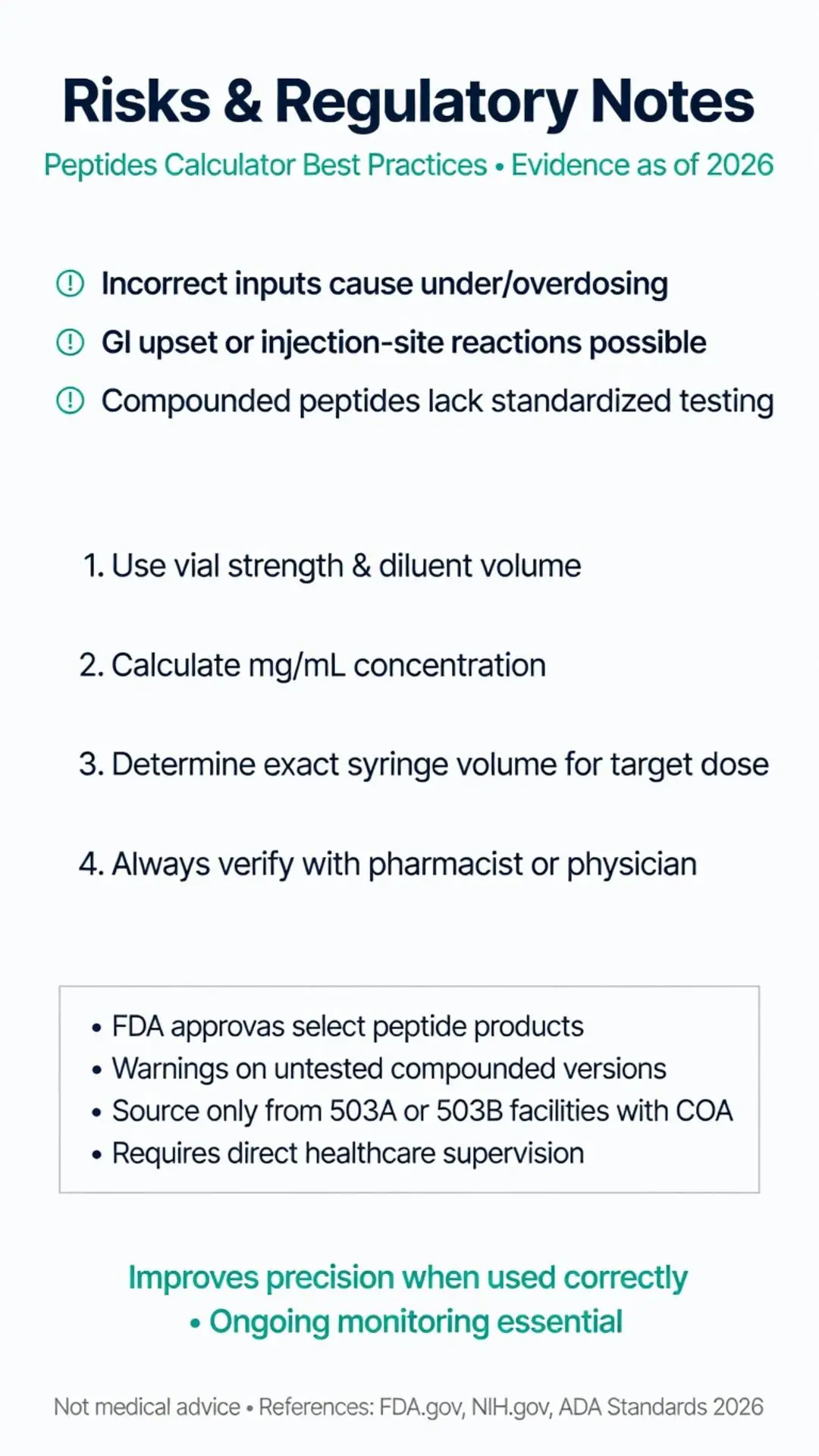
Incorrect inputs into a peptides calculator can lead to under- or overdosing, potentially causing adverse effects such as gastrointestinal upset or injection-site reactions. The FDA has approved certain peptide-based products while issuing warnings about compounded versions lacking standardized potency testing. Compounded peptides should only be sourced from 503A or 503B facilities that provide certificates of analysis. Patients must never use calculators to self-adjust doses outside of a supervised treatment plan.
A peptides calculator improves precision in preparing and administering peptide therapies when used correctly alongside professional guidance. By incorporating evidence-based inputs and respecting regulatory distinctions between approved and investigational agents, healthcare teams can support safer research and clinical applications. Ongoing monitoring and verification remain essential components of responsible peptide use.
Word count: 478
U.S. Food and Drug Administration. “FDA Approved Drug Products.” FDA.gov. Accessed May 7, 2026. https://www.accessdata.fda.gov/scripts/cder/daf/
National Institutes of Health. “Peptide Therapeutics: Current Status and Future Directions.” NIH.gov. Accessed May 7, 2026. https://www.nih.gov/
American Diabetes Association. “Standards of Medical Care in Diabetes—2026.” Diabetes.org. Accessed May 7, 2026. https://diabetesjournals.org/