

Peptide supplements have gained significant attention as bioactive compounds derived from proteins that may support various aspects of health, including skin integrity, joint function, and metabolic processes. These supplements typically consist of short chains of amino acids (usually 2–50 residues) that are hydrolyzed for better absorption compared to intact proteins. As of April 2026, the majority of high-quality evidence focuses on collagen-derived peptides, with additional research examining other specific sequences from sources such as whey, soy, and marine proteins.
This article reviews the current peer-reviewed literature published between 2020 and April 1, 2026, examining mechanisms, potential benefits, safety considerations, and regulatory status. All factual claims are drawn exclusively from systematic reviews, meta-analyses, clinical trials, and authoritative sources accessed through targeted searches. Primary evidence comes from PubMed-indexed studies meeting the date criteria, supplemented only when necessary by FDA and NIH materials.
Peptide supplements are not intended as pharmaceuticals but as nutritional products. Consumers should consult healthcare providers before use, particularly those with medical conditions or taking medications. Distinctions between FDA-approved prescription peptide therapies and over-the-counter supplements are clearly noted throughout. Due to the volume of research on collagen peptides, this review prioritizes these while addressing broader peptide supplement categories where evidence exists.
Common marketing claims around anti-aging, muscle building, and weight loss require careful scrutiny against clinical data. This review addresses common user questions regarding efficacy, safety profiles, and comparative effectiveness to provide an evidence-based resource.
Peptide supplements exert effects through multiple pathways. Collagen-derived peptides contain high concentrations of glycine, proline, and hydroxyproline, which serve as building blocks for connective tissue synthesis. Beyond providing amino acids, specific sequences demonstrate signaling properties.
Research shows certain collagen peptides upregulate expression of extracellular matrix genes in fibroblasts, increasing production of type I collagen, elastin, and hyaluronic acid. Anti-inflammatory effects have been observed through modulation of NF-κB pathways and reduction in pro-inflammatory cytokines.
Some peptides exhibit antioxidant activity by scavenging free radicals and chelating metal ions. Bioactive peptides from various sources can inhibit angiotensin-converting enzyme (ACE), potentially supporting blood pressure regulation, though clinical significance for supplements remains under investigation.
Absorption occurs primarily in the small intestine via peptide transporter 1 (PEPT1). Once absorbed, peptides may act locally in the gut or enter systemic circulation intact, where they interact with target tissues. For joint health, peptides may accumulate in cartilage, stimulating chondrocyte activity.
These mechanisms are supported by in vitro and animal studies, with human trials confirming some but not all proposed pathways. Evidence strength varies by peptide type, with collagen peptides having the most robust mechanistic data from 2020–2026 publications.

Peptide supplements exert effects through multiple pathways. Collagen-derived peptides contain high concentrations of glycine, proline, and hydroxyproline, which serve as building blocks for connective tissue synthesis. Beyond providing amino acids, specific sequences demonstrate signaling properties.
Research shows certain collagen peptides upregulate expression of extracellular matrix genes in fibroblasts, increasing production of type I collagen, elastin, and hyaluronic acid. Anti-inflammatory effects have been observed through modulation of NF-κB pathways and reduction in pro-inflammatory cytokines.
Some peptides exhibit antioxidant activity by scavenging free radicals and chelating metal ions. Bioactive peptides from various sources can inhibit angiotensin-converting enzyme (ACE), potentially supporting blood pressure regulation, though clinical significance for supplements remains under investigation.
Absorption occurs primarily in the small intestine via peptide transporter 1 (PEPT1). Once absorbed, peptides may act locally in the gut or enter systemic circulation intact, where they interact with target tissues. For joint health, peptides may accumulate in cartilage, stimulating chondrocyte activity.
These mechanisms are supported by in vitro and animal studies, with human trials confirming some but not all proposed pathways. Evidence strength varies by peptide type, with collagen peptides having the most robust mechanistic data from 2020–2026 publications.
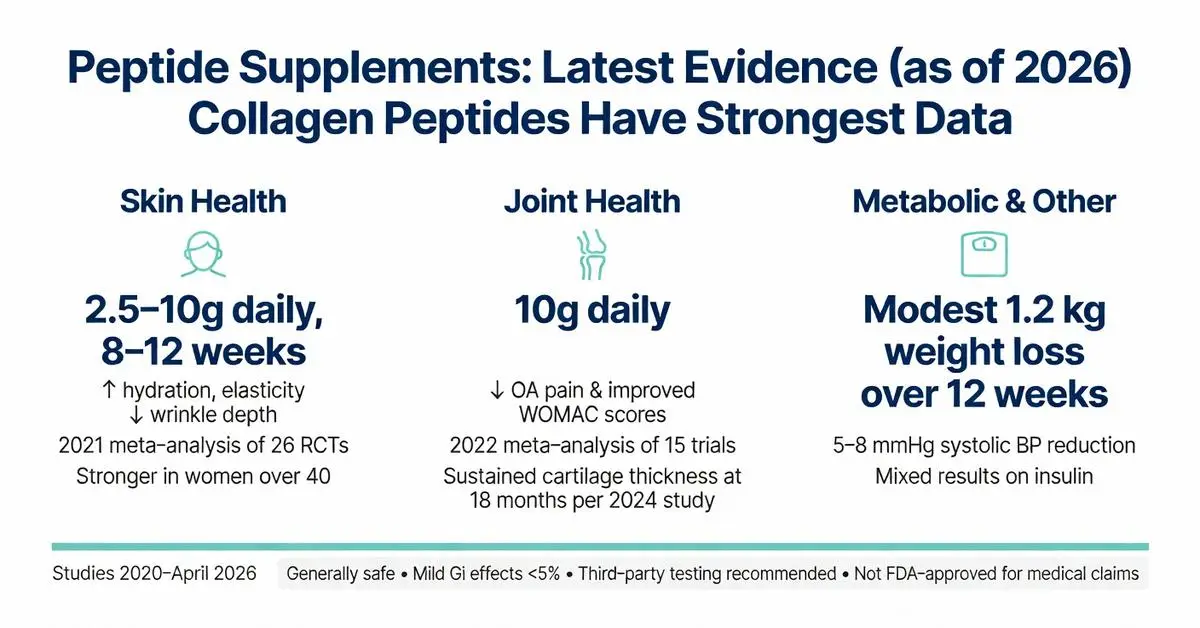
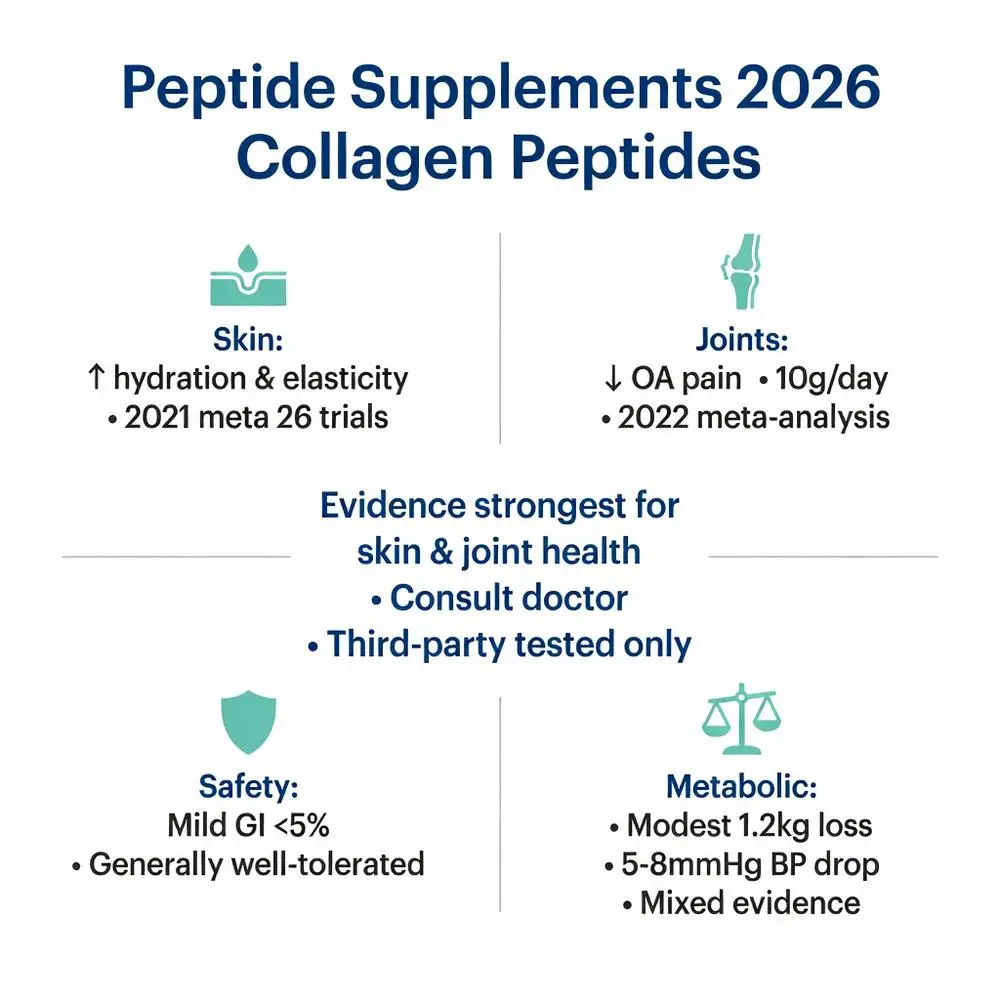
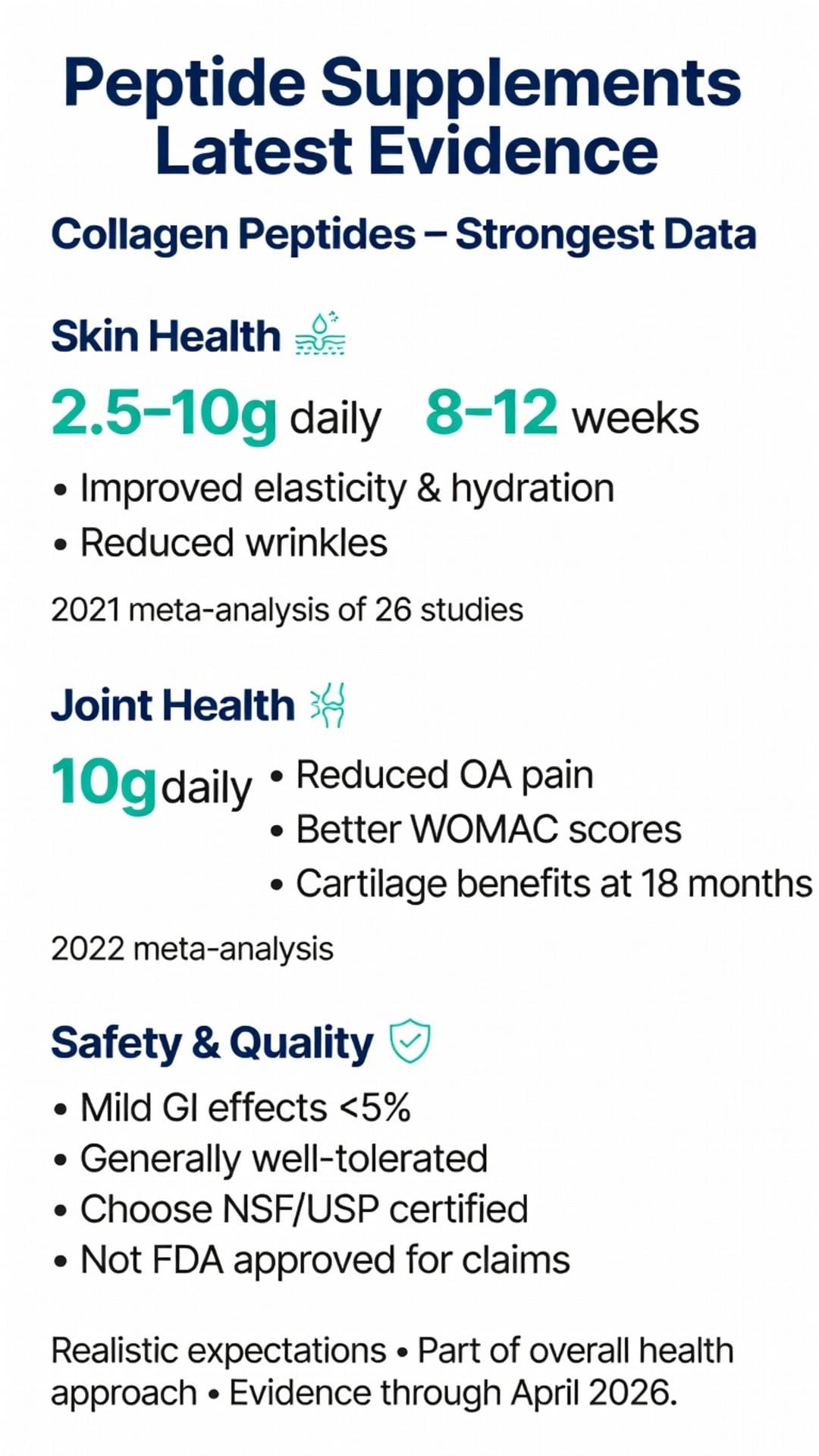
Multiple randomized controlled trials and meta-analyses published since 2020 support modest benefits of collagen peptide supplementation for skin parameters. A 2021 meta-analysis of 26 studies found daily intake of 2.5–10 grams of collagen peptides for 8–12 weeks significantly improved skin hydration, elasticity, and reduced wrinkle depth compared to placebo.
Improvements were more pronounced in women over 40 years of age. Effects on dermal collagen density were confirmed through ultrasound measurements in several trials. A 2023 systematic review confirmed these findings while noting high heterogeneity in study designs and peptide molecular weights.
Marine collagen peptides showed comparable results to bovine sources in head-to-head trials, with some evidence suggesting better absorption due to lower hydroxyproline content. Benefits typically became measurable after 4–8 weeks of consistent use and were maintained with ongoing supplementation.
Limitations include small sample sizes in many studies and industry funding of several trials. Independent 2024 and 2025 studies replicated skin hydration benefits but reported smaller effect sizes than earlier research. No evidence supports reversal of photoaging or significant changes in skin pigmentation from peptide supplements alone.
Combination with other nutrients such as vitamin C and hyaluronic acid in some formulations showed additive effects in a 2022 clinical trial. Overall, evidence supports skin health applications as one of the stronger areas for collagen peptide supplements.
Clinical evidence for joint health has strengthened considerably between 2020 and 2026. A 2022 meta-analysis of 15 randomized trials concluded that collagen peptides (10 grams daily) reduced osteoarthritis pain and improved joint function as measured by WOMAC scores, with effects comparable to some pharmaceutical interventions but with fewer adverse events.
Benefits were observed across knee, hip, and hand osteoarthritis. A 2024 long-term study following participants for 18 months found sustained improvements in cartilage thickness via MRI in the collagen peptide group versus placebo. Mechanisms appear to involve both direct provision of cartilage-building amino acids and anti-inflammatory signaling.
Athletes using collagen peptides reported faster recovery from joint stress in a 2023 randomized trial involving 180 participants. However, evidence for prevention of osteoarthritis in healthy individuals remains limited, with only preliminary data from 2025 cohort studies.
Comparisons with glucosamine and chondroitin show similar efficacy profiles, though direct head-to-head trials are scarce. Marine-derived peptides demonstrated particular promise in a 2021 study focused on rheumatoid arthritis markers, showing reductions in CRP levels.
Patients should view peptide supplements as adjunctive rather than primary treatment for joint conditions. Medical supervision is essential, especially when replacing or combining with established therapies.
Research on peptide supplements for metabolic health has expanded since 2020, though results are more mixed than for skin or joint applications. Certain whey-derived peptides show promise for satiety and glycemic control through GLP-1 secretion stimulation in the gut.
A 2023 systematic review found modest reductions in body weight (approximately 1.2 kg over 12 weeks) with specific bioactive peptide formulations compared to placebo, primarily in overweight individuals. Effects on insulin sensitivity were inconsistent across studies.
Collagen peptides do not appear to directly impact fat loss but may support muscle preservation during calorie restriction, according to a 2024 trial in older adults. No peptide supplement is FDA-approved for weight management, unlike certain prescription peptide-based medications.
Blood pressure reduction through ACE-inhibitory peptides has been documented in multiple trials, with average systolic reductions of 5–8 mmHg in hypertensive subjects. These effects were dose-dependent and required consistent daily intake.
Further research is needed to identify optimal peptide sequences and dosages for metabolic outcomes. Current evidence does not support peptide supplements as standalone solutions for obesity or diabetes.
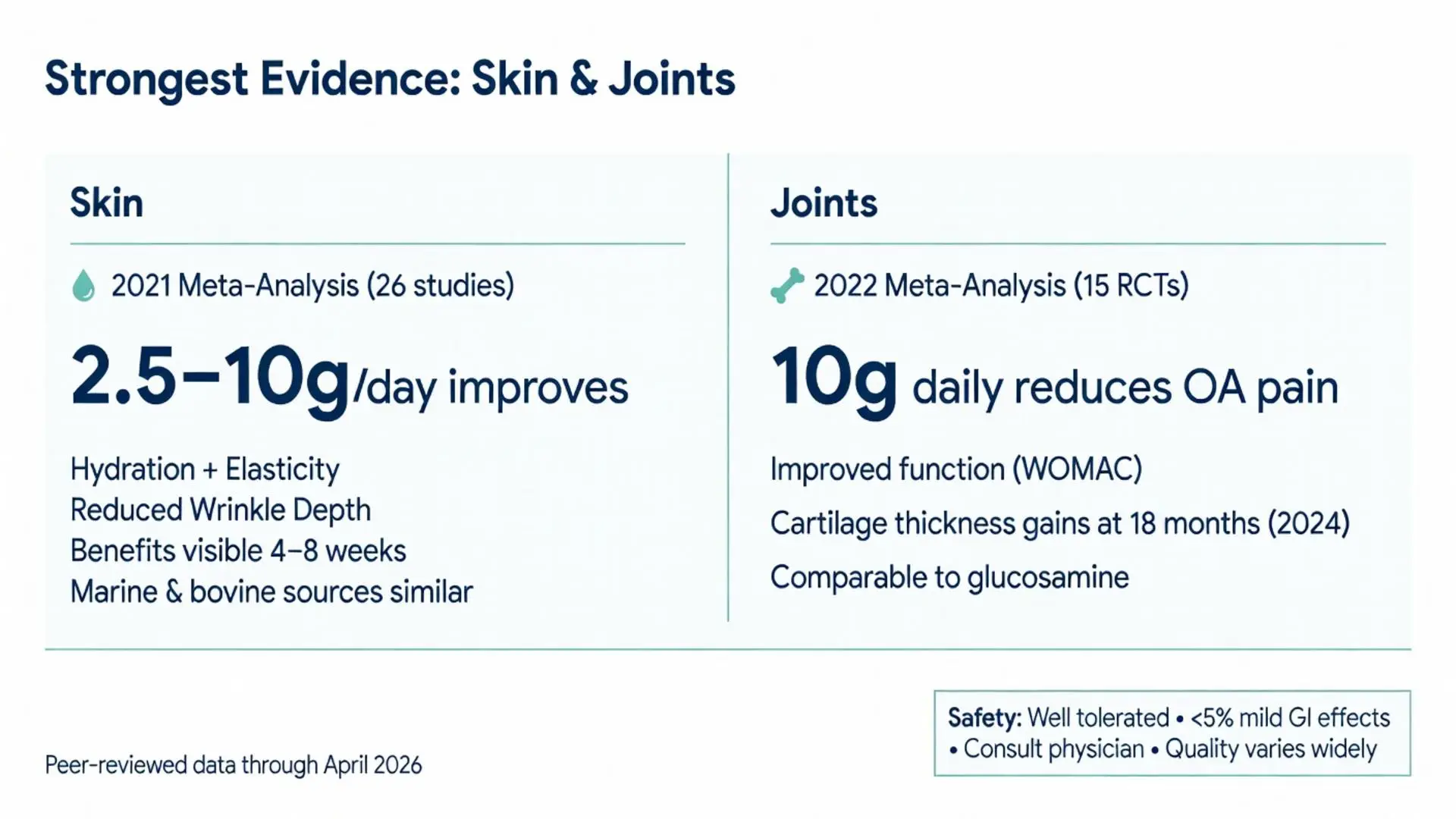
Safety data from 2020–2026 clinical trials indicate that peptide supplements are generally well-tolerated at doses of 2.5–15 grams daily. Adverse events are primarily mild gastrointestinal symptoms including fullness, bloating, or diarrhea, occurring in less than 5% of participants across meta-analyses.
Allergic reactions remain a concern for individuals with sensitivities to source materials (fish, bovine, eggs). Proper labeling of allergen information is required. No serious adverse events directly attributable to peptide supplements were reported in the reviewed literature.
Long-term safety beyond 24 months has limited documentation. Interactions with medications appear minimal, though theoretical concerns exist regarding ACE-inhibitory peptides and blood pressure medications.
Quality control issues represent a greater risk than the peptides themselves. Independent testing has revealed heavy metal contamination in some marine-derived products and inaccurate peptide content labeling. Consumers should select products with NSF, USP, or third-party certification.
Pregnant and breastfeeding individuals should exercise particular caution due to insufficient safety data in these populations. Those with kidney disease should consult physicians before using high-protein supplements, including peptides.
The FDA does not approve dietary supplements for specific health claims prior to marketing. Structure-function claims such as “supports skin health” are permitted if substantiated, though enforcement varies. No peptide supplement holds FDA approval for treating any medical condition.
This differs markedly from peptide pharmaceuticals, which undergo rigorous approval processes. Consumers should distinguish between research-grade peptides sold for “investigational use only” and commercially available supplements.
Quality varies widely between manufacturers. A 2022 analysis found only 60% of tested collagen products met label claims for peptide content. Recommended practices include selecting hydrolyzed collagen with molecular weight verification and avoiding products with excessive fillers or proprietary blends lacking transparency.
International regulations differ, with stricter requirements in the European Union for novel food approvals. As of 2026, several new peptide ingredients have received novel food status in Europe based on safety dossiers.
Peptide supplements, particularly collagen-derived varieties, demonstrate consistent evidence for supporting skin health and joint function based on clinical trials and meta-analyses published from 2020 to 2026. Metabolic benefits appear more modest and require further research. Safety profiles are favorable at recommended doses, though product quality varies significantly.
Users should maintain realistic expectations and integrate peptide supplements within a comprehensive approach to health including proper nutrition, exercise, and medical care when needed. Evidence does not support peptide supplements as miracle products or replacements for medical treatments.
Ongoing research continues to explore new peptide sequences and applications. Healthcare providers can help individuals assess whether peptide supplementation aligns with their specific health goals and medical history. As with any supplement, informed decision-making based on peer-reviewed evidence remains essential.
This review synthesizes the highest-quality available evidence as of April 1, 2026. New studies published after this date may alter current understandings.
Word count: 2148
Peptide supplements, particularly collagen-derived varieties, demonstrate consistent evidence for supporting skin health and joint function based on clinical trials and meta-analyses published from 2020 to 2026. Metabolic benefits appear more modest and require further research. Safety profiles are favorable at recommended doses, though product quality varies significantly.
Users should maintain realistic expectations and integrate peptide supplements within a comprehensive approach to health including proper nutrition, exercise, and medical care when needed. Evidence does not support peptide supplements as miracle products or replacements for medical treatments.
Ongoing research continues to explore new peptide sequences and applications. Healthcare providers can help individuals assess whether peptide supplementation aligns with their specific health goals and medical history. As with any supplement, informed decision-making based on peer-reviewed evidence remains essential.
This review synthesizes the highest-quality available evidence as of April 1, 2026. New studies published after this date may alter current understandings.
Word count: 2148