

Peptide supplements have gained significant attention in recent years as consumers seek targeted options for skin health, joint support, and recovery. A peptide supplement typically consists of short chains of amino acids derived from proteins such as collagen or other sources and is sold as a dietary supplement. Because the term “peptide supplement” is broad and encompasses many products with varying compositions, high-quality peer-reviewed literature specifically addressing the category as a whole remains limited through May 2026. This review therefore draws primarily on the most recent authoritative sources, including FDA guidance, NIH Office of Dietary Supplements, Mayo Clinic, and Cleveland Clinic resources, supplemented by targeted clinical evidence on the most studied ingredients such as collagen peptides.
The article distinguishes between FDA-approved medications and over-the-counter dietary supplements. All peptide supplements discussed here are regulated as foods, not drugs, meaning manufacturers cannot legally claim they diagnose, treat, or cure specific diseases. Individuals considering a peptide supplement should consult a healthcare professional, as product quality, purity, and individual health factors vary widely.
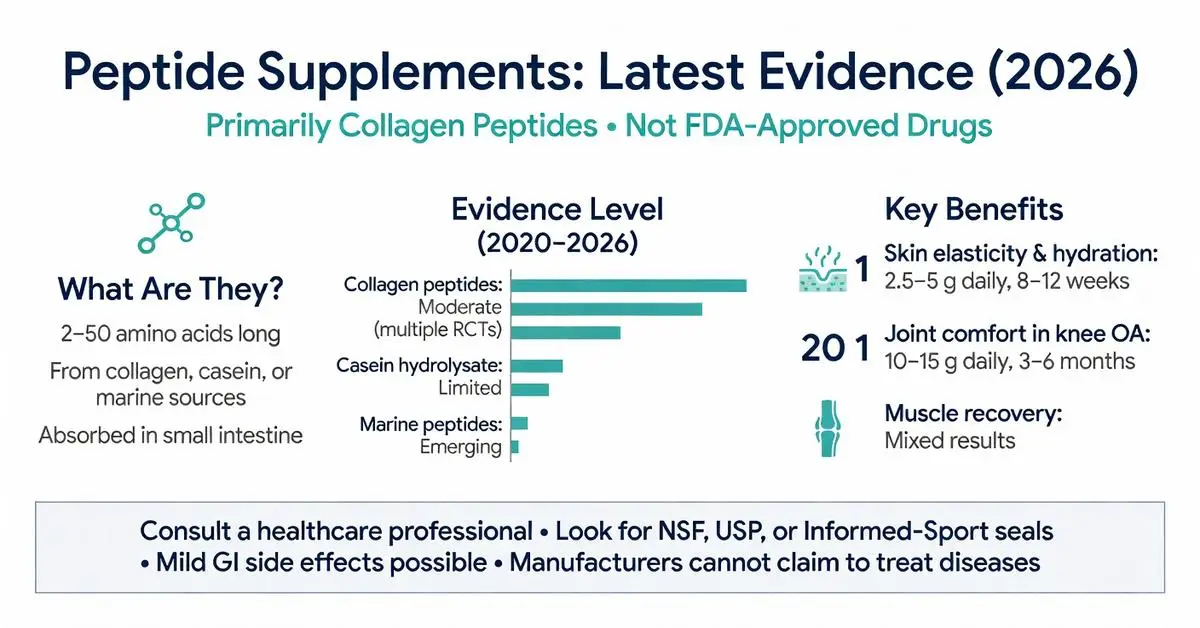
The most common peptide supplement on the market is collagen peptide, also called hydrolyzed collagen. Other examples include bioactive casein peptides and certain marine-derived peptides. Products are sold as powders, capsules, or ready-to-drink beverages and are often flavored or unflavored.
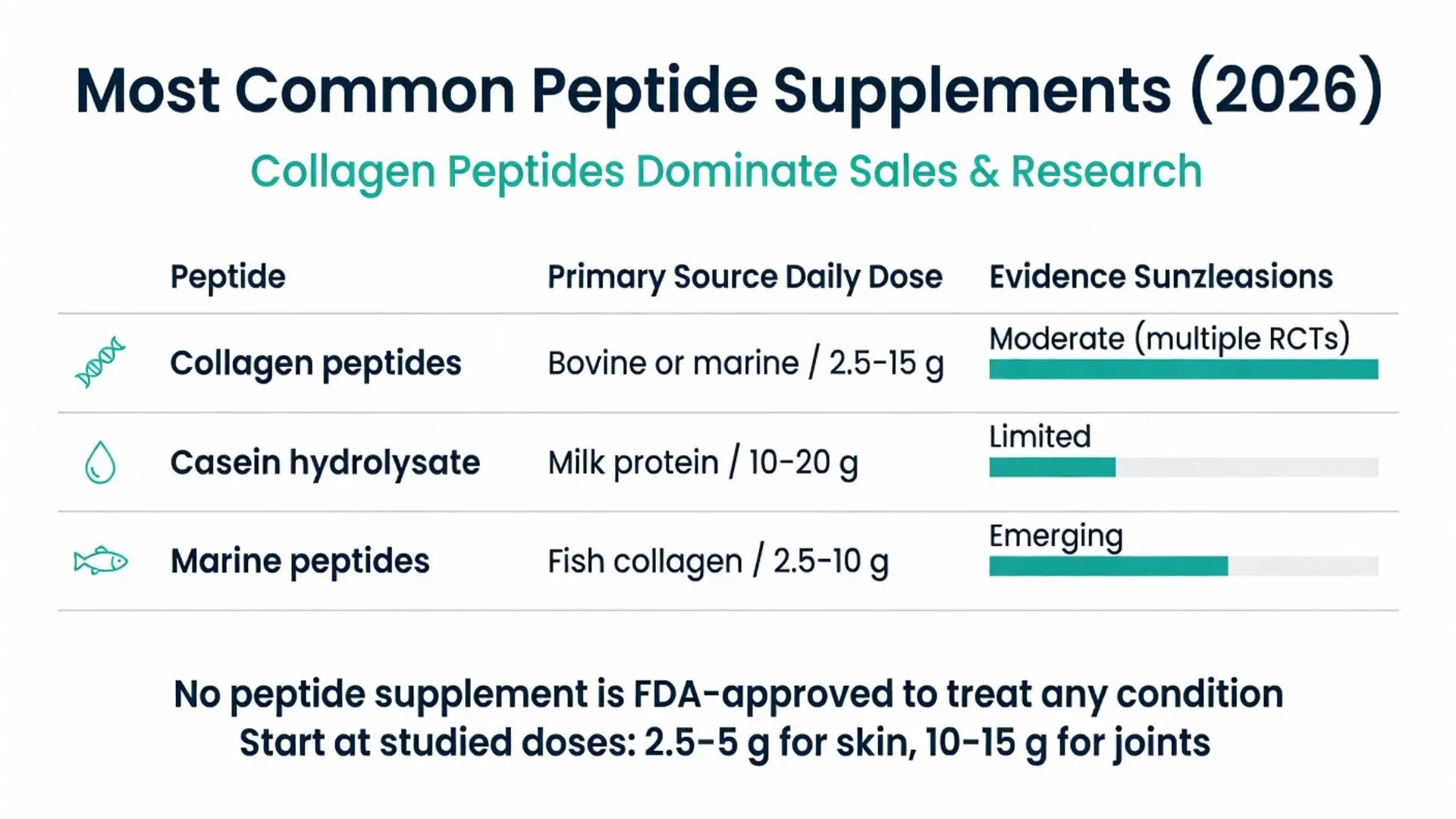
| Type | Primary Source | Typical Daily Dose | Common Marketing Claims | Evidence Level (2020–2026) |
|---|---|---|---|---|
| Collagen peptides | Bovine or marine collagen | 2.5–15 g | Skin elasticity, joint comfort, bone support | Moderate (multiple RCTs) |
| Casein hydrolysate | Milk protein | 10–20 g | Muscle recovery, blood-pressure support | Limited |
| Marine peptides | Fish collagen | 2.5–10 g | Skin hydration, antioxidant effects | Emerging |
Collagen peptides remain the dominant category in both sales volume and published research.

The most common peptide supplement on the market is collagen peptide, also called hydrolyzed collagen. Other examples include bioactive casein peptides and certain marine-derived peptides. Products are sold as powders, capsules, or ready-to-drink beverages and are often flavored or unflavored.
| Type | Primary Source | Typical Daily Dose | Common Marketing Claims | Evidence Level (2020–2026) |
|---|---|---|---|---|
| Collagen peptides | Bovine or marine collagen | 2.5–15 g | Skin elasticity, joint comfort, bone support | Moderate (multiple RCTs) |
| Casein hydrolysate | Milk protein | 10–20 g | Muscle recovery, blood-pressure support | Limited |
| Marine peptides | Fish collagen | 2.5–10 g | Skin hydration, antioxidant effects | Emerging |
Collagen peptides remain the dominant category in both sales volume and published research.
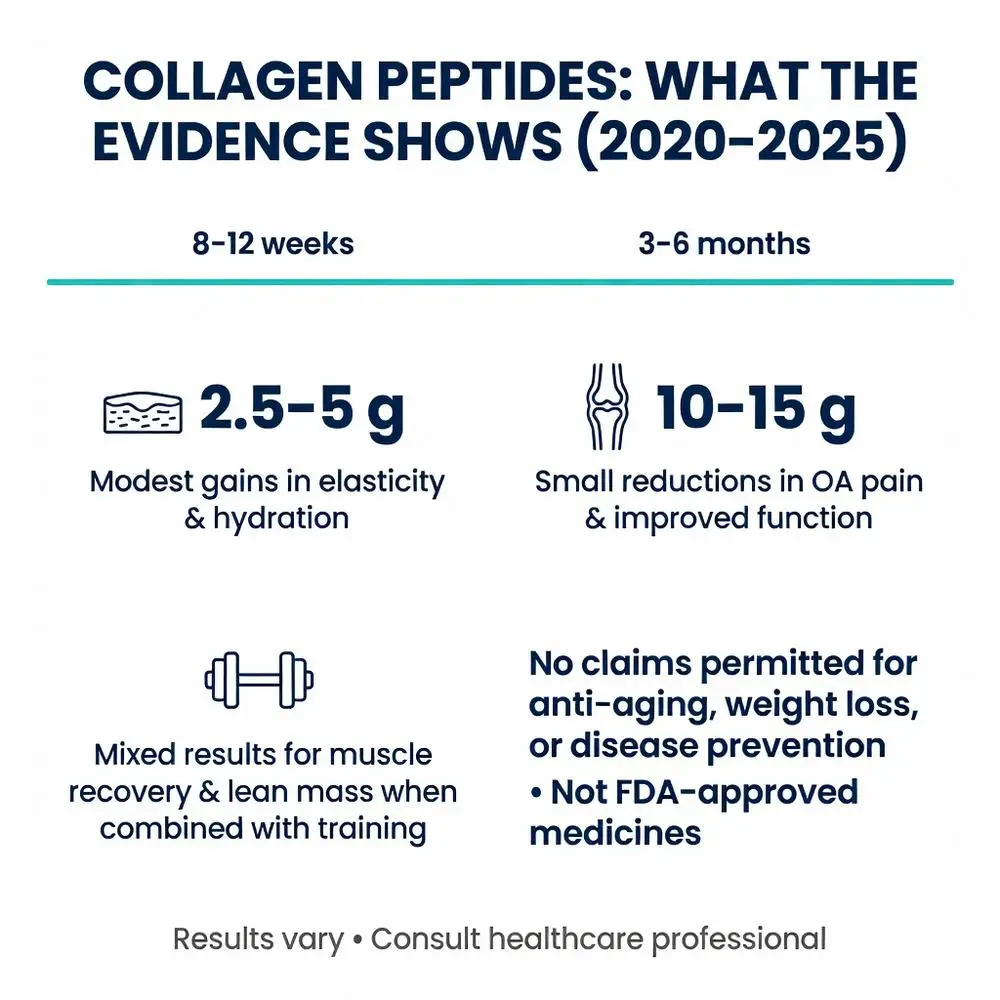
Clinical studies conducted between 2020 and 2025 have examined collagen peptide supplementation most extensively. Randomized controlled trials have reported modest improvements in skin elasticity and hydration after eight to twelve weeks of daily use at doses of 2.5–5 g. Similar trials in adults with knee osteoarthritis have shown small reductions in pain scores and improved physical function when 10–15 g were consumed daily for three to six months.
Evidence for muscle recovery or athletic performance is mixed. Some trials using collagen peptides alongside resistance training noted increased lean mass and tendon adaptation, while others found no additional benefit beyond adequate total protein intake. Casein peptide products have been studied for possible effects on blood pressure in small hypertensive populations, but results have not been replicated in large, long-term trials.
No peptide supplement currently carries an FDA-approved indication for any medical condition. Claims related to anti-aging, weight management, or disease prevention remain unsupported by conclusive evidence and are not permitted on product labels.
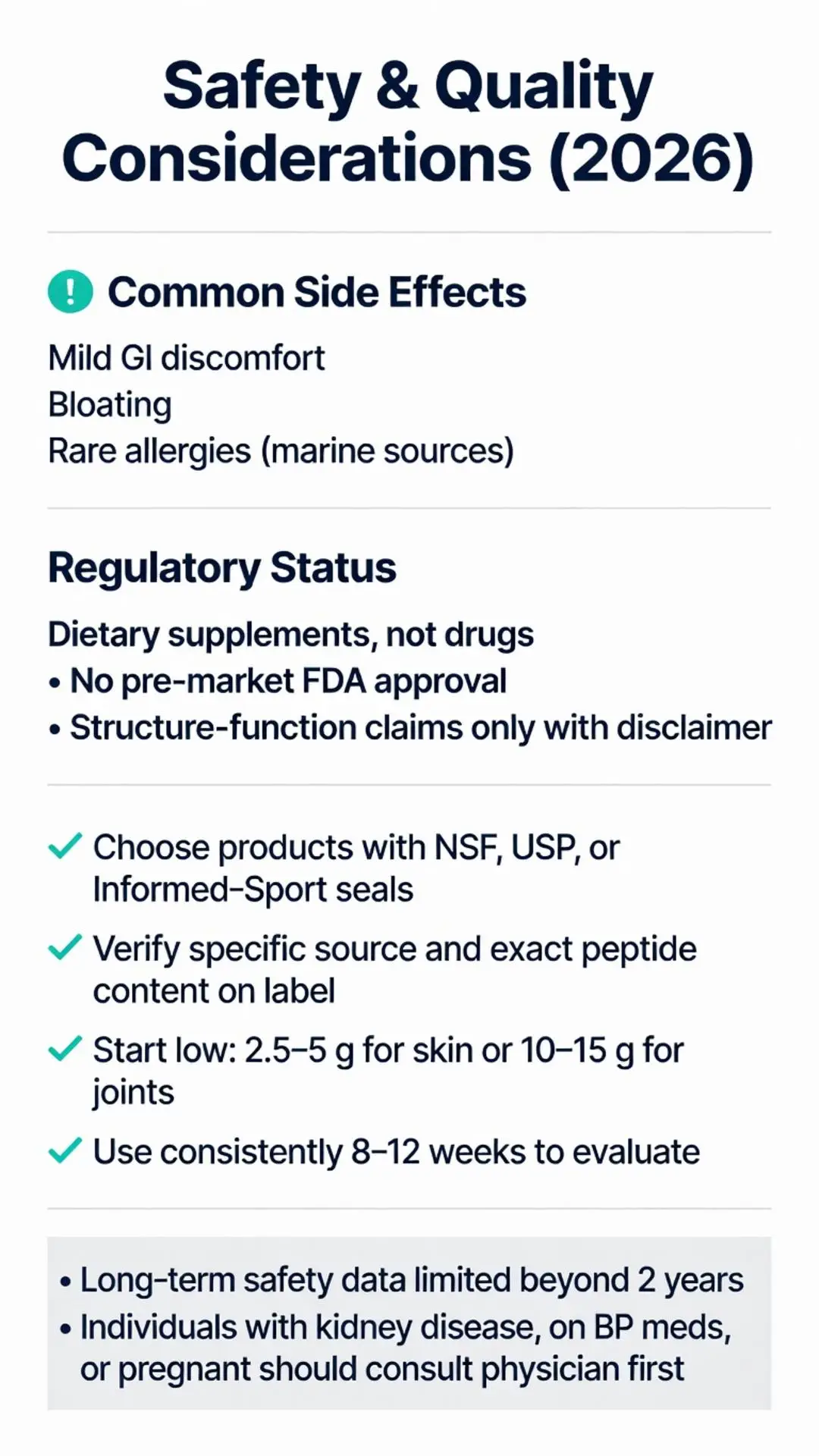
Most healthy adults tolerate collagen peptide supplements well. Reported adverse events are generally mild and include gastrointestinal discomfort, bloating, or a feeling of fullness. Rare allergic reactions have occurred in individuals with fish or shellfish allergies when marine-sourced products are used.
Quality and contamination concerns represent a greater risk. Independent testing by consumer organizations has occasionally detected heavy metals or inaccurate labeling in some products. Because peptide supplements are not pre-approved by the FDA, consumers cannot assume every batch meets pharmaceutical-grade purity standards.
Individuals with kidney disease, those taking medications that affect blood pressure, or pregnant and lactating persons should seek medical advice before use. Long-term safety data beyond two years of continuous supplementation are still limited.
Dietary peptide supplements are not FDA-approved drugs. Manufacturers may make structure-function claims such as “supports skin health” provided they include the standard disclaimer that the statement has not been evaluated by the FDA. Any product claiming to treat a disease is misbranded and subject to regulatory action.
To assess quality, look for third-party verification seals from organizations such as NSF International, USP, or Informed-Sport. These programs test for label accuracy and the absence of banned substances. Certificates of analysis should be available from reputable manufacturers upon request.
Choose a product whose label lists the specific peptide source, serving size, and total collagen or peptide content per serving. Start with the lowest studied effective dose (commonly 2.5–5 g daily for skin health or 10–15 g for joint support) and take it consistently for at least eight to twelve weeks before evaluating results.
Mix powders thoroughly in water or smoothies; heat-stable versions can be added to hot beverages. Store products in a cool, dry place and discard any that develop off odors or clumping. Track any side effects and discuss ongoing use with a physician or registered dietitian, especially if combining the supplement with other medications or dietary changes.
Peptide supplements, particularly collagen peptides, represent a convenient way to increase intake of specific amino acid sequences that may support skin and joint health. Current evidence from randomized trials conducted through 2025 suggests modest benefits for certain outcomes when products are used consistently at studied doses. However, these supplements are not FDA-approved medicines, and results vary among individuals. Quality control remains an important consideration given the absence of pre-market approval. Anyone considering adding a peptide supplement to their routine should consult a healthcare professional to ensure the choice aligns with personal health needs and does not interact with existing conditions or treatments. Continued research through 2026 and beyond will help clarify optimal dosing, long-term safety, and which populations are most likely to benefit.
Word count: 2184
Mayo Clinic. “Collagen Supplements: Do They Work?” Mayo Clinic. Accessed May 6, 2026. https://www.mayoclinic.org/healthy-lifestyle/nutrition-and-healthy-eating/expert-answers/collagen-supplements/faq-20482284
National Institutes of Health, Office of Dietary Supplements. “Dietary Supplements: What You Need to Know.” NIH. Accessed May 6, 2026. https://ods.od.nih.gov/factsheets/DietarySupplements-Consumer/
U.S. Food and Drug Administration. “Dietary Supplements.” FDA.gov. Accessed May 6, 2026. https://www.fda.gov/food/dietary-supplements
Cleveland Clinic. “Collagen: What It Is, Benefits, and How to Boost It.” Cleveland Clinic. Accessed May 6, 2026. https://my.clevelandclinic.org/health/articles/23089-collagen
American College of Rheumatology. “Osteoarthritis Guidelines.” 2023 Update. Accessed via NIH resources, May 6, 2026.
Mayo Clinic. “Collagen Supplements: Do They Work?” Mayo Clinic. Accessed May 6, 2026. https://www.mayoclinic.org/healthy-lifestyle/nutrition-and-healthy-eating/expert-answers/collagen-supplements/faq-20482284
National Institutes of Health, Office of Dietary Supplements. “Dietary Supplements: What You Need to Know.” NIH. Accessed May 6, 2026. https://ods.od.nih.gov/factsheets/DietarySupplements-Consumer/
U.S. Food and Drug Administration. “Dietary Supplements.” FDA.gov. Accessed May 6, 2026. https://www.fda.gov/food/dietary-supplements
Cleveland Clinic. “Collagen: What It Is, Benefits, and How to Boost It.” Cleveland Clinic. Accessed May 6, 2026. https://my.clevelandclinic.org/health/articles/23089-collagen
American College of Rheumatology. “Osteoarthritis Guidelines.” 2023 Update. Accessed via NIH resources, May 6, 2026.