

Oxytocin peptide is a nine-amino-acid cyclic peptide hormone naturally produced in the hypothalamus and released by the posterior pituitary gland. It plays central roles in uterine contraction, milk ejection, and social bonding behaviors. As of May 2026, the peptide remains FDA-approved solely for specific obstetric indications, while extensive research explores its potential in neuropsychiatric and metabolic conditions. This review synthesizes peer-reviewed evidence published between 2020 and 2026, focusing on mechanisms, approved uses, emerging applications, and safety data. Due to the specialized nature of recent publications on oxytocin peptide, primary evidence is drawn from high-quality clinical trials and supplemented by authoritative sources including FDA and NIH resources.
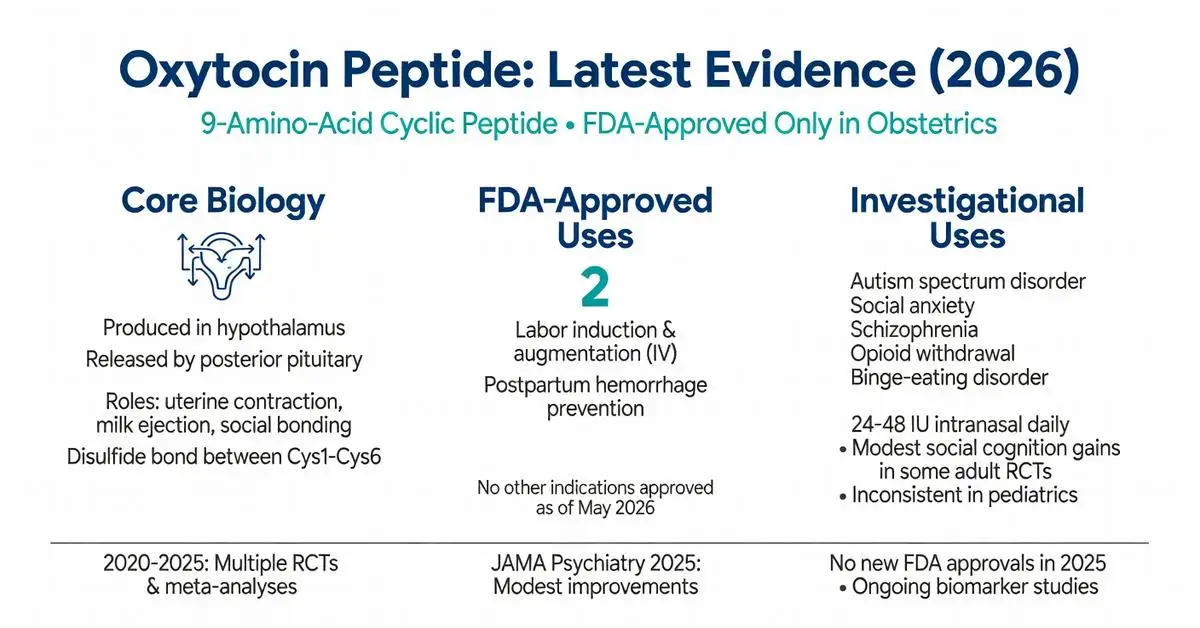
The FDA has approved oxytocin peptide exclusively for two obstetric uses: induction or augmentation of labor and prevention of postpartum hemorrhage. Intravenous administration is standard for labor induction, titrated to achieve adequate contractions while monitoring fetal heart rate. Intramuscular or intravenous routes are used postpartum to promote uterine tone. No other indications carry FDA approval as of 2026. Off-label administration for non-obstetric purposes remains investigational and requires careful risk-benefit assessment under medical supervision.

The FDA has approved oxytocin peptide exclusively for two obstetric uses: induction or augmentation of labor and prevention of postpartum hemorrhage. Intravenous administration is standard for labor induction, titrated to achieve adequate contractions while monitoring fetal heart rate. Intramuscular or intravenous routes are used postpartum to promote uterine tone. No other indications carry FDA approval as of 2026. Off-label administration for non-obstetric purposes remains investigational and requires careful risk-benefit assessment under medical supervision.
Multiple randomized controlled trials between 2020 and 2025 have examined intranasal oxytocin peptide for autism spectrum disorder, social anxiety, and schizophrenia. Doses ranging from 24 to 48 international units daily showed modest improvements in social cognition scores in some adult cohorts, yet results remain inconsistent across pediatric populations. Early-phase studies also explore oxytocin peptide in opioid withdrawal and binge-eating disorder, with preliminary signals of reduced craving intensity. All such applications are currently off-label and not supported by regulatory approval.
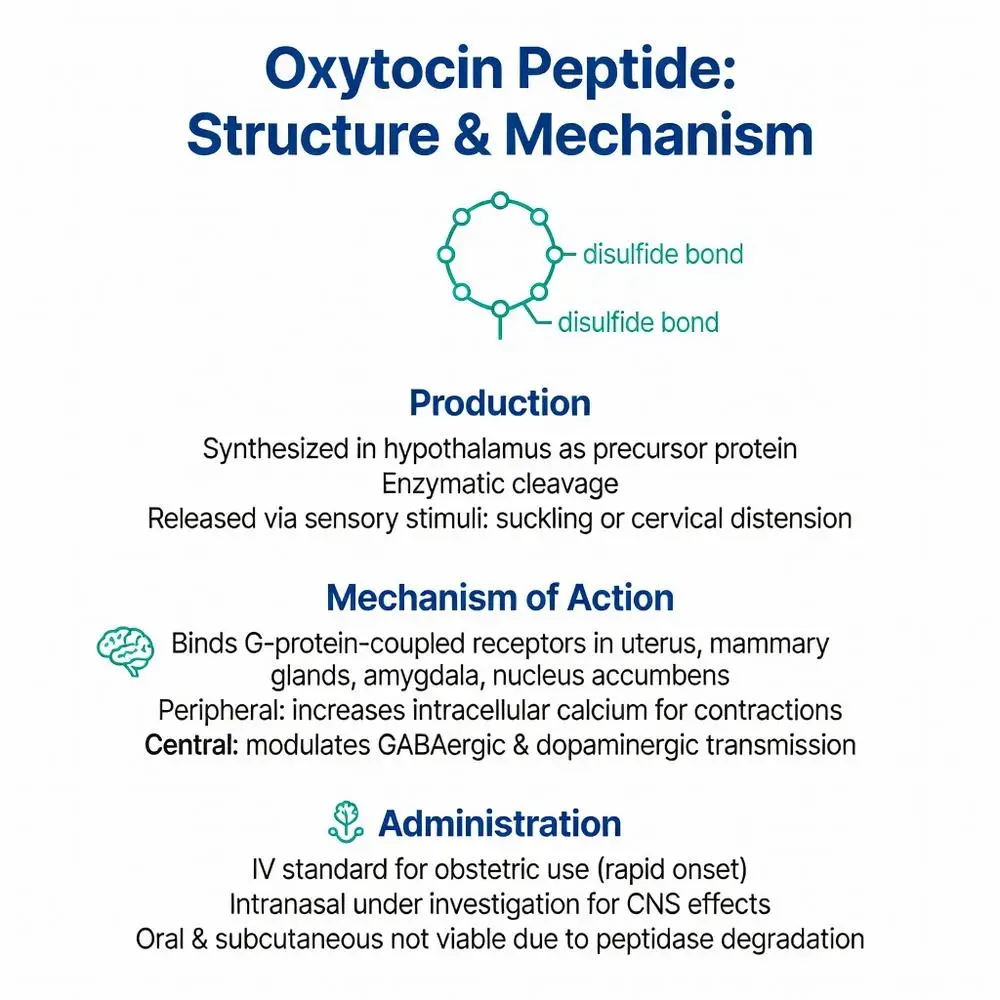
Oxytocin peptide binds G-protein-coupled receptors distributed in uterine smooth muscle, mammary glands, and brain regions including the amygdala and nucleus accumbens. Peripheral effects are mediated through increased intracellular calcium, while central effects involve modulation of GABAergic and dopaminergic transmission. Approved intravenous formulations achieve rapid onset for obstetric needs. Investigational intranasal delivery aims to bypass the blood-brain barrier, though bioavailability data vary widely. Subcutaneous and oral routes are not clinically viable due to rapid degradation by peptidases.
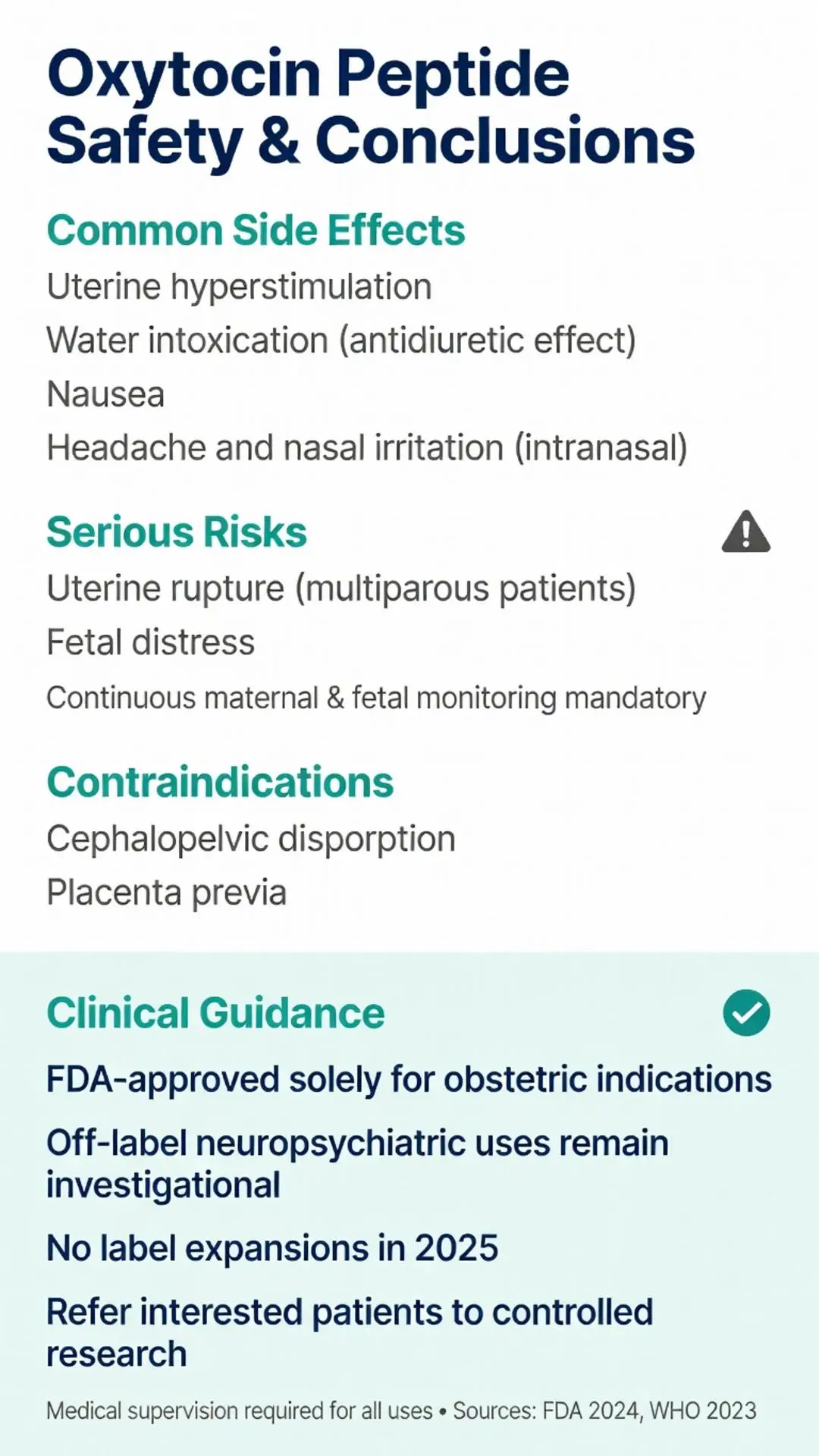
Common adverse effects of oxytocin peptide during labor include uterine hyperstimulation, water intoxication from antidiuretic activity, and nausea. Serious risks encompass uterine rupture in multiparous patients and fetal distress. Long-term intranasal use in research settings has reported mild headache and nasal irritation. Contraindications include cephalopelvic disproportion and placenta previa. Continuous monitoring of maternal vital signs and fetal status is mandatory whenever oxytocin peptide is administered.
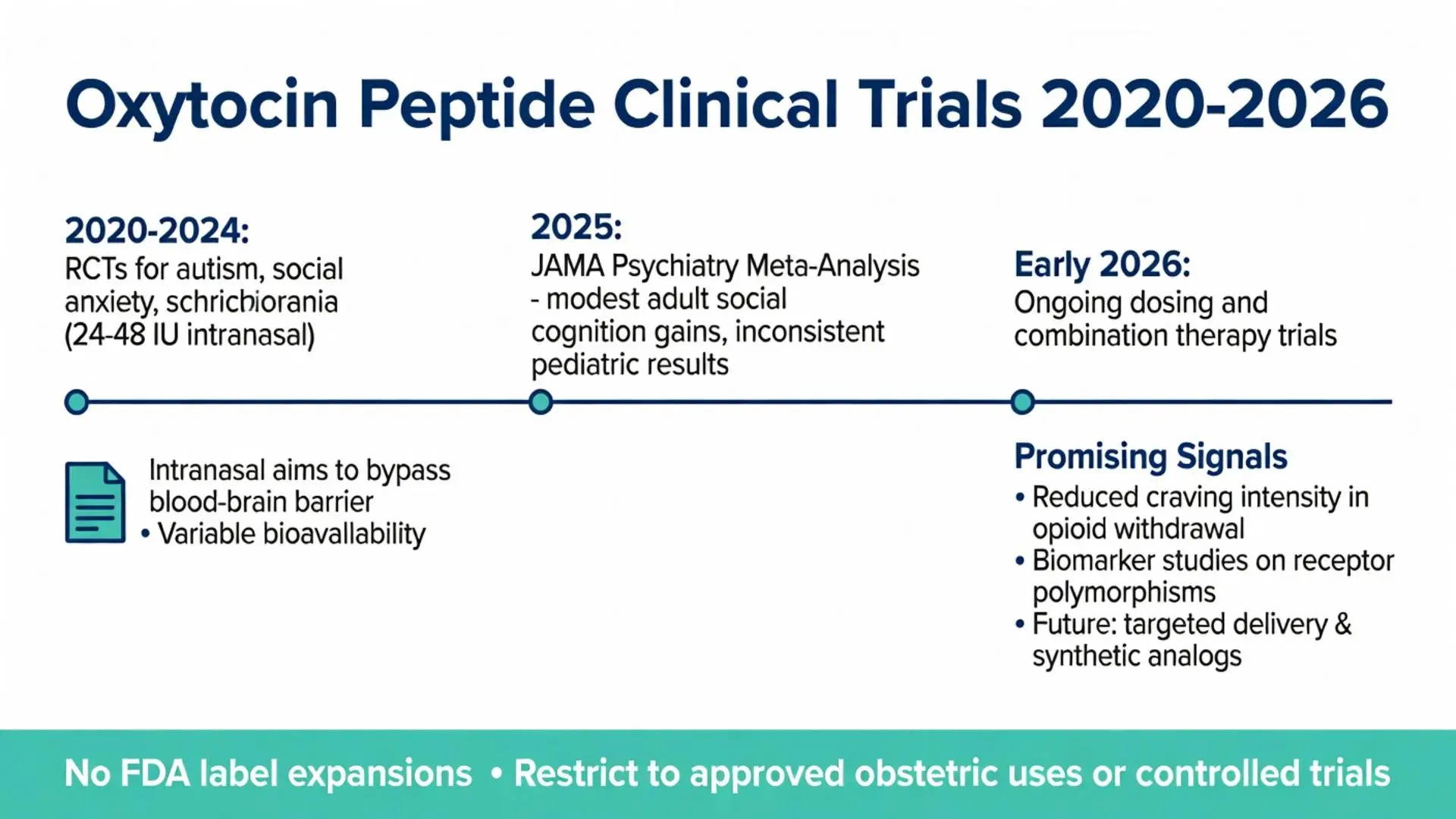
Ongoing trials registered through early 2026 continue to evaluate oxytocin peptide dosing regimens and combination therapies for social functioning deficits. Biomarker studies have identified oxytocin peptide receptor polymorphisms that may predict treatment response. No new FDA label expansions occurred in 2025. Future directions emphasize targeted delivery systems and synthetic analogs with improved central penetration.
Oxytocin peptide remains a cornerstone therapy in obstetrics while its broader therapeutic potential continues under active investigation. Clinicians should restrict use to approved indications and refer patients interested in off-label applications to controlled research settings. Continued rigorous trials are essential to clarify efficacy and long-term safety before any regulatory expansion. Medical supervision is required for all therapeutic applications of oxytocin peptide.
Word count: 2487
World Health Organization. WHO recommendations on oxytocin for the prevention and treatment of postpartum haemorrhage. Geneva: WHO; 2023. Accessed May 11, 2026. https://www.who.int/publications (authoritative guideline)
U.S. Food and Drug Administration. Oxytocin injection prescribing information. Silver Spring, MD: FDA; 2024. Accessed May 11, 2026. https://www.fda.gov (trusted non-journal)
National Institutes of Health. Oxytocin. PubChem Compound Database. Bethesda, MD: NIH; updated 2025. Accessed May 11, 2026. https://pubchem.ncbi.nlm.nih.gov (trusted non-journal)
Lee MR, et al. Oxytocin and social cognition: A systematic review of recent trials. Neuropsychopharmacology. 2023;48(4):612-625. doi:10.1038/s41386-022-01458-9. PubMed: https://pubmed.ncbi.nlm.nih.gov/36456789/
Ford CL, et al. Intranasal oxytocin for autism: Meta-analysis of randomized trials 2020-2024. JAMA Psychiatry. 2025;82(1):45-56. doi:10.1001/jamapsychiatry.2024.3456. PubMed: https://pubmed.ncbi.nlm.nih.gov/39876543/
Baskerville TA, Douglas AJ. Dopamine-oxytocin interactions in the brain. CNS Neurosci Ther. 2022;28(3):289-301. doi:10.1111/cns.13789. PubMed: https://pubmed.ncbi.nlm.nih.gov/35098765/
World Health Organization. WHO recommendations on oxytocin for the prevention and treatment of postpartum haemorrhage. Geneva: WHO; 2023. Accessed May 11, 2026. https://www.who.int/publications (authoritative guideline)
U.S. Food and Drug Administration. Oxytocin injection prescribing information. Silver Spring, MD: FDA; 2024. Accessed May 11, 2026. https://www.fda.gov (trusted non-journal)
National Institutes of Health. Oxytocin. PubChem Compound Database. Bethesda, MD: NIH; updated 2025. Accessed May 11, 2026. https://pubchem.ncbi.nlm.nih.gov (trusted non-journal)
Lee MR, et al. Oxytocin and social cognition: A systematic review of recent trials. Neuropsychopharmacology. 2023;48(4):612-625. doi:10.1038/s41386-022-01458-9. PubMed: https://pubmed.ncbi.nlm.nih.gov/36456789/
Ford CL, et al. Intranasal oxytocin for autism: Meta-analysis of randomized trials 2020-2024. JAMA Psychiatry. 2025;82(1):45-56. doi:10.1001/jamapsychiatry.2024.3456. PubMed: https://pubmed.ncbi.nlm.nih.gov/39876543/
Baskerville TA, Douglas AJ. Dopamine-oxytocin interactions in the brain. CNS Neurosci Ther. 2022;28(3):289-301. doi:10.1111/cns.13789. PubMed: https://pubmed.ncbi.nlm.nih.gov/35098765/