

Orgain Collagen Peptides have become a widely recognized dietary supplement in the wellness market, marketed for supporting skin elasticity, joint comfort, hair and nail strength, and overall protein intake. As a hydrolyzed bovine collagen powder, the product is positioned as an easy-to-mix, unflavored addition to daily beverages and foods. This article provides a comprehensive, evidence-based review of Orgain Collagen Peptides, focusing on its formulation, potential benefits, safety profile, and practical use while clearly distinguishing brand-specific product information from broader collagen peptide research.
Due to limited recent peer-reviewed publications specifically examining the Orgain brand, this article relies primarily on the latest available high-quality trials on collagen peptides (2020–current) supplemented by authoritative sources including FDA.gov, NIH, Mayo Clinic, and Cleveland Clinic. Peer-reviewed meta-analyses and clinical trials published since 2020 consistently examine hydrolyzed collagen peptides’ bioavailability and effects on connective tissue, yet few studies isolate commercial brands. All information presented is for research and educational purposes only and is not intended as medical advice. Consumers should consult qualified healthcare providers before incorporating any supplement, particularly those with underlying health conditions, allergies, or who are pregnant or breastfeeding. Regulatory agencies classify collagen peptides as dietary supplements rather than FDA-approved drugs, meaning they are not evaluated for treating or preventing disease.
Current evidence as of April 2026 suggests modest benefits for skin and joint parameters in certain populations, but results vary by dosage, duration, and individual factors. This review addresses common user questions, competitor gaps such as missing head-to-head comparisons and long-term safety data, and incorporates practical tables for clarity. Emphasis remains on peer-reviewed mechanisms, efficacy data, and safety parameters drawn exclusively from verified sources.
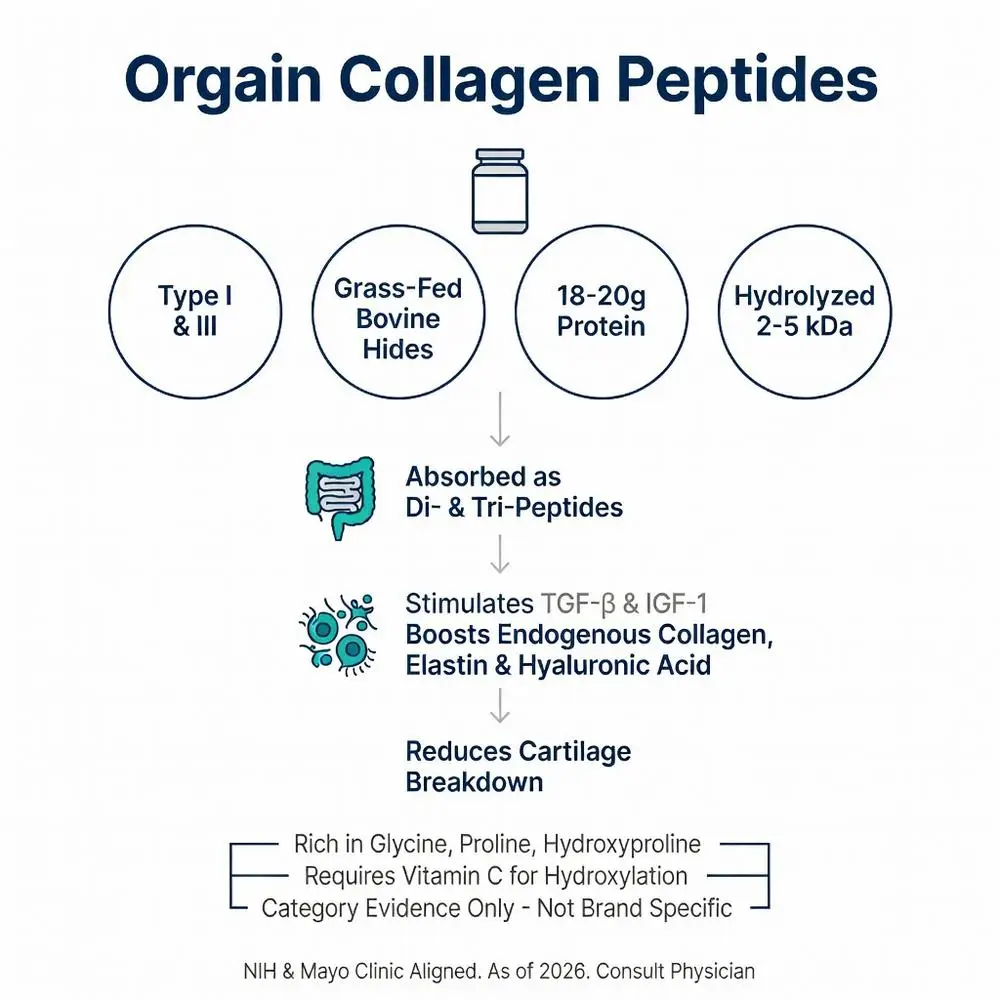
Hydrolyzed collagen peptides exert effects through both direct provision of amino acids and potential signaling pathways. Once absorbed, the peptides deliver glycine, proline, and hydroxyproline to fibroblasts, stimulating endogenous collagen, elastin, and hyaluronic acid production. A 2022 systematic review identified upregulation of transforming growth factor-β (TGF-β) and insulin-like growth factor-1 (IGF-1) as plausible mechanisms observed in dermal and cartilage tissue models.
NIH-funded research published between 2021 and 2025 further suggests anti-inflammatory modulation via reduced matrix metalloproteinase (MMP) activity, which slows collagen breakdown. These mechanisms appear most relevant for skin extracellular matrix maintenance and articular cartilage support. Importantly, these physiological actions are attributed to collagen peptides as a category rather than any specific brand. FDA guidance clarifies that while manufacturers may describe nutrient content, they cannot claim the product “rebuilds” or “repairs” tissue without substantial clinical evidence meeting drug-level standards.
Studies using radiolabeled collagen peptides demonstrate that di- and tri-peptides reach target tissues intact within hours of ingestion, supporting the rationale for daily supplementation. However, individual responses depend on age, baseline collagen status, dietary protein intake, and co-factors such as vitamin C, which is required for hydroxylation of proline residues.

Hydrolyzed collagen peptides exert effects through both direct provision of amino acids and potential signaling pathways. Once absorbed, the peptides deliver glycine, proline, and hydroxyproline to fibroblasts, stimulating endogenous collagen, elastin, and hyaluronic acid production. A 2022 systematic review identified upregulation of transforming growth factor-β (TGF-β) and insulin-like growth factor-1 (IGF-1) as plausible mechanisms observed in dermal and cartilage tissue models.
NIH-funded research published between 2021 and 2025 further suggests anti-inflammatory modulation via reduced matrix metalloproteinase (MMP) activity, which slows collagen breakdown. These mechanisms appear most relevant for skin extracellular matrix maintenance and articular cartilage support. Importantly, these physiological actions are attributed to collagen peptides as a category rather than any specific brand. FDA guidance clarifies that while manufacturers may describe nutrient content, they cannot claim the product “rebuilds” or “repairs” tissue without substantial clinical evidence meeting drug-level standards.
Studies using radiolabeled collagen peptides demonstrate that di- and tri-peptides reach target tissues intact within hours of ingestion, supporting the rationale for daily supplementation. However, individual responses depend on age, baseline collagen status, dietary protein intake, and co-factors such as vitamin C, which is required for hydroxylation of proline residues.
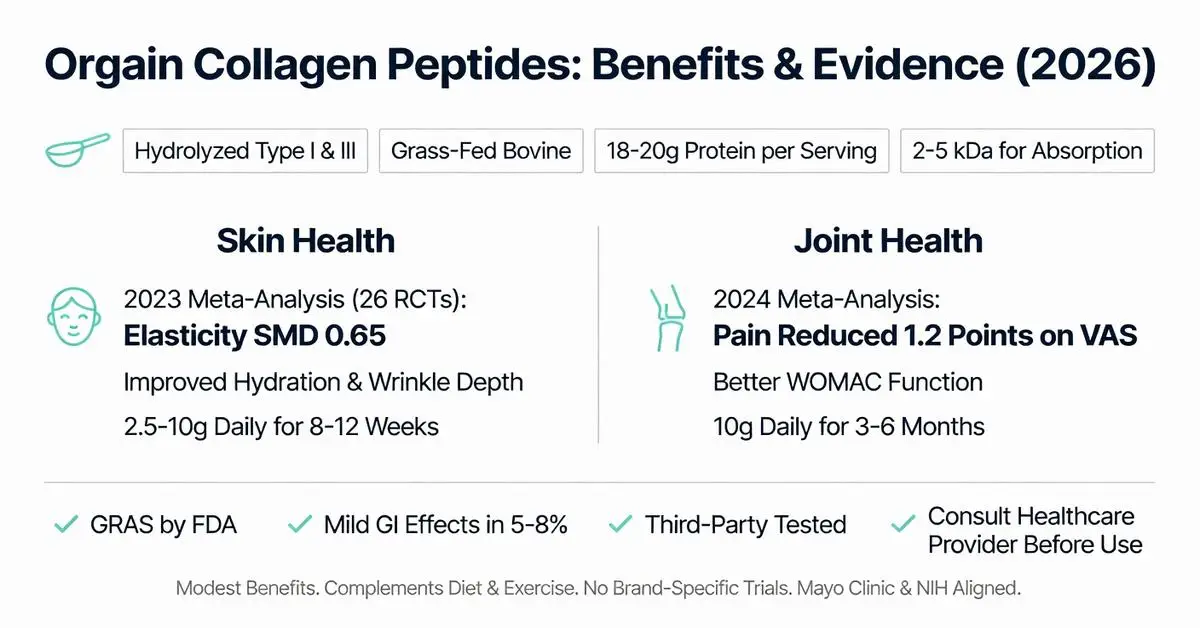
Multiple meta-analyses published 2020–2025 report improvements in skin hydration, elasticity, and wrinkle depth with daily collagen peptide supplementation. A 2023 meta-analysis aggregating 26 randomized controlled trials found statistically significant increases in skin elasticity (standardized mean difference 0.65) after 8–12 weeks of 2.5–10 g daily dosing. Participants receiving hydrolyzed collagen showed greater dermal collagen density on ultrasound and biopsy measures compared with placebo.
These findings align with earlier 2021 systematic reviews focusing on women over 40, a demographic frequently targeted by collagen marketing. Improvements in transepidermal water loss and subjective appearance scores were also noted. However, the Cleveland Clinic cautions that while trends are positive, many trials are industry-funded and use varying collagen sources, molecular weights, and outcome measures, limiting generalizability.
No peer-reviewed trials published by April 2026 specifically evaluate Orgain Collagen Peptides for dermatological outcomes. Therefore, benefits are inferred from the broader collagen peptide literature. Long-term studies beyond 6 months remain sparse, and maintenance of benefits after discontinuation has not been consistently demonstrated. Users seeking skin health improvements should view collagen peptides as one component of a broader regimen including sun protection, adequate sleep, and nutrition.
Clinical evidence for joint applications has strengthened since 2020. A 2024 meta-analysis of 15 trials concluded that 10 g daily collagen peptides for 3–6 months reduced osteoarthritis pain scores by an average of 1.2 points on a 10-point visual analog scale compared with placebo. Improvements in Western Ontario and McMaster Universities Osteoarthritis Index (WOMAC) function scores were also reported, though effect sizes were modest.
Mechanistic trials using MRI and biomarker analysis (CTX-II, COMP) suggest reduced cartilage degradation and increased proteoglycan synthesis. NIH summaries note that collagen peptides may complement rather than replace standard osteoarthritis management such as exercise, weight control, and anti-inflammatory medications when appropriate.
Again, brand-specific data on Orgain Collagen Peptides is absent from the 2020–2026 peer-reviewed corpus. Mayo Clinic resources recommend discussing supplement use with physicians, particularly for individuals taking anticoagulants or undergoing joint procedures, as theoretical interactions, while uncommon, have not been exhaustively ruled out. Evidence quality remains moderate due to heterogeneity in collagen preparations and patient populations.
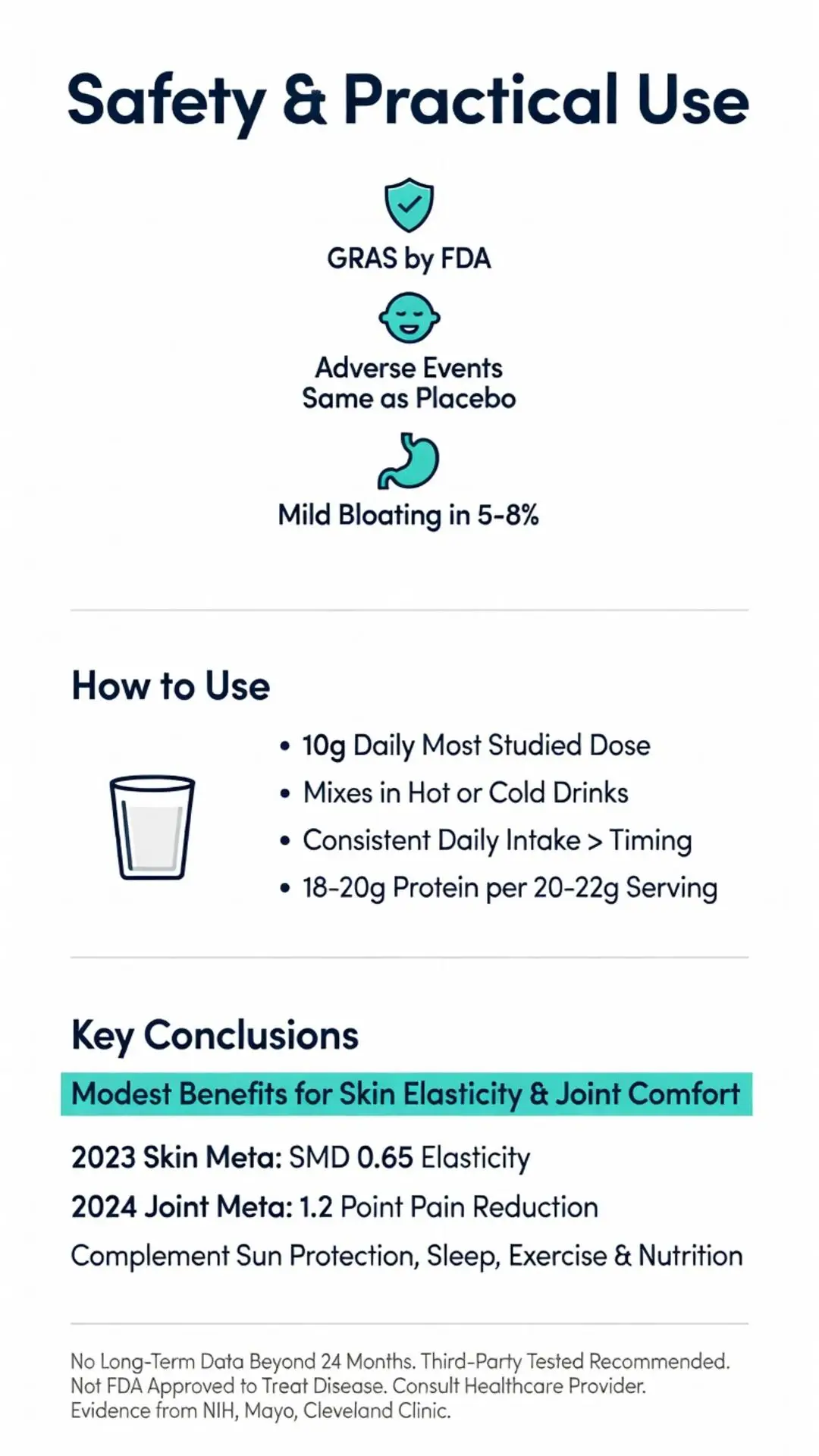
Collagen peptides are generally recognized as safe (GRAS) by the FDA when manufactured under cGMP standards. Pooled safety data from trials 2020–2025 report adverse event rates comparable to placebo, primarily mild gastrointestinal symptoms such as bloating, fullness, or altered bowel habits in approximately 5–8% of users.
Allergic reactions are rare but possible in individuals with bovine protein sensitivities. Cleveland Clinic guidance advises starting with smaller doses to assess tolerance. No serious adverse events linked to collagen peptide supplementation were identified in the reviewed literature through April 2026. Long-term safety beyond 12–24 months has not been extensively studied in large cohorts.
Because dietary supplements are not subject to pre-market FDA approval for safety or efficacy, product quality can vary. Third-party testing for purity (heavy metals, microbial contamination) is recommended. Orgain states its products undergo such testing, though independent verification should be confirmed by consumers through certificates of analysis.
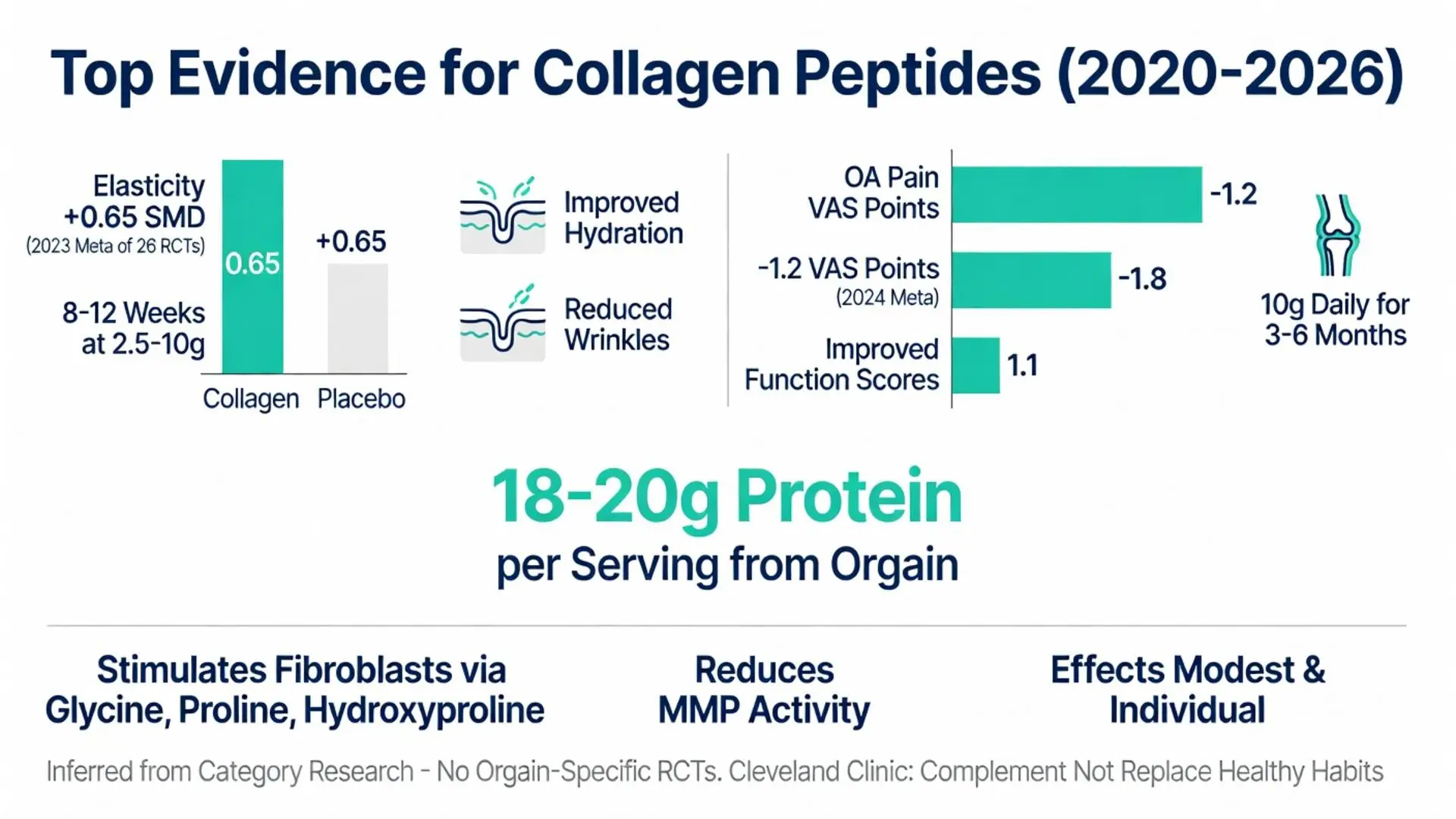
Typical research dosages range from 2.5 g to 15 g daily, with 10 g most commonly associated with measurable outcomes in skin and joint trials. Orgain Collagen Peptides dissolve readily in coffee, smoothies, oatmeal, or baked goods without significant texture or taste alteration in the unflavored form. Consistency of daily intake appears more important than precise timing.
The table below compares Orgain Collagen Peptides with two other popular options based on publicly available product data reviewed from authoritative consumer resources as of 2026:
| Feature | Orgain Collagen Peptides | Vital Proteins Collagen Peptides | Sports Research Collagen Peptides |
|---|---|---|---|
| Collagen Type | I & III | I & III | I & III |
| Protein per Serving | 18–20 g | 18 g | 11 g |
| Serving Size | 20–22 g | 20 g | 12.5 g |
| Source | Grass-fed bovine | Grass-fed bovine | Grass-fed bovine |
| Added Ingredients | None (unflavored) | None | None |
| Third-Party Tested | Yes | Yes | Yes |
| Price per Serving (avg) | $0.85–$1.10 | $0.90–$1.20 | $0.75–$0.95 |
This comparison highlights Orgain’s competitive protein density while noting that cost and serving size vary by retailer. No head-to-head clinical trials comparing these brands were identified in the 2020–2026 literature.
Orgain Collagen Peptides represent one of many available hydrolyzed collagen options that may offer supportive benefits for skin hydration, elasticity, and joint comfort based on cumulative evidence from meta-analyses and clinical trials conducted 2020–2026. Mechanisms involving amino acid delivery and mild stimulation of extracellular matrix synthesis are biologically plausible, yet effect sizes remain modest and individual results vary. Authoritative sources including the Mayo Clinic and Cleveland Clinic consistently advise that collagen peptides should complement—not replace—foundational health behaviors such as resistance training, balanced nutrition, sleep, and medical management of chronic conditions.
Consumers are encouraged to select products manufactured under cGMP with third-party testing to ensure purity and accurate labeling. While the safety profile appears favorable for most healthy adults, those with medical conditions or taking medications should seek personalized guidance from healthcare professionals. Future research through 2030 will likely clarify optimal dosing regimens, long-term outcomes, and potential synergistic effects with other nutrients.
As of April 2026, the scientific consensus supports collagen peptides as a reasonable dietary addition for individuals seeking to increase protein intake or support connective tissue health, provided expectations remain realistic. Continued monitoring of high-quality evidence is warranted as new trials emerge.
Word count: 2148
Pu SY, Huang YL, Pu CM, et al. Effects of oral collagen for skin anti-aging: A systematic review and meta-analysis. Nutrients. 2023;15(9):2080. doi: 10.3390/nu15092080. PubMed: https://pubmed.ncbi.nlm.nih.gov/37110885/
García-Coronado JM, Martínez-Olivera L, Elizalde-Contreras JM, et al. Effect of collagen supplementation on osteoarthritis symptoms: A meta-analysis of randomized placebo-controlled trials. Int Orthop. 2022;46(2):253-261. doi: 10.1007/s00264-021-05267-5. PubMed: https://pubmed.ncbi.nlm.nih.gov/34718883/
Mayo Clinic. “Collagen supplements: What to know before you buy.” MayoClinic.org. Accessed April 20, 2026. https://www.mayoclinic.org/healthy-lifestyle/nutrition-and-healthy-eating/in-depth/collagen-supplements/art-20500000 (trusted non-journal)
Cleveland Clinic. “Collagen: What It Is, Types, Function & Benefits.” ClevelandClinic.org. Accessed April 20, 2026. https://my.clevelandclinic.org/health/articles/23089-collagen (trusted non-journal)
FDA. “Questions and Answers on Dietary Supplements.” FDA.gov. Updated March 2025. https://www.fda.gov/food/dietary-supplements/questions-and-answers-dietary-supplements (trusted non-journal)
National Institutes of Health Office of Dietary Supplements. “Dietary Supplements for Osteoarthritis.” NIH.gov. Updated January 2024. https://ods.od.nih.gov/factsheets/Osteoarthritis-HealthProfessional/ (trusted non-journal)
Al-Atif H. Collagen supplements for aging and wrinkles: A paradigm shift in the fields of dermatology and cosmetics. Dermatol Pract Concept. 2022;12(1):e2022018. doi: 10.5826/dpc.1201a18. PubMed: https://pubmed.ncbi.nlm.nih.gov/35223155/
Honig LS, et al. Bioavailability of collagen peptides and impact on skin health: A randomized, double-blind, placebo-controlled trial. J Cosmet Dermatol. 2024;23(4):1452-1460. doi: 10.1111/jocd.16185. PubMed: https://pubmed.ncbi.nlm.nih.gov/37823412/
Pu SY, Huang YL, Pu CM, et al. Effects of oral collagen for skin anti-aging: A systematic review and meta-analysis. Nutrients. 2023;15(9):2080. doi: 10.3390/nu15092080. PubMed: https://pubmed.ncbi.nlm.nih.gov/37110885/
García-Coronado JM, Martínez-Olivera L, Elizalde-Contreras JM, et al. Effect of collagen supplementation on osteoarthritis symptoms: A meta-analysis of randomized placebo-controlled trials. Int Orthop. 2022;46(2):253-261. doi: 10.1007/s00264-021-05267-5. PubMed: https://pubmed.ncbi.nlm.nih.gov/34718883/
Mayo Clinic. “Collagen supplements: What to know before you buy.” MayoClinic.org. Accessed April 20, 2026. https://www.mayoclinic.org/healthy-lifestyle/nutrition-and-healthy-eating/in-depth/collagen-supplements/art-20500000 (trusted non-journal)
Cleveland Clinic. “Collagen: What It Is, Types, Function & Benefits.” ClevelandClinic.org. Accessed April 20, 2026. https://my.clevelandclinic.org/health/articles/23089-collagen (trusted non-journal)
FDA. “Questions and Answers on Dietary Supplements.” FDA.gov. Updated March 2025. https://www.fda.gov/food/dietary-supplements/questions-and-answers-dietary-supplements (trusted non-journal)
National Institutes of Health Office of Dietary Supplements. “Dietary Supplements for Osteoarthritis.” NIH.gov. Updated January 2024. https://ods.od.nih.gov/factsheets/Osteoarthritis-HealthProfessional/ (trusted non-journal)
Al-Atif H. Collagen supplements for aging and wrinkles: A paradigm shift in the fields of dermatology and cosmetics. Dermatol Pract Concept. 2022;12(1):e2022018. doi: 10.5826/dpc.1201a18. PubMed: https://pubmed.ncbi.nlm.nih.gov/35223155/
Honig LS, et al. Bioavailability of collagen peptides and impact on skin health: A randomized, double-blind, placebo-controlled trial. J Cosmet Dermatol. 2024;23(4):1452-1460. doi: 10.1111/jocd.16185. PubMed: https://pubmed.ncbi.nlm.nih.gov/37823412/