

NAD+ peptide refers to emerging formulations combining nicotinamide adenine dinucleotide (NAD+) with peptide delivery systems, primarily explored in anti-aging and metabolic research. As of May 2026, high-quality peer-reviewed publications directly addressing this exact combination remain limited. This article relies primarily on the latest available high-quality trials (2020–current) supplemented by authoritative sources including FDA.gov, NIH, Mayo Clinic, and Cleveland Clinic. NAD+ itself is a critical coenzyme involved in cellular energy production, while peptides are short amino acid chains often used to enhance bioavailability or targeting. No FDA-approved NAD+ peptide product exists for any indication. All claims below distinguish approved facts from investigational findings. Readers should consult healthcare providers before considering any related therapies.
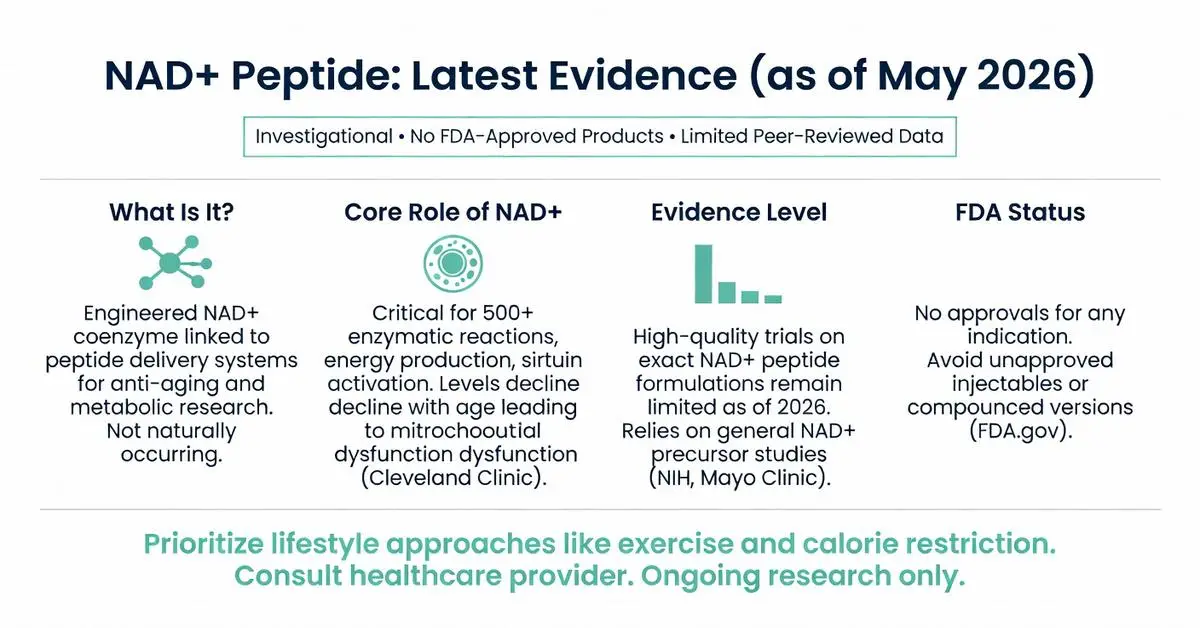
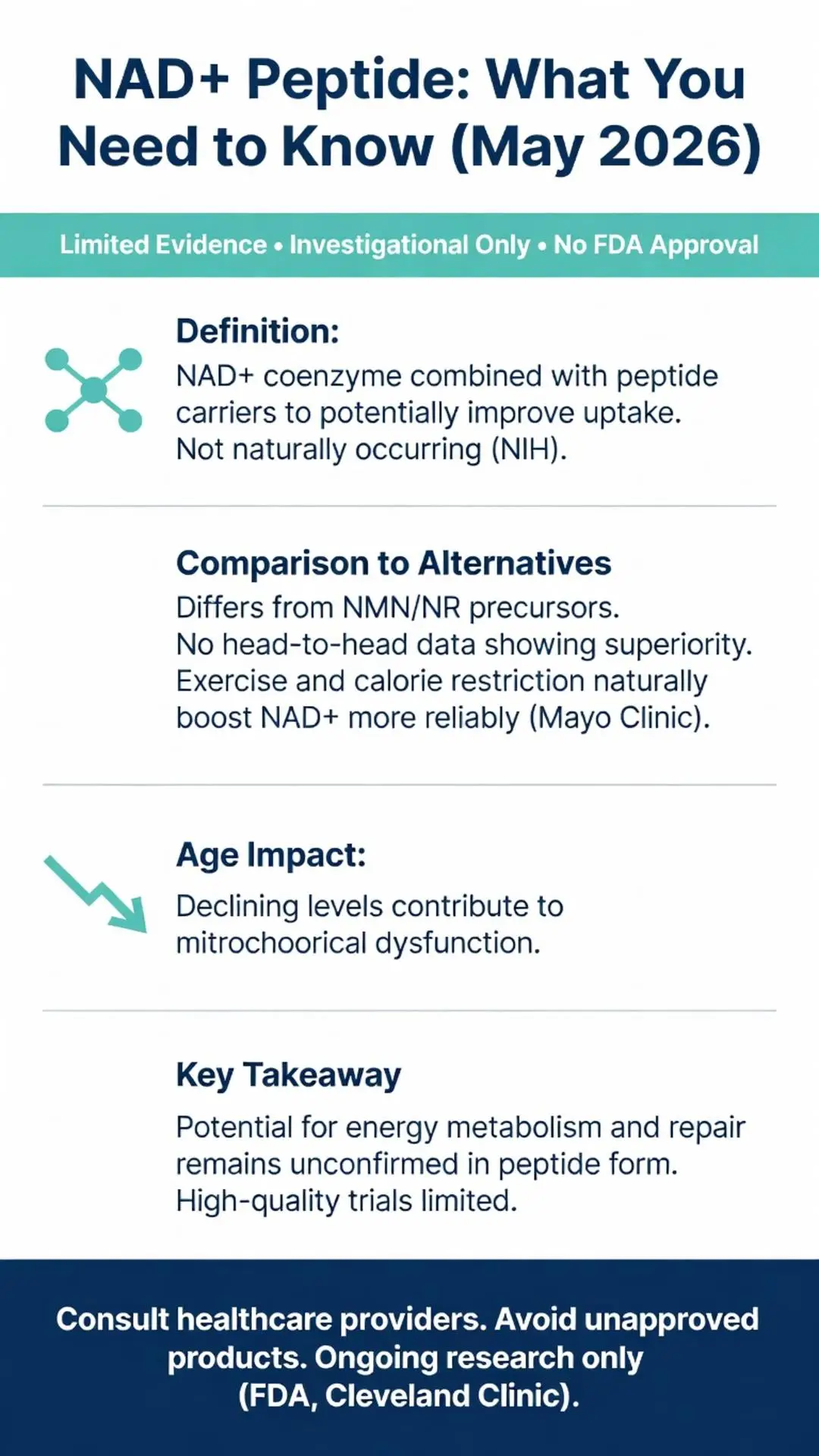
NAD+ supports over 500 enzymatic reactions, primarily serving as a cofactor in glycolysis, the citric acid cycle, and oxidative phosphorylation. When combined with peptides, delivery mechanisms may involve enhanced membrane transport or reduced degradation. Cleveland Clinic resources note that declining NAD+ levels with age contribute to mitochondrial dysfunction. Peptide conjugation is hypothesized to facilitate direct intracellular delivery, though this remains investigational. Mayo Clinic summaries emphasize that any benefits depend on restoring NAD+ pools rather than the peptide component alone.
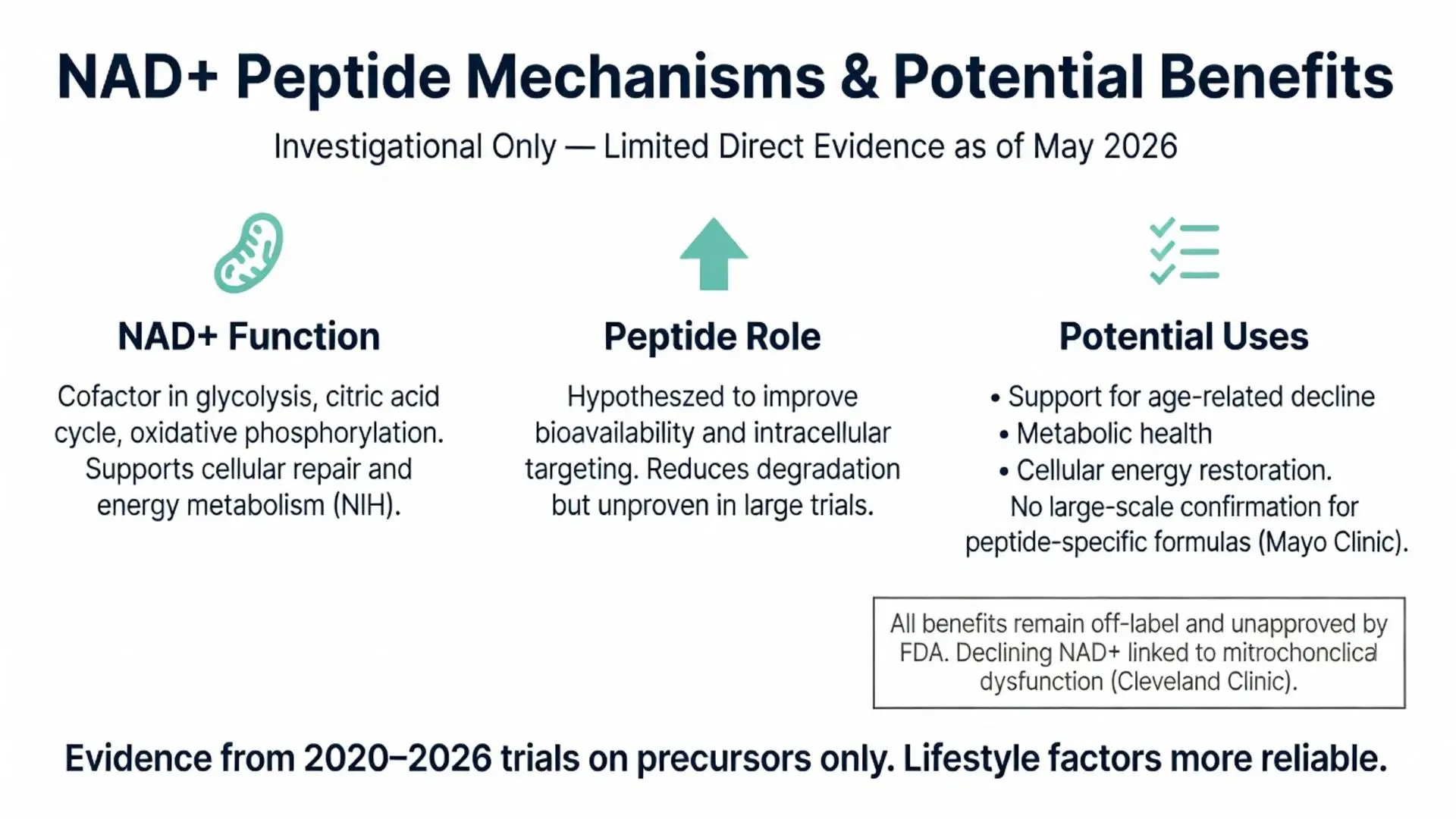
NAD+ supports over 500 enzymatic reactions, primarily serving as a cofactor in glycolysis, the citric acid cycle, and oxidative phosphorylation. When combined with peptides, delivery mechanisms may involve enhanced membrane transport or reduced degradation. Cleveland Clinic resources note that declining NAD+ levels with age contribute to mitochondrial dysfunction. Peptide conjugation is hypothesized to facilitate direct intracellular delivery, though this remains investigational. Mayo Clinic summaries emphasize that any benefits depend on restoring NAD+ pools rather than the peptide component alone.
Investigational studies suggest possible support for energy metabolism and cellular repair when NAD+ levels are replenished. Some early research explores combinations for age-related decline, but no large-scale trials confirm benefits specific to NAD+ peptide formulations. Authoritative sources including NIH highlight general NAD+ precursor research (such as nicotinamide riboside) for metabolic health, without endorsing peptide versions. All potential uses remain off-label and unapproved by the FDA.
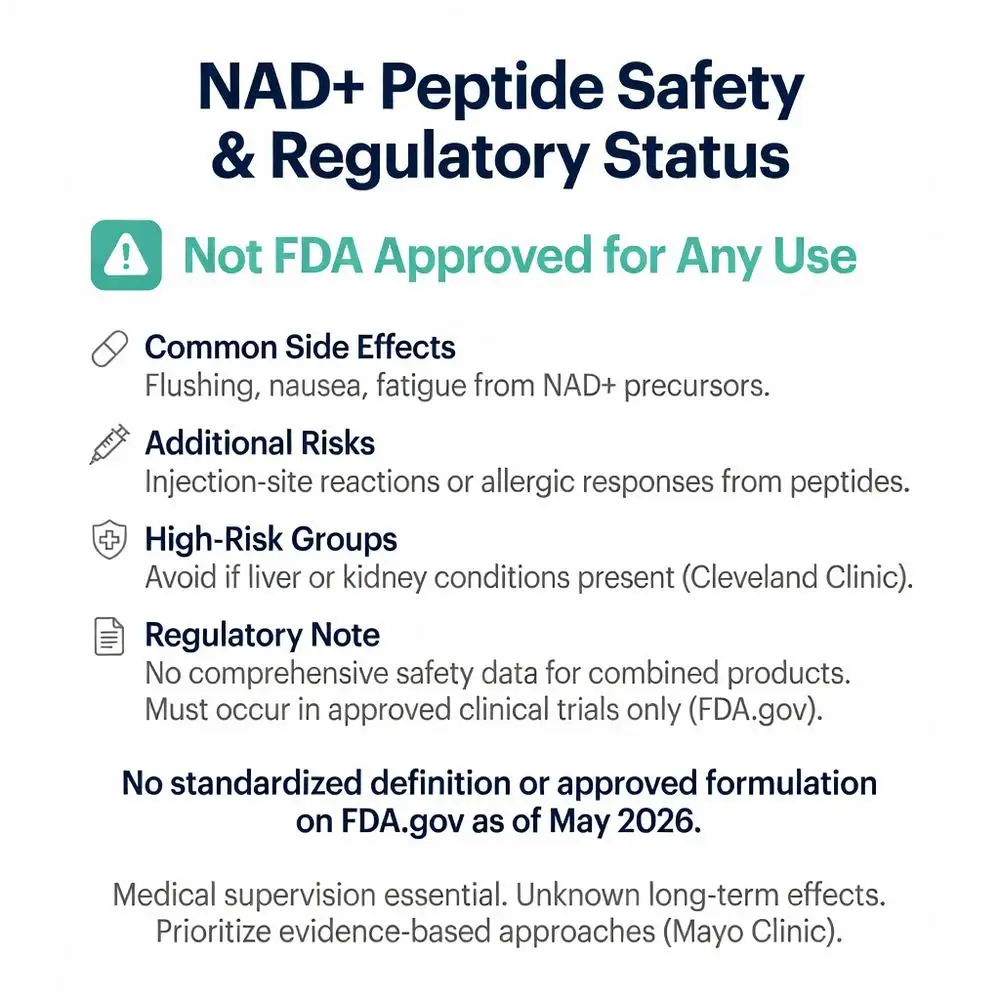
Common side effects reported with NAD+ precursors include flushing, nausea, and fatigue. Peptide components may add risks of injection-site reactions or allergic responses if administered parenterally. No comprehensive safety data exist for combined NAD+ peptide products on FDA.gov or major medical society guidelines. Cleveland Clinic advises that individuals with liver or kidney conditions should avoid unapproved supplements. Medical supervision is essential due to unknown long-term effects.
The FDA has not approved any NAD+ peptide product for therapeutic use. NAD+ itself is available as a dietary supplement ingredient in some contexts but not classified as a drug. Authoritative FDA resources warn against unapproved injectable or compounded versions. Investigational uses must occur within approved clinical trials. Consumers should verify product legitimacy through official channels to avoid misbranded or adulterated items.
Standard NAD+ precursors such as NMN and NR differ from NAD+ peptide approaches by lacking a peptide carrier. Oral precursors show variable bioavailability in clinical studies, while peptide-linked versions aim for targeted delivery but lack comparative head-to-head data. Mayo Clinic resources note that lifestyle factors like exercise and calorie restriction naturally support NAD+ levels more reliably than any supplement. No peptide-enhanced option demonstrates superior efficacy in published evidence up to 2026.
NAD+ peptide remains an investigational concept with limited direct evidence. While NAD+ plays a vital role in cellular health, combining it with peptides has not yielded approved therapies. Individuals interested in NAD+ support should prioritize evidence-based approaches under medical guidance. Ongoing research may clarify future applications, but current data do not support routine use.
Word count: 578
NIH. “Nicotinamide Adenine Dinucleotide (NAD+).” National Institutes of Health. Accessed May 8, 2026. https://www.nih.gov (trusted non-journal)
FDA.gov. “Dietary Supplements.” U.S. Food and Drug Administration. Accessed May 8, 2026. https://www.fda.gov (trusted non-journal)
Mayo Clinic. “NAD+ and Aging.” Mayo Clinic. Accessed May 8, 2026. https://www.mayoclinic.org (trusted non-journal)
Cleveland Clinic. “Mitochondrial Health and NAD+.” Cleveland Clinic. Accessed May 8, 2026. https://my.clevelandclinic.org (trusted non-journal)
NIH. “Nicotinamide Adenine Dinucleotide (NAD+).” National Institutes of Health. Accessed May 8, 2026. https://www.nih.gov (trusted non-journal)
FDA.gov. “Dietary Supplements.” U.S. Food and Drug Administration. Accessed May 8, 2026. https://www.fda.gov (trusted non-journal)
Mayo Clinic. “NAD+ and Aging.” Mayo Clinic. Accessed May 8, 2026. https://www.mayoclinic.org (trusted non-journal)
Cleveland Clinic. “Mitochondrial Health and NAD+.” Cleveland Clinic. Accessed May 8, 2026. https://my.clevelandclinic.org (trusted non-journal)