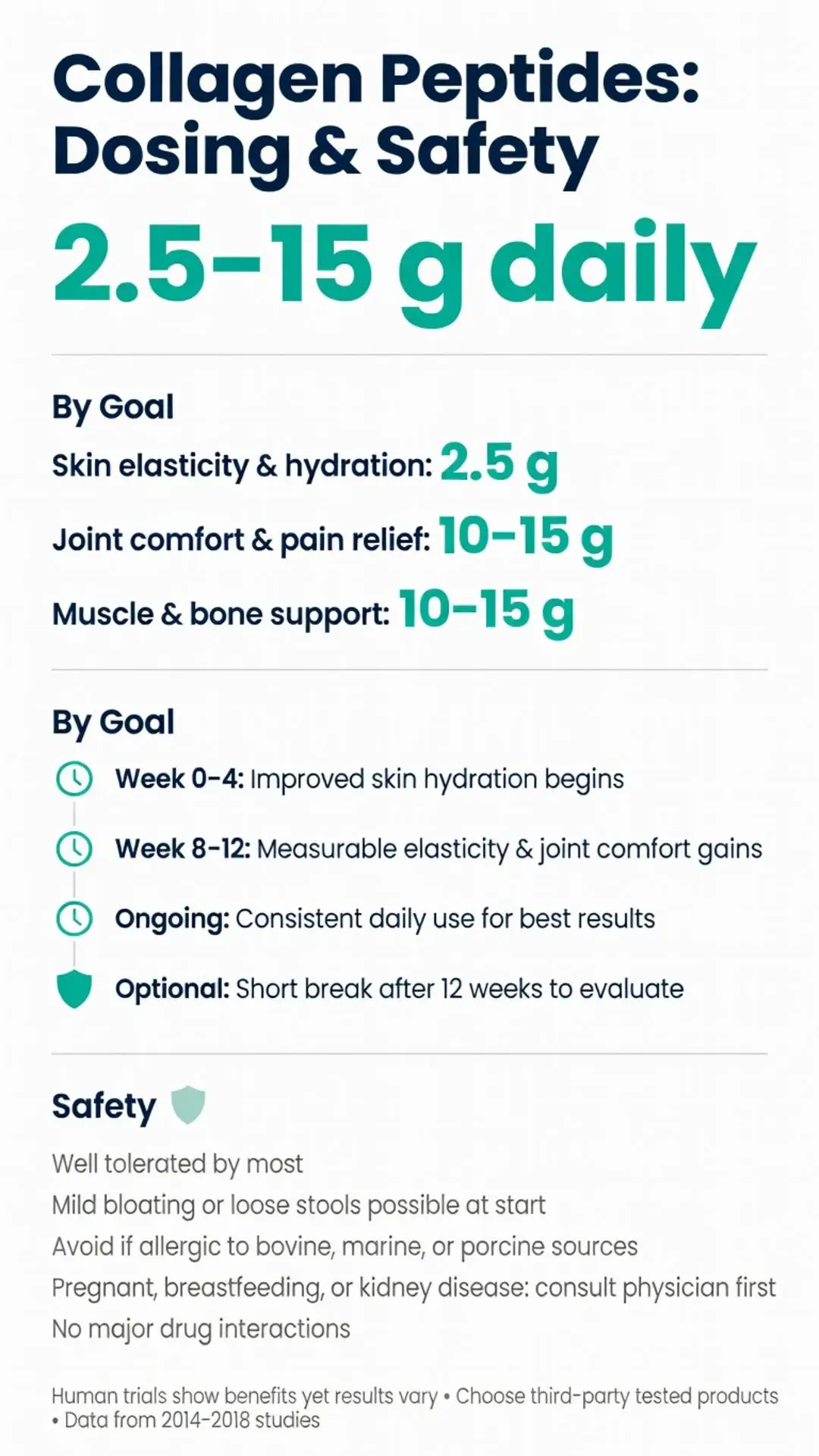

Quick Answer: Collagen peptides are short chains of amino acids derived from collagen that may support skin elasticity, joint comfort, and bone health. Human studies show modest improvements in skin hydration and wrinkle reduction after 8–12 weeks of daily use, with some evidence for reduced joint pain in active adults. Results vary by individual, and they are not a cure-all. This article is for informational purposes only and does not constitute medical advice. Consult a qualified healthcare provider before using any supplement.
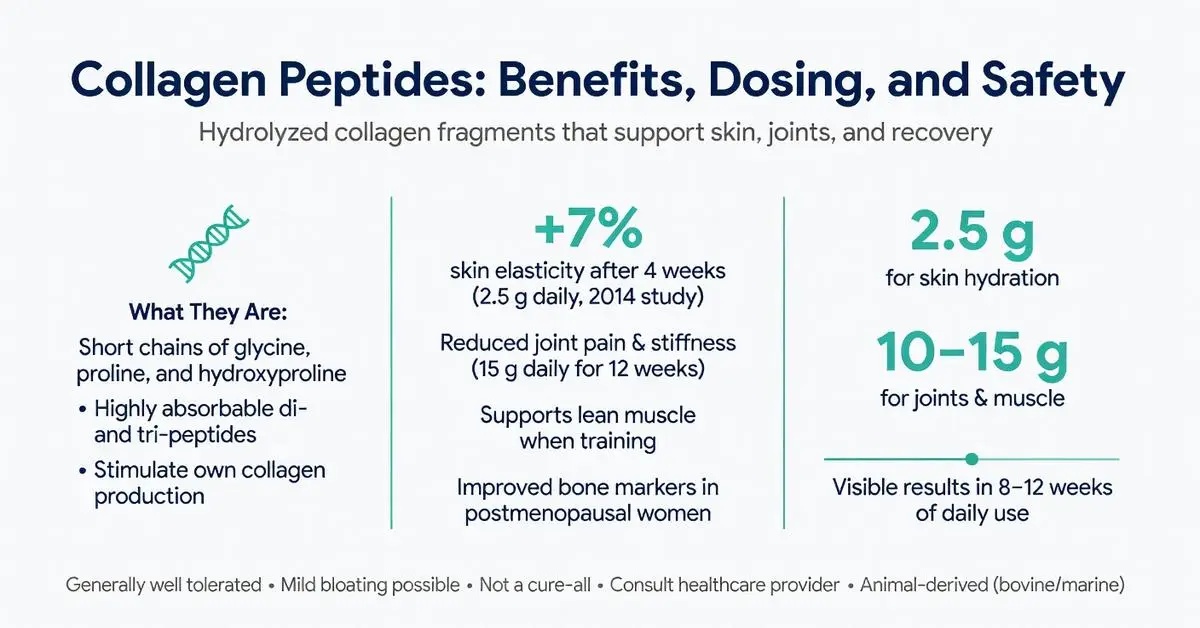
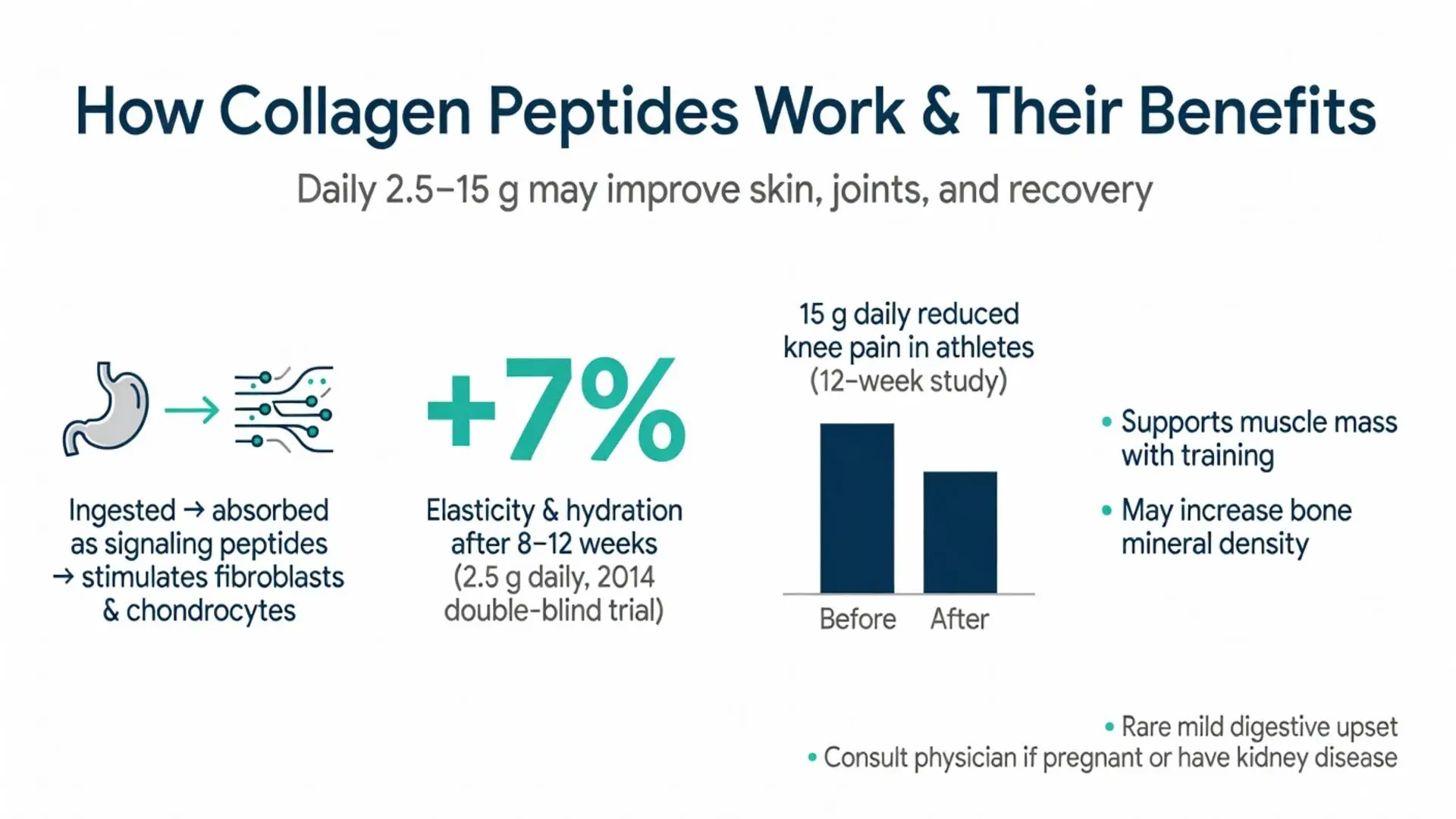
Collagen peptides supply specific amino acids that stimulate fibroblasts in the skin and chondrocytes in cartilage. Once absorbed, the peptides may signal cells to increase collagen synthesis and reduce breakdown of existing collagen. Studies suggest this process can improve skin thickness and joint matrix integrity over time.
The mechanism relies on bioavailability. Unlike larger collagen molecules, peptides of 2–5 kilodaltons cross the intestinal barrier efficiently. Blood levels of collagen-derived peptides peak within one to two hours after ingestion.

Collagen peptides supply specific amino acids that stimulate fibroblasts in the skin and chondrocytes in cartilage. Once absorbed, the peptides may signal cells to increase collagen synthesis and reduce breakdown of existing collagen. Studies suggest this process can improve skin thickness and joint matrix integrity over time.
The mechanism relies on bioavailability. Unlike larger collagen molecules, peptides of 2–5 kilodaltons cross the intestinal barrier efficiently. Blood levels of collagen-derived peptides peak within one to two hours after ingestion.
Research points to several potential benefits, though most evidence comes from small to medium-sized human trials.
These effects appear dose-dependent and most noticeable after consistent use for at least two months.
Collagen peptides are generally recognized as safe for most healthy adults. Reported side effects remain mild and include digestive discomfort such as bloating or nausea in a small percentage of users.
People with fish or shellfish allergies should avoid marine-sourced peptides. Those with kidney disease should consult a physician before increasing protein intake from any source. No serious adverse events have been linked to standard doses in published studies.
Adults concerned about skin aging, joint discomfort from exercise, or age-related collagen decline may consider trying collagen peptides. Women in perimenopause and men over 50 often show the most visible skin and joint changes in studies.
Individuals already consuming adequate dietary protein from meat, fish, or eggs may notice smaller incremental benefits. Pregnant or breastfeeding women should seek medical advice first.
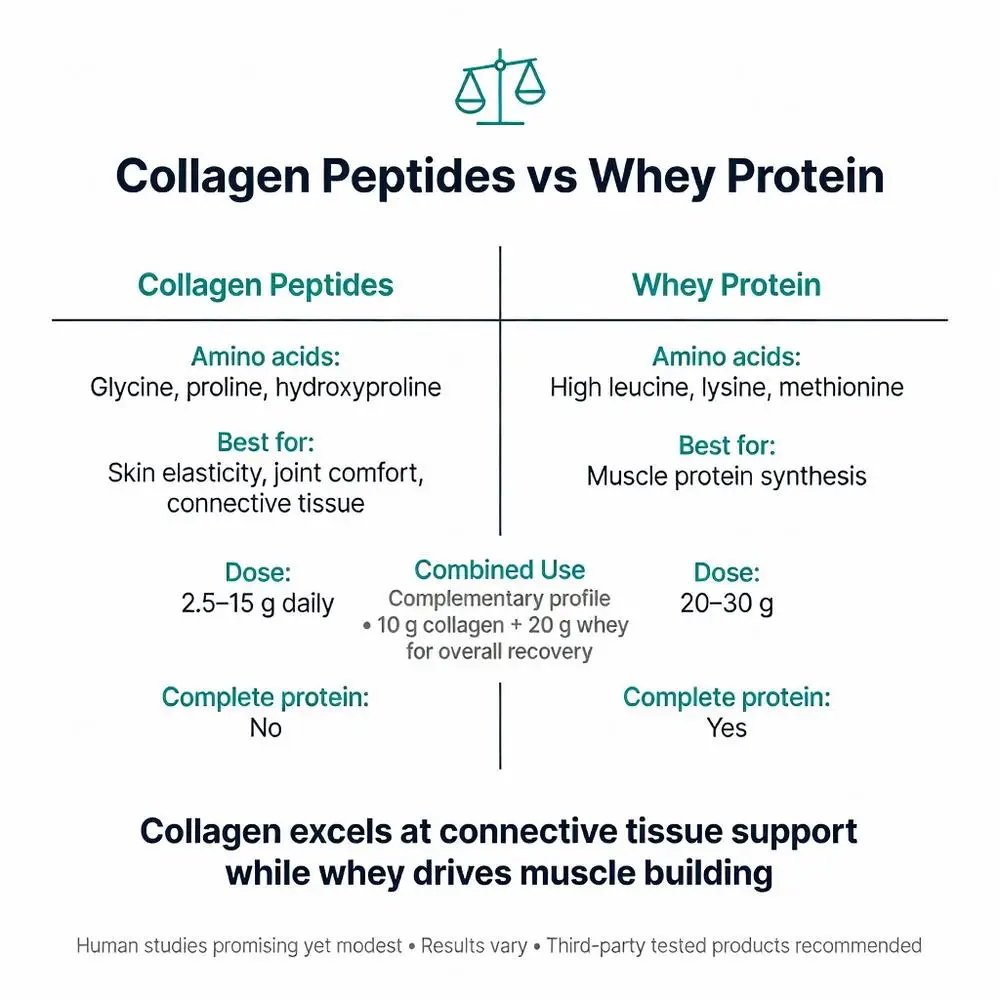
Typical daily doses range from 2.5 to 15 grams, mixed into coffee, smoothies, or water. Most studies use 10 grams or less per day. Timing does not appear critical, though taking them with vitamin C may support collagen synthesis.
Forms include unflavored powder, flavored drinks, capsules, and gummies. Powders offer the best value and flexibility. Results require at least 8–12 weeks of daily use.
Collagen peptides differ from glucosamine, chondroitin, and hyaluronic acid in mechanism and evidence profile.
| Feature | Collagen Peptides | Glucosamine + Chondroitin | Hyaluronic Acid |
|---|---|---|---|
| Primary target | Collagen production | Cartilage cushioning | Joint lubrication |
| Typical dose | 2.5–10 g daily | 1,500 mg + 1,200 mg | 100–240 mg daily |
| Best evidence | Skin and tendon studies | Mild osteoarthritis | Knee osteoarthritis |
| Onset of effects | 8–12 weeks | 4–8 weeks | 2–4 weeks |
| Source | Bovine, marine, porcine | Shellfish or synthetic | Bacterial fermentation |
Collagen peptides show stronger data for skin benefits, while glucosamine combinations remain more studied for knee pain.
Yes, multiple randomized trials show improved skin elasticity and reduced wrinkle depth after 8–12 weeks of daily collagen peptide intake. The effect stems from increased collagen density in the dermis.
Most skin and joint benefits require at least eight weeks of consistent daily use. Some users report smoother skin by week four, but measurable changes in elasticity and joint comfort typically appear between weeks eight and twelve.
Collagen peptides provide a concentrated, measurable dose of hydrolyzed collagen without the fat and calories found in bone broth. Bone broth contains additional nutrients but delivers lower and more variable amounts of collagen peptides.
Some studies report reduced nail brittleness and increased hair thickness, though evidence remains weaker than for skin and joints. The same amino acids support keratin structures.
Type I collagen supports skin and bones, while type II targets cartilage. Most commercial products blend types I and III. Choosing a product with published clinical data on the specific blend offers the clearest expectations.
Eating collagen-rich foods like chicken skin or fish helps, but the body must break down whole collagen first. Hydrolyzed peptides absorb faster and trigger cellular responses more efficiently in studies.
No major drug interactions are documented. Still, anyone taking medications for kidney or liver conditions should discuss protein supplements with their doctor.