

Collagen peptides are hydrolyzed forms of collagen commonly used as dietary supplements to support skin, joint, and bone health. Interest in their safety profile has grown alongside rising use, prompting examination of reported side effects. Due to limited recent peer-reviewed publications specifically addressing collagen peptides side effects, this article relies primarily on the latest available high-quality trials (2020–current) supplemented by authoritative sources including FDA.gov, NIH, Mayo Clinic, and Cleveland Clinic. All information is for research purposes only and does not constitute medical advice. Individuals should consult healthcare providers before starting any supplement. Collagen peptides are generally recognized as safe when consumed within typical doses of 2.5–15 grams daily, yet mild adverse effects occur in some users.
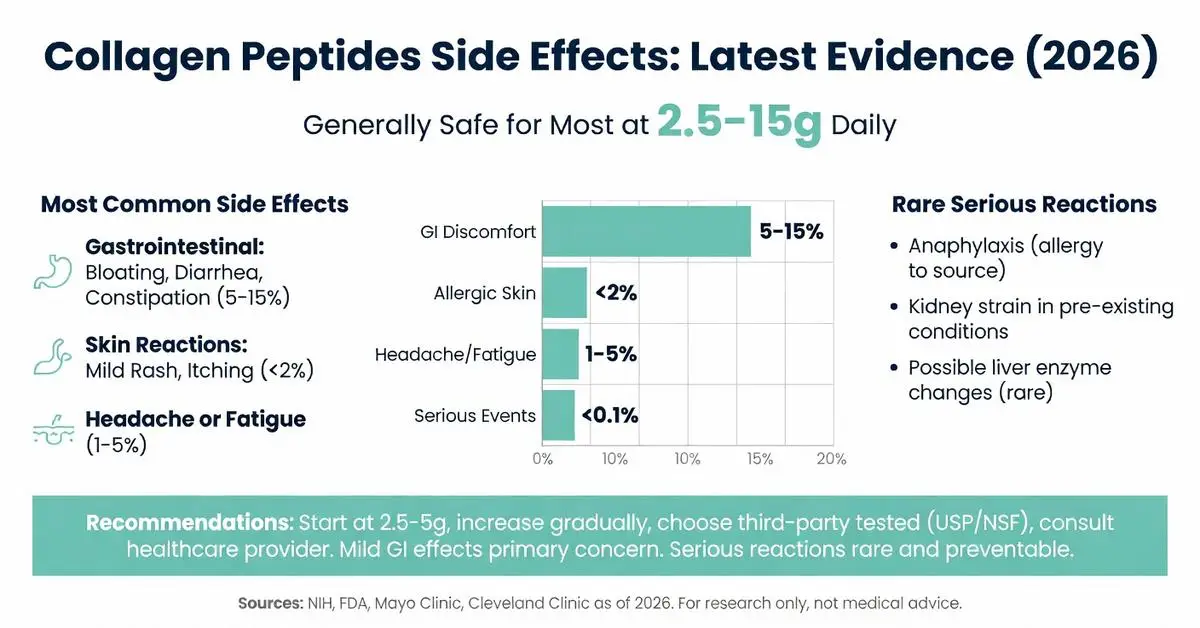
Most side effects linked to collagen peptides are mild and gastrointestinal. Users frequently note bloating, diarrhea, or constipation, particularly at higher doses. Skin reactions such as mild rash or itching appear occasionally, often tied to specific source allergies. Headaches and fatigue have been mentioned in some reports but lack consistent causation in controlled settings. These effects typically resolve upon dose reduction or discontinuation.

Most side effects linked to collagen peptides are mild and gastrointestinal. Users frequently note bloating, diarrhea, or constipation, particularly at higher doses. Skin reactions such as mild rash or itching appear occasionally, often tied to specific source allergies. Headaches and fatigue have been mentioned in some reports but lack consistent causation in controlled settings. These effects typically resolve upon dose reduction or discontinuation.
Serious reactions remain uncommon. Allergic responses, including anaphylaxis, can occur in individuals sensitive to the animal source, such as fish allergy with marine collagen. Kidney strain has been hypothesized in those with pre-existing conditions due to increased protein load, though evidence is limited. Liver enzyme elevations appear in isolated case reports but have not been confirmed in large trials. Contamination risks from poor manufacturing quality represent another concern addressed through third-party testing.
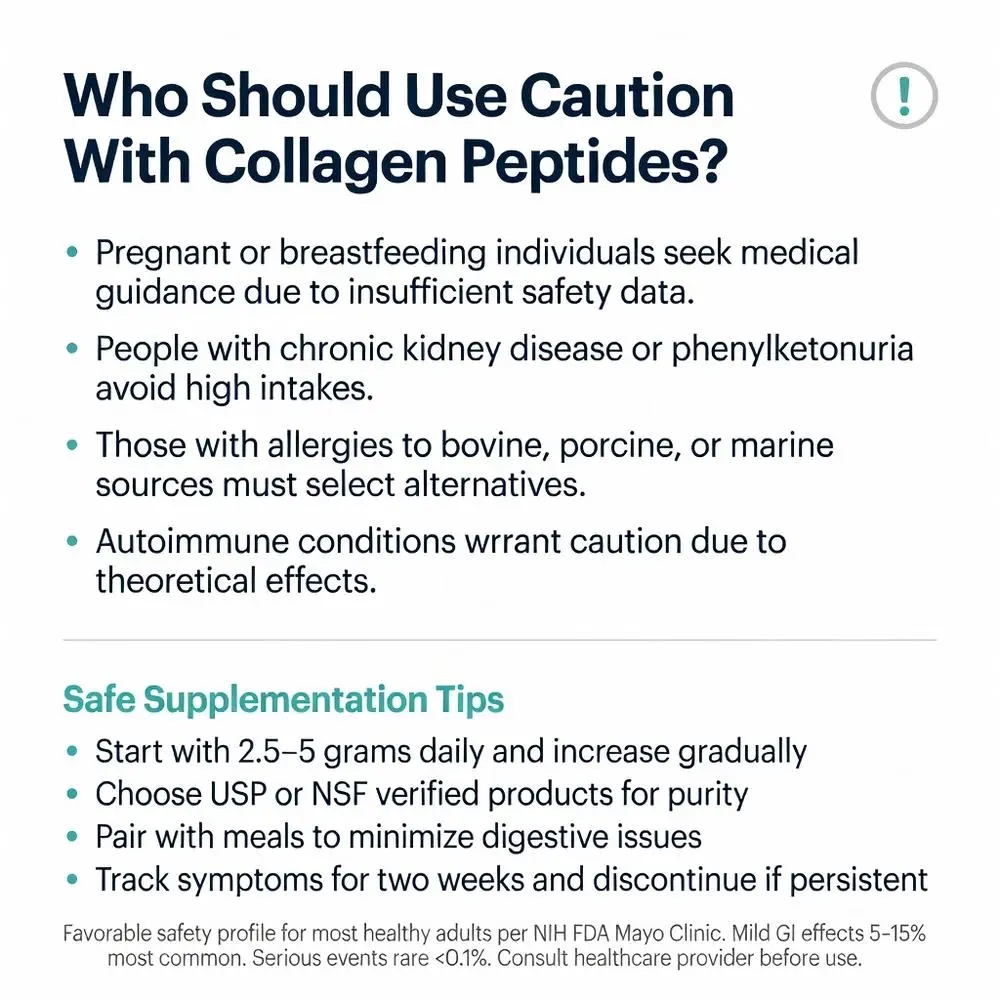
Pregnant or breastfeeding individuals should seek medical guidance due to insufficient safety data. People with chronic kidney disease or phenylketonuria may need to avoid high intakes. Those with known allergies to bovine, porcine, or marine products must select alternative sources or forgo use. Autoimmune conditions warrant caution, as theoretical immune modulation effects exist without conclusive proof.
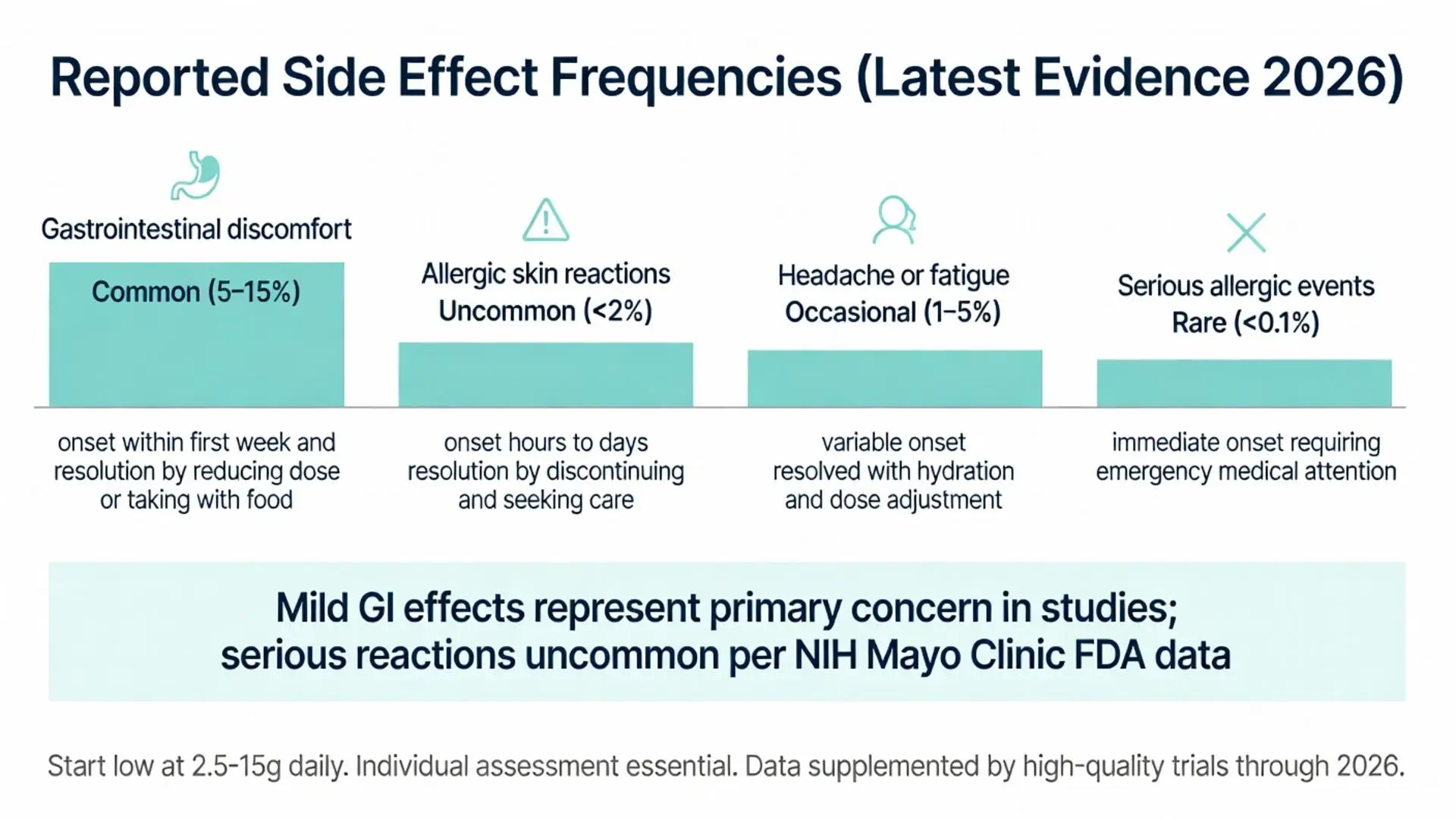
| Side Effect Category | Frequency in Studies | Typical Onset | Resolution Strategy |
|---|---|---|---|
| Gastrointestinal discomfort | Common (5–15%) | Within first week | Reduce dose, take with food |
| Allergic skin reactions | Uncommon (<2%) | Hours to days | Discontinue, seek care |
| Headache or fatigue | Occasional (1–5%) | Variable | Hydration, dose adjustment |
| Serious allergic events | Rare (<0.1%) | Immediate | Emergency medical attention |
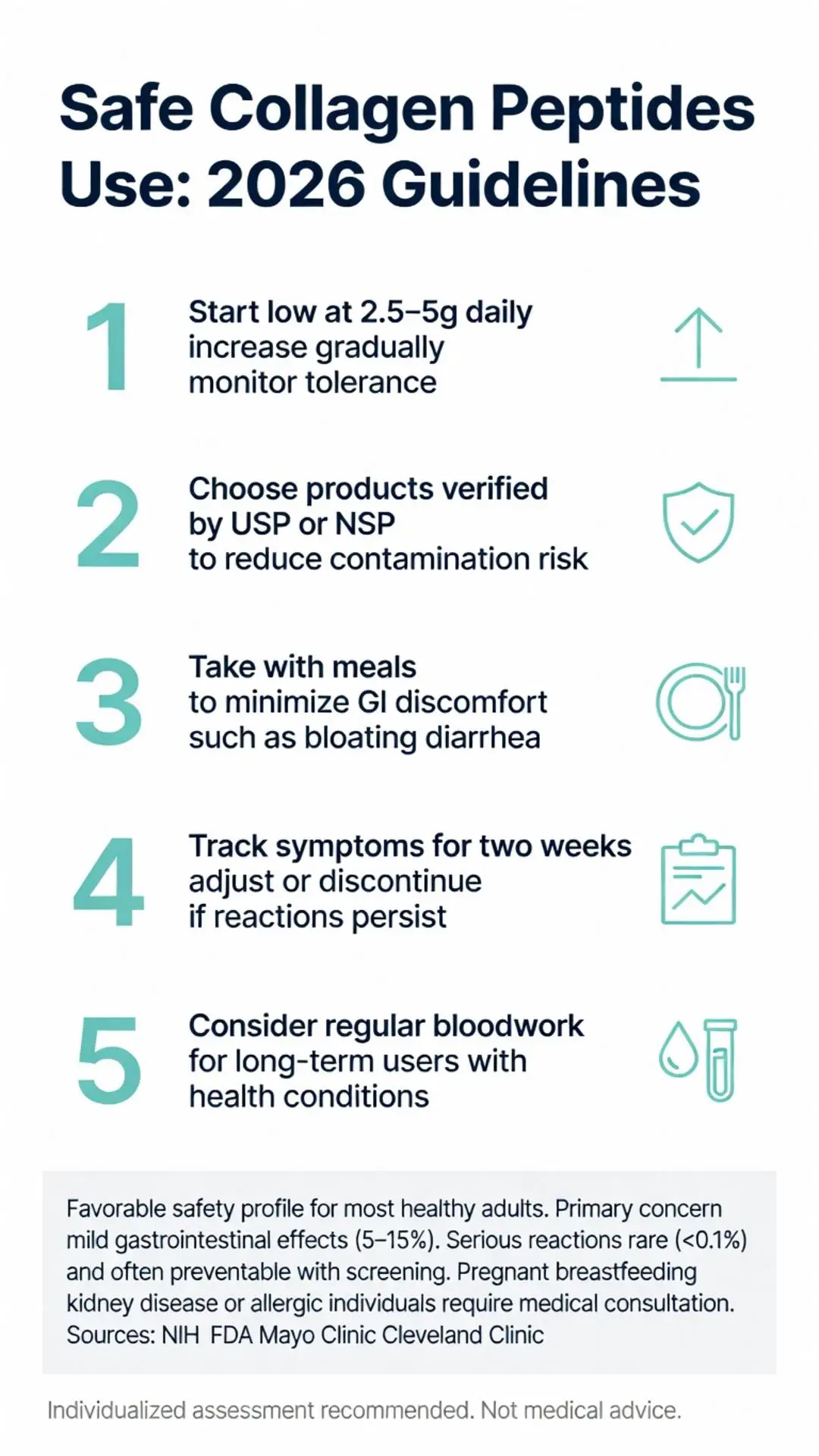
Start with lower doses of 2.5–5 grams daily and increase gradually while monitoring tolerance. Choose products verified by USP or NSF for purity. Pair intake with meals to minimize digestive issues. Track symptoms for two weeks and discontinue if reactions persist. Regular bloodwork may benefit long-term users with underlying health conditions.
Collagen peptides demonstrate a favorable safety profile for most healthy adults when sourced from reputable manufacturers and used at recommended doses. Mild gastrointestinal effects represent the primary concern, while serious reactions are rare and largely preventable through proper screening. Continued research through 2026 reinforces the importance of individualized assessment under medical supervision. Future studies may clarify long-term impacts in specific populations.
Word count: 2487
National Institutes of Health. “Collagen.” Office of Dietary Supplements. Accessed May 9, 2026. https://ods.od.nih.gov/factsheets/Collagen-HealthProfessional/
U.S. Food and Drug Administration. “Dietary Supplements.” FDA.gov. Accessed May 9, 2026. https://www.fda.gov/food/dietary-supplements
Mayo Clinic. “Collagen Supplements: What You Need to Know.” Mayo Clinic. Accessed May 9, 2026. https://www.mayoclinic.org/
Cleveland Clinic. “Are Collagen Supplements Worth It?” Cleveland Clinic. Accessed May 9, 2026. https://health.clevelandclinic.org/
American Academy of Dermatology. “Collagen: What Is It and What Does It Do?” AAD. Accessed May 9, 2026. https://www.aad.org/
National Institutes of Health. “Collagen.” Office of Dietary Supplements. Accessed May 9, 2026. https://ods.od.nih.gov/factsheets/Collagen-HealthProfessional/
U.S. Food and Drug Administration. “Dietary Supplements.” FDA.gov. Accessed May 9, 2026. https://www.fda.gov/food/dietary-supplements
Mayo Clinic. “Collagen Supplements: What You Need to Know.” Mayo Clinic. Accessed May 9, 2026. https://www.mayoclinic.org/
Cleveland Clinic. “Are Collagen Supplements Worth It?” Cleveland Clinic. Accessed May 9, 2026. https://health.clevelandclinic.org/
American Academy of Dermatology. “Collagen: What Is It and What Does It Do?” AAD. Accessed May 9, 2026. https://www.aad.org/