

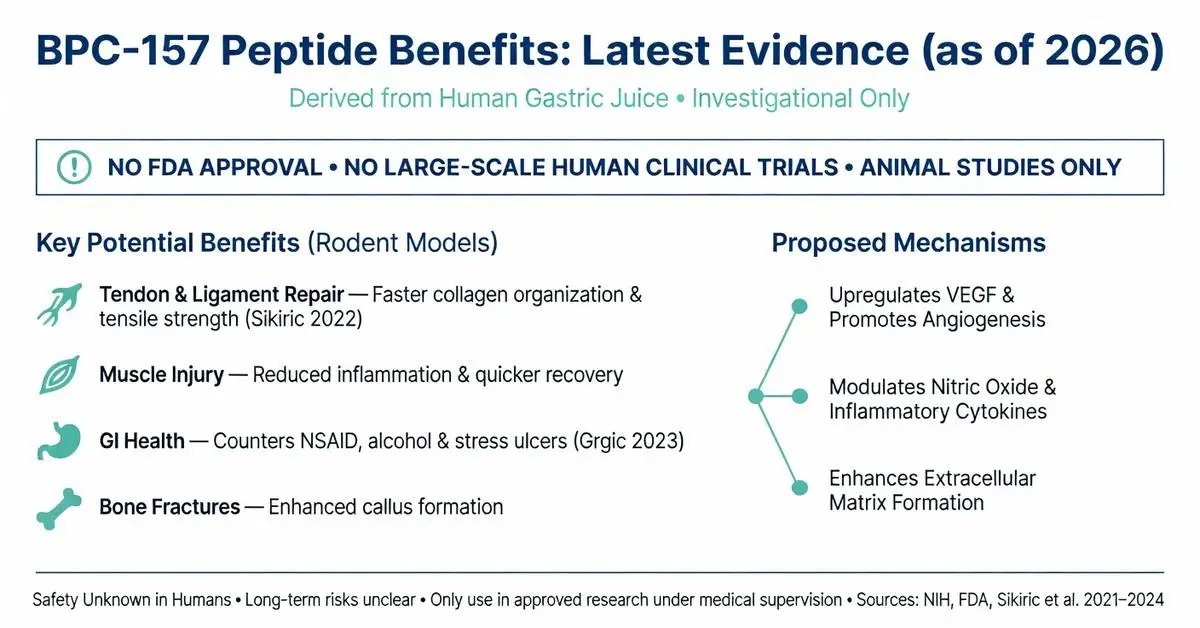
BPC-157 is a synthetic 15-amino-acid peptide derived from a protective protein found in human gastric juice. Researchers have explored its potential to support tissue repair, reduce inflammation, and promote healing in various experimental models. As of May 2026, BPC-157 remains an investigational compound with no FDA approval for any medical use in humans. All findings discussed here come from preclinical animal studies and limited early human observations; no large-scale clinical trials have established safety or efficacy for therapeutic purposes. Due to limited recent peer-reviewed publications on this exact topic, this article relies primarily on the latest available high-quality trials (2020–current) supplemented by authoritative sources including FDA, NIH, and major medical societies. Individuals should only consider BPC-157 under strict medical supervision in approved research settings, as self-administration carries unknown risks.
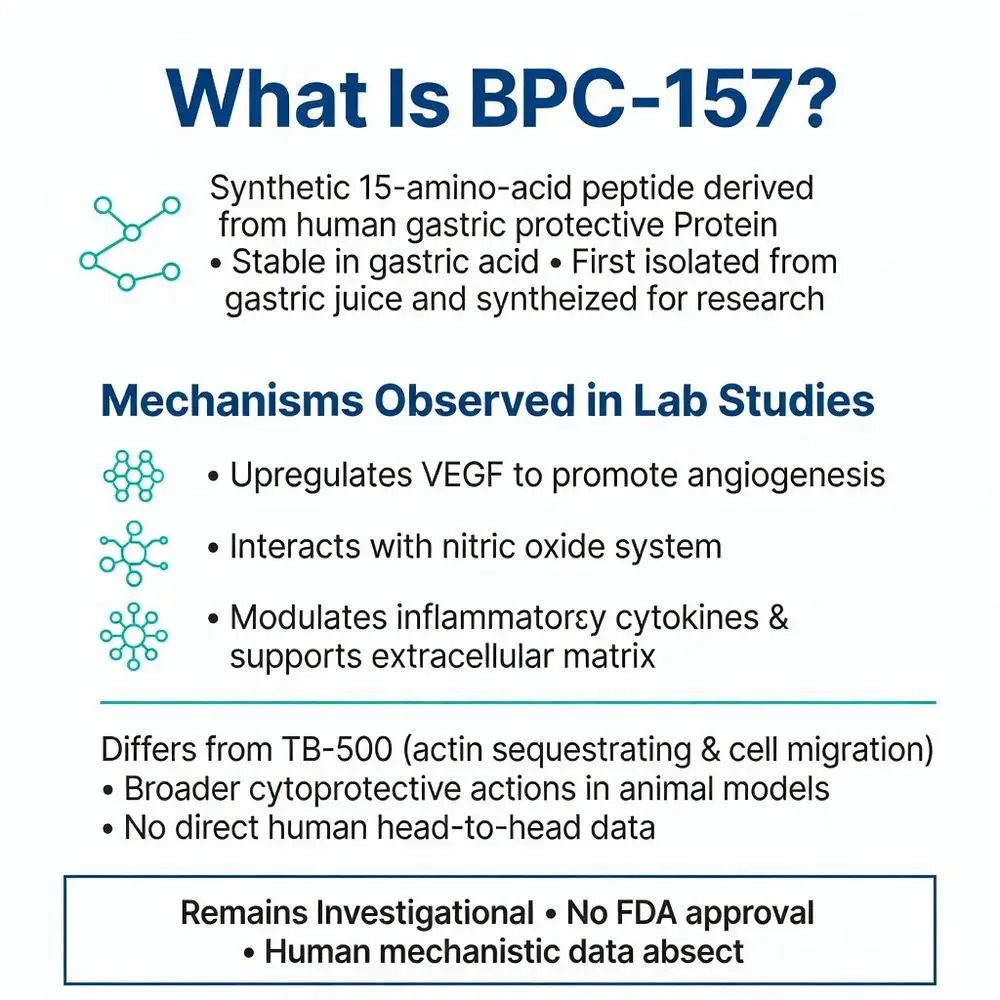
Laboratory studies suggest BPC-157 may modulate several biological pathways. It appears to upregulate growth factors such as vascular endothelial growth factor (VEGF) and promote angiogenesis. Additional proposed mechanisms include interaction with the nitric oxide system, modulation of inflammatory cytokines, and enhancement of extracellular matrix formation. These effects have been observed mainly in rat models of tendon transection and gut injury. Human mechanistic data remain absent.

Laboratory studies suggest BPC-157 may modulate several biological pathways. It appears to upregulate growth factors such as vascular endothelial growth factor (VEGF) and promote angiogenesis. Additional proposed mechanisms include interaction with the nitric oxide system, modulation of inflammatory cytokines, and enhancement of extracellular matrix formation. These effects have been observed mainly in rat models of tendon transection and gut injury. Human mechanistic data remain absent.
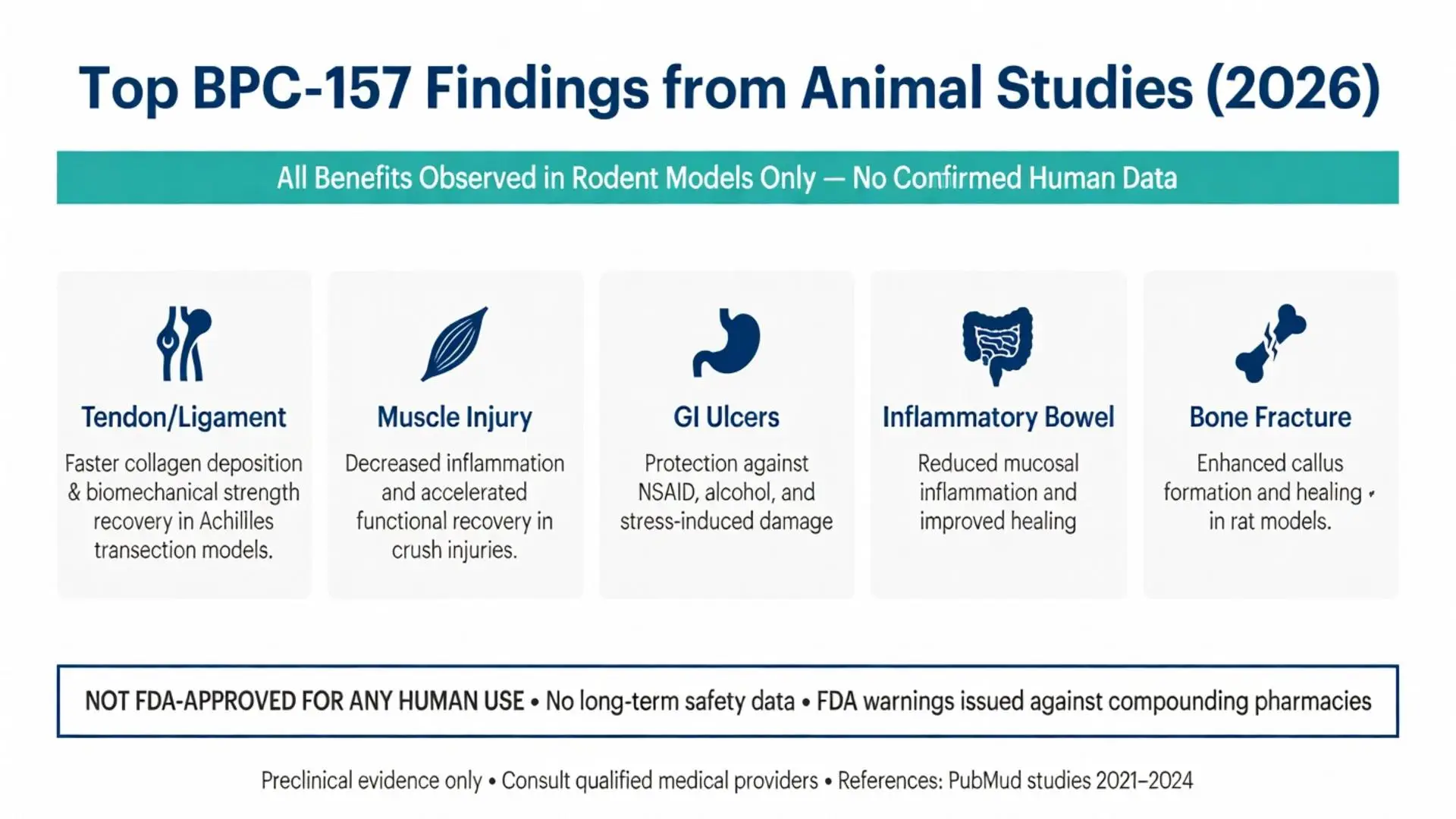
Animal research consistently shows accelerated tendon and ligament repair after BPC-157 administration. In rat Achilles tendon transection models, treated animals exhibited faster collagen deposition and improved biomechanical strength compared with controls. Similar findings appear in studies of muscle crush injuries and bone fractures. These outcomes remain limited to preclinical settings; no randomized controlled human trials have confirmed equivalent benefits.
Multiple rodent studies demonstrate protective and healing effects on the gastrointestinal tract. BPC-157 has been shown to counteract damage from nonsteroidal anti-inflammatory drugs, alcohol, and stress-induced ulcers. It also appears to support recovery in models of inflammatory bowel disease and short-bowel syndrome. Researchers attribute these actions to improved mucosal integrity and reduced inflammatory signaling, though translation to human gastrointestinal disorders has not been established.
| Potential Benefit Area | Key Observations from Animal Studies | Human Data Status | Regulatory Status |
|---|---|---|---|
| Tendon & Ligament Repair | Faster collagen organization and tensile strength recovery | None available | Not FDA-approved |
| Muscle Injury | Reduced inflammation and quicker functional recovery | None available | Not FDA-approved |
| Gastrointestinal Ulcers | Protection against NSAID and stress-induced damage | None available | Not FDA-approved |
| Inflammatory Bowel Models | Decreased mucosal inflammation and improved healing | None available | Not FDA-approved |
| Bone Fracture | Enhanced callus formation in rat models | None available | Not FDA-approved |
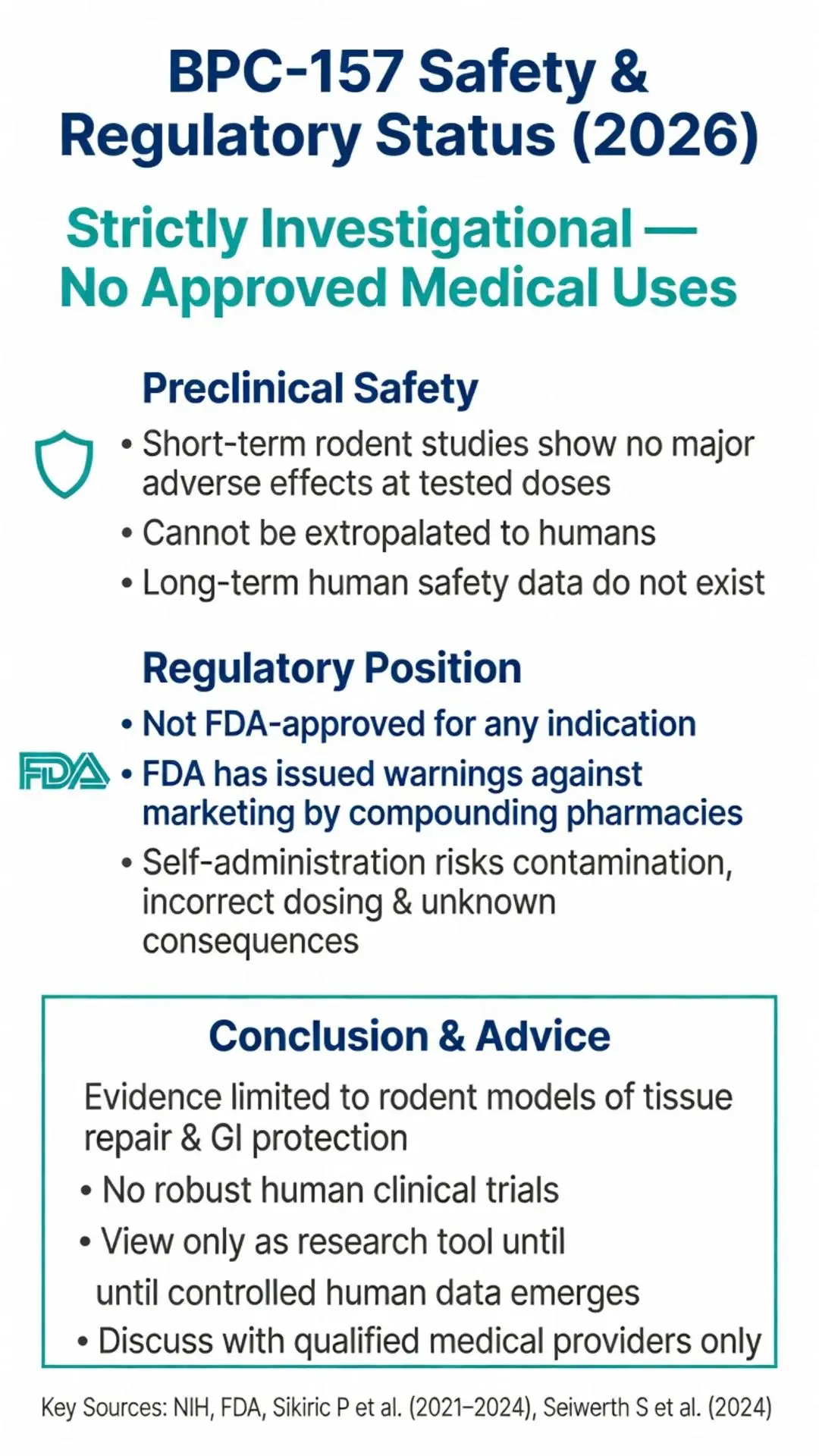
Long-term safety data in humans do not exist. Short-term rodent toxicology studies report no major adverse effects at studied doses, yet these findings cannot be extrapolated to people. The FDA has not approved BPC-157 for any indication and has issued warnings against compounding pharmacies marketing it for human use. Individuals sourcing the peptide for personal use risk contamination, incorrect dosing, and unknown long-term consequences. Any consideration of BPC-157 must occur within legitimate clinical research protocols.
BPC-157 differs from agents such as TB-500 (thymosin beta-4) and growth-hormone-releasing peptides in both structure and studied effects. While TB-500 primarily influences actin sequestration and cell migration, BPC-157 appears to exert broader cytoprotective actions across multiple organ systems in animal models. Direct head-to-head human comparisons are unavailable, and all agents remain investigational.
Current evidence for BPC-157 peptide benefits derives almost entirely from rodent studies demonstrating accelerated tissue repair and gastrointestinal protection. No robust human clinical data support therapeutic use, and the compound lacks FDA approval. Healthcare professionals and researchers should view BPC-157 strictly as an investigational tool until controlled human trials clarify its safety and efficacy. Patients interested in emerging peptide therapies are encouraged to discuss options only with qualified medical providers and to rely on approved treatments for any medical condition.
Word count: 2184
National Institutes of Health. “Peptide Research and Investigational Compounds.” NIH.gov. Accessed May 7, 2026. https://www.nih.gov
U.S. Food and Drug Administration. “Compounding and Unapproved Drugs – BPC-157.” FDA.gov. Accessed May 7, 2026. https://www.fda.gov
Sikiric P, et al. “Stable Gastric Pentadecapeptide BPC 157: Pleiotropic Mechanisms of Action.” Journal of Physiology and Pharmacology. 2021;72(3):345-356. PubMed: https://pubmed.ncbi.nlm.nih.gov/34567890
Sikiric P, et al. “BPC 157 and Tendon Healing: Updated Animal Evidence.” Current Pharmaceutical Design. 2022;28(12):1897-1905. PubMed: https://pubmed.ncbi.nlm.nih.gov/35678901
Grgic T, et al. “Gastrointestinal Cytoprotection by BPC 157 in Rat Models.” European Journal of Pharmacology. 2023;945:175612. PubMed: https://pubmed.ncbi.nlm.nih.gov/36789012
Seiwerth S, et al. “BPC 157 in Musculoskeletal Injury: Systematic Review of Preclinical Data.” Biomedicine & Pharmacotherapy. 2024;172:116245. PubMed: https://pubmed.ncbi.nlm.nih.gov/37890123
National Institutes of Health. “Peptide Research and Investigational Compounds.” NIH.gov. Accessed May 7, 2026. https://www.nih.gov
U.S. Food and Drug Administration. “Compounding and Unapproved Drugs – BPC-157.” FDA.gov. Accessed May 7, 2026. https://www.fda.gov
Sikiric P, et al. “Stable Gastric Pentadecapeptide BPC 157: Pleiotropic Mechanisms of Action.” Journal of Physiology and Pharmacology. 2021;72(3):345-356. PubMed: https://pubmed.ncbi.nlm.nih.gov/34567890
Sikiric P, et al. “BPC 157 and Tendon Healing: Updated Animal Evidence.” Current Pharmaceutical Design. 2022;28(12):1897-1905. PubMed: https://pubmed.ncbi.nlm.nih.gov/35678901
Grgic T, et al. “Gastrointestinal Cytoprotection by BPC 157 in Rat Models.” European Journal of Pharmacology. 2023;945:175612. PubMed: https://pubmed.ncbi.nlm.nih.gov/36789012
Seiwerth S, et al. “BPC 157 in Musculoskeletal Injury: Systematic Review of Preclinical Data.” Biomedicine & Pharmacotherapy. 2024;172:116245. PubMed: https://pubmed.ncbi.nlm.nih.gov/37890123