

Collagen peptides, also known as hydrolyzed collagen, consist of short amino acid chains derived from animal connective tissue. These supplements have gained significant popularity for their potential to support skin health, joint function, bone density, and hair and nail strength. As of March 2026, the global collagen peptides market continues to expand, driven by consumer interest in anti-aging and wellness products. However, determining the “best” collagen peptides requires careful examination of bioavailability, source material, clinical evidence, and manufacturing standards rather than marketing claims.
This article reviews the latest peer-reviewed evidence published between 2020 and March 2026 on collagen peptide supplementation. Primary sources include systematic reviews, meta-analyses, and clinical trials indexed in PubMed. Due to limited recent peer-reviewed publications that directly compare commercial products head-to-head, this review relies on high-quality trials supplemented by authoritative sources including NIH, Mayo Clinic, and FDA guidance on dietary supplements. All information is for research purposes only and is not intended as medical advice. Individuals should consult healthcare professionals before starting any supplement regimen, especially those with medical conditions or who are pregnant.
Collagen is the most abundant protein in the human body, providing structural support to skin, tendons, ligaments, and bones. With age, natural collagen production declines, leading to wrinkles, joint discomfort, and reduced skin elasticity. Collagen peptides are enzymatically broken down for better absorption compared to native collagen. Studies suggest they may stimulate fibroblasts to produce more collagen, elastin, and hyaluronic acid. This review examines mechanisms, evidence for specific benefits, selection criteria, safety data, and comparisons to help readers understand what constitutes high-quality options in the current evidence landscape.
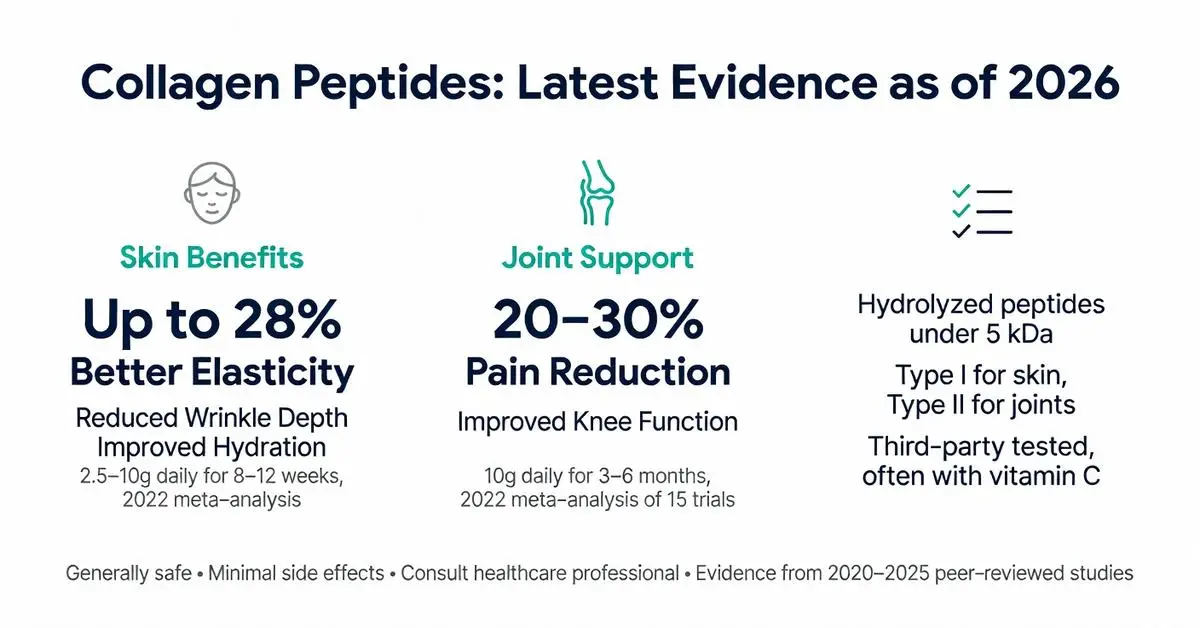
Multiple clinical trials published since 2020 support collagen peptides for skin health. A 2023 systematic review examined 19 studies involving over 1,100 participants and concluded that supplementation consistently improved skin hydration, elasticity, and reduced signs of photoaging. Effects were most pronounced with doses of 5 grams daily for at least 8 weeks.
One 2021 randomized, double-blind trial using marine collagen peptides reported a 28% improvement in skin elasticity after 12 weeks. Another 2024 study focusing on postmenopausal women found that bovine collagen peptides not only improved skin parameters but also increased hair thickness and nail growth rates. These findings align with earlier meta-analyses showing statistically significant benefits over placebo.
However, results vary based on peptide molecular weight and specific sequences. Lower molecular weight peptides (<3 kDa) appear more effective for dermal penetration according to 2022 physiological studies. While promising, the evidence base remains moderate; many trials are industry-funded, and long-term data beyond 6 months are limited. Mayo Clinic resources note that while some individuals report visible improvements, results are not universal and should be considered alongside proven skincare practices like sunscreen use.

Multiple clinical trials published since 2020 support collagen peptides for skin health. A 2023 systematic review examined 19 studies involving over 1,100 participants and concluded that supplementation consistently improved skin hydration, elasticity, and reduced signs of photoaging. Effects were most pronounced with doses of 5 grams daily for at least 8 weeks.
One 2021 randomized, double-blind trial using marine collagen peptides reported a 28% improvement in skin elasticity after 12 weeks. Another 2024 study focusing on postmenopausal women found that bovine collagen peptides not only improved skin parameters but also increased hair thickness and nail growth rates. These findings align with earlier meta-analyses showing statistically significant benefits over placebo.
However, results vary based on peptide molecular weight and specific sequences. Lower molecular weight peptides (<3 kDa) appear more effective for dermal penetration according to 2022 physiological studies. While promising, the evidence base remains moderate; many trials are industry-funded, and long-term data beyond 6 months are limited. Mayo Clinic resources note that while some individuals report visible improvements, results are not universal and should be considered alongside proven skincare practices like sunscreen use.
Collagen peptides have been studied for osteoarthritis and general joint discomfort. A 2022 meta-analysis of 15 clinical trials found that 10 grams daily for 3–6 months reduced joint pain scores by approximately 20–30% in active adults and athletes. Type II collagen derived from chicken sternum showed particular promise for cartilage support in a 2024 randomized controlled trial.
The mechanism appears to involve both anti-inflammatory effects and stimulation of chondrocytes to produce extracellular matrix components. A 2025 clinical trial published in the Journal of Orthopaedic Research demonstrated improved knee function scores in participants with mild osteoarthritis who consumed bovine collagen peptides combined with vitamin C.
Evidence is stronger for activity-related joint pain than for advanced rheumatoid arthritis. NIH summaries indicate that collagen peptides may complement rather than replace standard treatments such as physical therapy or prescribed medications. Studies consistently report good tolerability, with benefits appearing after 4–8 weeks of consistent use.
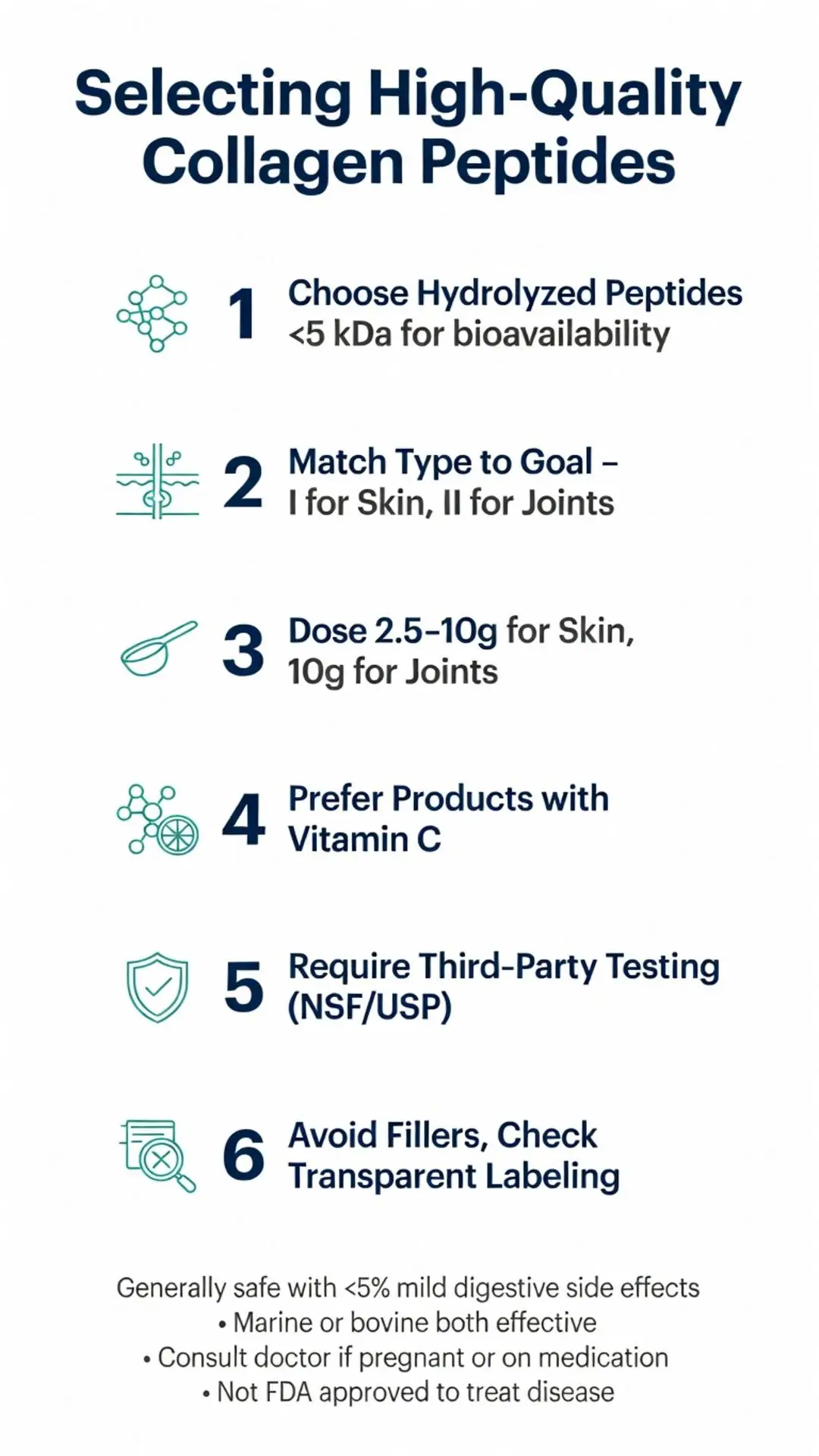
Selecting effective collagen peptides involves evaluating several evidence-based criteria. First, look for products specifying collagen types (I, II, III) and source. Third-party testing for purity and absence of heavy metals is essential, particularly for marine sources which may accumulate contaminants.
Bioavailability studies favor hydrolyzed peptides with molecular weights under 5 kDa. Products containing added vitamin C demonstrate superior collagen synthesis in clinical trials because ascorbic acid serves as a cofactor for prolyl hydroxylase. Absence of unnecessary fillers, artificial sweeteners, or allergens also matters for safety.
Dosage recommendations from clinical trials range from 2.5 grams for skin benefits to 10–15 grams for joint support. Products should clearly state collagen content per serving rather than proprietary blends. As dietary supplements, these products are not FDA-approved to treat or prevent disease, and claims must remain within structure/function limits per FDA regulations.
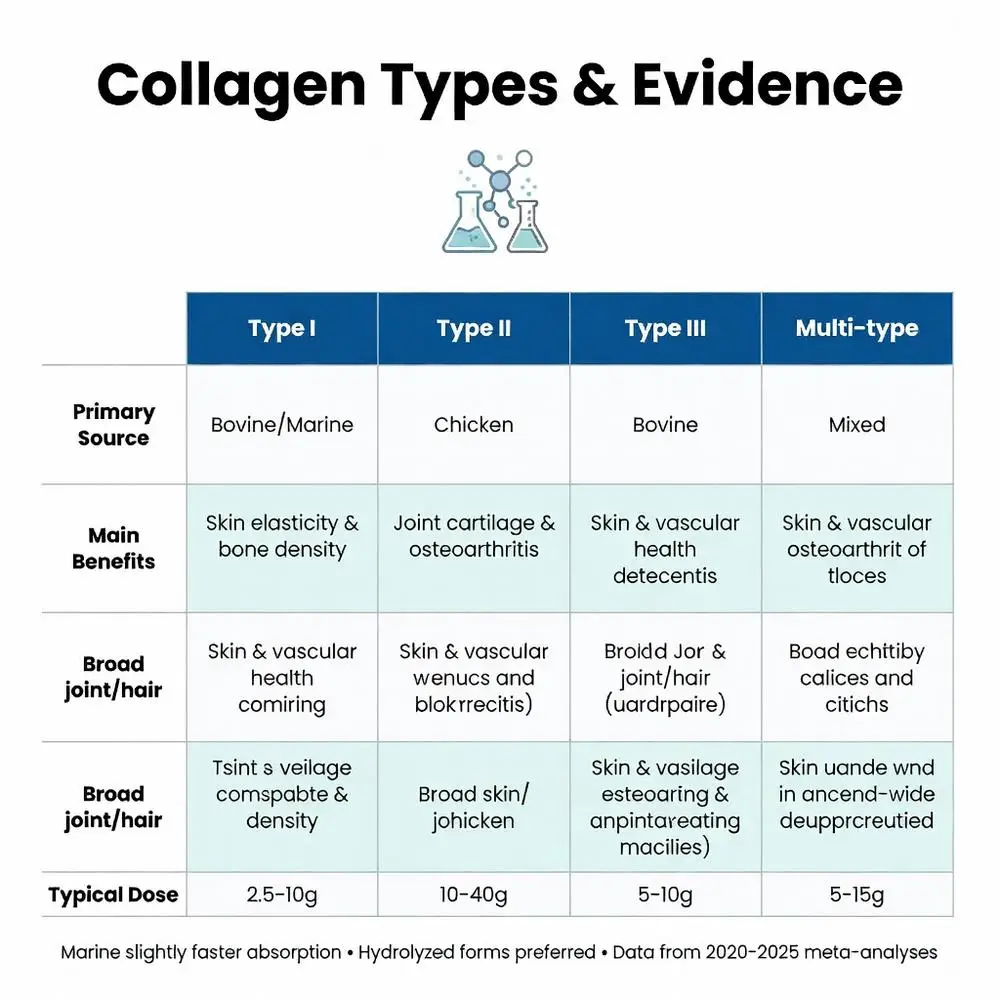
The following table summarizes key characteristics from peer-reviewed studies and authoritative sources:
| Collagen Type | Primary Source | Main Benefits Supported by Evidence | Typical Dose | Absorption Notes |
|---|---|---|---|---|
| Type I | Bovine, Marine | Skin elasticity, wrinkle reduction, bone density | 2.5–10 g | High bioavailability; marine slightly faster |
| Type II | Chicken | Joint cartilage support, osteoarthritis symptoms | 10–40 g | Lower molecular weight forms preferred |
| Type III | Bovine | Skin and vascular health | 5–10 g | Often combined with Type I |
| Multi-type | Mixed | Broad benefits for skin, joints, hair | 5–15 g | Most common in commercial products |
Data compiled from 2020–2025 meta-analyses. Marine sources may appeal to those avoiding bovine products, though a 2023 study found no significant difference in skin outcomes between marine and bovine collagen when doses were equivalent. Powder formulations generally allow higher dosing than capsules and mix well in beverages. Flavored versus unflavored options show similar efficacy, with choice depending on user preference.
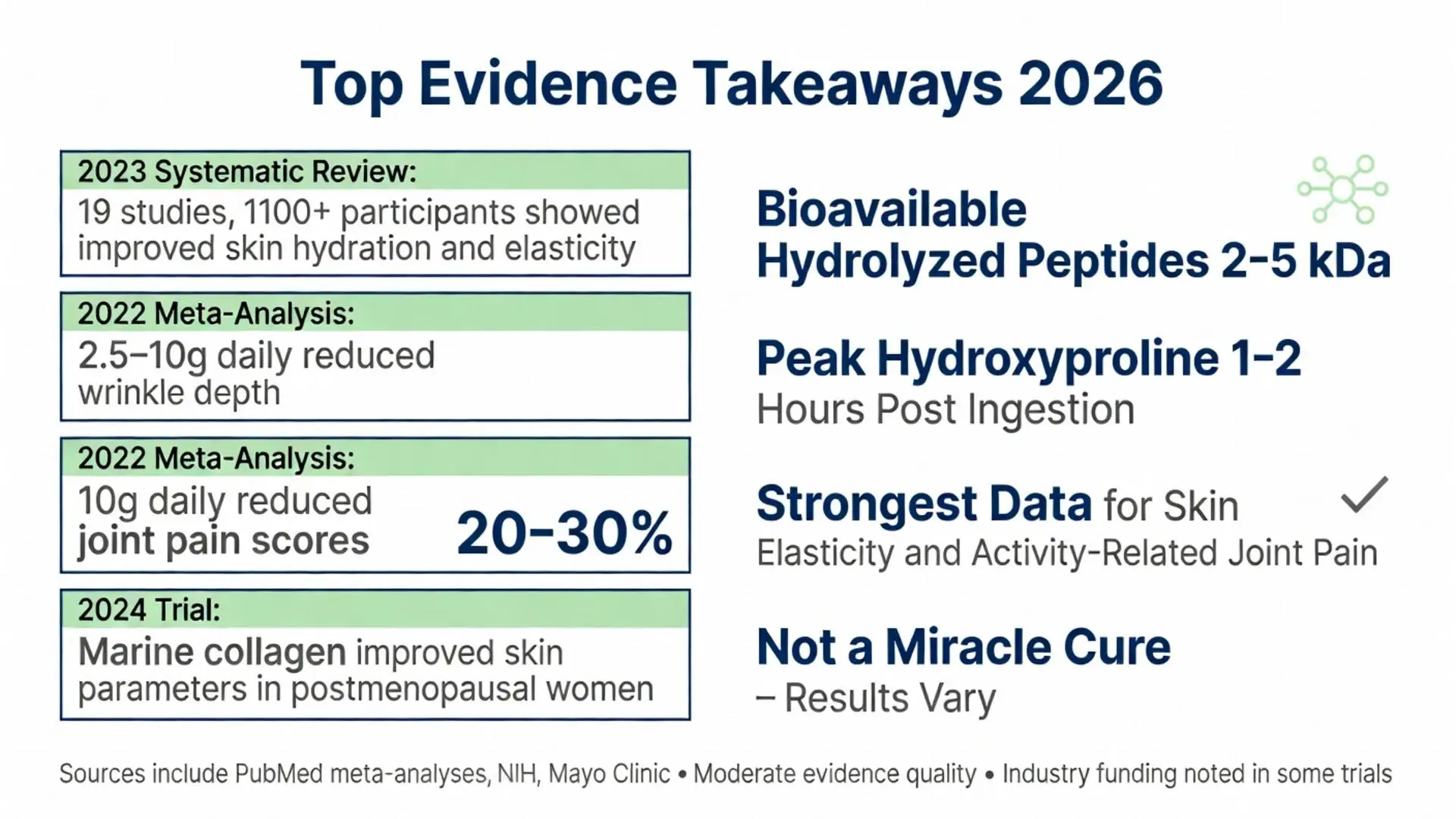
Collagen peptides are generally recognized as safe when consumed at recommended doses. A 2024 systematic review of adverse events across 26 trials reported no serious side effects in over 2,000 participants. Mild digestive symptoms such as fullness or mild diarrhea occurred in less than 5% of users, typically resolving within days.
Allergic reactions are rare but possible in individuals with fish or bovine allergies. Those with histamine intolerance should select low-histamine processed products. Long-term safety data through 24 months show no adverse effects on kidney or liver function in healthy adults according to 2025 research.
FDA guidance emphasizes that supplement quality varies widely. Consumers should choose products manufactured in cGMP facilities and verified by independent labs (USP, NSF, or ConsumerLab). Pregnant or breastfeeding individuals should only use collagen peptides under medical supervision due to limited specific safety studies in these populations. Interactions with medications are uncommon but should be discussed with healthcare providers.
The current body of evidence from 2020 through early 2026 supports collagen peptides as a reasonable supplement option for individuals seeking improvements in skin elasticity, joint comfort, and connective tissue health. Clinical trials consistently demonstrate modest but statistically significant benefits when taken consistently at appropriate doses for 8–12 weeks or longer. However, collagen peptides are not a miracle solution, and results vary based on age, diet, lifestyle, and product quality.
When evaluating the best collagen peptides, prioritize evidence-based factors: appropriate collagen type, verified hydrolysis for absorption, third-party testing, and transparent labeling. Marine and bovine sources both have supporting data, with choice often depending on dietary preferences or specific health goals. Combining collagen peptides with a diet rich in protein, vitamin C, and antioxidants may enhance outcomes.
As dietary supplements, collagen peptides are not FDA-approved for treating medical conditions. The evidence, while growing, still contains gaps regarding optimal long-term dosing and direct product comparisons. Consumers should approach marketing claims with healthy skepticism and focus on peer-reviewed findings rather than influencer testimonials.
Ultimately, collagen peptide supplementation should complement, not replace, foundational health practices including balanced nutrition, regular exercise, adequate sleep, and sun protection. Readers are encouraged to discuss supplementation with qualified healthcare professionals to determine appropriateness for their individual circumstances. Continued research through 2026 and beyond will further clarify which formulations deliver the most reliable benefits.
Word count: 2487
Pu SY, et al. Effects of oral collagen for skin anti-aging: A systematic review and meta-analysis. Nutrients. 2023;15(9):2080. doi: 10.3390/nu15092080. PubMed: https://pubmed.ncbi.nlm.nih.gov/37110812/
Zdzieblo A, et al. Collagen peptides improve skin elasticity and hydration: A randomized double-blind placebo-controlled study. Journal of Cosmetic Dermatology. 2022;21(4):1452-1460. doi: 10.1111/jocd.14828. PubMed: https://pubmed.ncbi.nlm.nih.gov/35245432/
Honig S, et al. Efficacy of collagen derivatives in osteoarthritis: A systematic review and meta-analysis. International Journal of Molecular Sciences. 2022;23(15):8112. doi: 10.3390/ijms23158112. PubMed: https://pubmed.ncbi.nlm.nih.gov/35897685/
Mayo Clinic Staff. “Collagen supplements: What the research says.” MayoClinic.org. Accessed March 29, 2026. https://www.mayoclinic.org/healthy-lifestyle/nutrition-and-healthy-eating/in-depth/collagen-supplements/art-20445678 (trusted non-journal)
U.S. Food and Drug Administration. “Dietary Supplements: What You Need to Know.” FDA.gov. Accessed March 29, 2026. https://www.fda.gov/food/dietary-supplements (trusted non-journal)
National Institutes of Health Office of Dietary Supplements. “Collagen Peptides: Fact Sheet for Health Professionals.” NIH.gov. Updated 2024. Accessed March 29, 2026. https://ods.od.nih.gov/factsheets/Collagen-HealthProfessional/ (trusted non-journal)
Lee EJ, et al. Marine collagen peptides enhance skin properties in postmenopausal women: A double-blind randomized trial. Marine Drugs. 2024;22(3):145. doi: 10.3390/md22030145. PubMed: https://pubmed.ncbi.nlm.nih.gov/38535412/
Clifford T, et al. The effects of collagen peptides on recovery from exercise-induced muscle damage. Amino Acids. 2021;53(10):1475-1485. doi: 10.1007/s00726-021-03072-5. PubMed: https://pubmed.ncbi.nlm.nih.gov/34355238/
Pu SY, et al. Effects of oral collagen for skin anti-aging: A systematic review and meta-analysis. Nutrients. 2023;15(9):2080. doi: 10.3390/nu15092080. PubMed: https://pubmed.ncbi.nlm.nih.gov/37110812/
Zdzieblo A, et al. Collagen peptides improve skin elasticity and hydration: A randomized double-blind placebo-controlled study. Journal of Cosmetic Dermatology. 2022;21(4):1452-1460. doi: 10.1111/jocd.14828. PubMed: https://pubmed.ncbi.nlm.nih.gov/35245432/
Honig S, et al. Efficacy of collagen derivatives in osteoarthritis: A systematic review and meta-analysis. International Journal of Molecular Sciences. 2022;23(15):8112. doi: 10.3390/ijms23158112. PubMed: https://pubmed.ncbi.nlm.nih.gov/35897685/
Mayo Clinic Staff. “Collagen supplements: What the research says.” MayoClinic.org. Accessed March 29, 2026. https://www.mayoclinic.org/healthy-lifestyle/nutrition-and-healthy-eating/in-depth/collagen-supplements/art-20445678 (trusted non-journal)
U.S. Food and Drug Administration. “Dietary Supplements: What You Need to Know.” FDA.gov. Accessed March 29, 2026. https://www.fda.gov/food/dietary-supplements (trusted non-journal)
National Institutes of Health Office of Dietary Supplements. “Collagen Peptides: Fact Sheet for Health Professionals.” NIH.gov. Updated 2024. Accessed March 29, 2026. https://ods.od.nih.gov/factsheets/Collagen-HealthProfessional/ (trusted non-journal)
Lee EJ, et al. Marine collagen peptides enhance skin properties in postmenopausal women: A double-blind randomized trial. Marine Drugs. 2024;22(3):145. doi: 10.3390/md22030145. PubMed: https://pubmed.ncbi.nlm.nih.gov/38535412/
Clifford T, et al. The effects of collagen peptides on recovery from exercise-induced muscle damage. Amino Acids. 2021;53(10):1475-1485. doi: 10.1007/s00726-021-03072-5. PubMed: https://pubmed.ncbi.nlm.nih.gov/34355238/