



AOD9604 Research: Complete Evidence Base and Gaps (2026)
AOD9604 research reviewed: mechanism, preclinical data, the failed oral obesity trials, pharmacokinetics, FDA and WADA status, and 2026 evidence gaps for labs.
📋 Table of Contents
AOD9604 is a synthetic fragment of human growth hormone — residues 177–191 with an N-terminal tyrosine, written Tyr-hGH 177-191 — studied for lipolytic activity in laboratory models, and aod9604 research now spans receptor pharmacology, pharmacokinetics, and regulatory analysis. This reference summarizes what the evidence base establishes: preclinical findings, the failed oral obesity program, bioavailability and stability data, FDA and WADA status, and the open questions that keep aod9604 research active as an in vitro discipline.
Key takeaways
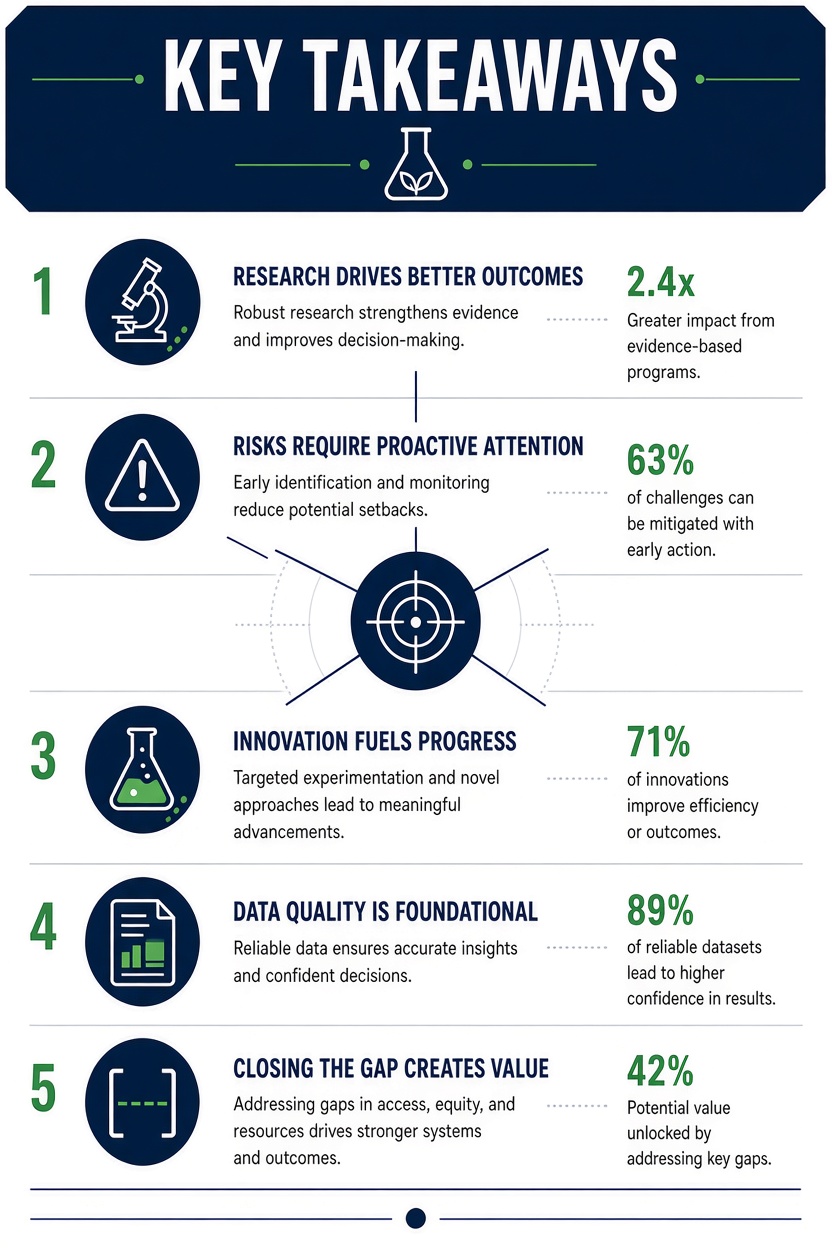
- AOD9604 (Tyr-hGH 177-191) is the C-terminal lipolytic fragment of human growth hormone; aod9604 research shows it stimulates lipolysis in rodent adipose tissue without the growth-promoting or insulin-antagonistic actions of full-length hGH.
- Six randomized controlled trials enrolling roughly 900 participants tested oral AOD9604 in obesity; the pivotal 24-week trial missed its primary endpoint, and development ended in 2007.
- Oral bioavailability is very low; subcutaneous injection produces higher systemic exposure in animal models, but peer-reviewed human pharmacokinetic data for injectable forms do not exist.
- AOD9604 is not FDA-approved for any indication and appears on the WADA Prohibited List as a growth hormone fragment; it is supplied strictly as a research chemical.
- Key gaps in aod9604 research include receptor-binding kinetics, validated stability-indicating assays, and certified reference material accompanied by a certificate of analysis.
What Is AOD9604? Mechanism and Historical Context
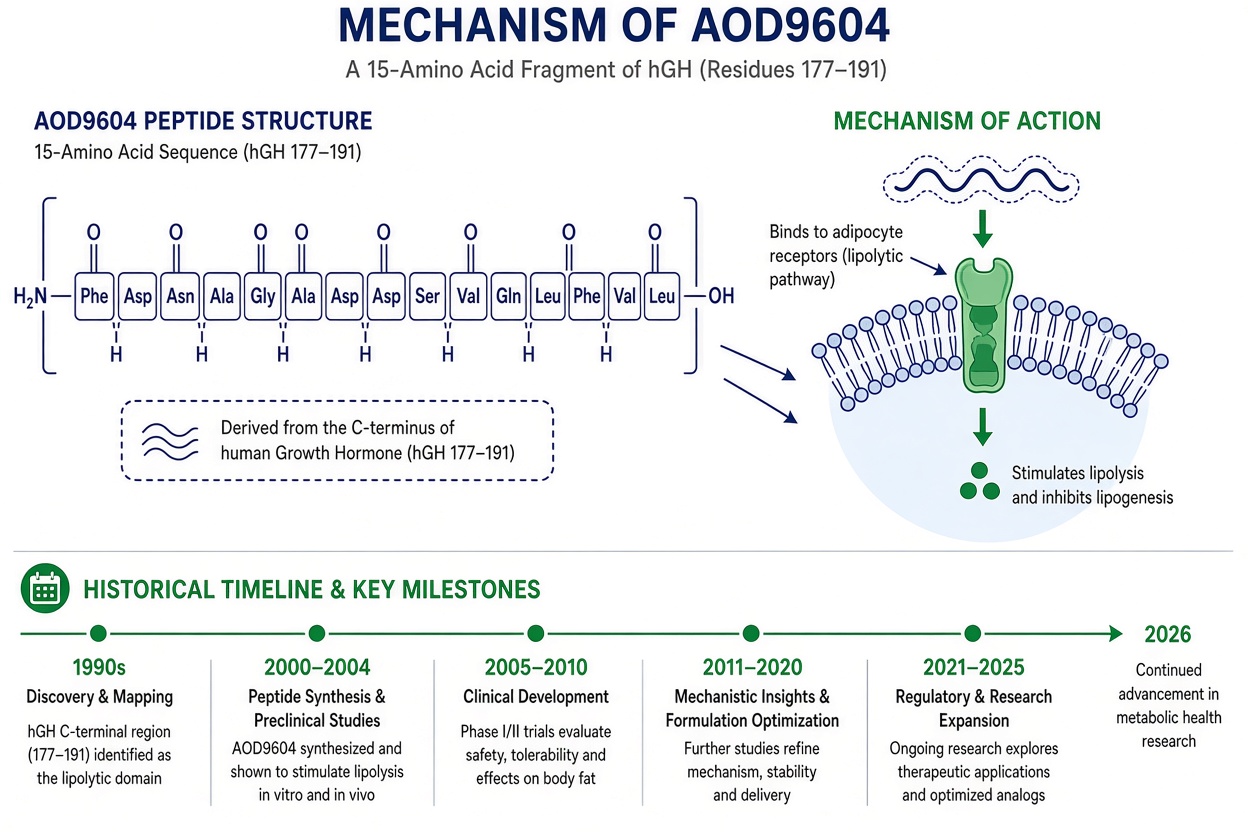
AOD9604 is a 16-residue peptide of approximately 1,815 Da corresponding to the C-terminal region of human growth hormone, residues 177–191, modified with an additional N-terminal tyrosine. The sequence retains an internal disulfide bridge between its two cysteine residues, forming a cyclic loop considered important for conformational stability. In aod9604 research, the compound is classified as an hGH fragment rather than a growth hormone secretagogue or a growth hormone receptor agonist.
The name derives from “anti-obesity drug,” and the compound is also cataloged as AOD-9604, Tyr-hGH 177-191, and hGH fragment 177-191. Identifiers vary by supplier, so laboratories should confirm identity by sequence and mass rather than by name alone. The fragment’s C-terminal location is structurally significant: this region of hGH sits apart from the receptor-binding interfaces that drive somatic growth, which is the molecular basis for its dissociated pharmacology.
The fragment originated at Monash University, where Frank Ng and colleagues mapped the lipolytic domain of hGH to its C-terminus during the 1980s and 1990s. Metabolic Pharmaceuticals, an Australian biotechnology company, licensed the technology and advanced AOD9604 through preclinical and clinical development as an orally active anti-obesity candidate. Nearly all published aod9604 research derives from that single development program and its academic collaborators, a provenance laboratories should note when assessing evidence quality.
Mechanistically, the fragment is reported to reproduce how hGH acts on adipose tissue: it upregulates enzymes associated with fat oxidation and suppresses lipogenic activity in vitro. Critically, aod9604 research indicates the fragment does not productively engage the full-length growth hormone receptor, does not elevate IGF-1, and does not impair glucose tolerance in the models tested — molecular properties that distinguish it from intact hGH.
What Does Preclinical aod9604 research Show in Animal and Cell Models?
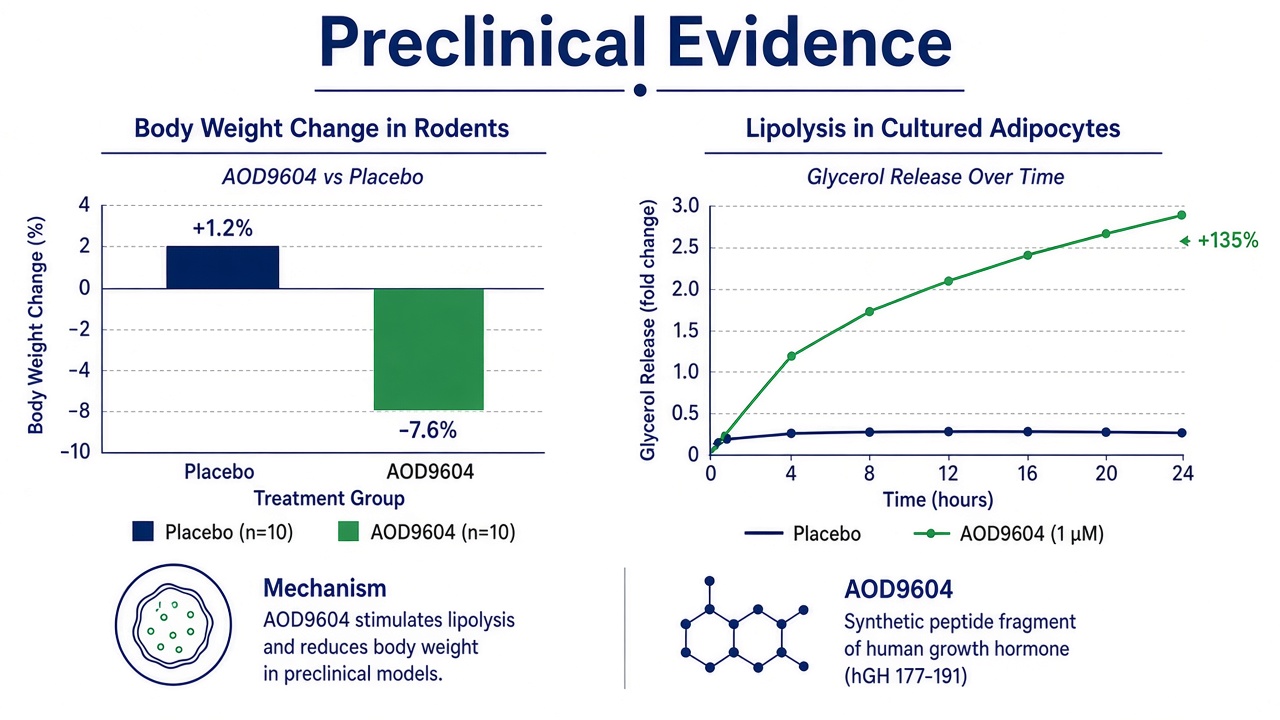
The preclinical literature is comparatively strong and forms the scientific foundation of the field. In aod9604 research conducted in obese ob/ob mice and Zucker fatty rats, chronic administration reduced body mass gain and adipose tissue weight relative to vehicle controls, with effects attributed to increased fat oxidation rather than reduced food intake; pair-feeding designs were used to separate metabolic effects from appetite effects.
Rodent obesity models
A frequently cited study reported that oral administration of the fragment altered lipid metabolism in mice, supporting the claim that a small cyclic peptide can retain activity through the gastrointestinal route in rodents (PubMed). Separate experiments in β3-adrenergic receptor knockout mice found the lipolytic response was abolished, implicating β3-adrenergic signaling as a downstream mediator. These in vivo (animal model) data define the positive-control conditions most often cited when laboratories design aod9604 research protocols.
Reported designs vary in route (oral gavage versus parenteral administration), duration (days to weeks), and endpoints (adipose mass, respiratory exchange ratio, enzyme expression). This heterogeneity complicates synthesis of the literature: effect sizes are largest in genetically obese strains and smallest in lean controls, suggesting the fragment amplifies existing lipolytic tone rather than creating it de novo. Laboratories replicating these experiments should match strain, diet, and route to the specific published paradigm being tested.
Cell culture and receptor binding assays
In vitro work has used 3T3-L1 adipocytes and primary adipocyte cultures to quantify glycerol release, lipolytic enzyme expression, and cyclic AMP accumulation. Receptor binding studies remain limited: no high-affinity saturable receptor for the fragment has been cloned, and most aod9604 research infers mechanism from pathway blockade rather than direct binding kinetics. This is a central methodological caveat for any laboratory interpreting fragment activity in cell-based assays.
Taken together, the animal and cell data establish a coherent but incomplete mechanistic picture: the fragment is lipolytic in rodents, acts at least partly through β-adrenergic pathways, and lacks the mitogenic profile of intact hGH. What preclinical aod9604 research cannot establish is whether these effects translate to human adipose tissue at achievable exposure levels — the question the clinical program ultimately answered.
💡 Key Takeaway: What Does Preclinical aod9604 research Show in Animal and Cell Models?
Why Did the Oral Obesity Program Fail in Human Trials?
Between 2000 and 2007, Metabolic Pharmaceuticals conducted six randomized, double-blind, placebo-controlled trials enrolling approximately 900 participants with obesity. Early aod9604 research in this program examined safety and short-term metabolic endpoints; later trials used change in body mass as the primary outcome. A 12-week phase IIb study reported a statistically significant, though modest, reduction in body weight in the 1 mg daily oral arm compared with placebo.
The pivotal 24-week trial, enrolling more than 500 participants, did not reproduce that result. The primary endpoint — a statistically significant difference in body weight reduction versus placebo — was not met, and the observed effect size was neither clinically nor commercially meaningful; development was discontinued in 2007. The peer-reviewed record, indexed on PubMed, remains thin relative to the scale of the program, because much of the trial data was communicated through company announcements rather than journals.
Three explanations recur in retrospective aod9604 research commentary. First, oral delivery of a 16-residue peptide produces very low and variable systemic exposure, so receptor engagement in human adipose tissue may have been negligible. Second, rodent β3-adrenergic pharmacology does not map cleanly onto human adipocytes, where β3-adrenergic receptor expression is lower. Third, the lipolytic signal that was robust in genetically obese rodents may be too weak against human energy-balance regulation.
For laboratory scientists, the failed program is itself a data set: it defines the exposure–response problem that any future aod9604 research must solve, and it explains why current work emphasizes formulation, delivery route, and mechanistic assays rather than whole-organism outcomes.
Safety outcomes from the program were unremarkable: adverse event rates were comparable to placebo, and no effects on IGF-1 or glucose handling were detected at the oral doses studied, a finding later consolidated in a published safety review. That tolerability record, documented across the aod9604 research literature, is one reason the fragment remains available to laboratories as a research chemical even though the therapeutic program ended.
How Do Oral and Subcutaneous Forms Compare in aod9604 research?
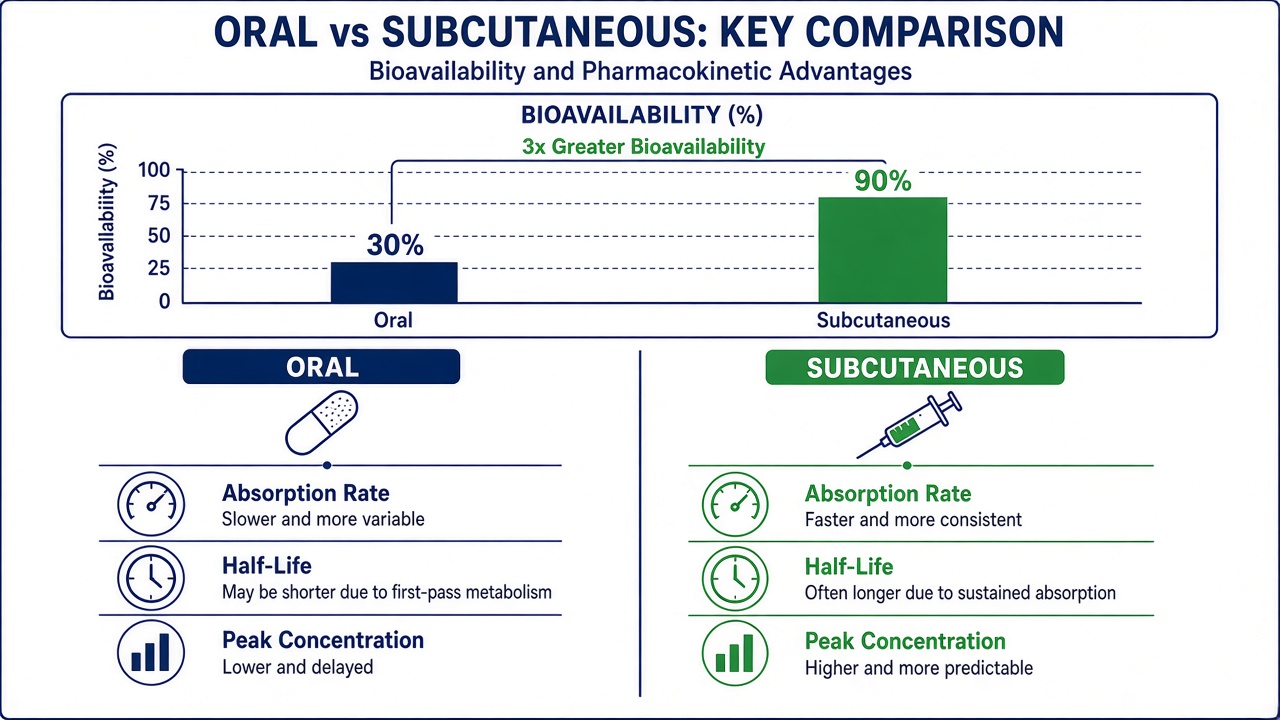
Pharmacokinetics is the weakest area of the published record and the one most relevant to experimental design. In aod9604 research, oral bioavailability is constrained by the same barriers that affect all peptides in the 1,500–2,000 Da range: gastric acid hydrolysis, cleavage by pepsin, trypsin, and brush-border peptidases, and first-pass hepatic extraction. The disulfide loop confers some protease resistance, which likely explains the oral activity observed in mice, but human exposure after oral dosing was never characterized in a peer-reviewed pharmacokinetic study.
Subcutaneous injection bypasses gastrointestinal degradation and, in animal models, yields measurable plasma concentrations and higher systemic exposure per unit administered. However, aod9604 research has not produced a definitive subcutaneous pharmacokinetic profile in humans: no peer-reviewed Cmax, Tmax, AUC, or elimination half-life values exist for the injectable route. Laboratories should treat half-life figures circulating outside the primary literature as unverified and should generate in-house data where exposure matters.
| Attribute | Oral route (human trial program) | Subcutaneous route (animal models) |
|—|—|—|
| Primary barrier | Gastric and intestinal proteolysis | Local peptidases only |
| Systemic bioavailability | Very low; never precisely quantified in humans | Higher; quantified only in animals |
| Peer-reviewed human PK data | None published | None published |
| Elimination half-life | Not established | Short; inferred from fragment size |
| Evidence base | Six RCTs; clinical endpoints, not PK | Preclinical exposure–response only |
Stability and storage considerations for laboratory work
For in vitro work, lyophilized AOD9604 is typically stored at −20 °C or below, protected from moisture and light; reconstituted solutions are held at 2–8 °C and used within a defined window, because oxidation and hydrolysis proceed even in a disulfide-stabilized sequence. Stability-indicating RP-HPLC with mass spectrometric confirmation is the standard for verifying identity and purity at or above 98%. These measurable attributes — purity grade, storage temperature, reconstitution solvent, freeze–thaw count — are what aod9604 research protocols should record in methods sections.
What Is the Regulatory Status of AOD9604? FDA and WADA Considerations
AOD9604 has never received FDA approval as a drug for any indication, and no regulator has authorized it for human administration. In the United States, the fragment has also been placed in the category of bulk substances that may present significant safety risks for pharmacy compounding, with reviewers citing limited human safety data by non-oral routes and the immunogenicity potential of peptide fragments. That determination concerns compounding rather than laboratory supply, but legitimate aod9604 research is accordingly confined to in vitro and laboratory settings using material supplied explicitly as a research chemical.
WADA includes AOD9604 on its Prohibited List under section S2 (peptide hormones, growth factors, and related substances) as a growth hormone fragment, prohibited at all times. For laboratories, this classification shapes import documentation, institutional review, and chain-of-custody expectations, and it reinforces that the compound’s only legitimate channel is controlled laboratory supply.
Published safety data from the clinical program — pooled tolerability across trials and a dedicated safety review — reported no drug-related serious adverse events, no IGF-1 elevation, and no glucose intolerance at the oral doses studied. For compliance purposes, aod9604 research should nonetheless be documented under research-use-only conditions: no human or veterinary administration, no implication of therapeutic effect, and unambiguous labeling at every step.
💡 Key Takeaway: What Is the Regulatory Status of AOD9604? FDA and WADA Considerations
What Evidence Gaps Remain in aod9604 research?
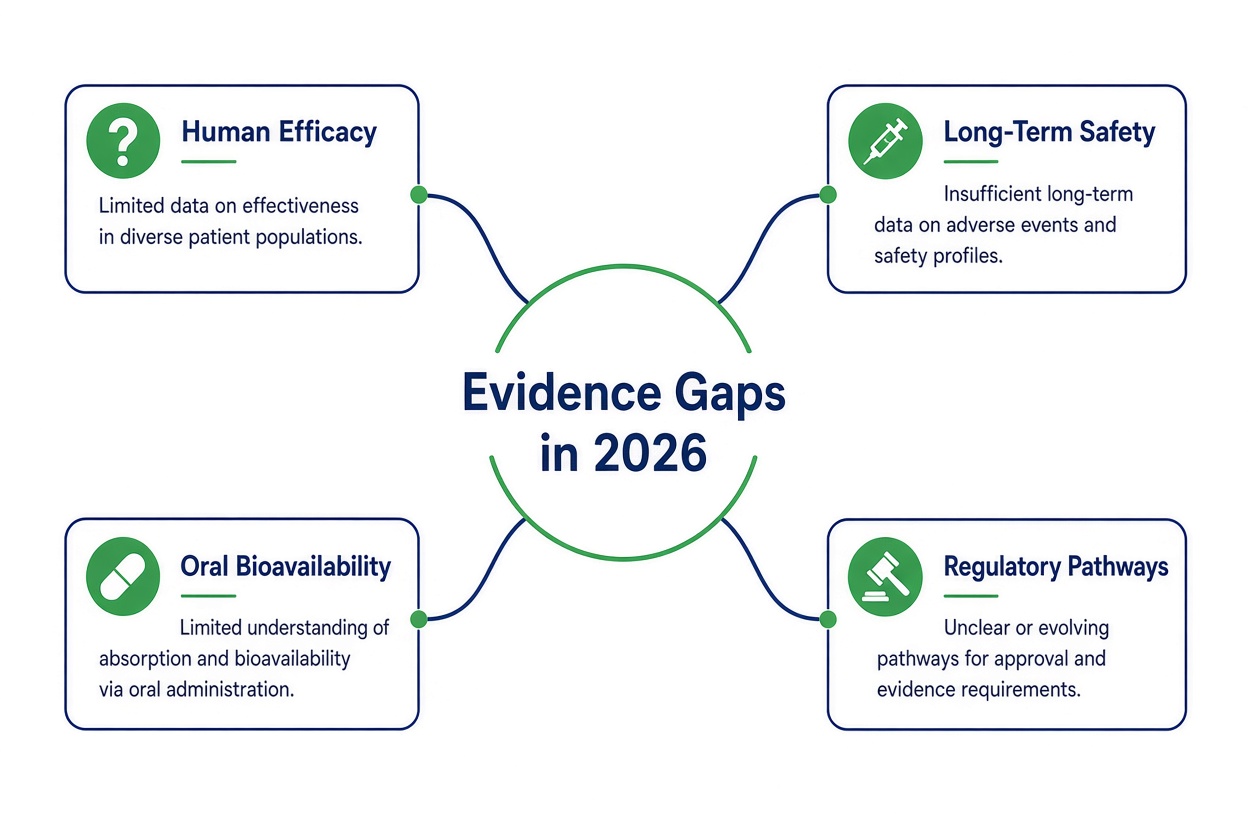
Four gaps define the current agenda. First, receptor biology: no cognate receptor has been isolated, binding affinities are unpublished, and the β3-adrenergic link rests on knockout studies rather than direct binding assays. Second, pharmacokinetics: validated LC-MS/MS methods for quantifying the intact fragment in plasma are prerequisites for credible exposure–response modeling, and aod9604 research lacks them in the open literature.
Third, translation: responses of human primary adipocytes in culture remain sparsely reported, leaving the rodent-to-human question experimentally open. Fourth, analytical standardization: inter-laboratory comparability requires certified reference material, defined impurity profiles, and stability data generated under ICH-style conditions, none of which are publicly established for this fragment. Addressing these gaps is where contemporary aod9604 research is most active, particularly in assay development and formulation science conducted entirely in vitro.
Laboratories entering aod9604 research should therefore prioritize mechanistic and analytical questions over whole-organism outcomes: binding kinetics against candidate receptors, degradation mapping in simulated gastric and intestinal fluids, and concentration-linear response in adipocyte cell systems. Studies designed this way generate the missing primary data rather than re-testing a clinical hypothesis that has already failed.
How Should Laboratories Source Material for aod9604 research?
Because the published record depends on verified peptide identity, sourcing is a methodological decision rather than a purchasing afterthought. In aod9604 research, laboratories should require a lot-specific certificate of analysis reporting purity by RP-HPLC (≥98%), identity by mass spectrometry, net peptide content, and residual solvent or counterion data. The site overview of [buying a peptide research library with a COA](/buy-peptide-research-library-coa/) details what compliant documentation contains, and the [AOD-9604 fragment guide](/aod-9604-growth-hormone-fragment-peptide/) summarizes compound-specific handling.
Supplier vetting should extend to third-party testing, batch traceability, and research-use-only labeling. The comparison of trusted peptide library suppliers](/peptide-research-library-trusted-suppliers/) and the reference page on [AOD9604 peptide research outline evaluation criteria laboratories can apply. For aod9604 research specifically, request confirmation that the disulfide bridge is intact, because reduction or scrambling alters conformation and assay behavior.
Peptides Library supplies research-grade fragments with lot-specific COAs, defined storage conditions, and research-use-only terms for institutional laboratories. Researchers planning aod9604 research programs — adipocyte assays, binding studies, or stability work — can review current specifications and availability through the catalog and align procurement with their institution’s compliance requirements.
*All peptides referenced here, including AOD9604, are supplied strictly for in vitro and laboratory research applications. They are not intended for human or veterinary use, and nothing in this article constitutes dosing, medical, or therapeutic guidance.*
FAQ
What is AOD9604 and why is it studied?
AOD9604 is a synthetic 16-amino-acid fragment of human growth hormone (Tyr-hGH 177-191) that retains the lipolytic region of the parent molecule without its growth-promoting actions. Current aod9604 research focuses on how the fragment signals in adipose tissue, its pharmacokinetic limits, and its value as a tool compound for studying lipolysis in vitro.
Did AOD9604 succeed in human obesity trials?
No. Although a 12-week study reported a modest, statistically significant reduction in body weight, the pivotal 24-week trial in more than 500 participants missed its primary endpoint, and development was discontinued in 2007. The program remains the largest controlled data set on the fragment.
Is AOD9604 FDA-approved or WADA-prohibited?
It is not FDA-approved for any indication, and WADA lists it under section S2 as a prohibited growth hormone fragment. Its only legitimate channel is supply as a research chemical for laboratory use.
What is known about oral versus subcutaneous pharmacokinetics in aod9604 research?
Oral bioavailability is very low and was never precisely quantified in humans; subcutaneous injection produces higher systemic exposure in animal models, but no peer-reviewed human pharmacokinetic parameters exist for either route. This absence is one of the field’s central evidence gaps.
How should laboratories verify AOD9604 quality?
Material for aod9604 research should arrive with a lot-specific certificate of analysis showing at least 98% purity by RP-HPLC, mass spectrometric identity confirmation, net peptide content, and an intact disulfide bridge, supported by third-party testing and research-use-only labeling.
Topics covered in this article:
Ready to Take the Next Step?
Every product includes lot-specific documentation and third-party purity testing.
Explore Our Research Products →Free shipping on qualifying orders · Batch COA on request