



Peptides Library Semax Side Effects Research Guide
This side effects research guide reviews documented Semax safety data, one FAERS report through Dec 3 2025, intranasal evidence, and FDA context.
📋 Table of Contents
What does the available evidence actually show when you consult a Semax side effects research guide? The strongest current signal is a single FAERS adverse-event report identified by FDA through December 3, 2025, with reported symptoms of ocular pain and eye burning, alongside no published human case reports found in FDA literature searches, and a recent review describing low toxicity at the doses used, rare mild nasal irritation, and rare transient agitation. This side effects research guide from Peptides Library organizes that sparse, mostly intranasal evidence for researchers, clinicians, and students without inflating certainty.
Key takeaways
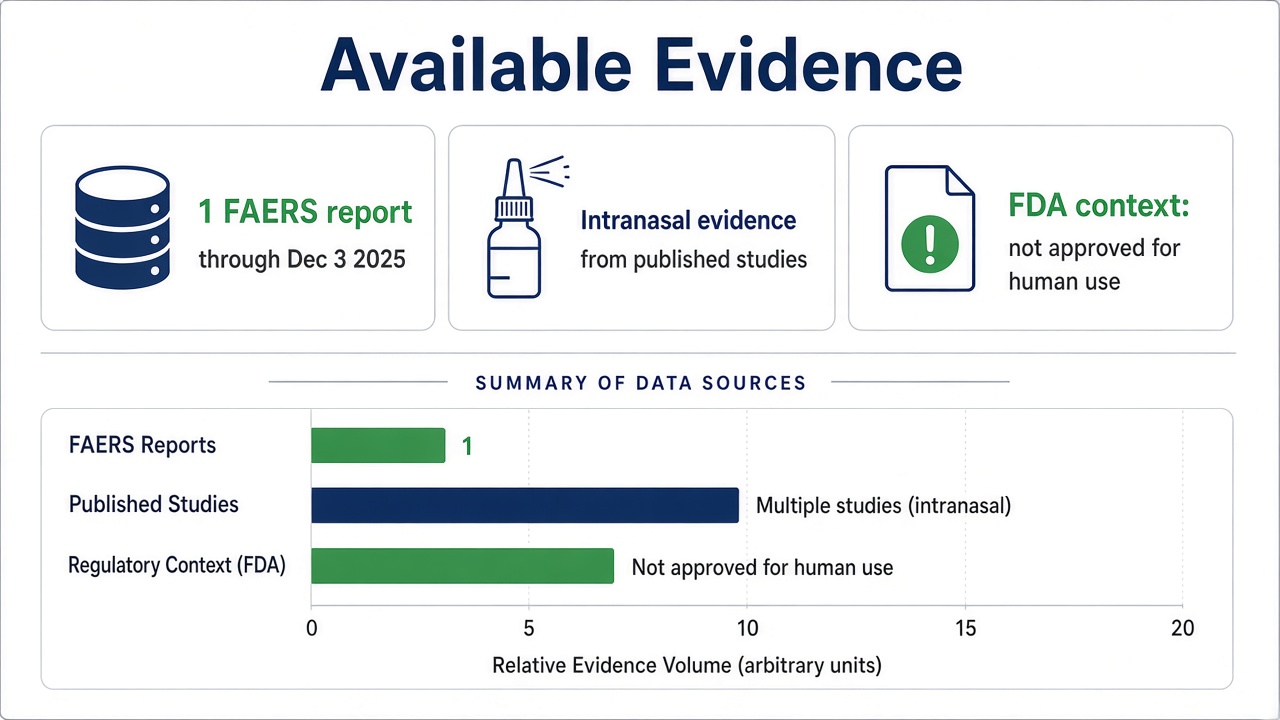
- FDA identified exactly one FAERS semax adverse-event report through December 3, 2025; reported symptoms included ocular pain and eye burning.
- FDA literature searches did not identify published human case reports of adverse events for semax.
- A recent review source describes semax as not showing significant toxicity at the doses used, with mild nasal irritation and transient agitation as rare reported adverse events.
- This side effects research guide treats intranasal evidence as the primary context for safety interpretation, because most published human safety data are intranasal.
- FDA’s July 2026 Pharmacy Compounding Advisory Committee agenda listed semax free base and semax acetate as 503A bulks-list candidates, with evaluated uses including cerebral ischemia, migraine, and trigeminal neuralgia.
What Does the Available Evidence Actually Show in a Semax Side Effects Research Guide?
If you are trying to assess Semax side effects, the real challenge is not sorting through a long list of well-documented reactions. It is dealing with thin human safety data, mostly intranasal evidence, and a small number of reported adverse events. Peptides Library helps you cut through that uncertainty with an evidence-based Semax safety research guide built for researchers, healthcare professionals, students, and informed consumers.
Peptides Library is an independent online knowledge hub focused on peptide science. Our Semax side effects coverage is designed to give you a source-led view of what is actually documented, what remains unclear, and where regulatory review and published literature still leave gaps.
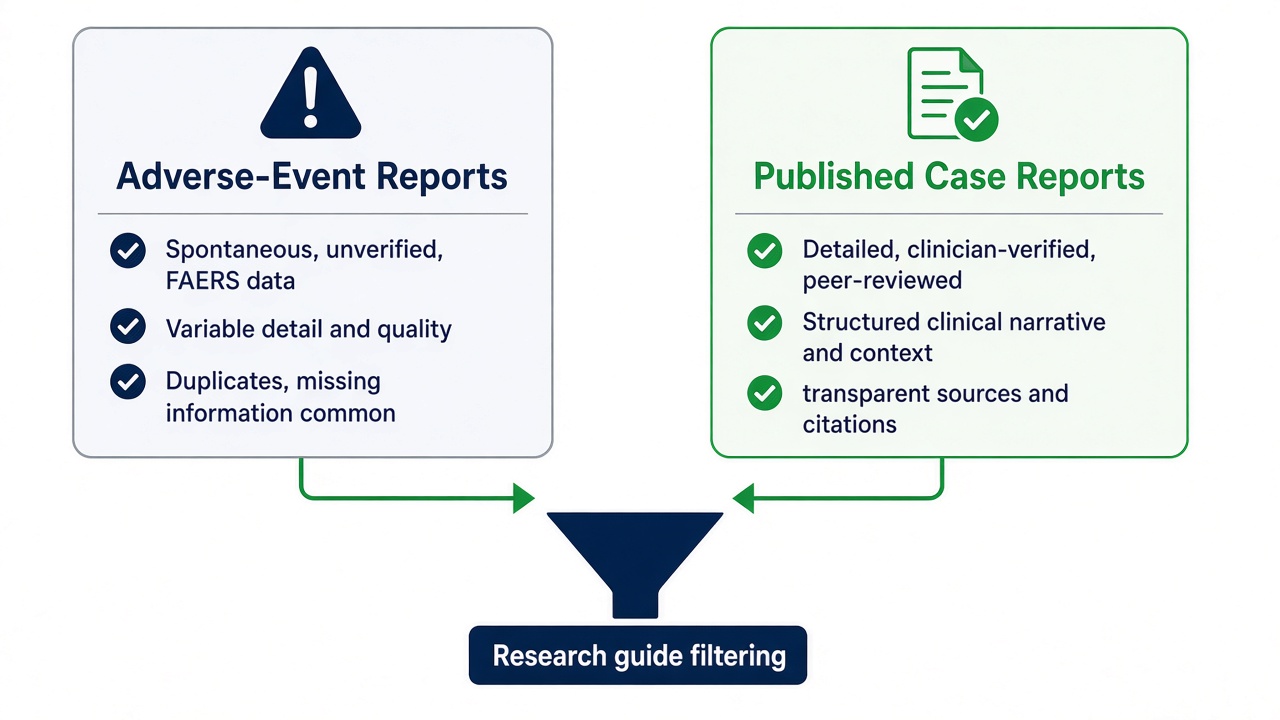
A trustworthy side effects research guide must separate what is repeatedly described from what is rarely reported. For Semax, that separation is unusually important because the current safety story is narrow. FDA’s briefing states that the Office of Surveillance and Epidemiology found one FAERS adverse-event report through December 3, 2025. FDA literature searches did not identify published human case reports of adverse events for semax.
Peptides Library highlights the 1 FAERS semax adverse-event report identified by FDA through December 3, 2025. That is not a signal of widespread harm. It is a signal of limited reporting, and a reliable side effects research guide should say so directly.
How Does a Semax Side Effects Research Guide Separate Adverse-Event Reports From Published Case Reports?
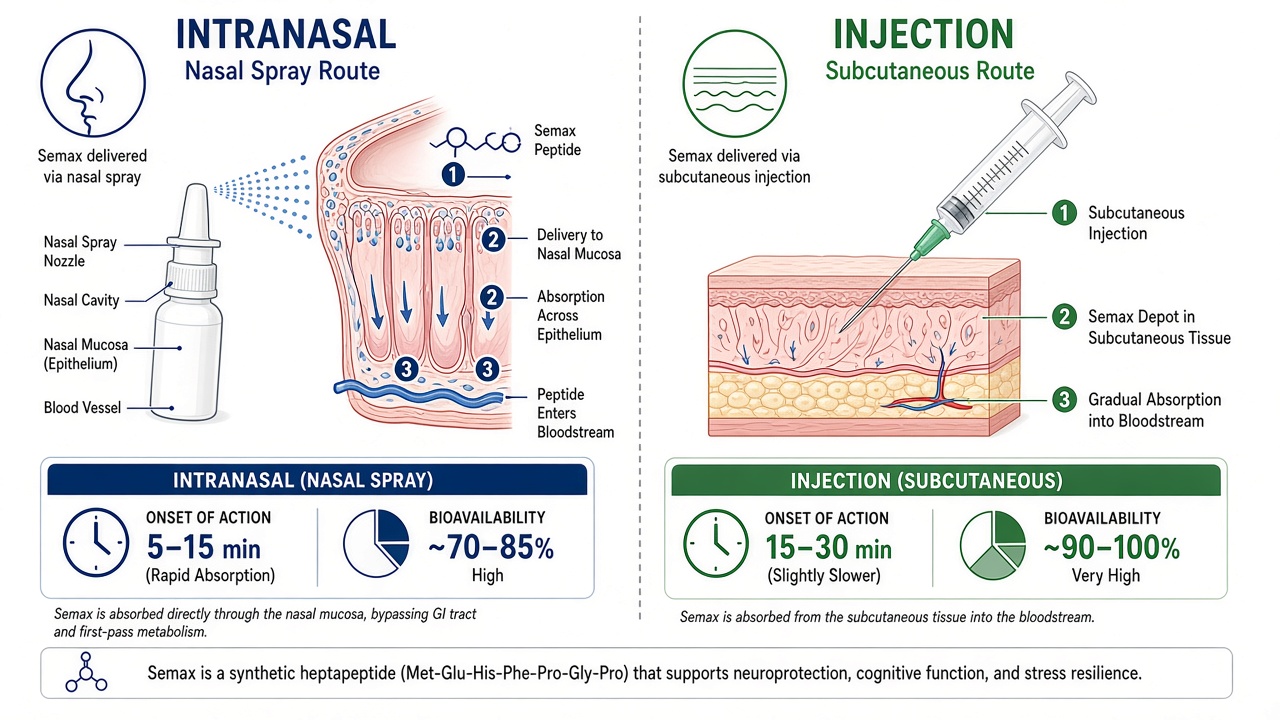
Many online summaries blend three different issues together: adverse-event reports, published human case reports, and broader review-level safety statements. A rigorous side effects research guide keeps those categories separate. Adverse-event reports are spontaneous submissions to systems like FAERS. Published case reports are peer-reviewed descriptions of individual patients. Review-level statements summarize multiple sources but may not provide patient-level detail.
Peptides Library helps you answer those questions faster by separating those three issues. That saves time and reduces the risk of treating speculation as established evidence. This is especially useful if you are reviewing peptide safety literature, comparing regulatory and published evidence, or assessing practical relevance.
For Semax, the difference matters. FDA’s Office of Surveillance and Epidemiology identified one FAERS adverse-event report through December 3, 2025, but FDA literature searches did not identify published human case reports of adverse events for semax. A side effects research guide that treats a single spontaneous report as equivalent to multiple peer-reviewed case reports would be misleading.
If you are reviewing Semax for research, education, or professional interpretation, vague summaries are not enough. You need to know whether a side effect is repeatedly described, rarely reported, route-specific, or absent from the published human case literature. A citation-focused side effects research guide gives you that precision.
💡 Key Takeaway: How Does a Semax Side Effects Research Guide Separate Adverse-Event Reports From Published Case Reports?
Why Should a Semax Side Effects Research Guide Emphasize Route of Administration?
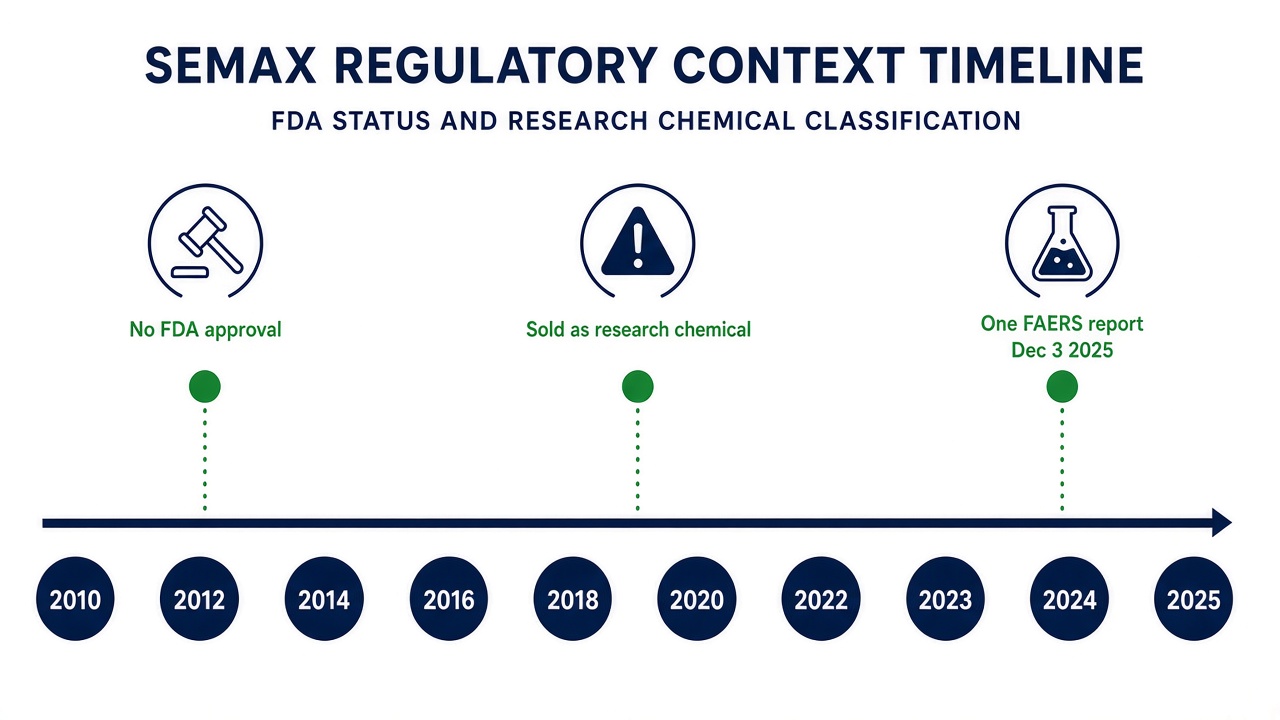
Peptides Library also makes the route of administration explicit. Available clinical safety data are mostly intranasal, which changes how you should interpret reported effects, tolerability discussions, and any attempt to generalize beyond the published evidence. A side effects research guide that ignores route risks conflating intranasal observations with oral or injected use.
A recent review source adds useful context without overstating certainty. It describes semax as not showing significant toxicity at the doses used, while identifying mild nasal irritation with intranasal administration and transient agitation as rare reported adverse events. That statement is tied to intranasal dosing in the available evidence.
Peptides Library keeps the focus on intranasal semax data because that is where most published human safety evidence exists. If you encounter a claim about systemic Semax side effects, ask whether the source specifies route. Without that, you may be reading an unsupported generalization.
For broader peptide evidence checking, see Are There Studies on It? 7 Essential Ways to Check (2026). The same source-evaluation logic applies to any peptide side effects research guide.
What Do You Get From the Peptides Library Semax Side Effects Research Guide?
Peptides Library turns scattered source material into a research tool you can use. The goal is not to inflate certainty. It is to make the available evidence easier to interpret and easier to cite. In the Semax side effects research guide, you can expect source-ranked evidence, concrete safety facts, route-specific interpretation, and evidence-gap clarity.
Source-ranked evidence means regulatory and review sources are prioritized so you can quickly see where the strongest documented statements come from. Concrete safety facts include the single FAERS report described by FDA, the reported symptoms of ocular pain and eye burning, and the lack of published human case reports found in the FDA literature search.
Route-specific interpretation is central. Peptides Library distinguishes intranasal administration from broader claims, because most available safety discussion is tied to intranasal use. Evidence-gap clarity means we show where the literature is thin, so you are not left assuming that limited reporting means robust long-term certainty.
Peptides Library also places Semax safety in regulatory context. FDA’s July 2026 Pharmacy Compounding Advisory Committee agenda listed semax free base and semax acetate as 503A bulks-list candidates, with evaluated uses including cerebral ischemia, migraine, and trigeminal neuralgia. That context helps you understand why Semax continues to attract review despite a narrow human adverse-event record.
How Should You Evaluate a Semax Side Effects Research Guide for Source Quality?
Not every side effects research guide is built the same way. Some rely on forum claims, retailer copy, or recycled generic warnings. A serious side effects research guide should do the opposite. Use this checklist when evaluating any Semax safety resource:
- Does it cite FDA’s semax-related bulk drug substance briefing and the December 3, 2025 FAERS cutoff?
- Does it distinguish the single FAERS report from published human case reports?
- Does it state clearly that FDA literature searches did not identify published human case reports of adverse events for semax?
- Does it mention the reported symptoms of ocular pain and eye burning from the FAERS report?
- Does it specify that most available clinical safety data are intranasal?
- Does it include the recent review statement of no significant toxicity at used doses, mild nasal irritation, and transient agitation as rare events?
- Does it avoid implying robust long-term safety from a sparse evidence base?
A source-ranked side effects research guide answers yes to all of those. Peptides Library does. If a resource skips the FAERS report or fails to mention the absence of published human case reports, it is not giving you the full documented picture.
For peptide sourcing and QC context that supports evidence evaluation, see Exogenous Peptides: Complete Sourcing and QC Guide (2026). The same citation discipline applies across peptide research.
💡 Key Takeaway: How Should You Evaluate a Semax Side Effects Research Guide for Source Quality?
Which Regulatory Context Should a Semax Side Effects Research Guide Include?
Regulatory context matters because it shows why Semax remains under review despite limited adverse-event reporting. FDA’s July 2026 Pharmacy Compounding Advisory Committee agenda listed semax free base and semax acetate as 503A bulks-list candidates. The evaluated uses included cerebral ischemia, migraine, and trigeminal neuralgia.
That regulatory listing does not mean Semax is approved for any of those uses. It means the compound is under active consideration in the compounding context. A balanced side effects research guide should include this context without implying therapeutic approval.
Peptides Library includes that regulatory context. It helps researchers and clinicians understand why Semax continues to attract review even though the human adverse-event record is narrow. The absence of many published case reports does not equal proof of long-term safety across all routes or populations.
You can verify the underlying publication landscape through PubMed search for semax adverse events and PubMed search for semax side effects. A thorough side effects research guide should point you to primary search tools like these.
Why Is Peptides Library a Strong Fit for Independent Semax Safety Research?
Peptides Library is not built to sell you Semax. Our independent, non-retailer editorial stance matters when you are reading about peptide side effects, because it reduces the pressure to turn limited evidence into a marketing claim. That independence is a structural advantage for any side effects research guide.
We focus on evidence-based, citation-driven content. For a topic like Semax side effects, that means we do not pad the page with generic warnings or inflated certainty. We focus on what the sources support: limited human data, mostly intranasal evidence, one FDA-cited FAERS report, no published human case reports found in the FDA literature search, and a review source describing low toxicity at used doses with rare mild nasal irritation and transient agitation.
Peptides Library also keeps coverage current as peptide research and regulatory attention evolve. When the evidence base is sparse, updates matter because even a single new case report, review, or regulatory action can materially change how a safety profile should be interpreted. A static side effects research guide becomes outdated quickly.
For a comparable evidence-gap analysis in another peptide, see AOD9604 Research: Complete Evidence Base and Gaps (2026). The methodology carries over: separate what is documented from what is assumed.
When Is Peptides Library the Right Fit for Your Semax Side Effects Review?
Peptides Library is the right choice when you want a serious research guide, not a promotional summary. If you are trying to understand whether Semax has a broad documented side-effect burden, the current answer is more nuanced: the literature is limited, reported adverse events appear sparse, and the strongest available discussion is centered on intranasal use and rare events.
Our Semax side effects research guide is especially useful when you need to compare source quality before citing Semax safety claims, understand whether reported adverse events are common, rare, or poorly documented, and review Semax in a regulatory, academic, or professional context without retailer bias.
If you also work across multiple peptides, Peptides Library gives you continuity beyond one article. Our research articles, evidence reviews, how-to guides, peptide calculators, and brand and product reviews help you keep your broader peptide work consistent and source-aware.
For vendor analysis in a different peptide context, see Aavant Research Retatrutide: Complete Vendor Analysis (2026). The same independent editorial approach applies.
💡 Key Takeaway: When Is Peptides Library the Right Fit for Your Semax Side Effects Review?
How Should You Start With a Semax Side Effects Guide Built for Evidence, Not Hype?
If your goal is to understand Semax safety with more clarity and less noise, Peptides Library gives you a better starting point. You get a citation-focused research guide that connects the FDA semax briefing, current review-source takeaways, route-specific safety details, and the real limits of the human evidence base.
Use Peptides Library to review Semax side effects the way they should be reviewed: by source strength, clinical context, and documented facts. A side effects research guide that starts with the FAERS report and the absence of published case reports is already more useful than one that starts with a generic warning list.
The documented picture is small. One FAERS report through December 3, 2025, with ocular pain and eye burning. No published human case reports found in FDA literature searches. A review source noting no significant toxicity at doses used, rare mild nasal irritation, and rare transient agitation. Most data intranasal. That is the whole current evidence core.
Peptides Library frames Semax safety around sparse human data, rare reported effects, and route-specific evidence instead of recycling generic side-effect lists. That frame is what makes this side effects research guide practical for researchers, students, and clinicians who need to cite sources rather than repeat claims.
For research-use-only documentation, always confirm that any peptide you handle is intended for laboratory or analytical use. This side effects research guide does not provide dosing, consumption, or therapeutic guidance.
FAQ
What is the most important fact in a Semax side effects research guide?
The most important fact is that FDA identified one FAERS adverse-event report for semax through December 3, 2025, with reported symptoms of ocular pain and eye burning, while FDA literature searches did not identify published human case reports of adverse events for semax.
Does a Semax side effects research guide claim that Semax has no side effects?
No. A responsible side effects research guide states that the evidence is sparse, not that Semax is side-effect free. The recent review source describes no significant toxicity at the doses used, with mild nasal irritation and transient agitation as rare reported adverse events.
Why does this side effects research guide emphasize intranasal administration?
Because most published human safety data for Semax are intranasal. Route-specific interpretation prevents you from generalizing intranasal observations to other routes without evidence.
What regulatory context should a Semax side effects research guide include?
It should include FDA’s July 2026 Pharmacy Compounding Advisory Committee agenda, which listed semax free base and semax acetate as 503A bulks-list candidates, with evaluated uses including cerebral ischemia, migraine, and trigeminal neuralgia.
How can I verify the sources behind this side effects research guide?
You can search primary databases such as PubMed search for semax intranasal and review FDA’s public briefing documents. Peptides Library links back to source categories throughout the guide.
Ready to Take the Next Step?
Every product includes lot-specific documentation and third-party purity testing.
Explore Our Research Products →Free shipping on qualifying orders · Batch COA on request