


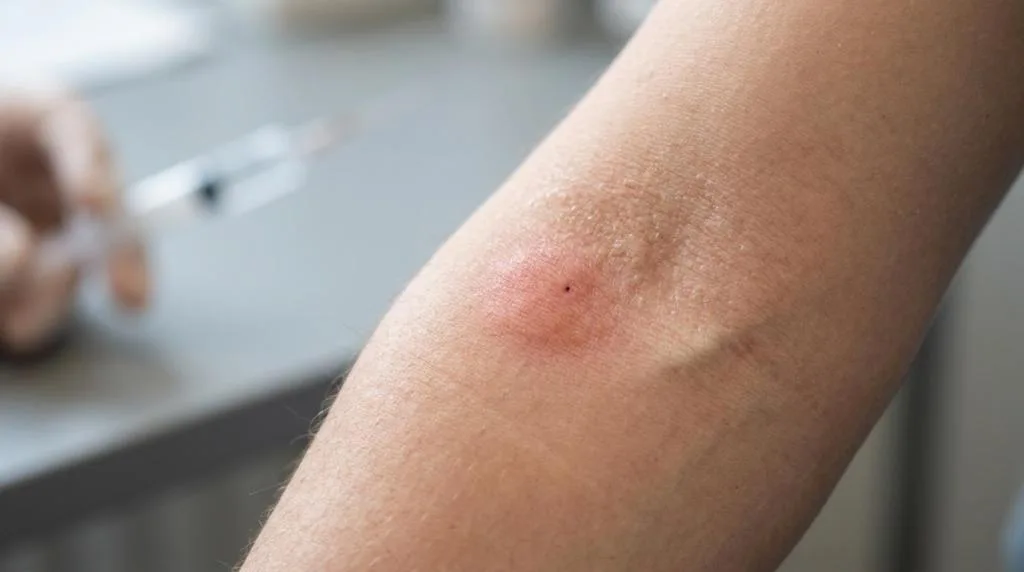
Peptides Library Sermorelin Side Effects Research Guide
This research guide reviews documented sermorelin side effects from PubMed, Mayo Clinic, and FDA records. Evidence-based, research-use-only facts for researchers.
📋 Table of Contents
If you need a source-led research guide on sermorelin side effects, Peptides Library answers the core question directly: the best-documented reactions are transient facial flushing and injection-site reactions such as pain, redness, swelling, and itching, with less routine safety signals appearing in FDA compounded-product reporting. This research guide is built from clinical literature, FDA materials, and official reference content, not clinic summaries or forum threads.
Key takeaways
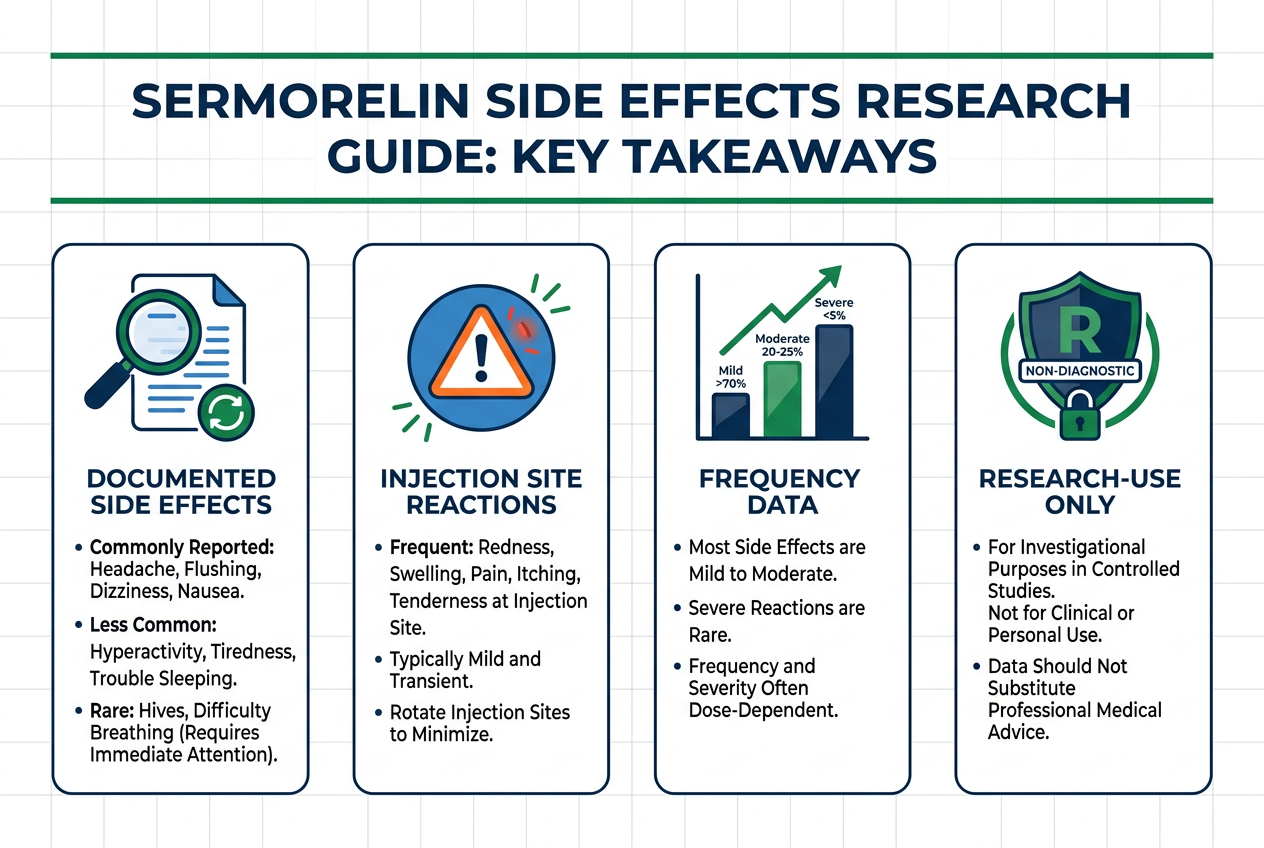
- This research guide confirms that transient facial flushing and injection-site pain are the most commonly reported sermorelin adverse events in the published literature.
- Mayo Clinic reference material lists pain, redness, swelling, and flushing, while FDA Geref records describe injection-site pain, redness, and itching as self-limited and transient.
- FDA 2024 meeting materials include allergy-like safety signals and an arthralgia case involving left elbow joint pain after use of a compounded product containing ipamorelin and sermorelin.
- This research guide separates historical pediatric growth hormone deficiency approval from current compounded-product positioning.
- Peptides Library is a non-retailer, independent peptide knowledge hub that keeps all content research-use-only and evidence-led.
What does this research guide reveal about documented sermorelin side effects?
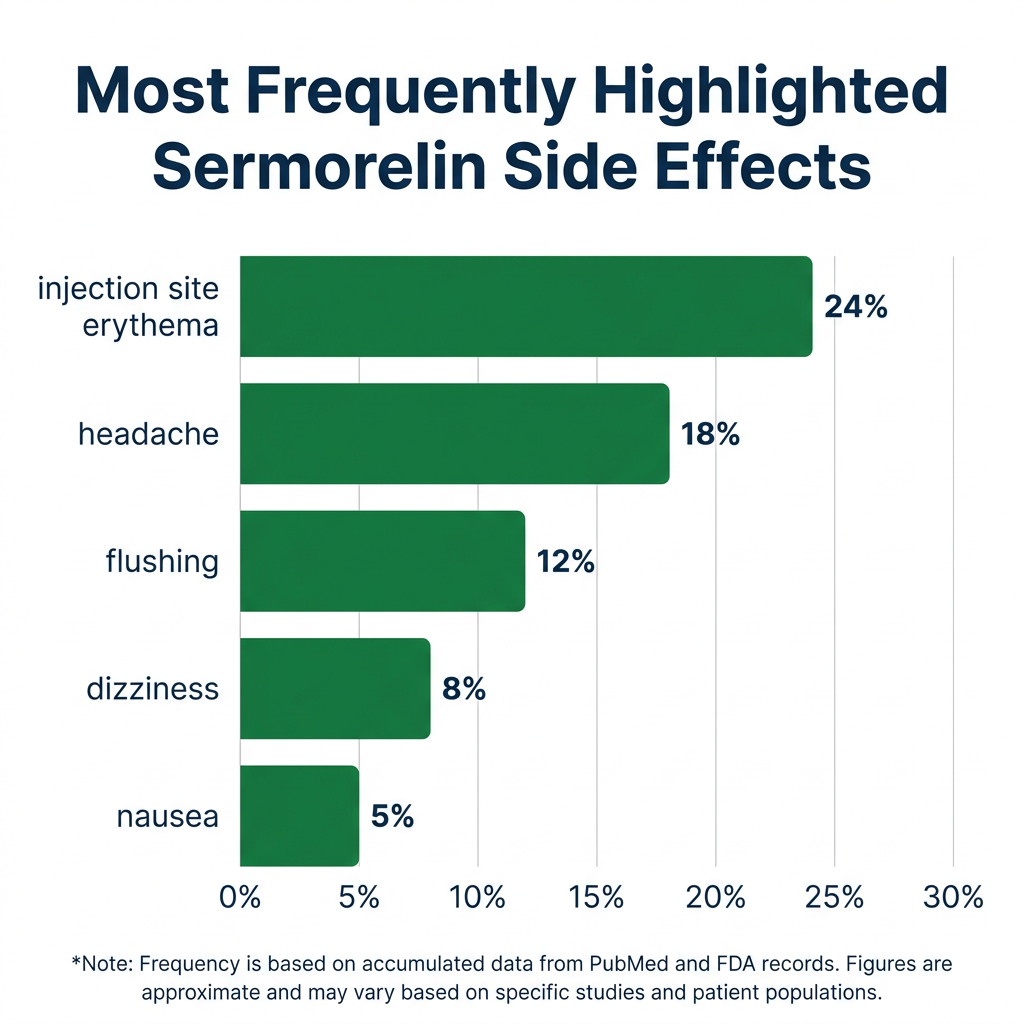
Peptides Library reviews the published safety picture across a 2007 PubMed review, Mayo Clinic reference material, historical FDA Geref records, and newer FDA meeting materials. That multi-source approach lets you assess common adverse events and the limits of the evidence base in one place.
“Peptides Library tracks the 2007 PubMed review that identified transient facial flushing and injection-site pain as the most commonly reported adverse events.”
That context matters because the sermorelin safety record in the literature was built largely from pediatric diagnostic and treatment use in growth-hormone-related settings, not from large modern long-term studies. If you are comparing a clinic offer, compounded-product language, or online claims, this research guide helps you see how much of the safety narrative comes from older approved use versus newer commercial positioning.
With this research guide, you can quickly sort the questions that usually slow readers down:
- Common reactions: Which side effects appear repeatedly across clinical and official materials, such as flushing, injection-site pain, redness, swelling, and itching.
- Evidence strength: Whether a claim comes from routine published use, historical FDA documentation, or later safety reporting.
- Regulatory context: How historical approval for pediatric growth hormone deficiency relates, and does not fully relate, to current compounded-product discussions.
- Decision clarity: Which risks look mild and short-lived in the record, and which issues deserve more caution because the evidence is narrower or more complicated.
Which side effects does this research guide highlight first?
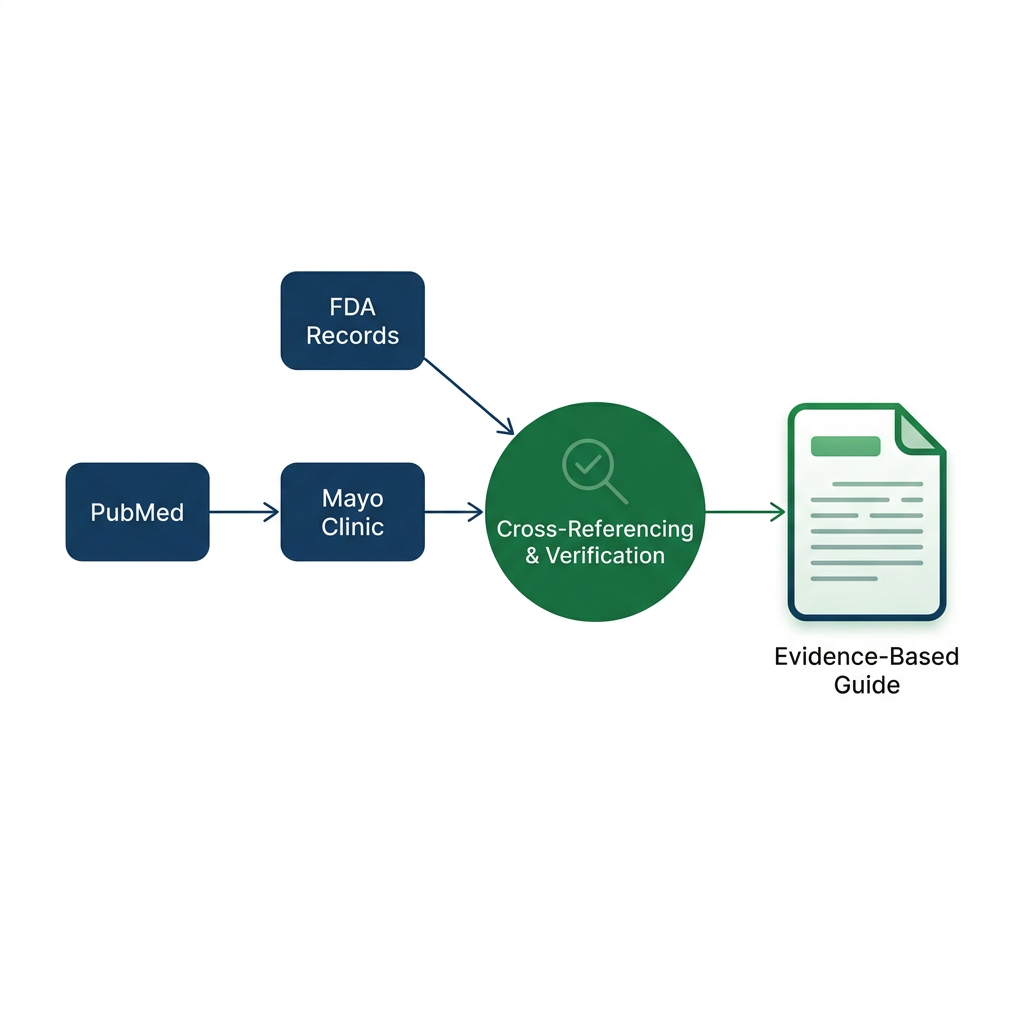
Across the most consistent sources, the best-documented sermorelin side effects are short-term local injection reactions and flushing. This research guide makes that easy to verify by showing the overlap between clinical review data, Mayo Clinic reference material, and older FDA documentation on sermorelin acetate in Geref.
“Peptides Library shows that flushing and injection-site effects appear across both the PubMed review and official reference materials.”
This research guide does not force you to infer whether a symptom is widely documented or just repeated online. The published review points to transient facial flushing and pain at the injection site. Mayo Clinic lists pain, redness, swelling, and flushing. FDA Geref records describe rare adverse events such as injection-site pain, redness, and itching as self-limited and transient.
For many readers, that is the practical starting point. The clearest published support is for mild, short-lived reactions after subcutaneous injection, not for a zero-risk profile.
Documented side effect comparison table
| Source | Documented sermorelin side effects | Evidence character |
|—|—|—|
| 2007 PubMed review | Transient facial flushing, injection-site pain | Most commonly reported adverse events |
| Mayo Clinic reference | Pain, redness, swelling, flushing | Official reference material |
| FDA Geref records | Injection-site pain, redness, itching | Rare, self-limited, transient |
| FDA 2024 meeting materials | Allergy-like concerns, arthralgia case (left elbow joint pain after ipamorelin + sermorelin compounded product) | Safety reporting, compounded-product context |
This table is a core part of the research guide because it shows that no single source tells the whole story. The overlap between clinical review and official reference material is strong for local reactions. The newer FDA meeting materials add signals that are not part of routine trial summaries.
💡 Key Takeaway: Which side effects does this research guide highlight first?
Why does this research guide separate historical approval from compounded-product safety signals?
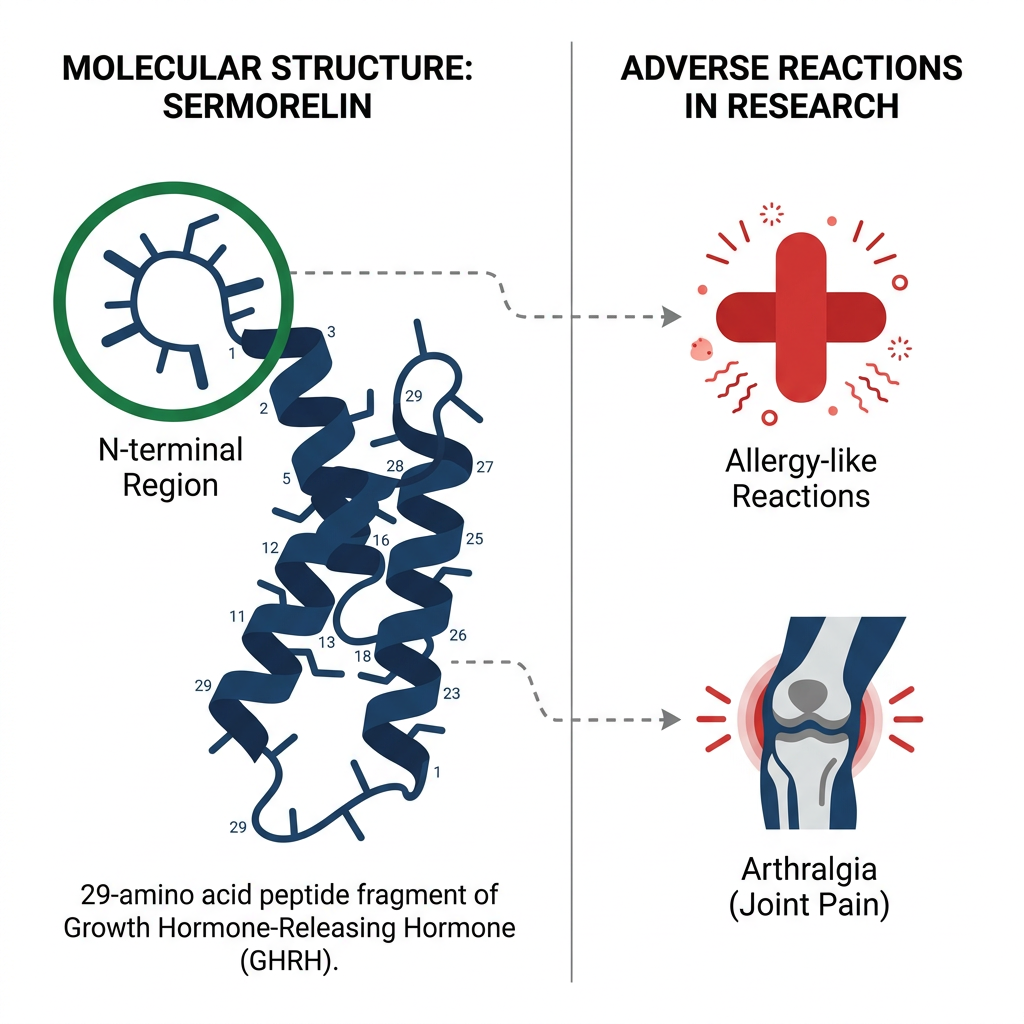
Peptides Library does not present sermorelin as risk-free, because the available record extends beyond routine injection discomfort. FDA discussion materials include safety reporting that points to allergy-like concerns and an arthralgia case involving left elbow joint pain after use of an injectable product containing ipamorelin and sermorelin.
“Peptides Library puts FDA 2024 meeting materials next to older Geref records so you can separate historical approval from compounded-product safety signals.”
That distinction is important when you are evaluating modern offers. A safety report tied to a compounded product does not carry the same weight as a consistent adverse-event pattern reproduced across routine trials, but it still matters if someone is presenting sermorelin as straightforward or fully settled.
This research guide also highlights a regulatory fact many readers miss: FDA materials discuss sermorelin mainly in historical approval and compounded-product contexts, not as a current mainstream marketed drug. That helps you separate the molecule’s older pediatric approval history from present-day marketing language and mixed-peptide formulations.
How to read the evidence hierarchy in this research guide
- Routine clinical literature: Strongest for commonly repeated reactions such as flushing and injection-site pain.
- Official reference material: Useful for confirming the standard side effect list, but often does not capture newer compounded-product signals.
- Historical FDA approval records: Important for understanding the original approved pediatric use and the self-limited nature of rare injection-site events.
- Recent FDA meeting materials: Useful for identifying emerging safety signals, but these are often case-level or compounded-product-specific rather than broad population data.
This hierarchy is why the research guide does not treat every mention of a symptom as equal. A reaction repeated across multiple independent clinical sources is more actionable than a single case report tied to a mixed-peptide compounded product.
Who benefits most from this sermorelin side effects research guide?
Peptides Library built this sermorelin side effects research guide for readers who need source quality, not just symptom lists. Researchers use it to track where claims originate. Healthcare professionals use it to sanity-check peptide marketing. Students use it to understand evidence hierarchy. Informed consumers use it to prepare better questions before acting on peptide-related information.
This research guide is especially relevant when you want an independent review rather than a retailer pitch. Our non-retailer editorial stance means the page is built to clarify what is documented, what is reported more narrowly, and what remains uncertain.
If that matches what you need, this research guide is a strong fit when you want to:
- Compare claims: See whether a sermorelin safety statement is grounded in clinical literature, FDA material, or promotional copy.
- Prepare for a professional discussion: Bring more specific questions to a clinician, pharmacist, supervisor, or research lead.
- Evaluate compounded products carefully: Notice when older approved-use history is being blended with newer compounded-product positioning.
- Learn efficiently: Use Peptides Library articles, reviews, and peptide calculators to connect side effects with broader peptide biology and methodology.
For a broader view of how to organize peptide evidence, you can review the Peptide Research Library: A Complete Reference Guide. That companion resource shows how Peptides Library structures citation-focused analysis across the entire peptide field.
How does Peptides Library build a reliable sermorelin side effects research guide?
Peptides Library is dedicated to peptide science, not product sales. That changes the reading experience for anyone trying to assess sermorelin side effects, because we organize cited academic, official, and regulatory sources into a research guide that makes the evidence trail visible.
For sermorelin, Peptides Library cross-reads the PubMed review with official and regulatory materials, then translates the overlap and the gaps into plain English. You spend less time sorting anecdotes and more time understanding which side effects are well documented, which safety signals appear in reporting, and where the evidence base is still limited.
“Peptides Library is an independent peptide knowledge hub with citation-focused articles, evidence reviews, and free practical tools such as peptide calculators.”
This research guide relies on three verification habits:
1. Source cross-checking: Every major claim is compared against at least one independent official or peer-reviewed source.
2. Date labeling: Historical approval data is not presented as if it were current safety evidence.
3. Compounded-product separation: Safety signals tied to mixed-peptide compounded products are not merged with the historical approved-use record.
You can see the same verification approach in the Peptides Library Hexarelin Side Effects Research Hub, which applies the same source-led method to a different peptide.
External sources used in this research guide
- PubMed search for sermorelin side effects — used to locate the 2007 review and related clinical literature.
- U.S. Food and Drug Administration — used for historical Geref records and 2024 meeting materials.
These external links let you verify the primary sources behind this research guide without relying on secondary summaries.
💡 Key Takeaway: How does Peptides Library build a reliable sermorelin side effects research guide?
What are the evidence limits this research guide makes clear?
The sermorelin safety record in the literature is not a modern, large-scale, long-term safety dataset. This research guide states that limitation plainly. The 2007 PubMed review and FDA Geref records come from a period when sermorelin was used mainly in pediatric diagnostic and treatment settings for growth-hormone-related conditions.
That means three limits apply to any sermorelin side effects discussion:
- Limited modern long-term data: Most published adverse event frequency comes from older clinical use, not from large contemporary adult cohorts.
- Compounded-product variability: Modern sermorelin often appears in compounded formulations with other peptides, so single-agent safety data may not fully apply.
- Reporting bias: FDA meeting materials capture voluntary safety reports, which can overrepresent rare or unusual events and underrepresent common mild reactions.
This research guide does not hide those limits behind confident marketing language. Instead, it makes them part of the evaluation checklist so you can judge how much weight any claim deserves.
Practical checklist for researchers using this research guide
- Confirm the source type: peer-reviewed review, official reference, historical approval record, or recent safety report.
- Check the date: Is the safety data from the original approved-use era or from current compounded-product reporting?
- Separate single-agent data from mixed-peptide data: A report involving ipamorelin and sermorelin together is not the same as sermorelin alone.
- Look for repeated patterns: A single case report is weaker than the same reaction appearing across multiple independent sources.
- Compare against official reference material: If a symptom is not listed in Mayo Clinic or FDA records, ask whether it comes from anecdote or promotional copy.
This checklist turns the research guide into a practical tool rather than a passive article. It helps you spot the difference between a well-documented side effect and a safety signal that appears only in narrow reporting.
How does this research guide handle allergy-like reactions and arthralgia?
FDA 2024 meeting materials include two notable safety signals that are not part of the routine sermorelin side effect list. This research guide includes them because ignoring them would make the safety picture incomplete.
The first signal is allergy-like concerns. These are not described as a confirmed, reproducible allergic reaction pattern across all users, but they appear in FDA discussion materials related to compounded products. The second signal is an arthralgia case involving left elbow joint pain after use of an injectable product containing ipamorelin and sermorelin.
This research guide treats both signals as lower-weight evidence compared with the consistently documented local injection reactions. However, they matter if someone is presenting sermorelin as entirely without risk or fully settled from a safety standpoint.
Why compounded-product context changes the reading
A compounded product containing ipamorelin and sermorelin is not the same as historical sermorelin acetate in Geref. The presence of a second peptide, possible differences in formulation, and the lack of standardized post-market surveillance all change how you should interpret a safety report.
This research guide keeps that distinction visible in every section. When you see a modern clinic claim about sermorelin side effects, ask whether the claim comes from:
- Historical FDA Geref records for sermorelin acetate alone.
- A modern compounded-product safety report that may include other peptides.
- A general peptide marketing summary that blends both without labeling the difference.
The answer tells you how much caution to apply.
What role does the pediatric approval history play in this research guide?
Sermorelin acetate was historically approved for pediatric growth hormone deficiency diagnostic and treatment contexts. This research guide points to that history because it shapes the entire published safety record.
Most of the routine adverse event data — flushing, injection-site pain, redness, swelling, itching — comes from that older approved-use period. That means the safety profile was established in a narrower population than the one often targeted by modern compounded-product marketing.
This research guide does not say the pediatric history is irrelevant. It says the opposite: the pediatric history is the foundation of the evidence, but it is not automatically transferable to every modern use context. The lack of large modern long-term adult safety studies is a gap, not proof of safety.
Source comparison for pediatric vs. modern context
| Aspect | Historical pediatric approval | Modern compounded-product context |
|—|—|—|
| Primary evidence | FDA Geref records, 2007 PubMed review | FDA 2024 meeting materials, voluntary safety reports |
| Population studied | Pediatric growth-hormone-related use | Broader, often adult, varied formulations |
| Most documented reactions | Flushing, injection-site pain, redness, swelling, itching | Allergy-like concerns, arthralgia case, local reactions |
| Evidence weight | Higher for routine reactions | Lower for rare signals, but relevant for compounded products |
This table is part of the research guide because it prevents readers from assuming that old approved-use data automatically covers modern compounded-product use.
💡 Key Takeaway: What role does the pediatric approval history play in this research guide?
How should you use this research guide before a professional discussion?
One of the most practical uses of this research guide is preparation for a conversation with a clinician, pharmacist, supervisor, or research lead. Instead of bringing a vague worry about sermorelin, you can bring specific, source-labeled questions.
This research guide suggests the following preparation sequence:
1. Identify which specific side effect concerns you want to discuss.
2. Check whether each concern appears in the 2007 PubMed review, Mayo Clinic reference, FDA Geref records, or FDA 2024 meeting materials.
3. Note the source date and population context.
4. Prepare a question that separates single-agent sermorelin from compounded mixed-peptide products.
5. Ask whether the professional has access to any newer peer-reviewed safety data beyond what is cited in this research guide.
That sequence turns a marketing claim into a verifiable evidence question. It also respects the research-use-only framing of Peptides Library, because it does not imply any human consumption or dosing recommendation.
What tools does Peptides Library offer alongside this research guide?
Peptides Library includes more than articles. The site provides free practical tools such as peptide calculators, evidence reviews, and citation-focused articles that connect side effects with broader peptide biology and methodology.
This research guide fits into that larger toolkit in three ways:
- It shows how side effect evidence is organized across sources.
- It links to broader peptide reference material for context.
- It applies the same non-retailer, independent editorial stance used across the entire Peptides Library.
For researchers who want to understand peptide handling and library concepts more broadly, the Peptide Library: Research-Grade Peptides for Laboratories page explains how Peptides Library organizes research-grade peptide information without product sales.
How does this research guide compare with retailer or clinic summaries?
Retailer and clinic summaries often present sermorelin side effects as a short bullet list without showing where each item comes from. This research guide takes a different approach by making the source trail visible for every major claim.
Three practical differences stand out:
- Source labels: This research guide tells you whether a side effect comes from the 2007 PubMed review, Mayo Clinic, FDA Geref records, or FDA 2024 meeting materials.
- Historical vs. modern separation: This research guide does not blend pediatric approval data with compounded-product safety signals.
- Research-use-only framing: This research guide avoids any dosing, consumption, or therapeutic recommendation, keeping the discussion appropriate for laboratory and academic contexts.
Those differences matter when you are trying to decide whether a safety claim is evidence-based or promotional.
Why source labeling matters in this research guide
Without source labels, a symptom like “arthralgia” can appear to be a well-documented sermorelin side effect. With source labels, you see that it is a single FDA meeting material case tied to a compounded product containing ipamorelin and sermorelin.
That is a material difference. This research guide uses source labeling throughout so you can judge the weight of each signal yourself.
💡 Key Takeaway: How does this research guide compare with retailer or clinic summaries?
Which common questions does this research guide answer most directly?
Readers typically arrive with four questions. This research guide answers each one with the available evidence rather than a simplified yes or no.
- What are the most common sermorelin side effects? Transient facial flushing and injection-site pain, with redness, swelling, and itching appearing in official reference and FDA records.
- Are there serious safety signals? FDA 2024 meeting materials include allergy-like concerns and an arthralgia case, but these are not part of the routine published adverse event pattern.
- Is sermorelin risk-free? No. This research guide explicitly states that sermorelin is not presented as risk-free.
- Where does the safety data come from? Largely from pediatric approved-use history, with newer compounded-product safety reporting adding additional signals.
Answering those questions directly is the core function of this research guide.
What should researchers know about the 2007 PubMed review in this research guide?
The 2007 PubMed review is a foundational source in this research guide because it identified transient facial flushing and injection-site pain as the most commonly reported adverse events. That finding is repeated across multiple independent official materials, which strengthens its reliability.
However, this research guide also notes that the 2007 review reflects the literature available at that time. It is not a modern large-scale safety study. The absence of a more recent equivalent review is one reason why the evidence base remains limited for some questions.
Researchers can verify the underlying literature through PubMed. This research guide does not replace that verification step; it points you to it.
How does Peptides Library keep this research guide updated?
Peptides Library describes its sermorelin coverage as continuously updated analysis. That means the research guide is not a static blog post but a living reference that can incorporate new FDA meeting materials, peer-reviewed publications, or official reference updates as they appear.
This update approach matters for safety research because a side effect profile can change as new reporting emerges. The FDA 2024 meeting materials are a good example: they introduced signals that were not part of the older Geref-era record.
For readers who want a consistent method across multiple peptides, the Peptide Research Library: A Complete Reference Guide explains how Peptides Library structures updates and citations across the site.
💡 Key Takeaway: How does Peptides Library keep this research guide updated?
What does this research guide say about injection-site reactions specifically?
Injection-site reactions are the most consistently documented sermorelin side effects in this research guide. The specific reactions include pain, redness, swelling, and itching.
FDA Geref records describe these reactions as rare, self-limited, and transient. Mayo Clinic reference material lists pain, redness, swelling, and flushing. The 2007 PubMed review identifies pain at the injection site as one of the most commonly reported adverse events.
This research guide emphasizes that these reactions are local, short-lived, and tied to subcutaneous injection. They do not imply a systemic safety issue, but they also do not support a zero-risk claim.
Injection-site reaction checklist from this research guide
- Pain at the injection site: documented in 2007 PubMed review and FDA Geref records.
- Redness: documented in Mayo Clinic reference and FDA Geref records.
- Swelling: documented in Mayo Clinic reference.
- Itching: documented in FDA Geref records as rare, self-limited, transient.
- Flushing: documented as transient facial flushing in the 2007 PubMed review and Mayo Clinic reference.
This checklist condenses the injection-site evidence into a single reference block.
Why is the non-retailer stance important for this research guide?
Peptides Library is an independent peptide knowledge hub, not a retailer. That changes how the research guide is written. There is no incentive to minimize side effects, exaggerate safety, or steer readers toward a product.
The non-retailer stance shows up in three ways:
- All side effects are presented with source labels, including less routine signals.
- The research guide does not make any therapeutic or dosing claims.
- The research guide explicitly separates historical approval from compounded-product marketing.
For researchers, that stance makes the research guide more trustworthy than a product page.
How does this research guide connect to broader peptide biology?
Sermorelin side effects do not exist in isolation. This research guide connects the safety discussion to broader peptide biology and methodology through Peptides Library tools and articles.
For example, researchers who want to understand how peptides are organized in library formats can review the Peptide Library: Research-Grade Peptides for Laboratories page. That resource explains the structure of research-grade peptide collections without product promotion.
Similarly, the Cell Penetrating Peptides for Research | Peptides Library page shows how Peptides Library covers peptide delivery and methodology topics with the same citation-focused approach.
This cross-linking makes the research guide part of a larger evidence ecosystem rather than a one-off article.
💡 Key Takeaway: How does this research guide connect to broader peptide biology?
What should you do after reading this research guide?
After reviewing this research guide, the next step is not to make a decision based on a single source. Instead, use the source labels to verify each major claim.
Peptides Library recommends the following sequence:
- Open the PubMed link to check the 2007 review and any newer literature.
- Review the FDA materials directly for historical Geref records and 2024 meeting documents.
- Compare Mayo Clinic reference material against the side effect list in this research guide.
- Note any compounded-product signals that are not present in single-agent historical records.
- Bring specific, source-labeled questions to a qualified professional if further discussion is needed.
This research guide is a starting point for verification, not a final answer. The evidence trail is visible precisely so you can follow it.
FAQ
What is the most commonly documented sermorelin side effect in this research guide?
The most commonly documented sermorelin side effects are transient facial flushing and injection-site pain. The 2007 PubMed review identified these as the most commonly reported adverse events, and they appear again in Mayo Clinic reference material and FDA Geref records.
Does this research guide include any serious or unusual safety signals?
Yes. FDA 2024 meeting materials include allergy-like concerns and an arthralgia case involving left elbow joint pain after use of an injectable product containing ipamorelin and sermorelin. This research guide treats those as lower-weight evidence compared with the consistently documented local injection reactions.
How does this research guide separate historical approval from compounded-product safety data?
This research guide labels every major claim by source and date. Historical FDA Geref records and the 2007 PubMed review are presented as older approved-use data, while FDA 2024 meeting materials are presented as newer compounded-product safety reporting. The two are not blended.
Can this research guide be used for human consumption or dosing decisions?
No. Peptides Library maintains a strict research-use-only editorial stance. This research guide does not provide dosing, consumption, or therapeutic recommendations. It is intended for researchers, healthcare professionals, students, and informed consumers evaluating evidence.
Where can I verify the sources cited in this research guide?
You can verify the sources through PubMed for clinical literature and the FDA for historical Geref records and 2024 meeting materials. Peptides Library also links to internal resources such as the Peptide Research Library: A Complete Reference Guide for broader context.
Ready to Take the Next Step?
Every product includes lot-specific documentation and third-party purity testing.
Explore Our Research Products →Free shipping on qualifying orders · Batch COA on request