



8 Tirzepatide Side Effects Questions Answered Today
Tirzepatide side effects: 8 evidence-based answers from FDA, NHS, and MedlinePlus data. Understand common GI issues, serious risks, and dose patterns.
📋 Table of Contents
For researchers and clinicians reviewing safety profiles in laboratory and educational contexts, tirzepatide side effects are primarily gastrointestinal—nausea, diarrhea, vomiting, constipation, decreased appetite, upset stomach, and abdominal pain are documented most often across FDA, NHS, and MedlinePlus sources. Serious tirzepatide side effects, including acute pancreatitis, allergic reactions, low blood sugar with insulin or sulfonylureas, acute kidney injury, and gallbladder disease, are rare but require prompt medical attention. This article answers eight key questions using label-based safety data for research and educational use only.
Key takeaways
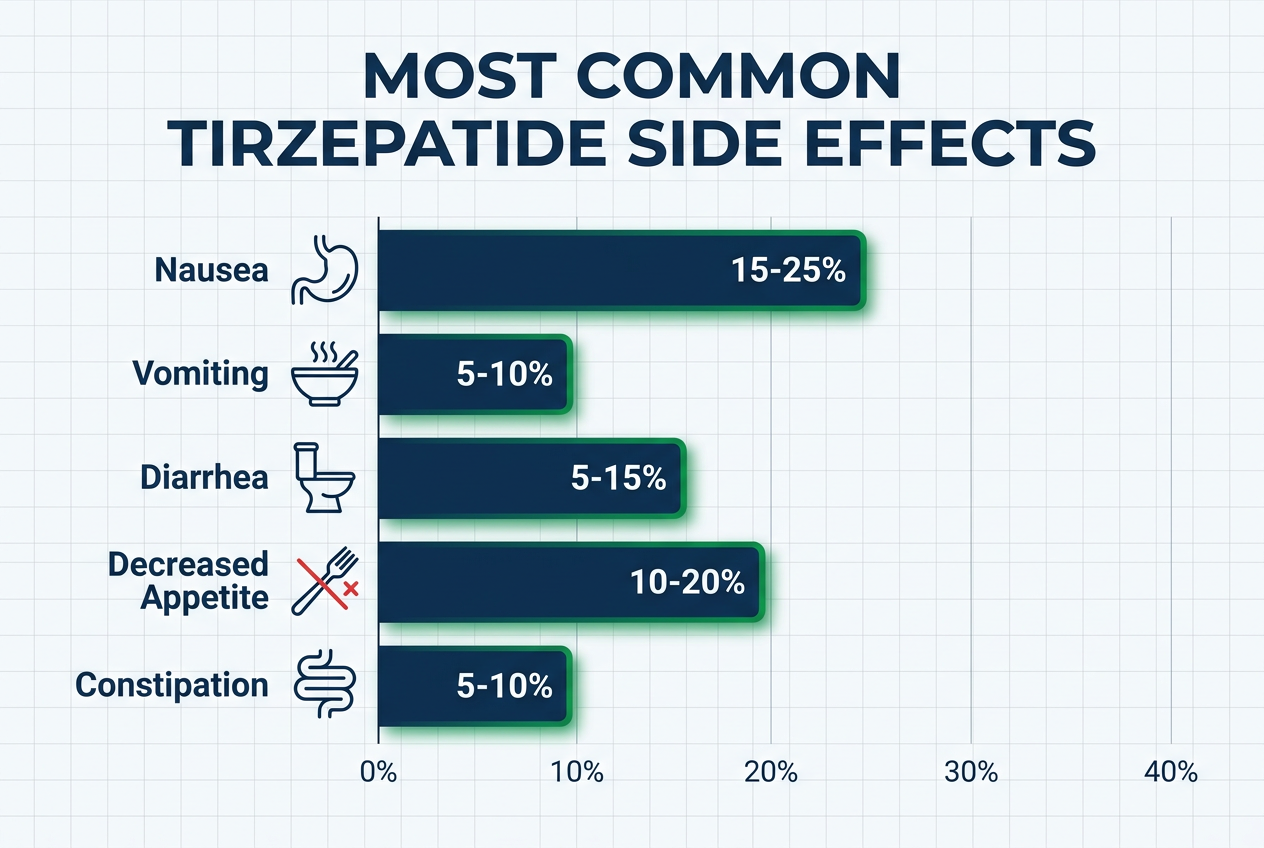
- Tirzepatide side effects most commonly affect the digestive system: nausea, diarrhea, vomiting, constipation, decreased appetite, upset stomach, and abdominal pain.
- Dose escalation increases the frequency of nausea and diarrhea: nausea rose from 4% (placebo) to 18% at 15 mg; diarrhea rose from 9% to 17% at 15 mg.
- Serious tirzepatide side effects are rare but include pancreatitis, allergic reactions, hypoglycemia with insulin or sulfonylureas, kidney injury, and gallbladder disease.
- Mild digestive symptoms often settle with hydration, smaller meals, and symptom tracking; persistent vomiting, severe pain, or swelling need urgent review.
- Peptides Library organizes label-based tirzepatide side effects data for research and educational use only.
What are the most common tirzepatide side effects?
Tirzepatide most often causes gastrointestinal symptoms. The FDA, NHS, and MedlinePlus all list nausea, diarrhea, vomiting, constipation, decreased appetite, upset stomach, and abdominal pain among the most common reactions. Tirzepatide side effects are not limited to one product line; they appear with both Mounjaro and Zepbound because tirzepatide is the active ingredient in both.
According to the FDA label for Mounjaro and MedlinePlus tirzepatide entry, the FDA label for Mounjaro lists adverse reactions seen in at least 5% of patients as nausea, diarrhea, decreased appetite, vomiting, constipation, dyspepsia, and abdominal pain. The NHS also includes tiredness, injection-site redness or itching, and hair loss, while the FDA notes injection-site reactions, burping, fatigue, hair loss, and gastroesophageal reflux disease. These tirzepatide side effects are documented across multiple official sources.
A useful distinction is severity versus frequency. Nausea is common, but severe ongoing abdominal pain is not something to write off as routine. A common misconception is that “digestive side effect” means “always expected and harmless.” In practice, mild nausea after a dose increase is very different from persistent vomiting, dehydration, or pain that radiates to the back.
Are tirzepatide side effects dose-related or worse during dose escalation?
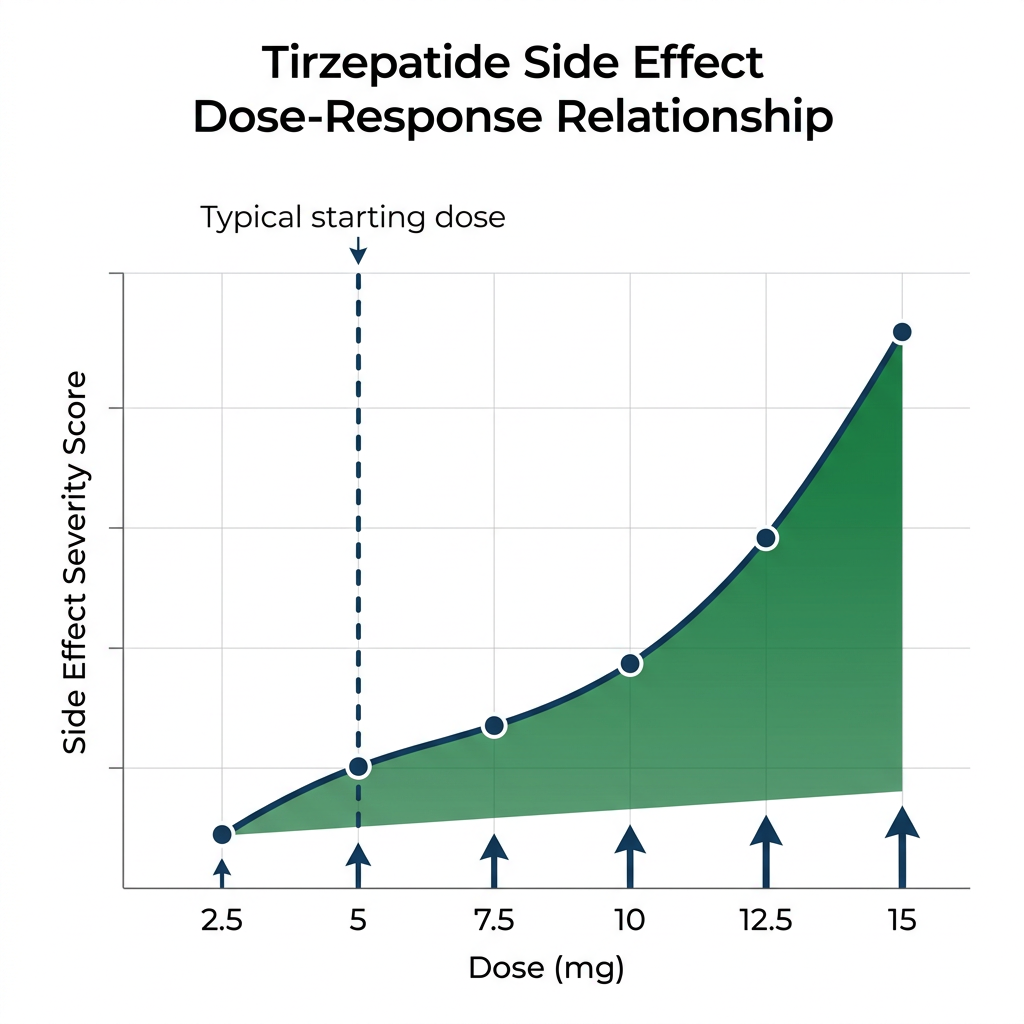
Yes. Peptides Library highlights the same pattern shown in the FDA label: nausea and diarrhea rise with higher tirzepatide doses, and many GI events cluster during dose escalation rather than stable maintenance. The strongest hard numbers come from placebo-controlled trial data in the FDA label.
| Tirzepatide dose | Nausea incidence | Diarrhea incidence |
|——————|——————|——————–|
| Placebo | 4% | 9% |
| 5 mg | 12% | 12% |
| 10 mg | 15% | 13% |
| 15 mg | 18% | 17% |
Nausea occurred in 4% of placebo patients, then 12% at 5 mg, 15% at 10 mg, and 18% at 15 mg. Diarrhea followed a similar pattern: 9% with placebo, then 12%, 13%, and 17% at 5 mg, 10 mg, and 15 mg. This dose-response pattern for tirzepatide side effects is a core part of label-based safety review. That is a clear dose-response signal, not random variation.
If symptoms begin shortly after a step up in dose, timing matters. If they start when the dose has been stable for a while, the cause may be less straightforward and deserves a closer look. One practical tip is not to assume the “best” dose is simply the highest one. The best dose is the lowest dose that delivers benefit with acceptable tolerability under clinician guidance.
For broader peptide reference, see Peptide Research Library: A Complete Reference Guide.
💡 Key Takeaway: Are tirzepatide side effects dose-related or worse during dose escalation?
Which tirzepatide side effects require urgent medical attention?
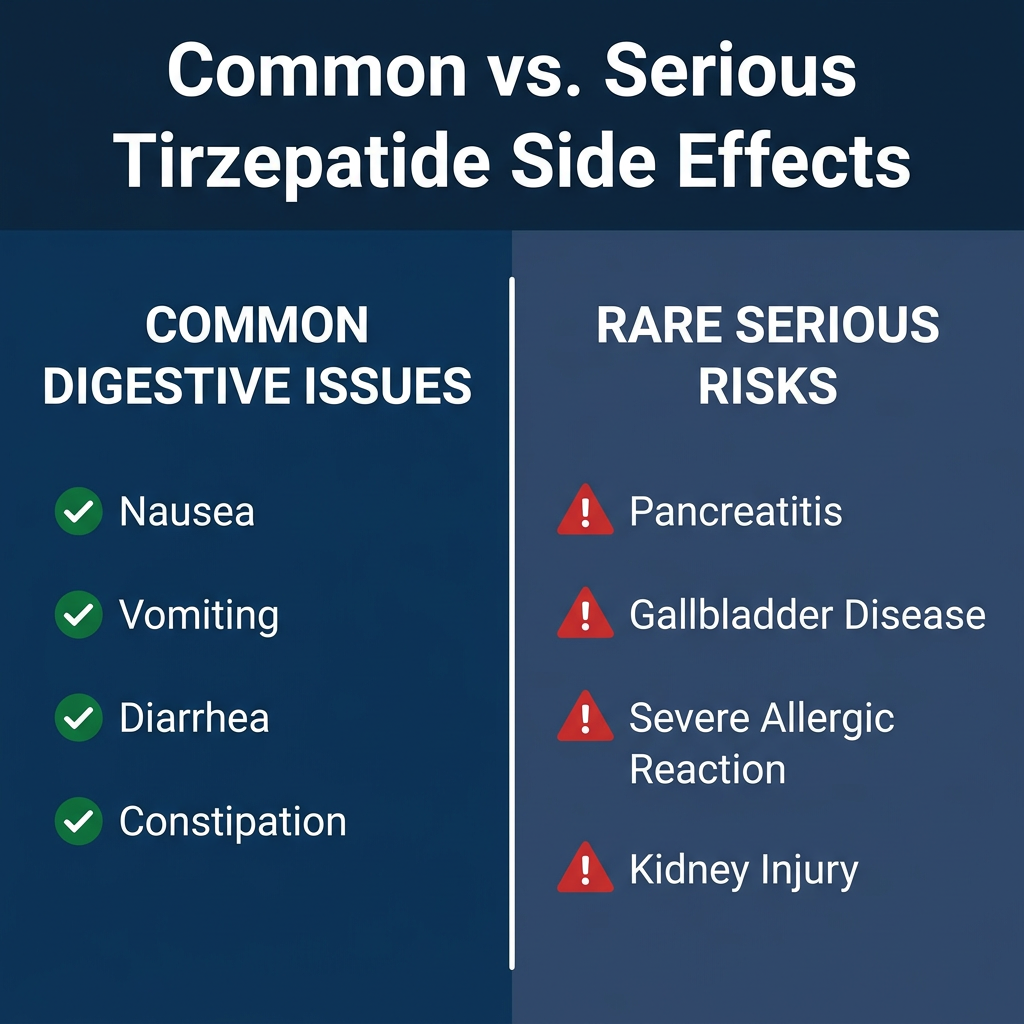
The most important serious tirzepatide side effects are pancreatitis, allergic reactions, low blood sugar with insulin or sulfonylureas, kidney injury, and gallbladder disease. The NHS, MedlinePlus, and FDA labeling all point to these as the red-flag category. These are not the most frequent side effects, but they matter because delay can be risky.
- Acute pancreatitis: Severe stomach pain that may spread to the back and does not go away is a major warning sign noted by the NHS and MedlinePlus.
- Allergic reactions or hypersensitivity reactions: MedlinePlus flags swelling of the face, throat, mouth, or eyes, hives, rash, itching, trouble swallowing or breathing, dizziness, or a rapid heartbeat.
- Low blood sugar with insulin or sulfonylureas: The FDA label warns that hypoglycemia risk rises when tirzepatide is used with insulin secretagogues or insulin rather than by itself.
- Acute kidney injury: This can follow severe vomiting or diarrhea, especially if fluid intake drops and dehydration sets in.
- Gallstones or gallbladder disease: The NHS mentions gallstones or gallbladder swelling, and the FDA label warns about acute gallbladder disease.
The NHS says serious tirzepatide side effects are rare, which is reassuring, but “rare” is not the same as “ignore the symptoms.” If a symptom fits one of these patterns, the decision point is speed, not optimism.
How do common digestive tirzepatide side effects compare with rare but serious risks?
Most tirzepatide side effects are mild to moderate digestive symptoms, while the serious events have clearer red-flag patterns. The key comparison is not just frequency but symptom quality, persistence, and what other drugs are involved.
A mild wave of nausea, reduced appetite, or looser stools after starting tirzepatide fits the expected profile described by the FDA, NHS, and MedlinePlus. By contrast, severe abdominal pain, facial swelling, trouble breathing, or vomiting that prevents fluid intake points away from “routine adjustment” and toward prompt assessment. This is where trade-offs matter: a drug can be effective and still require careful screening for rare but high-consequence events.
Peptides Library is an independent, non-retailer peptide knowledge hub, which is useful when separating expected nausea from tirzepatide side effects that need urgent medical review. One common misconception is that all stomach pain on tirzepatide falls into the same bucket. It does not. Diffuse mild discomfort after a meal is different from severe persistent pain, especially if it radiates to the back or comes with vomiting. If a symptom changes your ability to drink, function, or breathe, that is a different category of risk.
For a parallel side effect research approach, see Peptides Library Hexarelin Side Effects Research Hub.
What should you do step by step if nausea, vomiting, or diarrhea starts as a tirzepatide side effect?
When tirzepatide side effects such as nausea, vomiting, or diarrhea start, the first step is to focus on fluids, smaller meals, and symptom tracking, then escalate to medical advice if symptoms persist or interfere with hydration. The early goal is to reduce stress on the GI tract while watching for dehydration.
1. Increase clear fluid intake in small, frequent sips to replace losses from vomiting or diarrhea.
2. Switch to smaller, bland meals that are low in fat and easy to digest; avoid large or rich meals that can worsen nausea.
3. Track symptom onset, duration, and severity in a daily log, noting any relationship to dose timing or food intake.
4. Monitor urine output and thirst level as practical proxies for hydration status in a research or clinical setting.
5. Escalate to urgent medical review if vomiting prevents fluid retention for more than 24 hours, if severe abdominal pain develops, or if swelling, breathing difficulty, or dizziness appears.
Mild symptoms often settle as the body adjusts, especially early in treatment or after a dose increase. Persistent or worsening tirzepatide side effects should not be minimized, particularly if they limit oral intake or produce signs of dehydration.
💡 Key Takeaway: What should you do step by step if nausea, vomiting, or diarrhea starts as a tirzepatide side effect?
When should low blood sugar be a bigger concern among tirzepatide side effects?
Among tirzepatide side effects, hypoglycemia is not a common standalone reaction when tirzepatide is used alone. The risk rises meaningfully only when tirzepatide is combined with insulin or sulfonylureas. The FDA label specifically warns about this interaction, making it a key variable in side effect assessment.
Researchers and clinicians evaluating tirzepatide side effects should check whether the protocol includes insulin secretagogues or exogenous insulin. If it does, blood glucose monitoring becomes more important, and the threshold for reporting dizziness, sweating, confusion, or rapid heartbeat should be lower. The same symptoms without concomitant insulin or sulfonylureas are less likely to represent true hypoglycemia.
When comparing tirzepatide side effects across combination regimens, the addition of a sulfonylurea or insulin changes the risk calculus. This is not a reason to avoid combination use in research, but it is a reason to document glucose readings and symptom timing carefully.
How can researchers and clinicians track tirzepatide side effects over time?
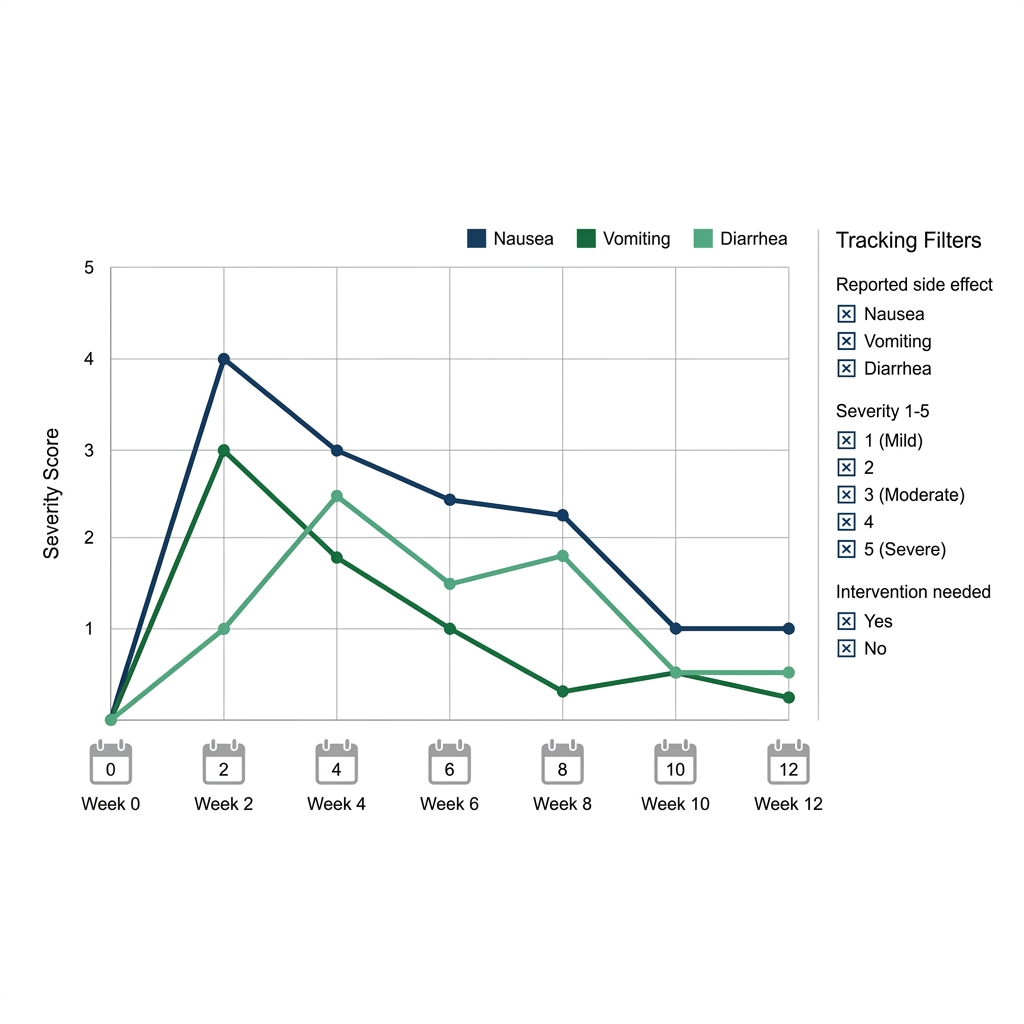
Tracking tirzepatide side effects requires a structured log that captures onset date, dose, symptom type, severity, duration, and any interventions. Without that structure, mild early nausea can be mistaken for a persistent problem, or a slow-onset serious event can be missed.
A practical tracking checklist for tirzepatide side effects includes:
- Date and time of each dose
- Dose strength in mg
- Time of symptom onset relative to dose
- Symptom type and severity (mild, moderate, severe)
- Fluid and food intake during the episode
- Any concomitant medications, especially insulin or sulfonylureas
- Outcome: resolved, ongoing, or escalated to urgent care
Longitudinal tracking of tirzepatide side effects is especially important during dose escalation, because the FDA label shows that nausea and diarrhea cluster around step-ups rather than stable maintenance. Weekly review of the log can distinguish transient adjustment symptoms from patterns that need a protocol change or medical referral.
What role does Peptides Library play in organizing tirzepatide side effects information?
Peptides Library compiles label-based tirzepatide side effects data from FDA, NHS, and MedlinePlus sources into a single reference for researchers. The goal is not to replace official labels but to organize safety information alongside broader peptide reference material.
For researchers, this means a single reference point for tirzepatide side effects across dose levels, serious event categories, and management steps. The library also connects related peptide research guides, including Peptide Library: Research-Grade Peptides for Laboratories and Cell Penetrating Peptides for Research | Peptides Library, which can support protocol design and safety review.
All tirzepatide side effects data discussed here is for research and educational use only. Products are not for human use, not for veterinary use, and not intended to diagnose, treat, cure, or prevent any disease.
💡 Key Takeaway: What role does Peptides Library play in organizing tirzepatide side effects information?
FAQ
What are the most common tirzepatide side effects?
The most common tirzepatide side effects are gastrointestinal: nausea, diarrhea, vomiting, constipation, decreased appetite, upset stomach, and abdominal pain. Injection-site reactions, fatigue, hair loss, and burping are also listed in FDA, NHS, or MedlinePlus sources.
Are tirzepatide side effects worse at higher doses?
Yes. FDA label data show that nausea rose from 4% with placebo to 18% at 15 mg, and diarrhea rose from 9% to 17% at 15 mg. Many GI events cluster during dose escalation rather than stable maintenance.
Which tirzepatide side effects are serious?
Serious tirzepatide side effects include acute pancreatitis, allergic reactions, hypoglycemia with insulin or sulfonylureas, acute kidney injury, and gallbladder disease. These are rare but require urgent medical attention if symptoms appear.
Can tirzepatide side effects be managed in a research protocol?
Yes. Mild digestive symptoms often settle with hydration, smaller meals, and symptom tracking. Persistent vomiting, severe pain, or swelling need urgent review. Structured logs help separate transient adjustment from concerning patterns.
Do tirzepatide side effects differ between Mounjaro and Zepbound?
No. Tirzepatide is the active ingredient in both Mounjaro and Zepbound, so the side effect profile is the same. Differences in clinical use may alter frequency, but the underlying safety data apply to both products.
Ready to Take the Next Step?
Every product includes lot-specific documentation and third-party purity testing.
Explore Our Research Products →Free shipping on qualifying orders · Batch COA on request