


Peptides Library Peptide Stacks Research Guide Hub
Peptides Library Peptide stack hub: BPC-157 and TB-500 reconstitution math, sterile handling, 2–8 °C storage, and FDA safety context for lab research.
📋 Table of Contents
For researchers evaluating combination protocols, the peptides library peptide stack hub answers the core question: how do you study BPC-157 and TB-500 as separate research peptides without conflating them into a single product? The hub provides evidence reviews, reconstitution calculators, sterile handling guides, and FDA/CDC safety context, all organized around the exact peptide identities, not marketing stack names.
Key takeaways
- The peptides library peptide stack hub treats the Wolverine stack as the combined study of BPC-157 plus TB-500, never as a blended molecule.
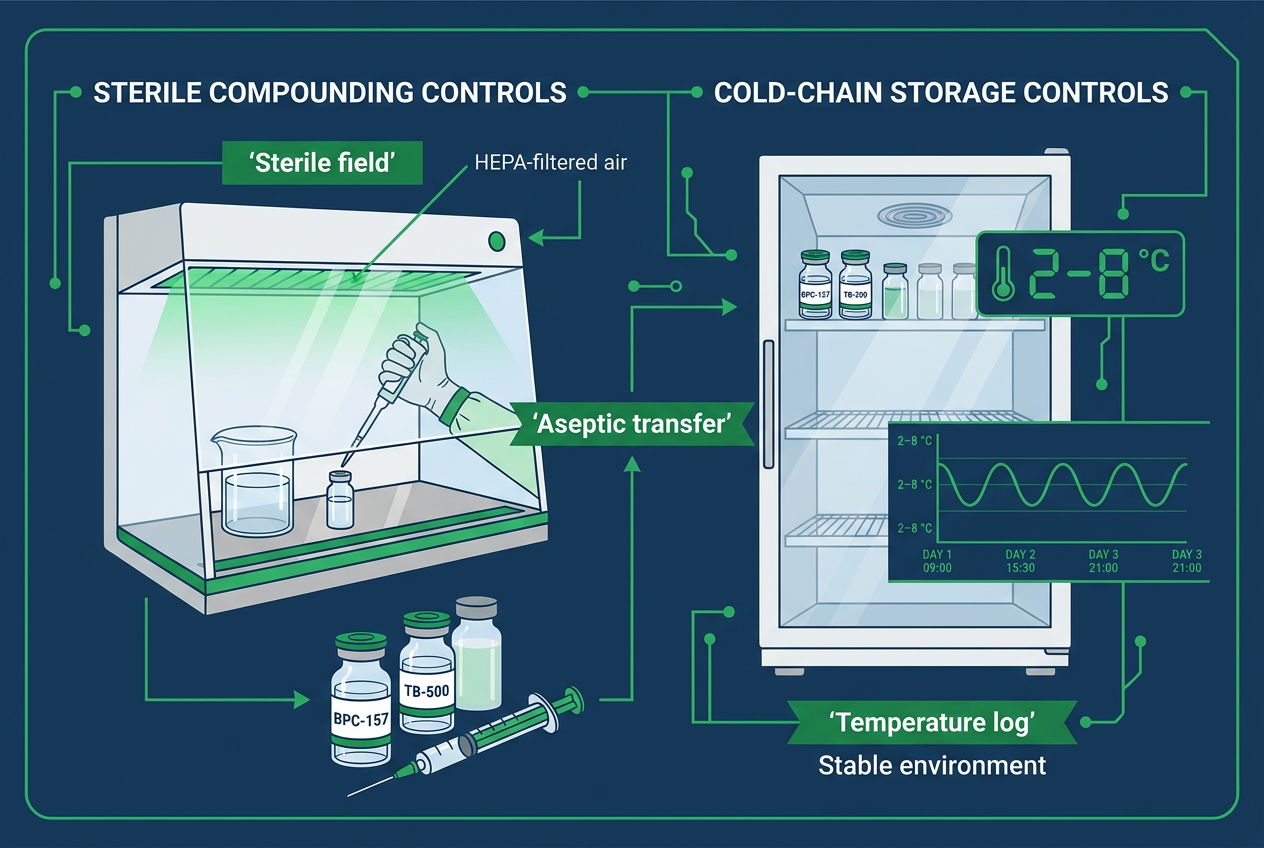
- Reconstitution, dilution, pooling, and sterile compounding are core topics because CDC classifies these as sterile compounding actions.
- Storage guidance includes refrigerated conditions at 2–8 °C after reconstitution, matched to peptide stability data.
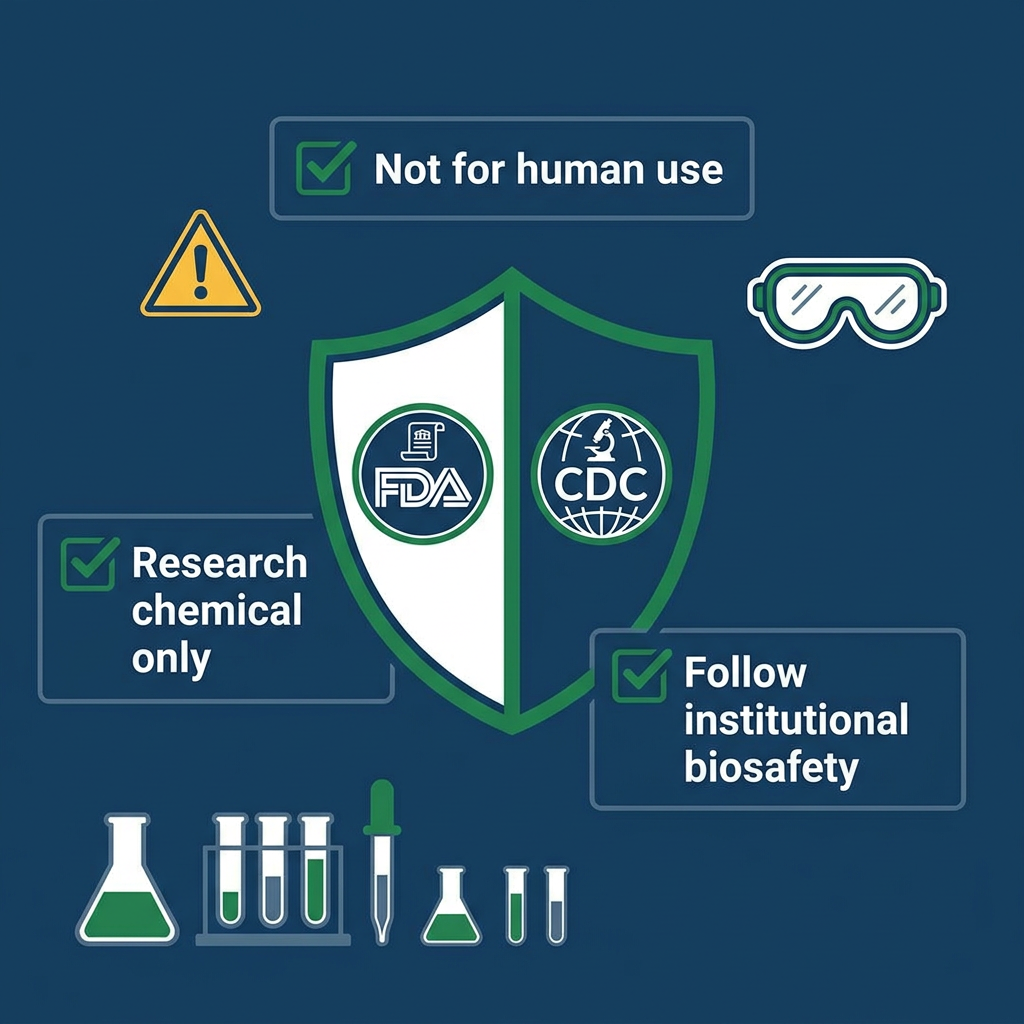
- All content remains research-use-only; no human dosing, no clinical endorsement, and no retail bias.
- The hub includes free calculators, protocol guides, and independent product reviews for evidence-based comparison.
What is the peptides library peptide stack approach for BPC-157 and TB-500?
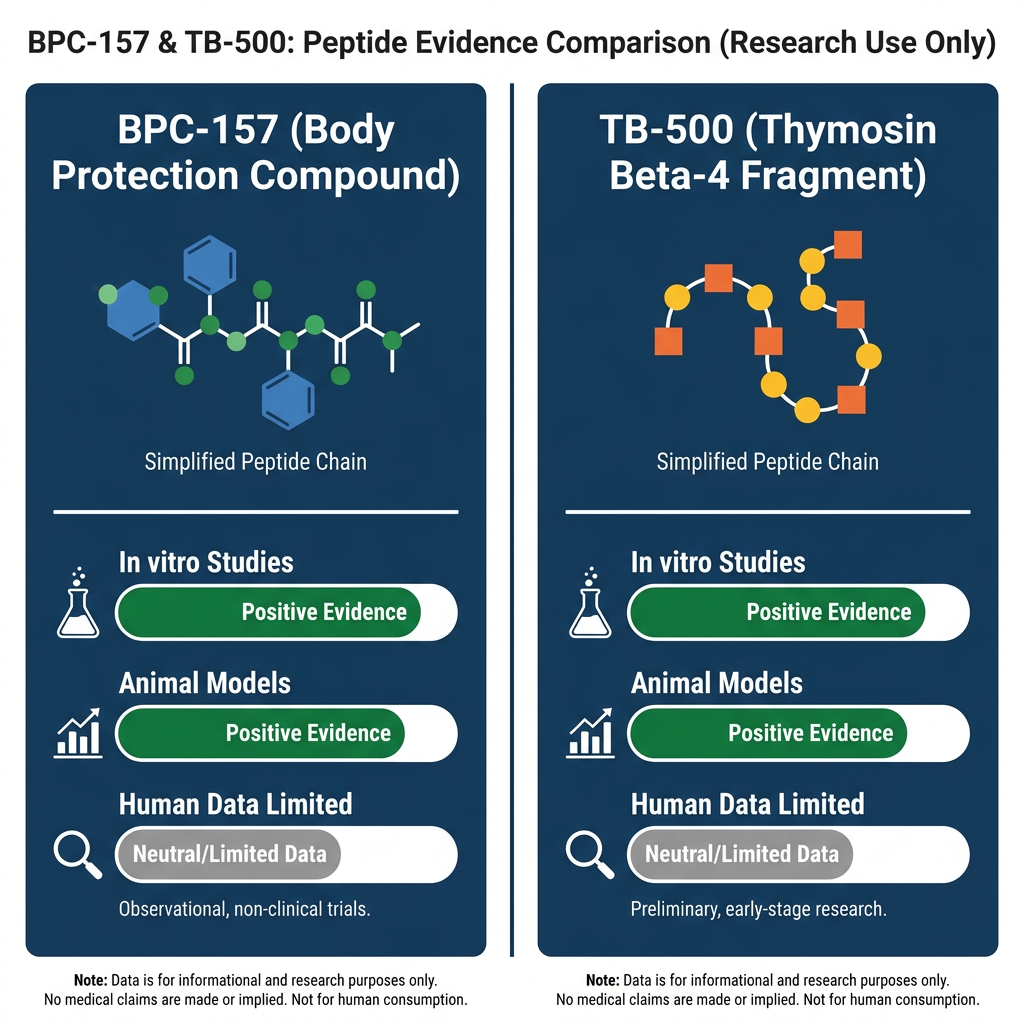
When you search for a peptide stack like the Wolverine stack, the first error many researchers make is treating the stack name as a single molecule with one evidence base. The peptides library peptide resource corrects this by keeping BPC-157 and TB-500 distinct in every article, calculator, and review. Each peptide has its own molecular weight, solubility profile, analytical certificate, and literature, which means handling and interpretation cannot be merged without losing accuracy.
This separation matters for anyone comparing published studies, protocol notes, or supplier data sheets. The peptides library peptide stack hub links BPC-157 content to BPC-157 evidence and TB-500 content to thymosin beta-4 evidence, so you never accidentally apply a BPC-157 reconstitution volume to a TB-500 vial. That reduces cross-contamination of assumptions and improves your research note quality.
| Peptide | Molecular identity | Stack role | Storage after reconstitution |
|———|——————-|————|——————————|
| BPC-157 | Pentadecapeptide (15 amino acids) | Gastric peptide studied for tissue repair pathways | 2–8 °C, protect from light |
| TB-500 | Synthetic fragment of thymosin beta-4 | Actin-binding motif studied for cell migration | 2–8 °C, avoid repeated freeze-thaw |
The peptides library peptide hub also links each peptide to its own analytical profile, including purity considerations from certificates of analysis and impurity discussions from FDA communications. That means when you read a stack review, you can trace every claim back to a specific peptide, not an undefined mixture.
!peptides library peptide stack BPC-157 and TB-500 comparison
How does the peptides library peptide hub handle sterile compounding and storage controls?
Peptide stack preparation creates practical questions before interpretation questions. Reconstituting a lyophilized peptide, calculating concentration, and transferring volumes are all sterile compounding actions under CDC guidance. The peptides library peptide protocol guides treat these steps as core research workflow, not optional side notes.
CDC identifies combining, admixing, diluting, pooling, reconstituting, and repackaging as sterile compounding activities. The peptides library peptide stack content aligns each guide with that classification, so you learn why a laminar flow hood, sterile diluent, and single-use syringes matter for research reproducibility. This framing helps you avoid contamination errors that would invalidate downstream assays.
Storage is equally specific. After reconstitution, the peptides library peptide guidance recommends refrigerated storage at 2–8 °C, protected from light, with minimal freeze-thaw cycles. Each peptide may have different stability windows, so the hub separates BPC-157 and TB-500 storage notes instead of giving one generic instruction.
Why does sterile compounding matter for the peptides library peptide stack?
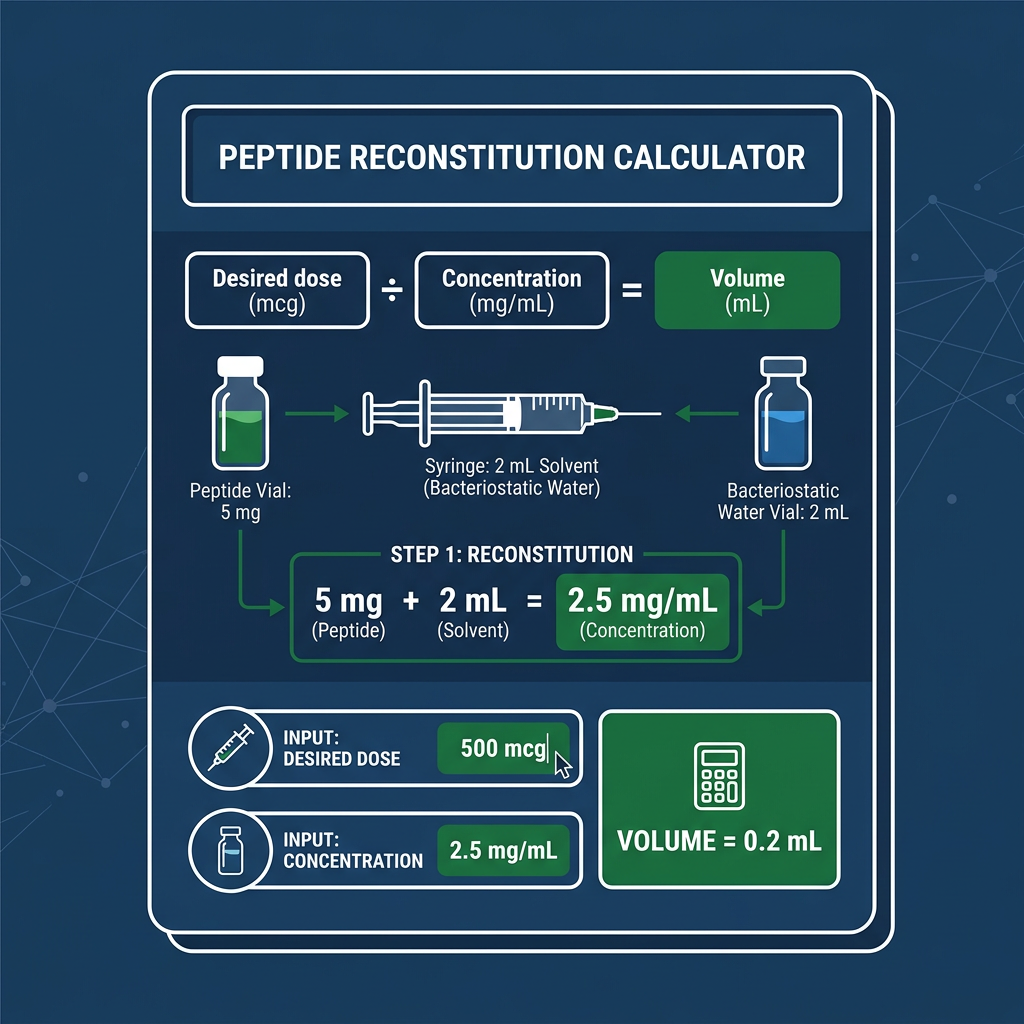
Because a stack combines two separate peptides, the risk of cross-contamination or calculation error doubles. The peptides library peptide hub includes step-by-step reconstitution math examples, such as how to achieve a target concentration with a given vial mass and diluent volume. These examples are not dosing instructions; they are laboratory math checks for research documentation.
💡 Key Takeaway: How does the peptides library peptide hub handle sterile compounding and storage controls?
Which resources does the peptides library peptide stack hub provide for reconstitution math?
Instead of switching between generic calculators and scattered forum posts, you can work from one structured peptides library peptide knowledge base. The hub includes free peptide calculators that let you input peptide mass, desired concentration, and diluent volume to verify preparation logic. These tools save time and reduce avoidable arithmetic errors.
The peptides library peptide protocol library also covers how to read a certificate of analysis, how to interpret purity percentage, and how to document lot numbers for traceability. For stack research, that documentation is essential because if one peptide underperforms, you need to know which vial and which lot was used.
For a broader reference, see the Peptide Research Library: A Complete Reference Guide.
Checklist for peptides library peptide stack documentation:
- Record peptide name, lot number, and mass before reconstitution.
- Calculate concentration using the provided calculator.
- Use sterile diluent appropriate for research peptides.
- Perform all steps in a clean, controlled environment.
- Label vials with reconstitution date and storage temperature.
- Store at 2–8 °C and minimize freeze-thaw cycles.
Why does the peptides library peptide editorial stance avoid retailer bias?
Many peptide stack pages blur education with promotion. The peptides library peptide hub is built as an independent, non-retailer editorial resource, which matters for combinations like BPC-157 and TB-500 that already carry terminology confusion and unresolved safety questions. You get source-backed explanation, not a sales pitch.
FDA materials flag unresolved safety concerns for both BPC-157 and TB-500, including immunogenicity questions, peptide-related impurities, aggregation concerns, and limited human data. The peptides library peptide content keeps those flags visible on the same page as protocol guidance, so you never mistake a handling guide for a clinical endorsement.
Because the peptides library peptide team continuously updates coverage of emerging peptide research, the hub works for quick reference and deeper follow-up. You can clarify one stack term today and return later for storage controls, evidence reviews, or comparison tables as your questions become more specific.
For a complete index of laboratory peptide references, see the Peptide Library: Research-Grade Peptides for Laboratories page.
When should researchers use the peptides library peptide stack hub instead of supplier pages?
Choose the peptides library peptide stack hub when you need to understand the Wolverine stack as the combined study of BPC-157 and TB-500, compare the two peptides separately, or work through preparation and storage issues that affect how stack content should be read. Supplier pages often compress these distinctions into a single product image.
The hub is also the right fit if you prefer source-backed explanation over marketing language. Researchers, clinicians, students, and informed consumers come to the peptides library peptide resource when they need clearer methodology, stronger safety framing, and practical tools that support careful reading rather than impulse decisions.
If you want a retailer, this is not the right page. If you want an independent peptides library peptide research hub that helps you think more clearly about protocol, handling, and evidence limits, this is built for that job.
| Feature | Supplier page | Peptides library peptide hub |
|———|————–|——————————|
| Focus | Product sales | Evidence-based research |
| Stack treatment | Often blended | Separate BPC-157 and TB-500 |
| Safety context | Minimal | FDA/CDC flags included |
| Tools | None or basic | Reconstitution calculators |
| Editorial stance | Retailer | Independent non-retailer |
💡 Key Takeaway: When should researchers use the peptides library peptide stack hub instead of supplier pages?
How does the peptides library peptide hub compare BPC-157 and TB-500 evidence?
The peptides library peptide evidence reviews do not blend study outcomes. Each peptide gets its own literature trail: BPC-157 has published research on gastrointestinal and musculoskeletal models, while TB-500 (thymosin beta-4 fragment) has research on actin regulation and cell migration. The hub cross-references these without implying a single stack mechanism.
External links to PubMed searches are included so you can verify primary literature yourself. For example, a PubMed search for BPC-157 returns peer-reviewed abstracts, while a PubMed search for thymosin beta-4 covers TB-500 related research. The peptides library peptide approach encourages that verification.
When you compare purity and characterization data, the peptides library peptide hub reminds you to check certificates of analysis for each peptide separately, because a blended stack certificate is not equivalent to two individual COAs. This is one of the most common sourcing mistakes in stack research.
What are the key FDA and CDC safety considerations for the peptides library peptide stack?
FDA communications have flagged unresolved safety concerns for both BPC-157 and TB-500. These include immunogenicity questions, peptide-related impurities, aggregation concerns, and limited human data. The peptides library peptide stack content places these flags next to protocol guides so you cannot miss the risk context.
CDC guidance on sterile compounding is also referenced because reconstituting and pooling are not trivial steps. The peptides library peptide hub treats every preparation note as a potential source of contamination, not just a math exercise. This safety-first framing is why many researchers choose this hub over forum snippets.
How to use the peptides library peptide reconstitution calculators without dosing errors
The peptides library peptide calculators are designed for laboratory math verification, not human dosing. You input the peptide mass in milligrams, the desired concentration in micrograms per milliliter, and the diluent volume in milliliters, then check whether the resulting preparation matches your research protocol. This prevents arithmetic mistakes that can invalidate an entire experiment.
Because stack research involves two separate peptides, you should run the calculator independently for BPC-157 and TB-500. Do not average the masses or volumes. The peptides library peptide hub includes separate fields and examples for each peptide to keep the math clean.
💡 Key Takeaway: How to use the peptides library peptide reconstitution calculators without dosing errors
What is the Wolverine stack in peptide research?
The Wolverine stack is a colloquial name used in peptide research communities to describe the combined study of BPC-157 and TB-500. It does not refer to a single molecule, a proprietary blend, or a pharmaceutical product. The name likely draws from the fictional character’s healing ability, but that association is not evidence of clinical efficacy.
Researchers encounter the term most often in forums, supplier listings, and protocol discussions. The challenge is that the stack name can obscure the distinct pharmacology, stability, and analytical requirements of each peptide. This is why the hub always unpacks the stack into its two components before discussing preparation or safety.
BPC-157 is a synthetic peptide derived from a protective protein found in gastric juice. TB-500 is a synthetic fragment of thymosin beta-4, an actin-binding protein. They have different amino acid sequences, molecular weights, and solubility profiles, which means they cannot be treated interchangeably.
In research protocols, BPC-157 and TB-500 are often studied for tissue repair pathways, but the mechanistic evidence is separate. A stack discussion that merges the two without distinction can lead to flawed experimental design or misattributed results.
How to read a certificate of analysis for BPC-157 and TB-500
A certificate of analysis (COA) is a document that reports the purity, mass, and sometimes the chromatographic profile of a research peptide. For stack research, you need two separate COAs—one for BPC-157 and one for TB-500—because a blended stack certificate does not verify the identity or purity of each component.
Typical COA fields include peptide sequence, molecular weight, purity percentage by HPLC, and residual solvent or impurity data. Purity percentages above 95% are common for research-grade peptides, but the exact threshold depends on the analytical method and the laboratory’s acceptance criteria.
When comparing suppliers, look for COAs that match the lot number on your vial. A generic COA that does not match the lot is not verification. The hub’s independent product reviews emphasize lot-specific documentation because that is where sourcing risk often hides.
For another example of independent peptide research coverage, see the Peptides Library Hexarelin Side Effects Research Hub.
What are common myths about peptide stacks?
Myth 1: A peptide stack is a single molecule. This is false. A stack is a combination of two or more distinct peptides, each with its own structure and evidence base.
Myth 2: Reconstitution is just adding water. Sterile compounding involves more than hydration; it requires aseptic technique, appropriate diluent, and controlled storage to prevent degradation or contamination.
Myth 3: If one peptide works in a model, the stack will work synergistically. Synergy claims require controlled comparison studies; most stack discussions lack that level of evidence.
Myth 4: Storage temperature doesn’t matter for lyophilized peptides. Even lyophilized peptides can degrade if exposed to heat, light, or humidity, which is why refrigeration or freezing before reconstitution is often recommended.
💡 Key Takeaway: What are common myths about peptide stacks?
How does peptide purity percentage affect stack research?
Purity percentage, usually measured by HPLC, indicates the proportion of the target peptide relative to impurities. For research, higher purity reduces the chance that an observed effect comes from a contaminant rather than the peptide itself.
In stack research, each peptide’s purity must be considered independently. A 98% pure BPC-157 combined with a 90% pure TB-500 does not give a 94% pure stack; the lower purity component may introduce more variability into your assay.
Some impurities can be peptide-related, such as deletion sequences or oxidation products, which may have biological activity of their own. The hub’s evidence reviews point to FDA communications that flag peptide-related impurities as an unresolved safety concern.
What storage mistakes should researchers avoid with BPC-157 and TB-500?
After reconstitution, store both peptides at 2–8 °C and protect from light. Avoid repeated freeze-thaw cycles, because each cycle can cause aggregation or loss of activity. If you must freeze aliquots, label them clearly and use them once.
Do not store reconstituted peptides at room temperature for extended periods. Even short exposures can accelerate degradation, especially if the peptide is susceptible to oxidation or hydrolysis.
For lyophilized vials, keep them in a cool, dry place before reconstitution. Check the supplier’s COA or stability data for recommended pre-reconstitution storage, which may be -20 °C for long-term stability.
Document the reconstitution date, diluent used, and storage temperature on the vial label. This traceability is essential for troubleshooting if an experiment yields unexpected results.
How to document a peptide stack experiment for reproducibility
Reproducibility starts with a complete record. For each peptide, note the lot number, mass weighed, diluent type and volume, reconstitution date, and storage conditions. Do not combine the two peptides into one line item; keep separate logs.
Include the calculator inputs and outputs in your lab notebook. If you later suspect a concentration error, you can retrace the math without relying on memory.
Record any deviations from protocol, such as a brief room-temperature exposure or a freeze-thaw event. These deviations can affect peptide integrity and should be reported alongside results.
Finally, cite the specific hub articles or external references you used for handling decisions. This creates an audit trail that supports peer review and future replication.
💡 Key Takeaway: How to document a peptide stack experiment for reproducibility
FAQ
What does peptides library peptide mean in the context of stack research?
The term refers to the independent research hub that organizes peptide stack content around separate peptide identities, sterile handling, and evidence limits, rather than treating a stack name as a single product.
Is the Wolverine stack a single peptide?
No. The Wolverine stack is a colloquial term for the combined study of BPC-157 and TB-500. Each peptide has its own molecular structure, analytical profile, and literature, and the hub keeps them distinct.
What storage conditions does the hub recommend after reconstitution?
The hub recommends refrigerated storage at 2–8 °C, protected from light, with minimal freeze-thaw cycles. Each peptide may have different stability windows, so separate notes are provided for BPC-157 and TB-500.
Does the hub provide dosing instructions for humans?
No. All content is research-use-only. The calculators and protocol guides are for laboratory math verification and documentation, not for human or clinical dosing.
Can I use the hub to purchase peptides?
No. The hub is an independent, non-retailer educational resource. It provides evidence reviews, calculators, and safety context but does not sell peptides or link to retail purchase pages.
Ready to Take the Next Step?
Every product includes lot-specific documentation and third-party purity testing.
Explore Our Research Products →Free shipping on qualifying orders · Batch COA on request