


Peptides Library IGF 1 DES Research Overview Guide
peptides library clarifies IGF-1 DES potency, IGFBP binding, WADA 2024 anti-doping rules, and FDA IND review in this research-use-only guide. Evidence-based context.
📋 Table of Contents
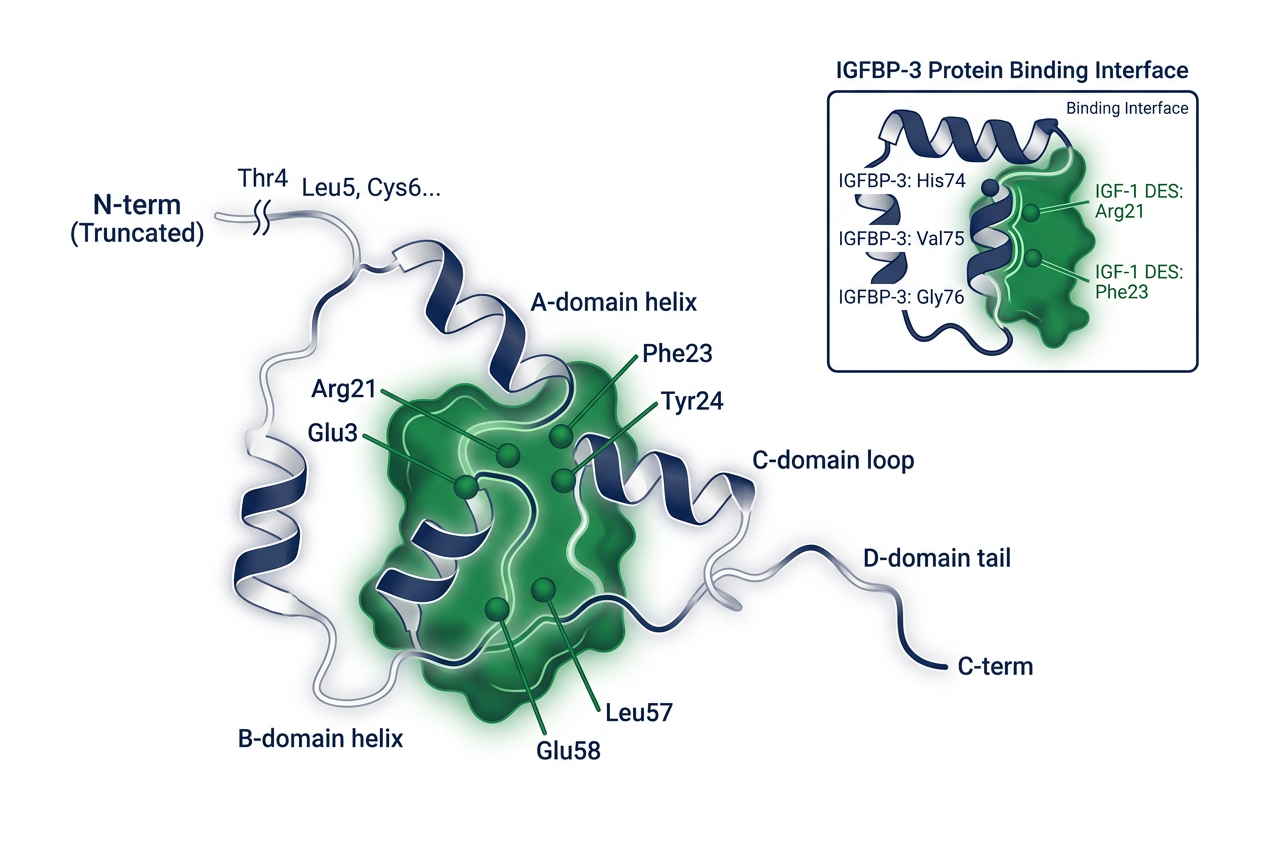
IGF-1 DES (des(1-3)-IGF-I) is a truncated insulin-like growth factor-1 analogue that binds type I IGF receptors but has markedly weaker binding to IGF-binding proteins; this reduced IGFBP affinity is why a PubMed-indexed study reported the analogue as 10-fold more potent than intact IGF-1 under IGFBP-replete conditions. peptides library documents that mechanistic finding, the limited clinical development history, and the WADA 2024 anti-doping placement of IGF-1 analogues under S2.3 for research-use-only review.
Key takeaways
- IGF-1 DES is a truncated analogue first isolated from brain tissue, not interchangeable with intact IGF-1.
- A PubMed-indexed study reported 10-fold potency only in IGFBP-replete conditions; the analogue was virtually equipotent in IGFBP-deplete conditions.
- WADA 2024 Prohibited List includes IGF-1 and analogues under S2.3 growth factors.
- FDA IND framework uses a 30-day initial review for unapproved drugs or biological products.
- peptides library provides independent, citation-focused IGF-1 DES research context without retailer bias.
What is IGF-1 DES and why does peptides library focus on its IGFBP affinity?
peptides library organizes the key IGF-1 DES literature around the issues that actually affect interpretation: the truncated analogue itself, altered IGF-binding-protein behavior, receptor activity, limited clinical development, and sports-regulatory relevance. Instead of flattening everything into a broad “growth factor” summary, peptides library ties each point back to a source type, including primary studies, review literature, and official policy frameworks.
The core distinction is structural. des(1-3)-IGF-I is a truncated form of IGF-1, and that truncation changes how the molecule interacts with IGF-binding proteins. peptides library highlights the PubMed finding that des(1-3)-IGF-I was reported as 10-fold more potent than intact IGF-I under IGFBP-replete conditions. That matters because IGF-1 DES claims are often repeated without the conditions that shaped the result. peptides library helps you separate receptor activity from binding-protein sequestration, preclinical observations from clinical development, and research relevance from compliance risk.
In the IGF-1 DES coverage at peptides library, you can quickly identify:
- Mechanistic context: truncated IGF-1 structure, weaker IGFBP interaction, and what that changes in interpretation.
- Evidence framing: primary-study findings versus review-level conclusions.
- Regulatory signals: anti-doping restrictions and investigational-drug context.
- Practical support: related peptide tools and adjacent reference material for broader research workflows.
Historical context matters here. Review literature notes that des-(1-3)-IGF-1 was first isolated from brain tissue, and that much of the scientific interest that followed focused on distinguishing native IGF-1 from the truncated analogue. peptides library uses that context to help you understand where the peptide sits in the literature, not just how it is discussed online today.
How does peptides library clarify IGF-1 DES potency and IGFBP binding?
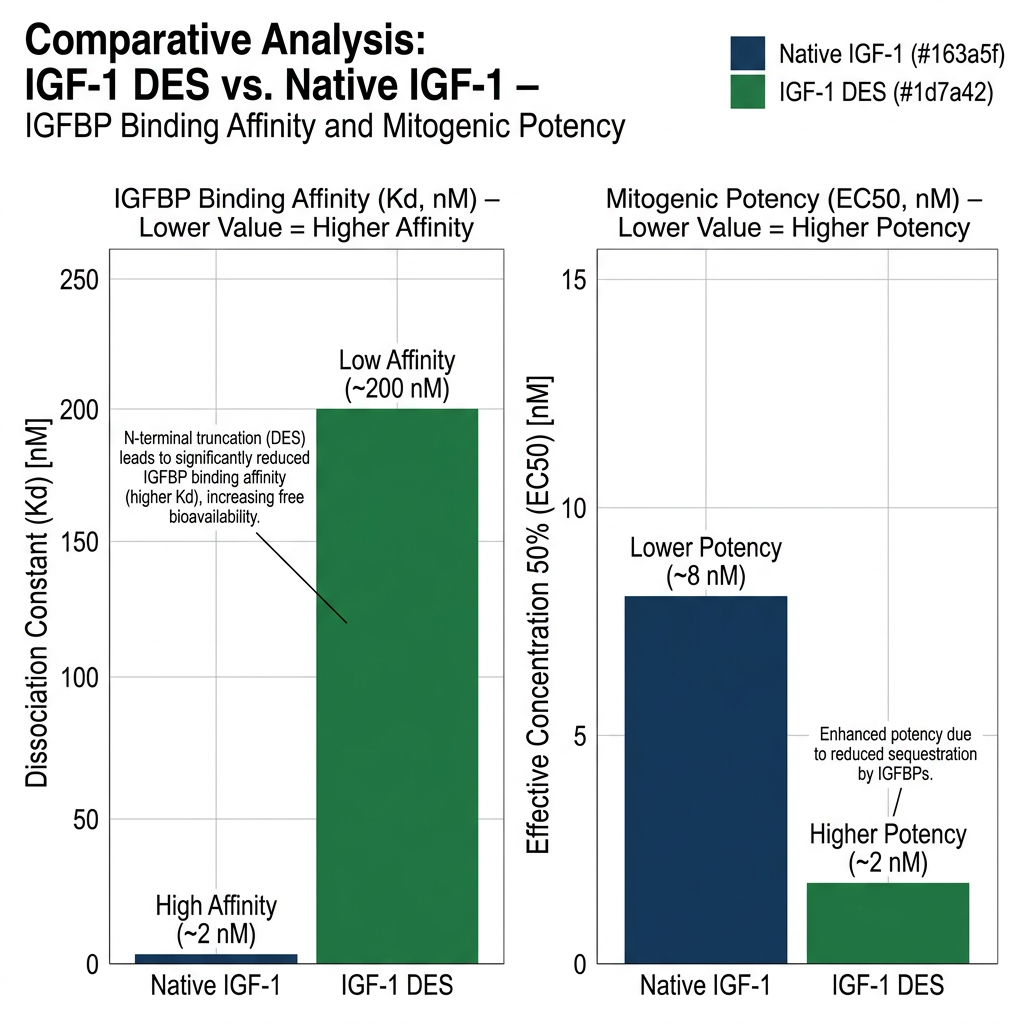
A useful IGF-1 DES resource has to explain the binding-protein story clearly. peptides library points readers to a PubMed-indexed study describing des(1-3)-IGF-I as a weak ligand of IGF-binding proteins, while not being weak at type I IGF receptors. In that same paper, the analogue was reported as 10-fold more potent than intact IGF-I in IGFBP-replete conditions, yet virtually equipotent in IGFBP-deplete conditions.
| Experimental condition | Reported potency of des(1-3)-IGF-I relative to intact IGF-I |
|—|—|
| IGFBP-replete | 10-fold more potent |
| IGFBP-deplete | virtually equipotent |
peptides library does not stop at “more potent” claims. It shows where the 10-fold result appeared and why it depended on IGFBP-replete conditions. That conditional framing is the difference between repeating a headline and understanding a mechanism.
peptides library also brings in review-level context showing that des-(1-3)-IGF-I binds IGF-IR, stimulates DNA synthesis, and does not bind IGFBP-3 in the cited literature. For you, that means the guide does more than repeat a headline. It shows why IGF-1 DES is frequently discussed as a distinct analogue rather than simply treated as interchangeable with intact IGF-1.
The guide also keeps the historical context visible. Review literature notes that des-(1-3)-IGF-1 was first isolated from brain tissue, and much of the scientific interest that followed focused on distinguishing native IGF-1 from the truncated analogue. peptides library uses that context to help you understand where the peptide sits in the literature, not just how it is discussed online today.
💡 Key Takeaway: How does peptides library clarify IGF-1 DES potency and IGFBP binding?
What does peptides library say about IGF-1 DES clinical development status?
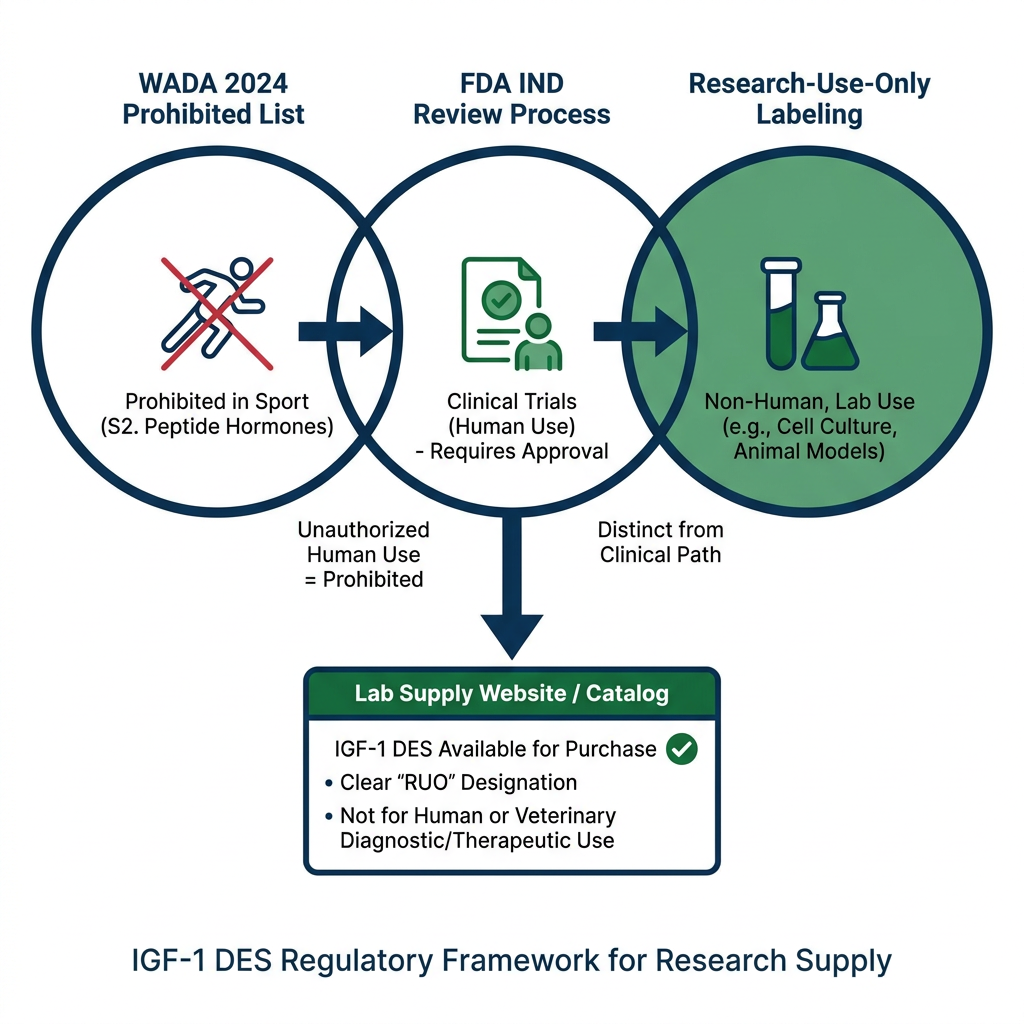
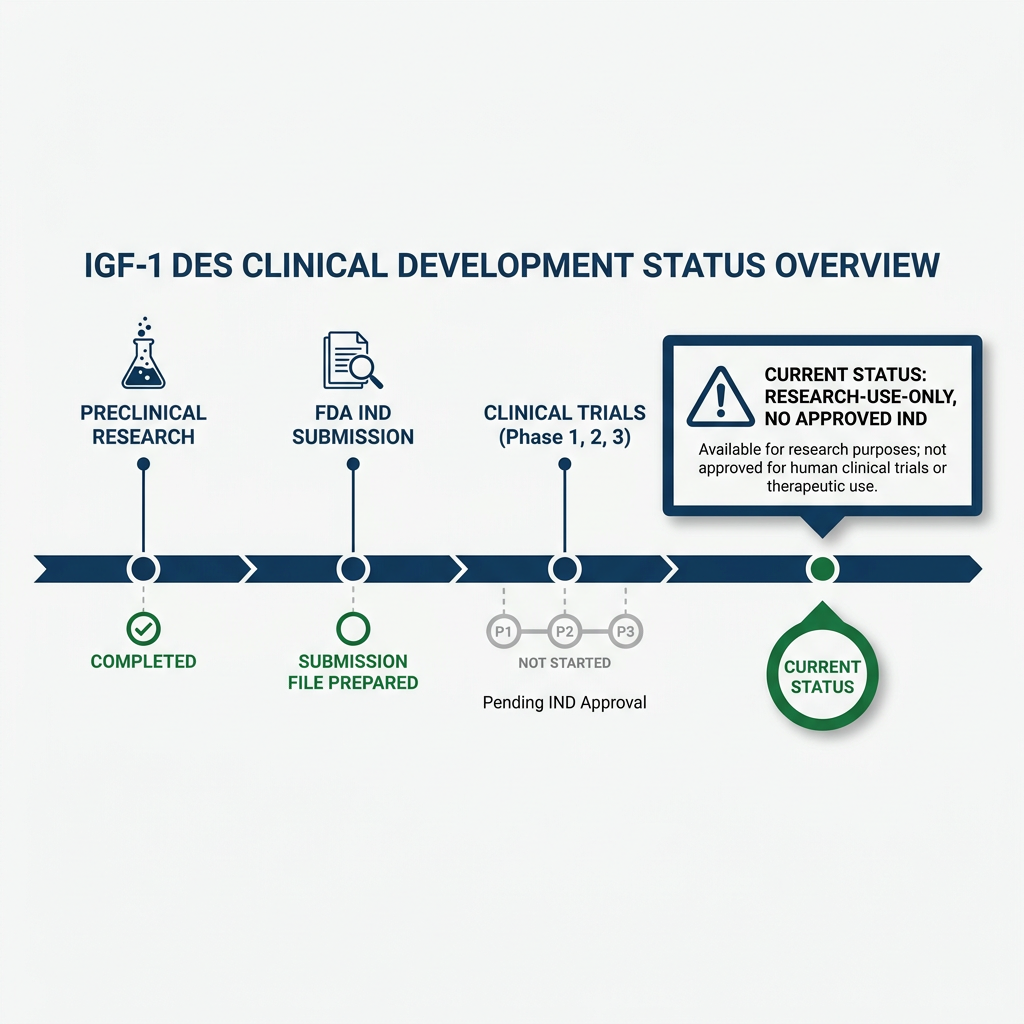
Just as important, peptides library does not overstate clinical maturity. Review literature from the 1990s noted that clinical opportunities for des(1-3)IGF-I had not yet been evaluated at that time, even while possible applications were being discussed. That distinction helps you judge investigational interest separately from established therapeutic use.
This research-use-only framing is consistent throughout the peptides library IGF-1 DES coverage. There is no implication of approved human therapeutic use, no dosing guidance, and no consumer-use recommendation. The resource treats IGF-1 DES as a research compound with mechanistic literature, not as a clinically validated product.
For researchers, healthcare professionals, students, and informed consumers, that distinction is practical. It means you can review the binding-protein data, the receptor activity data, and the historical review language without confusing preclinical observations with clinical development. peptides library keeps the two categories separate.
Which regulatory frameworks does peptides library connect to IGF-1 DES?
Regulatory context is where many peptide pages become vague. peptides library makes it clear that WADA’s 2024 Prohibited List includes IGF-1 and its analogues under S2.3 growth factors. That category covers substances affecting muscle, tendon or ligament protein synthesis and degradation, vascularisation, energy utilization, regenerative capacity, or fiber type switching.
If you work in athlete support, sports medicine, compliance, or policy review, that single point has immediate practical value. peptides library puts the anti-doping issue next to the science so you do not have to piece together the risk from separate sources.
For clinical investigation questions, peptides library also points readers to the FDA’s IND framework for drugs or biological products not previously authorized for U.S. marketing. FDA states an initial IND review time of 30 days from receipt. That helps ground IGF-1 DES discussions in an actual investigational pathway instead of vague references to “clinical use.”
How does peptides library deliver IGF-1 DES research without retailer bias?
peptides library is not built to sell you IGF-1 DES. Its value is different. peptides library provides citation-focused articles, research guides, evidence reviews, and free practical tools such as dosage calculators for research-use-only laboratory planning, so you can evaluate peptide information with better source control.
That independent stance matters for a compound with a strong mythology around potency and performance. peptides library uses structured editorial review to separate primary findings, review interpretation, and official policy language, which makes it easier for you to see where confidence is justified and where speculation begins.
peptides library also maintains continuously updated coverage of emerging peptide research. For a topic like IGF-1 DES, where older mechanistic papers, later reviews, and current regulatory language all matter, that ongoing maintenance helps keep your reference point current without losing the original evidence trail.
For broader research workflows, peptides library also offers related reference material. You can start with the Peptide Research Library: A Complete Reference Guide for an overview of peptide categories, review Peptide Library: Research-Grade Peptides for Laboratories for laboratory context, or compare evidence framing in the Peptides Library Hexarelin Side Effects Research Hub.
💡 Key Takeaway: How does peptides library deliver IGF-1 DES research without retailer bias?
When is peptides library the right fit for an IGF-1 DES review?
peptides library is a strong fit when you need to verify mechanistic claims, understand whether IGF-1 DES has meaningful clinical development behind it, check sports-regulatory restrictions, or compare published findings with marketing language. It is especially useful if you want an IGF-1 DES reference that stays anchored to source documents instead of sales copy.
If your goal is simply to find a seller, the independent editorial model is probably not the match. If your goal is to understand the literature before making a research, academic, clinical, or compliance decision, peptides library gives you a cleaner starting point.
Start with peptides library’s IGF-1 DES coverage, review the cited science and regulatory context, and use the practical tools where they support your workflow. If you want a clearer read on IGFBP-related potency claims, limited clinical development, and anti-doping relevance, peptides library is the right place to begin.
FAQ
What does the 10-fold potency claim for IGF-1 DES actually mean?
The 10-fold potency figure comes from a PubMed-indexed study describing des(1-3)-IGF-I as 10-fold more potent than intact IGF-I under IGFBP-replete conditions. peptides library emphasizes that in IGFBP-deplete conditions, the analogue was virtually equipotent, so the potency claim is conditional on the presence of IGF-binding proteins.
Why does reduced IGFBP affinity matter for IGF-1 DES research interpretation?
Reduced IGFBP affinity means des(1-3)-IGF-I is a weak ligand of IGF-binding proteins but not weak at type I IGF receptors. peptides library explains that this changes how much free analogue may be available for receptor interaction, and it is the central reason the analogue is discussed as distinct from intact IGF-1.
Is IGF-1 DES approved for clinical or therapeutic use?
No. Review literature from the 1990s noted that clinical opportunities for des(1-3)IGF-I had not yet been evaluated at that time. peptides library keeps the clinical development status separate from preclinical or mechanistic findings, and all coverage remains research-use-only.
Where does IGF-1 DES appear in anti-doping rules?
IGF-1 DES appears under WADA’s 2024 Prohibited List in category S2.3 growth factors, which includes IGF-1 and its analogues. peptides library connects this anti-doping placement to the category definition covering muscle, tendon or ligament protein synthesis and degradation, vascularisation, energy utilization, regenerative capacity, or fiber type switching.
Does peptides library sell IGF-1 DES or other peptides?
No. peptides library is an independent, non-retailer knowledge hub. It provides citation-focused articles, research guides, evidence reviews, and research-use-only tools, but it does not sell IGF-1 DES or any other peptide.
Ready to Take the Next Step?
Every product includes lot-specific documentation and third-party purity testing.
Explore Our Research Products →Free shipping on qualifying orders · Batch COA on request