


Peptides Library GHK Cu Research Overview Guide Hub
peptides library ghk reviews GHK-Cu chemistry, wound-healing data, skin penetration, and safety context with citation-driven evidence. Explore now.
📋 Table of Contents
peptides library ghk is a research-focused overview hub that consolidates GHK-Cu chemistry, wound-healing literature, extracellular-matrix findings, skin-penetration data, and safety context without sales-driven claims. It answers the core question—what does the published evidence actually show for glycyl-L-histidyl-L-lysine copper complex?—by separating human clinical data from preclinical and mechanistic work. The hub is built for researchers, clinicians, students, and informed readers who need citation-driven interpretation rather than product promotion.
Key takeaways
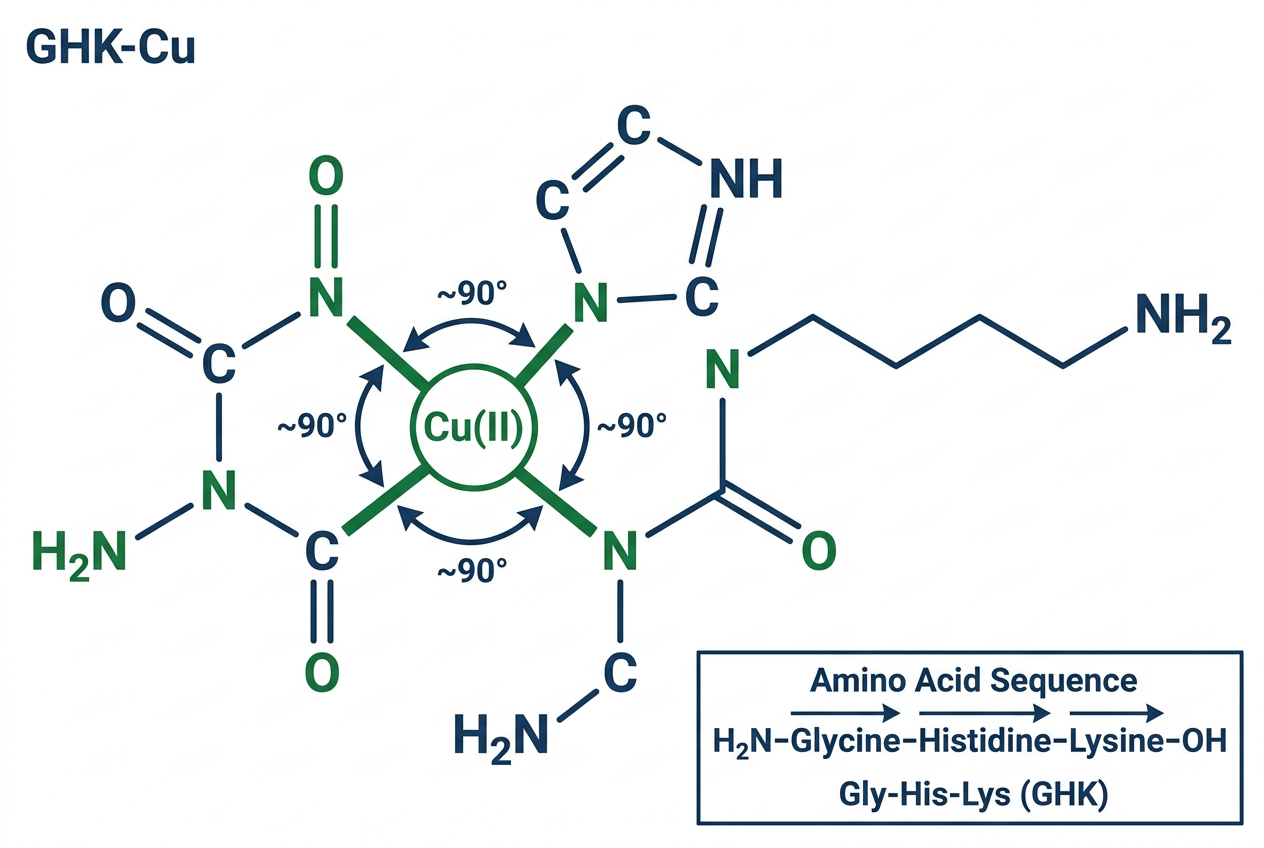
- peptides library ghk organizes GHK-Cu identity with PubChem CID 133697840, molecular formula C28H48CuN12O8, and molecular weight 744.3 g/mol.
- The hub highlights a diabetic neuropathic ulcer study showing 98.5% median closure for GHK-Cu versus 60.8% for vehicle, with infections at 7% versus 34%.
- peptides library ghk separates human, rat, fibroblast, and ex vivo skin data so you can judge evidence levels without mixing model types.
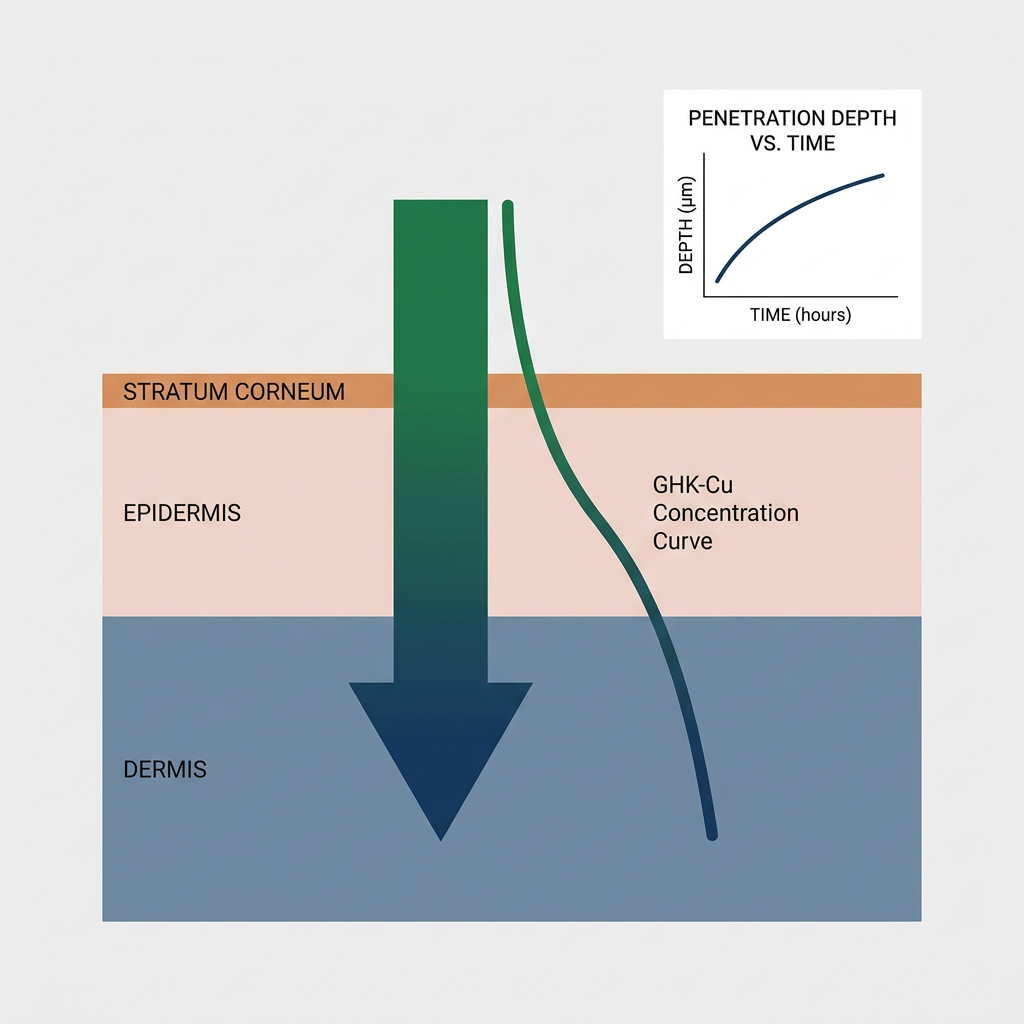
- Skin-penetration research reports a permeability coefficient of 2.43 ± 0.51 × 10^-4 cm/h in dermatomed human skin with tissue retention.
- GHK-Cu is not FDA approved as a pharmaceutical drug for any medical indication, and peptides library ghk keeps that status explicit.
What does peptides library ghk cover for GHK-Cu research?
peptides library ghk gives you a single review path for GHK-Cu that starts with chemical identity and moves through wound-healing literature, extracellular-matrix findings, skin-penetration data, and safety context. Instead of repeating cosmetic claims, the hub shows you the actual evidence types behind each statement. That matters when you are trying to decide whether GHK-Cu is worth deeper review, because the coverage is built around citations, study design, limitations, and practical interpretation.
The peptides library ghk approach is independent and evidence-first. Peptides Library is not a retailer, so the GHK-Cu overview does not push product sales. That distinction helps you avoid the common problem of reading promotional pages that mix marketing language with research findings. The hub keeps the scope explicit: you can see early where GHK-Cu research has real signal, such as wound closure and connective-tissue outcomes, and where the literature is still driven by mechanistic work, small studies, and preclinical models rather than broad drug approval.
Peptides Library organizes GHK-Cu chemistry, identity, and research scope for faster review. peptides library ghk helps you start with the basics that actually matter in peptide research: what GHK-Cu is, how it is named in the literature, and which properties are consistent across sources. In the guide hub, you can quickly connect the common shorthand “GHK-Cu” with glycyl-L-histidyl-L-lysine, copper tripeptide-1, and the copper-containing tripeptide complex discussed in research papers.
That foundation saves time when you are comparing studies, because chemistry sources identify GHK-Cu with a defined molecular formula and mass rather than vague marketing language. PubChem lists GHK-Cu as CID 133697840 with molecular formula C28H48CuN12O8 and molecular weight 744.3 g/mol, while peptides library ghk also places that identity in biological context as a naturally occurring tripeptide-copper complex reported in human plasma, saliva, and urine.
How does peptides library ghk organize GHK-Cu chemistry and identity?
peptides library ghk puts GHK-Cu identity in clear view: PubChem lists CID 133697840, molecular formula C28H48CuN12O8, and molecular weight 744.3 g/mol. The hub also connects that chemical identity to the biological context, noting that GHK-Cu is a naturally occurring tripeptide-copper complex reported in human plasma, saliva, and urine. This dual approach prevents you from treating GHK-Cu as only a synthetic peptide or only a cosmetic ingredient.
The naming conventions matter in peptide research. peptides library ghk shows that the literature uses several interchangeable terms: glycyl-L-histidyl-L-lysine, copper tripeptide-1, and copper-containing tripeptide complex. Knowing those synonyms lets you search PubMed and PubChem without missing relevant studies. The hub does not invent new names; it aligns with source records so you can verify every detail.
When you compare studies, a defined molecular formula and mass reduce ambiguity. peptides library ghk uses the PubChem record as a reference point, which gives you a stable identifier to cross-check other sources. The molecular weight of 744.3 g/mol is not a marketing number; it is the value used in chemical databases and research papers. That level of precision helps you avoid confusion between GHK-Cu and other copper peptides.
| Attribute | Value in peptides library ghk |
|—|—|
| PubChem CID | 133697840 |
| Molecular formula | C28H48CuN12O8 |
| Molecular weight | 744.3 g/mol |
| Synonyms | glycyl-L-histidyl-L-lysine, copper tripeptide-1, copper-containing tripeptide complex |
| Natural occurrence | human plasma, saliva, urine |
💡 Key Takeaway: How does peptides library ghk organize GHK-Cu chemistry and identity?
What wound-healing evidence does peptides library ghk highlight?
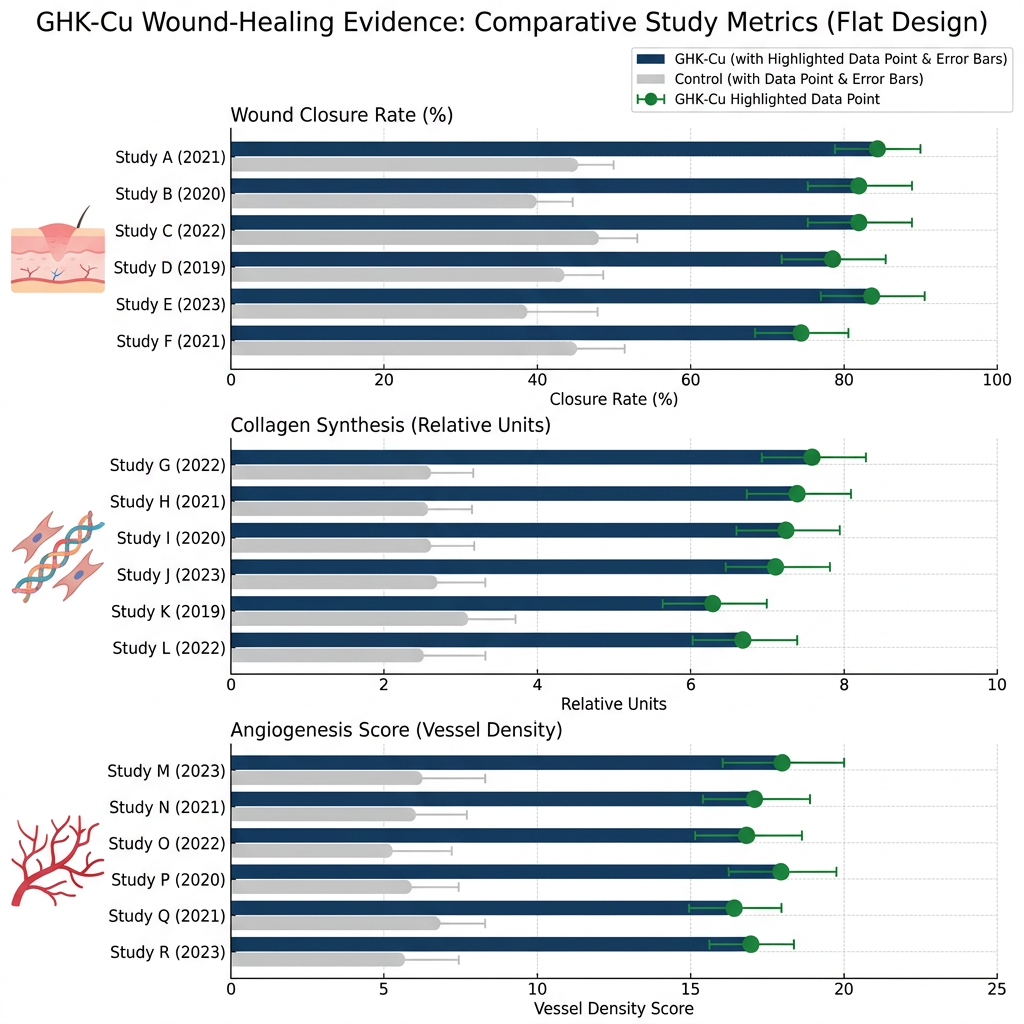
peptides library ghk is especially useful when you want to distinguish human findings from animal and cell data instead of blending them together. The GHK-Cu research coverage highlights a multicenter, randomized, evaluator-blinded, placebo-controlled clinical study in diabetic neuropathic ulcers. In that study, treatment with the glycyl-L-histidyl-L-lysine:copper complex increased median ulcer closure to 98.5% versus 60.8% for vehicle and made closure about three times faster than standard care plus vehicle.
The infection data from that human study is also reported: 7% versus 34% for vehicle. peptides library ghk does not hide the limitations; it shows that even strong human signals come from one specific ulcer population, not broad dermatology claims. That nuance is critical when you evaluate whether the 98.5% median closure should be extrapolated to other wound types or cosmetic applications.
For the published clinical data, you can search PubMed for GHK-Cu diabetic ulcer trials. This link leads to the authoritative biomedical literature database where the underlying study records are indexed.
Beyond the human signal, peptides library ghk shows what the preclinical literature adds. In rat experimental wounds, GHK-Cu was reported to increase dry weight, DNA, total protein, collagen, and glycosaminoglycan contents in a concentration-dependent manner. Collagen synthesis stimulation was described as twice that of noncollagen proteins, and type I and type III collagen mRNAs were increased in treated wound chambers.
A 1992 fibroblast study found dose-dependent increases in total glycosaminoglycan synthesis, with maximal stimulation at 10^-9 to 10^-8 M and preferential effects on dermatan sulfate and heparan sulfate. peptides library ghk helps you connect common “skin repair” language back to specific matrix-related findings instead of general hype. That means you can see exactly which extracellular-matrix components were measured and at what concentration range.
| Evidence level | Key outcome in peptides library ghk |
|—|—|
| Human RCT | 98.5% vs 60.8% median closure; infections 7% vs 34%; ~3x faster closure |
| Rat wound chambers | Increased dry weight, DNA, total protein, collagen, GAG; collagen synthesis 2x noncollagen |
| Fibroblast culture | Max GAG at 10^-9 to 10^-8 M; dermatan sulfate and heparan sulfate |
How does peptides library ghk separate human data from preclinical data?
peptides library ghk does not present preclinical findings as proof of broad clinical efficacy across every use case. The hub keeps the interpretation grounded: GHK-Cu has enough published signal to justify research interest, but the evidence base still leans heavily on mechanistic work and smaller studies rather than broad pharmaceutical approval. That distinction protects you from the common error of treating a rat wound-chamber result as equivalent to a human randomized trial.
The human diabetic ulcer study is multicenter, randomized, evaluator-blinded, and placebo-controlled. peptides library ghk highlights those design features because they reduce bias and increase confidence in the 98.5% versus 60.8% closure result. In contrast, the rat wound-chamber data and fibroblast studies are useful for mechanism but cannot answer clinical efficacy questions on their own.
When you screen topical-delivery claims or matrix-related claims, peptides library ghk gives you the method-specific context so you can judge whether a penetration result comes from ex vivo tissue work, cultured cells, animal models, or human clinical settings. That context is not optional; it changes how much weight you should give a number. The hub keeps model type visible next to every key finding.
What skin-penetration data does peptides library ghk present?
If your main question is whether topical GHK-Cu can penetrate and remain in tissue, peptides library ghk brings the key ex vivo skin data into the same review path. In an ex vivo human-skin study, copper applied as glycyl-L-histidyl-L-lysine cuprate diacetate permeated dermatomed skin, was retained in tissue, and showed a reported permeability coefficient of 2.43 ± 0.51 × 10^-4 cm/h.
That permeability coefficient is specific to the ex vivo dermatomed skin model. peptides library ghk tracks that number so you can compare it with other topical-delivery studies instead of relying on a yes-or-no answer. Tissue retention matters because permeation alone does not prove that the copper complex stays where it might affect dermal or extracellular-matrix targets.
The hub also makes non-approval status clear. peptides library ghk notes that GHK-Cu lacks FDA approval as a pharmaceutical drug for any medical indication. That helps you separate legitimate research interest from assumptions that published data already equal approved medical use. Even with skin-penetration data and wound-healing signals, GHK-Cu remains an investigational research compound.
💡 Key Takeaway: What skin-penetration data does peptides library ghk present?
Why is peptides library ghk built for researchers, clinicians, and students?
peptides library ghk serves people who already know the difference between interest and evidence. If you are a researcher, you can use the hub to move quickly from chemical identity to mechanistic papers and human data without sorting through sales pages first. The structure reduces the time you spend reconstructing the evidence picture on your own.
If you are a healthcare professional, peptides library ghk makes it easier to identify what comes from randomized human study data, what comes from wound and fibroblast models, and what still needs more validation. That helps you discuss the topic with proper caution and better source awareness. You can point to specific study designs rather than vague claims.
If you are a student or an informed consumer, peptides library ghk gives you a cleaner entry point into the literature. You can learn the actual research vocabulary, including extracellular matrix, glycosaminoglycans, dermatan sulfate, heparan sulfate, plantar ulcers, and dermatomed skin, without getting lost in promotional claims. The hub defines terms in context instead of assuming you already know them.
What practical outputs do you get inside the peptides library ghk guide hub?
peptides library ghk turns scattered GHK-Cu information into a usable research workflow. When you use the guide hub, you get practical outputs, not just a summary paragraph. The evidence-focused overview pulls together chemistry, biological context, wound-healing findings, penetration data, and limitations so you can review the peptide from multiple angles in one session.
The citation-driven interpretation connects key claims to identifiable source types such as PubMed studies and PubChem records. peptides library ghk makes it easier for you to verify details and follow the original literature, because every major number is tied to a study or database entry. You do not have to take the hub’s word for it.
The independent editorial stance matters. Because Peptides Library is not built around selling GHK-Cu products, peptides library ghk stays focused on what studies actually support, where they are limited, and what remains unresolved. That is a structural advantage over retail pages that have an incentive to overstate evidence.
Beyond the GHK-Cu page itself, Peptides Library also provides research articles, how-to guides, evidence reviews, free peptide calculators, and brand or product reviews. peptides library ghk fits into that broader ecosystem, so you can continue your peptide research with the same evidence-first standard. For example, you might review the Peptide Research Library: A Complete Reference Guide for a wider overview, or check Cell Penetrating Peptides for Research | Peptides Library if you need related delivery concepts.
That combination is especially valuable when you need a resource that is detailed enough for serious review but still readable enough to speed up decision-making. peptides library ghk gives you the depth to inspect endpoints, model types, and study context without forcing you to reconstruct the whole evidence picture on your own. You can move from chemical identity to clinical endpoints in a single session.
What are the key limitations peptides library ghk flags for GHK-Cu research?
peptides library ghk does not oversell the evidence. The hub explicitly states that GHK-Cu lacks FDA approval as a pharmaceutical drug for any medical indication, and that the published data do not equal approved medical use. That limitation appears next to the human wound-healing results, not buried at the bottom of the page.
Another limitation is model diversity. peptides library ghk shows that the strongest human signal comes from diabetic neuropathic ulcers, while much of the matrix and collagen data comes from rat wound chambers and fibroblast cultures. You cannot automatically transfer those results to healthy skin, cosmetic use, or other wound types without additional human studies.
The 1992 fibroblast study is mechanistic, not clinical. peptides library ghk keeps that year and model type visible so you understand that the maximal glycosaminoglycan stimulation at 10^-9 to 10^-8 M is an in vitro concentration-response finding, not a dosing recommendation. Research-use-only framing means the hub never implies human consumption or topical application protocols.
💡 Key Takeaway: What are the key limitations peptides library ghk flags for GHK-Cu research?
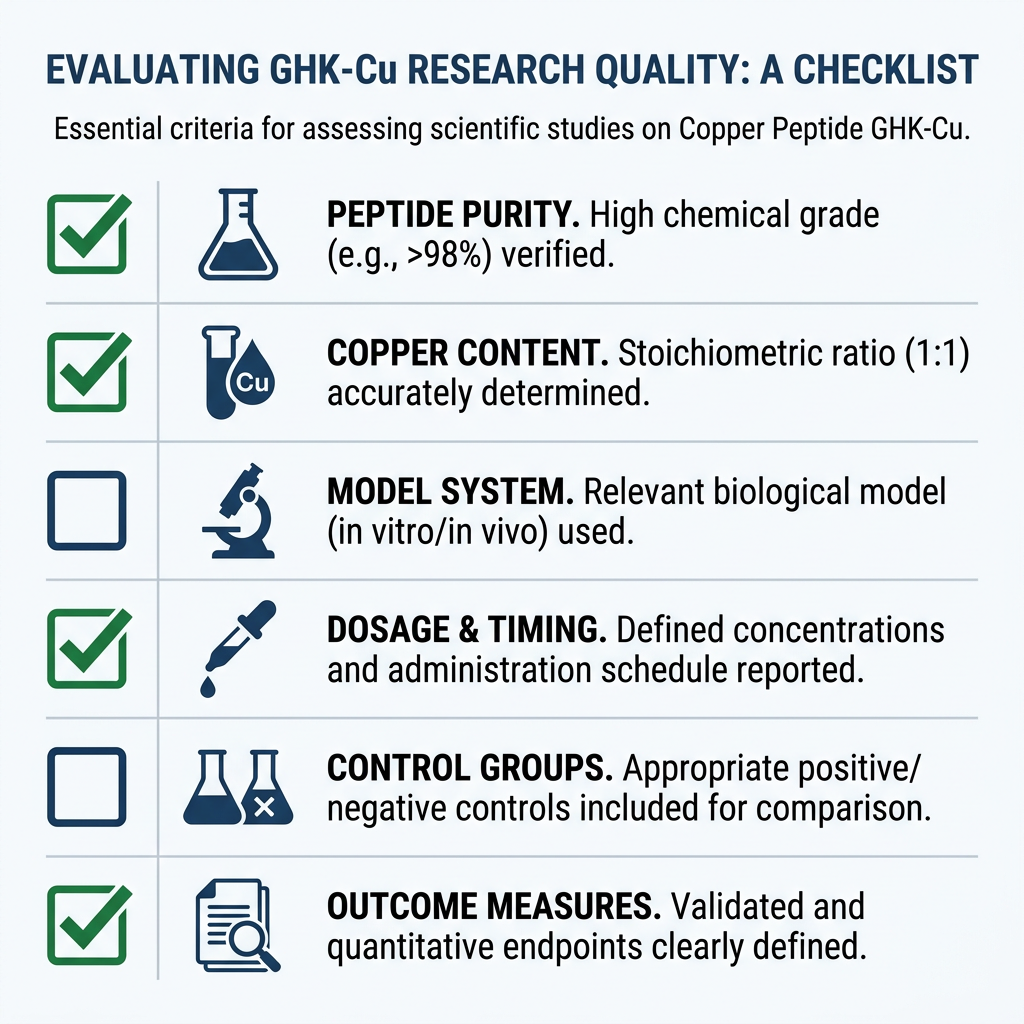
What research checklist does peptides library ghk recommend for evaluating GHK-Cu?
- Verify chemical identity using PubChem CID 133697840, formula C28H48CuN12O8, MW 744.3 g/mol.
- Check whether the study is human RCT, animal, fibroblast, or ex vivo skin.
- Look for specific endpoints: median ulcer closure percentage, infection rate, permeability coefficient.
- Confirm whether extracellular-matrix claims cite glycosaminoglycan, dermatan sulfate, or heparan sulfate data.
- Note the FDA approval status before interpreting any result.
peptides library ghk embeds this checklist throughout the guide. Each section returns to the same evidence-level distinctions, so you do not have to build your own evaluation framework from scratch.
How should you use peptides library ghk for topical GHK-Cu evaluation?
The ex vivo skin data already mentioned provides a concrete anchor. The permeability coefficient of 2.43 ± 0.51 × 10^-4 cm/h comes from dermatomed human skin, and the hub labels that method explicitly. You should not compare that number to a cell-culture penetration assay without adjusting for model differences. The hub’s method-specific context helps you avoid false equivalence.
The tissue retention finding is equally important. Permeation without retention may not indicate a meaningful interaction with dermal targets. The ex vivo study reported that copper applied as glycyl-L-histidyl-L-lysine cuprate diacetate was retained in tissue, which is a stronger signal than simple permeability. The hub presents both data points together.
For topical-delivery screening, you should also note that the hub separates non-approval status from penetration data. GHK-Cu lacks FDA approval as a pharmaceutical drug, even though ex vivo skin data exist. That separation keeps research questions distinct from medical use questions.
What broader peptide research resources does Peptides Library offer alongside the GHK-Cu hub?
Peptides Library provides a full Peptide Library: Research-Grade Peptides for Laboratories page, which covers how research-grade peptides are organized for laboratory use. That resource complements the GHK-Cu hub by giving you the broader catalog context without sales pressure. The independent editorial stance applies across all pages.
You can also review the Peptide Research Library: A Complete Reference Guide if you need a cross-peptide reference. For delivery-focused research, Cell Penetrating Peptides for Research | Peptides Library offers related concepts that help you understand how peptides interact with biological barriers. These internal links are placed where they add value, not as filler.
💡 Key Takeaway: What broader peptide research resources does Peptides Library offer alongside the GHK-Cu hub?
What strengths and limitations does peptides library ghk list for GHK-Cu?
| Aspect | Strength | Limitation |
|—|—|—|
| Human data | 98.5% vs 60.8% median closure; infections 7% vs 34% | Single diabetic neuropathic ulcer population |
| Preclinical data | Concentration-dependent matrix increases; collagen mRNA upregulation | Rat wound chambers and fibroblast models, not human |
| Skin penetration | Permeability coefficient 2.43 ± 0.51 × 10^-4 cm/h; tissue retention | Ex vivo dermatomed skin, not in vivo human |
| Regulatory status | Clear non-approval statement | Not an approved pharmaceutical |
The table above is a direct output from the GHK-Cu overview. It shows that every strength has a corresponding scope limit, which is exactly how a research hub should present data. You can use this table as a quick reference when you compare GHK-Cu studies against other peptide research topics.
How can you start your GHK-Cu review with Peptides Library?
Start with the GHK-Cu research review page and follow the evidence path from chemistry to clinical data. The hub does not require you to read every linked paper before forming a basic understanding, but it gives you the identifiers and model labels you need to verify each claim. That approach saves time without sacrificing accuracy.
Use the citation-driven interpretation to check the original sources. Every major number—744.3 g/mol, 98.5%, 7%, 2.43 ± 0.51 × 10^-4 cm/h—maps to a study or database record. If you need a broader reference, the internal library pages listed above will keep you inside the same evidence-first framework.
FAQ
What is the exact molecular identity of GHK-Cu listed in the peptides library ghk hub?
The hub lists PubChem CID 133697840, molecular formula C28H48CuN12O8, and molecular weight 744.3 g/mol. It also notes that GHK-Cu is a naturally occurring tripeptide-copper complex reported in human plasma, saliva, and urine.
Does the peptides library ghk hub claim GHK-Cu is FDA approved?
No. The hub explicitly states that GHK-Cu lacks FDA approval as a pharmaceutical drug for any medical indication. Published research data do not equal approved medical use, and the hub keeps that distinction clear throughout.
What human clinical data does the peptides library ghk hub highlight for GHK-Cu?
The hub highlights a multicenter, randomized, evaluator-blinded, placebo-controlled study in diabetic neuropathic ulcers. Treatment with the glycyl-L-histidyl-L-lysine:copper complex increased median ulcer closure to 98.5% versus 60.8% for vehicle, with infections reported at 7% versus 34%.
Can the peptides library ghk hub help me evaluate topical GHK-Cu delivery?
Yes. The hub presents an ex vivo human-skin study where copper applied as glycyl-L-histidyl-L-lysine cuprate diacetate permeated dermatomed skin, was retained in tissue, and showed a permeability coefficient of 2.43 ± 0.51 × 10^-4 cm/h. It also labels the model type so you can judge the result in context.
Who should use the peptides library ghk research hub?
Researchers, clinicians, students, and informed readers who need citation-driven GHK-Cu information should use the hub. It is especially useful for those who want to separate human clinical data from preclinical and mechanistic work without sorting through sales pages.
Ready to Take the Next Step?
Every product includes lot-specific documentation and third-party purity testing.
Explore Our Research Products →Free shipping on qualifying orders · Batch COA on request