



8 CJC 1295 Side Effects Questions, Answered by Data
CJC 1295 side effects explained with 8 data-driven answers. Explore human studies, animal toxicity, long-term risks, and research-only findings from Peptides Library.
📋 Table of Contents
CJC-1295 side effects are often discussed with more certainty than the available evidence supports. The most data-backed answer is that small human studies report short-term adverse effects such as tachycardia and injection-site irritation without serious adverse events, while FDA-reviewed nonclinical findings and missing long-term data leave chronic safety questions unresolved. Peptides Library treats CJC-1295 as a peptide with limited short-term human safety data, not settled long-term risk data.
Key takeaways
- CJC-1295 side effects are not well defined long term. Small human studies reported short-term tachycardia and injection-site irritation without serious adverse events, but long-term safety remains uncertain.
- FDA-reviewed nonclinical findings add caution: repeated subcutaneous injections of CJC-1295 DAC in rats and dogs produced local injection-site hemorrhage, inflammation, and necrosis.
- Key evidence gaps matter: FDA reported no identified carcinogenicity studies and no identified nonclinical pharmacokinetic/TK studies for several CJC-1295 forms, so chronic exposure risks cannot be ruled out.
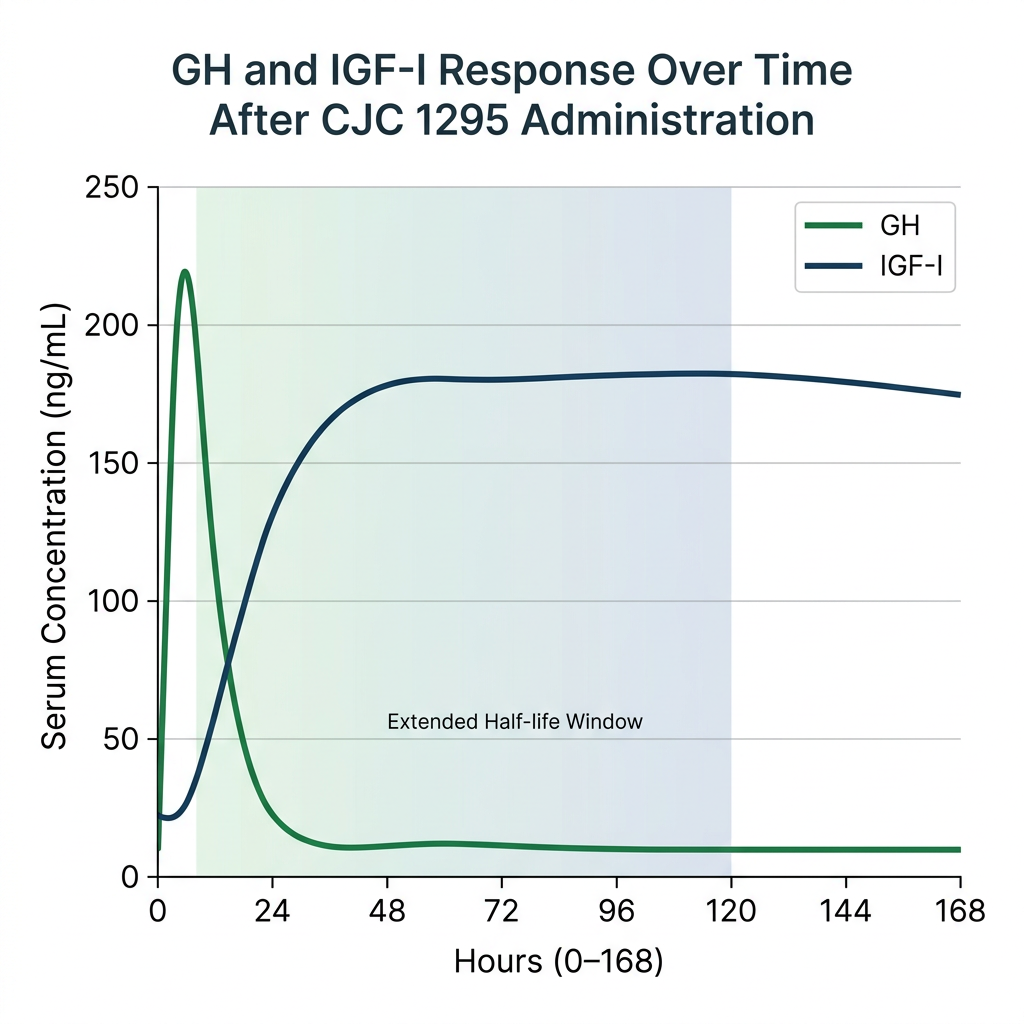
- Hormonal effects are substantial: a single injection increased mean plasma growth hormone 2- to 10-fold for 6 days or more and IGF-I 1.5- to 3-fold for 9 to 11 days in Teichman et al.
- The practical takeaway from Peptides Library is simple: treat CJC-1295 as a peptide with limited short-term human safety data, not as a compound with settled long-term risk data.
What side effects have actually been reported in human CJC-1295 studies?
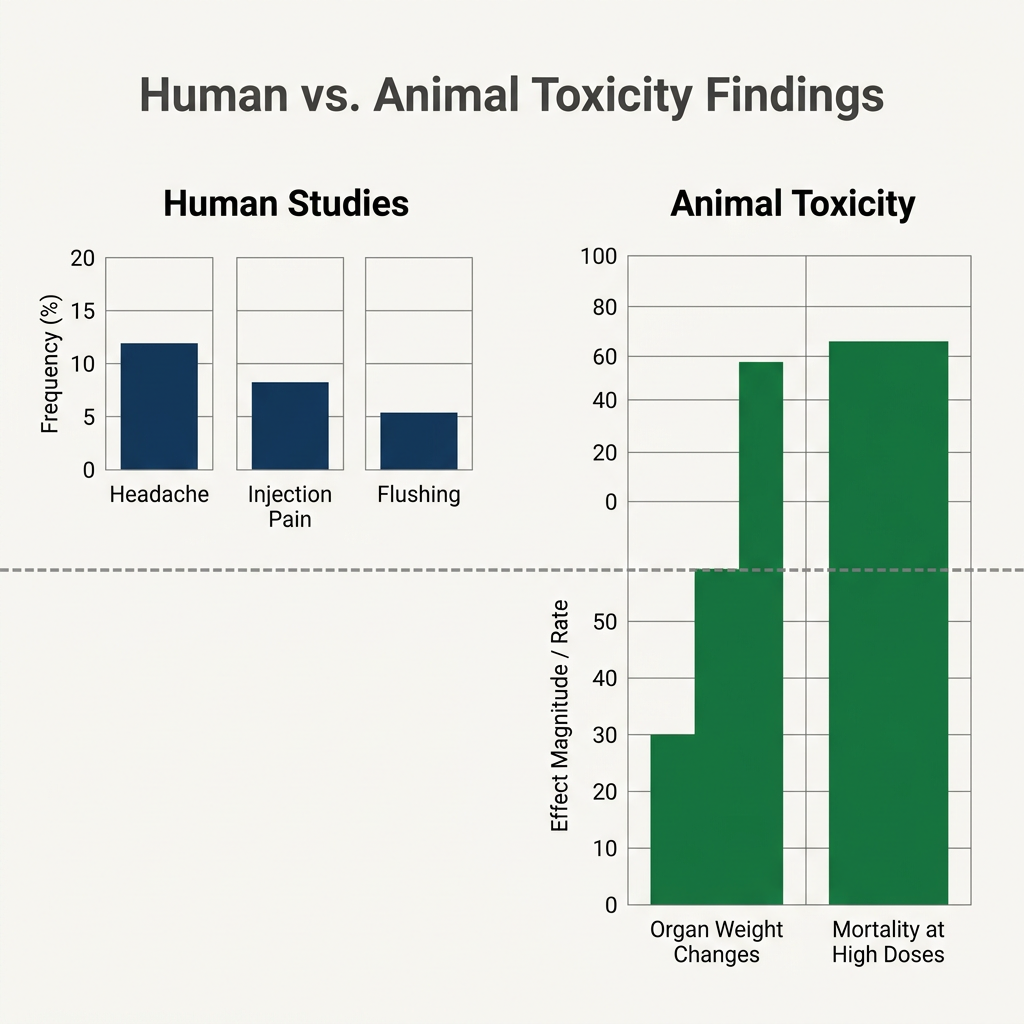
The reported human CJC-1295 side effects are limited and mostly short term. Peptides Library reads the human record as small-study evidence showing tachycardia and injection-site irritation in some participants, with no serious adverse events reported in the studies summarized by FDA and official secondary materials.
The key point is scale. Early human evidence for CJC-1295 is small, not broad. One 2006 paper by Teichman and colleagues is part of that base, and another related report involved only 11 healthy young men examining serum protein changes after injection. FDA meeting materials in 2024 described the available clinical data as small and short.
That means the human side-effect list is not long, but it is also not settled. Australian official materials summarizing the single-dose study reported tachycardia and injection-site irritation in some men, while also stating that no serious adverse effects were observed. A common mistake is to read “no serious adverse events reported” as “proven safe.” In small short-term studies, it only means serious events were not seen in that limited setting.
Peptides Library treats CJC-1295 as a peptide with small, short human safety studies, not a peptide with settled long-term risk data. This distinction matters because CJC-1295 is a growth hormone secretagogue, and its safety discussion often blends together human findings, animal toxicity signals, and different formulations, especially CJC-1295 DAC. If you want a data-first view, the right question is not “Is it safe?” but “What has actually been shown, in which form, and for how long?”
How do short-term human findings compare with long-term risk questions?
Short-term tolerability looks better than the long-term evidence base. FDA materials describe small, short human studies without reported serious adverse events, but the same FDA review flagged missing carcinogenicity and pharmacokinetic/TK data. This is the central trade-off in the CJC-1295 side effects discussion.
On the one hand, the available human studies did not report serious adverse events. On the other hand, those studies were not designed to answer chronic-risk questions. They were too small, too short, and too early to settle what happens with repeated exposure over time.
Long-term uncertainty is not a technical footnote. FDA stated that carcinogenicity studies were not identified, which means pituitary gland hyperplasia and tumors from long-term treatment cannot be ruled out. If your main concern is what happens after prolonged exposure, the evidence is incomplete at the point where it matters most.
Another misconception is to think uncertainty is neutral. It is not. In toxicology and drug evaluation, missing long-term data means risk is unresolved, not absent. For researchers evaluating CJC-1295 side effects, this means any claim of long-term safety is unsupported by the current record.
💡 Key Takeaway: How do short-term human findings compare with long-term risk questions?
What are the main CJC 1295 side effects categories?
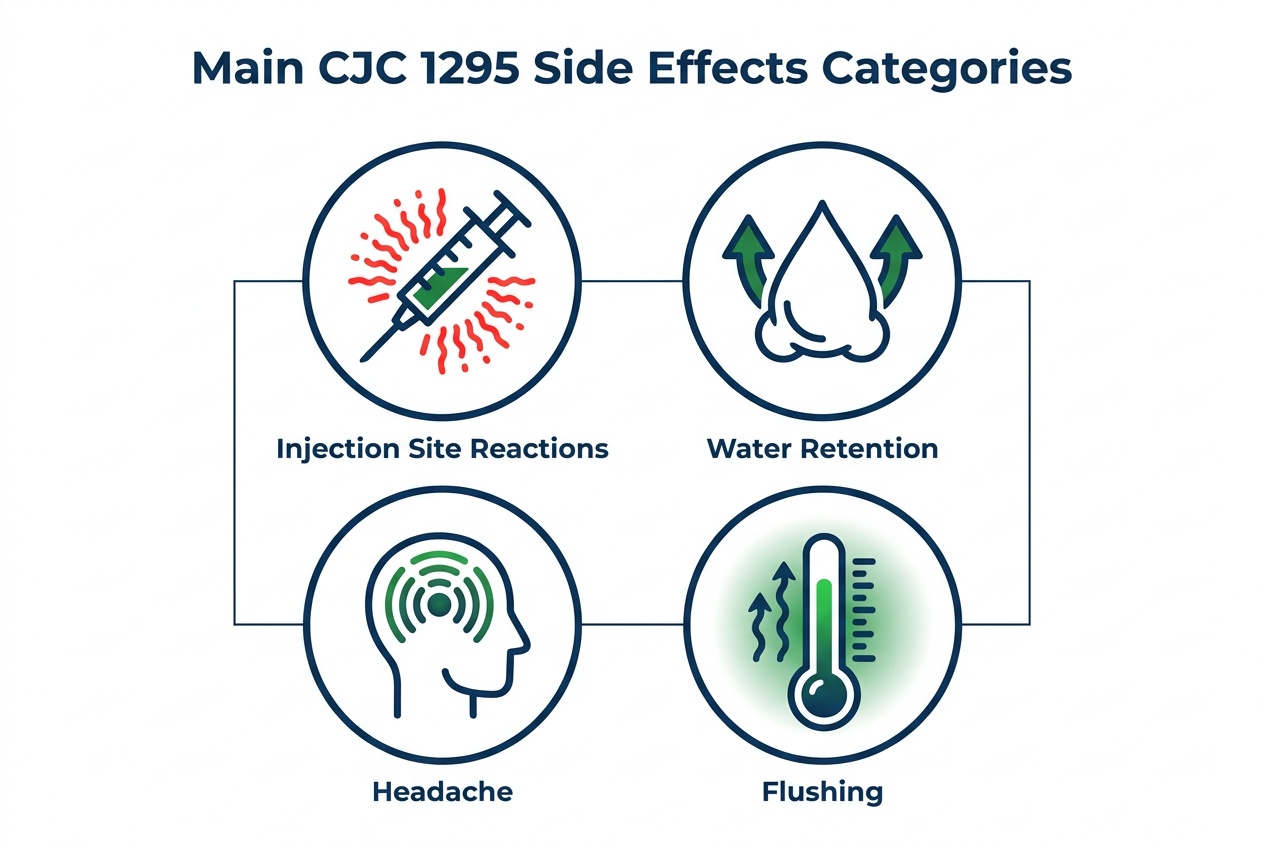
The main CJC 1295 side effects categories are local injection reactions, cardiovascular symptoms, endocrine exposure effects, and major long-term unknowns. The data do not support a long catalog of confirmed human harms, but they do support several clear risk buckets.
The most useful way to organize the evidence is by mechanism and evidence source, not by internet anecdote. Here are the categories with their supporting data:
- Injection-site reactions: Human reports included injection-site irritation in some participants. FDA-reviewed animal findings for CJC-1295 DAC went much further, showing hemorrhage, inflammation, and necrosis after repeated subcutaneous injections.
- Cardiovascular symptoms: Tachycardia was reported in some men in the single-dose human study summary. That does not prove a broad cardiac risk profile, but it is a documented human adverse effect signal.
- Hormone-mediated exposure effects: CJC-1295 drives prolonged growth hormone and IGF-I changes. Those biomarker shifts are not side effects by themselves, but they create the biological setting in which downstream adverse effects would need to be interpreted.
- Long-term proliferative concerns: Because carcinogenicity studies were not identified, FDA said pituitary hyperplasia and tumors from long-term treatment cannot be ruled out.
- Reproductive and developmental unknowns: FDA also noted the lack of identified developmental and reproductive toxicity studies across complete reproductive cycles.
A practical tip: keep local toxicity and systemic hormonal effects separate in your thinking. They come from different parts of the evidence base and should not be collapsed into one generic CJC 1295 side effects label.
How should you evaluate a reported CJC 1295 side effect step by step?
A reported CJC 1295 side effect should be evaluated by form, timing, and mechanism. If you do not know whether the exposure involved CJC-1295, CJC-1295 DAC, acetate, or free base, your safety interpretation is already weak.
Step 1 is compound identification. Safety claims are often blurred across related names. FDA specifically discussed multiple forms, including CJC-1295 free base, acetate, CJC-1295 DAC free base, and CJC-1295 DAC acetate. If a report does not specify the form, you cannot cleanly map it to the right evidence set.
Step 2 is timing. Ask when the symptom started relative to subcutaneous injection and how long it lasted. This matters because Teichman et al. showed that one injection can keep growth hormone elevated for 6 days or more and IGF-I elevated for 9 to 11 days. A same-day reaction may point you toward local irritation or an acute systemic effect; a delayed issue may need a different explanation.
Step 3 is mechanism. If the symptom is redness, swelling, or pain at the site, think local tissue response first. If the symptom is palpitations or a racing pulse, tachycardia becomes the closer documented human comparator. If the concern is long-term growth-related risk, the relevant discussion shifts to carcinogenicity gaps and pituitary hyperplasia questions.
This step-by-step framework helps separate anecdote from evidence when reading CJC 1295 side effects reports.
How do human CJC 1295 side effects compare with animal toxicity findings?
Human CJC 1295 side effects are milder than the animal toxicity signals, and Peptides Library treats that gap as a warning about uncertainty, not reassurance. FDA-reviewed nonclinical findings for CJC-1295 DAC included injection-site hemorrhage, inflammation, and necrosis in rats and dogs after repeated injections.
That comparison needs care. Animal studies are not the same as human outcomes, and repeated daily exposure is not the same as a single dose. Still, animal toxicology is where regulators often detect signals that small human studies are not powered to catch. Local necrosis is a meaningful finding, even if it came from nonclinical work.
The other key issue is formulation. Many casual safety discussions treat “CJC-1295” as one thing, but the FDA material specifically names DAC-related substances in the nonclinical toxicity context. If you merge non-DAC and DAC evidence without saying so, you create false clarity. Pro tip: always ask whether a safety claim refers to CJC-1295 broadly or CJC-1295 DAC specifically.
Peptides Library separates CJC-1295 from CJC-1295 DAC when reading safety data, because formulation-specific findings can change the risk story. For a deeper dive into peptide research resources, see the Peptide Research Library: A Complete Reference Guide.
💡 Key Takeaway: How do human CJC 1295 side effects compare with animal toxicity findings?
What does the growth hormone and IGF-I response mean for CJC 1295 side effects?
The growth hormone and IGF-I response means CJC-1295 has a prolonged biological effect after one dose. Teichman et al. reported mean plasma growth hormone increases of 2- to 10-fold for 6 days or more and IGF-I increases of 1.5- to 3-fold for 9 to 11 days. This pharmacodynamic profile is central to interpreting CJC 1295 side effects.
Step 1 is to separate pharmacodynamics from toxicity. A rise in growth hormone or IGF-I shows the peptide is biologically active. It does not automatically mean harm, but it creates a sustained hormonal state that could amplify any downstream tissue response.
Step 2 is to recognize the duration. Six to eleven days of elevated biomarkers after a single subcutaneous injection is unusually long for a peptide. Most short-acting secretagogues clear within hours. This prolonged activity means that even a single dose is not a “single exposure” in the traditional sense.
Step 3 is to ask what tissues are affected. Growth hormone and IGF-I act on many cell types, including pituitary cells. Because carcinogenicity studies were not identified, the FDA could not rule out pituitary hyperplasia or tumors from long-term treatment. The hormonal response is not a side effect by itself, but it is the biological background that makes long-term CJC 1295 side effects plausible.
Which formulation differences matter for CJC 1295 side effects: DAC vs. non-DAC?
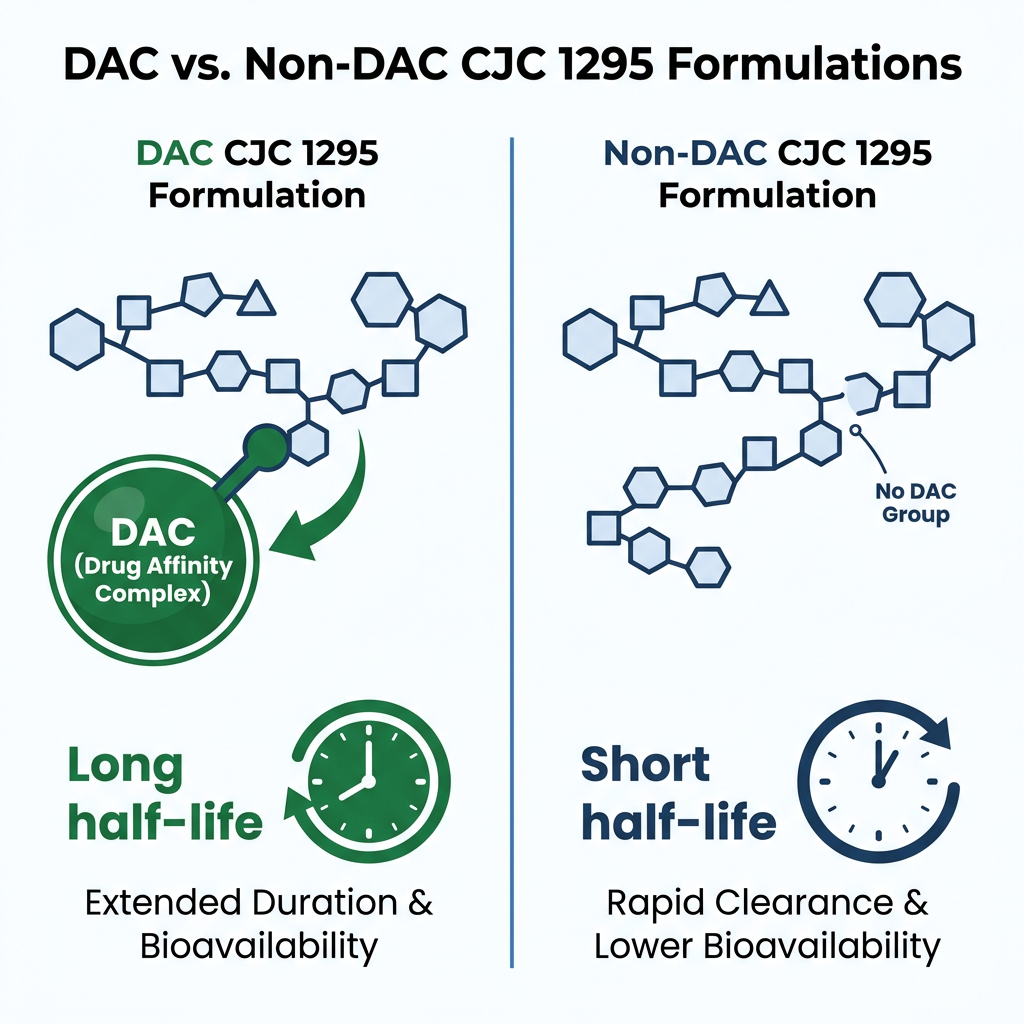
Formulation differences matter significantly for CJC 1295 side effects because CJC-1295 DAC (Drug Affinity Complex) is a modified version with a longer half-life than non-DAC CJC-1295. FDA materials specifically discussed four forms: CJC-1295 free base, CJC-1295 acetate, CJC-1295 DAC free base, and CJC-1295 DAC acetate.
The nonclinical toxicity findings of injection-site hemorrhage, inflammation, and necrosis were reported in the context of CJC-1295 DAC after repeated subcutaneous injections. This does not mean non-DAC CJC-1295 is free of local irritation, but the stronger animal signal is tied to the DAC formulation.
When reading any report of CJC 1295 side effects, the first question should be: which form was used? A claim about “CJC-1295” without specifying DAC or non-DAC is incomplete. Researchers should document the exact substance name, salt form (free base or acetate), and batch source when recording adverse events.
For laboratories maintaining a peptide library, accurate formulation tracking is essential. The Peptide Library: Research-Grade Peptides for Laboratories resource covers best practices for cataloging research peptides.
What are the most important research limitations in CJC 1295 side effects data?
The most important research limitations in CJC 1295 side effects data are small sample sizes, short durations, missing long-term toxicology studies, and lack of formulation-specific pharmacokinetic data. Each limitation affects how confidently we can interpret existing reports.
First, the human studies are tiny. The Teichman et al. paper and the related 11-subject serum protein study are not powered to detect rare adverse events. A study with 11 healthy young men cannot rule out a side effect that occurs in 1% of users.
Second, the studies are short. Single-dose or short-term designs cannot address cumulative toxicity. FDA noted that carcinogenicity studies and nonclinical pharmacokinetic/TK studies were not identified for several CJC-1295 forms, leaving chronic exposure risks unknown.
Third, there is no reproductive or developmental toxicity data across complete reproductive cycles. This is a critical gap for any peptide that alters growth hormone and IGF-I signaling.
Fourth, formulation differences complicate the evidence. Without consistent reporting of DAC vs. non-DAC, acetate vs. free base, and exact dosing schedules, cross-study comparisons are unreliable.
These limitations mean that any statement about CJC 1295 side effects must be framed as provisional, not definitive.
💡 Key Takeaway: What are the most important research limitations in CJC 1295 side effects data?
How do regulatory documents like FDA materials shape our understanding of CJC 1295 side effects?
Regulatory documents like FDA meeting materials from 2024 shape our understanding of CJC 1295 side effects by highlighting what is missing, not just what was observed. FDA described the available clinical data as small and short, and then listed specific gaps: no carcinogenicity studies, no nonclinical pharmacokinetic/TK studies for several forms, and no developmental or reproductive toxicity studies.
This is important because regulators use a different standard than casual internet discussions. FDA does not say “no serious adverse events means safe.” Instead, FDA says “long-term risk cannot be ruled out because the necessary studies were not identified.”
For researchers, regulatory documents are a useful cross-check against overconfident claims. If a vendor or forum post claims that CJC-1295 side effects are fully understood, compare that claim against the FDA record. The gap is wide.
Peptides Library recommends treating official secondary materials and FDA briefing documents as primary sources for risk framing, not as final answers. The Peptides Library Hexarelin Side Effects Research Hub demonstrates how a similar peptide side-effect question can be approached with the same data-first method.
What should researchers prioritize when studying CJC 1295 side effects?
Researchers studying CJC 1295 side effects should prioritize four areas: formulation-specific documentation, longer observation windows, local tissue histology, and endocrine biomarker tracking. These priorities follow directly from the evidence gaps identified by FDA and the existing human and animal data.
First, always record the exact formulation: CJC-1295 free base, CJC-1295 acetate, CJC-1295 DAC free base, or CJC-1295 DAC acetate. This is non-negotiable for meaningful safety data.
Second, extend observation beyond the immediate post-injection period. Because growth hormone stays elevated for 6 days or more and IGF-I for 9 to 11 days, side effects may emerge days after dosing. A 24-hour observation window is insufficient.
Third, include local injection-site histology in any repeated-dose study. The animal findings of hemorrhage, inflammation, and necrosis after repeated CJC-1295 DAC injections suggest that gross observation alone may miss tissue damage.
Fourth, measure growth hormone and IGF-I levels serially. Correlating biomarker changes with adverse events helps distinguish pharmacodynamic effects from true toxicity.
All research should remain research-use-only. No human consumption is implied or recommended.
How can you apply a data-first framework to CJC 1295 side effects questions?
A data-first framework for CJC 1295 side effects questions means asking five sequential questions before accepting any safety claim: what form, what dose, what duration, what species, and what endpoint?
What form? If the claim does not specify CJC-1295 vs. CJC-1295 DAC and free base vs. acetate, it is not usable.
What dose? Dose affects both local irritation and systemic hormonal response. Without dose information, you cannot compare across reports.
What duration? Single-dose and repeated-dose profiles differ. Animal necrosis findings came from repeated injections, not single doses.
What species? Human reports are limited to tachycardia and injection-site irritation. Animal findings include more severe local damage. Always separate species when interpreting CJC 1295 side effects.
What endpoint? Are you looking at local tissue, cardiovascular function, hormonal levels, or long-term tumor risk? Different endpoints require different evidence.
This framework is used throughout Peptides Library resources, including the Peptide Research Library: A Complete Reference Guide.
💡 Key Takeaway: How can you apply a data-first framework to CJC 1295 side effects questions?
Why does Peptides Library treat CJC 1295 side effects as unresolved long-term?
Peptides Library treats CJC 1295 side effects as unresolved long-term because the FDA specifically identified missing carcinogenicity studies, missing nonclinical pharmacokinetic/TK studies, and missing developmental and reproductive toxicity studies. These are not minor omissions; they are the core studies needed to assess chronic safety.
Small short-term human studies showing no serious adverse events are useful for acute tolerability, but they cannot answer the question of what happens after months or years of exposure. The animal findings of injection-site necrosis after repeated CJC-1295 DAC dosing show that repeated exposure can produce tissue damage not seen after a single dose.
Therefore, the responsible position is to say: short-term tolerability appears acceptable in limited human data, but long-term CJC 1295 side effects cannot be characterized with current evidence. This is not pessimism; it is accurate reading of the available record.
FAQ
What are the most commonly reported human CJC 1295 side effects?
The most commonly reported human CJC 1295 side effects in small studies are tachycardia and injection-site irritation. These were observed in some participants in a single-dose study summarized by Australian official materials, with no serious adverse events reported.
Does CJC-1295 DAC cause more severe side effects than non-DAC CJC-1295?
The available nonclinical data suggest that CJC-1295 DAC is associated with more severe local injection-site findings, including hemorrhage, inflammation, and necrosis in rats and dogs after repeated subcutaneous injections. Human data are too limited to make a direct comparison between formulations.
How long do growth hormone and IGF-I stay elevated after one CJC-1295 injection?
According to Teichman et al., a single CJC-1295 injection increased mean plasma growth hormone 2- to 10-fold for 6 days or more and IGF-I 1.5- to 3-fold for 9 to 11 days. This prolonged pharmacodynamic effect is a key consideration for side effect timing.
Can CJC 1295 side effects include pituitary tumors?
FDA stated that carcinogenicity studies were not identified, so pituitary gland hyperplasia and tumors from long-term treatment cannot be ruled out. No human study has demonstrated such tumors, but the absence of evidence is not evidence of absence.
Is CJC-1295 safe for human use?
CJC-1295 is a research peptide. Peptides Library maintains a research-use-only stance. Available human safety data are limited to small, short studies; long-term safety has not been established. No human consumption is implied or recommended.
Ready to Take the Next Step?
Every product includes lot-specific documentation and third-party purity testing.
Explore Our Research Products →Free shipping on qualifying orders · Batch COA on request