


Peptides Library Recovery Peptides Research Overview Hub
Peptides library recovery peptides research hub covers BPC-157, TB-500, and thymosin beta-4 evidence, FDA 2026/WADA context, and research-only limits.
📋 Table of Contents
Peptides Library recovery peptides research hub gives researchers, healthcare professionals, students, and informed consumers an evidence-first way to evaluate BPC-157, TB-500, thymosin beta-4, and related musculoskeletal recovery compounds. It answers the core question by separating mechanism summaries, preclinical findings, human evidence levels, safety limits, and regulatory status so you can see what is actually supported versus what remains investigational. The peptides library recovery peptides model keeps research-use-only framing, independent analysis, and source context at the center of every recovery peptide claim.
Key takeaways
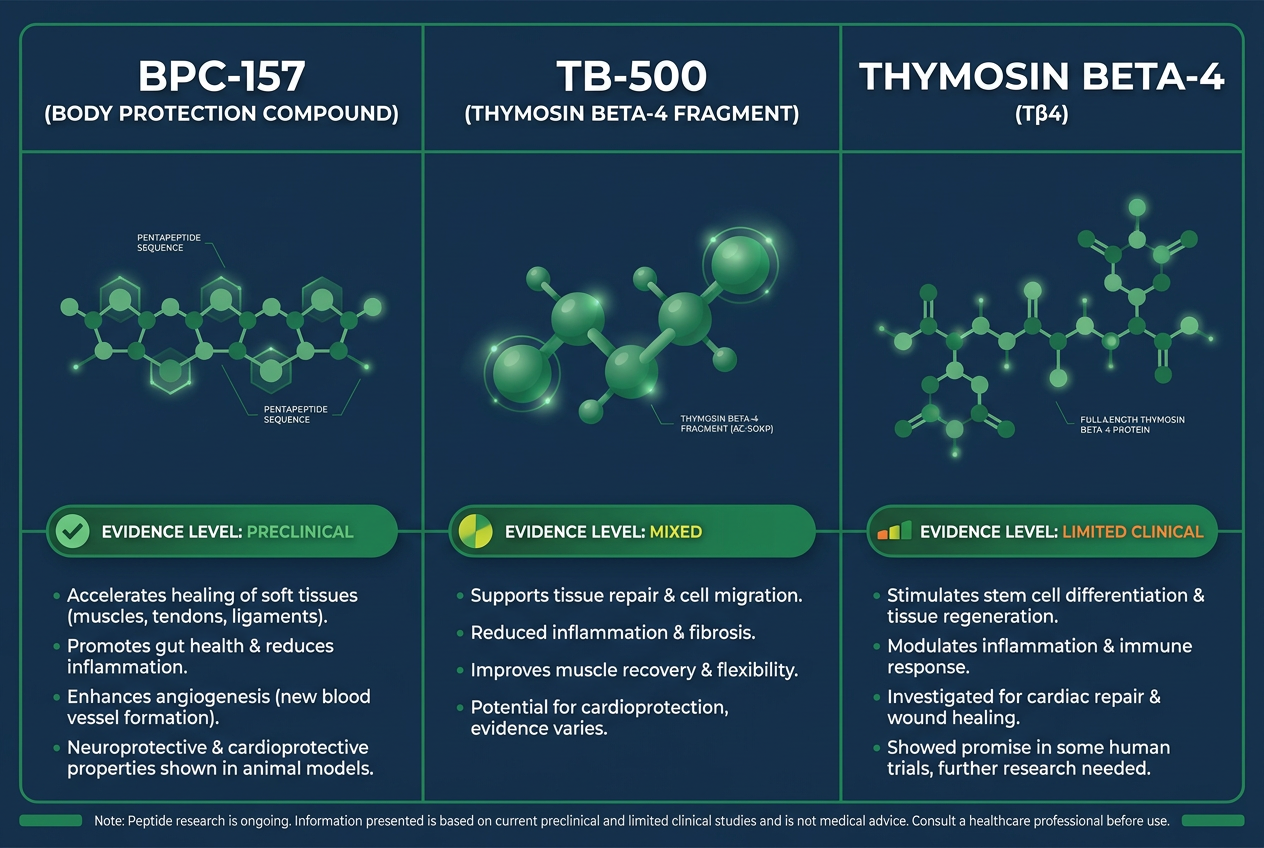
- The peptides library recovery peptides hub organizes BPC-157, TB-500, and thymosin beta-4 evidence by mechanism, preclinical data, human limits, safety, and regulatory status rather than by retailer claims.
- A 2025 PubMed-indexed systematic review found BPC-157 promising for musculoskeletal injury recovery in animal models but relied on level IV and level V studies with no human clinical safety data.
- FDA 2026 compounding materials state BPC-157 is not a component of an approved product in any country and may involve immunogenicity risk, peptide-impurity issues, and API characterization complexities.
- WADA places non-approved substances in category S0 as prohibited at all times and explicitly includes BPC-157.
- Thymosin beta-4 is covered as a defined 43-amino-acid peptide associated with the TMSB4X gene, not as a vague recovery label.
What exactly does the peptides library recovery peptides hub cover?
The peptides library recovery peptides hub is built around named compounds, study questions, and real evidence categories. Instead of folding everything into a generic “healing peptide” label, Peptides Library separates mechanism, preclinical findings, human evidence, safety limits, and regulatory status so you can assess each claim on its own terms.
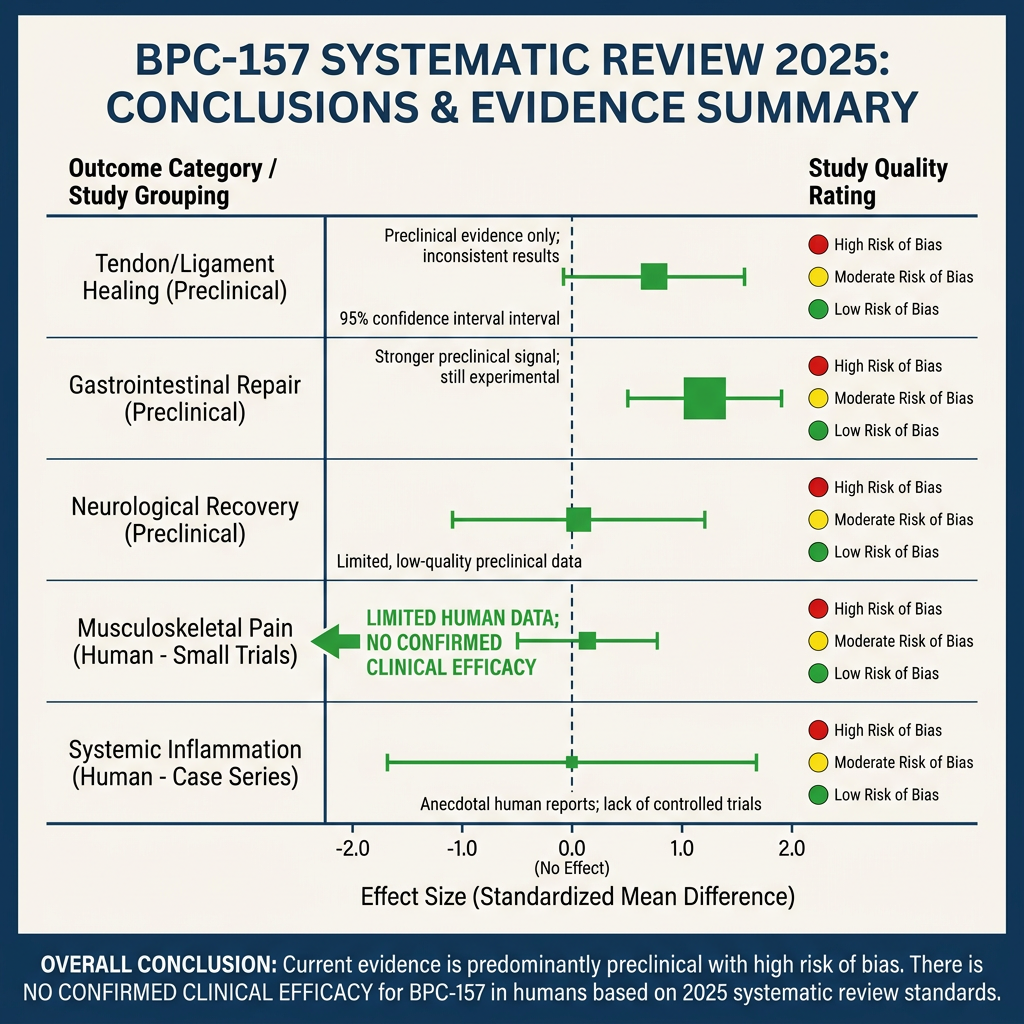
That structure matters when you are looking at BPC-157 and similar recovery-related peptides. A 2025 systematic review indexed on PubMed concluded that BPC-157 shows promise for recovery from musculoskeletal injuries and reported improved outcomes in animal models of muscle, tendon, ligament, and bone injury, but the evidence base was still limited to level IV and level V studies and did not include clinical safety data in humans.
“Peptides Library centers recovery-peptide coverage on evidence, and the 2025 BPC-157 review still relied on level IV and level V studies.”
The peptides library recovery peptides hub keeps those limits visible so you can see where preclinical enthusiasm ends and where unanswered human safety and efficacy questions begin.
Why does the peptides library recovery peptides resource separate evidence levels instead of using a generic healing peptide label?
Different readers need different precision. A researcher tracking mechanism summaries needs source context; a clinician reviewing safety needs route and compounding context; a student needs pathway clarity; an informed consumer needs independent comparison against product claims. The peptides library recovery peptides structure supports all four without collapsing BPC-157, TB-500, or thymosin beta-4 into one overstated category.
Peptides Library also connects foundational explainers with practical research tools. For example, the complete reference guide at Peptide Research Library: A Complete Reference Guide shows how named peptide overviews and literature context help you understand what a recovery peptide is actually being studied for. You can move from a peptide name or product claim to the underlying biology, study quality, and restrictions that actually matter.
This evidence-first organization is why the hub avoids retailer messaging or therapy-style promises. It is designed to improve judgment, not funnel you toward a purchase.
💡 Key Takeaway: Why does the peptides library recovery peptides resource separate evidence levels instead of using a generic healing peptide label?
What did the 2025 systematic review actually conclude about BPC-157 in the peptides library recovery peptides database?
The 2025 systematic review indexed on PubMed concluded that BPC-157 shows promise for recovery from musculoskeletal injuries. It reported improved outcomes in animal models of muscle, tendon, ligament, and bone injury. However, the evidence base was limited to level IV and level V studies, and the review did not include clinical safety data in humans.
That is a critical distinction. Preclinical enthusiasm does not equal human safety or efficacy. The peptides library recovery peptides database keeps that limitation explicit rather than burying it under recovery-language marketing. You can verify the broad evidence landscape through resources such as PubMed and NCBI, but the hub already summarizes what those studies can and cannot support.
For researchers, this means you can track mechanism summaries and early clinical limits without losing source context. For clinicians, it means you can see why a BPC-157 claim attached to muscle, tendon, ligament, or bone repair still needs a higher level of human evidence before it becomes clinically meaningful.
How does the peptides library recovery peptides hub add FDA and WADA context to recovery peptide research?
Recovery peptides are not just a science question. They are also a regulatory and risk question, especially when a compound is investigational, unapproved, discussed in compounded form, or relevant to sport.
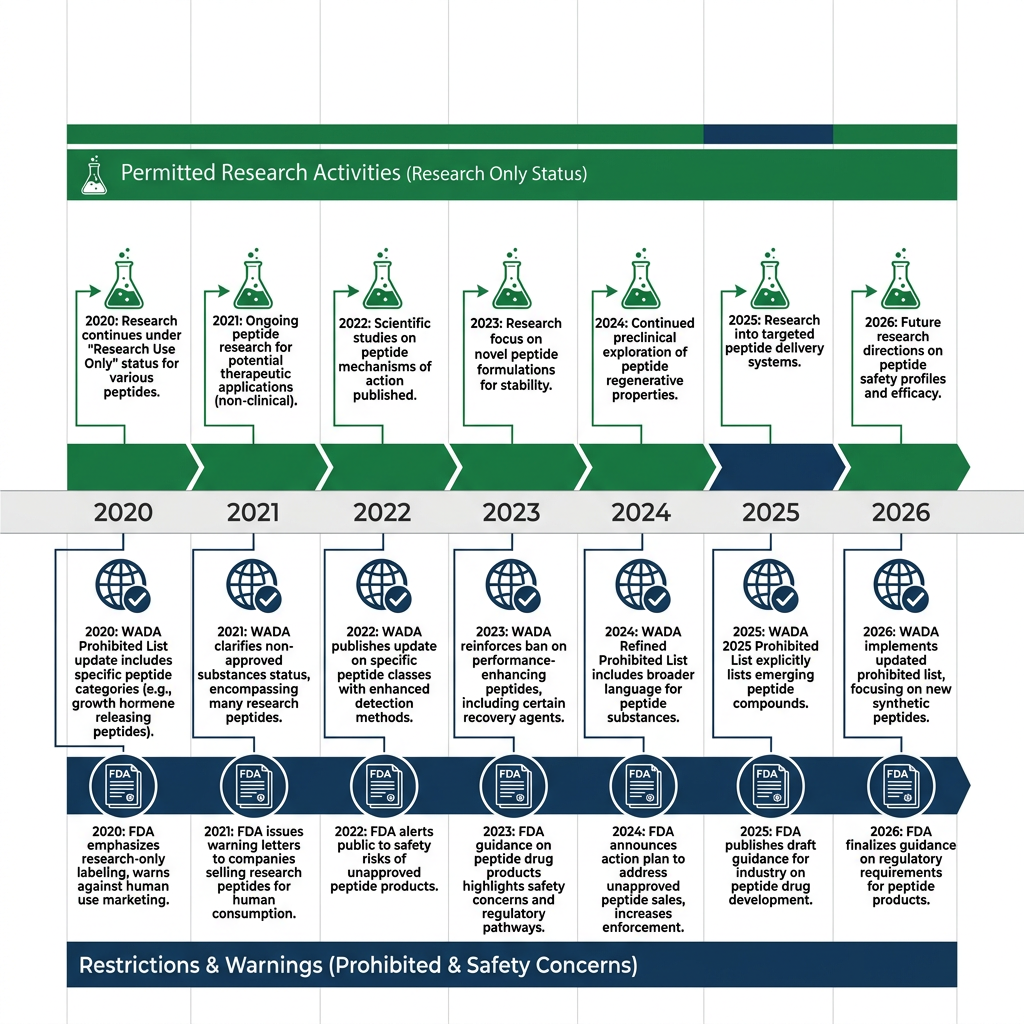
The peptides library recovery peptides hub brings that layer into the main reading experience. For BPC-157, the coverage highlights FDA’s 2026 compounding materials stating that BPC-157 is not a component of an approved product in any country, is not found in the European, Japanese, or International Pharmacopoeias, and may involve immunogenicity risk, peptide-impurity issues, and active pharmaceutical ingredient characterization complexities.
“Peptides Library flags that FDA materials state BPC-157 is not part of an approved product in any country.”
That context changes how you read every “recovery” claim attached to the compound. If you work with athletes or competitive settings, the peptides library recovery peptides hub also makes clear that WADA places non-approved substances in category S0 as prohibited at all times and explicitly includes BPC-157. This helps you avoid confusing investigational status with practical acceptability.
For additional regulatory and research framing, the hub links to broader peptide library guides, including Peptide Library: Research-Grade Peptides for Laboratories, which reinforces the research-use-only boundary across all peptide content.
Why does the peptides library recovery peptides hub treat thymosin beta-4 as a defined 43-amino-acid peptide?
Peptides Library treats thymosin beta-4 as a defined research subject, not a loose trend term. The thymosin beta-4 coverage identifies it as a 43-amino-acid peptide associated with the TMSB4X gene and focuses on actin sequestration, cell migration, tissue-repair biology, dermal healing, corneal wound healing, and clinical limits.
“Peptides Library covers thymosin beta-4 as a defined 43-amino-acid peptide linked to TMSB4X, not a vague recovery label.”
That level of specificity helps you read TB-500 discussions more critically. You can connect the shorthand label back to the biology being studied and see more clearly where mechanistic interest exists, where the literature is still emerging, and where clinical translation remains uncertain. The peptides library recovery peptides hub keeps this precision even when market language tries to blur TB-500 and thymosin beta-4 into a single recovery promise.
For researchers interested in how peptide delivery and cellular uptake affect interpretation, the hub also points to Cell Penetrating Peptides for Research | Peptides Library, which covers a related mechanism layer without losing the research-only frame.
💡 Key Takeaway: Why does the peptides library recovery peptides hub treat thymosin beta-4 as a defined 43-amino-acid peptide?
What resources does the peptides library recovery peptides hub include for evidence-based due diligence?
The table below shows the core resources and how they support recovery peptide research without pushing a purchase.
| Resource | What Peptides Library includes | What it helps you do |
|—|—|—|
| Research articles | Named peptide overviews, mechanism summaries, and literature context | Understand what a recovery peptide is actually being studied for |
| Evidence reviews | Comparisons of preclinical findings, human evidence, safety limits, and source quality | Judge claim strength before repeating or relying on it |
| How-to guides | Research-focused reading support for peptide methodology, delivery discussions, and interpretation | Read peptide literature with more accuracy and less guesswork |
| Peptide calculators | Free practical tools for peptide-related calculations used in research discussions | Reduce avoidable math errors when interpreting protocols or labels |
| Brand and product reviews | Independent reviews that compare market claims with evidence and safety context | Pressure-test promotional language before you buy, recommend, or cite |
The peptides library recovery peptides hub also structures injectable-peptide coverage around what a peptide is studied for, how delivery affects use, what dosing ranges are discussed, and what safety limits are known. That means a clearer view of how route, formulation, and research context can change the meaning of a recovery-peptide claim.
When is the peptides library recovery peptides hub the right fit for due diligence?
The peptides library recovery peptides hub is a strong fit when you want evidence before action and context before conclusions. You are likely to benefit if you need clarity on BPC-157, TB-500, or thymosin beta-4 and want the evidence level stated plainly; if you want regulatory context with the science, especially when sport rules, compounding issues, or approval status affect your decision; if you prefer independent analysis instead of retailer copy, forum repetition, or vague “healing peptide” language; and if you need one place to compare mechanism, safety, and study quality without switching between disconnected sources.
The peptides library recovery peptides hub is probably not the right fit if you want therapy instructions, product sales, or a shortcut around uncertainty. Our research-peptides guidance makes clear that most research peptides are labeled for in vitro or non-human in vivo use and are not intended for human consumption, which is exactly why evidence quality and regulatory status stay central in our recovery peptide coverage.
What safety limits does the peptides library recovery peptides hub flag for BPC-157 and related compounds?
The peptides library recovery peptides hub flags three main safety and characterization limits for BPC-157. First, FDA’s 2026 compounding materials state that BPC-157 is not a component of an approved product in any country and is not found in the European, Japanese, or International Pharmacopoeias. Second, those materials may involve immunogenicity risk, peptide-impurity issues, and active pharmaceutical ingredient characterization complexities. Third, WADA places non-approved substances in category S0 as prohibited at all times and explicitly includes BPC-157.
These flags matter because they reframe recovery language. A compound can show promising animal-model outcomes and still lack human clinical safety data, pharmacopoeial standards, and sport acceptability. The hub keeps those separate so you do not mistake one for the other.
For a related research hub that applies the same safety-first structure to another peptide, see Peptides Library Hexarelin Side Effects Research Hub. It demonstrates how side-effect and regulatory context are integrated across the library.
💡 Key Takeaway: What safety limits does the peptides library recovery peptides hub flag for BPC-157 and related compounds?
How does the peptides library recovery peptides hub help researchers, healthcare professionals, students, and informed consumers differently?
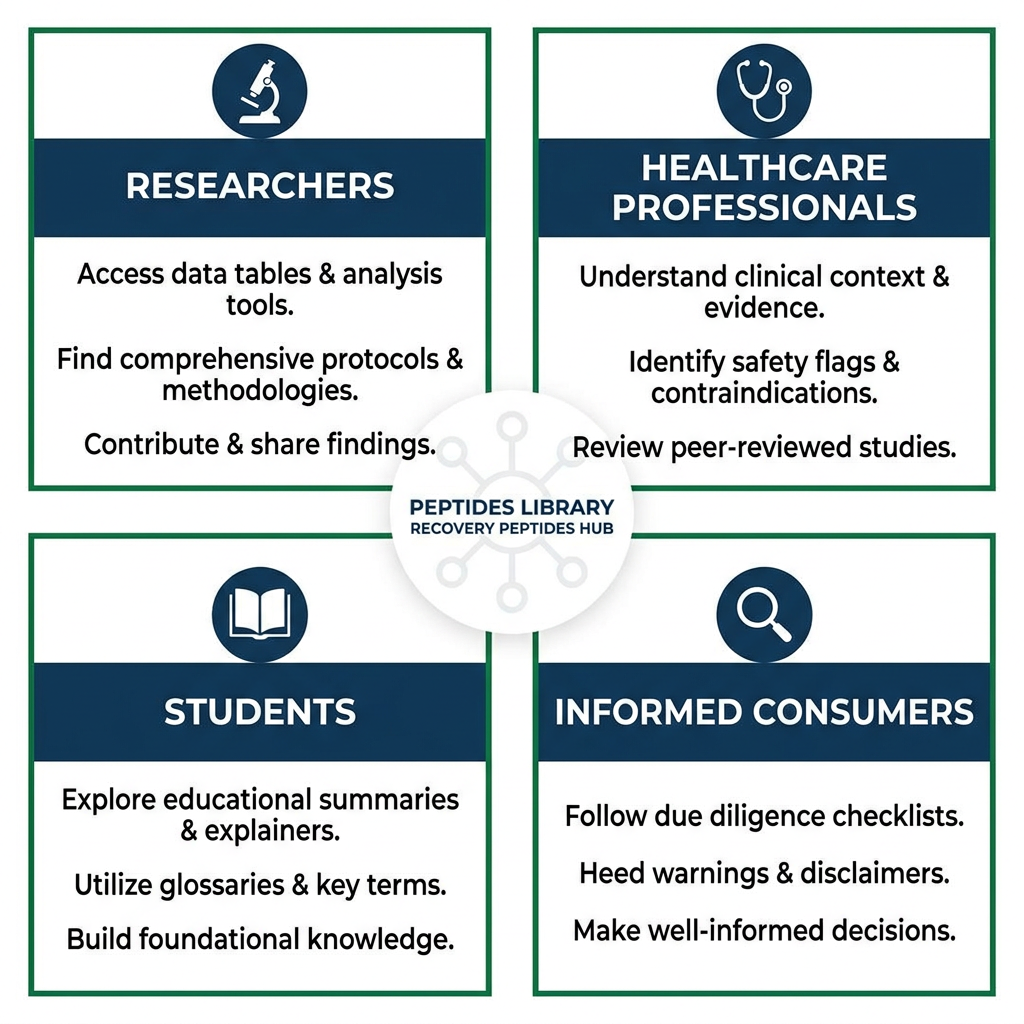
Different readers come to recovery peptides with different goals, but the need is usually the same: faster access to better evidence and less marketing noise. The peptides library recovery peptides hub helps you move from a peptide name or product claim to the underlying biology, study quality, and restrictions that actually matter.
You can use the peptides library recovery peptides hub in a few practical ways:
- Researchers: Track mechanism summaries, preclinical findings, and early clinical limits without losing the source context.
- Healthcare professionals: Review safety, route, compounding, and regulatory issues before treating a recovery-peptide claim as clinically meaningful.
- Students: Build a more precise understanding of peptide biology, tissue-repair pathways, and how evidence levels change interpretation.
- Informed consumers: Compare brand or product claims against independent reviews, evidence summaries, and known safety concerns.
Because Peptides Library is an independent knowledge hub rather than a peptide retailer, the peptides library recovery peptides pages are designed to improve your judgment, not funnel you toward a purchase.
How does delivery route change the meaning of a recovery peptide claim?
The hub structures injectable-peptide coverage around what a peptide is studied for, how delivery affects use, what dosing ranges are discussed, and what safety limits are known. For BPC-157 and TB-500, route and formulation are not neutral details: they affect stability, bioavailability discussions, and how preclinical findings translate. This section adds context without providing therapy instructions or dosing recommendations.
Peptide stability and purity are separate from efficacy claims. A research article may report an animal-model outcome without clarifying whether the route, formulation, or peptide purity would be replicable in a different setting. Peptides Library keeps those variables visible so you do not overread a single study as a blanket recovery endorsement.
When you compare BPC-157 and thymosin beta-4, the delivery context also matters because the underlying biology differs. BPC-157 research often emphasizes musculoskeletal injury models, while thymosin beta-4 research focuses on actin sequestration, cell migration, and tissue-repair pathways. Route discussions should follow the biology being studied, not a generic recovery label.
What comparison method does Peptides Library use across recovery peptides?
The hub applies the same comparison method across BPC-157, TB-500, and thymosin beta-4. The table below shows how identified biology, key evidence limits, and regulatory notes are kept separate.
| Compound | Identified biology | Key evidence limit | Regulatory note |
|—|—|—|—|
| BPC-157 | Musculoskeletal injury recovery in animal models: muscle, tendon, ligament, bone | 2025 systematic review limited to level IV and level V studies; no human clinical safety data | FDA 2026: not approved in any country; WADA S0 prohibited |
| Thymosin beta-4 | 43-amino-acid peptide, TMSB4X gene, actin sequestration, cell migration, dermal/corneal healing | Clinical translation uncertain; literature still emerging | Research-use-only framing; no approved human therapeutic status implied |
This side-by-side approach prevents the common mistake of treating all recovery peptides as interchangeable. Each compound has its own evidence profile, safety questions, and regulatory status.
💡 Key Takeaway: What comparison method does Peptides Library use across recovery peptides?
What should you check before relying on any claim from the peptides library recovery peptides hub?
The peptides library recovery peptides hub gives you a checklist to apply before repeating or relying on any recovery-peptide claim. Ask these questions:
- Is the claim based on level IV or level V evidence, or on human clinical trials with safety data?
- Does the source separate animal-model outcomes from human efficacy?
- Does the source mention FDA compounding status, pharmacopoeial inclusion, immunogenicity risk, or peptide-impurity issues?
- Does the source clarify WADA S0 status if sport or competition is involved?
- Does the source state that the peptide is for research use only and not intended for human consumption?
This checklist is part of what makes the peptides library recovery peptides hub different from retailer copy. It forces the same rigor across BPC-157, TB-500, thymosin beta-4, and any other compound covered in the library.
How can you start with the peptides library recovery peptides hub for research you can actually use?
If you are trying to make sense of recovery peptides, start with the hub and work from the evidence outward. You will get citation-focused articles, defined peptide overviews, independent reviews, free practical tools, and the regulatory context needed to assess BPC-157, TB-500, and related tissue-repair peptides more carefully.
Explore the recovery peptide hub on Peptides Library now if your goal is simple: understand what is being studied, what is still investigational, and what safety or compliance issues change the picture before you rely on any recovery-peptide claim.
FAQ
Does the peptides library recovery peptides hub sell peptides or provide therapy instructions?
No. Peptides Library is an independent knowledge hub, not a peptide retailer. The content is designed to improve judgment, not funnel you toward a purchase, and it never provides therapy instructions, dosing recommendations, or human-use guidance.
What evidence level supports BPC-157 recovery claims in the peptides library recovery peptides resource?
A 2025 systematic review indexed on PubMed concluded that BPC-157 shows promise for recovery from musculoskeletal injuries and reported improved outcomes in animal models of muscle, tendon, ligament, and bone injury. However, the evidence base was limited to level IV and level V studies and did not include clinical safety data in humans.
Why does the peptides library recovery peptides hub mention WADA and FDA status?
Because recovery peptides are also a regulatory and risk question. FDA 2026 compounding materials state BPC-157 is not a component of an approved product in any country, and WADA places non-approved substances in category S0 as prohibited at all times, explicitly including BPC-157. The hub keeps that context visible so you avoid confusing investigational status with practical acceptability.
Is thymosin beta-4 the same as TB-500 in the peptides library recovery peptides database?
The hub treats thymosin beta-4 as a defined 43-amino-acid peptide associated with the TMSB4X gene and focuses on actin sequestration, cell migration, tissue-repair biology, dermal healing, corneal wound healing, and clinical limits. TB-500 is discussed critically so you can connect the shorthand label back to the biology being studied, but the database does not equate them without evidence context.
Can I use information from the peptides library recovery peptides hub for human consumption decisions?
No. The hub repeatedly states that most research peptides are labeled for in vitro or non-human in vivo use and are not intended for human consumption. The material is for research-use-only evaluation, not for personal use or clinical application.
Ready to Take the Next Step?
Every product includes lot-specific documentation and third-party purity testing.
Explore Our Research Products →Free shipping on qualifying orders · Batch COA on request