



Peptides Library IGF 1 LR3 Research Overview Guide
peptides library explains IGF-1 LR3 research with 2023 bioactivity data, FDA import context, and safety literature. Compare evidence before you source.
📋 Table of Contents
peptides library answers the core IGF-1 LR3 question by organizing published biology, 2023 recombinant bioactivity data, and FDA import context into one research overview. It does not sell IGF-1 LR3; it explains what the literature supports about myogenesis, PI3K/Akt and MAPK signaling, and what remains uncertain. This research-use-only hub helps you move from bold claims to verifiable evidence.
Key takeaways
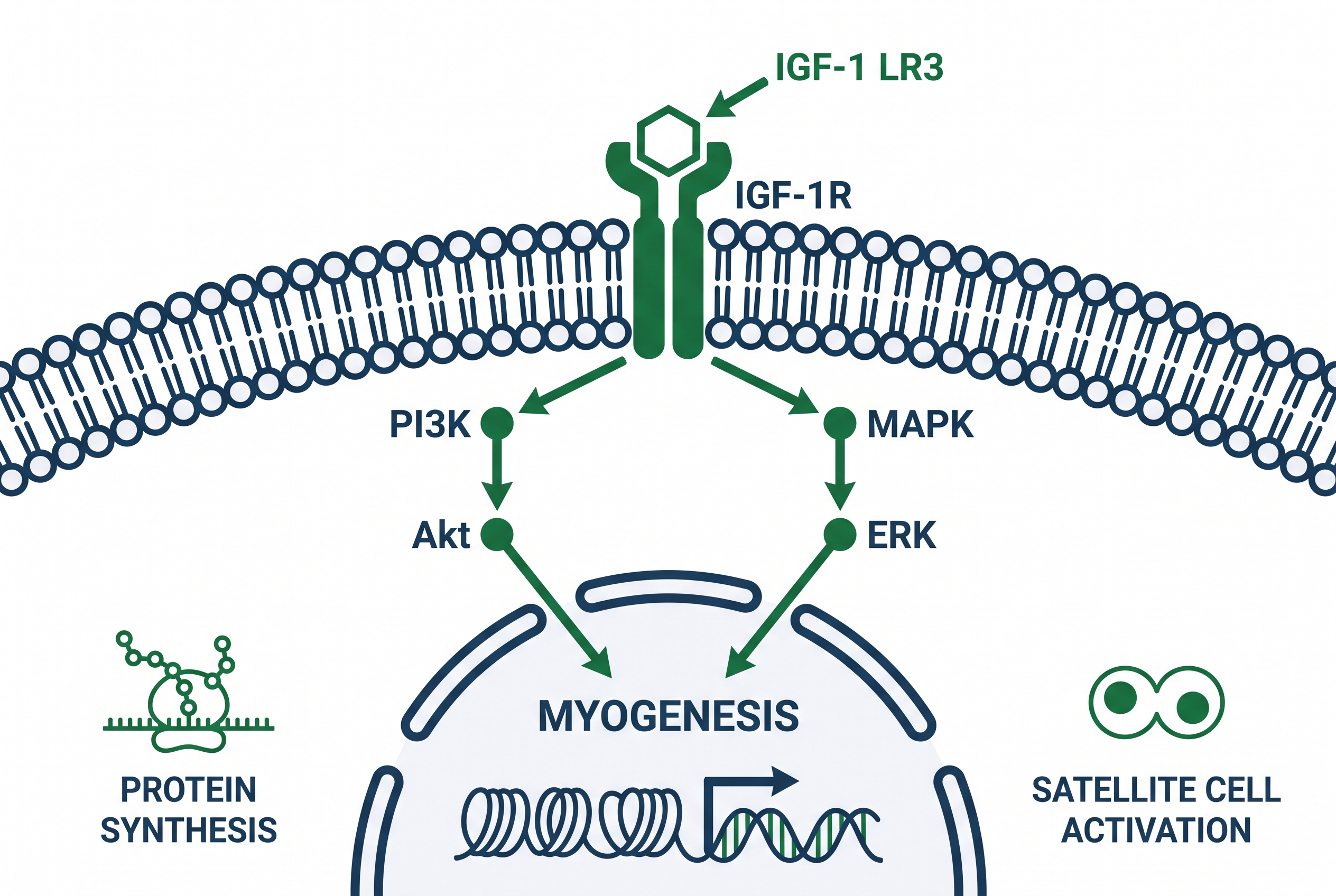
- peptides library places IGF-1 LR3 inside peer-reviewed biology on skeletal myogenesis, muscle satellite cells, and PI3K/Akt and MAPK signaling.
- The 2023 Pichia pastoris study reported about 1 g/L yield for XynCDBFV-TEV-LR3 IGF-1 in a 15-L bioreactor, with cell-proliferation bioactivity comparable to standard IGF-1.
- Review literature links higher IGF-I signaling to cancer-related concerns and notes a modestly increased later cancer diagnosis risk at the high end of the normal IGF-I range.
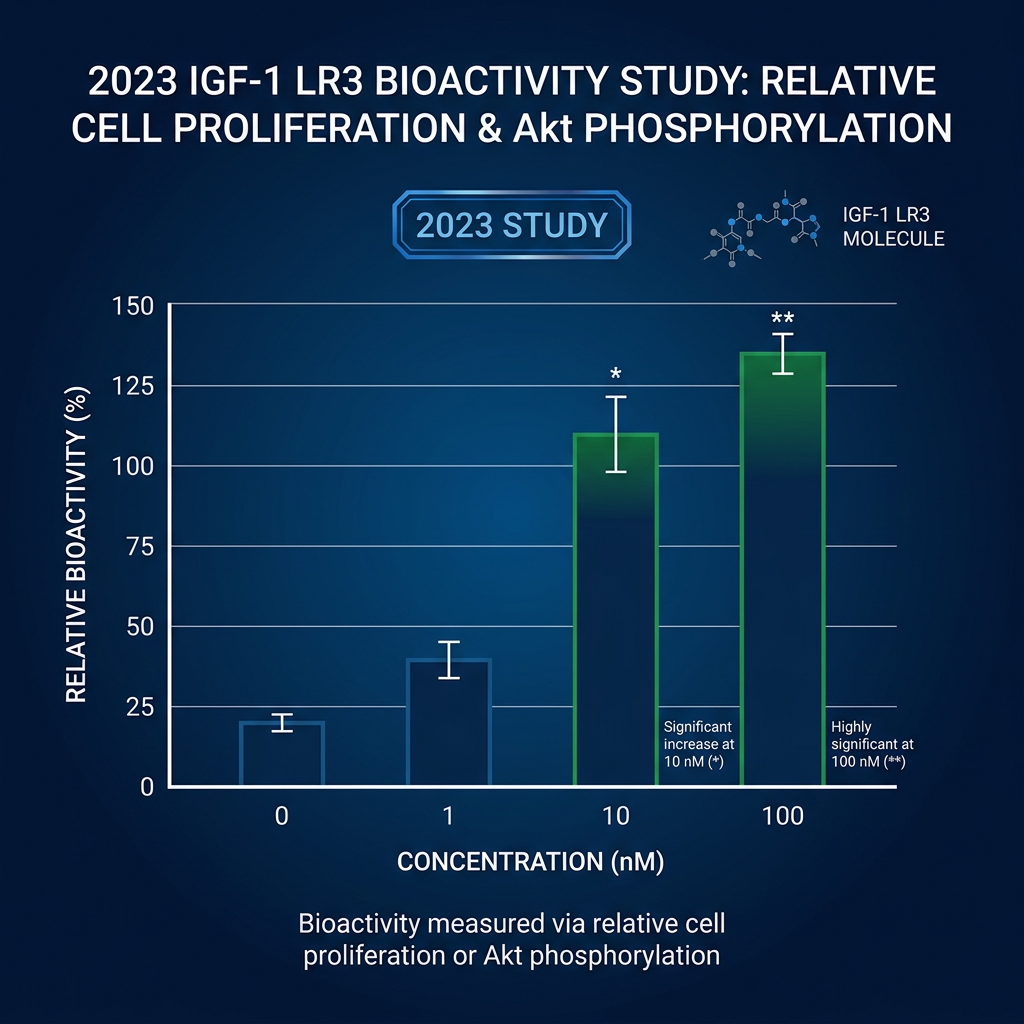
- FDA import-alert language says articles may be refused admission if they appear to be a drug or biologic product without an effective biologics license and not subject to an effective IND.
- peptides library includes comparison topics such as IGF-1 LR3 vs PEG MGF, free peptide calculators, and protocol-oriented resources for research-use decisions.
What does the peptides library IGF-1 LR3 research overview actually cover?
If you are reviewing IGF-1 LR3, the challenge is not finding bold claims. The challenge is finding a source that puts those claims inside the actual biology, research methods, and U.S. regulatory context that matter before you trust a study, a protocol reference, or a seller description. peptides library is built for that decision.
peptides library is an independent peptide science knowledge hub that publishes evidence-based research articles, evidence reviews, how-to guides, practical calculators, and brand or product reviews for researchers, healthcare professionals, students, and informed consumers who want a clearer IGF-1 LR3 picture without retailer bias. Its IGF-1 LR3 coverage is designed to help you move faster with better judgment.
Instead of piecing together PubMed abstracts, vendor copy, and scattered forum posts, you get structured, citation-focused content that connects mechanism, bioactivity, safety concerns, and sourcing risk in one place. That is why the peptides library approach starts with a research overview, not a sales pitch.
You can also use the Peptide Research Library: A Complete Reference Guide to see how the hub organizes its broader peptide knowledge base. But for IGF-1 LR3 specifically, the overview connects the peptide to IGF-1 biology rather than isolated performance claims.
How does peptides library organize IGF-1 LR3 evidence around myogenesis and signaling?
peptides library places IGF-1 LR3 inside the published biology on myogenesis, muscle satellite cells, and PI3K/Akt and MAPK signaling. The literature describes IGF-1 as important in skeletal myogenesis, muscle mass, strength development, and the proliferative capacity of muscle satellite cells. It also links IGF-1R activation to PI3K/Akt and MAPK signaling that regulate proliferation and differentiation.
That gives you a more useful lens for every next step. When you read a comparison page, a protocol discussion, or a product review on peptides library, you are not just seeing what IGF-1 LR3 is called. You are seeing how claims relate to the pathways and cell behavior the literature actually discusses.
The hub’s editorial approach starts with core IGF-1 function, then layers research-specific details on top. This prevents the common mistake of evaluating IGF-1 LR3 as a standalone anabolic label without understanding the signaling context.
Here is a quick reference table for the signaling elements peptides library covers:
| Signaling element | Role in IGF-1 biology | Relevance to IGF-1 LR3 research |
|—|—|—|
| PI3K/Akt pathway | Regulates proliferation and differentiation in muscle cells | Often cited in muscle-growth discussions about IGF-1 LR3 |
| MAPK pathway | Supports cell proliferation and differentiation signaling | Used to evaluate how IGF-1 LR3 bioactivity may be interpreted |
| Muscle satellite cells | Proliferative capacity linked to muscle repair and growth | Central to myogenesis claims in the IGF-1 LR3 literature |
| IGF-1R activation | Upstream receptor event for both pathways | Needed to understand why IGF-1 LR3 is compared with native IGF-1 |
💡 Key Takeaway: How does peptides library organize IGF-1 LR3 evidence around myogenesis and signaling?
Which 2023 study details does peptides library highlight for IGF-1 LR3 bioactivity?
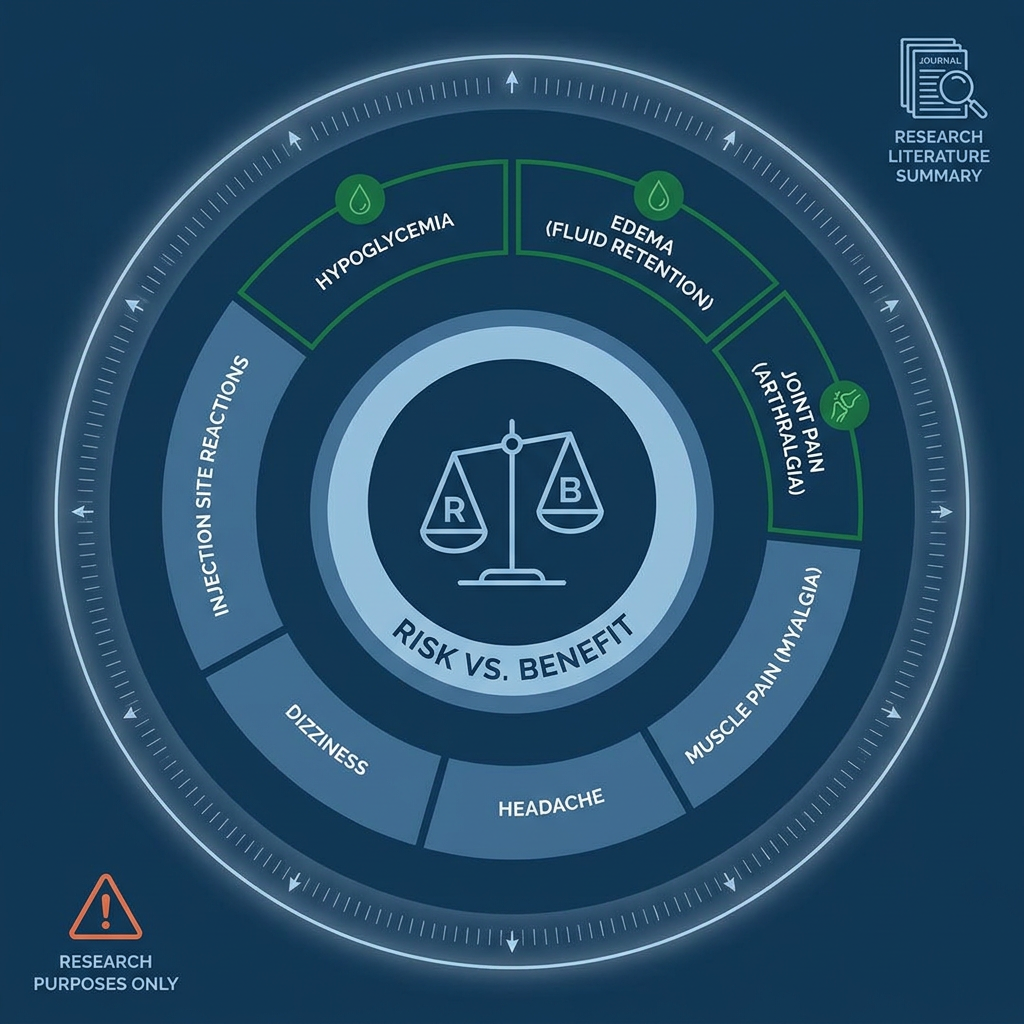
peptides library surfaces study details that help advanced readers judge whether an IGF-1 LR3 claim is grounded in real experimental work. In a 2023 study, human IGF-1 and Long R3 IGF-1 were recombinant-expressed in Pichia pastoris, and purified LR3 IGF-1 showed cell-proliferation bioactivity comparable to standard IGF-1.
The same study reported about 1 g/L yield for XynCDBFV-TEV-LR3 IGF-1 in a 15-L bioreactor. peptides library highlights concrete IGF-1 LR3 research facts, including that 2023 study reporting about 1 g/L yield in a 15-L bioreactor.
Those details are not trivia. peptides library uses them to help you separate evidence from vague marketing language, compare sources more intelligently, and understand what a paper supports versus what a promotional claim adds on top. You can search the relevant literature through this PubMed search for Long R3 IGF-1 Pichia pastoris.
A quick checklist for evaluating IGF-1 LR3 bioactivity claims on peptides library:
- Does the claim specify the expression system, such as Pichia pastoris?
- Is the reported yield tied to a bioreactor scale, like a 15-L bioreactor?
- Does the study compare purified LR3 IGF-1 bioactivity with standard IGF-1?
- Does the source distinguish recombinant production from unverified vendor descriptions?
Why does peptides library include FDA import and effective IND context for IGF-1 LR3?
IGF-1 LR3 cannot be evaluated responsibly through anabolic relevance alone. peptides library brings in the broader IGF-1 safety discussion and the U.S. regulatory picture that many peptide sites leave out. FDA states that it verifies requirements for human drugs at import, and FDA import-alert language says articles may be refused admission if they appear to be a drug or biologic product without an effective biologics license and not subject to an effective IND.
peptides library includes the FDA import and effective IND context that can directly affect how readers think about IGF-1 LR3 sourcing. For you, that means fewer blind spots. peptides library helps you ask better questions about sourcing, legality, compliance exposure, and research risk before you rely on a product page or assume that availability equals legitimacy.
You can also review Peptide Library: Research-Grade Peptides for Laboratories to understand how research-grade sourcing differs from unverified retail claims. This internal link supports the same sourcing-risk framework peptides library applies to IGF-1 LR3.
What safety context does peptides library connect to IGF-1 LR3 research?
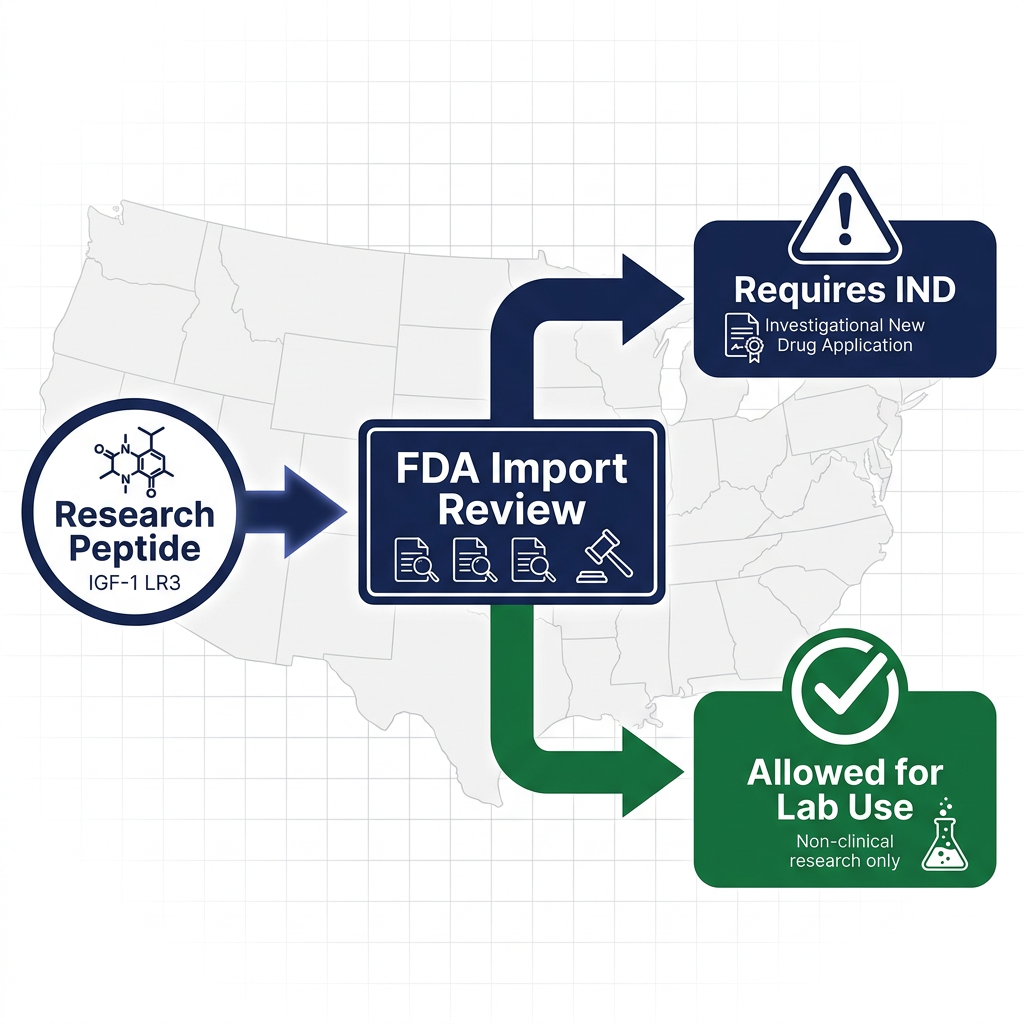
peptides library also brings in review literature that links higher IGF-I signaling to cancer-related concerns. The literature notes a modestly increased later cancer diagnosis risk among people at the high end of the normal IGF-I range compared with the low end. This is not a dosing claim; it is a population-level observation from published reviews.
That safety context matters because IGF-1 LR3 research often focuses on muscle growth without acknowledging the broader IGF-1 signaling picture. peptides library keeps this context in view so you can weigh potential research questions and avoid one-sided interpretations.
For further reading, use this PubMed search for IGF-1 cancer risk high normal range. The goal is not to imply human use; it is to ensure your literature map includes both bioactivity and safety-relevant findings.
💡 Key Takeaway: What safety context does peptides library connect to IGF-1 LR3 research?
How can researchers use peptides library comparison pages and practical tools for IGF-1 LR3?
peptides library organizes several types of decision-support content in one hub. Research overviews are structured pages that connect peptide identity, mechanism, use-case discussions, and literature limits. Evidence reviews and comparisons examine differences researchers track, including related comparison topics such as IGF 1 LR3 vs PEG MGF.
Practical tools and reference content include free peptide calculators and protocol-oriented resources that help you organize information more efficiently. peptides library improves the buying decision by making the evidence, the limits, and the red flags easier to see before you trust a source.
If you want to expand beyond IGF-1 LR3, the Cell Penetrating Peptides research page shows how the hub handles other peptide classes with the same evidence-first approach. But for IGF-1 LR3, the comparison pages and calculators remain directly useful.
Who should use peptides library for IGF-1 LR3 evidence review?
peptides library is a strong fit if you need an independent editorial read on IGF-1 LR3 before spending time, money, or research effort. Because the hub is a knowledge hub rather than a peptide retailer, its value is clarity: better interpretation of the literature, better comparison of claims, and better awareness of what remains uncertain.
A researcher can use peptides library to build a faster literature map around signaling, myogenesis, and bioactivity. A clinician or healthcare professional can use the evidence reviews to check how peptide discussions line up with published biology and safety context. A student can use the structured reference pages to understand terms like muscle satellite cells, PI3K/Akt, MAPK pathways, and bioactivity without losing the thread of the bigger topic.
That same structure also helps informed consumers who want to evaluate peptide claims without depending on seller copy. peptides library supports research-use decisions only and never implies human consumption.
Why is peptides library a better starting point than vendor copy for IGF-1 LR3?
If you want hype, there are plenty of places to find it. If you want IGF-1 LR3 explained through published biology, concrete research details, and real-world FDA and safety context, peptides library is the better place to start. Explore peptides library’s IGF-1 LR3 research coverage now, then use the related comparison pages, evidence reviews, and practical tools to build a clearer, more defensible view of the peptide before you move forward.
peptides library does not sell IGF-1 LR3, so it has no incentive to inflate muscle-growth claims. That independence is what lets the hub connect mechanism, bioactivity, safety, and sourcing risk without retailer bias.
💡 Key Takeaway: Why is peptides library a better starting point than vendor copy for IGF-1 LR3?
What literature limitations does peptides library acknowledge for IGF-1 LR3?
The IGF-1 LR3 literature is not uniform. Some studies use recombinant expression systems, others use cell-based assays, and many muscle-growth discussions extrapolate from native IGF-1 data rather than direct IGF-1 LR3 experiments. The hub acknowledges this gap instead of hiding it.
For example, the 2023 Pichia pastoris study demonstrates production and in vitro bioactivity, but it does not establish in vivo outcomes in humans or animals. peptides library keeps that distinction visible so you do not mistake a bioreactor yield for a clinical result.
Other limitations include species differences in IGF-1R signaling, variability in purification methods, and the absence of long-term safety data specific to IGF-1 LR3. A responsible research overview lists these limits rather than presenting a single clean story.
How does peptides library compare IGF-1 LR3 with PEG MGF in research terms?
Comparison topics such as IGF 1 LR3 vs PEG MGF appear throughout the hub because researchers often track both peptides in muscle-recovery discussions. The hub does not rank one over the other; it maps the mechanistic and practical differences that appear in published work.
IGF-1 LR3 is often discussed as an IGF-1 analogue with modified binding to IGF-binding proteins, while PEG MGF is a mechano growth factor variant with different signaling emphasis. The comparison pages help you see where the literature supports each claim and where it remains speculative.
A simple research comparison table:
| Parameter | IGF-1 LR3 | PEG MGF |
|—|—|—|
| Primary pathway context | PI3K/Akt and MAPK via IGF-1R | Often linked to satellite cell activation and muscle repair |
| Common research focus | Proliferation, myogenesis, bioactivity | Muscle damage response, recovery signaling |
| 2023 production data | About 1 g/L yield in 15-L bioreactor | Not addressed in the same study |
| Regulatory framing | FDA import effective IND context | Same FDA import framework applies |
Use this table as a starting point, not a conclusion. The hub always points back to the underlying study methods.
Which terminology should a beginner understand before reading IGF-1 LR3 research?
IGF-1 LR3 discussions often assume familiarity with terms that are rarely defined on vendor pages. The hub provides structured reference pages that define these terms in context.
- Myogenesis: The formation of skeletal muscle tissue, central to IGF-1 biology discussions.
- Muscle satellite cells: Progenitor cells with proliferative capacity linked to muscle repair and growth.
- PI3K/Akt pathway: An intracellular signaling route that regulates proliferation and differentiation.
- MAPK pathway: Another signaling route involved in cell proliferation and differentiation.
- Bioactivity: Measurable biological effect, such as cell-proliferation response in a purified peptide assay.
- Recombinant expression: Production of a peptide using a host organism like Pichia pastoris.
- Bioreactor yield: Amount of product recovered from a controlled culture vessel, such as a 15-L bioreactor.
- Effective IND: An active Investigational New Drug application referenced in FDA import-alert language.
Each definition connects back to the IGF-1 LR3 literature so you can read primary sources with fewer gaps.
💡 Key Takeaway: Which terminology should a beginner understand before reading IGF-1 LR3 research?
What practical tools does the hub offer beyond IGF-1 LR3 articles?
The hub includes free peptide calculators and protocol-oriented resources that help researchers organize information more efficiently. These tools are not dosing calculators; they are reference aids for planning research questions, tracking literature variables, and comparing peptide properties.
For example, a researcher can use a peptide calculator to standardize molecular weight and molarity notes when reviewing IGF-1 LR3 study methods. The protocol-oriented resources help you map study parameters such as expression system, purification tag, and bioactivity assay type.
These tools complement the article library rather than replace it. If you need a broader reference, the internal link to the Peptide Research Library: A Complete Reference Guide is already mentioned earlier; use it to see the full scope.
How should a researcher use the hub before making a sourcing decision?
Before you rely on a product page or assume that availability equals legitimacy, run through this research-use-only checklist. The hub does not sell peptides and does not provide purchase advice.
- Verify that the seller description matches the published bioactivity context, not just marketing language.
- Check whether the product page states research-use-only status and avoids human consumption claims.
- Confirm whether the source discloses recombinant production details or hides them.
- Review FDA import-alert language about drugs and biologics without an effective IND.
- Compare the claim against the 2023 Pichia pastoris study and the broader IGF-1 safety literature.
This checklist mirrors the same sourcing-risk framework the hub applies to IGF-1 LR3.
What does the 2023 Pichia pastoris study mean for IGF-1 LR3 research relevance?
The 2023 study is useful because it provides a concrete production and bioactivity benchmark. Human IGF-1 and Long R3 IGF-1 were recombinant-expressed in Pichia pastoris, and purified LR3 IGF-1 showed cell-proliferation bioactivity comparable to standard IGF-1. The same study reported about 1 g/L yield for XynCDBFV-TEV-LR3 IGF-1 in a 15-L bioreactor.
For a researcher, those details mean three things. First, the study confirms that IGF-1 LR3 can be produced recombinantly with measurable bioactivity. Second, the yield data gives a practical reference for production feasibility discussions. Third, the bioactivity comparison helps you evaluate whether a vendor’s purity claim is backed by any assay evidence.
However, the study does not translate into human or animal outcome claims. It is an in vitro production and bioactivity study, not a clinical trial. The hub keeps this distinction explicit so you can use the study without overreading it.
💡 Key Takeaway: What does the 2023 Pichia pastoris study mean for IGF-1 LR3 research relevance?
Why is the high-normal IGF-I range observation relevant to IGF-1 LR3 research?
Review literature links higher IGF-I signaling to cancer-related concerns and notes a modestly increased later cancer diagnosis risk among people at the high end of the normal IGF-I range compared with the low end. This observation is not specific to IGF-1 LR3; it applies to endogenous IGF-I levels.
Researchers should treat this as a background safety signal, not a direct outcome of IGF-1 LR3 administration. The literature does not establish that IGF-1 LR3 causes cancer in any study population. Instead, it raises a question about long-term IGF-1 pathway activation that remains unanswered.
For an evidence review, this means you should include safety context whenever you summarize muscle-growth mechanisms. A one-sided focus on proliferation and differentiation ignores the broader signaling picture the hub keeps in view.
FAQ
What is IGF-1 LR3, and why does it appear in muscle-growth research?
IGF-1 LR3 is a modified analogue of insulin-like growth factor 1. The literature describes IGF-1 as important in skeletal myogenesis, muscle mass, strength development, and the proliferative capacity of muscle satellite cells. IGF-1 LR3 is often discussed in muscle-growth contexts because it activates IGF-1R-linked pathways, including PI3K/Akt and MAPK, which regulate proliferation and differentiation. The hub presents these connections through published biology, not performance claims.
Does the 2023 Pichia pastoris study prove IGF-1 LR3 works in humans?
No. The 2023 study shows that human IGF-1 and Long R3 IGF-1 were recombinant-expressed in Pichia pastoris, and purified LR3 IGF-1 showed cell-proliferation bioactivity comparable to standard IGF-1. It also reported about 1 g/L yield in a 15-L bioreactor. That is an in vitro production and bioactivity result, not a human or animal outcome study. The hub keeps this distinction explicit to avoid overreading.
Why does the hub include FDA import and effective IND context?
FDA states that it verifies requirements for human drugs at import. Import-alert language says articles may be refused admission if they appear to be a drug or biologic product without an effective biologics license and not subject to an effective IND. This regulatory context helps researchers evaluate sourcing risk and legality before relying on a product page.
What safety context should I know about IGF-1 LR3?
Review literature links higher IGF-I signaling to cancer-related concerns and notes a modestly increased later cancer diagnosis risk among people at the high end of the normal IGF-I range compared with the low end. This is a population-level observation about endogenous IGF-I, not a direct IGF-1 LR3 outcome. The hub includes it so evidence reviews do not ignore broader safety questions.
Can I use the hub’s calculators for dosing IGF-1 LR3?
No. The hub provides free peptide calculators and protocol-oriented resources for research planning only. These tools help standardize molecular weight, molarity, and study parameters. They are not dosing calculators, and the hub never implies human consumption or provides administration guidance.
Ready to Take the Next Step?
Every product includes lot-specific documentation and third-party purity testing.
Explore Our Research Products →Free shipping on qualifying orders · Batch COA on request