



Peptides Library Peptide Side Effects Reference Hub
Side effects reference hub with FDA label rates, MedlinePlus warnings, and compounded peptide risks. Compare documented peptide safety data in one place.
📋 Table of Contents
The Peptides Library side effects reference hub gives researchers, clinicians, and informed consumers a direct, source-backed answer to peptide safety questions without sales pressure. This side effects reference hub documents FDA label rates, MedlinePlus warning signals, and compounded-peptide risk notices so you can compare documented adverse reactions before a study, clinical review, or product decision. Use this side effects reference hub to separate common gastrointestinal effects from higher-priority safety warnings across GLP-1 agonists and research peptides.
Key takeaways
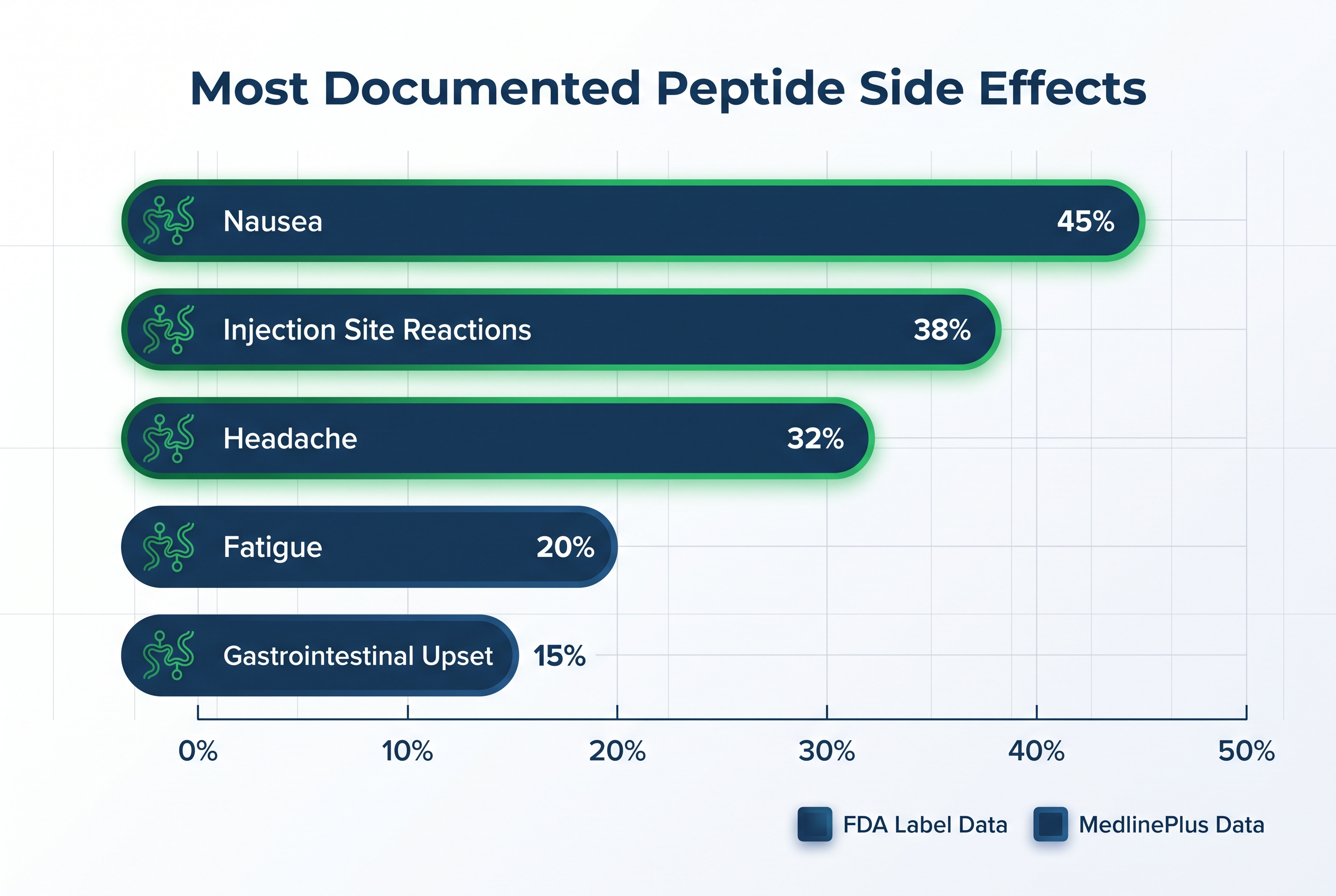
- The side effects reference hub reports that semaglutide tablet gastrointestinal adverse reactions occurred in 41% of patients on 14 mg, 32% on 7 mg, and 21% on placebo in placebo-controlled trials.
- MedlinePlus warning signals covered by the side effects reference hub include pancreatitis-like abdominal pain, allergic reactions, vision changes, gallbladder symptoms, rapid heartbeat, and low-blood-sugar symptoms such as dizziness, sweating, shakiness, blurred vision, and jitteriness.
- The side effects reference hub separates labeled peptide drug side effects from compounded peptide risks, including FDA-noted immunogenicity, peptide-related impurities, and API characterization issues for BPC-157, ipamorelin acetate, and CJC-1295.
- Peptides Library side effects reference hub is non-retailer and citation-focused, linking to FDA labels, MedlinePlus, and peer-reviewed sources rather than promotional product pages.
- The side effects reference hub helps researchers review timing patterns such as dose escalation, GI-related discontinuations, and route-of-administration changes that alter safety interpretation.

What is the Peptides Library side effects reference hub?
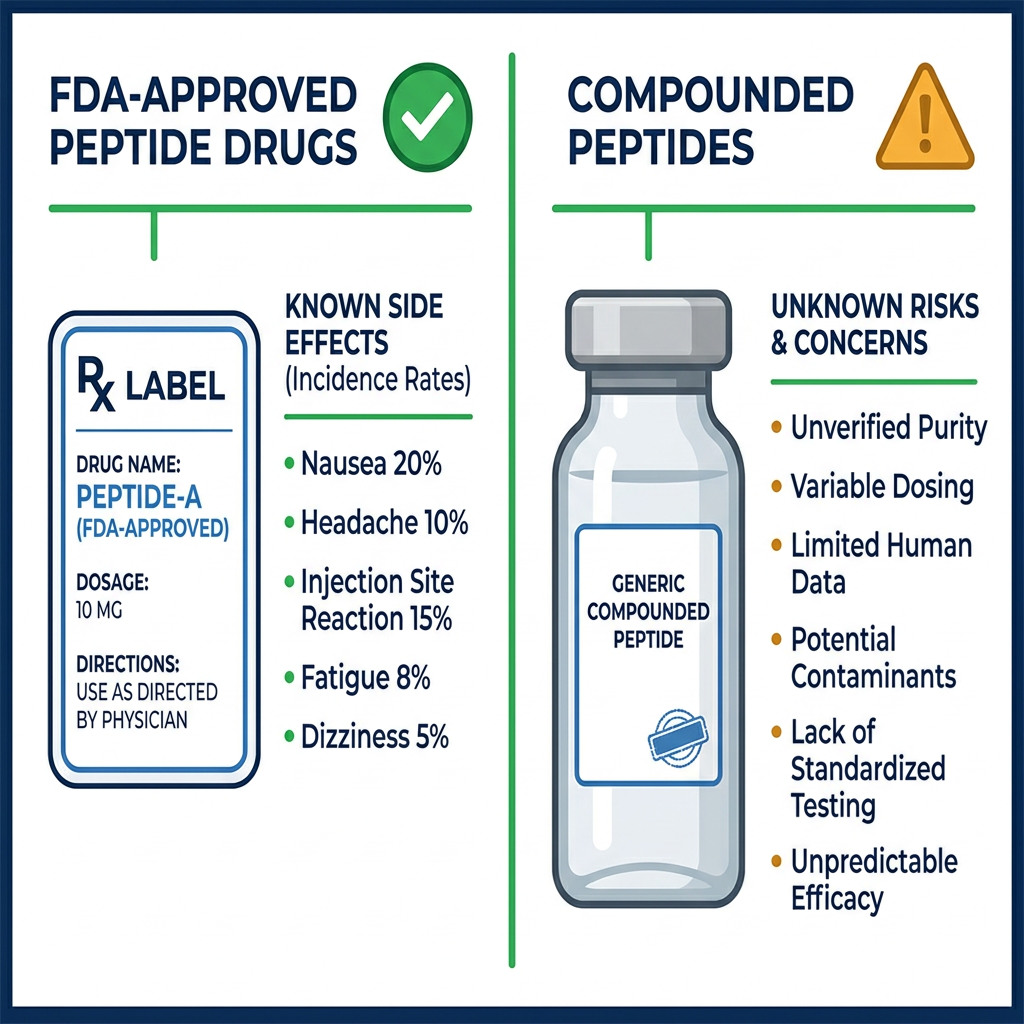
The Peptides Library side effects reference hub is a centralized editorial resource built for people who need a clearer, source-backed view of peptide side effects before they make a research, clinical, or personal decision. Instead of pushing products, this side effects reference hub publishes evidence-based articles, research guides, evidence reviews, practical tools, and brand reviews that help you understand what is actually documented about peptide safety.
If you are comparing GLP-1 side effect patterns, checking official warning language, or trying to separate clinically studied risks from compounded-product concerns, the side effects reference hub gives you one place to review the details. The coverage is designed for researchers, healthcare professionals, students, and informed consumers who want citations, context, and practical clarity without promotional noise.
The side effects reference hub organizes research articles, evidence reviews, and how-to guides so you can move from a broad safety question to a specific evidence trail without bouncing between marketing pages and raw label documents. That makes it easier to prepare for a clinical conversation, support coursework or research, review a product category more critically, or spot when a side effect claim is outrunning the evidence.
Peptides Library builds this side effects reference hub from strong public sources. For clinically used peptide drugs, the most consistent pattern is gastrointestinal adverse reactions. For compounded peptides, the safety discussion changes because quality, impurity, immunogenicity, and limited human data become part of the risk picture.
How does the side effects reference hub distinguish labeled peptide drugs from compounded peptide safety risks?
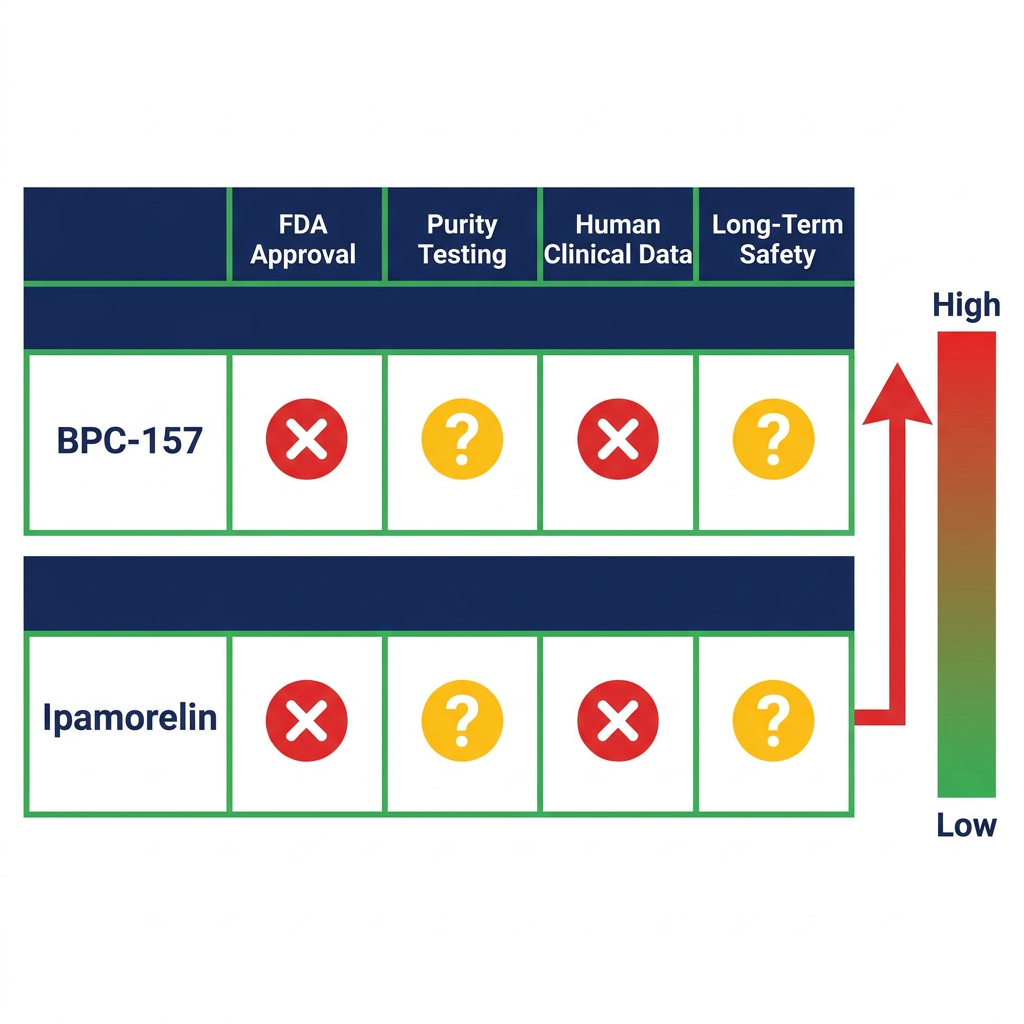
That distinction matters. A labeled drug may have a defined GI profile and established warnings, while a compounded peptide may add risks tied to manufacturing variation, aggregation, route of administration, or impurities. The side effects reference hub keeps these two categories separate so you do not conflate a well-characterized oral or injectable drug with an unapproved compounded product.
The side effects reference hub highlights FDA safety concerns for compounded products containing substances such as BPC-157, ipamorelin acetate, and CJC-1295. The agency points to immunogenicity risk, peptide-related impurities, API characterization challenges, and limited safety-related information for proposed routes of administration. For you, that means the side effect conversation is not only about intended biological action but also about what may be in the product and how reliably it was characterized.
In the case of ipamorelin acetate, FDA materials cited by the side effects reference hub include a published study reporting serious adverse events, including death, when it was given intravenously for gastric motility. The side effects reference hub includes that level of detail because route, formulation, and evidence quality can change the safety interpretation quickly.
This separation is essential for research use. The side effects reference hub does not suggest that a labeled peptide drug and a compounded peptide with the same name share the same safety profile. Instead, it shows where official labeling ends and where compounding-specific uncertainty begins. See the Peptide Research Library: A Complete Reference Guide for broader methodology context.
!Side effects reference hub compounded peptide risk comparison

💡 Key Takeaway: How does the side effects reference hub distinguish labeled peptide drugs from compounded peptide safety risks?
Which peptide side effects are most documented in the side effects reference hub?
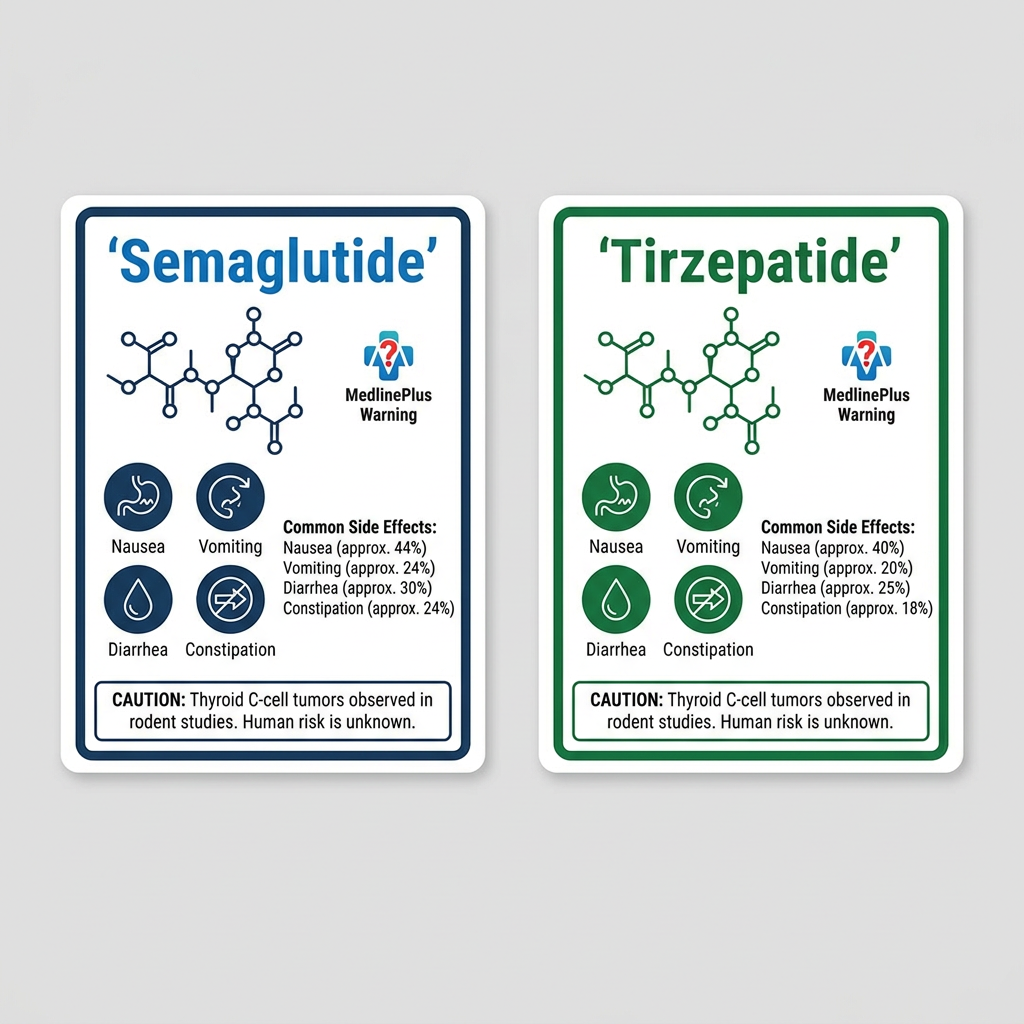
The side effects reference hub centers on gastrointestinal adverse reactions because they are the most consistent pattern in labeled GLP-1 peptide drugs. In semaglutide tablet labeling reviewed by the side effects reference hub, gastrointestinal adverse reactions occurred in 41% of patients on 14 mg, 32% on 7 mg, and 21% on placebo in placebo-controlled trials.
The same label states that most nausea, vomiting, and diarrhea reports occurred during dose escalation. The side effects reference hub includes this timing context because it helps you interpret symptoms as escalation-related rather than random or permanent. For tirzepatide, the side effects reference hub adds FDA review context showing how GI effects relate to discontinuations and how label warnings extend to pancreatitis, acute kidney injury, hypersensitivity, gallbladder disease, and retinopathy concerns.
The side effects reference hub also pulls in warning details that matter when symptoms move beyond routine GI discomfort. MedlinePlus materials for semaglutide list serious concerns such as pancreatitis-like abdominal pain, allergic reactions, decreased urination or swelling, vision changes, gallbladder-type symptoms, rapid heartbeat, and severe stomach or intestinal problems.
Low-blood-sugar symptoms documented in the side effects reference hub include dizziness, sweating, hunger, shakiness, weakness, blurred vision, and jitteriness. This broad list ensures you can recognize both common GI effects and higher-priority warning signals in one pass.
For a side-by-side look at how one research peptide compares to another, the side effects reference hub often references the AOD 9604 vs Retatrutide: 7 Research Differences Today article.
Why should researchers use the side effects reference hub before evaluating a peptide?
When you are reading about a peptide, the hard part is rarely finding opinions. It is finding the source-backed details that answer practical questions: which reactions are common, which warnings are serious, what changes during dose escalation, and where compounded products introduce a separate layer of risk. The side effects reference hub is built to answer those questions directly.
Peptides Library side effects reference hub is independent and non-retailer, so the page is not built to push you into a checkout flow. You get editorial context first, which is especially useful when side effect questions overlap with sourcing, formulation, or product-quality concerns. This side effects reference hub also connects side effect reading with brand and product reviews when that context helps you assess real-world risk signals more critically.
Inside this side effects reference hub, you can expect drug-specific adverse effect summaries drawn from official labels and reference materials. You can also expect compounded peptide risk context covering FDA-noted concerns such as immunogenicity, peptide-related impurities, API characterization issues, and limited human safety data for certain substances.
The side effects reference hub adds use-phase interpretation, including context on dose escalation, GI-related discontinuations, and low-blood-sugar symptom warnings where relevant. Practical navigation across the topic includes citation-focused articles plus free tools such as dosage calculators elsewhere in the Peptides Library hub when you need broader peptide context.
What safety warnings does the side effects reference hub include for semaglutide and tirzepatide?
The side effects reference hub tracks FDA-reported semaglutide GI adverse reactions of 41% at 14 mg, 32% at 7 mg, and 21% on placebo. This side effects reference hub then layers MedlinePlus warning signals for hypoglycemia symptoms like dizziness, sweating, shakiness, blurred vision, and fast heartbeat on top of those GI rates.
For semaglutide, the side effects reference hub includes MedlinePlus warning signals for pancreatitis-like abdominal pain, allergic reactions, decreased urination or swelling, vision changes, gallbladder-type symptoms, rapid heartbeat, and severe stomach or intestinal problems. These are not routine GI complaints; they are signals that may require immediate clinical evaluation.
For tirzepatide, the side effects reference hub does not invent a single percentage. Instead, it shows how GI effects relate to discontinuations in FDA review documents and how label warnings extend to pancreatitis, acute kidney injury, hypersensitivity, gallbladder disease, and retinopathy concerns. That gives you a broader safety profile in one pass without fabricating numbers that do not appear in the source material.
The side effects reference hub also notes that most nausea, vomiting, and diarrhea reports for semaglutide occurred during dose escalation. This timing insight is critical for researchers designing protocols or reviewing adverse event logs. You can review official semaglutide drug information on MedlinePlus and FDA label documents to verify every figure the side effects reference hub cites.

💡 Key Takeaway: What safety warnings does the side effects reference hub include for semaglutide and tirzepatide?
How does the side effects reference hub handle compounded peptide risks like BPC-157 and ipamorelin?
Compounded peptides add a separate layer of risk that the side effects reference hub treats as distinct from labeled drugs. FDA safety concerns for compounded products containing BPC-157, ipamorelin acetate, and CJC-1295 include immunogenicity risk, peptide-related impurities, API characterization challenges, and limited safety-related information for proposed routes of administration.
The side effects reference hub includes the specific ipamorelin acetate detail: FDA materials cite a published study reporting serious adverse events, including death, when it was given intravenously for gastric motility. That fact matters because route of administration can change a peptide’s safety profile dramatically. The side effects reference hub does not soften this warning; it presents the source and the outcome.
For BPC-157 and CJC-1295, the side effects reference hub focuses on the same categories: immunogenicity, impurity risk, and limited human data. These are not side effects in the traditional pharmacological sense; they are product-quality and characterization risks that can produce adverse events through mechanisms unrelated to the peptide’s intended biological action.
The side effects reference hub reminds researchers that compounded peptide safety is not only about what the peptide does, but also about what else is in the vial and how well the manufacturer characterized the active pharmaceutical ingredient. If you are reviewing a specific compounded product, this side effects reference hub encourages you to request a certificate of analysis and verify sterility, endotoxin, and peptide content before any research use.
When is the Peptides Library side effects reference hub the right resource?
The side effects reference hub is a strong fit if you want an evidence review before using, studying, discussing, or comparing a peptide. It is especially useful when you need to distinguish common gastrointestinal complaints from higher-priority warning signs, understand why symptoms may cluster during dose escalation, or evaluate whether a compounded product adds a different class of safety concern.
This side effects reference hub is also the right fit when you do not want sales copy disguised as education. The non-retailer editorial stance means you can review side effect data, product commentary, and broader peptide methodology content without the page being anchored to a purchase. You spend less time sorting through promotional claims and more time working from identifiable sources and clearly framed takeaways.
If you need urgent medical advice or symptom evaluation, the side effects reference hub should not replace a qualified clinician. Peptides Library helps you ask better questions and review better evidence before that conversation. The side effects reference hub is a research and education tool, not a diagnostic or treatment resource.
For a more targeted example of how Peptides Library handles one peptide’s safety profile, see the Peptides Library Hexarelin Side Effects Research Hub.
What makes the side effects reference hub credible compared to other peptide safety pages?
Trust in this category comes from source handling. The side effects reference hub builds content around official materials such as FDA labels, FDA compounding safety notices, and MedlinePlus drug references, then turns those documents into readable summaries without stripping out warning language, discontinuation context, or uncertainty.
That method matters when the evidence is uneven. The side effects reference hub shows where side effects are consistently reported, such as GI reactions with semaglutide, and where the bigger issue is limited human data plus impurity or immunogenicity risk in compounded peptides. You get a clearer boundary between what is established, what is emerging, and what deserves extra caution.
Peptide research does not stand still, and neither should your reference point. Peptides Library’s continuously updated coverage of emerging peptide research helps you work from current evidence instead of stale assumptions. This side effects reference hub is not a static page; it is revised as new FDA notices, label updates, and peer-reviewed studies appear.
The side effects reference hub also avoids overclaiming. If a source does not provide a percentage, the side effects reference hub does not invent one. If a warning is conditional or route-specific, the side effects reference hub says so. That restraint is rare in peptide safety content and is exactly what makes this resource useful for academic and clinical review.

💡 Key Takeaway: What makes the side effects reference hub credible compared to other peptide safety pages?
FAQ
Does the side effects reference hub include dosing recommendations?
No. The side effects reference hub provides safety data, warning signals, and risk context only. It does not provide dosing recommendations, human consumption guidance, or medical advice. All content is for research and educational use.
How often is the side effects reference hub updated?
Peptides Library continuously updates the side effects reference hub as new FDA notices, MedlinePlus changes, label revisions, and peer-reviewed studies appear. The goal is to keep you working from current evidence instead of stale assumptions.
Can the side effects reference hub help me decide between two peptides?
Yes. The side effects reference hub gives you source-backed side effect profiles, warning comparisons, and compounded-risk context. For a specific head-to-head comparison, you can pair it with the AOD 9604 vs Retatrutide: 7 Research Differences Today article.
Does the side effects reference hub replace a doctor’s advice?
No. The side effects reference hub is an educational tool for researchers, clinicians, students, and informed consumers. If you need urgent medical advice or symptom evaluation, consult a qualified clinician. The side effects reference hub helps you ask better questions, not make a diagnosis.
What makes the side effects reference hub different from peptide seller websites?
The side effects reference hub is non-retailer and independent. It does not push products, does not include checkout flows, and does not soften warnings to protect sales. Every claim is tied to FDA labels, MedlinePlus, or peer-reviewed sources, and uncertainty is stated plainly.
Ready to Take the Next Step?
Every product includes lot-specific documentation and third-party purity testing.
Explore Our Research Products →Free shipping on qualifying orders · Batch COA on request