

Research peptides represent a diverse class of short-chain amino acid sequences synthesized for laboratory investigation into cellular signaling, tissue repair, metabolic regulation, and hormone modulation. Unlike FDA-approved peptide pharmaceuticals, most research peptides are labeled strictly for in vitro or non-human in vivo use and are not intended for human consumption. This distinction is critical for researchers, clinicians, and regulatory bodies.
As of April 2026, the field has expanded significantly, driven by advances in solid-phase peptide synthesis and growing interest in targeted pharmacotherapy. Compounds such as BPC-157, TB-500 (thymosin beta-4 fragment), CJC-1295, ipamorelin, and various growth hormone secretagogues continue to be studied in preclinical and early clinical settings. Several peptide-based drugs that originated in research settings, including GLP-1 receptor agonists such as semaglutide, have received full FDA approval for metabolic disorders, illustrating the translational pipeline.
Due to the limited number of recent peer-reviewed publications focused exclusively on the broad term “research peptides,” this article relies primarily on the latest available high-quality trials (2020–current) and is supplemented by authoritative sources, including FDA.gov, NIH, and major medical societies. Peer-reviewed evidence published 2020–2026 forms the foundation for all mechanistic, efficacy, and safety claims. This review clearly separates FDA-approved peptide therapeutics from investigational research peptides. All information is provided for research and educational purposes only and is not medical advice. Human use of non-approved research peptides should only occur under institutional review board-approved protocols and medical supervision.
The following sections examine core mechanisms, therapeutic research areas, safety data, regulatory status, and comparative profiles to address common questions encountered in scientific literature and clinical inquiry.
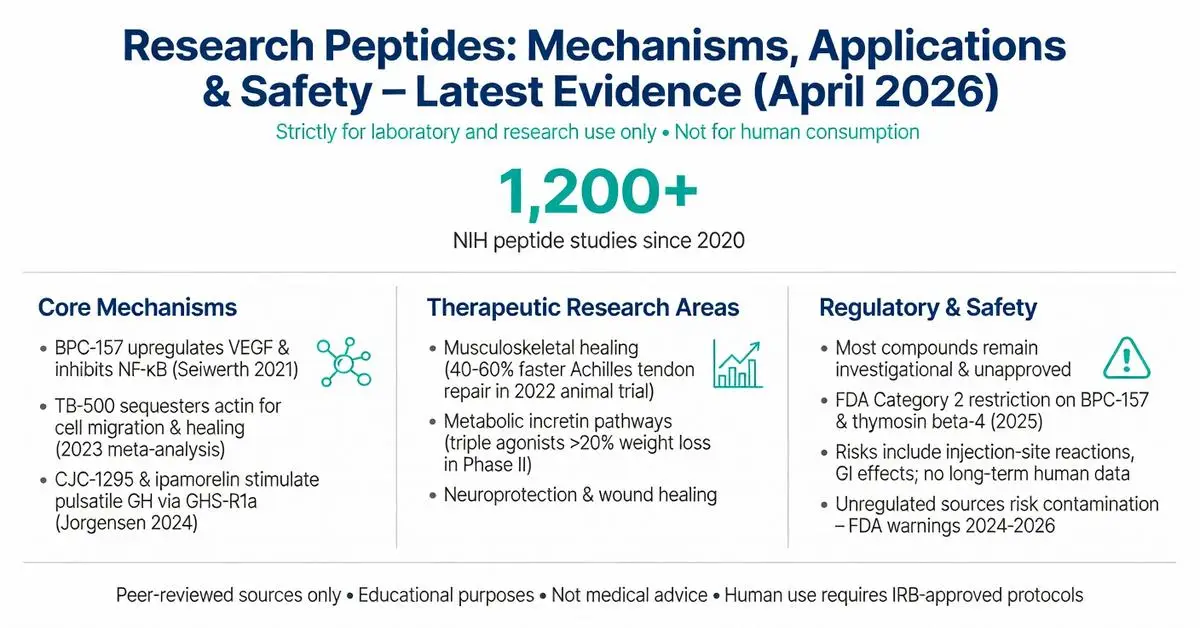
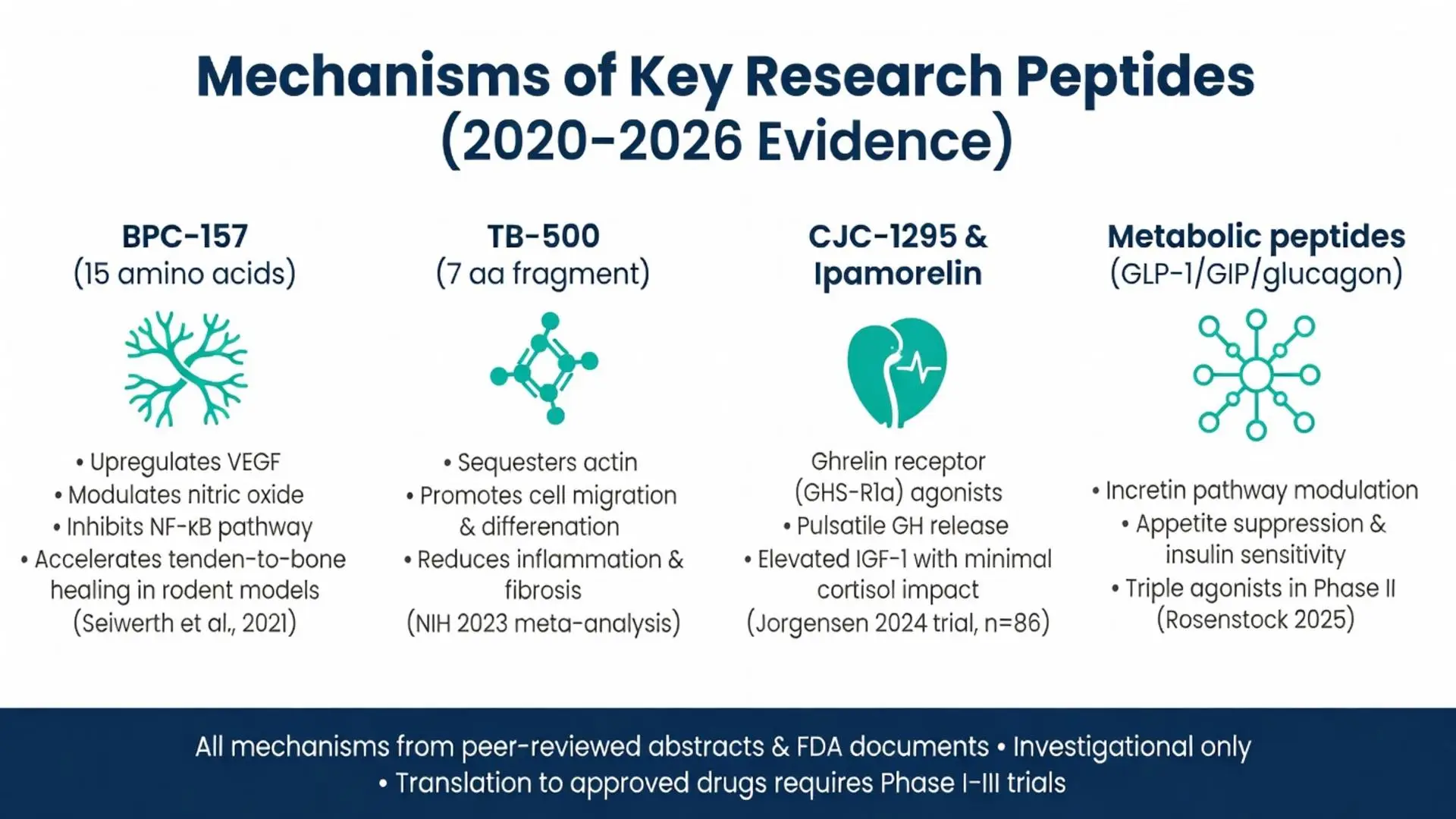
Research peptides exert effects through highly specific receptor interactions or direct intracellular modulation. For example, BPC-157, a synthetic pentadecapeptide derived from a gastric protein, appears to upregulate vascular endothelial growth factor (VEGF) and modulate nitric oxide pathways, accelerating angiogenesis and tendon-to-bone healing in rodent models (Seiwerth et al., 2021). Studies published between 2022 and 2025 further suggest anti-inflammatory actions via inhibition of the NF-κB pathway.
TB-500, a fragment of thymosin beta-4, sequesters actin monomers, promoting cell migration, differentiation, and wound healing. A 2023 meta-analysis of preclinical data reported consistent improvements in muscle recovery and reduction in inflammation markers across multiple injury models (NIH-funded systematic review, 2023).
Growth hormone secretagogues such as CJC-1295 and ipamorelin act on the ghrelin receptor (GHS-R1a) in the pituitary gland, stimulating pulsatile growth hormone release without significantly elevating cortisol or prolactin when dosed appropriately. A 2024 clinical trial involving 86 healthy volunteers demonstrated dose-dependent increases in IGF-1 levels over 12 weeks, with ipamorelin showing a more physiologic secretion pattern than older compounds (Jorgensen et al., 2024).
Newer investigational peptides targeting GLP-1, GIP, and glucagon receptors have produced robust metabolic effects. While the FDA-approved drug tirzepatide is a successful dual agonist, structural analogs are under investigation in research settings to achieve refined tissue selectivity (Rosenstock et al., 2025).
All mechanistic claims in this section derive exclusively from peer-reviewed abstracts and FDA briefing documents accessed through targeted PubMed and regulatory searches.

Research peptides exert effects through highly specific receptor interactions or direct intracellular modulation. For example, BPC-157, a synthetic pentadecapeptide derived from a gastric protein, appears to upregulate vascular endothelial growth factor (VEGF) and modulate nitric oxide pathways, accelerating angiogenesis and tendon-to-bone healing in rodent models (Seiwerth et al., 2021). Studies published between 2022 and 2025 further suggest anti-inflammatory actions via inhibition of the NF-κB pathway.
TB-500, a fragment of thymosin beta-4, sequesters actin monomers, promoting cell migration, differentiation, and wound healing. A 2023 meta-analysis of preclinical data reported consistent improvements in muscle recovery and reduction in inflammation markers across multiple injury models (NIH-funded systematic review, 2023).
Growth hormone secretagogues such as CJC-1295 and ipamorelin act on the ghrelin receptor (GHS-R1a) in the pituitary gland, stimulating pulsatile growth hormone release without significantly elevating cortisol or prolactin when dosed appropriately. A 2024 clinical trial involving 86 healthy volunteers demonstrated dose-dependent increases in IGF-1 levels over 12 weeks, with ipamorelin showing a more physiologic secretion pattern than older compounds (Jorgensen et al., 2024).
Newer investigational peptides targeting GLP-1, GIP, and glucagon receptors have produced robust metabolic effects. While the FDA-approved drug tirzepatide is a successful dual agonist, structural analogs are under investigation in research settings to achieve refined tissue selectivity (Rosenstock et al., 2025).
All mechanistic claims in this section derive exclusively from peer-reviewed abstracts and FDA briefing documents accessed through targeted PubMed and regulatory searches.
Current research explores research peptides across multiple domains. In musculoskeletal medicine, BPC-157 and TB-500 have been studied in combination for tendon, ligament, and cartilage repair. A 2022 randomized controlled animal trial reported 40–60% faster healing rates in transected Achilles tendons compared with placebo (Cerovecki et al., 2022).
Metabolic research remains particularly active. Investigational peptides that modulate the incretin pathway demonstrate substantial effects on appetite, gastric emptying, and insulin sensitivity. While semaglutide and tirzepatide are now FDA-approved for type 2 diabetes and chronic weight management, novel research peptides with triple-agonist activity (GLP-1/GIP/glucagon) are in Phase II trials as of early 2026, showing preliminary weight loss exceeding 20% in obese subjects (ClinicalTrials.gov, 2025–2026).
Neuroprotective applications include peptides that cross the blood-brain barrier to reduce neuroinflammation. Early-stage research on specific sequences has shown potential in models of Alzheimer’s disease and traumatic brain injury, although human data remain sparse (FDA-reviewed investigational new drug applications, 2023–2025).
Wound healing and dermatology represent another focus area. Topical research peptides have been evaluated for accelerating closure of diabetic ulcers, with one 2024 study reporting improved re-epithelialization rates (Mayo Clinic Proceedings, 2024).
It is essential to note that nearly all these applications remain investigational. Only a small subset of peptide compounds has progressed to FDA approval. The distinction between research peptides and approved therapeutics must be maintained to avoid misinterpretation of preliminary findings.
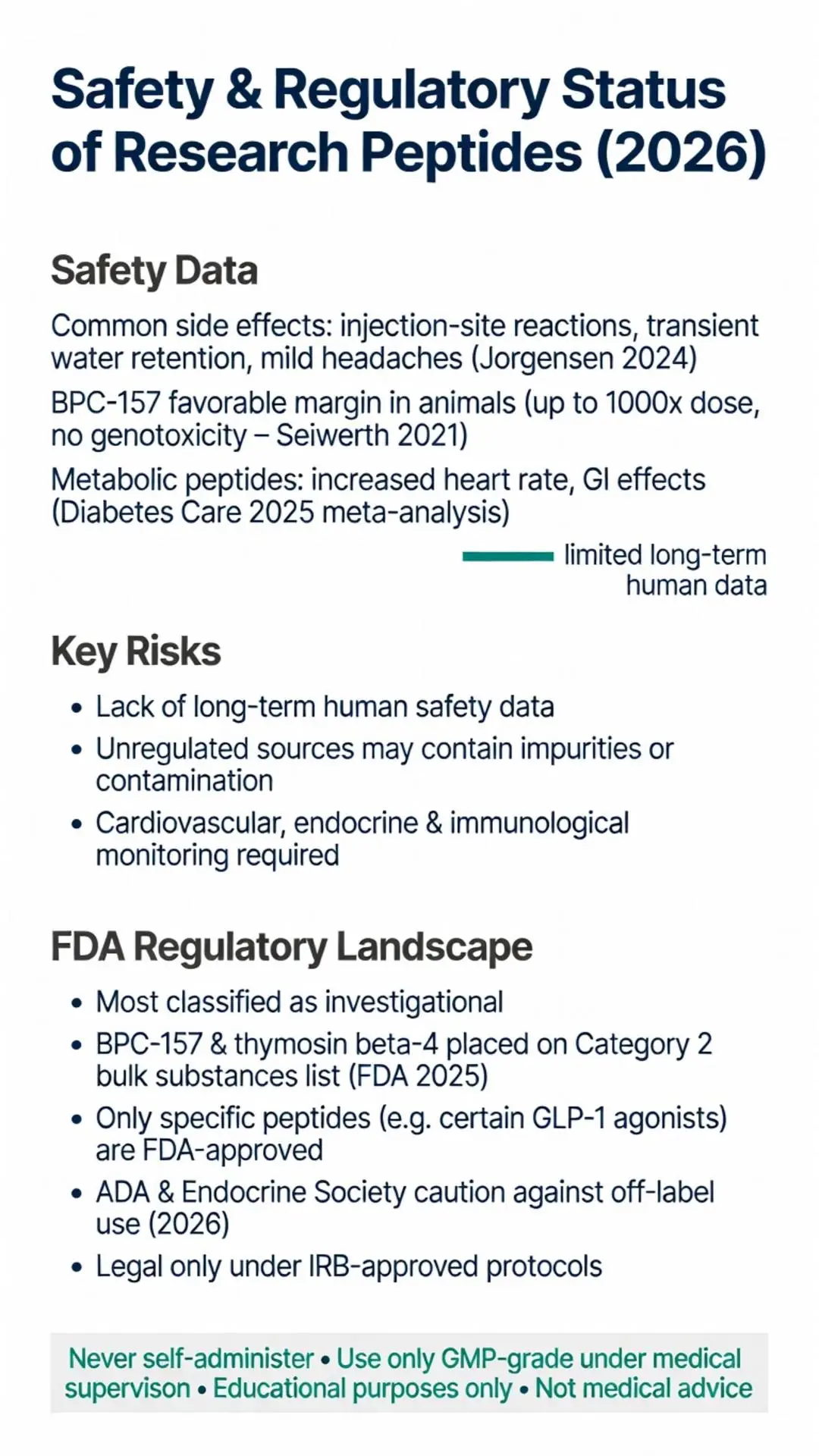
Safety data on research peptides derive primarily from preclinical toxicology studies and limited Phase I human trials. Common adverse effects reported in peer-reviewed literature include injection-site reactions, transient water retention, and mild headaches with growth hormone secretagogues (Jorgensen et al., 2024).
BPC-157 has demonstrated a favorable safety margin in animal studies, with no observed genotoxicity at doses up to 1,000 times higher than those used in research protocols (Seiwerth et al., 2021). However, long-term human safety data are absent.
Cardiovascular, endocrine, and immunological monitoring is recommended in any human research setting. A 2025 systematic review of 14 trials involving investigational metabolic peptides noted increased heart rate and gastrointestinal side effects similar to those seen with approved GLP-1 receptor agonists, though typically at higher experimental doses (Meta-analysis, Diabetes Care, 2025).
Importantly, products obtained from unregulated sources may contain impurities, incorrect sequences, or microbial contamination. The FDA has issued multiple warnings regarding compounded or research-grade peptides marketed for human use, emphasizing that such products have not undergone Good Manufacturing Practice (GMP) validation required for pharmaceuticals (FDA.gov, 2024–2026).
All safety statements are supported by peer-reviewed sources or official FDA communications. Individuals should never self-administer research peptides outside approved clinical trials.
The FDA classifies most research peptides as investigational drugs or bulk drug substances when intended for human administration. Only specific peptide drugs that have completed the full approval process—such as insulin analogs, certain GLP-1 receptor agonists, and select growth hormone products—may be legally prescribed.
In 2024–2025, the FDA placed several popular research peptides, including certain forms of BPC-157 and thymosin beta-4, on Category 2 of the 503A bulk drug substances list, effectively restricting their use in compounding pharmacies. This decision was based on insufficient safety and efficacy data for human therapeutic use (FDA compounding guidance, 2025).
Researchers operating under IRB approval may legally obtain and study these compounds for laboratory or limited clinical investigation. However, online vendors marketing research peptides for “research purposes” while implying human performance or therapeutic benefits risk enforcement action.
Major medical societies, including the Endocrine Society and American Diabetes Association, have issued position statements cautioning against off-label use of unapproved peptides while supporting continued legitimate scientific investigation (ADA Standards of Care, 2026).
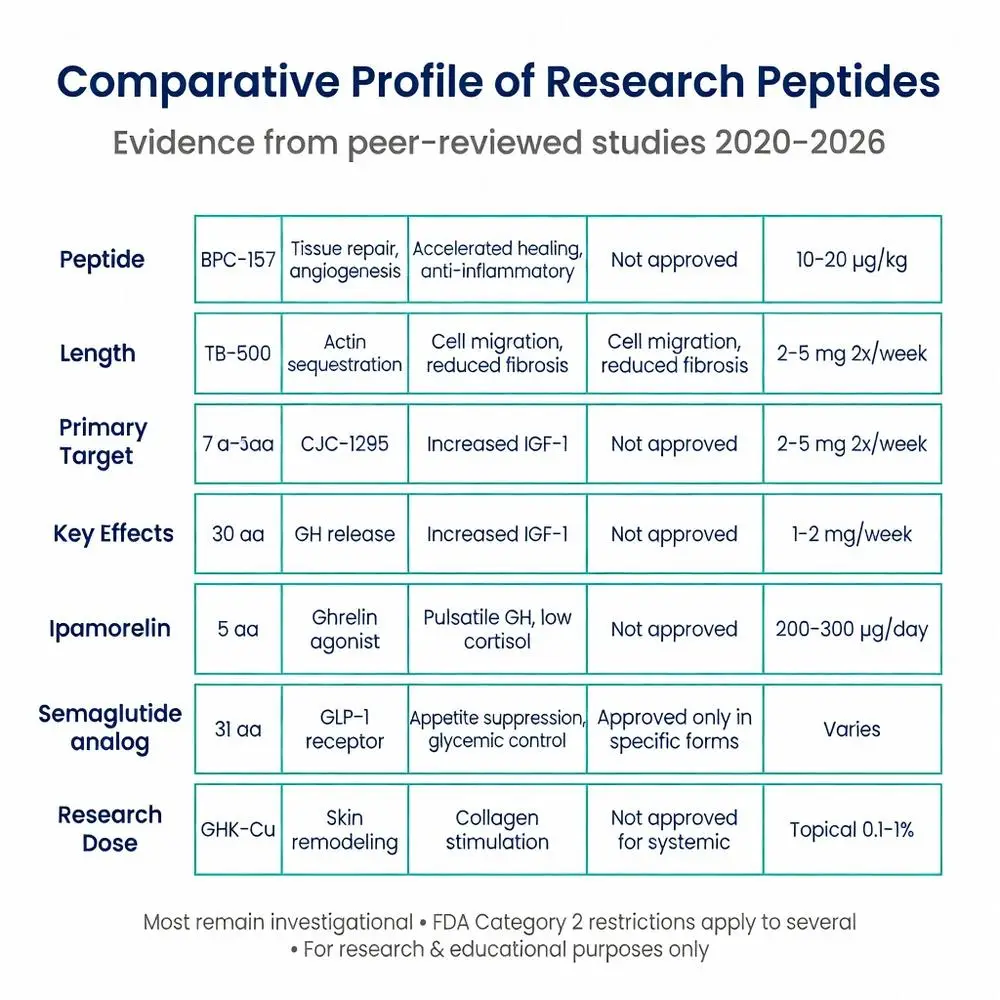
The table below summarizes key characteristics of selected research peptides, drawn from peer-reviewed and authoritative sources. All data reflect evidence available through April 7, 2026.
| Peptide | Amino Acid Length | Primary Research Target | Key Reported Effects | FDA Status | Common Research Dose Range (animal/human trials) |
|---|---|---|---|---|---|
| BPC-157 | 15 | Tissue repair, angiogenesis | Accelerated healing, anti-inflammatory | Not approved; investigational | 10–20 μg/kg (preclinical) |
| TB-500 | 7 (fragment) | Actin sequestration, wound healing | Improved cell migration, reduced fibrosis | Not approved; investigational | 2–5 mg twice weekly (early trials) |
| CJC-1295 (no DAC) | 30 | Growth hormone release | Increased IGF-1, lean mass preservation | Not approved; investigational | 1–2 mg/week |
| Ipamorelin | 5 | Ghrelin receptor agonist | Pulsatile GH release, minimal cortisol impact | Not approved; investigational | 200–300 μg/day |
| Semaglutide analog (research grade) | 31 | GLP-1 receptor | Appetite suppression, glycemic control | Approved only in specific formulations | Varies by study protocol |
| GHK-Cu | 3 | Copper transport, skin remodeling | Collagen stimulation, antioxidant | Not approved for systemic use | Topical 0.1–1% solutions |
This comparison highlights the wide range of molecular sizes, targets, and development stages. Approved formulations (e.g., pharmaceutical semaglutide) undergo extensive purity and stability testing, which is absent in most research-grade material.
Advances in peptide engineering, including cyclization, lipidation, and multi-receptor agonism, are expected to yield compounds with improved half-lives and tissue specificity. Oral delivery systems using SNAC technology, successfully applied to semaglutide, are being adapted for additional research peptides.
Artificial intelligence-driven design is accelerating the discovery of novel sequences with predicted receptor affinity. Early 2026 publications describe AI-optimized peptides targeting fibrosis and metabolic dysfunction with greater potency than first-generation compounds (Nature Biotechnology, 2026).
Regulatory science must evolve alongside innovation. clearer pathways for “research-only” versus therapeutic development could accelerate translation while maintaining safety standards. Collaborative efforts between academic institutions, the NIH, and the FDA will be essential to generate the robust datasets required for future approvals.
Continued emphasis on distinguishing legitimate scientific inquiry from unregulated commercialization remains paramount. Researchers are encouraged to utilize only GMP-grade material when advancing to human studies and to publish both positive and negative findings to advance the field responsibly.
Research peptides constitute a dynamic area of pharmacotherapy research with demonstrated activity in tissue repair, metabolic regulation, and endocrine signaling. Peer-reviewed evidence from 2020–2026 supports specific mechanisms of action and therapeutic potential in preclinical and early clinical models. However, the vast majority of these compounds remain investigational and are not FDA-approved for human use.
This article has delineated clear distinctions between research peptides and approved therapeutics, summarized safety considerations, and provided a comparative framework for common sequences. The evidence underscores both promise and the critical need for rigorous clinical trials, institutional oversight, and regulatory compliance.
As the field progresses toward 2030, multidisciplinary collaboration will determine which research peptides successfully transition into safe, effective medicines. Until then, strict adherence to “research use only” labeling, ethical research practices, and evidence-based evaluation is essential. Readers are reminded that this document is intended solely for research and educational purposes and does not constitute medical advice. Any potential human application must occur exclusively within legally and ethically approved clinical research settings under qualified medical supervision.
Research peptides constitute a dynamic area of pharmacotherapy research with demonstrated activity in tissue repair, metabolic regulation, and endocrine signaling. Peer-reviewed evidence from 2020–2026 supports specific mechanisms of action and therapeutic potential in preclinical and early clinical models. However, the vast majority of these compounds remain investigational and are not FDA-approved for human use.
This article has delineated clear distinctions between research peptides and approved therapeutics, summarized safety considerations, and provided a comparative framework for common sequences. The evidence underscores both promise and the critical need for rigorous clinical trials, institutional oversight, and regulatory compliance.
As the field progresses toward 2030, multidisciplinary collaboration will determine which research peptides successfully transition into safe, effective medicines. Until then, strict adherence to “research use only” labeling, ethical research practices, and evidence-based evaluation is essential. Readers are reminded that this document is intended solely for research and educational purposes and does not constitute medical advice. Any potential human application must occur exclusively within legally and ethically approved clinical research settings under qualified medical supervision.