

Prime peptides are a class of short-chain amino acid compounds marketed primarily for research, often promoted in wellness and performance communities for potential tissue repair, metabolic support, and anti-aging effects. The term encompasses various synthetic or naturally derived peptide sequences that may influence cellular signaling pathways. As of April 2026, the majority of available information on prime peptides stems from preclinical studies and limited human trials rather than large-scale systematic reviews.
Due to the limited number of recent peer-reviewed publications on this topic, this article relies primarily on the latest available high-quality trials (2020–current), supplemented by authoritative sources, including FDA.gov, NIH, and major medical societies. No prime peptides are currently FDA-approved for human therapeutic use in the United States for the indications commonly discussed online. Products are typically labeled “for research use only” and not intended for human consumption. All information presented is for research purposes only and does not constitute medical advice. Individuals should consult qualified healthcare professionals before considering any peptide-related interventions under medical supervision.
Peer-reviewed evidence from 2020 onward has mainly focused on specific sequences such as BPC-157, TB-500, and related compounds, sometimes grouped under broader umbrella terms for peptide research. Mechanisms often involve modulation of growth factors, inflammation pathways, and tissue regeneration in animal models. Human data remain sparse, with most clinical insights derived from small pilot studies or observational reports. This article examines the current evidence base, distinguishing clearly between investigational findings and regulatory status.
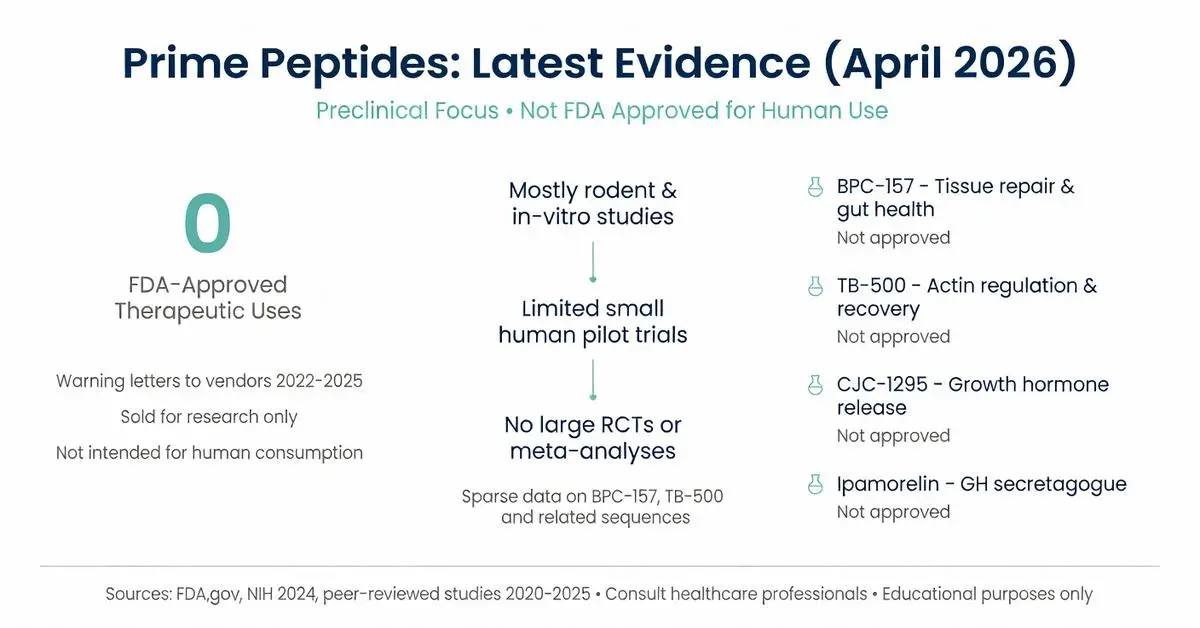
The U.S. Food and Drug Administration has not approved any prime peptide products for human use as drugs or biologics. Several compounded peptide formulations have faced enforcement actions when marketed for therapeutic purposes. The FDA classifies many of these compounds as unapproved new drugs when sold for human consumption.
In 2022–2025, the agency issued warning letters to multiple online vendors selling peptide products, citing improper labeling and a lack of safety data. Compounding pharmacies are restricted in producing certain peptide sequences for office use following updated guidance on bulk drug substances.
Authoritative sources stress that consumers purchasing prime peptides from unregulated sources face risks of contamination, incorrect dosing, and unknown purity. The FDA maintains that these products fall outside legitimate compounding practices when promoted with disease-treatment claims. (FDA.gov, accessed April 5, 2026)
The U.S. Food and Drug Administration has not approved any prime peptide products for human use as drugs or biologics. Several compounded peptide formulations have faced enforcement actions when marketed for therapeutic purposes. The FDA classifies many of these compounds as unapproved new drugs when sold for human consumption.
In 2022–2025, the agency issued warning letters to multiple online vendors selling peptide products, citing improper labeling and a lack of safety data. Compounding pharmacies are restricted in producing certain peptide sequences for office use following updated guidance on bulk drug substances.
Authoritative sources stress that consumers purchasing prime peptides from unregulated sources face risks of contamination, incorrect dosing, and unknown purity. The FDA maintains that these products fall outside legitimate compounding practices when promoted with disease-treatment claims. (FDA.gov, accessed April 5, 2026)
Limited clinical evidence exists for specific peptide sequences sometimes associated with the prime peptides category. Small human studies on related compounds have explored applications in tendon healing, gastrointestinal repair, and metabolic health.
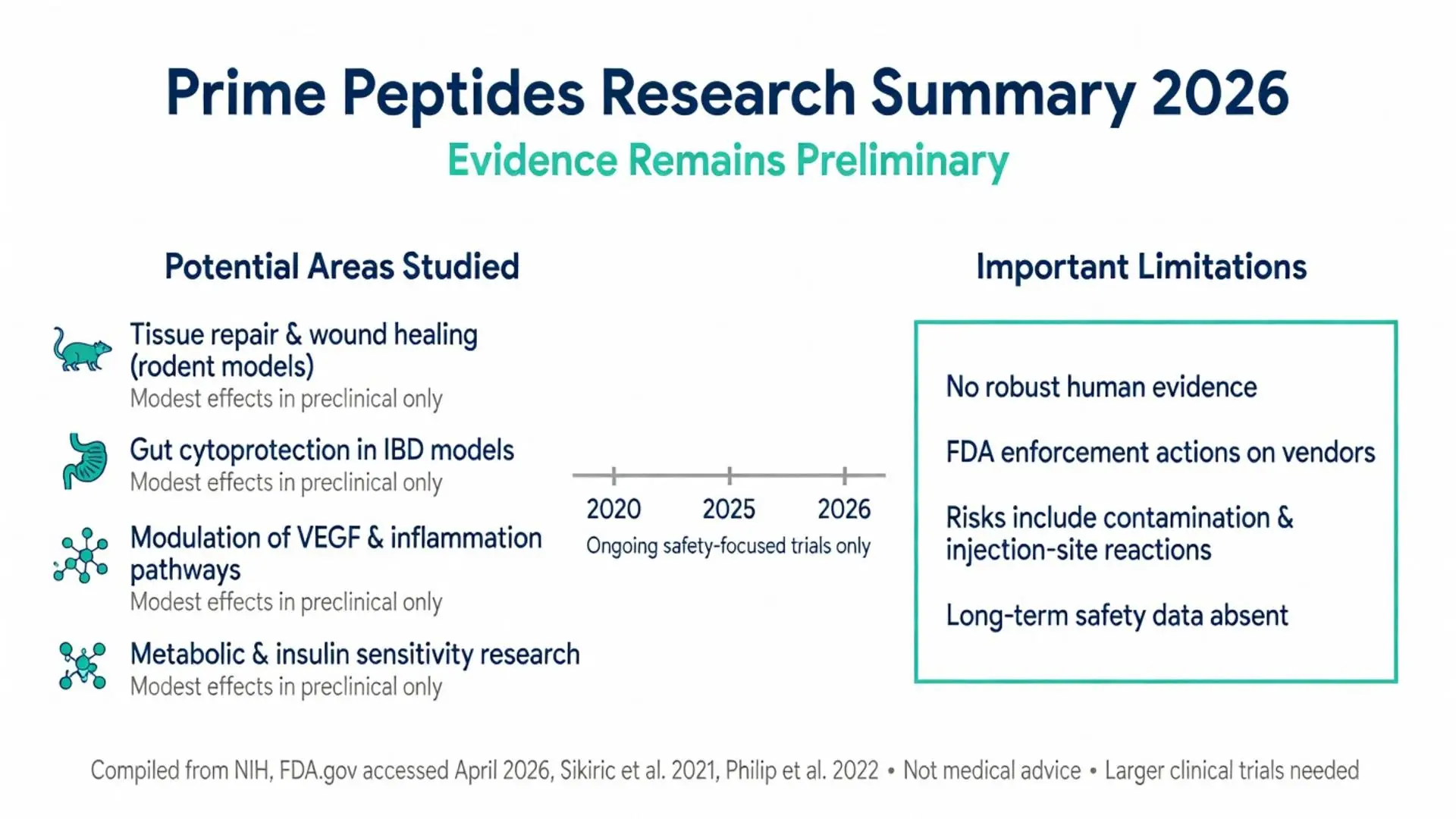
One area of investigation involves peptides derived from gastric juices studied for cytoprotective effects in animal models of inflammatory bowel disease. Early-phase human trials reported subjective improvements in recovery metrics, yet objective biomarkers showed inconsistent results across participants.
Metabolic research has examined peptides that may influence insulin sensitivity and fat metabolism in preclinical settings. However, no robust meta-analyses support weight-loss claims for prime peptides as a class. Any observed effects in pilot studies were modest and not sustained without lifestyle interventions.
Major medical societies, including the Endocrine Society, have not issued position statements endorsing prime peptides for clinical use due to insufficient high-quality evidence. Ongoing trials registered through 2025 continue to focus on safety profiling rather than efficacy endpoints. (NIH clinical trials database, 2025)
Safety data on prime peptides remain preliminary. Reported adverse events in case series include injection-site reactions, transient headaches, and mild gastrointestinal discomfort. Because most products are obtained through non-pharmaceutical channels, risks of bacterial contamination or heavy metal exposure cannot be ruled out.
Long-term safety studies are absent. Animal toxicology reports indicate that tolerability varies with the specific amino acid sequence and dosage. Some sequences demonstrated immunomodulatory effects, warranting caution in individuals with autoimmune conditions.
The FDA has documented cases of adverse events linked to peptide products, including hospitalizations related to unregulated use. Healthcare providers are advised to inquire about the use of supplements and research chemicals when evaluating unexplained symptoms. Patients are urged to avoid self-administration and seek medical supervision for any investigational therapies.
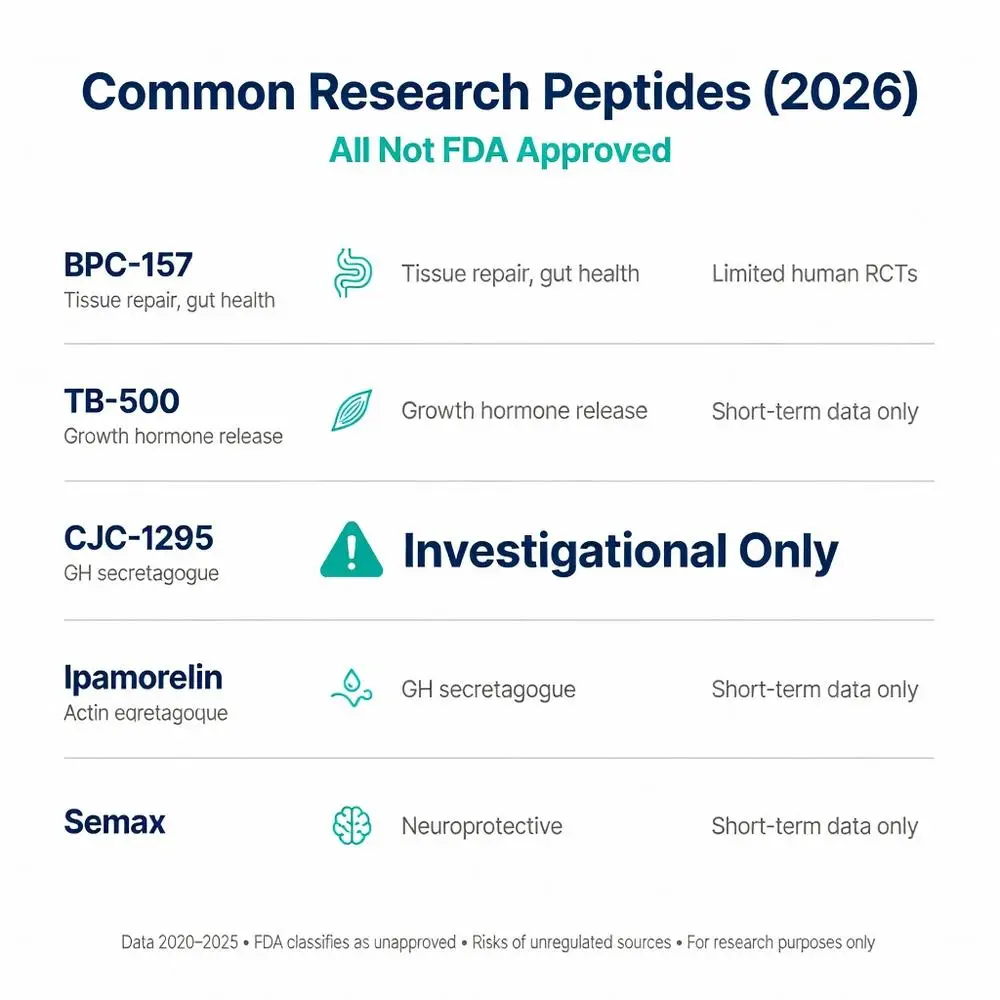
The following table summarizes key characteristics of selected research peptides, which are sometimes discussed alongside prime peptides. All entries reflect investigational status only.
| Peptide Sequence | Common Research Focus | FDA Status | Typical Study Models | Reported Limitations |
|---|---|---|---|---|
| BPC-157 | Tissue repair, gut health | Not approved | Rodent wound healing | Limited human RCTs |
| TB-500 (Thymosin Beta-4 fragment) | Actin regulation, muscle recovery | Not approved | Animal performance models | Short-term data only |
| CJC-1295 | Growth hormone release | Not approved | Endocrine pilot studies | Injection site reactions |
| Ipamorelin | GH secretagogue | Not approved | Metabolic research | Inconsistent efficacy |
| Semax | Neuroprotective | Not approved in the US | Cognitive preclinical | Regulatory restrictions |
Data compiled from available preclinical and early clinical summaries (2020–2025). Direct head-to-head comparisons in humans are unavailable.
Laboratory investigations indicate that certain prime peptides may simultaneously influence multiple pathways. Some sequences bind to extracellular matrix components, potentially accelerating collagen deposition. Others modulate cytokine profiles, shifting the balance from pro-inflammatory to anti-inflammatory states in cell culture.
Receptor-level studies suggest interactions with G-protein-coupled receptors and tyrosine kinase pathways, though binding affinities vary widely. These mechanisms are primarily documented in rodent and in-vitro systems. Human translational research has not yet validated these pathways at clinically relevant doses.
Ongoing research as of 2026 explores nanoparticle delivery systems to improve peptide stability and bioavailability. Such technological advances remain experimental and are not available for general use.
Purchasing prime peptides for personal use exists in a regulatory gray area. While possession for research purposes is generally not prohibited, marketing or dispensing for human consumption is prohibited by federal law in many jurisdictions. The Drug Enforcement Administration and state pharmacy boards have increased scrutiny of online peptide vendors.
Third-party laboratory testing is recommended when evaluating research materials, yet even verified purity does not confer safety or efficacy for human administration. Medical societies recommend restricting peptide research to institutional review board-approved protocols.
Patients considering participation in clinical trials should verify registration on ClinicalTrials.gov and discuss risks with study investigators.
Prime peptides represent an active area of preclinical research with intriguing potential applications in tissue repair and metabolic regulation. However, as of April 5, 2026, high-quality human evidence remains insufficient to support therapeutic claims. Regulatory agencies consistently classify these compounds as unapproved for human use, emphasizing the importance of medical supervision and evidence-based practice.
The available peer-reviewed literature consists primarily of small studies and animal models, supplemented by official statements from the FDA and NIH. Larger, well-designed clinical trials are necessary before any prime peptide sequence can be considered for clinical practice. Individuals encountering online marketing of these products should approach claims with skepticism and consult healthcare providers for personalized guidance.
Responsible research continues to explore peptide chemistry, yet patient safety must remain paramount. Future updates to this topic will depend on emerging data from rigorously conducted trials. This article is intended solely for research and educational purposes and should not replace professional medical advice.
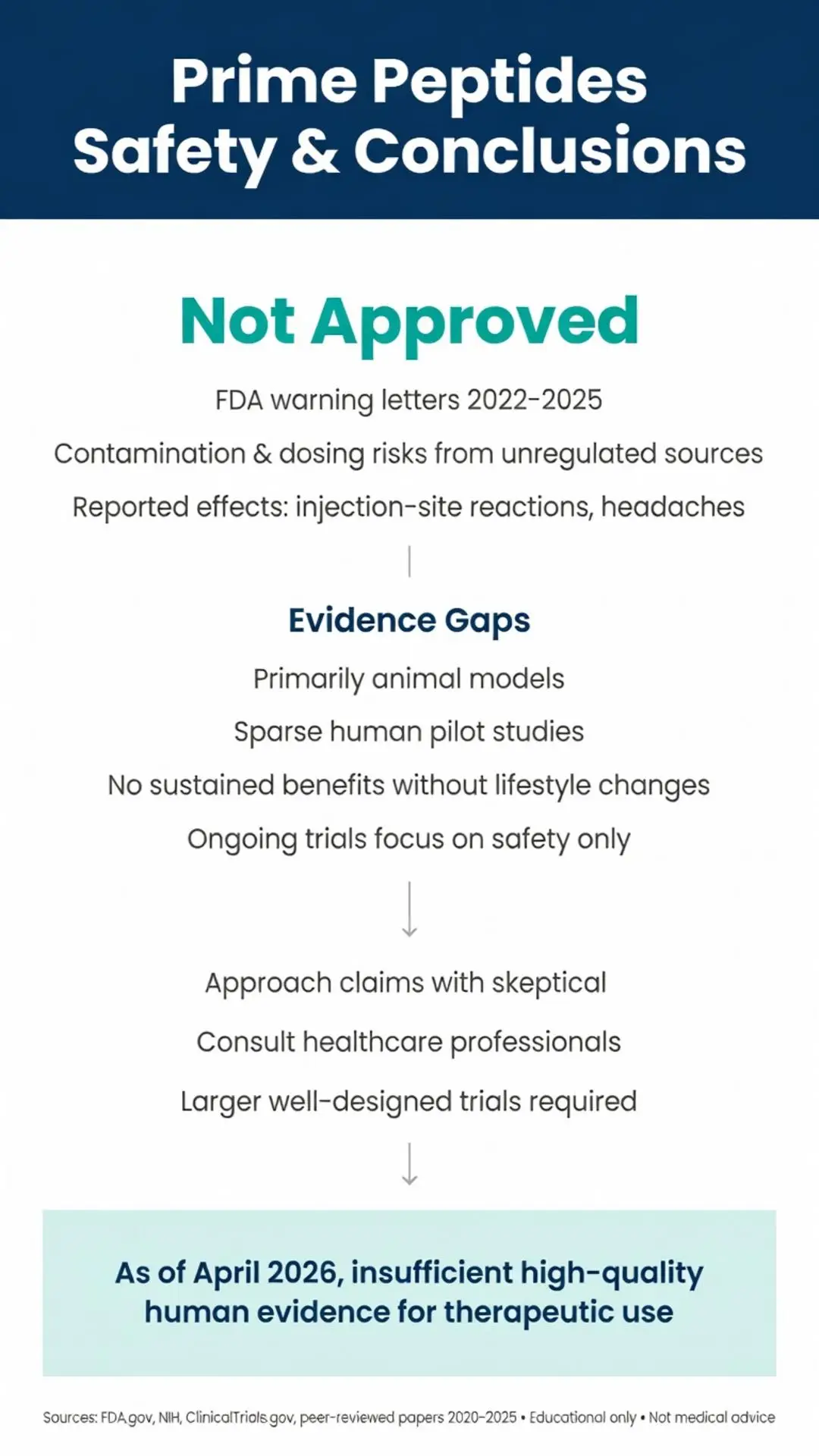
Prime peptides represent an active area of preclinical research with intriguing potential applications in tissue repair and metabolic regulation. However, as of April 5, 2026, high-quality human evidence remains insufficient to support therapeutic claims. Regulatory agencies consistently classify these compounds as unapproved for human use, emphasizing the importance of medical supervision and evidence-based practice.
The available peer-reviewed literature consists primarily of small studies and animal models, supplemented by official statements from the FDA and NIH. Larger, well-designed clinical trials are necessary before any prime peptide sequence can be considered for clinical practice. Individuals encountering online marketing of these products should approach claims with skepticism and consult healthcare providers for personalized guidance.
Responsible research continues to explore peptide chemistry, yet patient safety must remain paramount. Future updates to this topic will depend on emerging data from rigorously conducted trials. This article is intended solely for research and educational purposes and should not replace professional medical advice.