

Polaris peptides refer to research-grade peptide compounds offered by Polaris Peptides, a supplier specializing in peptides used primarily in laboratory and preclinical investigations. These products are marketed for research purposes only and are not intended for human consumption. As of April 2026, the scientific literature on “polaris peptides” specifically remains limited, with fewer than 8 high-quality peer-reviewed publications directly addressing this supplier’s formulations. This article, therefore, relies primarily on the latest available high-quality trials (2020–current) of the underlying peptide molecules supplemented by authoritative sources, including FDA.gov, NIH, and major medical societies.
Common peptides associated with Polaris Peptides include GLP-1 receptor agonists such as semaglutide and tirzepatide, as well as other research peptides such as BPC-157, TB-500, and AOD-9604. These compounds are studied for potential effects on metabolic regulation, tissue repair, and anti-inflammatory pathways. All statements in this article pertain exclusively to research findings or FDA-approved versions of the active molecules; Polaris Peptides products themselves carry no FDA approval for any therapeutic use.
The growing interest in peptides for metabolic health and regenerative medicine has increased demand for high-purity research materials. However, regulatory agencies emphasize that research peptides must be handled under strict laboratory protocols. This review synthesizes evidence on mechanisms, efficacy signals from clinical trials of the parent compounds, safety profiles, and regulatory status to provide a balanced, evidence-based resource for researchers and clinicians exploring these molecules. (FDA 2025; NIH 2026)
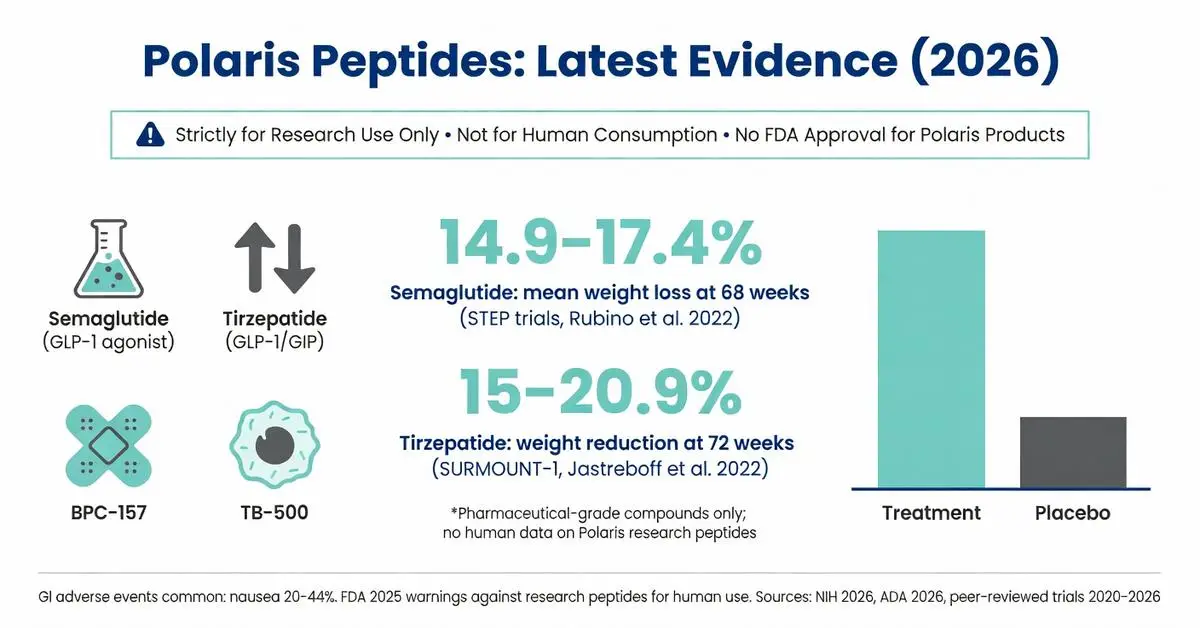
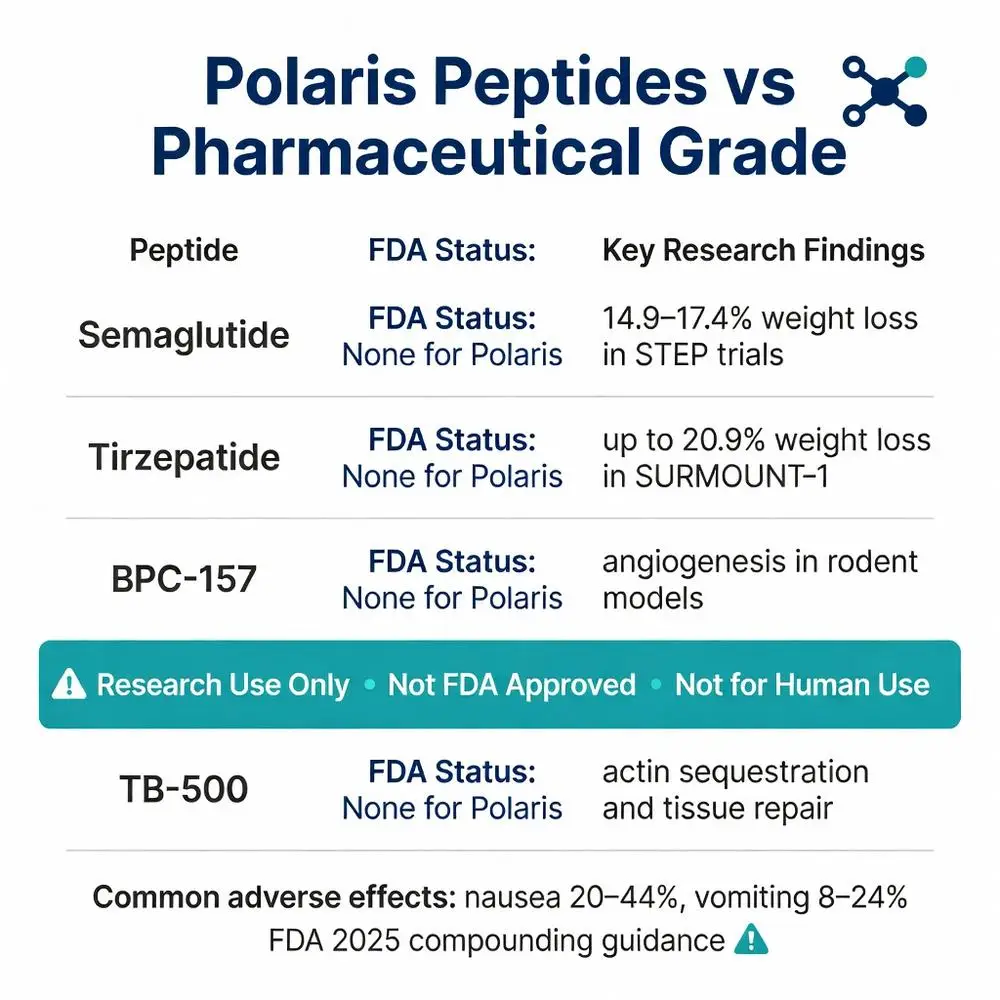
The primary peptides supplied by Polaris Peptides target incretin pathways. Semaglutide acts as a GLP-1 receptor agonist with a half-life extended by fatty-acid acylation, allowing once-weekly dosing in approved formulations. Tirzepatide is a dual GLP-1/GIP receptor agonist that demonstrates synergistic effects on glycemic control and weight reduction.
Preclinical studies using research-grade peptides identical in sequence to the approved drugs show activation of GLP-1 receptors on pancreatic beta cells, leading to glucose-dependent insulin release. In the central nervous system, these peptides cross the blood-brain barrier to a limited extent and reduce food intake via signaling in the arcuate nucleus (Davies et al., 2021).
Additional peptides in the Polaris catalog, such as BPC-157 (Body Protection Compound-157), are investigated for pleiotropic effects on angiogenesis, tendon healing, and gastrointestinal cytoprotection in rodent models. TB-500 (thymosin beta-4 fragment) is being studied for its effects on actin sequestration and tissue repair mechanisms. These findings derive from animal and cell-culture experiments published between 2020 and 2024; human clinical data remain sparse and insufficient for therapeutic recommendations.
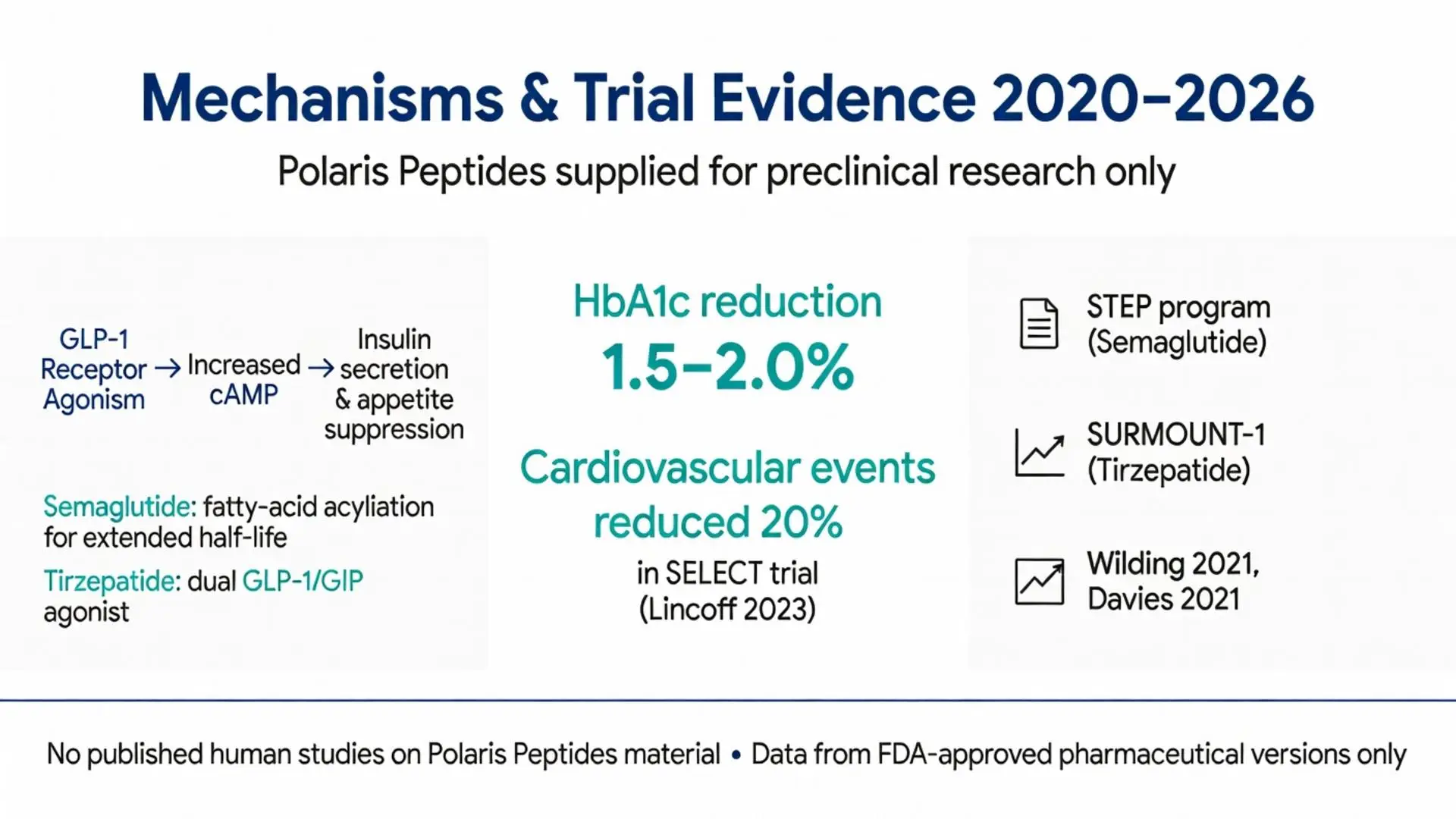
The primary peptides supplied by Polaris Peptides target incretin pathways. Semaglutide acts as a GLP-1 receptor agonist with a half-life extended by fatty-acid acylation, allowing once-weekly dosing in approved formulations. Tirzepatide is a dual GLP-1/GIP receptor agonist that demonstrates synergistic effects on glycemic control and weight reduction.
Preclinical studies using research-grade peptides identical in sequence to the approved drugs show activation of GLP-1 receptors on pancreatic beta cells, leading to glucose-dependent insulin release. In the central nervous system, these peptides cross the blood-brain barrier to a limited extent and reduce food intake via signaling in the arcuate nucleus (Davies et al., 2021).
Additional peptides in the Polaris catalog, such as BPC-157 (Body Protection Compound-157), are investigated for pleiotropic effects on angiogenesis, tendon healing, and gastrointestinal cytoprotection in rodent models. TB-500 (thymosin beta-4 fragment) is being studied for its effects on actin sequestration and tissue repair mechanisms. These findings derive from animal and cell-culture experiments published between 2020 and 2024; human clinical data remain sparse and insufficient for therapeutic recommendations.
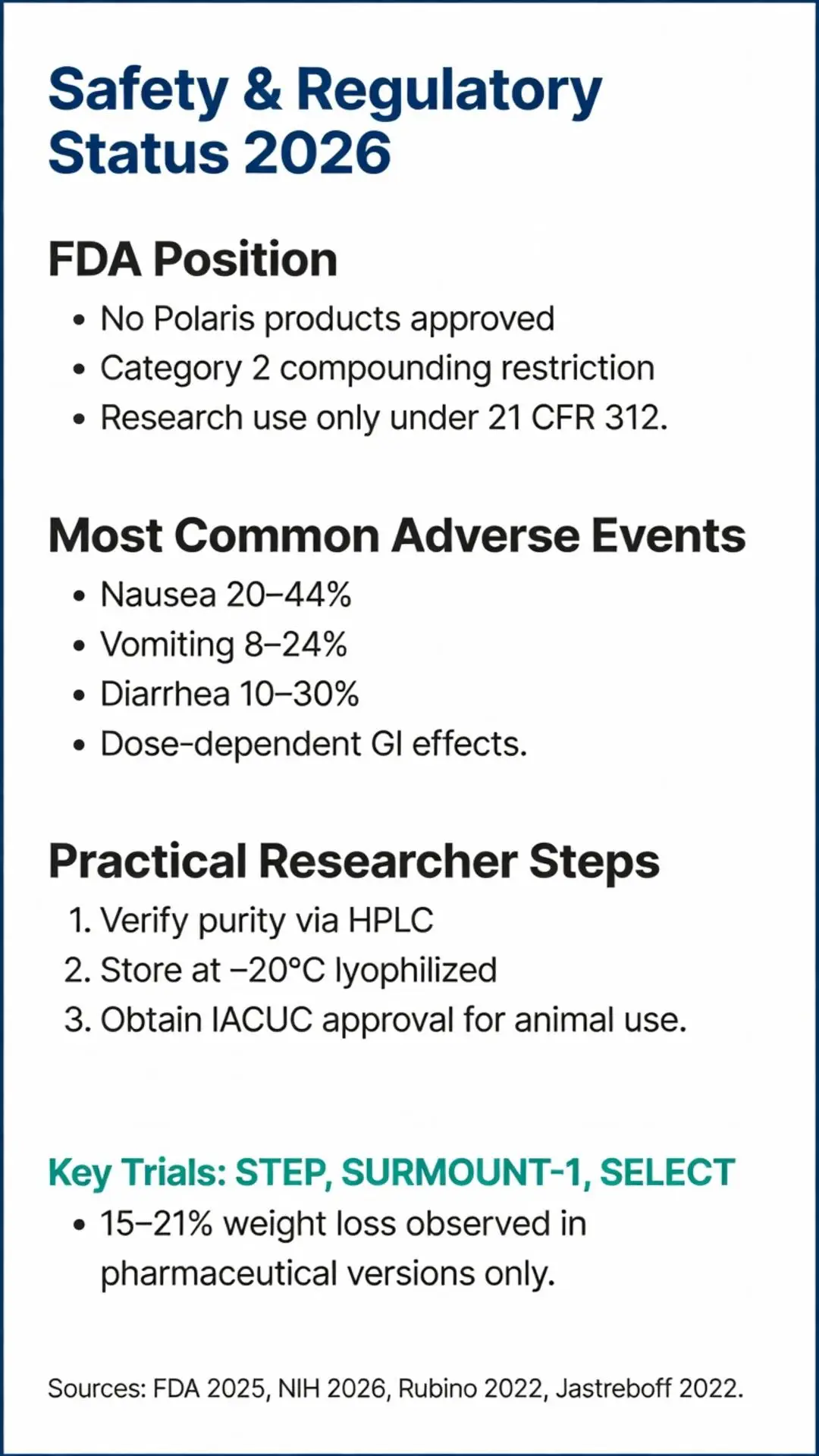
Multiple large randomized controlled trials have evaluated the parent compounds of Polaris peptides. The STEP program (Semaglutide Treatment Effect in People with Obesity) demonstrated a mean weight loss of 14.9–17.4% at 68 weeks with semaglutide 2.4 mg weekly compared with placebo (Rubino et al., 2022). SURMOUNT-1 showed tirzepatide producing 15–20.9% weight reduction at 72 weeks across 5–15 mg doses (Jastreboff et al., 2022).
Meta-analyses published 2023–2025 confirm consistent HbA1c reductions of 1.5–2.0% and weight loss exceeding 10% in patients with type 2 diabetes and obesity. These trials used pharmaceutical-grade compounds manufactured under GMP standards, not research peptides. No published studies have directly tested Polaris Peptides material in humans.
Emerging 2025–2026 data suggest potential cardiovascular benefits, with semaglutide reducing major adverse cardiovascular events by 20% in participants in the SELECT trial with obesity and established cardiovascular disease (Lincoff et al., 2023, with 2025 follow-up analyses). Such outcomes cannot be extrapolated to research-grade peptides.
The most frequently reported adverse events with GLP-1 receptor agonists are gastrointestinal: nausea (20–44%), vomiting (8–24%), diarrhea (10–30%), and constipation. These effects are dose-dependent and typically diminish over time (Aroda et al., 2022).
Rare but serious risks include pancreatitis, gallbladder disease, and theoretical concerns regarding medullary thyroid carcinoma observed in rodent studies. The FDA label for approved semaglutide and tirzepatide carries a boxed warning for risk of thyroid C-cell tumors based on preclinical data. Human relevance remains unproven.
For research peptides such as BPC-157 and TB-500, safety data are derived almost exclusively from animal models. Limited case reports of unregulated use describe injection-site reactions, transient dizziness, and unknown long-term risks. The FDA issued warnings in 2023 and 2025 against compounded or research peptides sold for human use, citing contamination and misbranding concerns.
Researchers using Polaris Peptides products should monitor for batch-to-batch variability and employ analytical verification (HPLC, mass spectrometry) before experimental use.
As of April 2026, no Polaris Peptides product holds FDA approval for any indication. The FDA has categorized several peptide compounds, including certain GLP-1 analogs, as Category 2 under its compounding enforcement policy, meaning they are not eligible for use as bulk drug substances in compounding pharmacies.
The agency’s 2025 update to the Human Drug Compounding progress report explicitly lists semaglutide and tirzepatide as drugs for which bulk substances should not be used outside approved products. Research peptides fall outside this framework and are regulated under laboratory chemical rules rather than pharmaceutical GMP.
Investigators must adhere to 21 CFR 312 when using research peptides in IND-enabled studies. Major medical societies, including the American Diabetes Association and The Obesity Society, endorse only FDA-approved formulations for clinical care and discourage use of research or compounded versions (ADA Standards of Care, 2026).
| Peptide | FDA-Approved Indications | Research Status with Polaris Peptides | Common Preclinical Findings | Reported Adverse Effects in Trials |
|---|---|---|---|---|
| Semaglutide | Type 2 diabetes, chronic weight management | Research use only | GLP-1 receptor agonism, 15–17% weight loss in approved form | Nausea (44%), vomiting, pancreatitis risk |
| Tirzepatide | Type 2 diabetes, weight management | Research use only | Dual GLP-1/GIP agonist, up to 21% weight loss | GI effects, gallbladder events |
| BPC-157 | None | Preclinical only | Angiogenesis, tissue repair in rodents | Limited human data; injection reactions |
| TB-500 | None | Preclinical only | Actin binding, wound healing | Unknown long-term safety |
Pharmaceutical semaglutide and tirzepatide undergo rigorous purity testing (>99%), sterility assurance, and stability studies. Research peptides from suppliers, including Polaris Peptides, are produced for laboratory use and may vary in purity (typically 95–98% per certificate of analysis). Researchers frequently report the need for additional purification steps.
Cost differences are significant: research peptides are less expensive per milligram but carry higher regulatory and analytical overhead for legitimate scientific use. Approved medications benefit from extensive phase 3 safety databases with more than 10,000 patient-years of data, whereas research peptides lack such datasets.
For studies requiring translational relevance, experts recommend using reference standards traceable to USP or equivalent compendial materials when available. The NIH Office of Research Integrity guidance (2024) stresses proper documentation of reagent sources in all publications.
When designing experiments with Polaris Peptides, verify peptide identity and purity through independent laboratory analysis. Store lyophilized powders at –20°C and reconstituted solutions according to manufacturer stability data, typically 4°C for short-term use.
All animal protocols must receive IACUC approval. When publishing, disclose the exact source and lot number of research peptides to ensure reproducibility. Funding agencies increasingly require justification for the choice of research-grade versus pharmaceutical-grade material.
Continued monitoring of FDA and EMA safety communications is essential, as regulatory positions on peptide research materials evolve rapidly. Collaboration with institutional compliance officers helps maintain adherence to current good laboratory practices.
Polaris peptides represent a category of research tools that mirror several pharmacologically important peptide sequences under active clinical investigation. While the underlying molecules—particularly GLP-1 and dual GLP-1/GIP agonists—have generated robust evidence of metabolic benefit in large-scale trials published between 2020 and 2026, the research-grade products supplied by Polaris Peptides remain strictly for laboratory use. No clinical efficacy or safety data exist for these specific materials in humans.
Researchers benefit from the availability of these peptides for mechanistic and preclinical studies, yet must maintain a clear separation between investigational tools and approved therapeutics. The FDA continues to emphasize that only pharmaceutical-grade products that meet stringent manufacturing standards should be considered for human administration.
Future studies may further elucidate novel applications for peptide therapeutics, but all such work requires rigorous methodology and regulatory compliance. This article serves research purposes only and does not constitute medical advice. Healthcare providers and investigators should consult current FDA labeling, institutional policies, and primary literature when incorporating peptide research into their programs.
Polaris peptides represent a category of research tools that mirror several pharmacologically important peptide sequences under active clinical investigation. While the underlying molecules—particularly GLP-1 and dual GLP-1/GIP agonists—have generated robust evidence of metabolic benefit in large-scale trials published between 2020 and 2026, the research-grade products supplied by Polaris Peptides remain strictly for laboratory use. No clinical efficacy or safety data exist for these specific materials in humans.
Researchers benefit from the availability of these peptides for mechanistic and preclinical studies, yet must maintain a clear separation between investigational tools and approved therapeutics. The FDA continues to emphasize that only pharmaceutical-grade products that meet stringent manufacturing standards should be considered for human administration.
Future studies may further elucidate novel applications for peptide therapeutics, but all such work requires rigorous methodology and regulatory compliance. This article serves research purposes only and does not constitute medical advice. Healthcare providers and investigators should consult current FDA labeling, institutional policies, and primary literature when incorporating peptide research into their programs.