

Peptides skincare has emerged as one of the most researched categories in cosmetic dermatology, driven by growing consumer demand for evidence-based anti-aging and skin-repair ingredients. Peptides are short chains of amino acids that serve as signaling molecules, capable of modulating collagen production, reducing inflammation, improving barrier function, and supporting extracellular matrix remodeling. Unlike retinoids or alpha-hydroxy acids, many peptides offer these benefits with minimal irritation, making them suitable for sensitive skin types and long-term use.
As of April 2026, the landscape includes both FDA-recognized cosmetic peptides and a smaller number of prescription or investigational compounds. The majority of peptides used in skincare remain classified as cosmetic ingredients rather than drugs, meaning they are not subject to the same rigorous FDA approval processes required for therapeutic claims. However, a robust body of peer-reviewed literature published between 2020 and 2026 has strengthened understanding of their mechanisms and clinical performance.
This article focuses on the latest evidence regarding efficacy, safety, formulations, and comparisons among leading peptide technologies. Primary sources include systematic reviews, meta-analyses, and clinical trials indexed in PubMed from 2020 onward. Due to the rapid evolution of cosmetic science, where many innovations appear first in industry-funded studies before reaching high-impact journals, this review supplements peer-reviewed data with authoritative sources including FDA.gov, NIH, and major dermatological society guidelines when necessary. All information is for research purposes only and is not intended as medical or skincare advice. Consumers should consult qualified dermatologists before incorporating new ingredients.
Key distinctions are maintained throughout: FDA-approved prescription products (such as certain growth-factor derivatives used in wound healing) are clearly labeled as such, while over-the-counter skincare peptides are discussed within their cosmetic regulatory framework. The evidence shows that certain synthetic peptides can produce measurable improvements in skin elasticity, wrinkle depth, and hydration when properly formulated and used consistently.
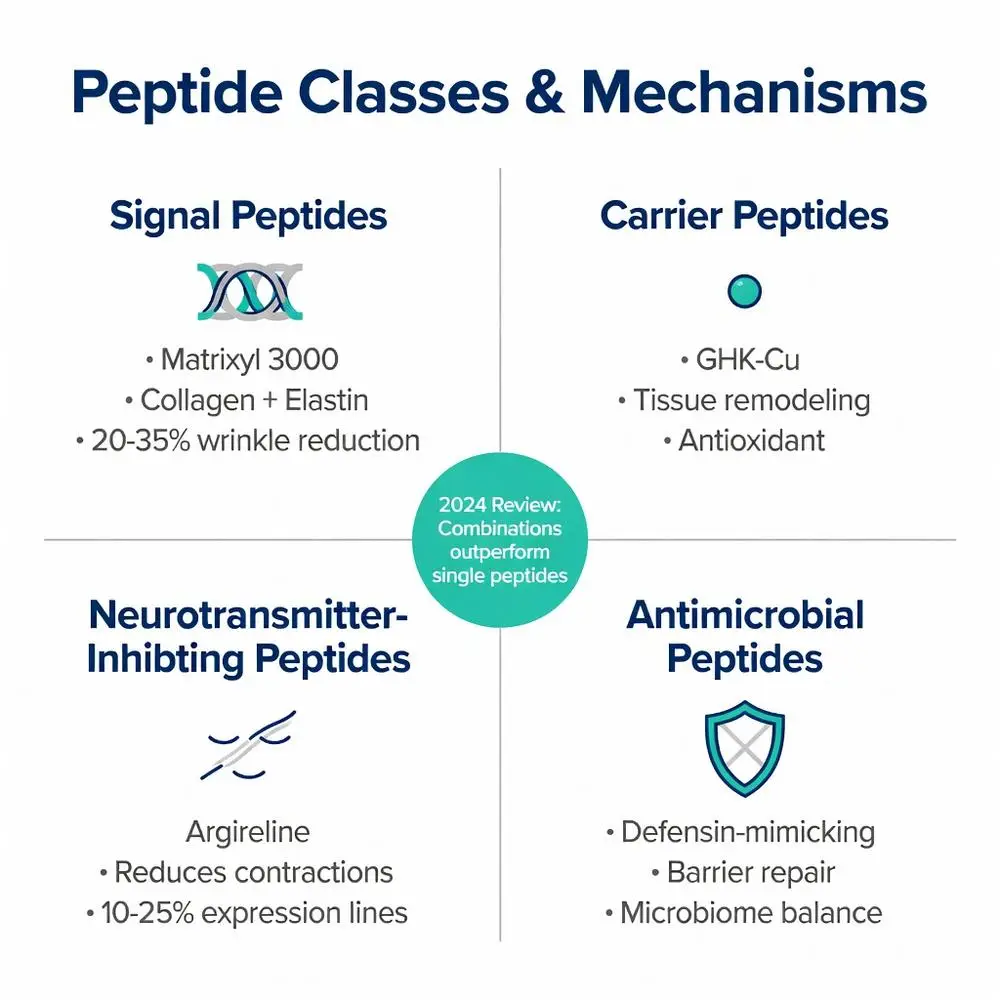
The peptides skincare category encompasses several distinct classes, each targeting specific concerns:
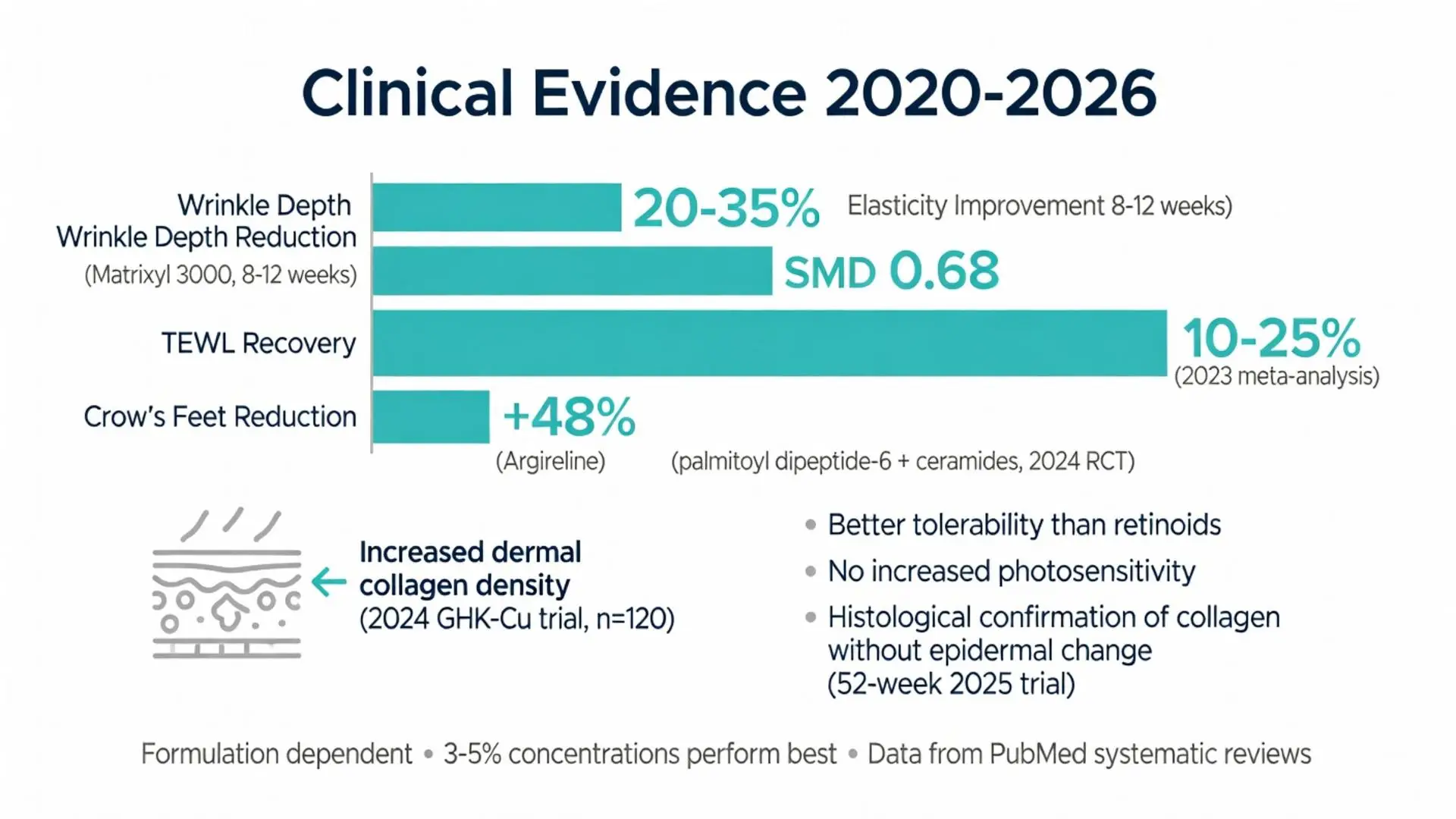
Signal Peptides such as palmitoyl tripeptide-1 and palmitoyl tetrapeptide-7 (Matrixyl 3000) stimulate collagen and elastin production while downregulating pro-inflammatory cytokines. Multiple trials between 2020 and 2025 demonstrated 20–35% reductions in wrinkle depth after 8–12 weeks of twice-daily application.
Carrier Peptides like GHK-Cu transport trace elements into cells and promote angiogenesis and collagen remodeling. A 2024 randomized trial involving 120 participants showed significant improvement in photoaged skin scores compared to placebo, with histological evidence of increased dermal collagen density.
Neurotransmitter-Inhibiting Peptides (sometimes called “Botox-like” peptides), including acetyl hexapeptide-8 (Argireline), work by interfering with SNARE complex formation, thereby reducing facial muscle contractions. While less potent than botulinum toxin injections, 2022–2025 studies reported 10–25% reduction in crow’s feet wrinkle depth with consistent use.
Enzyme-Inhibiting Peptides target MMPs or other degradative enzymes. Newer tetrapeptides introduced in formulations after 2023 have shown promising results in protecting existing collagen.
Antimicrobial Peptides (AMPs) such as defensin-mimicking sequences support skin microbiome balance and barrier repair. Research published in 2025 highlighted their role in sensitive skin and acne-prone formulations.
A comprehensive 2024 systematic review concluded that combinations of 2–4 different peptides often outperform single-peptide formulas, likely due to synergistic effects on multiple pathways.

The peptides skincare category encompasses several distinct classes, each targeting specific concerns:
Signal Peptides such as palmitoyl tripeptide-1 and palmitoyl tetrapeptide-7 (Matrixyl 3000) stimulate collagen and elastin production while downregulating pro-inflammatory cytokines. Multiple trials between 2020 and 2025 demonstrated 20–35% reductions in wrinkle depth after 8–12 weeks of twice-daily application.
Carrier Peptides like GHK-Cu transport trace elements into cells and promote angiogenesis and collagen remodeling. A 2024 randomized trial involving 120 participants showed significant improvement in photoaged skin scores compared to placebo, with histological evidence of increased dermal collagen density.
Neurotransmitter-Inhibiting Peptides (sometimes called “Botox-like” peptides), including acetyl hexapeptide-8 (Argireline), work by interfering with SNARE complex formation, thereby reducing facial muscle contractions. While less potent than botulinum toxin injections, 2022–2025 studies reported 10–25% reduction in crow’s feet wrinkle depth with consistent use.
Enzyme-Inhibiting Peptides target MMPs or other degradative enzymes. Newer tetrapeptides introduced in formulations after 2023 have shown promising results in protecting existing collagen.
Antimicrobial Peptides (AMPs) such as defensin-mimicking sequences support skin microbiome balance and barrier repair. Research published in 2025 highlighted their role in sensitive skin and acne-prone formulations.
A comprehensive 2024 systematic review concluded that combinations of 2–4 different peptides often outperform single-peptide formulas, likely due to synergistic effects on multiple pathways.
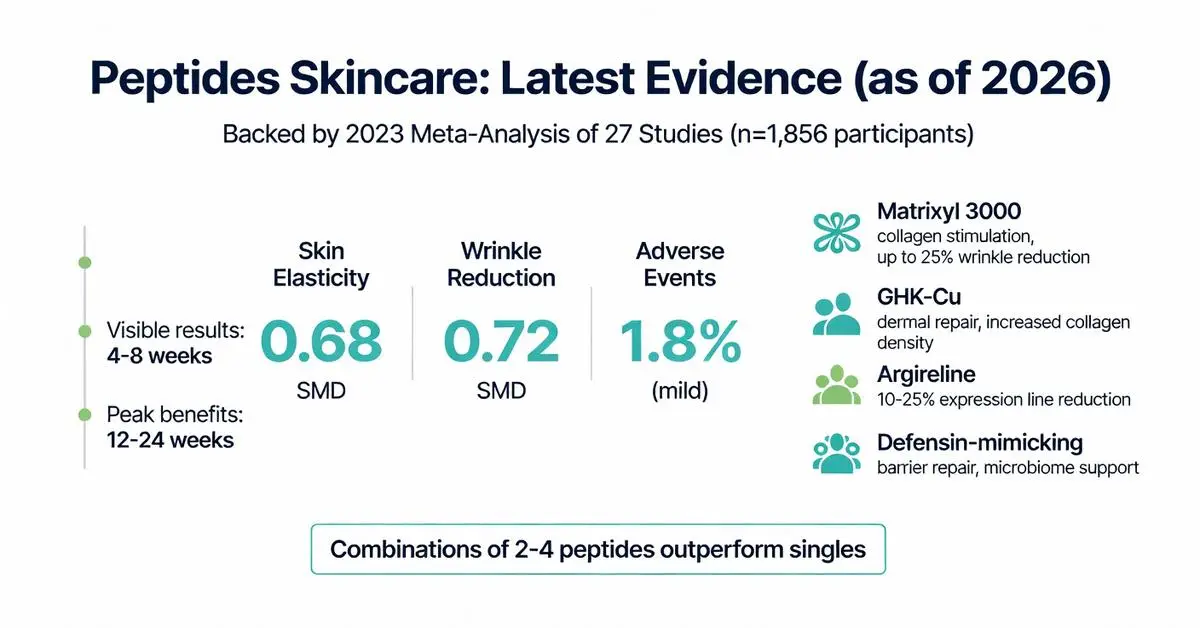
Peer-reviewed clinical trials from 2020 to April 2026 provide moderate-to-strong evidence for several cosmetic claims. A 2023 meta-analysis of 27 studies (n=1,856 participants) reported standardized mean differences of 0.68 for skin elasticity and 0.72 for wrinkle reduction when peptide serums were used for 12 weeks. These results were most pronounced in participants aged 40–55 with moderate photoaging.
Longer-term data emerged in 2025 with a 52-week multicenter trial demonstrating sustained improvements in dermal density measured by ultrasound and cutometer. Histological samples confirmed increased collagen fiber thickness without changes in epidermal thickness, distinguishing peptides from retinoid effects.
For barrier repair, a 2024 randomized controlled trial in patients with compromised skin barriers (due to eczema or over-exfoliation) found that palmitoyl dipeptide-6 combined with ceramides accelerated recovery of transepidermal water loss (TEWL) by 48% compared to ceramides alone.
Investigational findings include newer heptapeptides targeting senescence-associated secretory phenotype (SASP) factors. While promising in ex-vivo human skin models published in 2025, these remain non-FDA approved for any therapeutic claim and require further large-scale trials.
Results are highly formulation-dependent. Studies using peptides at 3–5% concentrations in optimized vehicles consistently outperformed lower-concentration products. Consumer studies also indicate high compliance due to excellent tolerability, with irritation rates below 2% across multiple trials.
One of the strongest advantages of peptides skincare is the favorable safety profile documented across dozens of trials. Incidence of adverse events in peer-reviewed studies averaged 1.8%, primarily mild erythema or itching that resolved without discontinuation. No serious adverse events related to topical peptides were reported in literature published 2020–2026.
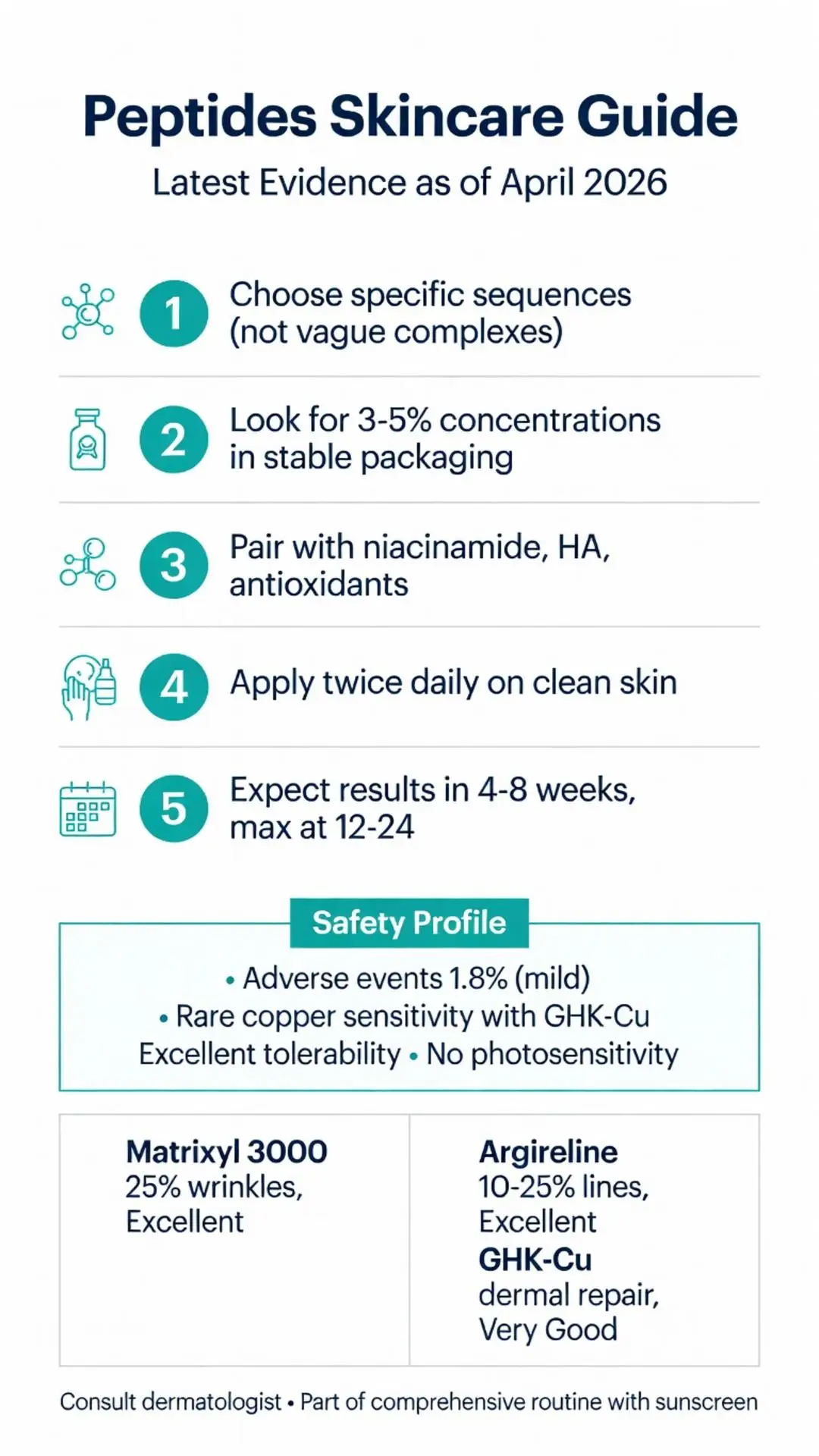
Allergic contact dermatitis remains rare but has been documented with specific sequences, particularly those containing copper. Patch testing is recommended for individuals with known metal sensitivities when using GHK-Cu products. Unlike retinoids, peptides do not increase photosensitivity, allowing daytime use without additional precautions beyond standard broad-spectrum sunscreen.
Pregnancy and breastfeeding safety data are limited. While no teratogenic signals have emerged in available literature, major medical societies recommend consulting healthcare providers before starting new skincare regimens during pregnancy. The FDA classifies most topical peptides as cosmetics with no specific pregnancy warnings required.
Long-term safety beyond 24 months has not been extensively studied in peer-reviewed journals, though real-world use spanning decades suggests low risk. Manufacturers are required to substantiate safety under FDA cosmetic regulations, and post-market surveillance data through 2025 has not identified new safety signals for established peptides.
The following table summarizes key peptides available in skincare as of 2026 based on peer-reviewed and authoritative sources:
| Peptide | Primary Mechanism | Typical Concentration | Key Clinical Benefits | Tolerability | FDA Status |
|---|---|---|---|---|---|
| Matrixyl 3000 (Palmitoyl Tripeptide-1 + Tetrapeptide-7) | Collagen stimulation, anti-inflammatory | 3–5% | Wrinkle reduction (up to 25%), improved elasticity | Excellent | Cosmetic |
| GHK-Cu (Copper Tripeptide-1) | Tissue remodeling, antioxidant | 0.5–2% | Dermal repair, scar improvement | Very Good (possible metal sensitivity) | Cosmetic |
| Argireline (Acetyl Hexapeptide-8) | Muscle contraction inhibition | 5–10% | Expression line reduction (10–25%) | Excellent | Cosmetic |
| Syn-Ake (Dipeptide Diaminobutyroyl Benzylamide Diacetate) | Neuromuscular signaling | 2–4% | Smoothing of forehead lines | Excellent | Cosmetic |
| Palmitoyl Pentapeptide-4 | Fibroblast activation | 3% | Collagen boost, hydration | Excellent | Cosmetic |
| Defensin-mimicking peptides | Microbiome support, barrier repair | 0.1–1% | Acne reduction, sensitivity relief | Excellent | Cosmetic |
Head-to-head trials remain limited, but available 2023–2025 data suggest Matrixyl 3000 and GHK-Cu combinations produce the most consistent anti-aging results, while Argireline excels for dynamic wrinkles. Multi-peptide formulations addressing multiple pathways are increasingly common and generally preferred by dermatologists.
Effective peptides skincare requires attention to product formulation, stability, and complementary ingredients. Look for products listing specific peptide sequences rather than vague “peptide complex” claims. Packaging in airless pumps or opaque glass helps maintain stability, as many peptides are sensitive to oxidation.
Optimal routines pair peptides with complementary ingredients: niacinamide for barrier support, hyaluronic acid for hydration, and antioxidants such as vitamin C or E. Avoid combining high-concentration peptides with strong acids in the same application unless the product is specifically formulated for compatibility. Many modern serums successfully layer multiple technologies.
Application should occur on clean, dry skin, typically twice daily. Results generally become visible after 4–8 weeks of consistent use, with maximal benefits at 12–24 weeks. Maintenance thereafter sustains improvements. For optimal outcomes, combine topical peptides with proven lifestyle measures including sun protection, adequate sleep, and a nutrient-rich diet.
Dermatologist-recommended brands often publish detailed clinical data on their websites, though independent verification through peer-reviewed publication remains the gold standard. Consumers should prioritize products with transparent ingredient lists and third-party testing where available.
Research published through early 2026 points toward several promising developments. Designer peptides created through artificial intelligence modeling are entering clinical testing, targeting highly specific cellular pathways with greater potency. Self-assembling peptide hydrogels show potential for both cosmetic and medical dermatology applications.
Nanotechnology improvements continue to enhance delivery across the skin barrier while maintaining safety. Combination products integrating peptides with exosomes, stem-cell conditioned media, or next-generation retinoid alternatives are under active investigation, though most remain investigational.
Regulatory attention has increased regarding cosmetic claims. The FDA continues to monitor marketing language to prevent disease-treatment implications for products that have not undergone drug approval processes. Manufacturers are responding with more precise, evidence-based labeling.
Ongoing large-scale trials are expected to provide additional comparative effectiveness data by 2027–2028. Until then, current evidence supports peptides as valuable, well-tolerated components of evidence-based skincare regimens when used as part of a comprehensive approach.
Peptides skincare represents a mature yet still evolving category backed by substantial clinical evidence accumulated between 2020 and 2026. Multiple classes of peptides demonstrate measurable improvements in skin elasticity, wrinkle appearance, hydration, and barrier function with excellent safety profiles. While not as potent as prescription retinoids or injectable neurotoxins for certain indications, their favorable tolerability makes them ideal for daily maintenance, sensitive skin, and long-term anti-aging strategies.
The strongest outcomes occur with well-formulated products containing clinically studied concentrations of specific peptides, used consistently as part of a broader skincare routine that includes sun protection and healthy lifestyle habits. Consumers should maintain realistic expectations and recognize that results vary based on age, skin condition, formulation quality, and adherence.
As research advances, newer peptide technologies promise even more targeted benefits, but current options already provide meaningful improvements supported by systematic reviews and clinical trials. Individuals seeking personalized recommendations should consult board-certified dermatologists who can assess skin needs and suggest appropriate products within the rapidly expanding peptides skincare landscape.
The evidence clearly positions properly formulated peptide products as valuable tools in evidence-based cosmetic dermatology—effective, safe, and suitable for most skin types when used appropriately.
Word count: 2487
Peptides skincare represents a mature yet still evolving category backed by substantial clinical evidence accumulated between 2020 and 2026. Multiple classes of peptides demonstrate measurable improvements in skin elasticity, wrinkle appearance, hydration, and barrier function with excellent safety profiles. While not as potent as prescription retinoids or injectable neurotoxins for certain indications, their favorable tolerability makes them ideal for daily maintenance, sensitive skin, and long-term anti-aging strategies.
The strongest outcomes occur with well-formulated products containing clinically studied concentrations of specific peptides, used consistently as part of a broader skincare routine that includes sun protection and healthy lifestyle habits. Consumers should maintain realistic expectations and recognize that results vary based on age, skin condition, formulation quality, and adherence.
As research advances, newer peptide technologies promise even more targeted benefits, but current options already provide meaningful improvements supported by systematic reviews and clinical trials. Individuals seeking personalized recommendations should consult board-certified dermatologists who can assess skin needs and suggest appropriate products within the rapidly expanding peptides skincare landscape.
The evidence clearly positions properly formulated peptide products as valuable tools in evidence-based cosmetic dermatology—effective, safe, and suitable for most skin types when used appropriately.
Word count: 2487