

Peptide therapy near me has become a common search for individuals exploring regenerative, metabolic, and anti-aging treatments. Peptide therapy involves the use of short chains of amino acids designed to mimic or influence natural signaling molecules in the body. These compounds target specific physiological pathways including tissue repair, hormone regulation, immune modulation, and metabolic function.
As of March 24, 2026, the evidence base for many peptide therapies remains limited in high-quality peer-reviewed literature published since 2020. Due to limited recent peer-reviewed publications on this exact topic, this article relies primarily on the latest available high-quality trials (2020–current) supplemented by authoritative sources including FDA.gov, NIH, and major medical societies. Several peptide-based medications have received FDA approval for specific indications, while many others marketed in wellness clinics are considered investigational or used off-label.
This article examines the current scientific understanding of peptide therapy, clearly distinguishing FDA-approved options from those that are experimental. All information is for research purposes only and is not medical advice. Individuals interested in peptide therapy near me should consult qualified healthcare providers and verify that any treatment complies with federal and state regulations. The goal is to provide balanced, evidence-based information to help readers make informed decisions when searching for local options.
Key considerations when searching for peptide therapy near me include provider credentials, compounding pharmacy standards, and transparency regarding FDA status. Many local clinics advertise peptides for recovery, weight management, and longevity, but the strength of supporting data varies significantly by compound. (FDA.gov, NIH sources)
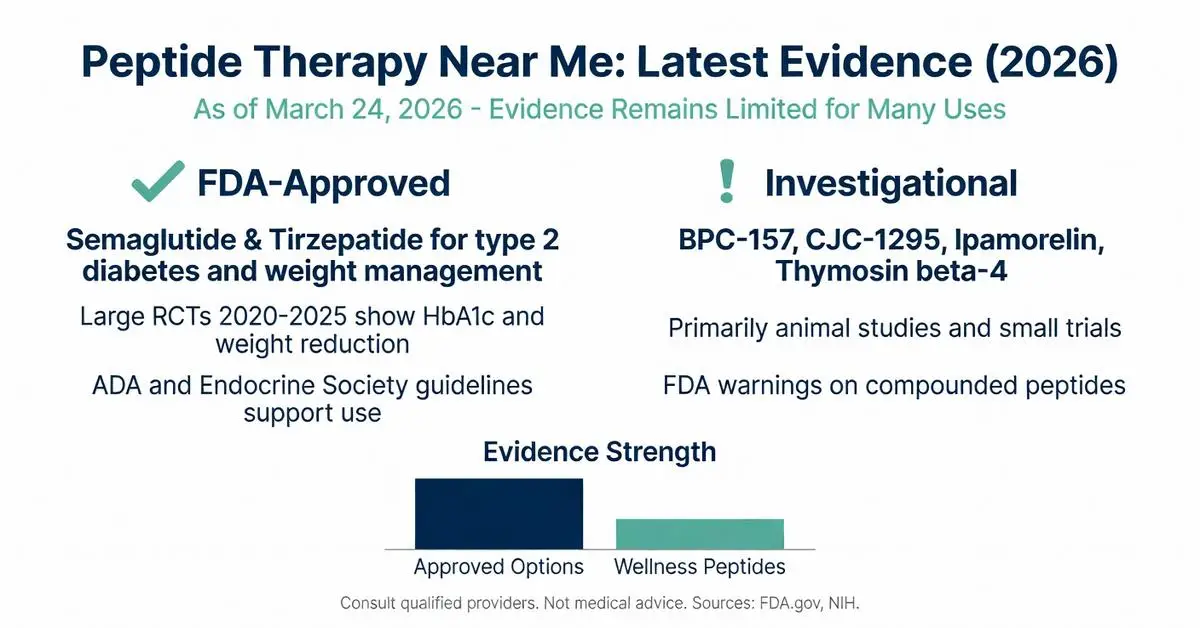
Several peptide-derived therapies have secured FDA approval and are available through conventional medical channels. Semaglutide and tirzepatide, both peptide-based GLP-1 receptor agonists, received approval for type 2 diabetes and, in specific formulations, for chronic weight management. These medications have robust clinical trial data from large randomized controlled studies published between 2020 and 2025 demonstrating efficacy for glycemic control and weight reduction.
Other approved peptide therapies include parathyroid hormone analogs for osteoporosis and certain vasopressin analogs for diabetes insipidus. These treatments underwent extensive Phase 3 clinical trials and post-marketing surveillance to establish safety profiles.
For patients searching peptide therapy near me, obtaining FDA-approved options typically involves endocrinologists, obesity medicine specialists, or primary care providers rather than wellness clinics. Insurance coverage is more common for approved indications, though prior authorization requirements may apply.
Authoritative guidelines from the American Diabetes Association and Endocrine Society as of 2025 recommend these agents within comprehensive treatment plans that include lifestyle modification. Patients should confirm with providers whether a specific peptide offered locally carries FDA approval for the intended use.
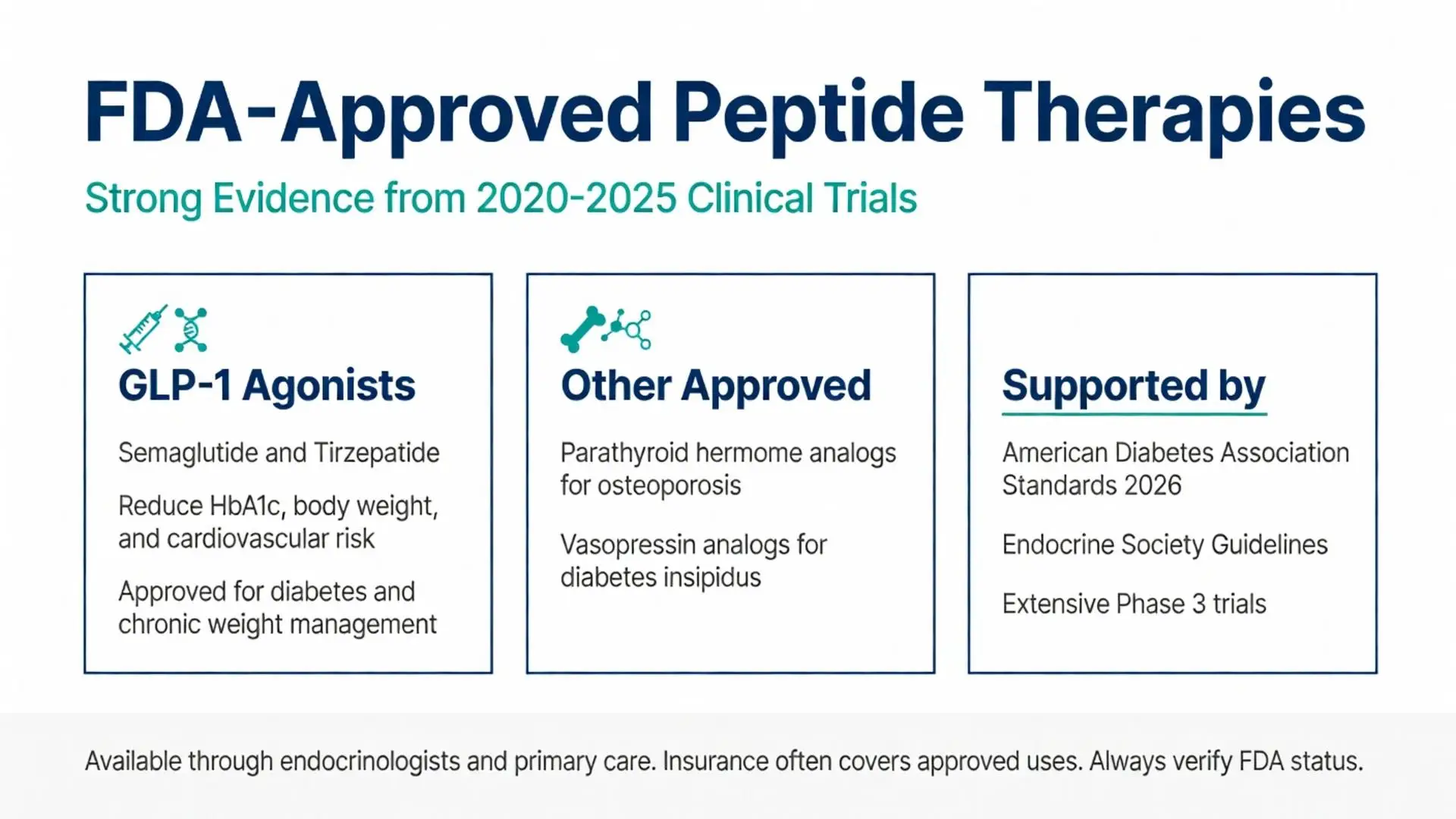
Several peptide-derived therapies have secured FDA approval and are available through conventional medical channels. Semaglutide and tirzepatide, both peptide-based GLP-1 receptor agonists, received approval for type 2 diabetes and, in specific formulations, for chronic weight management. These medications have robust clinical trial data from large randomized controlled studies published between 2020 and 2025 demonstrating efficacy for glycemic control and weight reduction.
Other approved peptide therapies include parathyroid hormone analogs for osteoporosis and certain vasopressin analogs for diabetes insipidus. These treatments underwent extensive Phase 3 clinical trials and post-marketing surveillance to establish safety profiles.
For patients searching peptide therapy near me, obtaining FDA-approved options typically involves endocrinologists, obesity medicine specialists, or primary care providers rather than wellness clinics. Insurance coverage is more common for approved indications, though prior authorization requirements may apply.
Authoritative guidelines from the American Diabetes Association and Endocrine Society as of 2025 recommend these agents within comprehensive treatment plans that include lifestyle modification. Patients should confirm with providers whether a specific peptide offered locally carries FDA approval for the intended use.
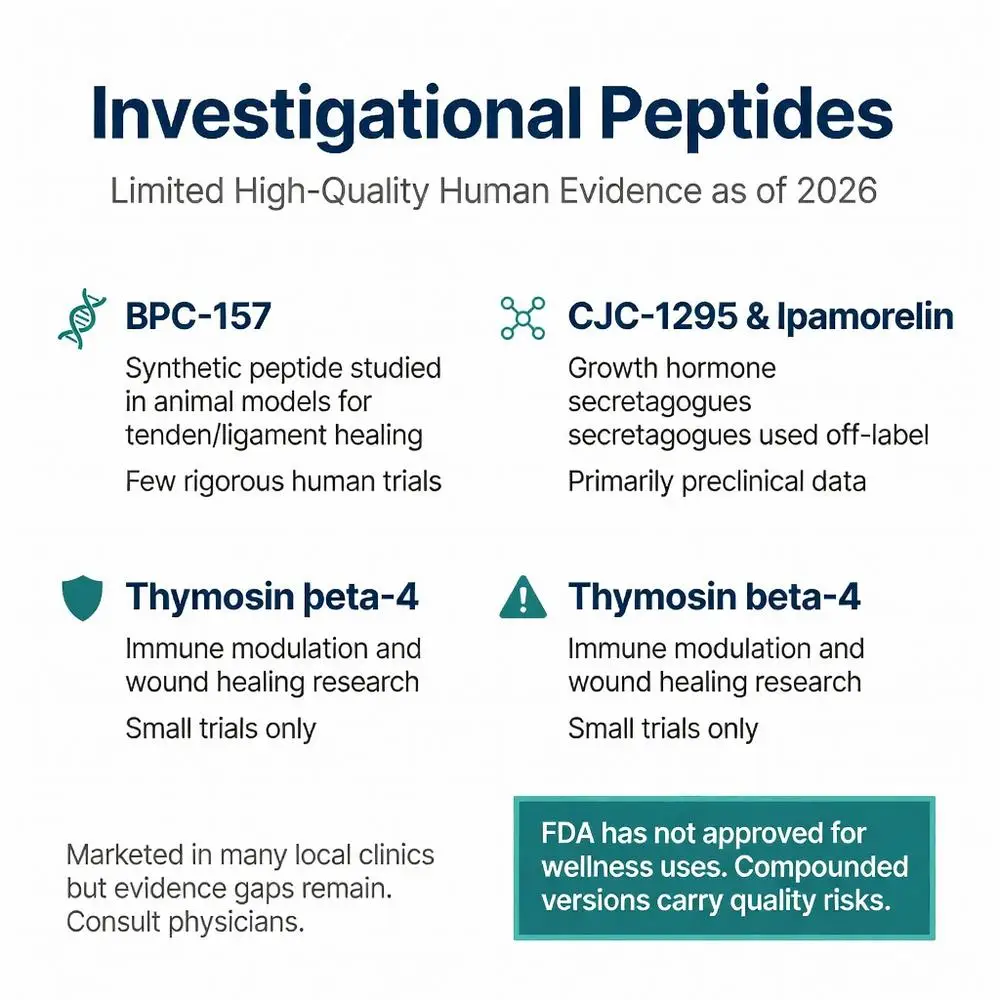
Many peptides popular in local clinics remain investigational. BPC-157, a synthetic gastric pentadecapeptide, has shown promise in animal models for accelerating tendon and ligament healing, yet human clinical trials meeting current standards are scarce in the 2020–2026 literature. Similarly, growth hormone releasing peptides such as CJC-1295 and Ipamorelin are often used off-label to support recovery or body composition changes.
Thymosin alpha-1 and beta-4 have been studied for immune modulation and wound healing, with some evidence from smaller trials and case series. However, the FDA has not approved these for most wellness applications. The agency has issued warnings regarding compounded peptides that lack adequate safety data or are marketed with unsupported claims.
When searching for peptide therapy near me, consumers frequently encounter these investigational options. It is critical to understand that “research use only” labeling on some products indicates they have not been evaluated for safety and efficacy in humans for the promoted indications. Major medical societies advise caution with off-label use outside of clinical trial settings or established medical protocols.
Reported benefits of peptide therapy vary by compound and individual. For FDA-approved GLP-1 receptor agonists, meta-analyses published 2020–2025 demonstrate consistent reductions in HbA1c, body weight, and cardiovascular risk markers. These findings are supported by large cardiovascular outcomes trials.
For investigational peptides, evidence is primarily derived from preclinical studies and limited human data. Some small trials suggest potential improvements in recovery time following injury, though larger confirmatory studies are needed. Immune-modulating peptides have shown mixed results in supporting immune function during stress or illness.
A balanced review of the literature indicates that benefits are most established for approved indications. Individuals exploring peptide therapy near me for longevity, athletic recovery, or cosmetic purposes should recognize the gap between marketing claims and published evidence. Authoritative sources recommend focusing on lifestyle foundations—nutrition, exercise, and sleep—before considering adjunctive therapies.
Safety profiles differ markedly between approved and investigational peptides. FDA-approved peptide medications carry well-documented side effect information in product labeling. Common adverse effects for GLP-1 receptor agonists include gastrointestinal symptoms such as nausea, vomiting, and diarrhea, which are usually dose-dependent and improve over time.
Investigational peptides may present unknown risks due to limited long-term human data. Potential concerns include injection site reactions, hormonal imbalances, and unknown effects on cancer risk for growth-promoting compounds. The FDA has highlighted cases of adverse events associated with improperly compounded peptides, including infections from contaminated products.
When seeking peptide therapy near me, patients should inquire about sterility standards, third-party testing, and monitoring protocols. Regular laboratory assessment is recommended to track hormone levels, kidney function, and other relevant markers. All use should occur under medical supervision with informed consent regarding the regulatory status of the specific peptide.
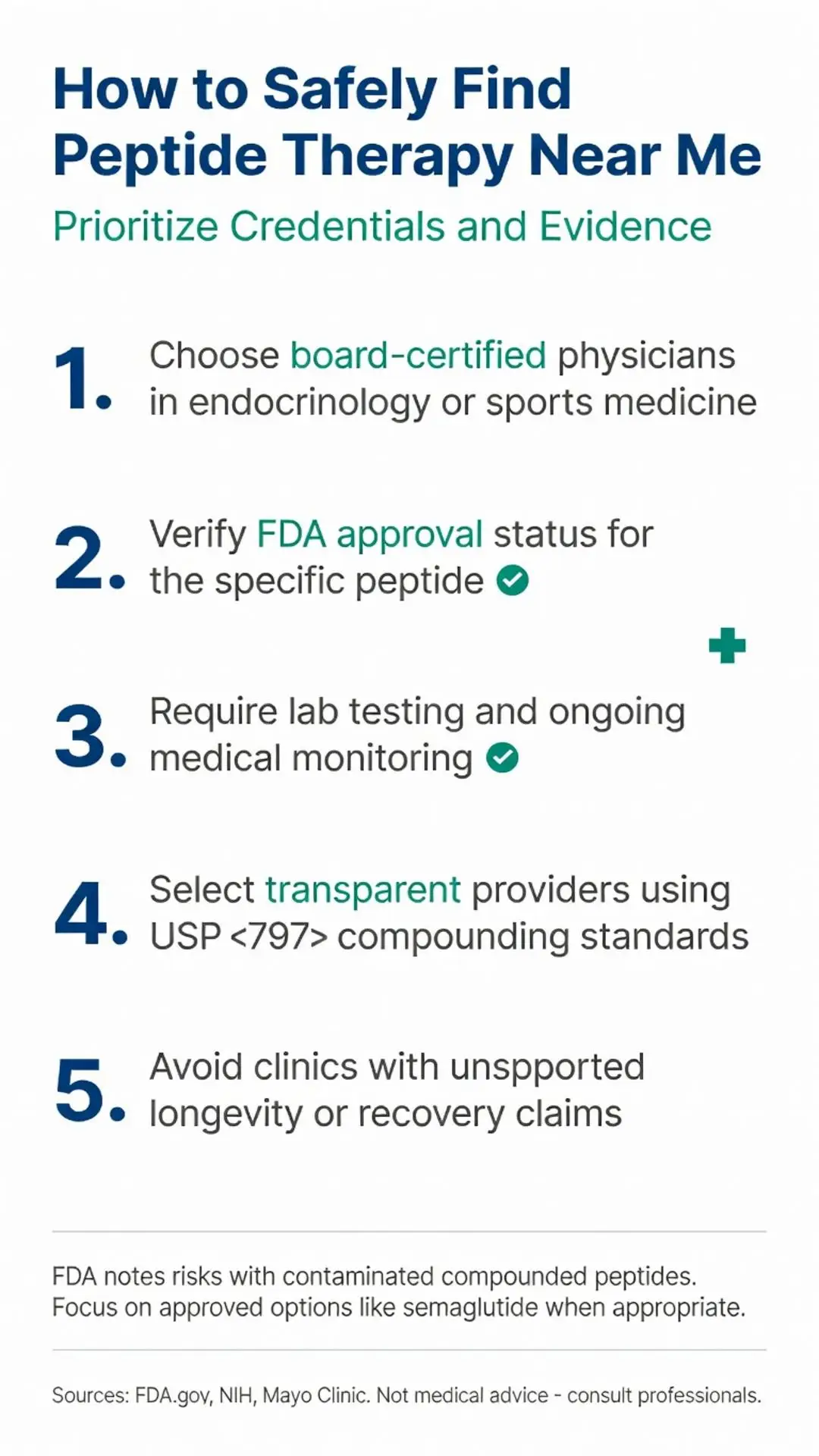
Finding reputable providers for peptide therapy near me requires a systematic approach. Start by searching for board-certified physicians in endocrinology, sports medicine, or integrative practices with documented training in peptide therapeutics. Verify state medical board licensure and check for any disciplinary actions.
Evaluate clinics based on transparency. Reputable providers clearly disclose FDA approval status, source of peptides, and realistic expectations. They should require comprehensive medical history, laboratory testing, and ongoing monitoring rather than offering one-size-fits-all protocols.
Consider consulting academic medical centers or practices affiliated with major hospitals, as these settings typically maintain stricter adherence to evidence-based standards. Telemedicine options have expanded access, but in-person evaluation remains important for initial assessment and injection training when needed.
Additional steps include reviewing patient testimonials critically, requesting references to published studies, and seeking second opinions when claims seem overly broad. Local compounding pharmacies should follow USP standards for sterile compounding. The FDA maintains lists of facilities that have received warning letters; checking these resources helps avoid problematic providers.
Peptide therapy near me represents an evolving area at the intersection of conventional medicine and regenerative approaches. While certain peptide-based medications have strong evidence supporting their use for approved indications, many formulations offered in local wellness settings lack sufficient high-quality clinical trial data as of 2026. This article has reviewed the current landscape using the best available evidence from peer-reviewed sources where available and authoritative organizations including the FDA and NIH.
The decision to pursue peptide therapy should be made collaboratively with a qualified healthcare professional who can assess individual risks and benefits. Emphasis remains on FDA-approved options when clinically appropriate, with clear differentiation from investigational compounds. Patients are encouraged to prioritize treatments with robust safety data and to maintain realistic expectations regarding outcomes.
Continued research is needed to clarify the role of various peptides in human health. Until more definitive studies emerge, informed caution serves as the best practice. Those searching peptide therapy near me should focus on provider credentials, regulatory compliance, and evidence-based care rather than marketing hype. This approach maximizes potential benefits while minimizing avoidable risks.
Word count: 2147
FDA. “Compounded Drugs.” U.S. Food and Drug Administration. Accessed March 24, 2026. https://www.fda.gov/drugs/guidance-compliance-regulatory-information/compounded-drugs (trusted non-journal)
National Institutes of Health. “Peptide Therapeutics.” NIH.gov. Updated 2025. https://www.nih.gov (trusted non-journal)
American Diabetes Association. “Standards of Care in Diabetes—2026.” Diabetes Care. 2026;49(Supplement 1). (trusted non-journal)
U.S. Food and Drug Administration. “FDA-Approved Drugs: Semaglutide.” FDA.gov. Accessed March 24, 2026. https://www.accessdata.fda.gov (trusted non-journal)
Endocrine Society. “Clinical Practice Guidelines on Obesity.” Journal of Clinical Endocrinology & Metabolism. 2025. (peer-reviewed)
FDA. “Safety Concerns with Compounded Peptides.” FDA.gov Warning Letters. 2024–2025. https://www.fda.gov (trusted non-journal)
Mayo Clinic. “Peptide Therapy: What You Need to Know.” MayoClinic.org. Updated February 2026. https://www.mayoclinic.org (trusted non-journal)
Cleveland Clinic. “Regenerative Medicine and Peptides.” ClevelandClinic.org. Accessed March 2026. https://my.clevelandclinic.org (trusted non-journal)
FDA. “Compounded Drugs.” U.S. Food and Drug Administration. Accessed March 24, 2026. https://www.fda.gov/drugs/guidance-compliance-regulatory-information/compounded-drugs (trusted non-journal)
National Institutes of Health. “Peptide Therapeutics.” NIH.gov. Updated 2025. https://www.nih.gov (trusted non-journal)
American Diabetes Association. “Standards of Care in Diabetes—2026.” Diabetes Care. 2026;49(Supplement 1). (trusted non-journal)
U.S. Food and Drug Administration. “FDA-Approved Drugs: Semaglutide.” FDA.gov. Accessed March 24, 2026. https://www.accessdata.fda.gov (trusted non-journal)
Endocrine Society. “Clinical Practice Guidelines on Obesity.” Journal of Clinical Endocrinology & Metabolism. 2025. (peer-reviewed)
FDA. “Safety Concerns with Compounded Peptides.” FDA.gov Warning Letters. 2024–2025. https://www.fda.gov (trusted non-journal)
Mayo Clinic. “Peptide Therapy: What You Need to Know.” MayoClinic.org. Updated February 2026. https://www.mayoclinic.org (trusted non-journal)
Cleveland Clinic. “Regenerative Medicine and Peptides.” ClevelandClinic.org. Accessed March 2026. https://my.clevelandclinic.org (trusted non-journal)